
图像: Healthy vs Problem Watermelons: Visual Comparison of Common Fruit Issues
已出版:
最后更新 2026年3月27日 UTC 17:51:46
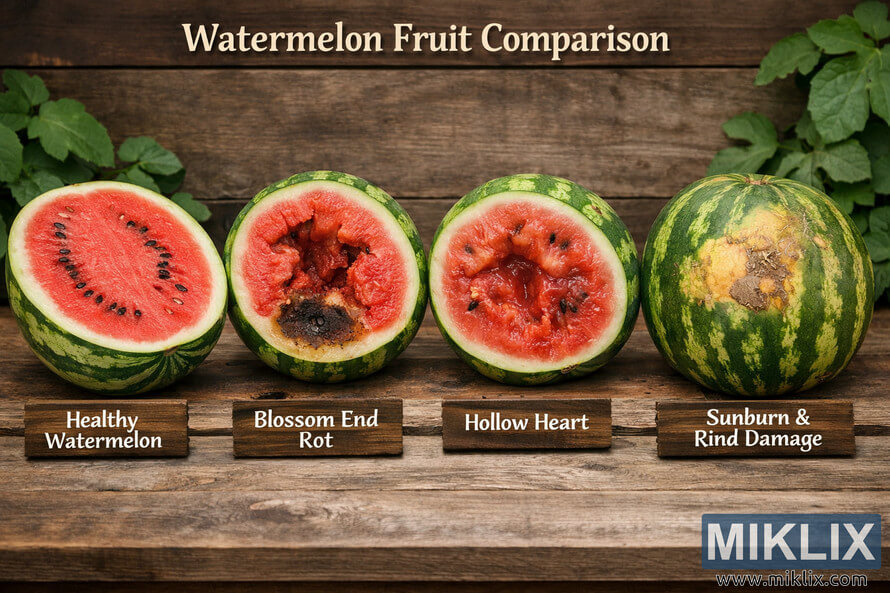
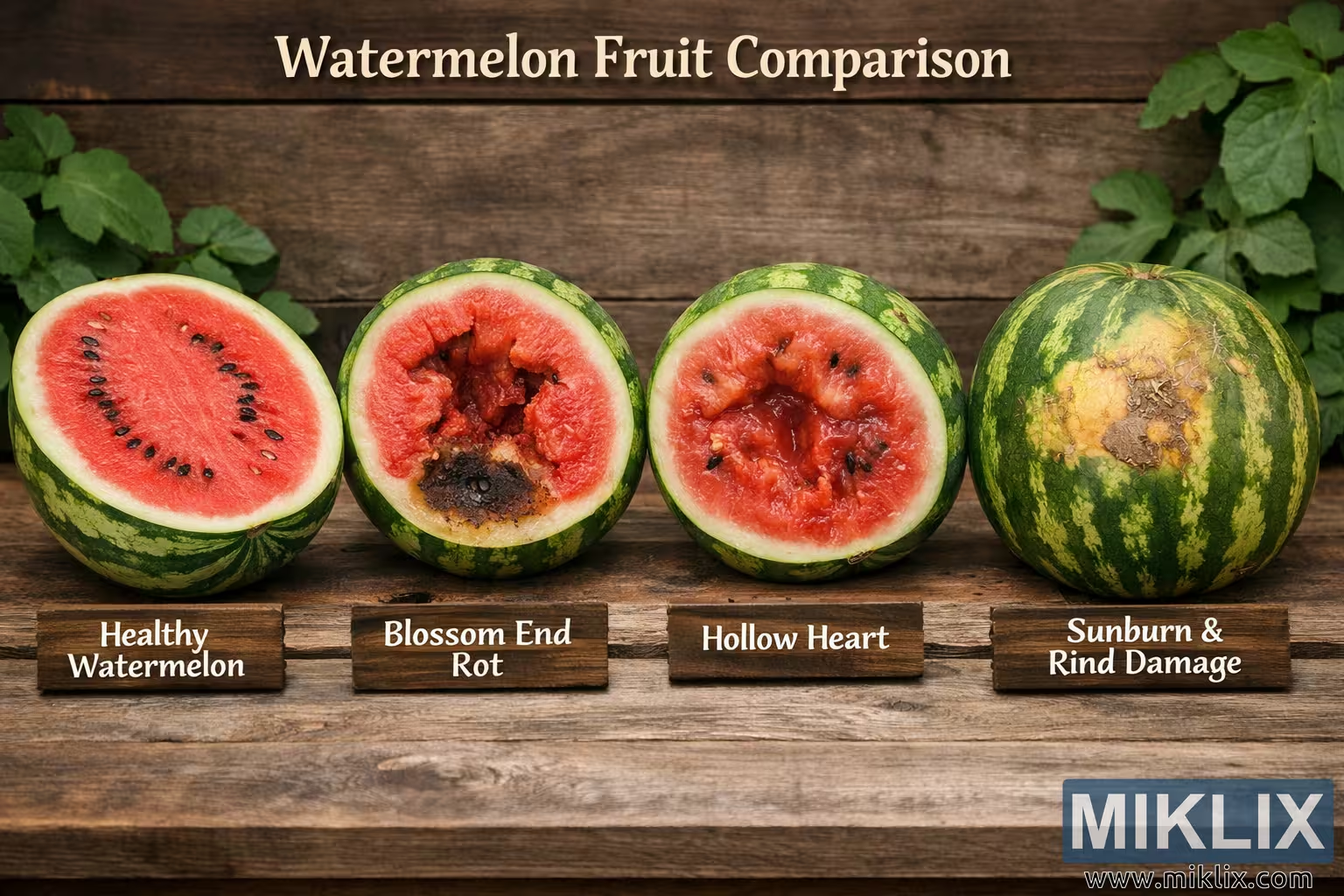
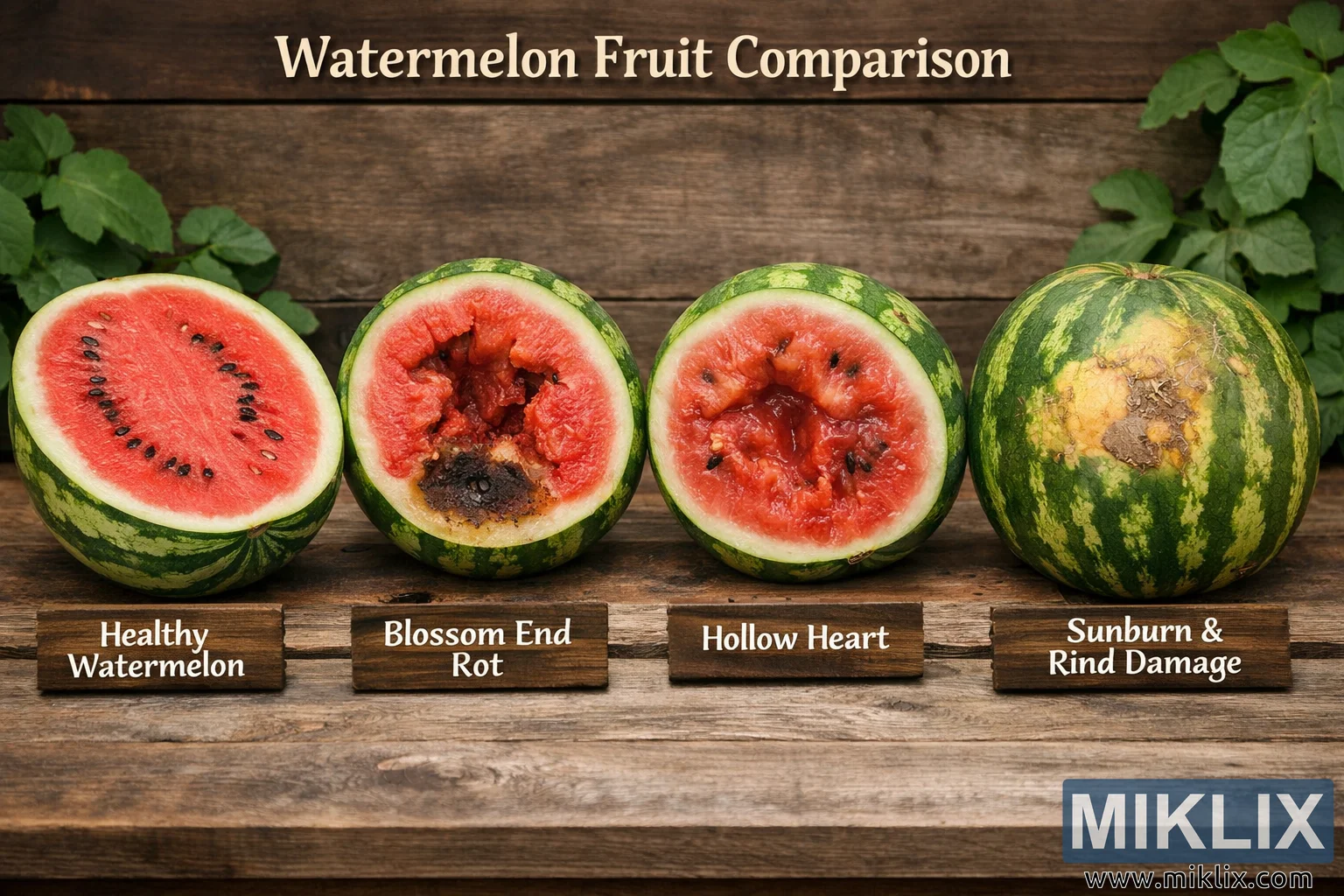
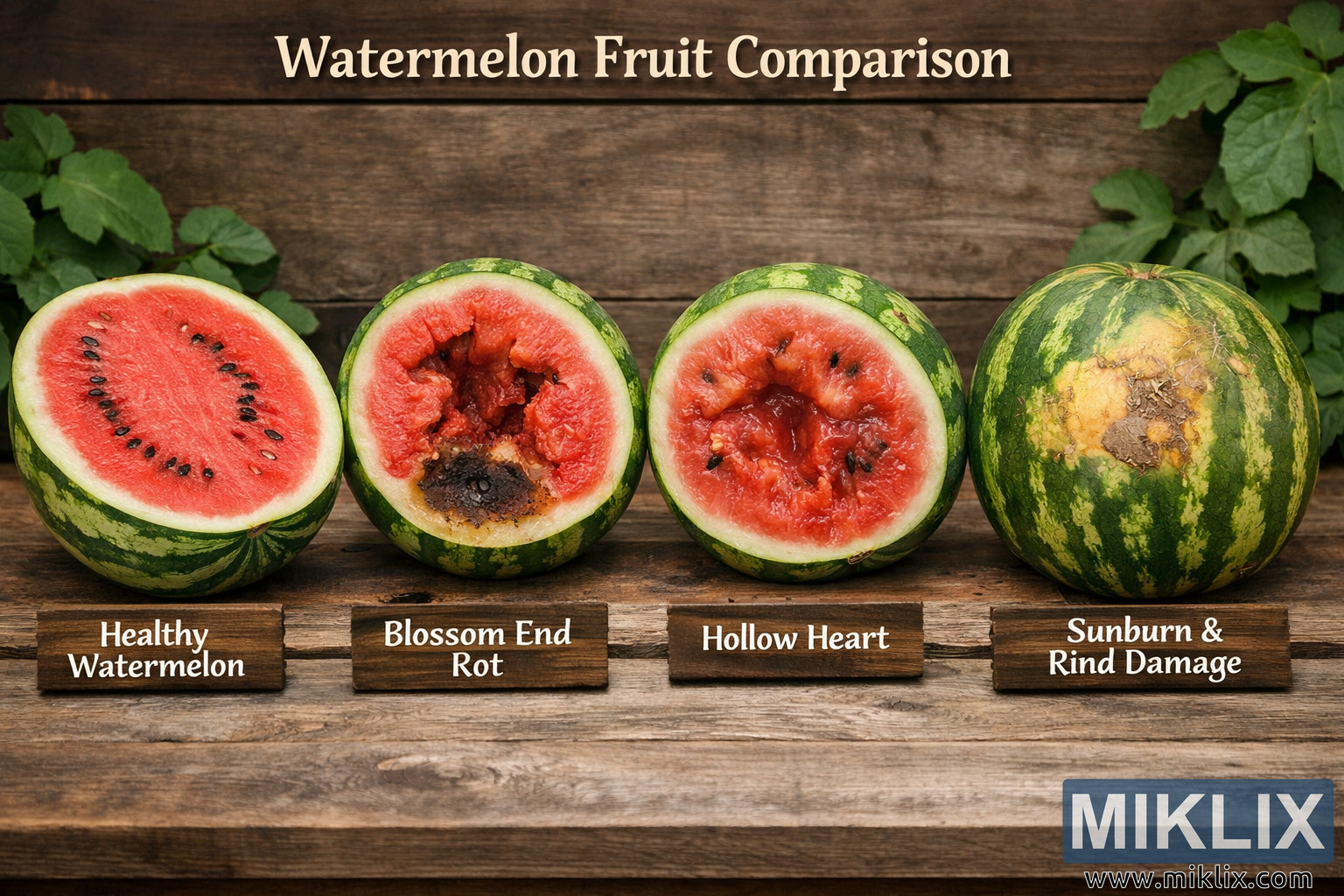
Educational comparison image showing a healthy watermelon alongside examples of common fruit disorders including blossom end rot, hollow heart, and sunburn rind damage.
Healthy vs Problem Watermelons: Visual Comparison of Common Fruit Issues
该图片的可用版本
与本网站文章和网页中嵌入的图片相比,以下可供下载的图片文件压缩程度更低,分辨率更高,因此质量也更高。
正常尺寸 (1,536 x 1,024)
大尺寸 (3,072 x 2,048)
尺寸非常大 (4,608 x 3,072)
超大尺寸 (6,144 x 4,096)
夸张的大尺寸 (1,048,576 x 699,051)
- 仍在上传......;-)
图片说明
A high-resolution landscape photograph presents a side-by-side comparison of watermelon fruits to illustrate the difference between a healthy fruit and several examples affected by common quality problems. The composition is arranged on a rustic wooden table with a matching wooden plank background, creating a warm agricultural setting that resembles a farm stand or produce inspection table. At the top of the image, large clear text reads "Watermelon Fruit Comparison," providing context for the visual demonstration.
Five watermelons are aligned horizontally across the center of the frame. Each fruit is accompanied by a small wooden label placed on the table directly in front of it, identifying the condition displayed. The lighting is even and natural, highlighting the texture of the rind and the internal flesh of the cut melons while maintaining a sharp focus across the entire row.
On the far left is a healthy watermelon that has been sliced open to reveal bright red flesh with evenly distributed black seeds and a crisp, juicy texture. The interior appears firm and vibrant, indicating good ripeness and quality. The rind is green with characteristic darker stripes, and the wooden sign beneath it reads "Healthy Watermelon." This fruit serves as the visual reference for what a properly developed watermelon should look like.
Next to it is a watermelon labeled "Blossom End Rot." This melon is cut open, revealing a dark, decayed area near the base of the fruit. The interior shows a brown to black sunken patch where tissue breakdown has occurred. The surrounding flesh appears damaged and discolored compared to the healthy example. This condition visually demonstrates how nutrient imbalance or environmental stress can affect fruit development.
The third fruit from the left is labeled "Hollow Heart." It has been cut open to reveal a large cavity inside the watermelon where the internal flesh has split apart. The center of the fruit shows irregular gaps and cracks within the red flesh, giving the appearance that the core has separated during growth. Although the flesh remains red, the structural integrity is clearly disrupted.
The fourth watermelon remains whole and is labeled "Sunburn & Rind Damage." Its outer rind shows a large pale yellow and brown scarred patch where the surface has been damaged by excessive sun exposure. The affected area appears rough and corky compared with the smooth green striped rind surrounding it.
Green leaves placed in the background add a natural agricultural feel, reinforcing the theme of fruit production and crop quality. The overall image functions as an educational comparison chart, clearly demonstrating several common watermelon fruit disorders alongside a healthy example to help viewers visually recognize quality differences.
图片与此有关: Growing Watermelons: Your Complete Guide to Juicy, Homegrown Success