
图像: Cross-Section of Purple-Top White Globe Turnip
已出版:
最后更新 2026年4月19日 UTC 21:37:15
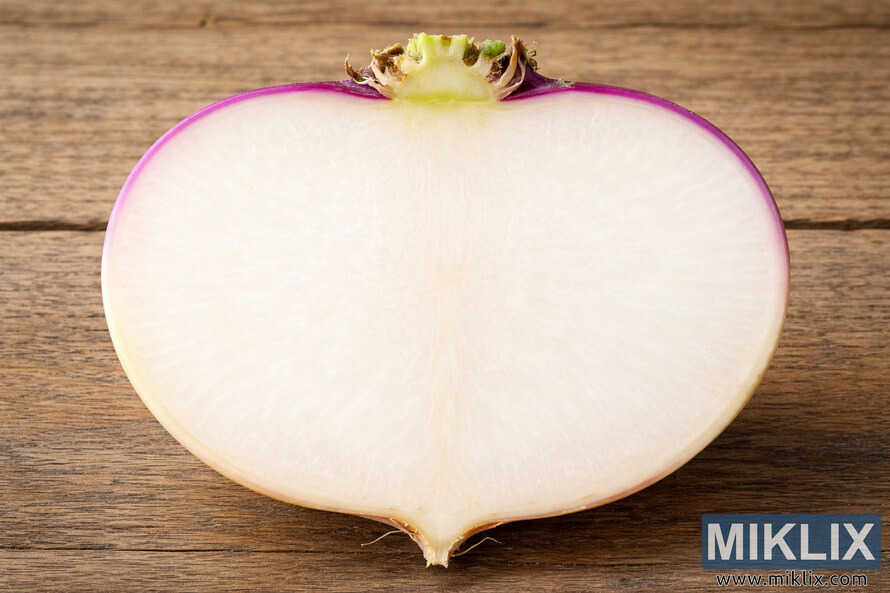
Detailed photo of a purple-top white globe turnip cut in half, revealing its white interior flesh and purple skin against a rustic wooden background.
Cross-Section of Purple-Top White Globe Turnip
该图片的可用版本
与本网站文章和网页中嵌入的图片相比,以下可供下载的图片文件压缩程度更低,分辨率更高,因此质量也更高。
正常尺寸 (1,536 x 1,024)
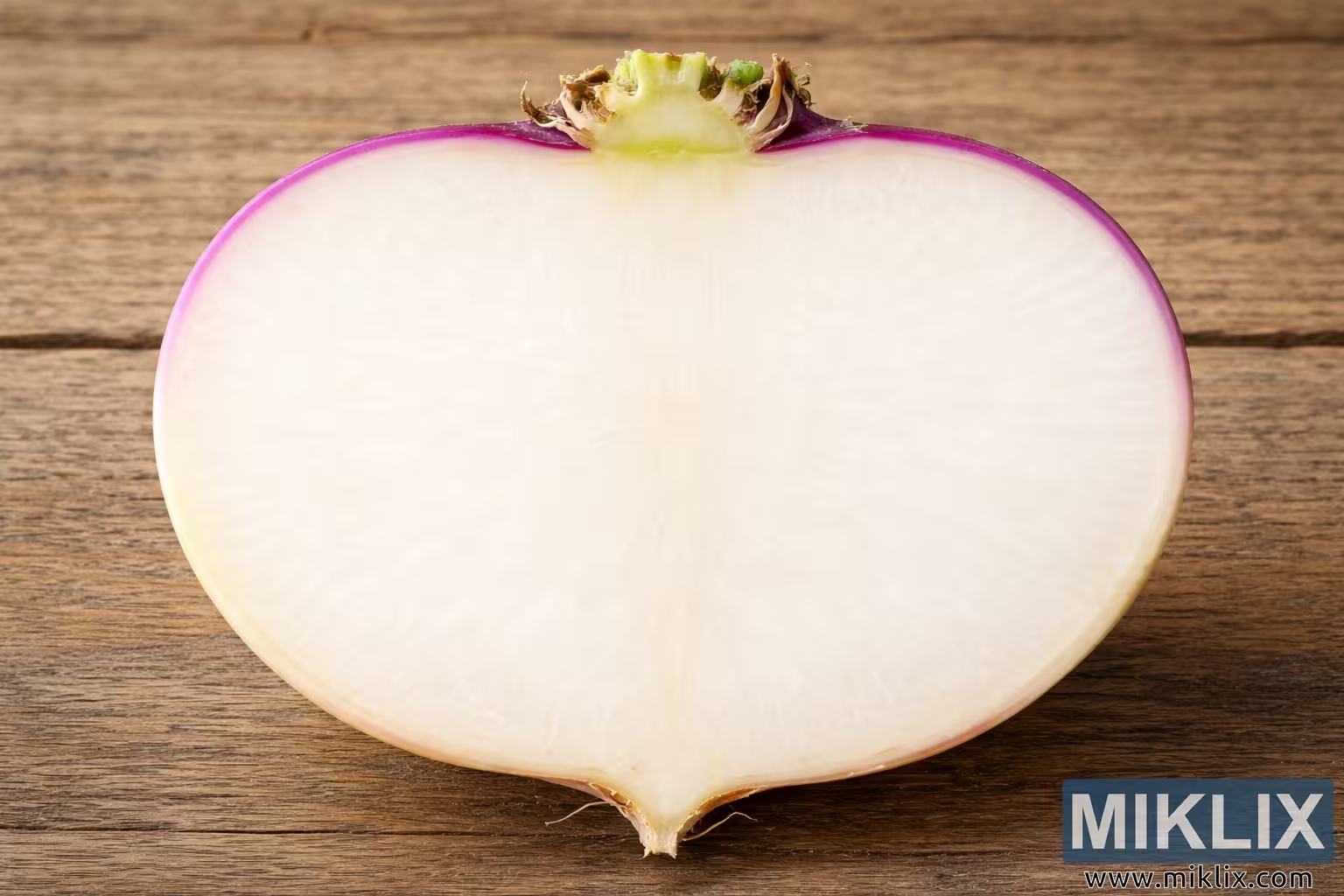
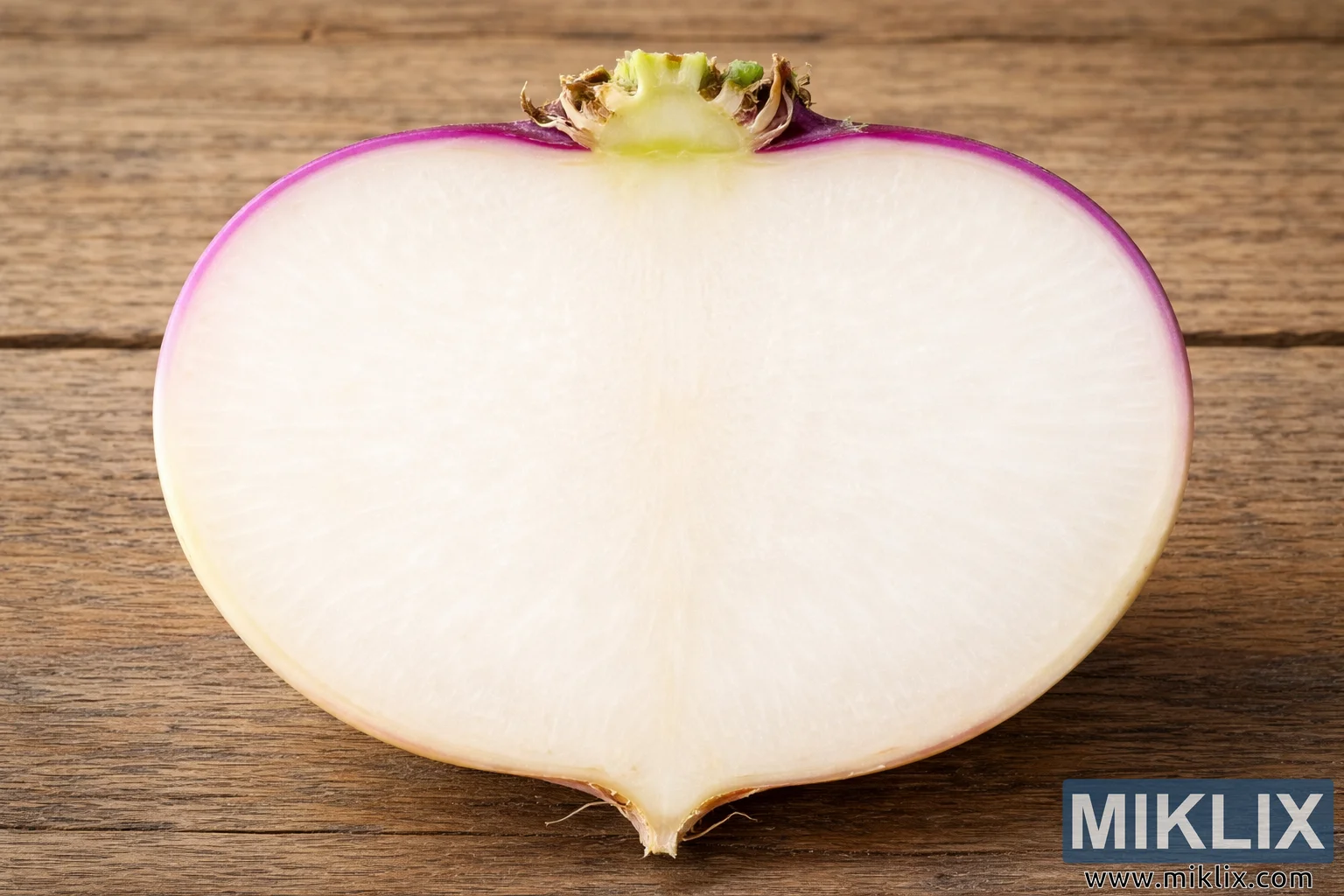
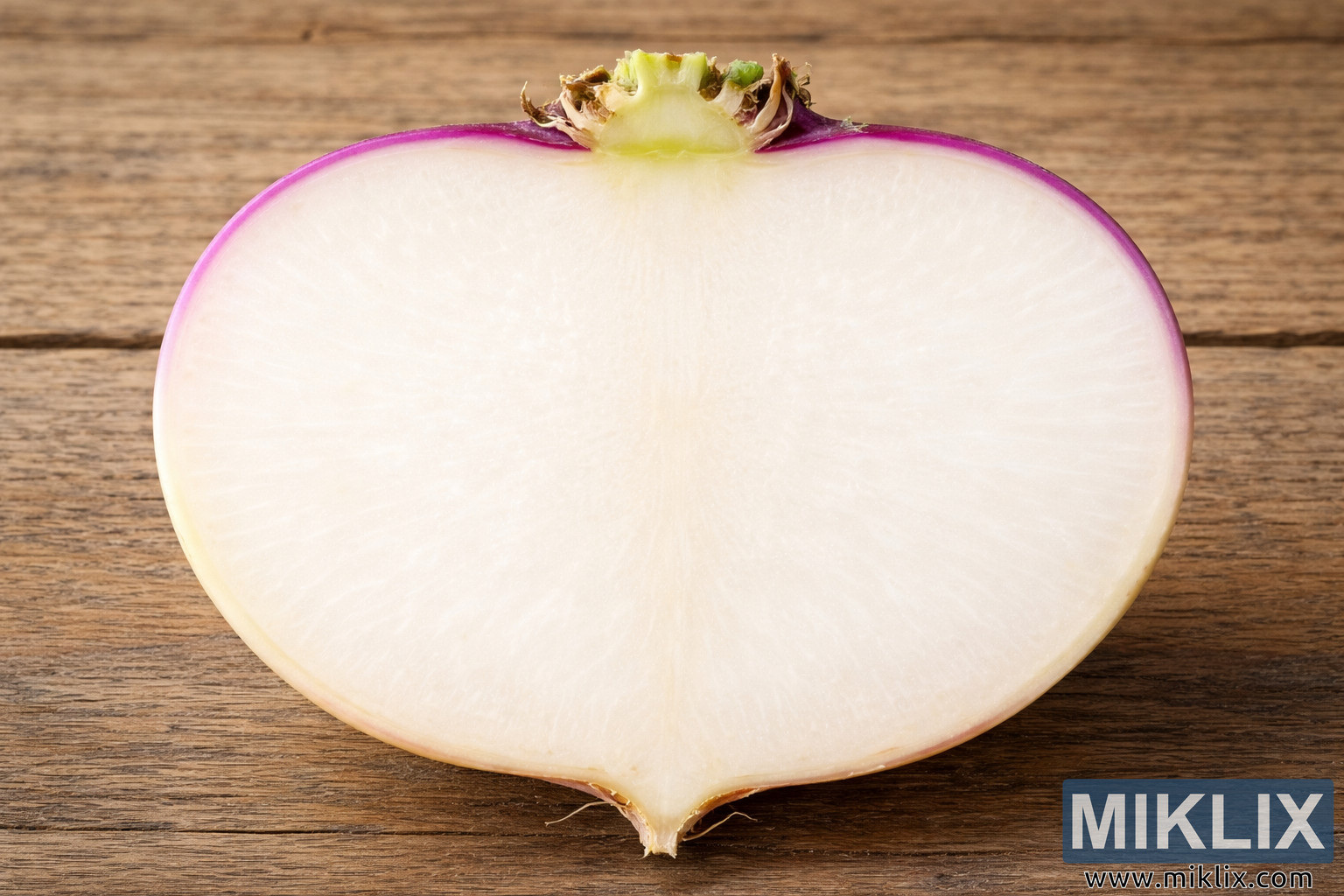
大尺寸 (3,072 x 2,048)
尺寸非常大 (4,608 x 3,072)
超大尺寸 (6,144 x 4,096)
夸张的大尺寸 (1,048,576 x 699,051)
- 仍在上传......;-)
图片说明
The image presents a high-resolution, landscape-oriented photograph of a purple-top white globe turnip that has been sliced cleanly in half and positioned to display its interior cross-section. The turnip occupies the center of the composition, laid horizontally on a rustic wooden surface with visible grain patterns and warm brown tones that provide a natural, earthy backdrop. The vegetable is photographed straight-on so the viewer can clearly see the internal structure of the root, emphasizing both its symmetrical shape and its subtle textures. The outer skin forms a thin band around the edge of the cut surface. Near the top of the turnip, the skin transitions into a distinctive purple coloration typical of the purple-top variety, while the remainder of the outer edge appears pale cream to light yellow. This purple band creates a gentle gradient where the pigment fades into the creamy white flesh inside.
The interior flesh of the turnip is smooth, dense, and bright white, with delicate radial lines that extend outward from the center toward the outer edge. These faint lines reveal the natural fiber structure of the root vegetable and subtly emphasize the circular geometry of the cut. The central portion appears slightly more opaque, gradually becoming more translucent toward the edges where moisture in the flesh catches the light. The surface of the cut is clean and even, suggesting it was sliced with a sharp knife, and the lighting highlights the moist, fresh texture typical of a recently cut root vegetable.
At the very top center of the turnip half, the small remnant of the stem base is visible. This area appears slightly fibrous and pale greenish-yellow, with tiny, dried fragments of leaf stems curling outward. At the opposite bottom edge, a small tapered root tip protrudes, creating a subtle point that mirrors the natural shape of the vegetable before it was cut. These small botanical details provide context and authenticity, reinforcing that the subject is a freshly harvested root crop rather than a stylized or processed food item.
The wooden surface beneath the turnip features long horizontal planks with visible grain, cracks, and tonal variation, ranging from honey brown to darker brown streaks. The rustic texture contrasts with the smooth, moist interior of the turnip, enhancing visual depth. Soft, even lighting illuminates the scene from above and slightly from the front, minimizing harsh shadows and allowing the colors of the vegetable to appear natural and vivid. The overall composition is simple and focused, drawing attention to the vegetable’s cross-section, its color contrast between purple skin and white flesh, and the subtle organic patterns revealed inside the root.