
图像: Common Watercress Growing Problems with Visual Examples
已出版:
最后更新 2026年5月11日 UTC 20:04:55
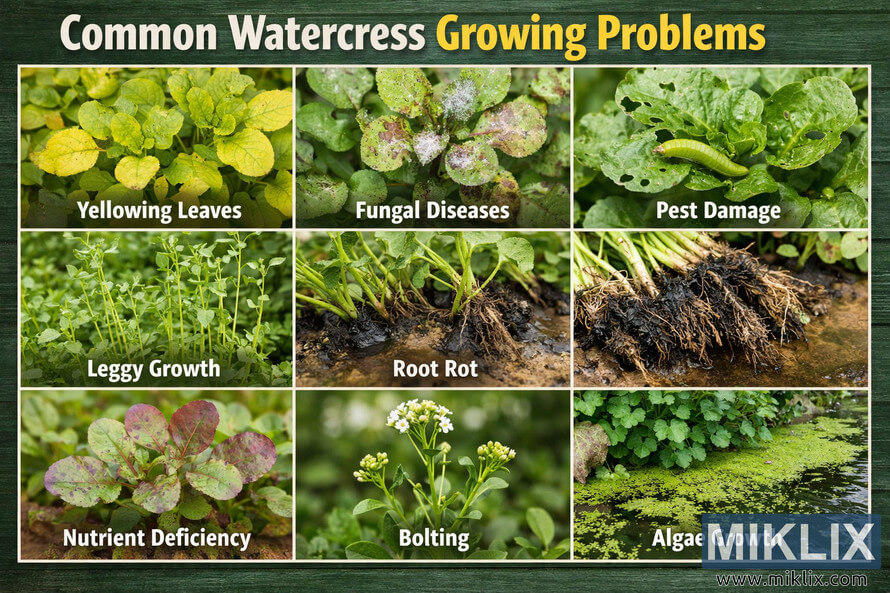
Illustrated guide to common watercress growing problems featuring visual examples of yellowing leaves, fungal diseases, pest damage, leggy growth, root rot, nutrient deficiencies, bolting, and algae growth.
Common Watercress Growing Problems with Visual Examples
该图片的可用版本
与本网站文章和网页中嵌入的图片相比,以下可供下载的图片文件压缩程度更低,分辨率更高,因此质量也更高。
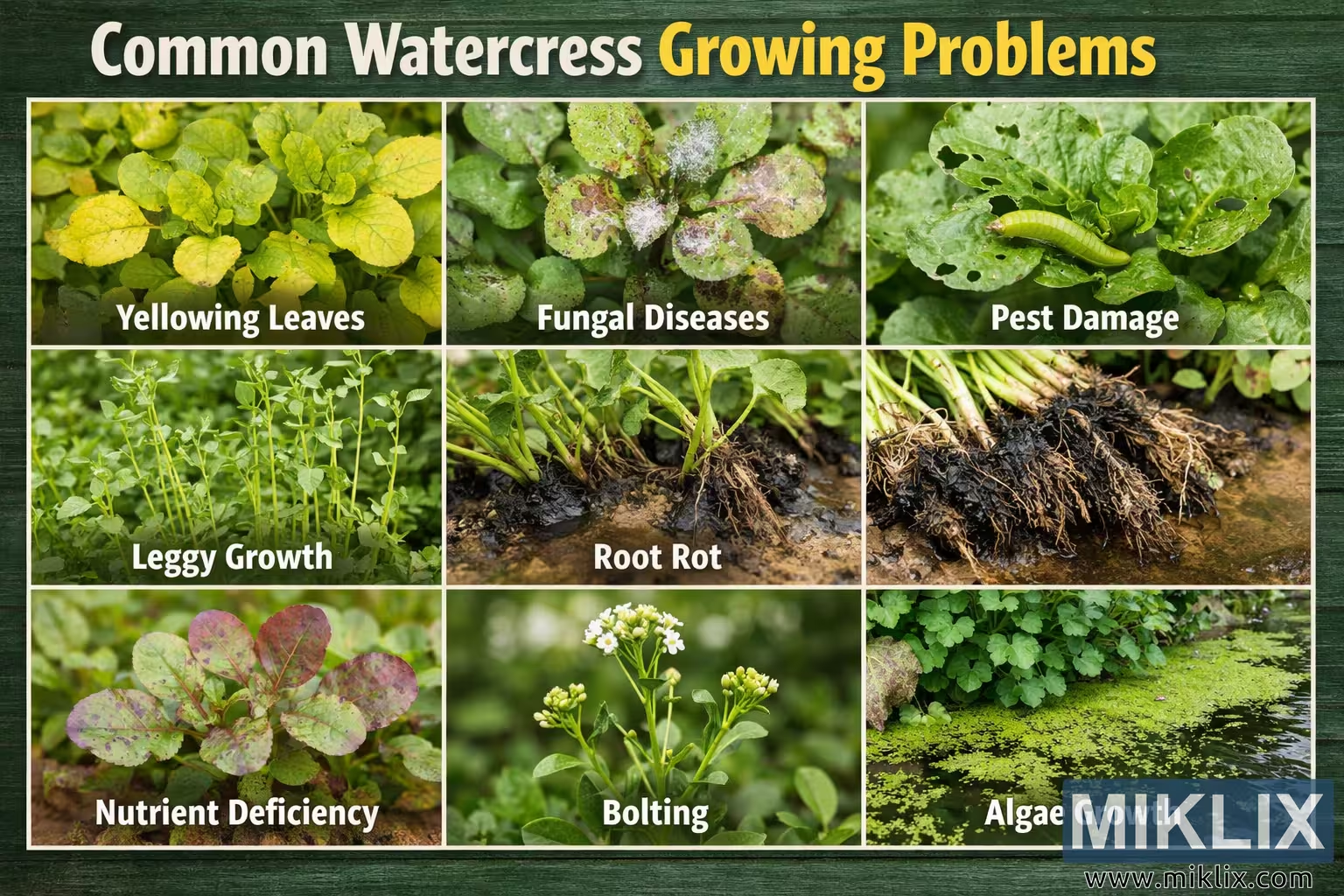
正常尺寸 (1,536 x 1,024)
大尺寸 (3,072 x 2,048)
尺寸非常大 (4,608 x 3,072)
超大尺寸 (6,144 x 4,096)
夸张的大尺寸 (1,048,576 x 699,051)
- 仍在上传......;-)
图片说明
This landscape educational collage presents a visual guide to common problems encountered when growing watercress. The image is arranged as a structured grid of nine sections with a prominent title banner across the top reading "Common Watercress Growing Problems" in bold white and yellow lettering set against a textured green wooden background. The design resembles a gardening infographic or reference poster intended to help growers quickly identify plant health issues by visual symptoms.
Below the title, the collage is divided into eight labeled photographic panels showing real-life examples of watercress plants experiencing different cultivation problems. Each panel contains a clear, close-up photograph accompanied by a bold caption that identifies the specific issue.
The first panel, labeled "Yellowing Leaves," shows a cluster of watercress plants with pale yellow foliage mixed with green leaves, suggesting nutrient stress or poor growing conditions. The leaves appear slightly dull and faded compared to the healthy green surrounding vegetation.
The second panel, titled "Fungal Diseases," displays watercress leaves with visible blotches, discoloration, and a powdery or mold-like coating on the surface. The infected leaves show mottled brown and white patches typical of fungal infections affecting moist-growing plants.
The third panel, "Pest Damage," features a bright green caterpillar resting on watercress leaves that have numerous holes and irregular chew marks. The damaged foliage clearly demonstrates how insect pests can rapidly harm delicate leafy greens.
In the fourth panel, labeled "Leggy Growth," tall, thin watercress stems stretch upward with sparse leaf clusters. The elongated stems suggest insufficient light or overcrowded growing conditions, causing the plants to stretch toward available light.
The fifth panel, "Root Rot," presents a close-up of watercress plants partially lifted from wet soil. Dark, waterlogged roots appear tangled and unhealthy, indicating decay caused by overly saturated conditions or poor water circulation.
The sixth panel visually reinforces root and soil issues by showing muddy roots and damp soil around the plant base, highlighting the consequences of prolonged moisture exposure in water-based growing systems.
The seventh panel, "Nutrient Deficiency," shows watercress leaves with uneven coloration including purplish or reddish blotches. These symptoms suggest a lack of essential nutrients affecting leaf development and plant vigor.
The eighth panel, "Bolting," depicts a watercress plant producing small white flowers on tall stems. Bolting indicates the plant has transitioned from leafy growth to flowering, which often happens due to heat stress or age and typically reduces leaf quality.
The final panel, labeled "Algae Growth," shows a water garden surface covered with bright green algae floating on the water around nearby plants. This illustrates how excess nutrients and sunlight can promote algae buildup in aquatic growing environments.
Overall, the collage functions as a clear and informative visual reference for gardeners, hydroponic growers, and small-scale farmers who cultivate watercress. By presenting labeled photographic examples, the image helps viewers quickly diagnose plant problems and better understand the environmental or biological factors that may affect healthy watercress production.
图片与此有关: How to Grow Watercress at Home: A Complete Beginner's Guide