
图像: Microscopic Battle: The Immune System in Action
已出版:
最后更新 2026年5月22日 UTC 18:03:34
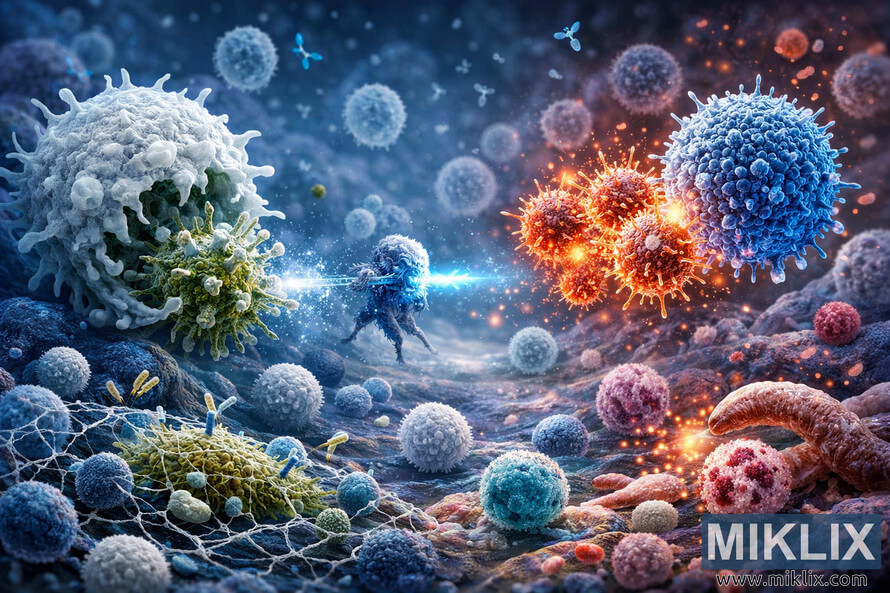
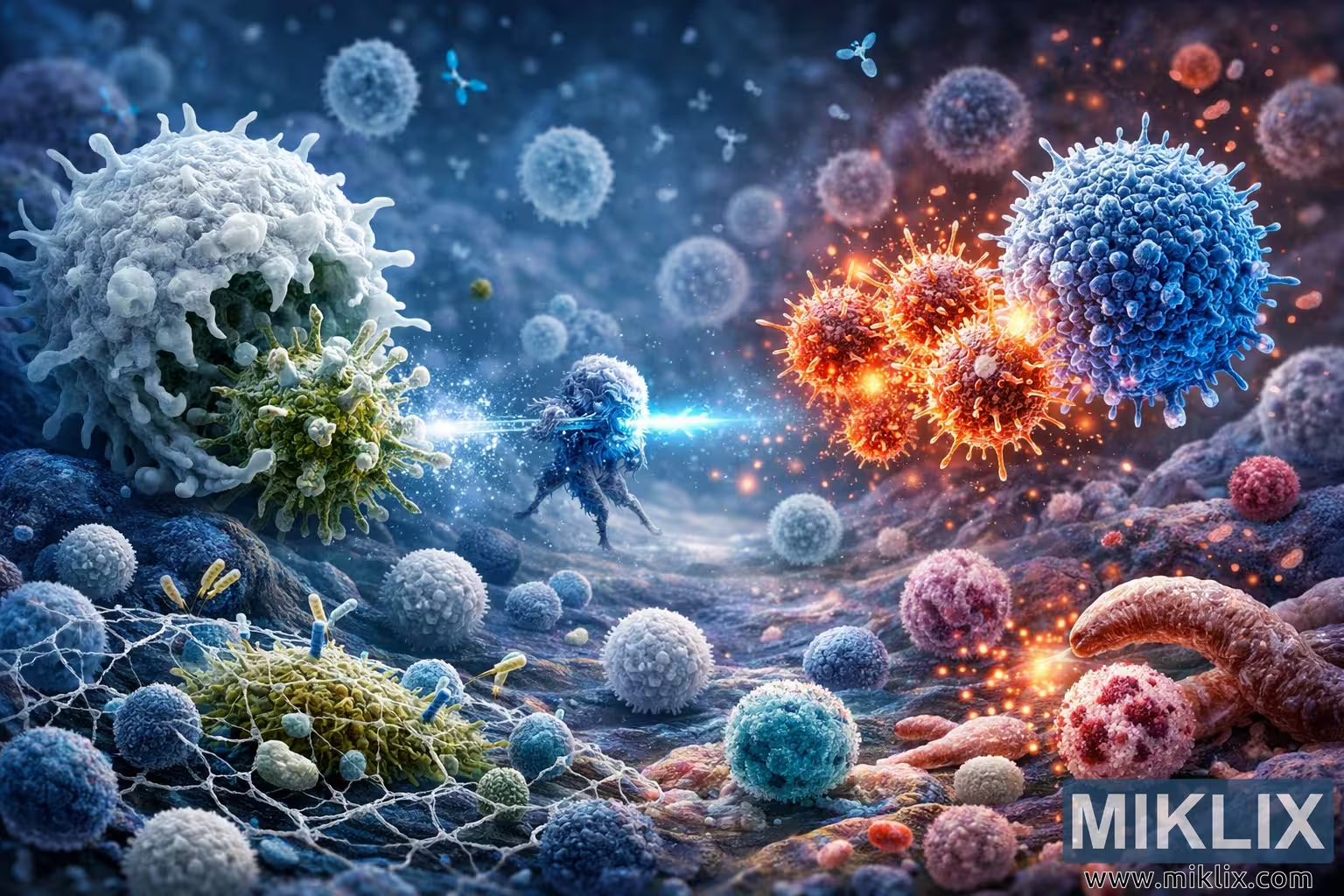
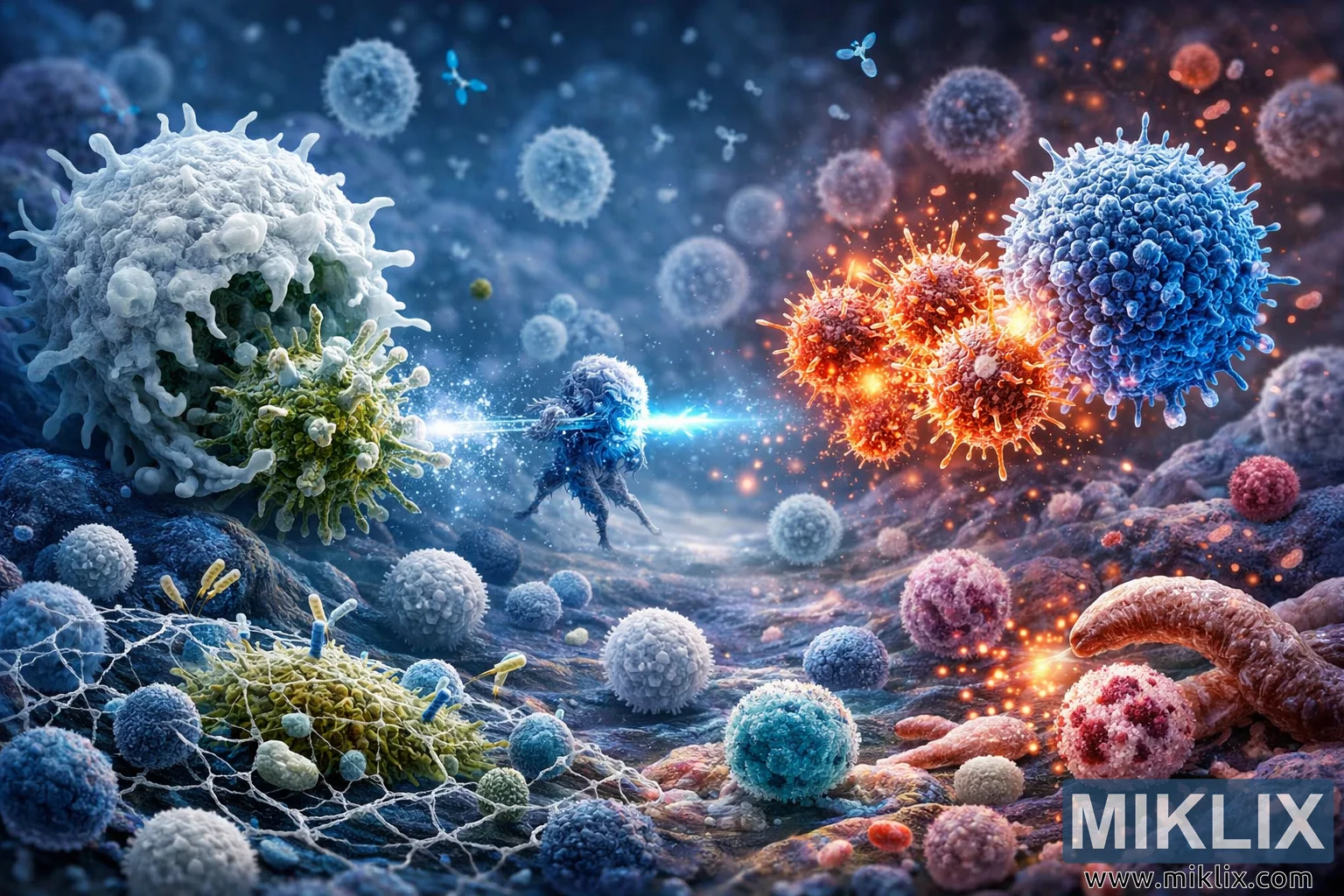
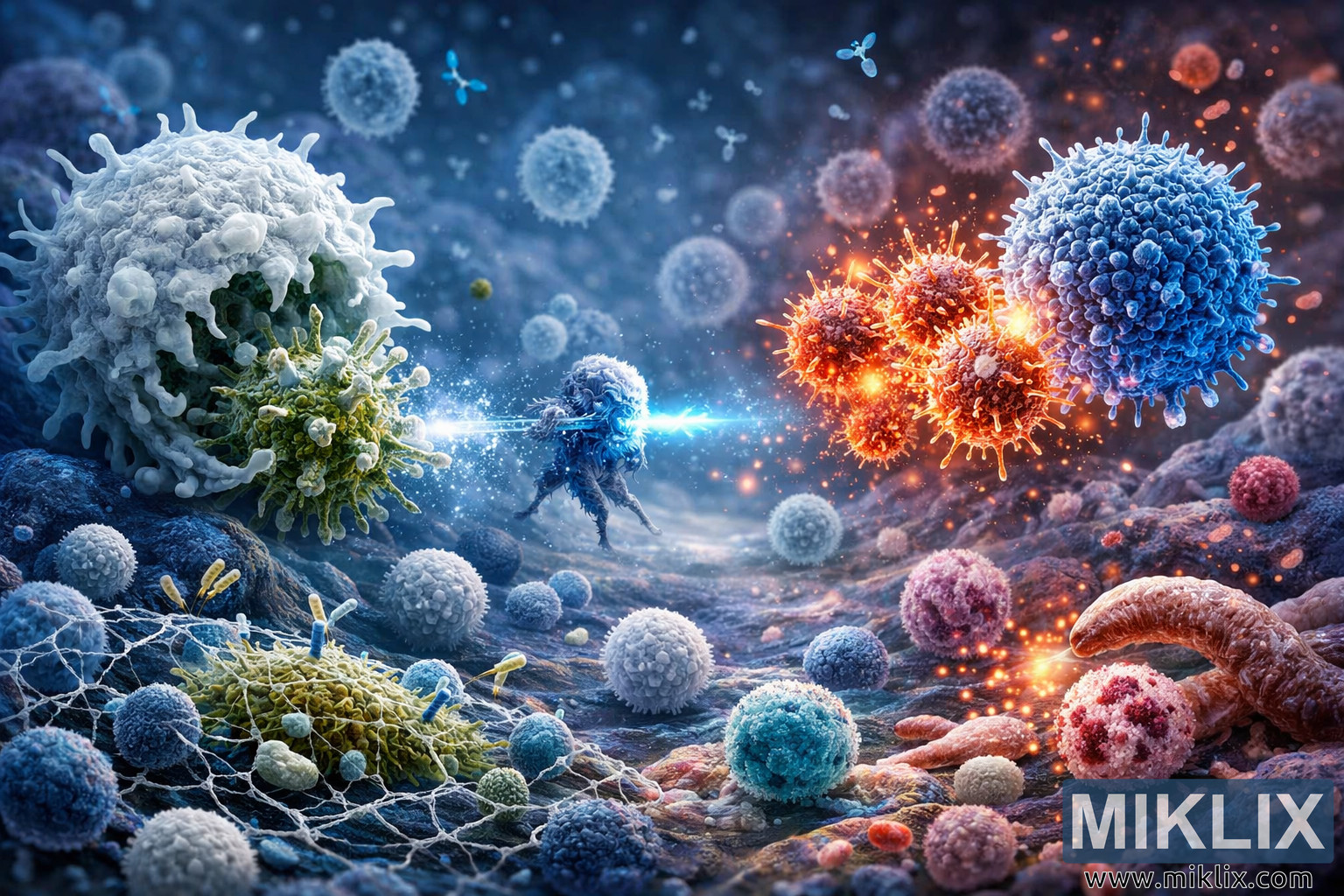
A detailed microscopic illustration of the human immune system showing white blood cells, macrophages, T cells, and NK cells battling viruses and bacteria in a vibrant cellular landscape.
Microscopic Battle: The Immune System in Action
该图片的可用版本
与本网站文章和网页中嵌入的图片相比,以下可供下载的图片文件压缩程度更低,分辨率更高,因此质量也更高。
正常尺寸 (1,536 x 1,024)
大尺寸 (3,072 x 2,048)
尺寸非常大 (4,608 x 3,072)
超大尺寸 (6,144 x 4,096)
夸张的大尺寸 (1,048,576 x 699,051)
- 仍在上传......;-)
图片说明
Within the vast and intricate landscape of the human body, a microscopic war unfolds—a dynamic and ceaseless struggle between invading pathogens and the vigilant defenders of the immune system. This image captures that invisible battlefield in breathtaking detail, portraying the coordinated assault of white blood cells against a swarm of viruses and bacteria.
On the left side of the composition, a massive macrophage dominates the scene. Its surface is textured with ridges and pseudopodia—tentacle-like extensions reaching outward to engulf a spiky green virus particle. The macrophage’s membrane glows faintly, emphasizing its role as one of the body’s first responders, devouring intruders through phagocytosis. Each protrusion seems alive, curling around the virus as if in slow motion, illustrating the elegance and ferocity of cellular defense.
In the center, a natural killer (NK) cell stands as a radiant sentinel. It emits a bluish beam of energy toward a cluster of viral particles, the light scattering into a burst of luminescent fragments. This depiction symbolizes the NK cell’s ability to destroy infected cells by releasing cytotoxic molecules. The surrounding environment shimmers with particles and proteins, creating a sense of motion and tension—the moment before the virus disintegrates completely.
To the right, a T cell glows with an electric blue hue, its surface covered in receptor structures that detect and bind to antigens. It advances toward a group of fiery red and orange virus particles, which appear to explode upon contact. The contrast between the cool blue of the T cell and the warm tones of the viruses evokes the clash between order and chaos, defense and invasion.
Below this central conflict, smaller immune cells swarm around a bacterium covered in greenish-yellow filaments. Antibodies—depicted as Y-shaped proteins—attach themselves to the bacterium’s surface, marking it for destruction. This detail highlights the adaptive immune response, where antibodies neutralize pathogens and facilitate their removal by other cells.
In the lower left, a delicate web of neutrophil extracellular traps (NETs) stretches across the terrain. These net-like structures ensnare multiple bacteria, immobilizing them within a mesh of DNA and proteins. The depiction of NETs adds a layer of complexity to the scene, showing how even cell remnants contribute to defense mechanisms.
To the far right, an eosinophil releases reddish-pink granules toward a worm-like parasitic organism. The granules represent toxic proteins that damage the parasite’s surface, illustrating the immune system’s versatility in combating different types of invaders—from viruses to multicellular parasites.
The background is a hazy expanse of blue and purple hues, filled with floating particles, antibodies, and distant immune cells. The lighting is dynamic, with bright highlights illuminating the main combatants and softer glows fading into the distance. The depth of field creates a sense of immersion, as if the viewer is peering through a microscope into a living, breathing world of cellular warfare.
Every element of the image contributes to a narrative of resilience and balance. The macrophage’s engulfing motion, the NK cell’s radiant strike, the T cell’s precise targeting—all symbolize the harmony of innate and adaptive immunity. The composition is both scientific and artistic, merging biological accuracy with visual drama.
This portrayal of the immune response is not merely a depiction of cells and pathogens—it is a celebration of life’s defense mechanisms, a reminder that within every human body, countless microscopic heroes work tirelessly to preserve health and equilibrium.