
图像: Antioxidant Shields Protecting a Human Cell from Oxidative Stress
已出版:
最后更新 2026年7月16日 UTC 20:44:44
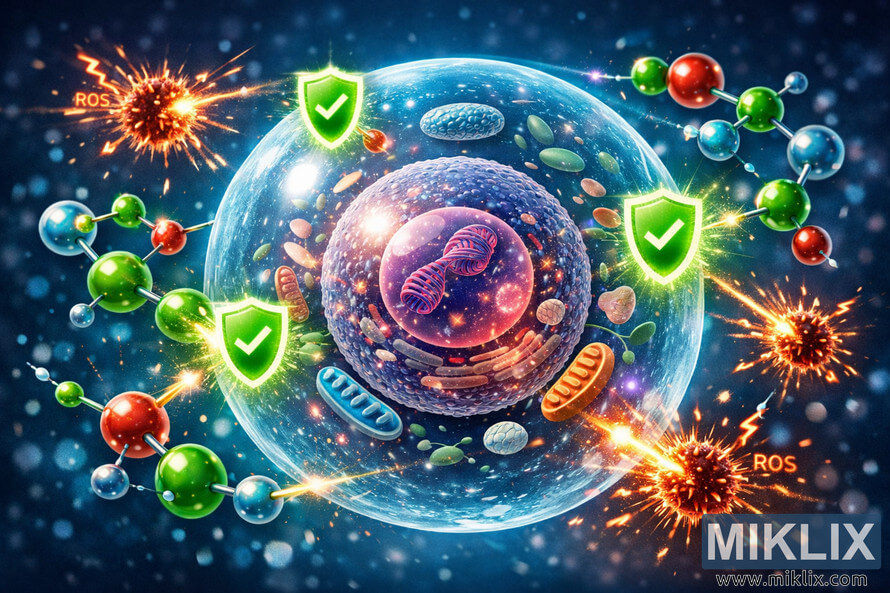
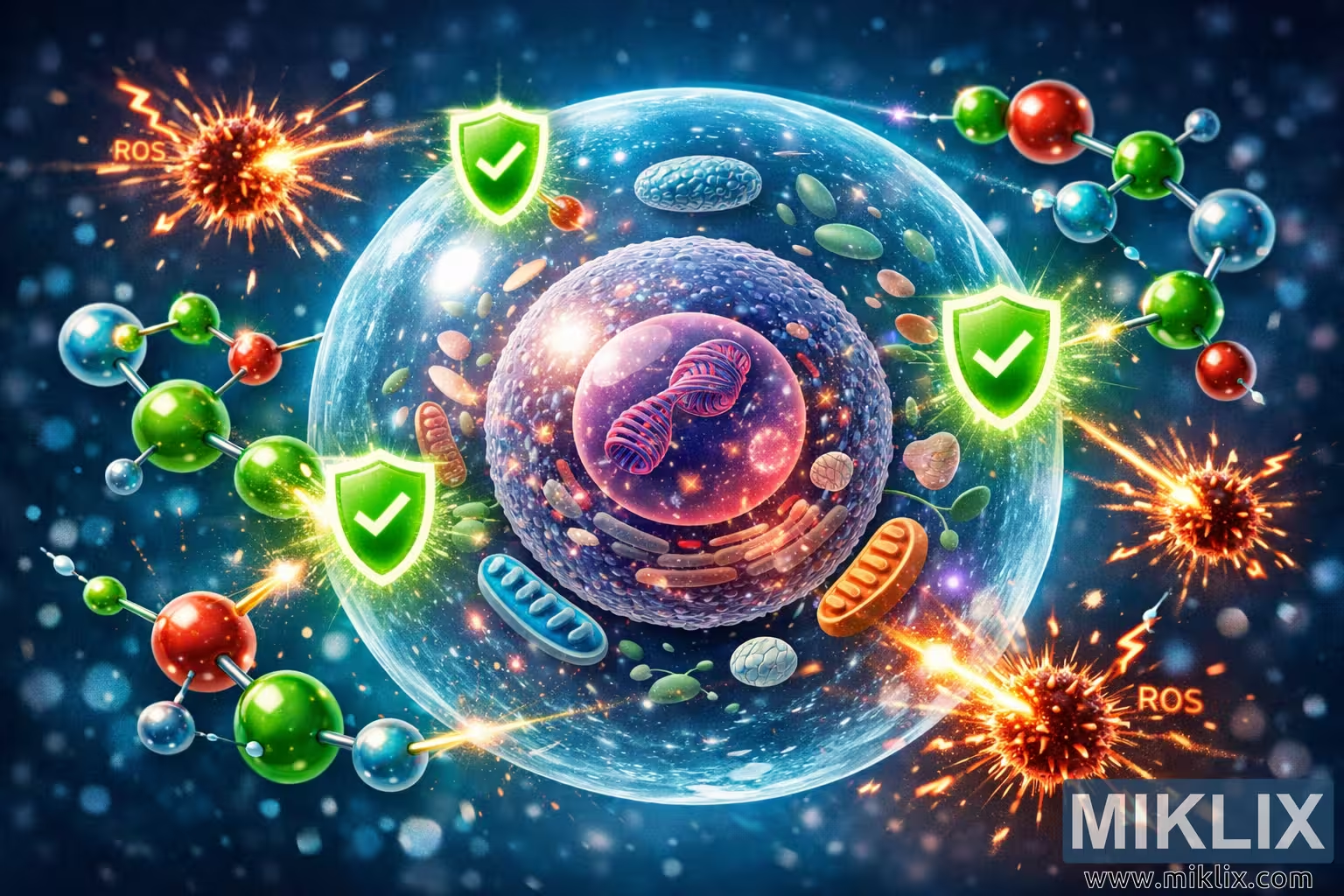
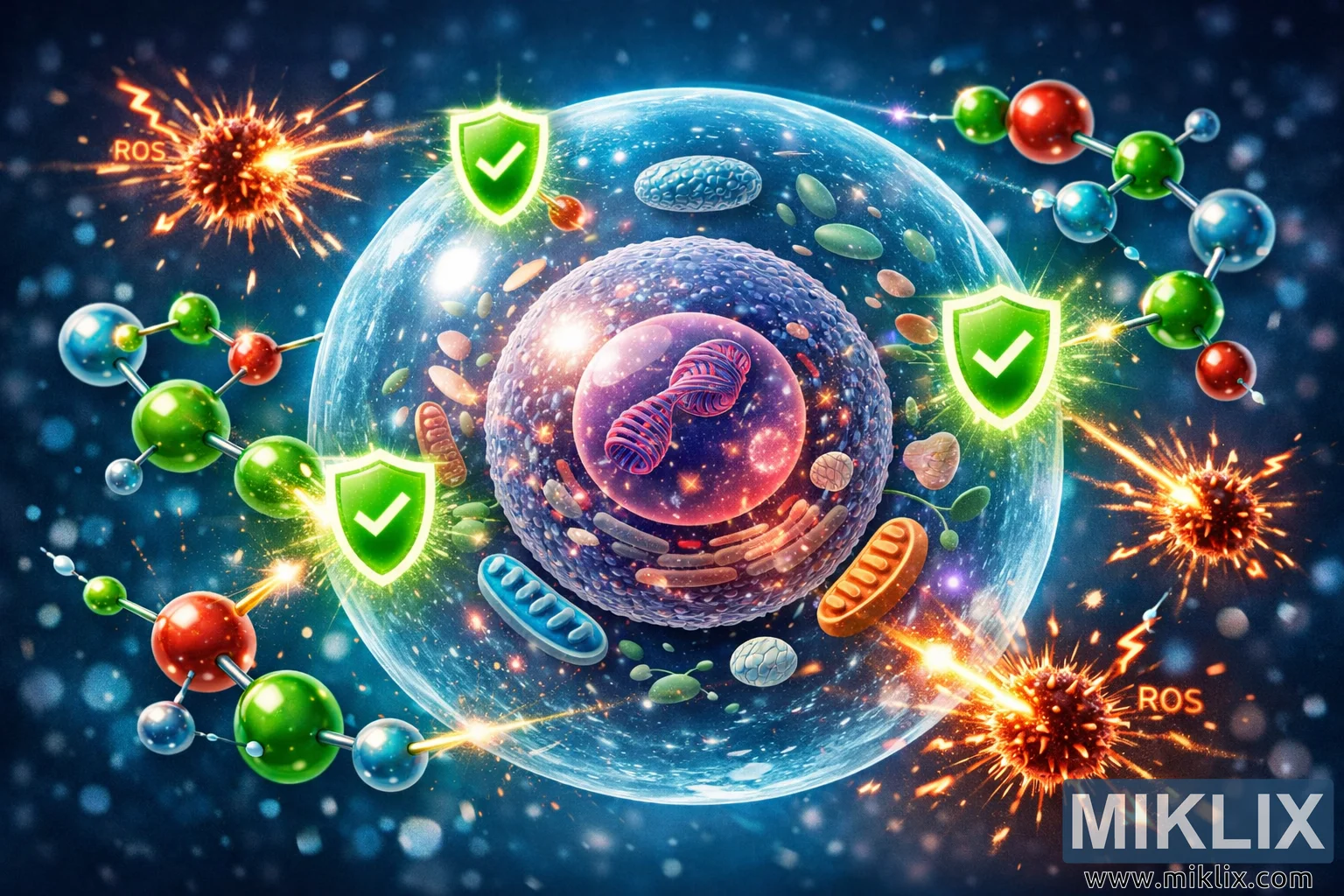
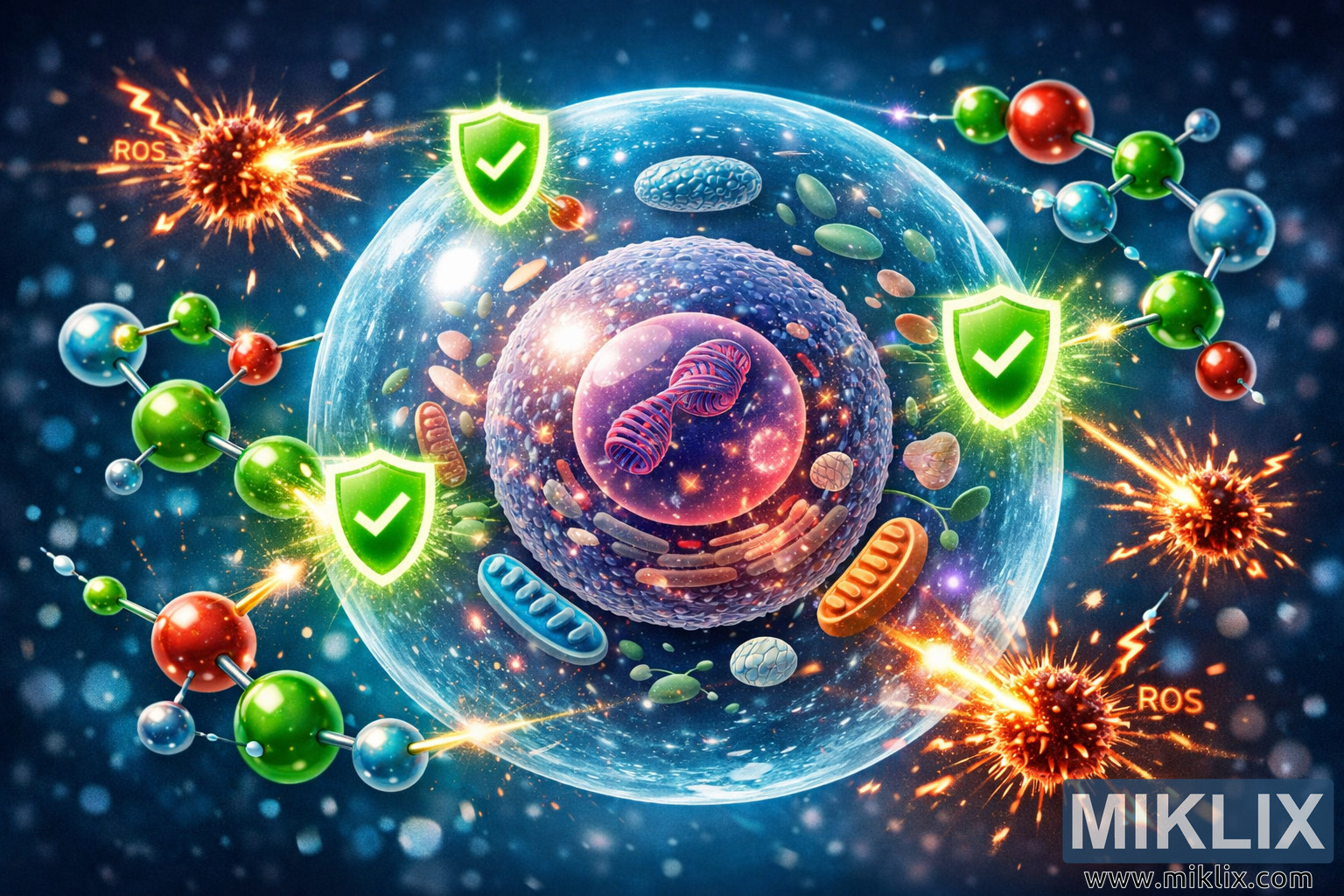
High-resolution scientific illustration showing a human cell protected from oxidative stress by antioxidant compounds. Glowing antioxidant molecules form luminous shields around the cell, intercepting and neutralizing reactive oxygen species (ROS) depicted as fiery, spiky particles. The image highlights the nucleus, organelles, and dynamic interactions between protective antioxidants and harmful reactive species in a vibrant, deep blue environment.
Antioxidant Shields Protecting a Human Cell from Oxidative Stress
该图片的可用版本
与本网站文章和网页中嵌入的图片相比,以下可供下载的图片文件压缩程度更低,分辨率更高,因此质量也更高。
正常尺寸 (1,536 x 1,024)
大尺寸 (3,072 x 2,048)
尺寸非常大 (4,608 x 3,072)
超大尺寸 (6,144 x 4,096)
夸张的大尺寸 (1,048,576 x 699,051)
- 仍在上传......;-)
图片说明
This digital scientific illustration presents a vivid, high-resolution depiction of a single human cell being actively protected from oxidative stress by antioxidant compounds. At the center of the composition, a large, spherical cell floats in a deep, cosmic blue environment. The cell membrane is semi-transparent and softly glowing, allowing the viewer to see the intricate structures within. The overall color palette leans toward cool blue and turquoise tones, punctuated by bright greens, purples, reds, and fiery oranges that highlight the dynamic interaction between protective antioxidants and harmful reactive species.
Inside the cell, the nucleus is prominently featured as a luminous, rounded structure rendered in shades of purple and pink. The nucleus appears almost crystalline, with a gentle inner glow that suggests biological activity and genetic information. Within the nucleus, coiled strands of DNA are visible, depicted as delicate, intertwined ribbons that emphasize the cell’s role as a repository of genetic material. Surrounding the nucleus, the cytoplasm is portrayed as a translucent, bluish medium filled with various organelles. Mitochondria, endoplasmic reticulum, and other subcellular structures are scattered throughout, each rendered with subtle detail to convey the complexity of cellular architecture.
Encasing the entire cell is a radiant, semi-transparent shield of light blue energy. This protective barrier appears as a smooth, spherical aura that closely follows the contour of the cell membrane. The shield glows with a soft, yet intense light, suggesting an active defense mechanism. The energy field is slightly textured with faint waves and ripples, implying that it is not static but continuously responding to external threats. This visual metaphor represents the protective effect of antioxidant compounds, which help safeguard cellular components from damage caused by reactive molecules.
Surrounding the cell are numerous antioxidant molecules, depicted as glossy, spherical structures in green, red, and blue. Many of these spheres are connected by short, rod-like bonds, hinting at their underlying chemical nature without referencing any specific real-world brand or product. The green antioxidant spheres are the most visually dominant, each emitting a bright, glowing aura. Some of these green spheres are accompanied by small, stylized checkmarks, symbolizing successful protection or neutralization of harmful agents. The checkmarks are subtle and integrated into the glow, reinforcing the idea that these compounds are effectively safeguarding the cell.
In contrast to the calm, protective glow of the antioxidants, the harmful reactive species are portrayed as fiery, spiky particles in shades of red, orange, and yellow. These particles have jagged, irregular shapes, with sharp protrusions that give them an aggressive, threatening appearance. Many of them trail glowing streaks of light, as if they are moving rapidly through the surrounding space. Some of these reactive particles are labeled with the abbreviation "ROS" to indicate reactive oxygen species, while others remain unlabeled but visually similar. The ROS particles emit small lightning-like bolts of orange and yellow energy, further emphasizing their destructive potential.
The interaction between antioxidants and ROS is depicted as a series of dynamic collisions and deflections. Beams of bright light emanate from the antioxidant molecules, forming straight or slightly curved paths that intersect with the trajectories of the ROS particles. At the points of contact, the ROS particles appear to disintegrate into showers of sparks and glowing fragments. These tiny, scattered particles fade quickly into the surrounding blue background, suggesting that the harmful species have been neutralized. The green shields around the antioxidants intensify in brightness at these collision points, visually reinforcing the concept of active protection.
Throughout the scene, small glowing particles and light trails are dispersed, adding a sense of motion and energy. These subtle details create the impression of a busy microscopic environment where countless interactions are occurring simultaneously. The background itself is a rich, deep blue with a slightly cosmic character. Soft bokeh effects—small, out-of-focus circles of light—are scattered across the backdrop, giving the image depth and a sense of scale. Faint, distant glows and gradients suggest that the cell and its protective antioxidants exist within a larger, complex biological context.
Around the central cell, additional antioxidant molecules are arranged in a loose, orbit-like pattern. Some are closer to the cell, actively engaging with incoming ROS particles, while others are positioned farther away, forming an outer defensive layer. The molecular bonds connecting the spheres vary in length and orientation, creating a visually interesting network that hints at chemical structures without becoming overly technical. The green spheres remain the most prominent, their luminous halos standing out against the darker background and drawing the viewer’s eye to the protective elements of the illustration.
The overall composition balances scientific accuracy with artistic interpretation. While the cell, nucleus, organelles, and molecular structures are recognizable, they are stylized to enhance clarity and visual impact. The glowing shields, beams of light, and explosive disintegration of ROS particles serve as metaphors for biochemical processes that occur at the microscopic level. The image communicates the concept of antioxidant protection in a way that is accessible to a broad audience, including students, researchers, and anyone interested in cellular health.
Lighting plays a crucial role in the illustration’s storytelling. The central cell is bathed in a gentle, radiant light that highlights its contours and internal structures. The antioxidants emit localized glows that create bright focal points around the cell, while the ROS particles introduce sharp, contrasting flashes of orange and red. This interplay of light and color guides the viewer’s attention from the protected cell to the surrounding defensive molecules and then to the attacking reactive species. The result is a visually engaging scene that conveys both the vulnerability of the cell and the strength of its antioxidant defenses.
In summary, the image portrays a human cell enveloped by a luminous protective shield, surrounded by vibrant antioxidant molecules that intercept and neutralize harmful reactive oxygen species. The detailed depiction of the nucleus, organelles, and molecular interactions, combined with dynamic lighting and color contrasts, creates a compelling visual narrative of cellular protection. The illustration effectively captures the essence of antioxidant compounds safeguarding cellular structures from oxidative stress, without referencing any specific brands, and presents the concept in a clear, aesthetically pleasing, and scientifically inspired manner.
图片与此有关: Health Benefits of Chives: Nature's Nutritional Powerhouse