
图像: Molecular Structure of Dill Antioxidants and Flavonoids
已出版:
最后更新 2026年7月23日 UTC 18:43:23
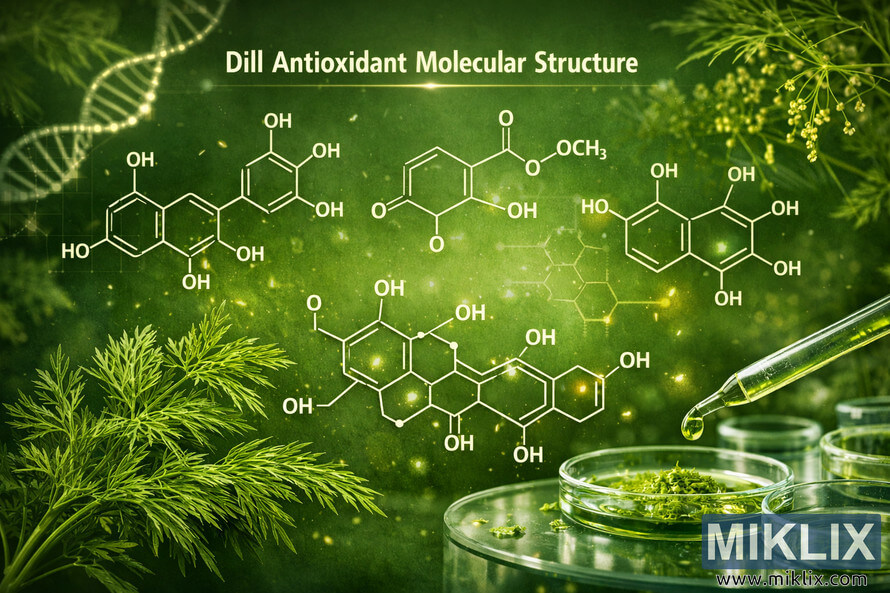
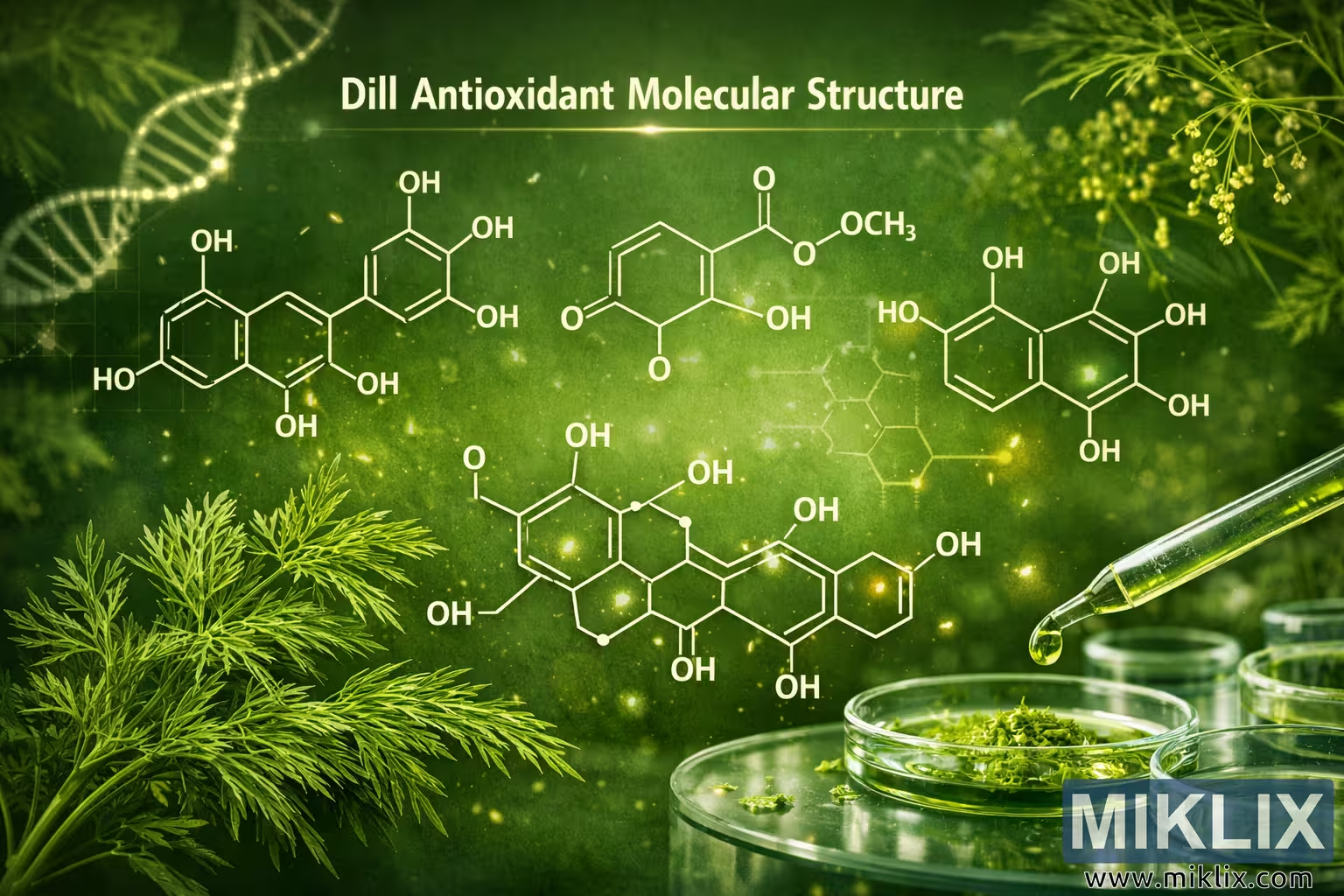
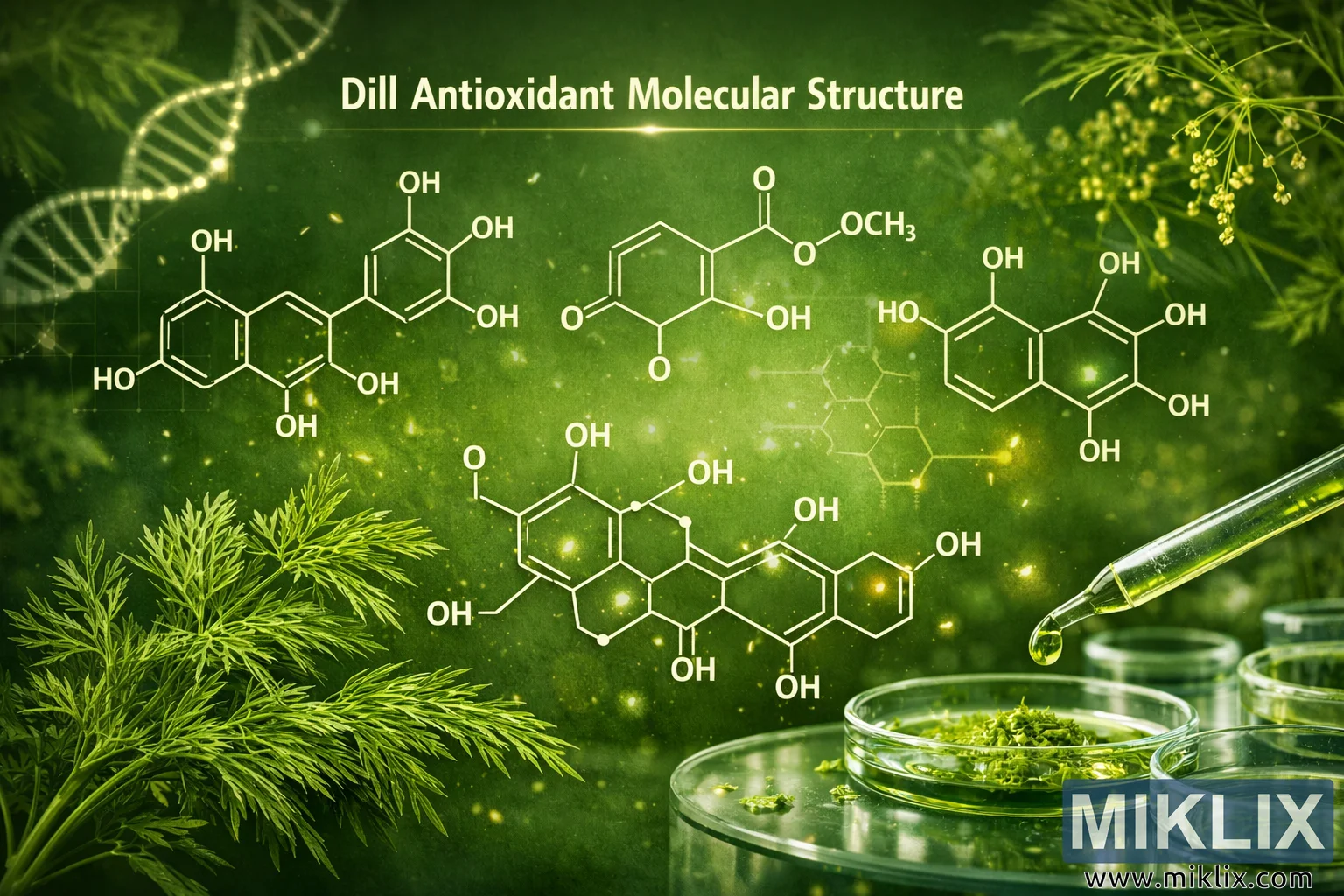
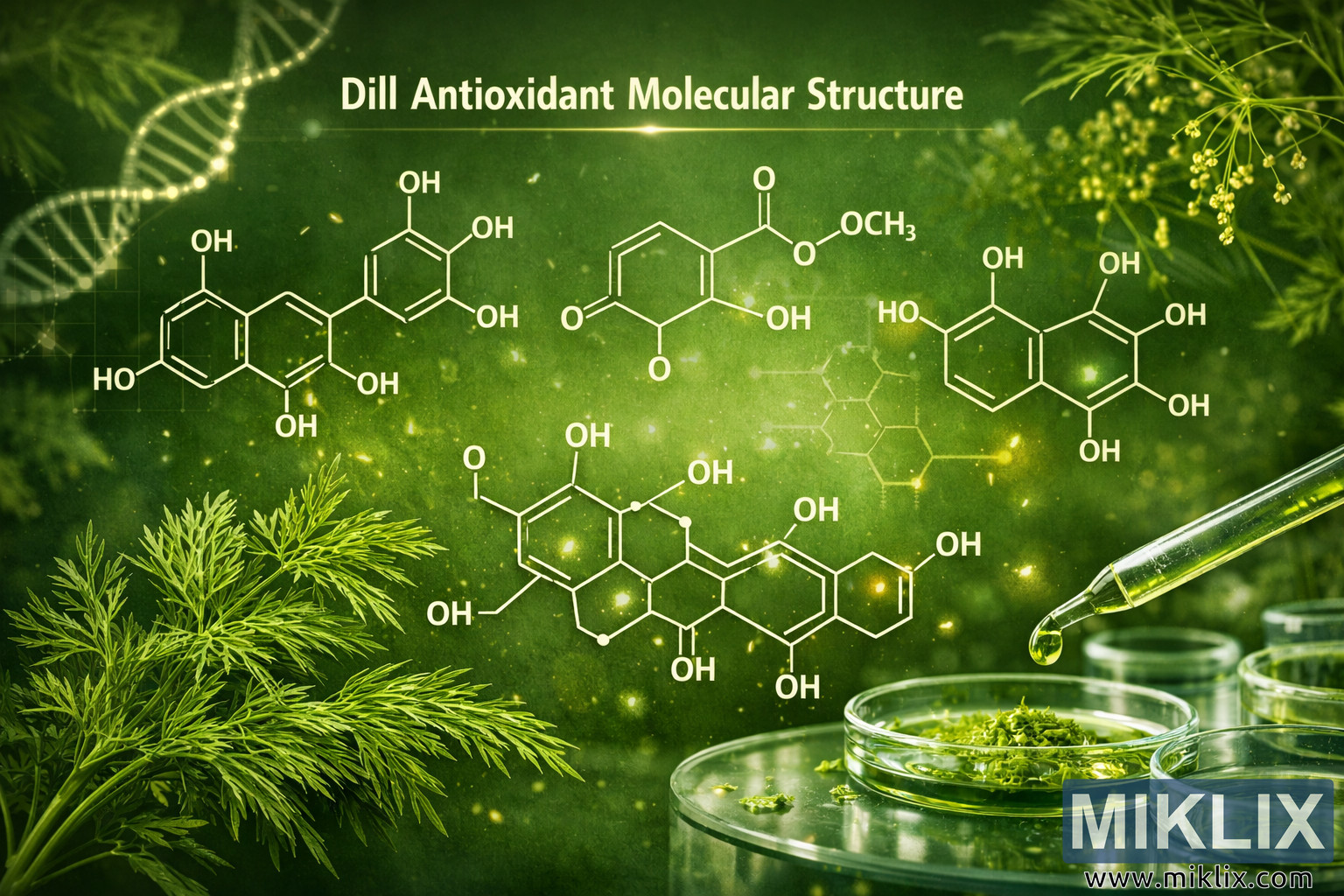
Detailed scientific illustration of dill antioxidants and flavonoids, featuring molecular structures, a fresh dill sprig, DNA helix, and laboratory elements on a vibrant green background, ideal for topics in phytochemistry, nutrition, and plant-based antioxidant research.
Molecular Structure of Dill Antioxidants and Flavonoids
该图片的可用版本
与本网站文章和网页中嵌入的图片相比,以下可供下载的图片文件压缩程度更低,分辨率更高,因此质量也更高。
正常尺寸 (1,536 x 1,024)
大尺寸 (3,072 x 2,048)
尺寸非常大 (4,608 x 3,072)
超大尺寸 (6,144 x 4,096)
夸张的大尺寸 (1,048,576 x 699,051)
- 仍在上传......;-)
图片说明
This scientific illustration presents a detailed and visually rich representation of the molecular structure of dill antioxidants and flavonoids, set against a predominantly green, laboratory-inspired backdrop. The composition is in landscape orientation, carefully balancing natural elements with scientific symbolism to convey both the botanical origin and the biochemical complexity of dill-derived compounds.
In the lower left portion of the image, a fresh sprig of dill is prominently displayed. Its feathery, needle-like leaves spread outward in a delicate fan, rendered in vibrant shades of green that suggest freshness and high antioxidant content. The dill sprig is sharply focused, with subtle highlights and shadows that give the leaves a three-dimensional, almost tactile quality. This natural element anchors the illustration, reminding the viewer that the complex molecular structures depicted throughout the scene originate from a simple herb commonly used in cooking and traditional medicine.
The background is a smooth gradient of green tones, ranging from deeper emerald hues to lighter, almost neon shades. This gradient creates a sense of depth and atmosphere, evoking the idea of a high-tech laboratory environment or a conceptual space where biology and chemistry intersect. In the upper left and upper right corners, blurred silhouettes of dill plants appear, softly out of focus. These ghostly botanical forms add context without distracting from the central scientific content, reinforcing the connection between the living plant and its molecular constituents.
At the center of the image, several molecular structures are arranged in a visually engaging cluster. Each structure is drawn with crisp, white lines and glowing accents, standing out clearly against the green background. On the left side of this central cluster, a flavonoid molecule is depicted with multiple hexagonal rings connected by single and double bonds. Small labels such as "OH" mark hydroxyl groups attached to the rings, emphasizing the functional groups that contribute to antioxidant activity. The rings are arranged in a way that suggests a typical polyphenolic framework, with the overall shape hinting at the complexity and diversity of flavonoid compounds found in dill.
To the right of the flavonoid structure, a coumarin-like molecule is illustrated, featuring fused rings and distinct functional groups. One of the rings contains a carbonyl oxygen, labeled "O," while another bears a methoxy group, labeled "OCH3." These labels help viewers recognize the presence of oxygen-containing groups that often play a role in antioxidant and bioactive properties. The fused-ring system is drawn with precision, and the glowing lines that connect the atoms give the impression of energy and dynamic chemical interactions.
Further to the right, another aromatic molecule is shown, composed of benzene rings connected by an oxygen bridge. Hydroxyl groups, again labeled "OH," are attached to the rings, reinforcing the theme of polyphenolic structures. The arrangement of these rings and functional groups suggests a family of compounds related to dill’s flavonoid content, highlighting the diversity of antioxidant molecules that can be derived from a single plant source.
In the lower right area of the central cluster, a more complex terpenoid-like structure is depicted. This molecule features interconnected hexagonal and pentagonal rings, with multiple oxygen atoms and hydroxyl groups integrated into the framework. The structure is intricate, with branching segments and ring junctions that convey the elaborate architecture of certain dill-derived compounds. Labels such as "OH" and "O" appear at key positions, and the overall design suggests a robust, multi-ring system typical of bioactive terpenoids. The glowing lines and subtle highlights around this molecule give it a sense of importance, as if it represents a key antioxidant component within dill.
Throughout the central region, the molecules are connected by fine lines representing chemical bonds, and the atoms are indicated by small nodes or labels. The visual style combines clarity with aesthetic appeal, making the structures accessible to viewers with a scientific background while still engaging to those who may simply appreciate the beauty of molecular diagrams. The glowing effect around the bonds and labels adds a futuristic touch, suggesting advanced analytical techniques or digital visualization tools used to study these compounds.
In the upper left portion of the background, a stylized DNA helix appears, rendered with luminous lines that curve gracefully from top to bottom. The helix is connected to the central molecular cluster by a faint glowing line, symbolizing the relationship between genetic information, plant metabolism, and the production of antioxidant compounds. This DNA motif hints at the idea that dill’s biochemical profile is encoded in its genetic material, and that the molecules shown in the illustration are the result of complex biosynthetic pathways.
Overlaying parts of the background are subtle hexagonal patterns, reminiscent of chemical diagrams or molecular lattices. These patterns are semi-transparent and softly glowing, adding texture without overwhelming the main structures. Alongside the hexagonal motifs, faint electrocardiogram-style waveforms stretch horizontally across the image, suggesting the impact of antioxidants on human health, such as cardiovascular protection or cellular stability. Small, glowing particles and light flares are scattered throughout the scene, giving the impression of energy, reactive species, or microscopic interactions occurring within a dynamic biochemical environment.
In the lower right corner, a set of laboratory elements reinforces the scientific context of the illustration. A glass surface supports several petri dishes, one of which contains a green liquid that represents dill extract or a concentrated solution of its antioxidant compounds. Above the dishes, a glass dropper is shown with a droplet of liquid suspended at its tip, poised to fall into the petri dish below. The dropper and dishes are rendered with realistic reflections and refractions, capturing the look of transparent glass under laboratory lighting. These elements suggest ongoing experimentation, analysis, and testing of dill-derived antioxidants and flavonoids.
Near the upper center of the image, the text "Dill Antioxidant Molecular Structure" appears in a bold, glowing white font. The lettering is clean and modern, standing out clearly against the green background. The glow around the text harmonizes with the luminous molecular diagrams and DNA helix, tying together the visual theme of advanced scientific exploration. The title text serves as a clear focal point, immediately informing viewers of the subject matter while complementing the surrounding imagery.
Overall, the illustration combines botanical realism, molecular precision, and conceptual scientific motifs to create a comprehensive visual narrative about dill antioxidants and flavonoids. The fresh dill sprig and blurred plant forms emphasize the natural origin of these compounds, while the central molecular structures, DNA helix, hexagonal overlays, and laboratory equipment highlight the analytical and biochemical perspective. The green color palette reinforces associations with plants, health, and vitality, and the glowing accents suggest energy, activity, and cutting-edge research. The image is detailed enough to support educational or scientific communication, yet visually appealing enough to be used in presentations, articles, or digital media focused on nutrition, phytochemistry, or functional foods derived from dill.
图片与此有关: Health Benefits of Dill: Your Complete Guide to This Powerful Herb