
图像: Microscopic Landscape of Beta-Carotene Molecules in Pumpkin Antioxidant Matrix
已出版:
最后更新 2026年9月7日 UTC 06:31:54
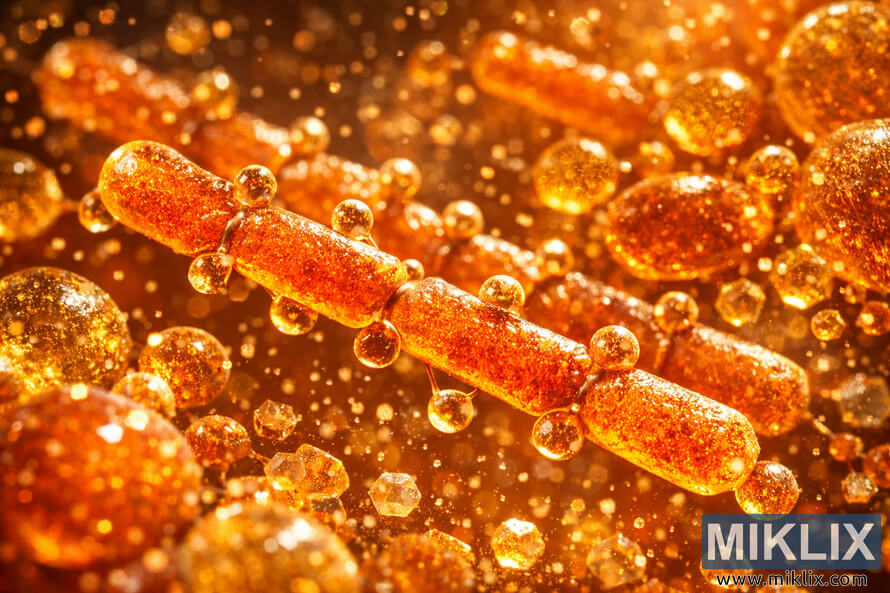
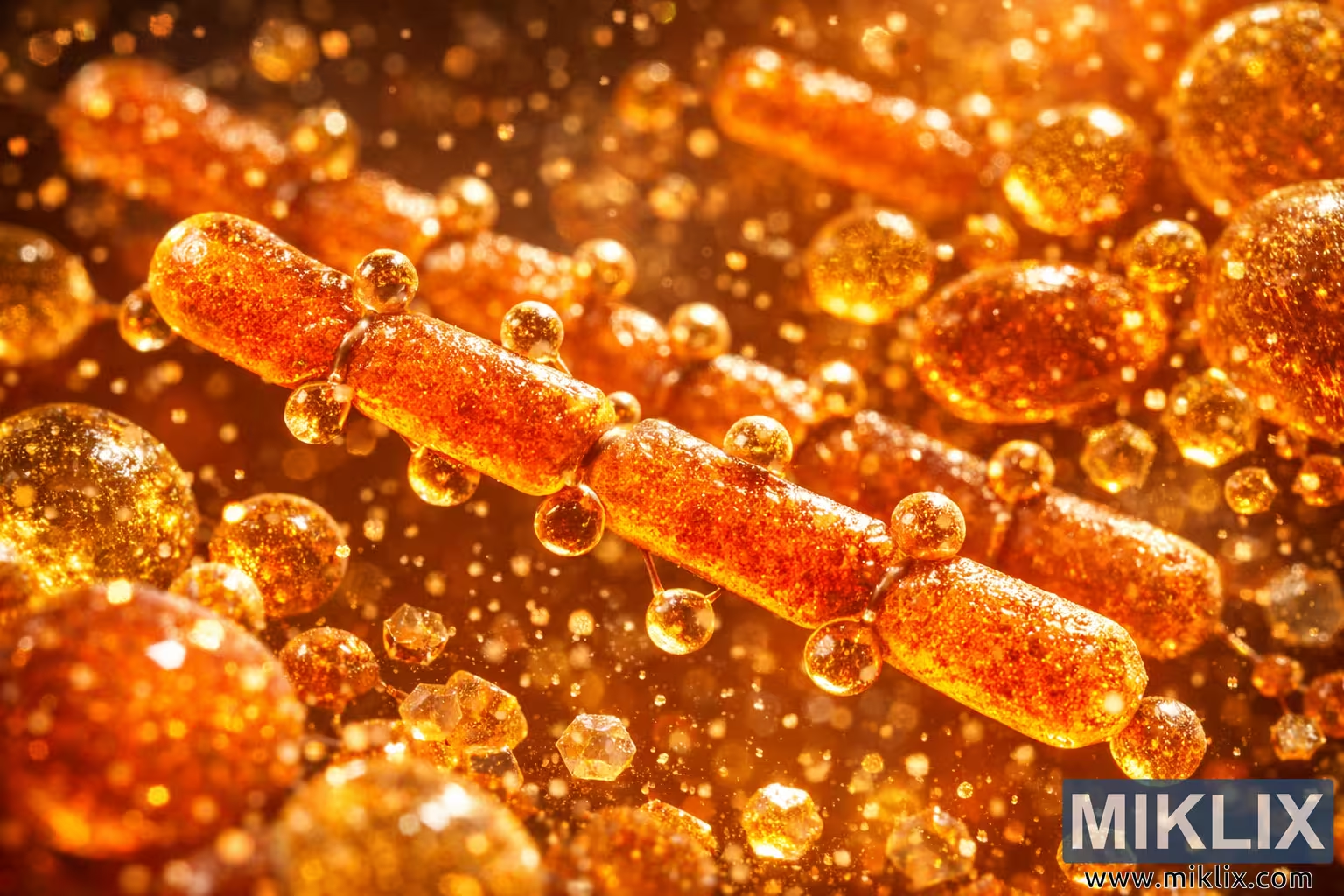
High-resolution microscopic image of beta-carotene molecules and antioxidants in pumpkin, featuring orange rod-like molecular chains, golden droplets, and glowing hexagonal crystals in a warm, amber landscape that blends scientific detail with artistic abstraction.
Microscopic Landscape of Beta-Carotene Molecules in Pumpkin Antioxidant Matrix
该图片的可用版本
与本网站文章和网页中嵌入的图片相比,以下可供下载的图片文件压缩程度更低,分辨率更高,因此质量也更高。
正常尺寸 (1,536 x 1,024)
大尺寸 (3,072 x 2,048)
尺寸非常大 (4,608 x 3,072)
超大尺寸 (6,144 x 4,096)
夸张的大尺寸 (1,048,576 x 699,051)
- 仍在上传......;-)
图片说明
In this high-resolution microscopic scene, the inner chemical world of pumpkin is revealed as a glowing, abstract landscape built from beta-carotene molecules and surrounding antioxidant structures. The composition is presented in a wide, landscape orientation, filling the frame with warm, luminous tones of deep orange, golden yellow, and rich amber. At the center of the image, a chain of elongated beta-carotene molecules forms the primary focal point. These molecules appear as cylindrical, rod-like structures with slightly tapered ends, arranged in a gently curving line that traverses the middle of the frame. Each rod is rendered with a crystalline, textured surface, as if carved from translucent mineral, and the light glancing off them creates a glistening, almost wet sheen.
Connecting these rods are small, spherical nodes that represent atomic junctions or molecular bonds. These spheres are colored in glowing gold, and thin, delicate rods link them to the larger beta-carotene segments, suggesting a complex, interconnected molecular architecture. The chain of molecules feels both scientific and artistic, like a stylized diagram brought to life with photographic realism. The sharp focus on this central structure allows the viewer to see minute details: tiny ridges along the rods, subtle variations in color from deep orange at the core to lighter, almost yellow highlights along the edges, and faint reflections that hint at a three-dimensional, semi-transparent nature.
Surrounding the central chain, the environment is populated with a variety of antioxidant-inspired forms that evoke the biochemical richness of pumpkin. In the midground and background, clusters of round droplets float and rest in the space around the molecules. These droplets vary in size from small pinpoints to larger, marble-like spheres, and they shimmer with golden and amber hues. Their surfaces are glossy and reflective, catching the same warm light that illuminates the beta-carotene rods. Some droplets appear slightly out of focus, contributing to a sense of depth and layering, while others near the focal plane show subtle internal textures, as if they contain dissolved pigments or microscopic particles.
Interspersed among the droplets are crystalline structures with distinct hexagonal shapes. These hexagons glow with a saturated orange color, echoing the pigment-rich nature of pumpkin flesh. They appear like tiny plates or facets, some overlapping, some standing alone, forming a scattered constellation of geometric forms. The hexagonal crystals reinforce the idea of an ordered, molecular world, suggesting antioxidant compounds arranged in repeating patterns. Their edges are sharp and well-defined where they fall within the narrow band of focus, but they soften and blur as they recede into the background, merging with the bokeh of light and color.
The background itself is a soft, luminous haze composed of countless tiny particles and blurred orbs of light. These particles create a bokeh effect, with glowing points ranging from pale gold to deep amber, floating in a dark, warm field. This backdrop gives the impression of a nutrient-rich medium, like the interior of pumpkin tissue seen at an extreme magnification, where pigments, antioxidants, and microscopic droplets are suspended in a complex matrix. The shallow depth of field ensures that the central beta-carotene chain remains the visual anchor, while the surrounding elements dissolve into a dreamy, atmospheric blur.
Lighting plays a crucial role in the mood of the image. A vibrant, well-balanced illumination seems to come from multiple directions, highlighting the rods and spheres with bright reflections while leaving pockets of shadow that add dimensionality. The light enhances the translucency of the molecules and droplets, making them appear almost luminous from within, as if they are emitting a gentle glow. This interplay of light and shadow emphasizes the organic yet structured nature of the scene, bridging the gap between scientific visualization and artistic interpretation.
Color is dominated by warm tones, with a palette that ranges from saturated pumpkin orange to golden yellow and deep amber. There are subtle gradients where colors blend smoothly, such as along the length of the beta-carotene rods or across the surfaces of droplets. These gradients suggest variations in concentration, density, or thickness, reinforcing the idea that this is a living, dynamic environment rather than a static diagram. The absence of cool tones keeps the image cohesive and reinforces the association with pumpkin, a vegetable known for its rich orange pigments and antioxidant content.
The overall composition feels balanced and harmonious. The central chain of molecules provides a strong horizontal axis, while the scattered droplets and hexagonal crystals create visual rhythm and movement across the frame. The viewer’s eye is naturally drawn first to the sharply focused beta-carotene structures, then guided outward to explore the surrounding antioxidant forms and the softly glowing background. Despite the complexity of the scene, the image remains readable and coherent, with clear separation between foreground, midground, and background layers.
Conceptually, the image captures the idea of pumpkin as a source of beta-carotene and antioxidants by translating invisible molecular structures into a visually tangible landscape. It suggests a microscopic world where pigments and protective compounds coexist in a delicate balance, contributing to the nutritional and health benefits associated with pumpkin. The scientific details—rod-like molecules, spherical bonds, hexagonal crystals—are stylized enough to be aesthetically pleasing, yet grounded enough to evoke real biochemical structures.
This microscopic view does not depict any recognizable brands or logos; instead, it focuses entirely on the abstract beauty of molecular forms and the warm, inviting colors associated with pumpkin. The result is a striking, high-resolution image that feels both educational and artistic, inviting viewers to imagine the hidden architecture of nutrients and antioxidants that reside within everyday foods.
图片与此有关: Pumpkins: The Nutrient-Packed Superfood You Should Eat Year-Round