
图像: Cellular Battle: Shallot Antioxidants Neutralizing Free Radicals
已出版:
最后更新 2026年8月5日 UTC 22:49:23
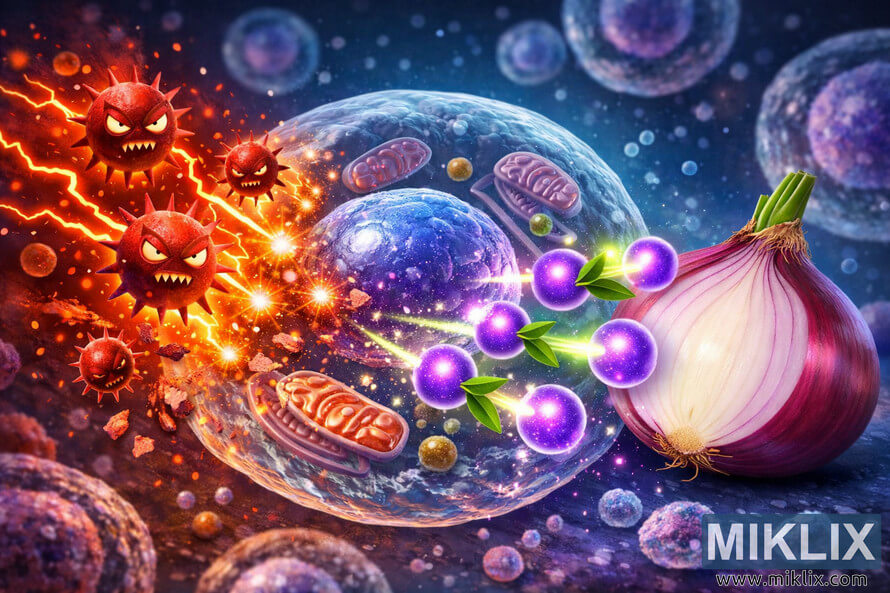
High-resolution cellular illustration depicting shallot-derived antioxidants neutralizing harmful free radicals attacking a cell, with a sliced shallot, glowing antioxidant spheres, and red spiked free radicals shown in a dynamic, colorful microscopic environment.
Cellular Battle: Shallot Antioxidants Neutralizing Free Radicals
该图片的可用版本
与本网站文章和网页中嵌入的图片相比,以下可供下载的图片文件压缩程度更低,分辨率更高,因此质量也更高。
正常尺寸 (1,536 x 1,024)
大尺寸 (3,072 x 2,048)
尺寸非常大 (4,608 x 3,072)
超大尺寸 (6,144 x 4,096)
夸张的大尺寸 (1,048,576 x 699,051)
- 仍在上传......;-)
图片说明
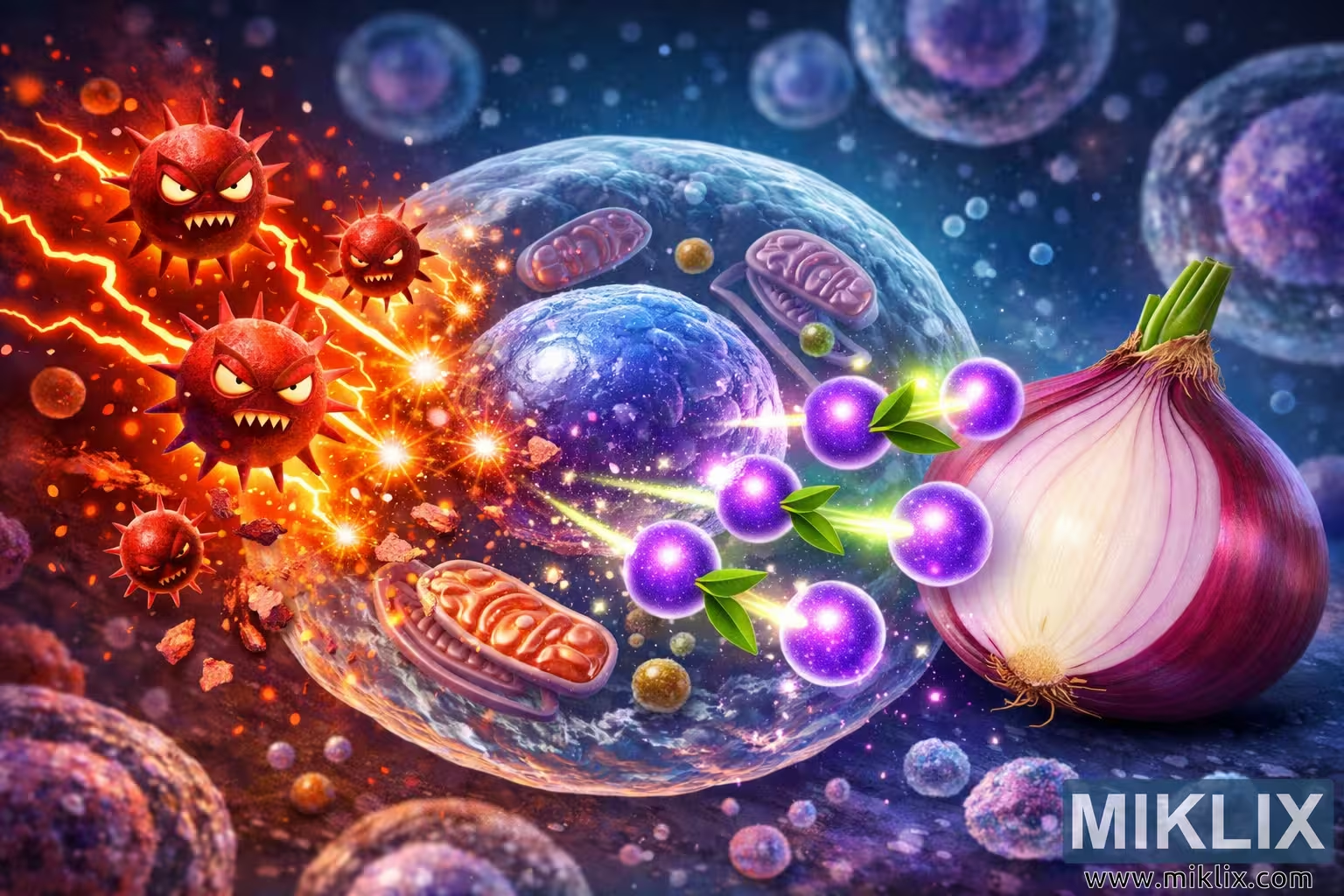
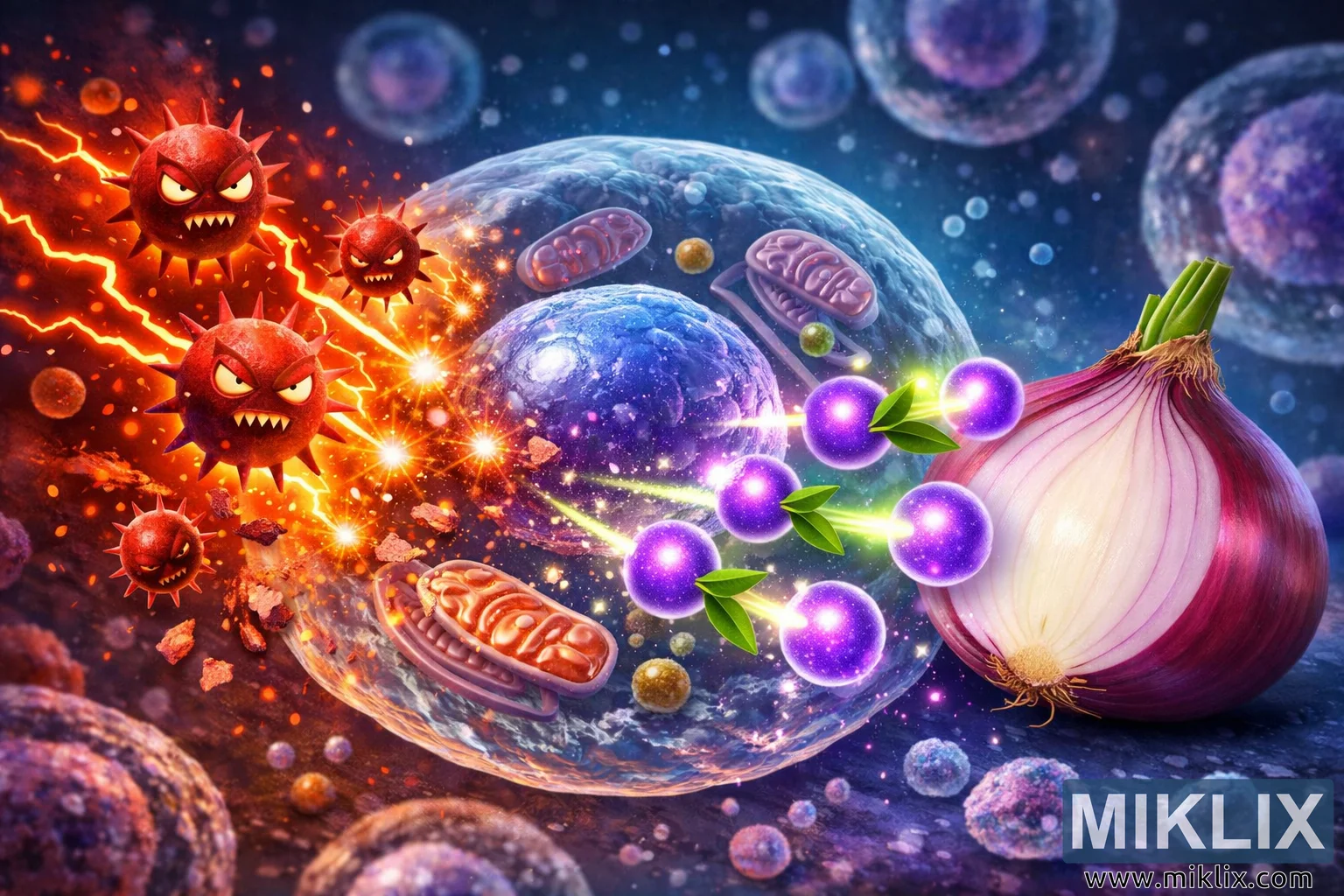
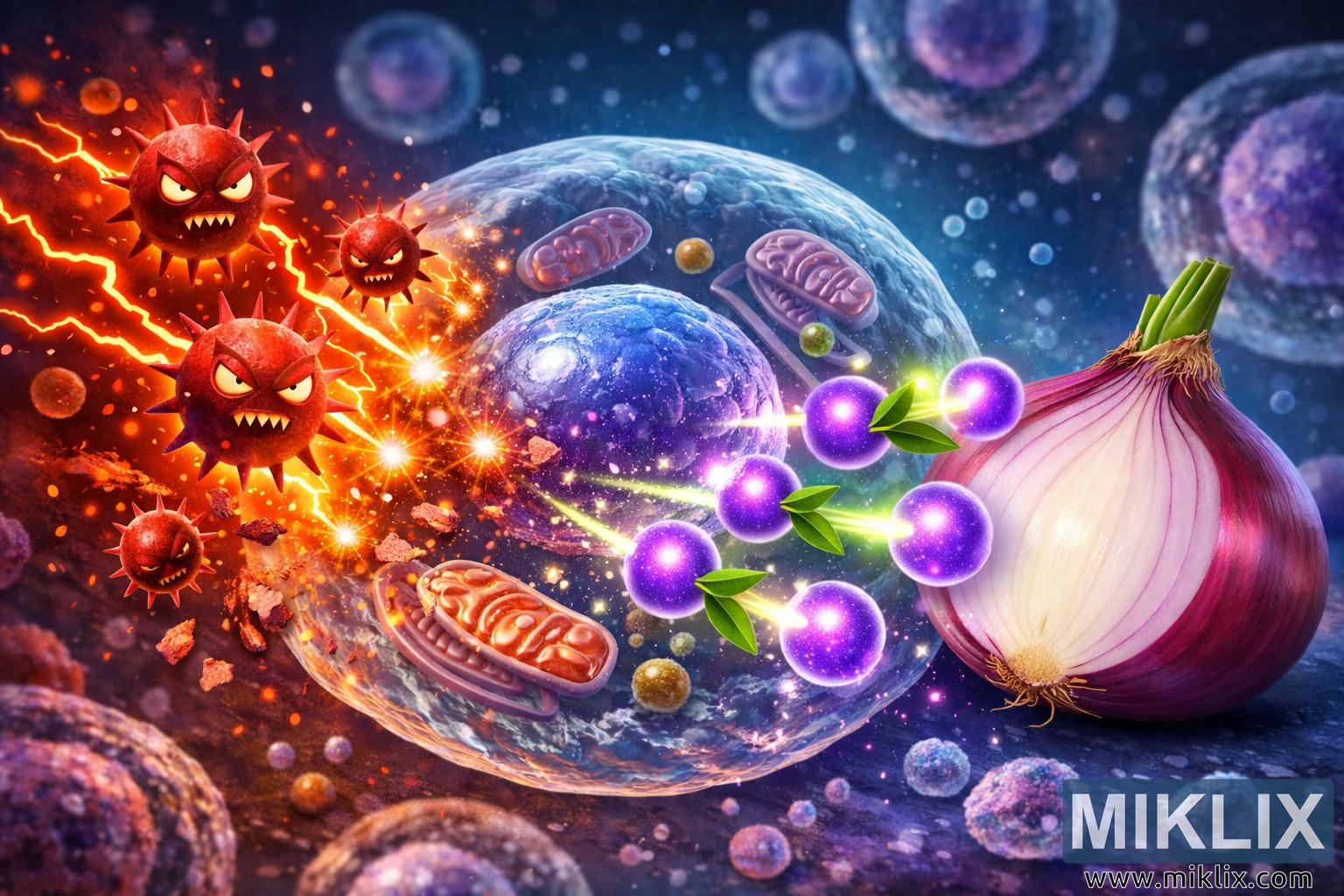
This image presents a vivid, high-resolution scientific illustration at the cellular level, focusing on the antioxidant properties of shallots as they combat harmful free radicals within a dynamic biological environment. The composition is in landscape orientation, with a clear visual narrative that moves from left to right, guiding the viewer through the unfolding microscopic battle.
On the far right side of the image, a large shallot is prominently displayed, sliced cleanly in half to reveal its internal structure. The outer layers of the shallot are rendered in rich shades of purple, transitioning smoothly into a pale, almost luminous white toward the center. The gradient from purple to white emphasizes the layered nature of the bulb and suggests the concentration of beneficial compounds within. At the top of the shallot, a small green sprout emerges, symbolizing vitality, growth, and the natural origin of the antioxidants depicted in the scene. The shallot itself is slightly stylized but remains recognizable, serving as a visual anchor that connects the microscopic processes to a familiar food source.
Adjacent to the sliced shallot, antioxidant molecules inspired by shallot-derived compounds are illustrated as glowing purple spheres, each adorned with a small green leaf-like motif. These spheres emit bright, radiant beams of energy that extend outward in smooth arcs and straight lines, visually representing the protective and neutralizing power of antioxidants. The energy beams are primarily green with hints of white and light purple, creating a sense of purity and beneficial action. These antioxidant spheres are shown moving toward the central cell, leaving behind faint glowing trails that suggest motion, direction, and purposeful intervention.
At the center of the composition lies a large, semi-transparent cell that serves as the main stage for the interaction between antioxidants and free radicals. The cell membrane is depicted as a soft, translucent boundary with subtle ripples and gradients of blue and turquoise, giving it a delicate yet resilient appearance. Inside the cell, a glowing blue nucleus occupies the central position, radiating a gentle light that symbolizes the core of cellular function and genetic information. Surrounding the nucleus are various organelles, including mitochondria and other structures, rendered in shades of teal, blue, and soft purple. These organelles are detailed enough to be recognizable as cellular components, yet stylized to maintain the overall artistic coherence of the illustration.
On the left side of the central cell, free radicals are depicted as spiked red spheres with exaggerated, menacing faces. Their expressions convey aggression and instability, with furrowed brows, sharp teeth, and intense glowing eyes. These free radical entities emit jagged red lightning bolts that extend toward the cell membrane and internal structures, symbolizing oxidative stress and cellular damage. Around them, smaller glowing red particles and fiery bursts of energy suggest ongoing attacks, fragmentation, and chaos. Some of these lightning bolts appear to strike the cell membrane, causing tiny cracks, sparks, and fragmented debris, visually reinforcing the destructive potential of free radicals.
In contrast, the right side of the central cell is dominated by the protective influence of the shallot-derived antioxidants. The glowing purple spheres move in coordinated paths toward the free radicals, their green energy beams intersecting and neutralizing the red lightning bolts. At the points of contact, sparkling effects and small bursts of light are depicted, indicating the neutralization of free radicals and the stabilization of previously unstable molecules. The interaction zones are rendered with a mix of green, white, and soft purple sparkles, creating a visual metaphor for balance, healing, and restoration of cellular integrity.
The background of the image features additional cells floating in a bluish fluid environment, slightly blurred to maintain focus on the central cell and the primary interactions. These background cells vary in size and orientation, adding depth and context to the scene. On the left side of the background, more free radicals are shown emitting red lightning and fiery explosions, attacking distant cells and causing visible fragmentation. On the right side, antioxidant molecules with green and purple glowing trails move gracefully through the fluid, converging on areas of damage and contributing to the overall sense of a coordinated defense system.
Tiny particles and glowing orbs are scattered throughout the surrounding space, enhancing the impression of a complex, active microscopic environment. The color palette is carefully balanced: warm reds, oranges, and fiery tones dominate the left side where free radicals are most active, while cool blues, purples, and greens define the right side where antioxidants exert their protective influence. This deliberate contrast not only makes the image visually striking but also reinforces the conceptual dichotomy between oxidative damage and antioxidant protection.
Overall, the illustration conveys a clear narrative of cellular defense, highlighting how antioxidants associated with shallots can help neutralize free radicals and protect cellular structures. The sliced shallot on the far right connects the microscopic scene to everyday nutrition, suggesting that dietary choices can influence cellular health. The dynamic lighting, detailed organelles, expressive free radicals, and radiant antioxidant spheres all work together to create an engaging, educational, and aesthetically compelling depiction of antioxidant activity at the cellular level.
图片与此有关: Shallots: The Small Vegetable with Big Nutritional Benefits