
Fermenting Beer with White Labs WLP575 Belgian Style Ale Yeast Blend
Gepubliseer:
Laas opgedateer: 15 Julie 2026 om 14:24:42 UTC
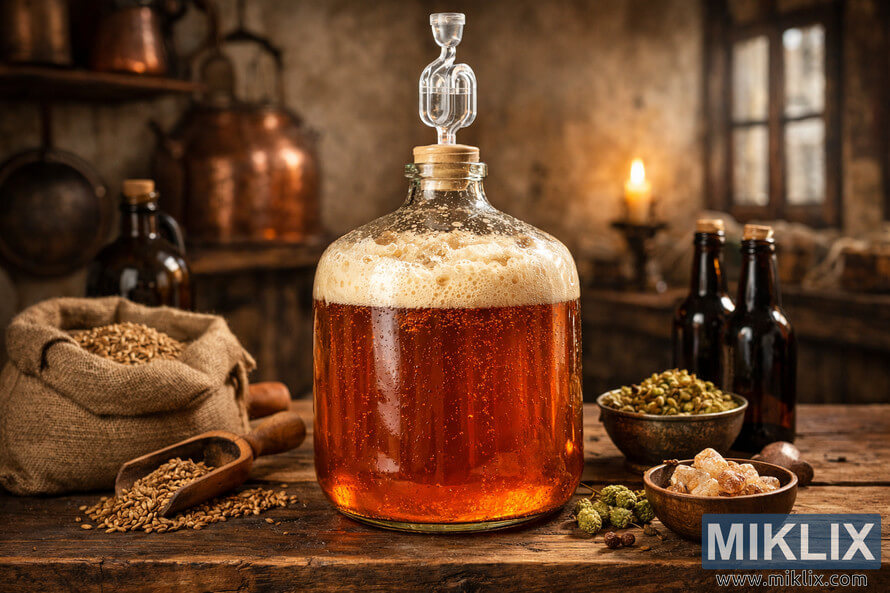
White Labs presents WLP575 as a pre-prepared Belgian yeast blend. It's designed for brewers who want to achieve Belgian character without the complexity of wild cultures.
Fermenting Beer with White Labs WLP575 Belgian Style Ale Yeast Blend
Klik of tik op die beeld vir meer inligting en hoër resolusies.
Key Takeaways
- White Labs WLP575 is a blended Belgian ale yeast suited to Belgian dubbels, tripels, and modern takes.
- The review combines lab specs and brewer experience to offer practical, evidence-based advice.
- Focus areas include flavor/aroma, fermentation behavior, handling, and recipe application.
- Following proper pitching and temperature control is key when fermenting with WLP575.
- Intended readers are U.S. homebrewers and small commercial brewers seeking reliable yeast performance.
Overview of White Labs WLP575 Belgian Style Ale Yeast Blend
White Labs presents WLP575 as a pre-prepared Belgian yeast blend. It's designed for brewers who want to achieve Belgian character without the complexity of wild cultures. The blend is a mix of strains, balancing fruity esters and spicy phenolics. It's suitable for both home and small commercial brewing setups.
The core of WLP575 is a mix of Saccharomyces strains and phenolic-producing yeasts. This blend aims to replicate the classic aromas and mouthfeel of Belgian beers. It reduces the variability often seen in mixed-culture fermentations.
Strain composition and intended beers
- Formulated to deliver common Belgian traits found in dubbels, tripels, saisons, Belgian pale ales, and dark Belgian ales.
- Blending multiple yeast contributors lets brewers access complex ester and phenol layers without using unpredictable wild strains.
- White Labs strain profile documentation helps brewers match yeast choice to intended beer styles when planning recipes.
Typical fermentation profile and characteristics
- Expect moderate to high attenuation that often yields a fairly dry finish suitable for many Belgian recipes.
- Notable for fruity esters—banana, pear, and stone-fruit notes—paired with clove-like phenolics and occasional peppery spice.
- Flocculation is generally medium, so beers may require extra time to clear; remaining yeast can aid bottle conditioning.
Why brewers choose this blend for Belgian styles
- Reliability and consistency make WLP575 a practical alternative to single-isolate strains or unpredictable mixed fermentations.
- It simplifies producing classic Belgian flavor while offering the depth many brewers seek in dubbels and tripels.
- Availability from White Labs and clear White Labs strain profile materials support both hobbyists and professional brewers testing intended beer styles.
Klik of tik op die beeld vir meer inligting en hoër resolusies.
Flavor and Aroma Profile When Fermenting with This Yeast
The WLP575 flavor profile is characterized by rich, fruit-forward esters and a spicy phenolic backbone. It's a favorite among brewers for adding complexity to dubbels, tripels, and Belgian-inspired pales. The interplay between fruity esters and a subtle phenolic bite is key to capturing the essence of classic Belgian beers.
Esters, phenols, and spicy notes
Esters like banana, pear, and stone fruits dominate the aroma. These are complemented by phenolic clove and medicinal spice, especially when fermentation is warm or the wort is highly oxygenated. The moderate pepper-like phenolics add depth without overpowering the brew.
Excessive temperature or stress can introduce solvent-like fusel notes. However, keeping fermentation within recommended ranges helps preserve the desired flavors and avoids harsh off-aromas.
Malt and hop interaction with yeast-derived flavors
In dubbels, malty caramel and toffee blend with fruity esters to create a rich, sweet profile. Tripels, made with pale malts, showcase the esters more prominently, resulting in a brighter fruit aroma.
- Noble and European hops like Saaz, Hallertau, and Styrian Goldings enhance the Belgian ester phenol balance. They support spicy notes without overpowering them.
- Citrus-forward American hops can compete with delicate phenolics. Use them sparingly to maintain traditional Belgian character.
The perception of esters changes with residual sweetness. Drier finishes highlight phenolic and spicy components. Sweeter malts, on the other hand, soften these edges and emphasize fruity esters.
How fermentation temperature alters aroma outcomes
Cooler fermentation favors cleaner, fruitier esters and reduces phenolic intensity. Warmer fermentations, however, enhance both ester production and spicy phenols, ideal for robust Belgian styles.
Uncontrolled temperature swings or sustained high temperatures can increase fusel production and solvent notes. Careful temperature management encourages layered ester development without harsh compounds.
Diacetyl and sulfur expressions are also temperature-sensitive. Proper temperature management limits these off-aromas, allowing the desired Belgian ester phenol balance to shine through.
Klik of tik op die beeld vir meer inligting en hoër resolusies.
Preparing Wort for Optimal Performance
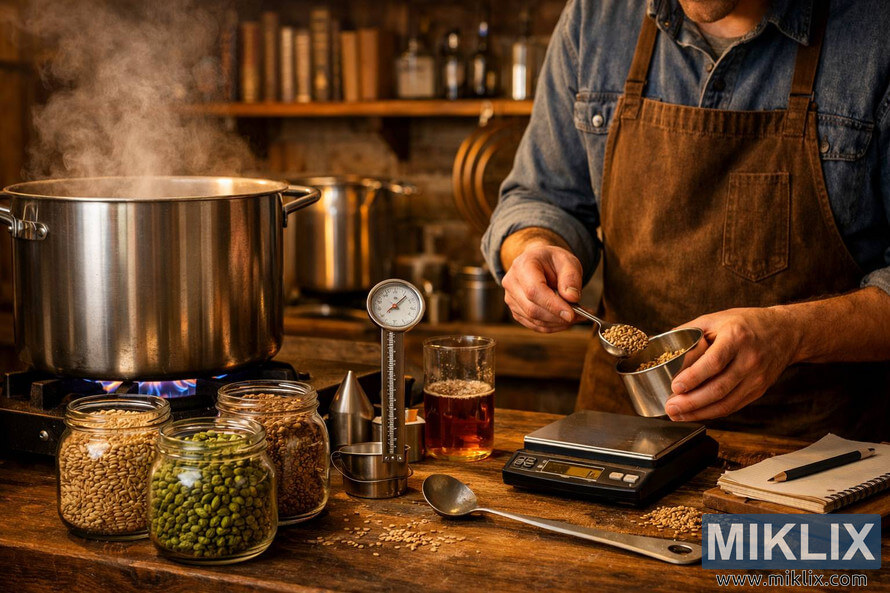
Optimizing wort is crucial for WLP575's performance. Adjust sugar levels, mash temperatures, and water ions. This ensures the yeast produces clean esters and peppery phenolics without stress. Plan the gravity, body, and hopping to support the yeast, not hinder it.
Target original gravity ranges for Belgian ales
Match your recipe to the expected Belgian OG ranges for the style. Aim for 1.062–1.075 for dubbels, 1.075–1.090 for tripels, and 1.045–1.065 for Belgian pales or saisons. Remember, WLP575 has strong attenuation, so predict the final gravity accordingly.
For high-gravity beers, add more dextrins at mash or consider step mashing. This prevents the beer from becoming too thin. Use the expected attenuation to estimate the final gravity and adjust the mash or specialty malts for the desired mouthfeel.
Mash and water considerations to support yeast character
Choose a mash profile that suits the beer's style. For fuller dubbels, mash warmer, around 154–156°F, to retain dextrins. For dryer tripels, mash lower, 148–152°F, to increase fermentability.
Consider the water chemistry Belgian yeast prefers. Aim for a moderate chloride-to-sulfate ratio to balance malt fullness with hop brightness. Higher chloride enhances maltiness, while higher sulfate brings dryness and hop snap.
Ensure proper nutrition for healthy fermentation. High-gravity worts need adequate FAN and oxygen. Add yeast nutrient when necessary and oxygenate the wort before pitching to support WLP575's performance.
Hop choices that complement WLP575 profiles
Select hops that enhance, not overwhelm, the yeast. Traditional European noble varieties like Hallertau, Saaz, Tettnang, and Styrian Goldings complement WLP575's spicy and fruity notes well.
Use late additions or light dry hopping to enhance aroma while preserving yeast character. In darker Belgian beers, use hops to balance sweetness rather than dominate aroma. Avoid heavy use of high-alpha American varieties, as they can mask phenolics.
- Adjust bitterness to style, keeping IBUs moderate for dubbels and higher if balancing heavy malts.
- For tripels, prioritize fermentability and subtle hop support to let yeast esters shine.
- Monitor water chemistry Belgian yeast will respond to; small tweaks change perceived malt and hop balance.
Klik of tik op die beeld vir meer inligting en hoër resolusies.
Yeast Handling and Pitching Best Practices
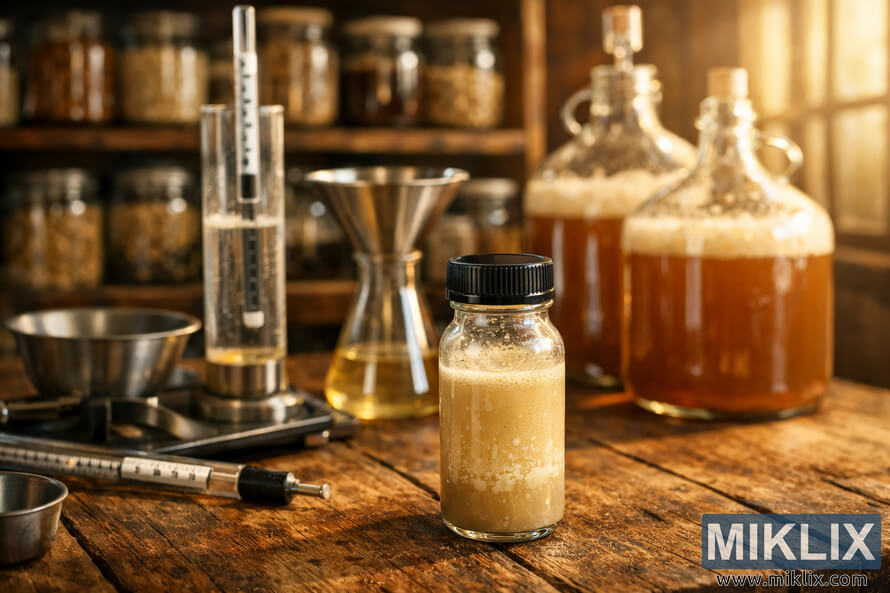
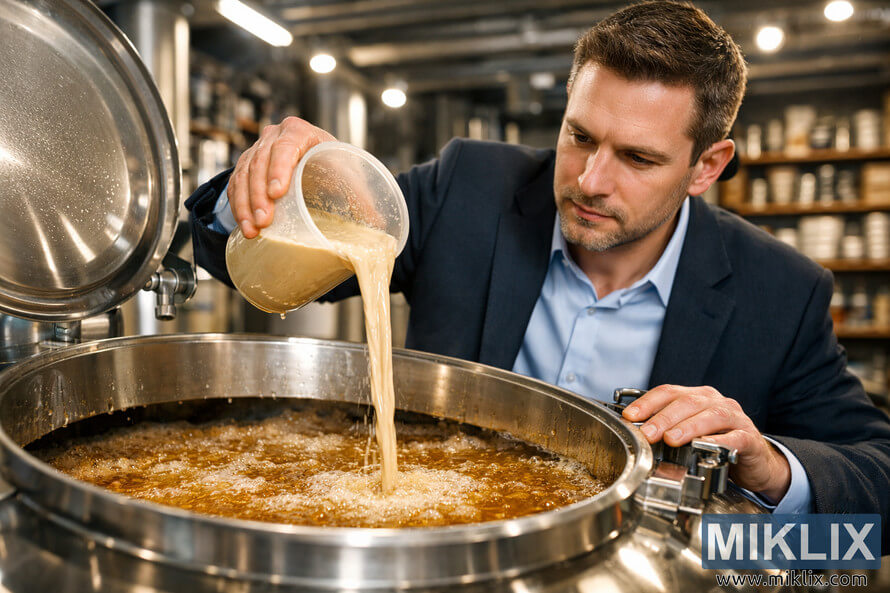
Mastering yeast handling is crucial for clean, consistent fermentation with WLP575. Store White Labs vials in the fridge and use them before they expire. For fresh vials, a gentle swirl can help resuspend cells before pitching WLP575 into wort.
Rehydration versus direct pitch
White Labs liquid yeast is designed for direct use, yet some brewers opt for rehydration or a starter. Rehydration can revive dry yeast cells, but many brewers choose a starter for liquid WLP575. This is especially true for larger batches or higher gravities.
Proper pitch rates and calculators
Target a cell count of 0.75–1.5 million per milliliter per degree Plato, based on gravity and desired ester profile. Utilize online tools like Brewer’s Friend or YeastCalc to determine the WLP575 pitch rate for your batch. Underpitching can enhance ester and phenolic flavors but may lead to slow or stuck fermentations.
Starter creation and when it’s necessary
Consider a starter for high-gravity beers like tripels or large dubbels, or when a vial is nearing its expiration. Follow these guidelines: select an appropriate starter volume, ensure good aeration, and let the yeast complete growth before cold-crashing and decanting. For lower OG or smaller batches, a fresh vial pitched directly is often sufficient.
- Check WLP575 pitch rate with a calculator before you brew.
- Prioritize aeration; oxygen supports sterol synthesis and strong cell walls.
- Consider a modest starter rather than extreme underpitching to avoid off-flavors.
Klik of tik op die beeld vir meer inligting en hoër resolusies.
Fermentation Temperature Management
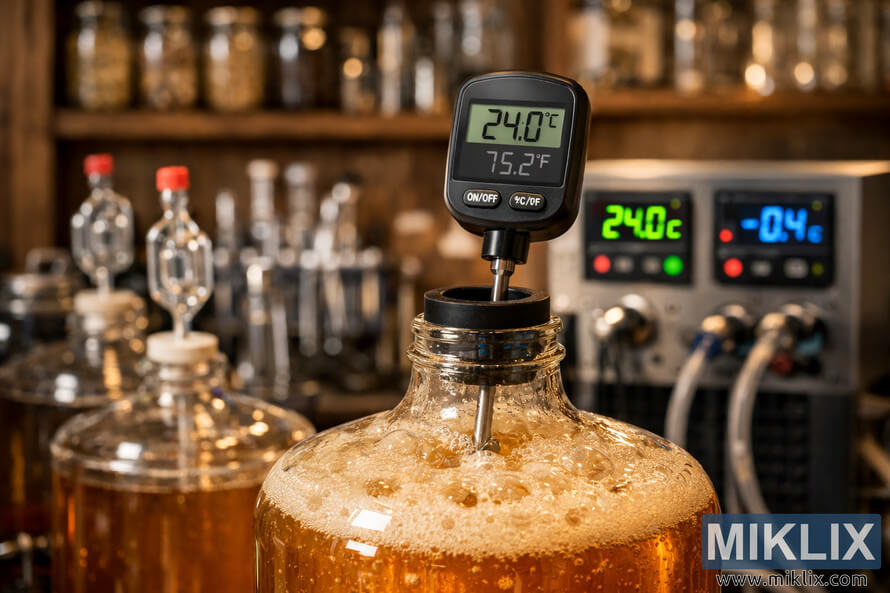
Temperature control is crucial when using White Labs WLP575. A stable fermentation temperature is essential for the right balance of esters and phenolics. Monitor activity, krausen, and gravity to track progress, not just time.
The ideal temperature range is 64–75°F (18–24°C). Many brewers aim for 68–74°F to achieve a balance between fruity esters and spicy phenolics. For a cleaner Belgian ale, stick to the lower end. For a bolder, traditional Belgian flavor, aim for the higher end.
Gradually increase the temperature near the end of primary fermentation. Raise it 2–4°F over 24–48 hours once fermentation slows. This helps the yeast finish cleanly and supports a diacetyl rest, allowing for the reabsorption of unwanted compounds.
- Cool fermentations yield tighter, cleaner esters and less phenolic spice.
- Warm fermentations amplify fruity esters and clove-like phenolics, but excessive heat can create fusels.
- Monitor specific gravity to confirm when the yeast have finished fermenting rather than guessing by time.
For high-gravity batches or mixed-culture conditioning, a brief warm period before packaging is beneficial. A controlled diacetyl rest WLP575 handles will reduce buttery notes and enhance flavor clarity. Avoid sudden large temperature jumps to prevent shocking the yeast and generating off-flavors.
Klik of tik op die beeld vir meer inligting en hoër resolusies.
Attenuation and Yeast Performance Metrics
Understanding WLP575 attenuation is key to predicting beer body and alcohol content. This yeast blend efficiently ferments sugars in many Belgian recipes. The expected final gravity (FG) for WLP575 varies by style and mash. So, it's crucial to plan recipes with this range in mind.
Expected attenuation and final gravity benchmarks
- Typical apparent attenuation for WLP575 attenuation sits around 72–80% depending on wort composition and fermentation conditions.
- Dry styles like tripels often finish low, commonly near FG 1.005–1.012; darker, malt-forward dubbels and brown ales may end between FG 1.014–1.024.
- Adjust mash temperatures and simple-sugar additions to hit target final gravity values for each style.
How to measure and troubleshoot stuck fermentations
- Use a calibrated hydrometer or refractometer to take specific gravity readings. Correct refractometer numbers for alcohol when needed.
- Before intervening, allow slower Belgian fermentations extra time and try a gentle temperature ramp to wake yeast activity.
- Common fixes in yeast performance troubleshooting include verifying pitch rate and yeast viability, ensuring adequate oxygenation at pitch, adding yeast nutrient or energizer, rousing trub to resuspend yeast, or making a fresh starter for repitching.
Tracking fermentation progress and record-keeping
- Keep a concise log: OG, gravity readings with dates and times, pitching rate, yeast lot or vial, temperature schedule, and sensory notes.
- Record krausen behavior and dissolve patterns to spot atypical stalls early. Regular entries improve batch-to-batch consistency.
- When possible, track cell counts or viability; that data sharpens your estimates for expected FG WLP575 and supports reproducible results.
Blending and Co-Pitching With Other Yeasts or Bacteria
Working with White Labs WLP575 opens up new avenues for beer flavor complexity. Brewers can opt for co-pitching WLP575 for immediate complexity or embark on a mixed fermentation Belgian journey. This journey unfolds over months, offering a chance to blend and achieve predictable results while preserving the lively esters WLP575 is known for.
Exploring pairings is key to achieving desired outcomes. Here are some combinations brewers often test:
- Co-pitch WLP575 with Brettanomyces bruxellensis to add restrained funk and long-term evolution.
- Blend with a cleaner Saccharomyces strain to soften phenolic edges while keeping fruity esters.
- Add Lactobacillus or Pediococcus when pursuing sour beers, with strict equipment control to avoid cross-contamination.
Mixed culture work offers benefits and risks. Benefits include increased depth, layered aroma development, and distinctive flavor paths single strains cannot produce. Risks include unpredictable attenuation, extended aging needs, and potential contamination of shared gear.
Commercial operations must weigh brand consistency against novel releases. Homebrewers should dedicate fermenters and lines for mixed fermentations to prevent accidental transfers to future batches.
Pitch timing shapes fermentation dynamics. Two common approaches appear in practice:
- Simultaneous pitching: all organisms introduced at once to encourage interaction from the start. This can yield integrated complexity but may let Brett or bacteria dominate early.
- Sequential pitching: WLP575 started first to drive primary attenuation, followed by Brett or bacteria after gravity stabilizes. This method preserves clean attenuation with secondary development by slower microbes.
For control, many brewers pitch WLP575 early, then introduce Brettanomyces weeks or months later. This sequence helps limit Brett takeover while allowing the beer to develop distinctive secondary notes over time.
When experimenting, record every variable: pitch rates, timings, temperatures, and sampling notes. Clear records improve repeatability for successful mixed fermentation Belgian projects and make blending yeasts White Labs a repeatable craft rather than guesswork.
Conditioning, Aging, and Secondary Fermentation Tips
After fermentation ends, beer needs time to refine its flavor and clarity. Brewers using White Labs WLP575 must consider timing and environment. Cool storage is crucial to preserve volatile esters during maturation.
Deciding when to transfer beer off the yeast depends on the brewer's goals. Many leave it on the primary lees for weeks to clean up byproducts. If you need the primary for a new batch, plan barrel aging, or add fruit or wood, transfer to a secondary fermenter. Bottle or keg for final aging when clarity and stability are achieved.
Extended conditioning impacts ester balance. With aging Belgian ales, esters and phenolics blend, smoothing out sharp edges and adding depth. Some high-volatility esters diminish over time, so cool, stable storage is key to preserving desirable flavors and preventing oxidation.
Here are some tips for managing secondary fermentation:
- Plan carbonation level by style: many Belgian beers benefit from 2.5–3.0+ volumes CO2 to lift esters and spicy phenols.
- Choose bottle conditioning for subtle, yeast-driven maturation or use force carbonation in kegs for speed and control.
- Calculate priming sugar precisely and consider headspace; stronger beers need longer refermentation time in bottles.
For mixed-culture or barrel projects, timing is everything. Add Brettanomyces or lactobacillus to the secondary for progressive funk or tarting. To maintain a clean Belgian profile, avoid extended exposure to oxygen and keep temperatures steady during conditioning WLP575.
Monitor gravity and aroma regularly, rather than relying on calendar dates. Small sensory checks guide when to package or move to colder storage. These practices help brewers refine aging Belgian ales and highlight the signature character WLP575 brings to Belgian styles.
Common Off-Flavors and How to Avoid Them
Brewers aiming for consistent results with White Labs WLP575 need a guide. This short guide helps identify common faults, correct them, and preserve the delicate Belgian character. Simple and repeatable practices are key to minimizing risks during fermentation and conditioning.
Solvent and fusel notes often stem from hot fermentations or underpitched yeast. High original gravity without sufficient cells stresses yeast, leading to solvent-like aromas. To prevent fusels, ensure correct pitch rates and adequate oxygenation before pitching the yeast.
- Maintain the recommended temperature range for WLP575.
- Use yeast calculators to hit proper cell counts for high OG batches.
- Oxygenate wort well and consider yeast nutrient for strong worts.
Sulfur compounds may appear early and usually fade with time. Allow the yeast to finish active fermentation and condition the beer before judging. If rotten-egg smells persist after conditioning, gently rouse settled yeast or allow extended aging to help the yeast reabsorb sulfur.
Phenolic character defines many Belgian styles but can become harsh at high temperatures. Lowering fermentation temperature a few degrees tames sharp phenolics. If phenols stay aggressive, blending WLP575 with a cleaner strain is an option for modern interpretations.
Diacetyl shows as a buttery or butterscotch note. Perform a planned diacetyl fix near the end of fermentation so yeast can reabsorb the compound. Raise temperature slightly for 24–48 hours as part of a diacetyl fix and give the beer time to settle afterwards.
- Spot a buttery finish? Use a diacetyl fix and extend conditioning.
- Persistent diacetyl may need warmer conditioning or additional time on yeast.
Sanitation prevents wild microbes that produce sour or solvent faults. Clean with oxygen-based cleaners like PBW or Oxiclean, then sanitize with Star San or Iodophor following label directions. Mixed culture work raises risk, so be extra diligent with gear separation.
Limit oxygen pickup after fermentation starts to avoid oxidation and stale aromas. Add oxygen only prior to pitching. During transfers, purge vessels with CO₂ when possible and minimize splashing to preserve fresh, yeast-driven flavors.
Recipe Ideas Featuring White Labs WLP575 Belgian Style Ale Yeast Blend
Below are practical recipe frameworks that showcase WLP575 recipes for a range of Belgian styles. Each suggestion includes target gravities, malt and hop directions, pitching guidance, and small adjunct ideas that work with the yeast’s spicy, fruity character.
Classic Belgian Dubbel recipe framework
Target original gravity: 1.062–1.075. Aim for a final gravity near 1.012–1.018 to keep some malt sweetness. Base the malt bill on Belgian pale malt with Munich and CaraMunich or CaraBelge to add amber color and soft caramel notes.
Use mild European hops such as Saaz or Hallertau to keep bitterness low (IBU 15–25). Add a small portion of dark candi sugar for authenticity and to lighten body without reducing mouthfeel too much.
Pitch WLP575 at recommended cell counts and ferment in the mid-range to encourage a balanced ester and phenol mix. Monitor attenuation and rest as needed to hit the FG target.
Belgian Tripel adaptations and yeast considerations
Set OG between 1.075 and 1.090. Target FG from 1.004 to 1.012 for a dry, effervescent finish. Use pale Pilsner or Belgian malt as the backbone and include simple sugars like candi or table sugar to boost attenuation and produce a lighter body.
Choose noble hops such as East Kent Goldings or Styrian Goldings for subtle spice and aroma, keeping bitterness in the 30–40 IBU range to balance the alcohol. Pitch generously with WLP575 to promote a clean yet characterful fermentation.
Ferment toward the warmer end if you want more esters, but watch for fusel alcohol formation in very high-OG batches. Adjust oxygen and pitch rate to help the yeast finish fully and reach the low FG.
Modern Belgian-inspired pale ales and spice additions
For a Belgian pale ale with WLP575, choose a lower OG from 1.045 to 1.060. Emphasize pale malts and use minimal specialty grains for color and slight sweetness. Use contemporary hops like Citra or Mosaic sparingly as late additions to complement, not overwhelm, yeast aromatics.
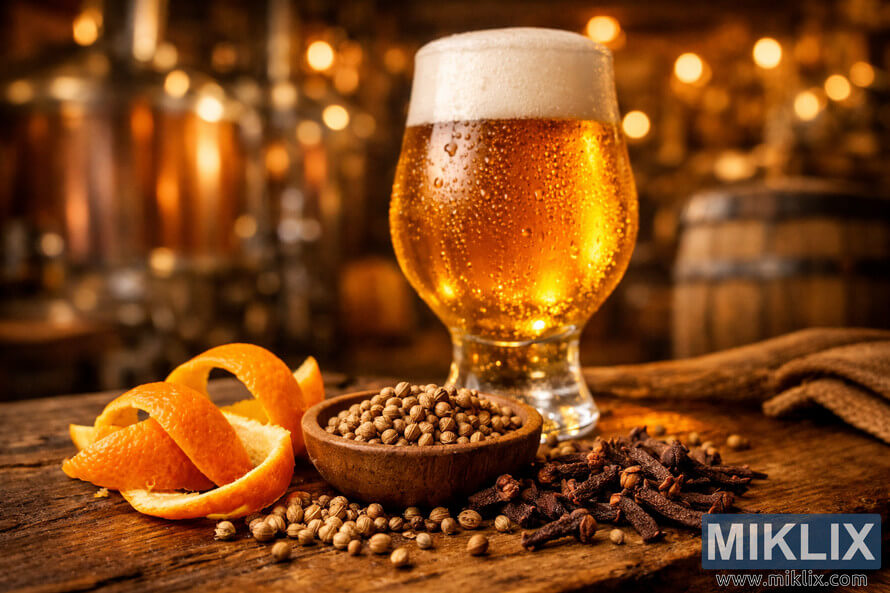
Consider small adjuncts such as orange peel, coriander, grains of paradise, or a touch of ginger to play with the yeast’s phenolic and spicy notes. Keep additions modest so the yeast remains the focal point.
Carbonate to a higher level to lift aromatics and present a lively mouthfeel. These WLP575 recipes benefit from restraint in hopping and a focus on balance to let yeast-driven flavors shine.
Comparing WLP575 to Other Belgian Yeast Strains
When selecting a Belgian yeast strain, it's crucial to grasp the distinction between blends and single-strain isolates. WLP575 stands out as a blend, engineered to provide a mix of esters and phenolics while ensuring consistent fermentation. This makes it a top choice for brewers seeking reliability, whether at home or in a professional setting.
On the other hand, single-strain isolates like Wyeast 1214 Belgian Ale or White Labs WLP500 showcase a distinct character. These strains tend to highlight specific esters or phenolics, resulting in a more defined aroma. WLP575, however, aims to offer a hybrid complexity by combining various yeast traits in one package.
Examining the performance of White Labs Belgian blends reveals differences in attenuation, flocculation, and temperature sensitivity. For instance, WLP530 focuses on different esters or phenolic levels, potentially altering the final gravity. Brewers often praise WLP575 for its dependable attenuation and moderate flocculation, which aids in achieving clarity without sacrificing flavor.
- Fermentation reliability: blends often give more consistent results than mixed wild cultures.
- Flavor complexity: blends can mimic mixed fermentations but with fewer surprises.
- Temperature tolerance: compare tech sheets and brewer notes to match strain to your protocol.
When selecting a Belgian yeast strain, consider the yeast's profile in relation to your malt bill, hop choices, and desired final gravity. Opt for WLP575 for balanced Belgian esters and moderate phenolics at cooler ale temperatures. For a peppery, high-attenuation finish, choose a saison-focused isolate.
Practical testing is key. Conduct split batches or small pilot brews to compare White Labs Belgian blends in real-world scenarios. This hands-on approach will reveal how WLP575 interacts with your brewing parameters, including water chemistry, mash profile, and fermentation schedule.
Align your expectations with the results. If you're after a reliable, mixed-character profile for Belgian dubbels and tripels, WLP575 is a good fit. For a sharply defined ester or a strong phenolic signature, opt for a single-strain isolate specifically designed for that purpose.
Packaging and Storage of Yeast and Finished Beer
Proper handling after fermentation is key to preserving the unique character of Belgian-style beers, thanks to White Labs WLP575. Small decisions at the packaging and storage stages are crucial. They ensure esters remain vibrant and protect yeast health for any secondary fermentation or bottle conditioning.
Storing WLP575 vials requires steady refrigeration between 35–40°F. Use them before the printed expiration date. Avoid freezing and wide temperature swings. For brewers planning to reuse or hold yeast, build a starter shortly before brewing. This restores cell counts and maintains viability.
- Inspect vial seals and follow White Labs handling notes before pitching.
- Minimize time at room temperature when you remove yeast from cold storage.
Timing packaging is critical for aroma retention. Wait until yeast has completed conditioning and off-flavors have settled. Premature packaging can trap diacetyl or sulfide compounds, muting the yeast-driven esters prized in Belgian ales.
For beers where yeast character is central, avoid long, harsh cold-conditioning before consumption. A brief warm conditioning window allows ester profiles to integrate. Follow with gentle cooling before longer storage.
Cold storage for finished beer depends on your goals. Cellar temperatures around 50–55°F suit medium-term aging. For preserving fresh yeast-driven aromas over months, refrigerate at 35–45°F to slow chemistry and limit oxidation.
- Kegged beer benefits from cold conditioning at 34–40°F to clarify and stabilize CO2 levels.
- Allow time for gas equilibrium in kegs to prevent foamy pours at dispense.
When packaging Belgian beers, choose procedures that protect volatile aromatics. Proper timing and controlled temperatures during packaging Belgian ales will retain the spicy and fruity notes that define the style.
Keep records of storage conditions to improve future batches. Good yeast viability storage and careful decisions about when to store WLP575 or bottle and keg will raise the consistency of your Belgian-style brews.
Homebrew Equipment and Sanitation Considerations
Effective brewing requires the right equipment and strict sanitation. This ensures yeast health and brings out the unique flavors of Belgian ales. It's crucial to select tools that fit your batch size and maintain control over fermentation conditions. This includes temperature, oxygen levels, and transfer hygiene.
Key equipment for successful fermentation
- A temperature-controlled fermentation chamber or fridge with a controller, like an Inkbird, to maintain steady temperatures.
- A hydrometer or refractometer for monitoring gravity and an oxygenation stone or vigorous shaking for proper aeration.
- Yeast starter flasks or a stir-plate for high-gravity batches to ensure adequate cell counts of WLP575.
- Clean racking cane, food-grade tubing, bottling bucket, or kegging kit to minimize oxygen pickup during transfer and packaging.
Sanitation protocols vital for yeast performance
- Clean with an alkaline cleaner like PBW or OxiClean Free, then sanitize with a no-rinse product such as Star San before any beer contact.
- Use separate equipment for mixed-culture or Brett/lacto/pediococcus projects to avoid contamination of clean Belgian ales.
- Sanitize transfer lines, siphons, kettles, and fermenter ports. Follow the manufacturer's instructions for sanitizer concentration and contact time.
- Minimize open fermenter time and avoid unnecessary sampling to reduce infection risk and preserve the desired ester and phenolic profile.
Small-batch fermentation tips with WLP575
- Scale starter volumes to avoid over-pitching for small batches. Match cell counts to batch gravity and target attenuation for flavor balance.
- Use insulated jackets or a small fridge controller; small fermenters are more sensitive to ambient temperature swings than larger carboys.
- Practice careful sampling. Use a sanitized thief or a sampling valve to avoid repeated lid removal that can introduce oxygen or contaminants.
- Choose appropriate homebrew equipment WLP575 pairings, such as a 3–5 gallon carboy, a compact stir-plate, and a reliable oxygenation stone sized for the batch.
Consistent sanitation is essential for Belgian ales. It preserves yeast vitality and enhances the beer's unique esters. Implement small-batch WLP575 tips early in planning to avoid rework and protect the beer's intended profile.
Conclusion
WLP575 summary: This White Labs Belgian-style ale yeast blend brings classic Belgian esters and peppery phenolics. It's predictable, making it great for repeat batches. When using White Labs WLP575, you'll get strong fruity esters in dubbels and tripels. Saisons will have restrained spice, and Belgian pale ales will finish clean with careful fermentation.
Key practices are crucial. Ensure adequate cell counts or build a starter for high-gravity beers. Keep temperatures steady to avoid unwanted flavors. Adjust your malt and hop bills to let the yeast's aromatics shine. These steps are essential for a Belgian ale yeast review and consistent results.
Final recommendation: WLP575 is a reliable choice for homebrewers and small commercial operations in the United States. It offers a familiar Belgian profile without the unpredictability of wild mixed cultures. This makes it a strong option for anyone looking to reproduce classic Belgian styles with confidence.
FAQ
What is White Labs WLP575 Belgian Style Ale Yeast Blend and what beers is it best for?
WLP575 is a liquid yeast blend from White Labs, designed for classic Belgian flavors. It's perfect for dubbels, tripels, Belgian pale ales, saisons, and dark Belgian ales. It offers fruity esters and spicy phenolics, ideal for those seeking authentic Belgian taste without the complexity of wild cultures.
What fermentation profile and attenuation can I expect from WLP575?
Expect moderate to high apparent attenuation, typically in the 72–80% range. This results in a relatively dry finish, especially in higher-fermentable worts. Final gravity varies by style and mash schedule, with tripels finishing very low and dubbels and darker beers ending higher.
How does fermentation temperature affect flavor with this yeast?
Temperature significantly impacts the balance of esters and phenolics. Cooler fermentations (64–75°F) yield cleaner, fruitier esters and milder phenolics. Warmer fermentations enhance esters and spicy phenols but risk fusel/solvent notes if too hot. Gradual temperature ramps and controlled diacetyl rests help manage off-flavors.
What pitch rate should I use and when is a starter necessary?
Use appropriate pitch rates: 0.75–1.5 million cells/mL/°P depending on gravity and desired ester profile. For high-gravity beers or older vials, build a starter to reach required cell counts. For fresh vials and lower OG batches, a direct pitch may suffice. Use yeast calculators to size starters.
Should I rehydrate WLP575 or pitch directly from the vial?
White Labs supplies active liquid cultures for direct pitching, but many prefer creating a starter for boosted viability and cell counts. If not making a starter, gently swirl the vial to resuspend yeast and pitch into well-oxygenated wort. Rehydration is more common with dry yeast; for liquid WLP575, starters are preferred when extra cells are needed.
What wort and mash adjustments support the best performance and flavor?
Tailor mash temperature to desired body: use 154–156°F for more dextrins and mouthfeel in dubbels, 148–152°F for drier tripels. Maintain adequate FAN and nutrient levels for high-gravity worts. Balance chloride-to-sulfate ratios to support malt fullness or perceived dryness, and choose mash and water profiles that complement the yeast’s ester/phenolic expression.
Which hops pair well with WLP575 without masking yeast character?
Traditional European noble hops—Hallertau, Saaz, Tettnang, and Styrian Goldings—pair very well, complementing spice and esters. Use modern American varieties like Citra or Mosaic sparingly and as late additions to avoid overpowering delicate phenolics. For darker Belgians, use hops primarily to balance sweetness rather than dominate aroma.
How should I manage fermentation temperature and diacetyl rests?
Ferment within roughly 64–75°F, adjusting toward the cooler end for cleaner profiles and warmer for pronounced esters. After active fermentation slows, raise temperature 2–4°F for 24–72 hours for a diacetyl rest on higher-gravity beers to help yeast reabsorb diacetyl. Make ramps gradual to avoid stressing yeast.
What causes solvent or fusel notes, and how can I prevent them?
Solvent/fusel aromas result from excessive fermentation temperatures, underpitching for high OG worts, and nutrient deficiency. Prevent them by pitching adequate cells (or a starter), maintaining proper temperature control, oxygenating wort before pitching, and supplying nutrients for large or high-gravity brews.
How do I troubleshoot a slow or stuck fermentation with WLP575?
First verify temperature, gravity readings, and yeast age/viability. Ensure you pitched enough yeast and oxygenated the wort. Consider a gentle temperature raise or rousing the yeast. If progress stalls, add yeast nutrients or prepare a fresh healthy starter and repitch. Allow extra time for Belgian strains before declaring a true stuck fermentation.
Can I co-pitch WLP575 with Brettanomyces or bacteria for complexity?
Yes—co-pitching with Brett strains (for funk) or with lactobacillus/pediococcus (for sourness) is common but carries risks. Benefits include added complexity and evolving flavors; risks include unpredictability, longer aging, and possible cross-contamination. Many brewers pitch WLP575 first, then introduce Brett later to manage primary attenuation before Brett-driven secondary development.
When should I transfer to secondary or bottle/keg the beer?
Secondary transfers are optional. For long conditioning, barrel aging, or mixed cultures, move to secondary to free fermenter space and manage lees. For most Belgian ales, leaving beer on yeast for several weeks is acceptable to integrate flavors. Bottle condition for traditional carbonation and continued yeast maturation; ensure fermentation is complete or that sufficient priming protocols are followed.
What carbonation level suits Belgian styles fermented with WLP575?
Many Belgian ales benefit from high carbonation. Aim for 2.5–3.0+ volumes CO2 for tripels and many dubbels to accentuate esters and spice. Bottle conditioning or force carbonation both work; bottle conditioning can add subtle yeast-derived complexity—calculate priming sugar carefully to reach target volumes safely.
How long should I condition Belgian beers to let WLP575 flavors integrate?
Conditioning time depends on style and gravity. Many Belgian ales taste better after several weeks to months of conditioning. Extended aging often mellows sharp edges and integrates esters and phenolics. For high-gravity beers or mixed ferments, plan months of conditioning. Store at cellar temperatures (50–55°F) for maturation or refrigerate (35–45°F) to preserve volatile aromatics if you want freshness.
How should I store WLP575 vials to keep yeast viable?
Store White Labs vials refrigerated at 35–40°F and use before the expiration date. Avoid freezing and minimize temperature swings. For older vials or bulk use, build a starter shortly before brewing to ensure strong cell counts.
How does WLP575 compare to single-strain Belgian isolates?
WLP575 is a blend that aims to deliver balanced mixed-character Belgian aromas with greater consistency and less unpredictability than wild mixed cultures. Single-strain isolates often show a more singular ester or phenolic profile. Brewers seeking reproducible, layered Belgian character frequently favor WLP575 over spontaneous blends.
Are there sanitation or cross-contamination concerns when working with WLP575 and mixed cultures?
Standard sanitation protocols apply: clean with alkaline cleaners (PBW, OxiClean Free) and sanitize with no-rinse sanitizers like Star San. When experimenting with Brett or bacteria, segregate equipment and practice heightened sanitation to prevent accidental contamination of clean ale fermentations. Avoid disposing live cultures into drains without proper sanitization precautions.
Where can U.S. brewers buy authentic WLP575 and get technical support?
Purchase White Labs products directly from White Labs’ website, authorized distributors, or reputable homebrew retailers like Northern Brewer and MoreBeer. For bulk or commercial needs and technical questions, contact White Labs sales and technical support. Verify lot codes and avoid suspiciously discounted or expired products from unofficial sellers.
Any recipe starters or frameworks recommended for brewing with WLP575?
Classic frameworks: Dubbel OG 1.062–1.075 with Belgian pale malt, Munich, CaraMunich, low dark candi sugar, IBUs 15–25. Tripel OG 1.075–1.090 using pale Pilsner malt and fermentables like candi sugar, IBUs 30–40, target very low FG. Modern Belgian ales OG 1.045–1.060 with restrained specialty grains and moderate late hopping. Pitch appropriate cell counts and manage fermentation temps to match the intended profile.
Verdere Leeswerk
As jy hierdie plasing geniet het, sal jy dalk ook van hierdie voorstelle hou:
- Bier fermenteer met Fermentis SafLager S-189 gis
- Bier fermenteer met Mangrove Jack se M10 Workhorse-gis
- Fermenterende bier met Wyeast 3763 Roeselare Ale Blend