
Image: Belgian Ale Fermentation in a Rustic Homebrew Setting
Published: July 15, 2026 at 2:24:29 PM UTC
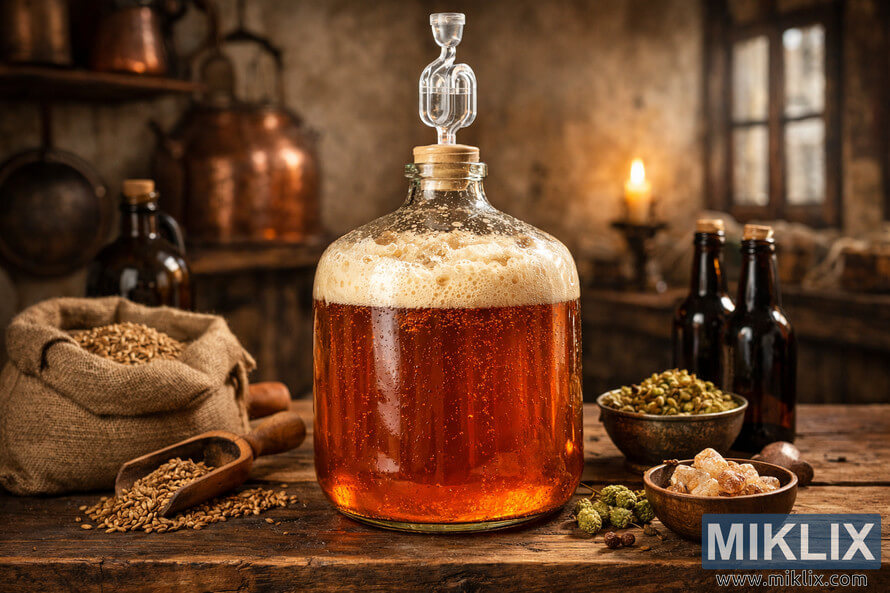
A detailed depiction of Belgian ale fermenting in a glass carboy on a rustic wooden table, surrounded by hops, malt, and copper brewing tools in a warm, traditional Belgian homebrew environment.
Available versions of this image
The image files available for download below are less compressed and higher resolution - and as a result of that, higher quality - than the images embedded in articles and pages on this website, which are more optimized for file size in order to reduce bandwidth consumption.
Regular size (1,536 x 1,024)
Large size (3,072 x 2,048)
Very large size (4,608 x 3,072)
Extra large size (6,144 x 4,096)
Comically large size (1,048,576 x 699,051)
- Still uploading... ;-)
Image description
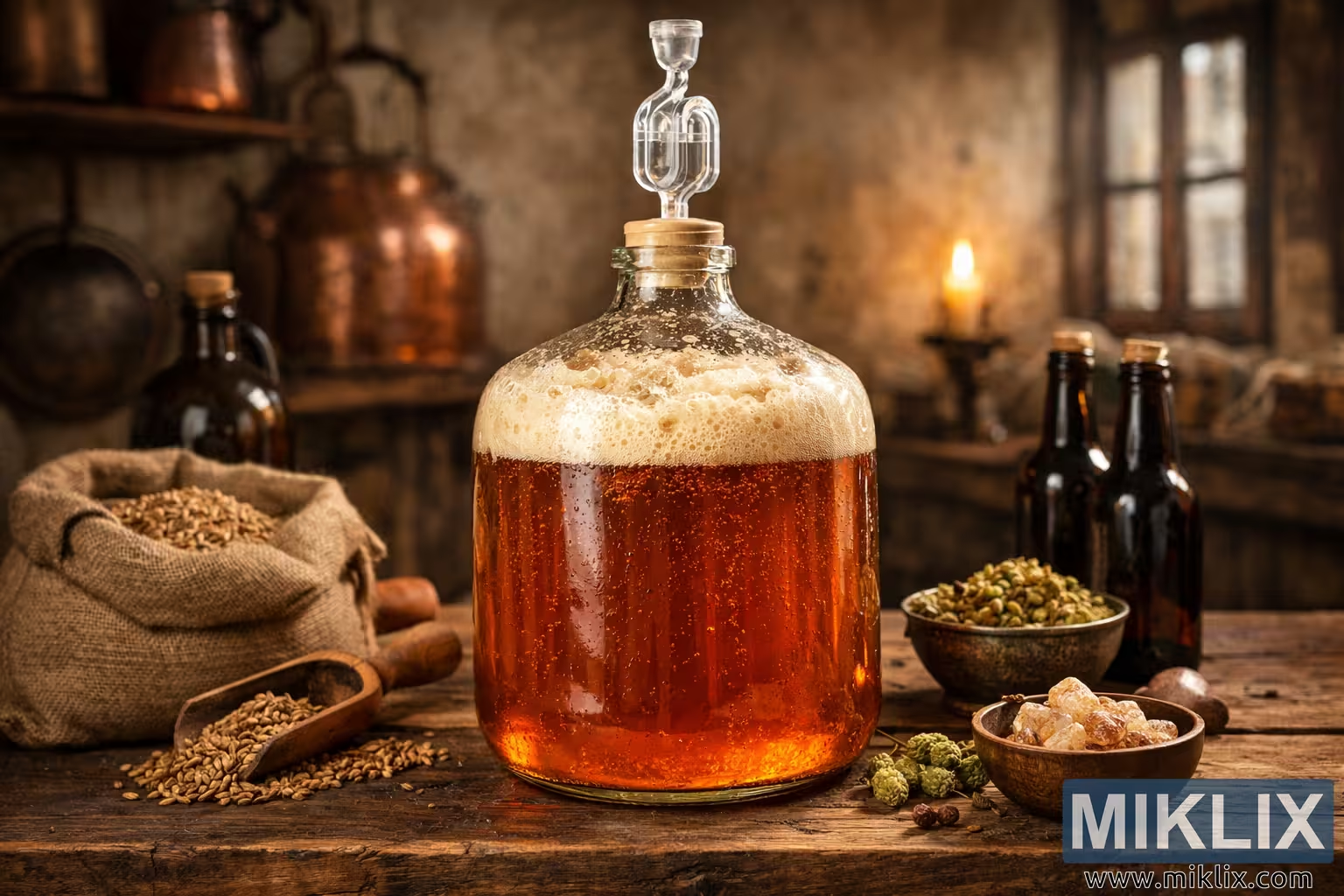
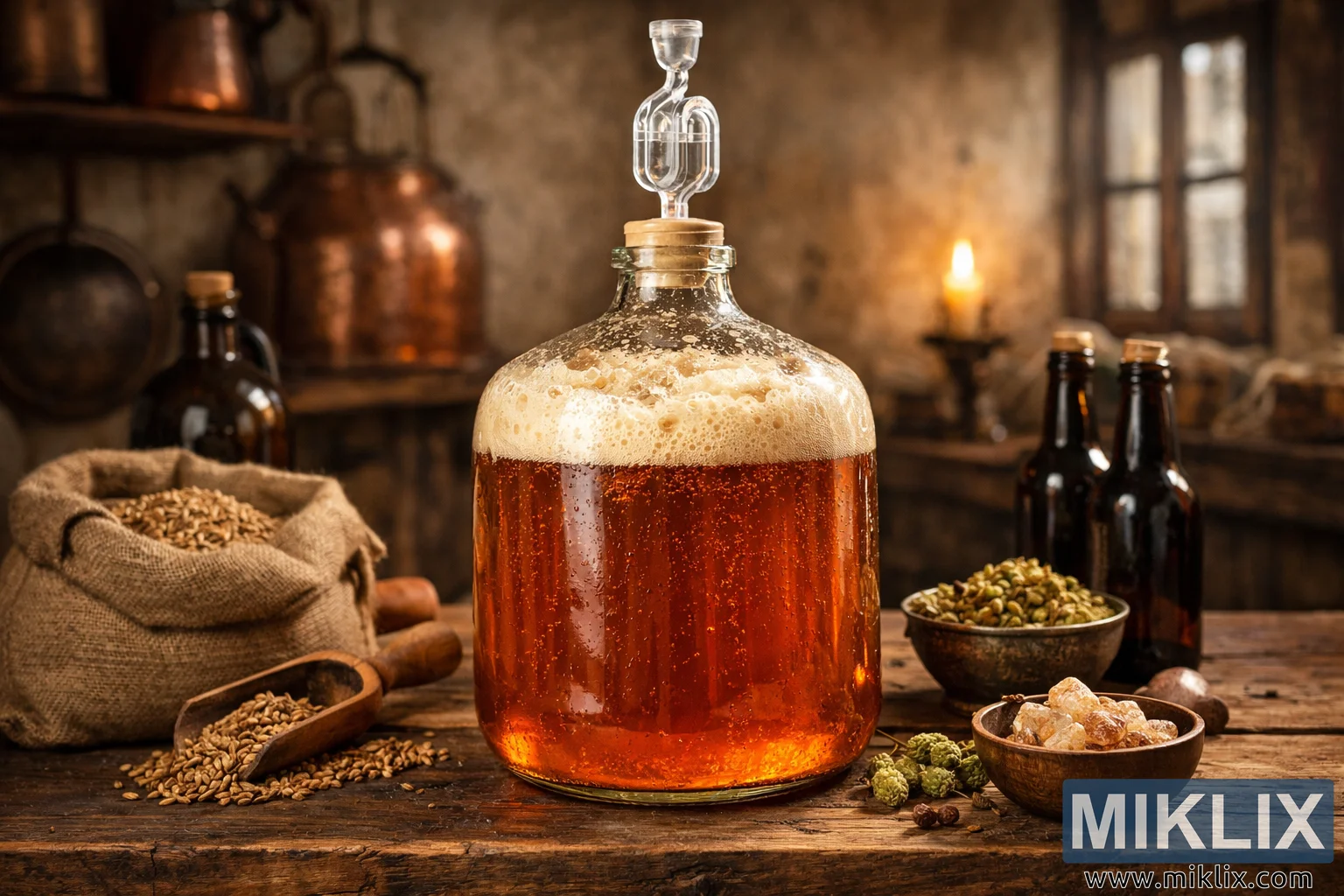
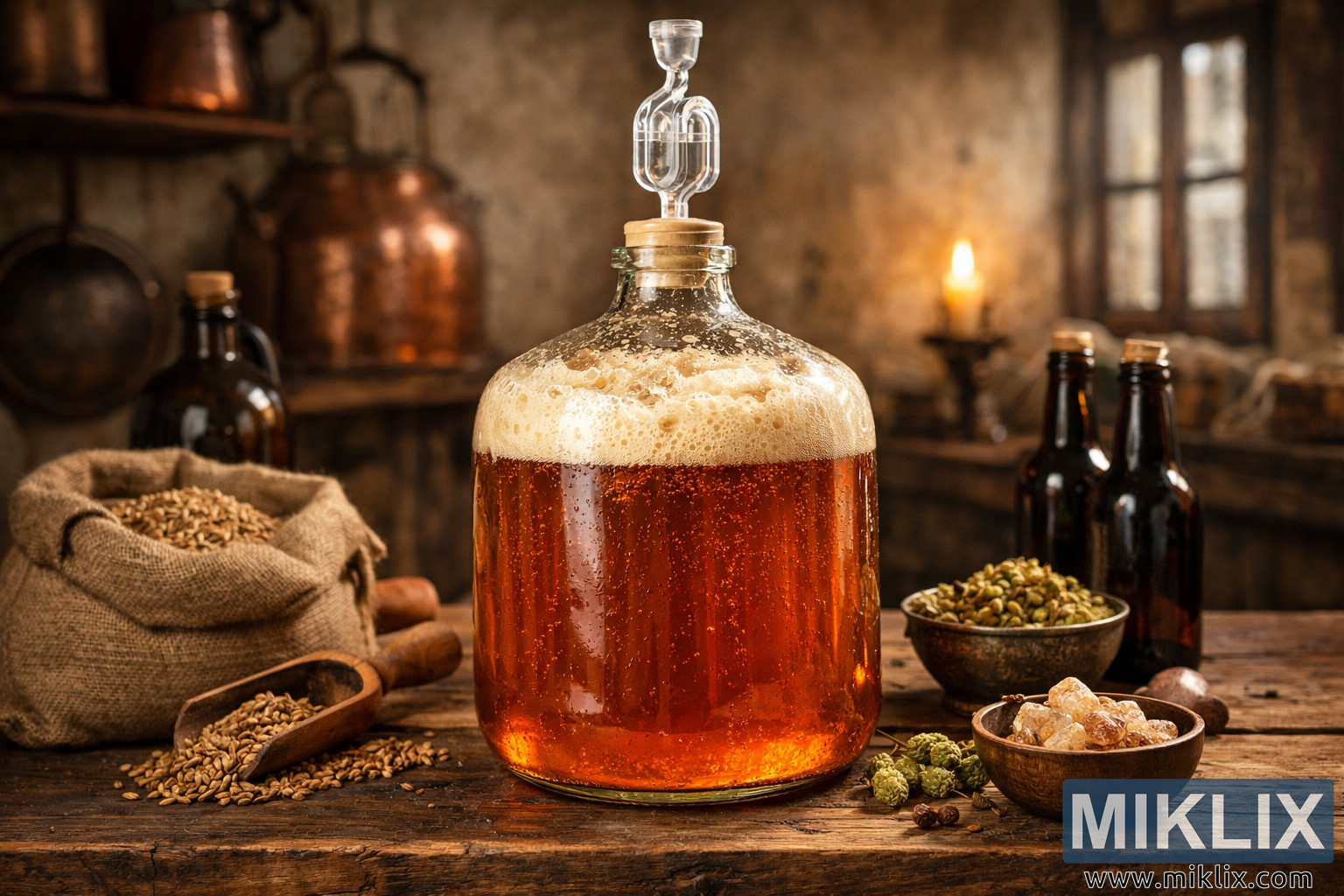
The image captures a serene and evocative moment in a traditional Belgian homebrewing environment, where craftsmanship and patience converge in the art of fermentation. At the center of the composition stands a large glass carboy, its transparent surface revealing the mesmerizing amber hue of Belgian ale in mid-fermentation. The liquid glows warmly under soft, golden light, with a thick layer of frothy krausen forming at the top—a creamy, off-white foam speckled with yeast and bubbles that cling to the neck of the vessel. A clear plastic airlock, filled with water, is attached to the carboy via a snug rubber stopper. The airlock’s S-shaped design allows carbon dioxide to escape in rhythmic bursts, each bubble marking the living heartbeat of the brewing process.
The carboy rests on a rustic wooden table, its surface worn and textured by years of use. The wood grain runs diagonally across the frame, guiding the viewer’s eye toward the centerpiece. Scattered around the carboy are the essential ingredients and tools of the brewer’s craft. To the left, a burlap sack brimming with malted barley spills gently onto the table, its golden grains catching the light. A wooden scoop lies beside it, its handle polished smooth from repeated use. Behind the sack, a dark ceramic bottle with a cork stopper adds depth and contrast, its matte surface absorbing the warm glow of the candlelight.
To the right of the carboy, a small pewter bowl holds dried hops—tiny green cones that symbolize the aromatic soul of beer. Their earthy texture contrasts beautifully with the smooth glass of the carboy. Next to the bowl, two dark brown bottles stand ready, corked and waiting for the day the ale will be transferred and aged. In the foreground, a wooden bowl filled with irregular chunks of rock candi sugar sits beside a small pile of whole hops and a wooden spoon, suggesting the sweetness and bitterness that balance the flavor profile of Belgian ale.
The background completes the story of tradition and warmth. Copper brewing equipment—pots, kettles, and a brass tap—hangs on an aged plaster wall, their surfaces reflecting the flickering light of a nearby candle. The candle, held in an antique brass holder, casts a soft, dancing glow that illuminates the scene with a sense of timelessness. Beyond the brewing tools, an old window framed by rustic wooden beams allows a faint hint of daylight to filter through, its glass slightly fogged from the cool air outside. The interplay of light and shadow creates a cozy, intimate atmosphere that evokes the quiet dedication of a homebrewer tending to his craft.
The composition is carefully balanced, with the carboy as the focal point and the surrounding elements arranged to tell a story of tradition, patience, and artistry. The shallow depth of field ensures that the carboy remains in sharp focus while the background softly blurs, emphasizing the tactile details of the fermentation process—the bubbles rising through the amber liquid, the foam’s delicate texture, and the subtle reflections on the glass. The lighting is warm and inviting, dominated by golden and amber tones that echo the color of the ale itself.
Every detail in the image contributes to a sense of authenticity and reverence for the brewing tradition. The absence of modern branding or labels reinforces the timeless quality of the scene, allowing the viewer to focus on the pure craft of brewing rather than commercial identity. The rustic setting, with its aged wood, copper, and natural materials, evokes a sense of heritage and continuity—a reminder that brewing is both science and art, passed down through generations.
The photograph’s atmosphere is rich with sensory cues: the imagined scent of malt and hops, the faint hiss of escaping gas through the airlock, and the warmth of candlelight reflecting off the amber liquid. It invites the viewer to linger, to appreciate the quiet beauty of fermentation as a living process. The image is not merely a depiction of beer brewing; it is a celebration of patience, tradition, and the simple joy of creating something by hand.
In its entirety, the scene embodies the essence of Belgian homebrewing—an art form rooted in history, sustained by passion, and illuminated by the glow of craftsmanship. The photograph stands as a tribute to the brewer’s dedication, capturing a fleeting moment where science meets soul, and where the humble ingredients of barley, hops, sugar, and yeast transform into something extraordinary.
The image is related to: Fermenting Beer with White Labs WLP575 Belgian Style Ale Yeast Blend