
صورة: Nutritional Composition of Lettuce – Vitamins and Minerals Infographic
نُشرت:
آخر تحديث: ٢٥ مايو ٢٠٢٦ م في ٢:٣٩:٥٠ م UTC
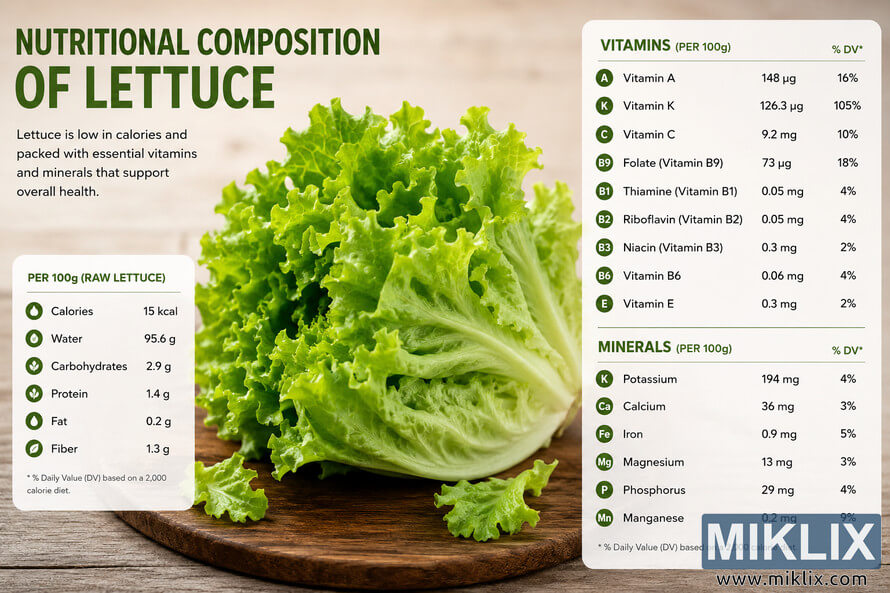
Explore the nutritional composition of lettuce with this detailed infographic featuring vitamins, minerals, calorie content, fiber, carbohydrates, and health benefits of raw lettuce per 100 grams.
Nutritional Composition of Lettuce – Vitamins and Minerals Infographic
الإصدارات المتوفرة من هذه الصورة
ملفات الصور المتاحة للتحميل أدناه أقل ضغطاً وأعلى دقة - ونتيجة لذلك أعلى جودة - من الصور المضمنة في المقالات والصفحات على هذا الموقع، والتي تم تحسينها من حيث حجم الملف من أجل تقليل استهلاك النطاق الترددي.
مقاس عادي (1,536 x 1,024)
حجم كبير (3,072 x 2,048)
حجم كبير جداً (4,608 x 3,072)
حجم كبير جداً (6,144 x 4,096)
حجم كبير بشكل كوميدي (1,048,576 x 699,051)
- ما زلت أقوم بالتحميل...؛-)
وصف الصورة
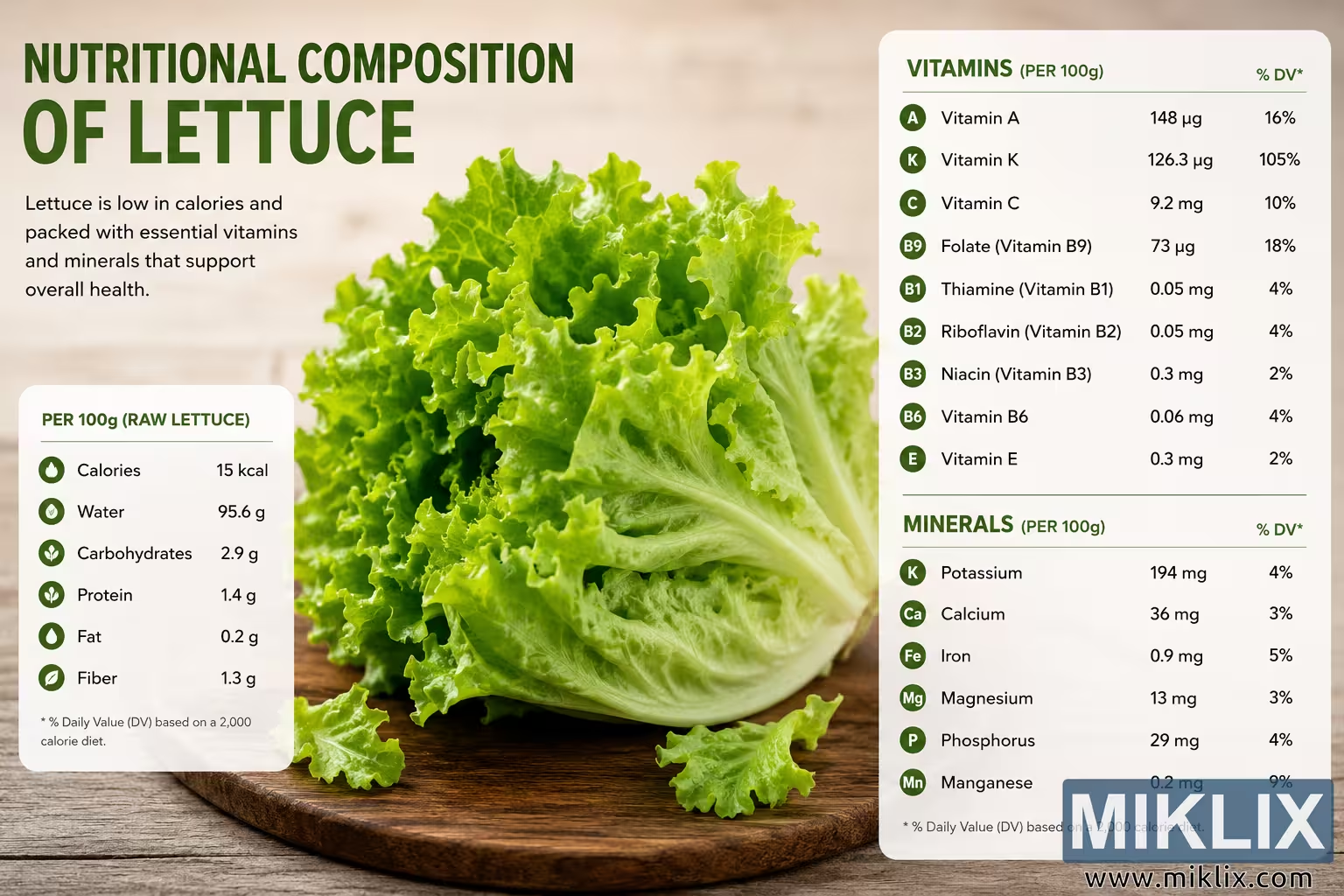
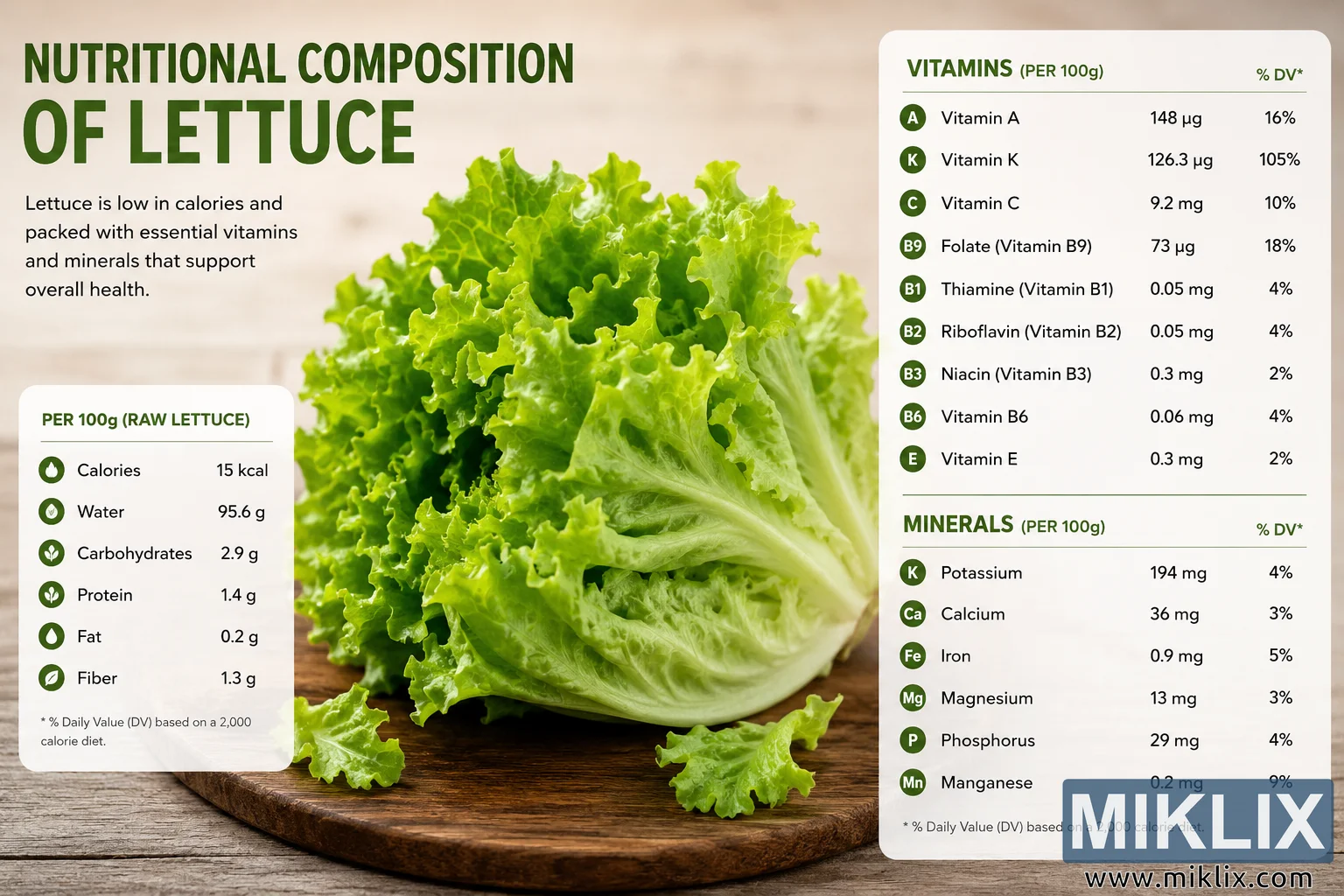
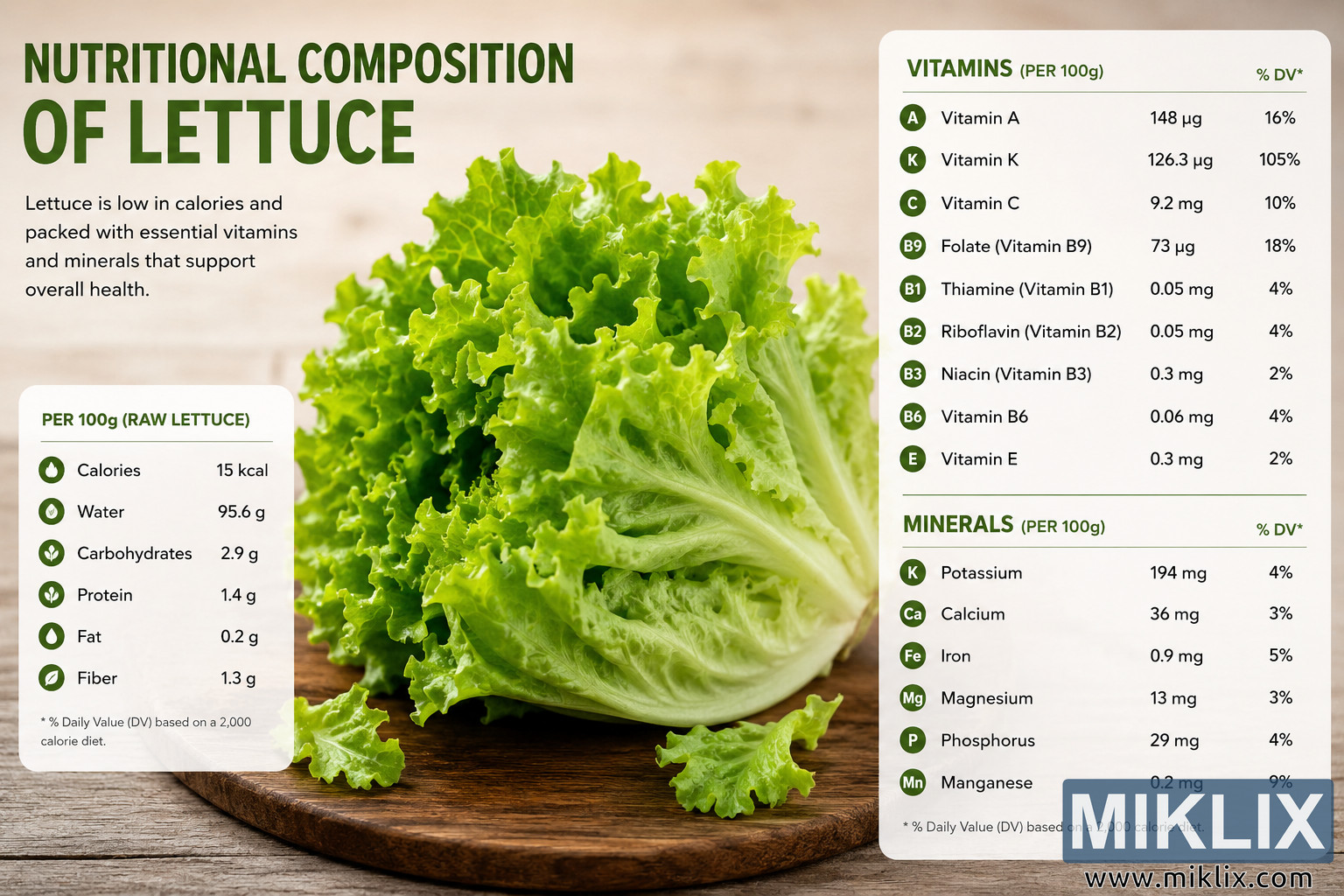
This high-resolution landscape infographic presents a visually rich and educational overview of the nutritional composition of lettuce, focusing on its vitamin and mineral content alongside general dietary information. The composition is arranged in a clean and balanced layout with a natural color palette dominated by fresh greens, soft beige tones, and warm wood textures. At the center of the image is a large head of crisp green leaf lettuce placed on a rustic round wooden board atop a wooden tabletop. The lettuce appears vibrant, fresh, and highly detailed, with curled leafy edges and varying shades of green that emphasize freshness and natural health. Small loose lettuce leaves are scattered around the board to create a more organic and realistic presentation.
The left side of the infographic contains a large bold headline reading “Nutritional Composition of Lettuce” in dark green capital letters. Beneath the title is a short explanatory paragraph describing lettuce as low in calories and rich in essential vitamins and minerals that support overall health. This introductory text establishes the educational and wellness-oriented tone of the infographic.
Below the introductory paragraph is a white rounded information panel labeled “Per 100g (Raw Lettuce).” This section presents the core macronutrient and dietary values associated with lettuce consumption. The information is organized into a simple vertical list accompanied by small circular icons. The listed values include calories, water content, carbohydrates, protein, fat, and fiber. The calorie value is very low, reinforcing lettuce’s reputation as a light and healthy food. The water content is shown as exceptionally high, visually communicating lettuce’s hydrating properties. The carbohydrates, fat, and protein levels are minimal, while fiber is presented as an important dietary benefit. At the bottom of the panel is a note explaining that percentage daily values are based on a standard 2,000-calorie diet.
The right side of the infographic contains a larger white information panel divided into two major sections: vitamins and minerals. The vitamins section appears at the top and is titled “Vitamins (Per 100g).” Each vitamin entry is paired with a circular green icon featuring a letter abbreviation and aligned values showing quantity and daily value percentage. The infographic highlights several important vitamins commonly found in lettuce, including Vitamin A, Vitamin K, Vitamin C, Folate (Vitamin B9), Thiamine (Vitamin B1), Riboflavin (Vitamin B2), Niacin (Vitamin B3), Vitamin B6, and Vitamin E. Vitamin K is emphasized with a particularly high daily value percentage, illustrating lettuce’s role in supporting bone health and blood clotting functions. Vitamin A is also prominently featured due to its importance for vision and immune support.
The minerals section appears below the vitamins and follows a similar visual style. It includes entries for potassium, calcium, iron, magnesium, phosphorus, and manganese. Each mineral is displayed with corresponding quantities and percentage daily values. Potassium is shown as one of the most abundant minerals, reinforcing lettuce’s nutritional contribution to hydration and electrolyte balance. Iron and magnesium are included to highlight lettuce’s role in supporting metabolism and healthy body functions.
The overall design style is modern, minimal, and highly readable. The typography is bold and clean, with strong hierarchy between headings, subheadings, and nutritional values. The infographic uses soft shadows, rounded white panels, and balanced spacing to maintain a polished appearance suitable for health blogs, nutrition articles, educational materials, or wellness-related websites. The natural wooden textures and fresh produce photography create a wholesome and organic atmosphere without referencing any commercial brands. Lighting throughout the image is soft and diffused, giving the lettuce a glossy fresh appearance while ensuring all nutritional text remains legible and visually distinct.
The image effectively combines realistic food photography with structured nutritional data visualization. Its educational purpose is immediately clear, making it suitable for readers interested in healthy eating, balanced diets, vegetable nutrition, and plant-based wellness information. The landscape orientation provides enough horizontal space to clearly separate the visual centerpiece from the nutritional information panels, resulting in a composition that feels both informative and aesthetically appealing.
الصورة مرتبطة بـ: A Complete Guide to the Health Benefits of Lettuce