
Şəkil: Step-by-Step Guide to Reducing Okra Sliminess
Nəşr olundu:
Son yeniləmə: 30 iyul 2026 at 18:38:35 UTC
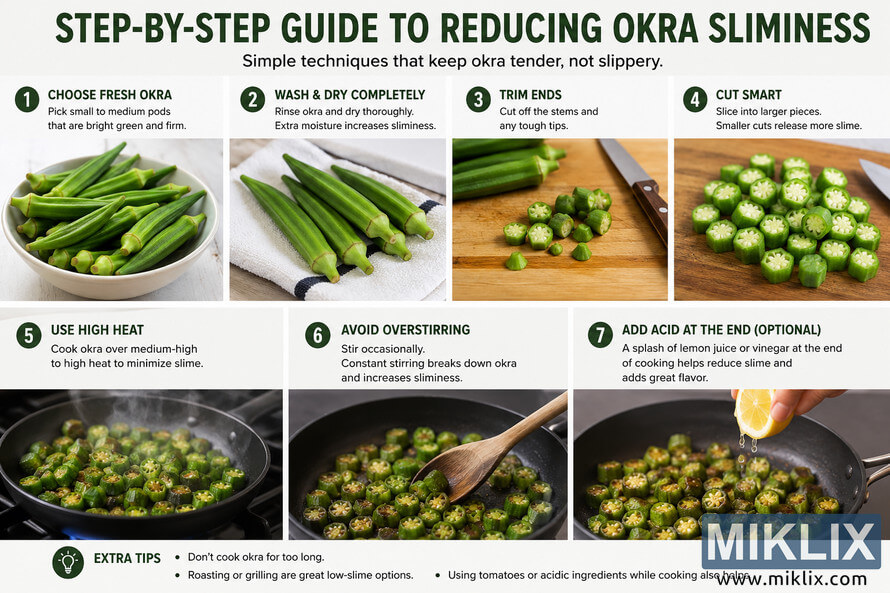
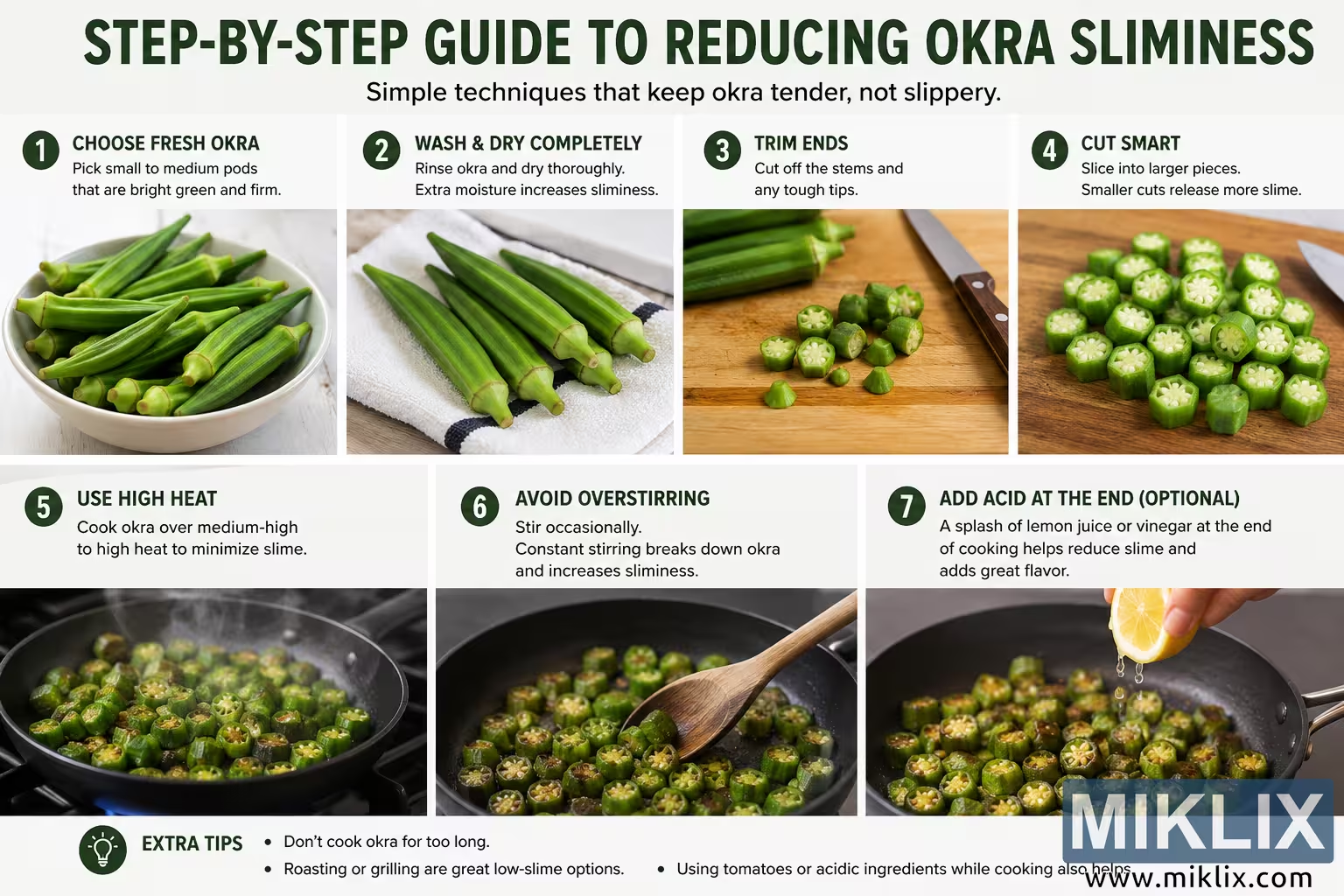
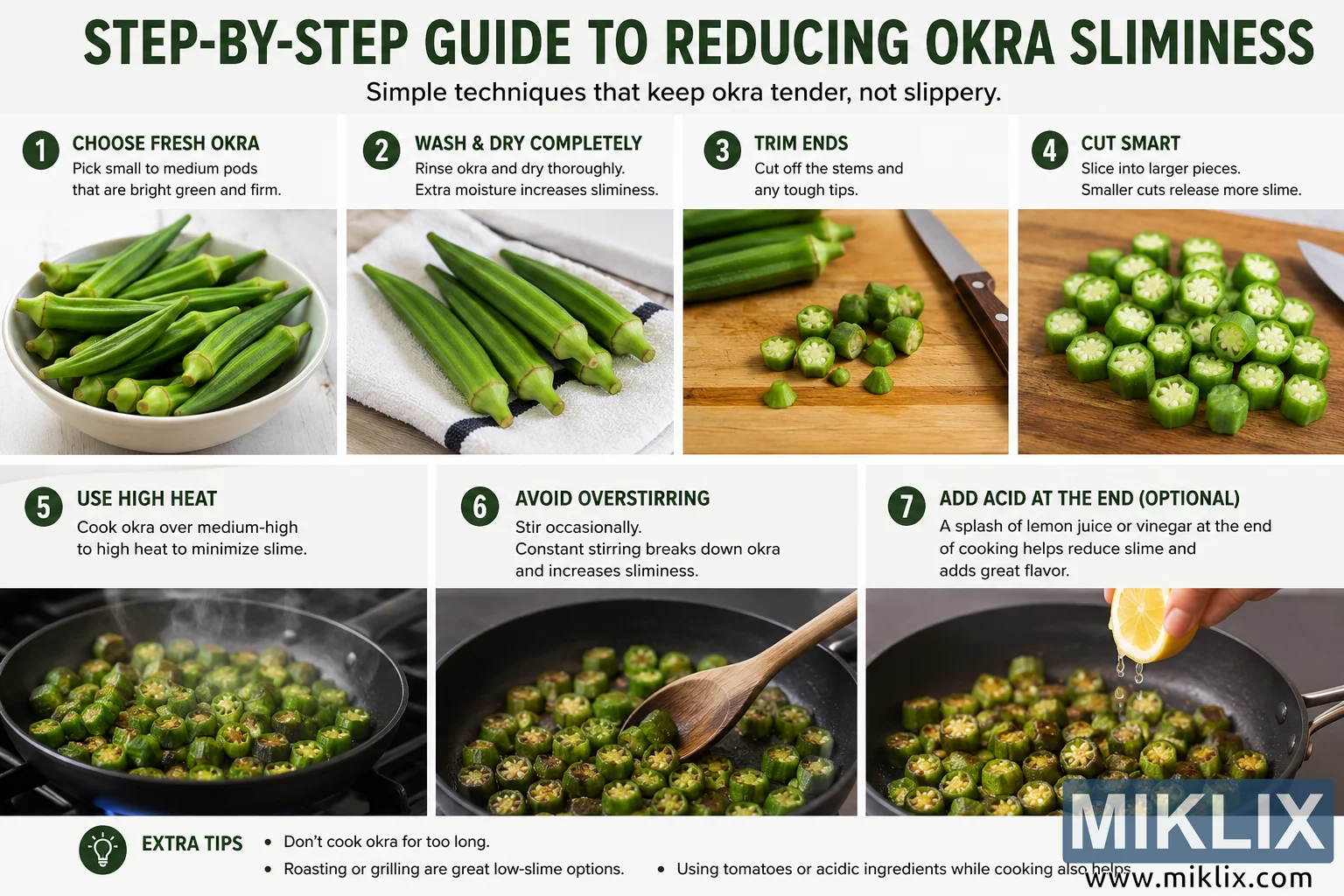
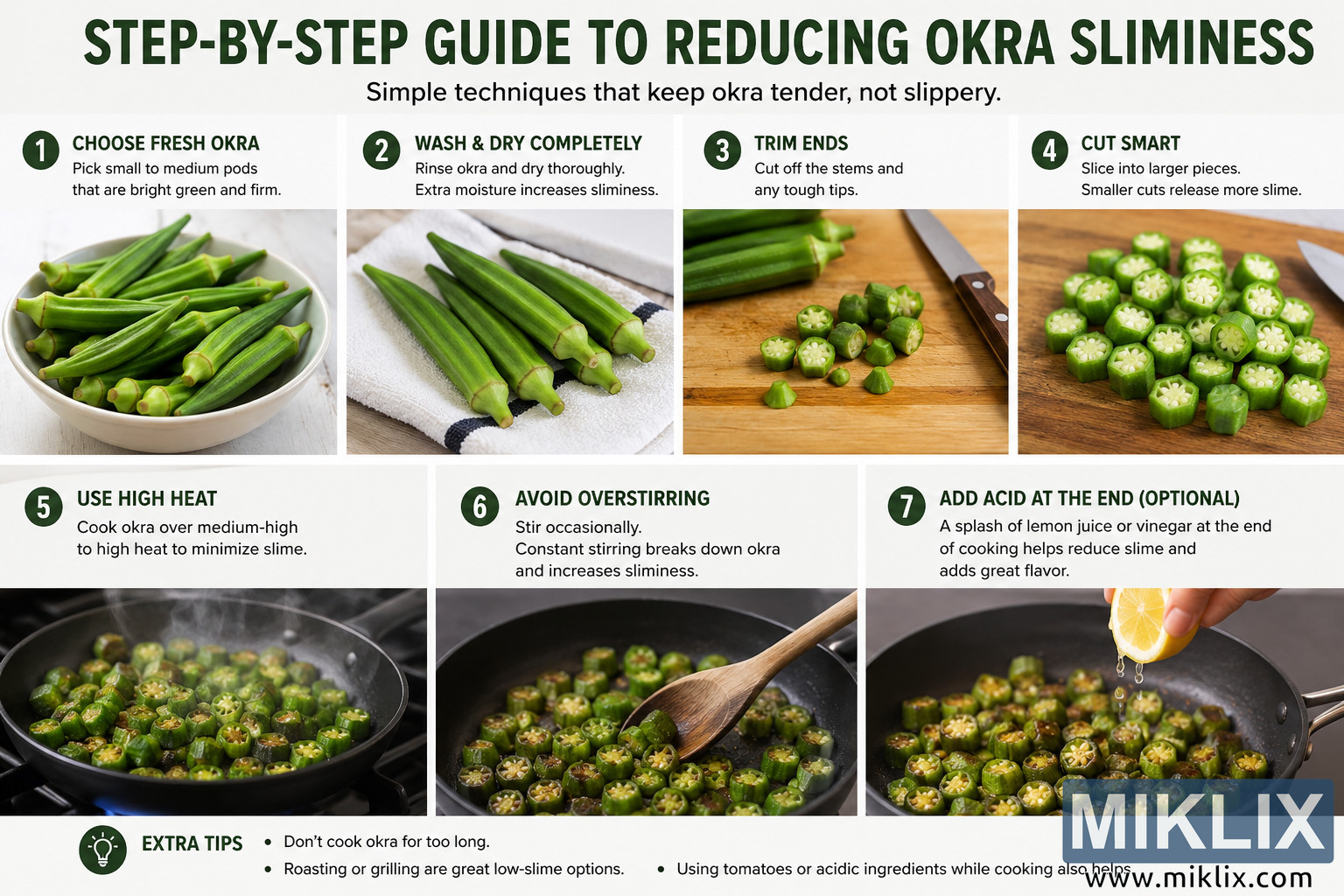
A detailed landscape infographic explaining practical techniques for reducing okra sliminess. The guide presents seven easy-to-follow cooking steps with accompanying photographs, plus additional tips for achieving tender, flavorful okra with minimal mucilage.
Step-by-Step Guide to Reducing Okra Sliminess
Bu şəklin mövcud versiyaları
Aşağıda yükləmək üçün mövcud olan şəkil faylları, bu veb saytdakı məqalələrə və səhifələrə yerləşdirilmiş şəkillərdən daha az sıxılmış və daha yüksək qətnaməyə malikdir - və bunun nəticəsində daha yüksək keyfiyyətə malikdir - bant genişliyi istehlakını azaltmaq üçün fayl ölçüsünə görə daha optimallaşdırılmışdır.
Adi ölçü (1,536 x 1,024)
Böyük ölçü (3,072 x 2,048)
Çox böyük ölçüdə (4,608 x 3,072)
Əlavə böyük ölçü (6,144 x 4,096)
Gülməli dərəcədə böyük ölçü (1,048,576 x 699,051)
- Hələ də yüklənir... ;-)
Şəkil təsviri
This landscape-oriented educational infographic presents a clear, visually organized, step-by-step guide to reducing the natural sliminess of okra during cooking. The overall design uses a clean white background with dark green headings and numbered circular markers that establish a logical sequence from beginning to end. Across the top of the composition is a large bold title reading "STEP-BY-STEP GUIDE TO REDUCING OKRA SLIMINESS," followed by a smaller subtitle explaining that the techniques help keep okra tender rather than slippery. The layout is divided into multiple rectangular sections containing both explanatory text and accompanying food photography, making it easy for viewers to connect each instruction with a visual example. The composition is balanced and symmetrical, with generous spacing between sections for readability.
The first instructional panel is labeled as the initial step and focuses on choosing fresh okra. It features a photograph of several vibrant green okra pods resting in a white bowl placed on a light-colored surface. The pods appear firm, smooth, and evenly colored, suggesting freshness. The accompanying text advises selecting small to medium pods that are bright green and firm, emphasizing that ingredient quality is the foundation for successful cooking.
The second panel explains the importance of washing and drying the okra completely. The corresponding image shows freshly washed okra arranged neatly on a folded white kitchen towel. The towel reinforces the message about removing excess moisture before cooking. The instructional text notes that extra surface moisture contributes to sliminess, encouraging thorough drying before preparation.
The third section discusses trimming the ends. A wooden cutting board occupies the photograph, where several okra pods have already been trimmed and a kitchen knife rests nearby. Small cut pieces are visible around the board, illustrating the preparation stage. The accompanying explanation recommends removing stems and any tough ends while avoiding unnecessary damage to the pods.
The fourth instructional block addresses cutting technique. The photograph displays sliced okra pieces arranged across a wooden work surface, revealing the distinctive star-shaped cross-sections and pale seeds inside each slice. The text explains that larger pieces generally release less mucilage than very small cuts, highlighting how cutting size can influence texture during cooking.
The fifth section shifts attention to cooking temperature. A skillet filled with sliced okra sits over visible heat, with steam rising from the pan to suggest active cooking. The vegetables display a slightly browned appearance rather than being heavily steamed. The written guidance recommends cooking over medium-high to high heat in order to minimize slime development while encouraging browning.
The sixth panel emphasizes avoiding excessive stirring. The accompanying image shows a wooden spoon gently moving cooked okra within a skillet. Rather than depicting vigorous mixing, the spoon appears to be making a light pass through the vegetables. The accompanying explanation states that frequent stirring can break down the okra and encourage additional sliminess, so occasional stirring is preferred.
The seventh and final primary step introduces the optional addition of acid near the end of cooking. The photograph shows a hand squeezing half of a lemon over the skillet, with droplets of juice falling onto the cooked okra below. This visual reinforces the recommendation that acidic ingredients may help reduce slime while adding brightness and flavor. The text mentions lemon juice or vinegar as examples of acidic additions used at the end of cooking.
Running along the bottom of the infographic is an additional tips section identified by a small lightbulb icon. This concluding area provides several concise suggestions intended to reinforce the main lessons. The listed reminders include avoiding overcooking the okra, considering roasting or grilling as cooking methods that naturally produce less sliminess, and noting that acidic ingredients such as tomatoes can also contribute to reducing mucilage during cooking. The tips are presented as short bullet points for quick reference.
Throughout the infographic, typography remains bold and highly legible, with section headings in dark green and supporting instructional text in a smaller, easy-to-read font. The numbered circles consistently guide the eye through the sequence from left to right and top to bottom. The photography uses bright, natural lighting that highlights the fresh green color of the okra, the texture of the vegetables, and the progression from raw preparation to finished cooking. Neutral kitchen surfaces, wooden cutting boards, white towels, and cookware provide a clean culinary setting without distracting decorative elements. The design communicates practical cooking advice in an approachable format suitable for educational articles, recipe pages, cooking classes, kitchen reference materials, or instructional food content. Overall, the infographic combines concise written instructions with realistic food imagery to demonstrate multiple complementary techniques for preparing okra with reduced sliminess while preserving flavor, texture, and visual appeal.
Şəkil aşağıdakılarla bağlıdır: Okra Benefits: How This Nutritious Vegetable Supports Your Health