
Hops in Beer Brewing: Ahil
Published: November 26, 2025 at 10:53:54 PM UTC
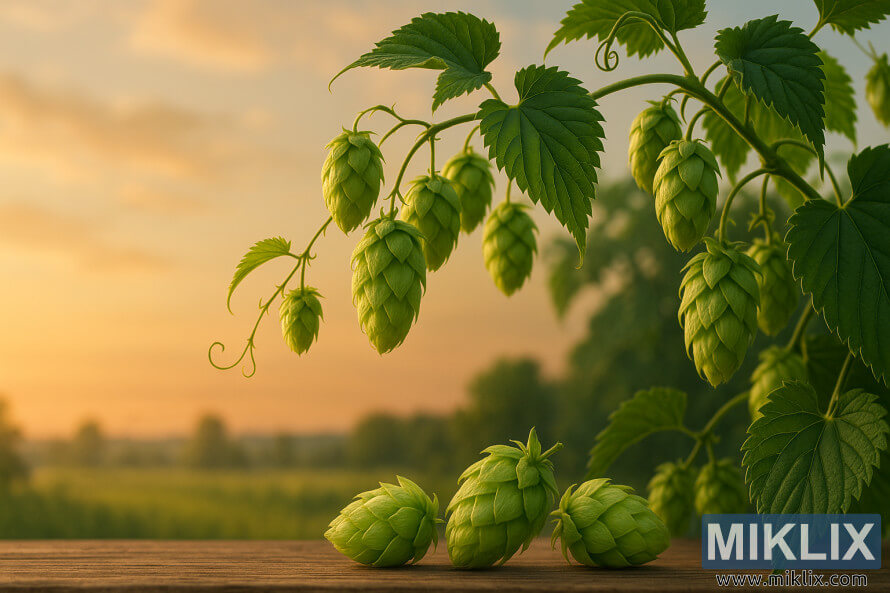
Ahil, a Slovenian aroma hop, is making waves in the craft brewing world. It's known for its unique profile and high alpha acids, near 11.0%. This places it in the aroma category but with a surprising bitterness level.
Click or tap the image for more information and higher resolutions.
Key Takeaways
- Ahil hops are an aroma hop variety from Slovenia with relatively high alpha acids.
- Ahil can be used for aroma-focused additions but offers dual-use due to its bitterness.
- Common brewer reference points include aroma tags, flavor profile, and technical data.
- Recipes often show Ahil covering a large portion of hop additions when featured.
- Understanding dosage and pairings is essential to highlight Ahil’s aromatic qualities without harsh bitterness.
Introduction to Ahil and Its Role in Brewing
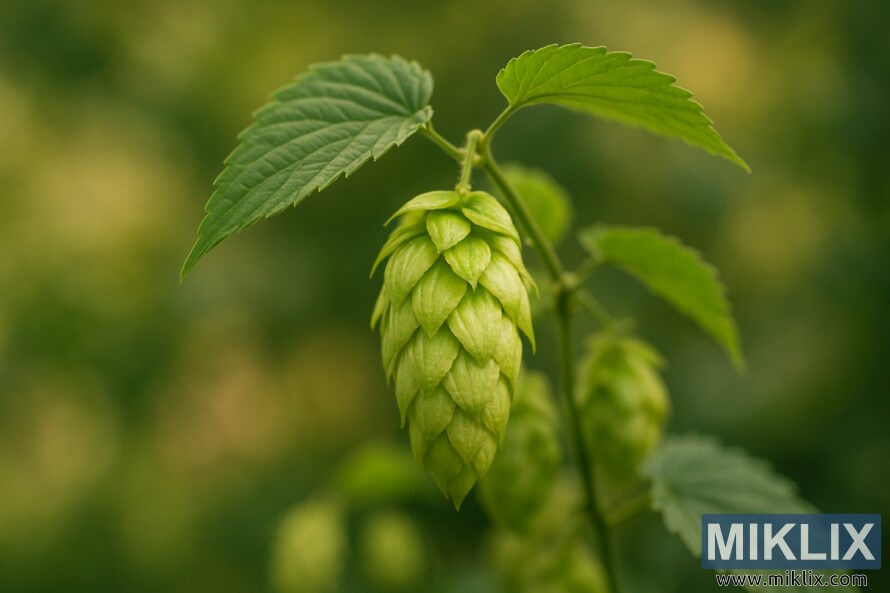
Introduction to Ahil reveals a Slovenian aroma hop with floral and spicy notes. It also boasts an unusually high alpha acid for its class. Brewers seek Ahil when they need an aroma-driven hop that can also add measurable bitterness.
Exploring Ahil's role in brewing, we find its strength lies in aroma delivery. It shines in late additions and dry hopping, adding a bright top-note character without overpowering malt balance. Many brewers use Ahil as the sole hop to highlight its scent in small recipe sets.
- Characteristics: pronounced floral and herbal tones, medium bitterness
- Primary use: aroma and finishing hops for pale ales, lagers, and specialty beers
- Practical edge: high alpha acids for dual-use in simple formulations
When brewing with Ahil, it's important to make cautious late additions to preserve its delicate aromatics. Its high alpha acid requires brewers to adjust kettle timing to avoid excessive bitterness. Trial batches help find the perfect balance for aroma impact.
It's prized for its ability to enhance aroma in beers, while also adding bitterness when added early in the boil. This versatility makes it a favorite among brewers.
Before diving into recipe design, the Ahil hop summary provides essential information. It outlines the hop's purpose, its origin, and key chemical attributes. This summary is a valuable tool for brewers looking to understand the hop's characteristics.
For those planning their brews, the Ahil quick facts offer valuable insights. Originating from Slovenia, Ahil is classified as an aroma hop with an alpha acid content of around 11%. It has been featured in at least four published recipes. Some brewers have even used it as the sole hop in their experimental single-hop ales.
When planning your brew, it's important to verify the batch details of the Ahil hop. Requesting a supplier's Certificate of Analysis (COA) can provide you with the oil composition and precise alpha values. These can vary by harvest and impact the hop's performance in late additions versus early kettle additions.
- Brewing note: treat Ahil as an aroma hop with dual-use capability.
- Recipe tip: balance late-hop additions for floral and spicy notes.
- Quality check: confirm alpha acids and oil totals before scaling a recipe.
Click or tap the image for more information and higher resolutions.
Origins and Botanical Background of Ahil
The Ahil origin is traced back to Slovenia, a region celebrated for its aromatic, noble-style hops. There's a record with a loading indicator for Origin, alongside a confirmed entry stating Origin: Slovenia. This dual record keeps the origin under scrutiny but clearly points to Slovenian fields.
Botanical background Ahil situates this variety within the cultivated Humulus lupulus group, prevalent in Central Europe. Slovenian hops are known for their floral and spicy notes. Growers in the region carefully select varieties that thrive in the continental climate and soils, influencing oil composition.
Available descriptions classify Ahil as an aroma hop, consistent with many Slovenian cultivars. This classification aligns with its expected oil profile and brewing role. Despite the lack of full hop pedigree, growers and brewers remain cautious about its ancestry.
Understanding hop pedigree is critical for breeding and cultivation decisions. Even without detailed breeder data, Ahil's Slovenian provenance hints at inherited traits. These traits include tolerance to local weather and a predisposition towards noble-like aroma components.
- Geographic note: confirmed Slovenian provenance.
- Botanical note: part of Humulus lupulus cultivated varieties.
- Practical note: aroma hop behavior aligns with Central European types.
Chemical Profile of Ahil
Ahil's chemical profile is notable for its high alpha acid content, a trait uncommon in aroma hops. Lab reports and supplier notes indicate Ahil's alpha acids are around 11.0%. This makes it an excellent choice for both flavor and bittering purposes.
It's important for brewers to be aware that Ahil's alpha acid content can vary by harvest and lot. For consistent results, always check the batch certificate of analysis before scaling a recipe. This is critical, as Ahil's versatility in both bittering and aroma applications demands precise planning.
Public summaries often fail to provide details on Ahil's beta acids. Beta acids play a significant role in stability and aging. Requesting a COA is essential to confirm beta percentages, ensuring the desired shelf-life and hop utilization.
Details on Ahil's oil content are not always readily available in summary tables. The total oil content, along with the balance of myrcene, humulene, caryophyllene, and farnesene, can vary by season and region. It's imperative to verify oil figures with your supplier to accurately predict the aroma impact during whirlpool and dry hop stages.
Ahil's co-humulone content is another factor brewers should monitor. Co-humulone can impact the perceived harshness of the beer, making it important for those aiming for a smoother bitterness. When planning to use Ahil heavily for bittering, compare co-humulone values across lots. Opt for batches with lower percentages to achieve the desired bitterness character.
- Alpha acids: ~11% typical, supports dual-use brewing.
- Beta acids: check COA for stability and aging planning.
- Total oil: confirm with supplier lab data for aroma design.
- Co-humulone: review batch numbers to manage bitterness character.
In practice, treat Ahil as a high-alpha aroma hop and plan recipes with accurate COA data. This approach ensures predictable bitterness and preserves the hop's aromatic qualities.
Aroma and Flavor Profile of Ahil
Public supplier notes classify Ahil as an aroma hop, yet they fail to offer a detailed list of descriptors. Brewers frequently observe Slovenian-origin hops to exhibit floral, herbal, and mildly spicy traits. These initial impressions guide expectations for Ahil's aroma when used in late additions or dry hopping.
Given the absence of explicit Ahil aroma tags, conducting small-scale trials is imperative. A pilot dry-hop or late addition at 2–5 g/L will unveil Ahil's flavor in your wort or finished beer. It's vital to record Ahil tasting notes at various stages during conditioning to monitor its evolution.
Sample tasting notes often highlight balance over bold citrus or tropical notes. Anticipate a subtle floral lift, light herbal greens, and a clean noble-like edge. These characteristics position Ahil's aroma as ideal for styles requiring refined, elegant aromatics, not bold fruity hops.
Practical tests are essential to understand how Ahil's flavor interacts with yeast esters and malt backbone. Compare single-hop ferments with blends containing Saaz, Tettnang, or Hallertauer to discover harmonious matches. Detailed Ahil tasting notes are necessary to refine its usage rates for aroma-only or gentle dual-use roles.
- Trial method: small-scale dry-hop, record at 24, 72, and 168 hours
- Suggested focus: floral, herbal, and noble-like descriptors
- Reason to test: lack of public Ahil aroma tags means brewer verification is required
Brewing Uses: Aroma and Dual-Use Applications
Ahil brewing focuses on aroma, but its high alpha acids open up more possibilities. Late additions bring out citrus, herbal, and floral notes without harsh bitterness.
Practical methods include late-boil, whirlpool, and dry-hop additions. These methods ensure the best expression of Ahil's aroma and preserve its volatile oils.
- Late-boil additions (5–0 minutes): Bright aroma lift with modest bittering.
- Whirlpool/knockout hops: Gentle extraction of oil for rounded aroma.
- Dry hopping: Strong aromatic presence in ales and lagers suited to hop-forward profiles.
Ahil is a versatile hop for brewers seeking a dual-use ingredient. Early additions can provide background bitterness, while later additions enhance aroma.
When planning early additions, consider the hop's alpha acid content. Use a conservative approach and run a pilot batch. This helps balance bitterness and malt with hop flavor.
- Start with aroma-driven schedules: heavy late-addition Ahil and dry hop.
- If bitterness is needed, add 5–10% of total hop weight in the first 30–60 minutes and adjust after pilot tasting.
- Document changes to strike the best balance between bittering and aroma across recipes.
Keep sensory notes after each trial. These notes guide adjustments to balance bittering and aroma in different styles. Controlled tests ensure Ahil's full utilization without overpowering delicate hop aromatics.
Recommended Beer Styles for Ahil
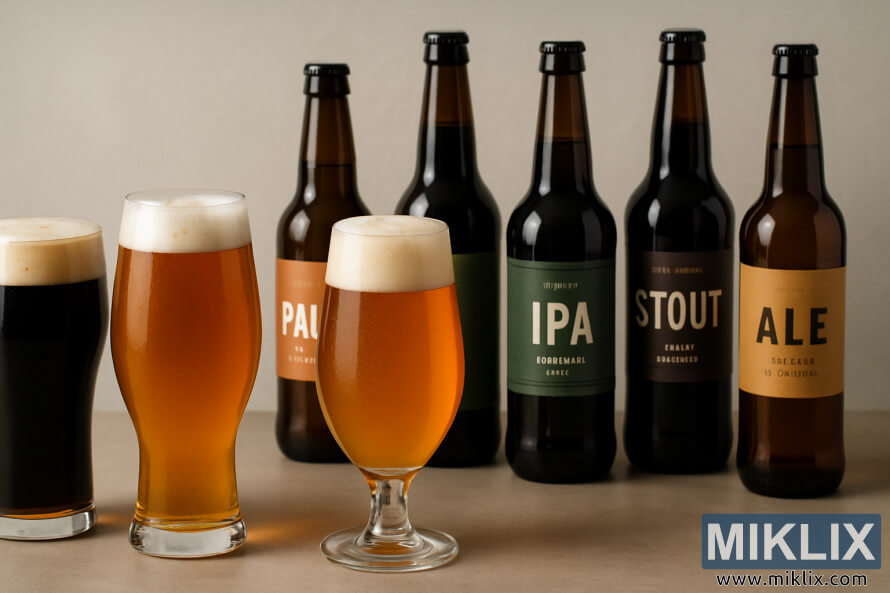
Ahil excels in beers where floral, spicy, and noble hop notes are valued. It's perfect for European-style lagers and pilsners, adding a subtle aromatic lift without overpowering the malt. Late additions or whirlpool hops preserve its delicate character.
Amber ales and Belgian ales are ideal for Ahil, providing a restrained spice and gentle herbal profile. In these recipes, a small dry-hop or late-boil dose is recommended. This enhances nuance while maintaining balance with yeast-driven esters.
Pale ales and session beers benefit from Ahil's refined floral top note. Use it as a late addition or for dry hopping to boost aroma without harsh bitterness.
Due to its higher alpha acids, Ahil is great in IPAs and stronger pale ales as a late-hop or dry-hop component. Early additions can introduce some bitterness. Testing batches will show how Ahil changes bitterness and aroma in lagers and hoppy ales.
- European-style lagers and pilsners — late additions, whirlpool hops
- Amber ales and Belgian ales — dry-hop or late-boil focus
- Pale ales and session ales — aroma-forward late additions
- IPAs and American pale ales — trial late additions or dry-hop for aroma
Adjust dose and timing based on style goals. Planning recipes around Ahil ensures hops are added late to preserve floral and noble traits. Small, precise additions result in the clean, expressive aroma brewers often seek in ales and lagers.
Click or tap the image for more information and higher resolutions.
Dosage and Hop Utilization Guidelines
Before setting Ahil dosage, check the supplier's certificate of analysis for alpha acids and oil content. For aroma additions, modest amounts work well. For bittering, use measured alpha to reach target IBUs. Estimating Ahil utilization requires knowing boil time and wort gravity.
For late additions aimed at aroma, use small, frequent doses. A common range for pronounced scent in a 5-gallon batch is 0.5–2.0 oz. Dry hopping often falls between 0.5–3.0 oz per 5 gallons, depending on flower quality and desired intensity.
If you plan to employ Ahil as a bittering hop, calculate Ahil IBU contribution using the reported alpha acid percentage. Use standard utilization tables or formulas that factor in boil time and wort gravity. Keep bittering additions conservative when also using Ahil for late aroma to avoid harshness.
Adjust Ahil hopping rates by beer style and recipe balance. Pale ales and IPAs tolerate higher hopping rates and more assertive aroma. Lagers and delicate ales benefit from lower doses to preserve malt and yeast character.
- When substituting or scaling, maintain the same total alpha-acid input to match target IBUs.
- Split additions help control both bitterness and flavor; an early bittering charge plus late aroma additions is common.
- Track outcomes and tweak Ahil utilization in subsequent brews using measured alpha values.
Record each batch’s Ahil dosage, hopping schedule, and measured IBUs. That log improves consistency and lets you refine Ahil hopping rates and Ahil IBU contribution for different styles over time.
Hop Pairings: Grains, Yeasts, and Other Hops
When crafting recipes with Ahil, aim for lightness and openness. Use pilsner malt as the base to showcase the hop's floral essence. Add Vienna malt and a hint of light caramel for body and sweetness. This approach maintains a clean, balanced profile.
Choosing the right yeast is key to Ahil's expression. Clean lager strains enhance the hop's herbal notes in pilsners and lagers. Neutral ale yeasts like Wyeast 1056 or White Labs WLP001 provide a backdrop for hop aromas in pale ales. For a more complex flavor, Belgian strains introduce esters and spice. Select a yeast that matches your desired intensity for the best pairing.
- Grain tips: pilsner malt base, 5–10% Vienna, 2–5% light caramel for balance.
- Yeast tips: clean lager yeast for purity, WLP001/Wyeast 1056 for neutral ale character.
When pairing Ahil with other hops, consider the style. Traditional European hops like Saaz, Hallertau, and Styrian Goldings complement Ahil's floral and herbal notes. For modern pale ales and IPAs, citrus-forward hops can add a punch when blended with care. Test small batches to ensure harmony between oils and aromas.
- Classic blend: Ahil + Saaz for a soft, noble profile.
- Balanced modern: Ahil + Citra or Amarillo for floral-citrus complexity.
- Layered approach: Ahil late-additions with a neutral bittering hop for clarity.
In practice, design recipes around Ahil's role as an aroma hop. Keep the malt simple, select a yeast that supports your goal, and choose companion hops that either mirror its European heritage or contrast with citrus notes. Thoughtful pairings will allow Ahil to shine without overwhelming the glass.
Substitutes and Similar Hops to Ahil
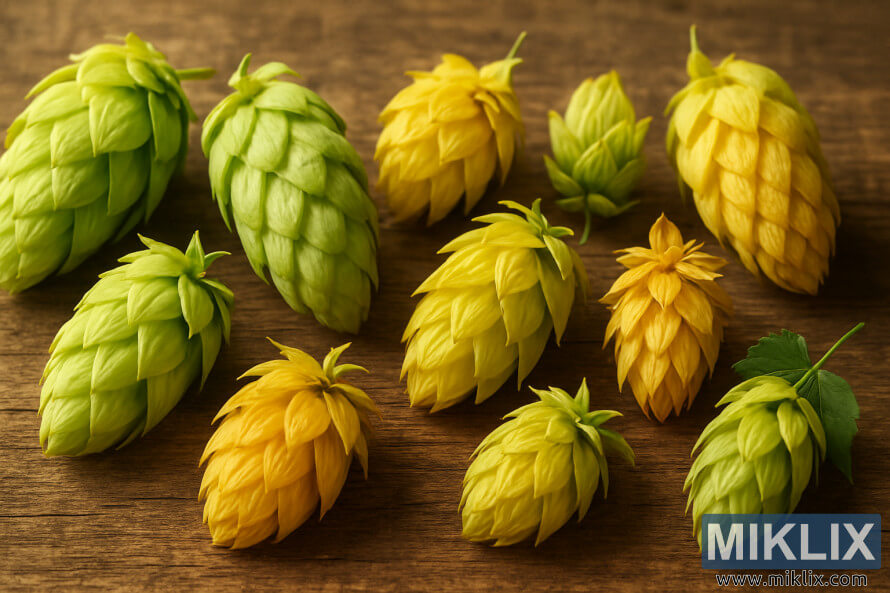
For brewers looking for Ahil substitutes, focus on matching aroma and alpha-acid levels. Ahil, a Slovenian aroma hop, has moderate to high alpha acids. Saaz, Styrian Goldings, and Hallertau offer classic Central European floral and herbal notes. These hops work well as substitutes for Ahil.
For a closer alpha-acid match, consider blending Styrian Goldings with a newer dual-use variety. This blend allows for bitterness control while preserving aroma. Small pilot batches are essential for fine-tuning the hop bill before scaling up.
- Saaz — traditional noble character, soft herbal spice.
- Styrian Goldings — gentle floral and earthy notes; versatile as a substitute for Ahil hop.
- Hallertau (Mittelfrüh or Tradition) — mild spice and floral tones, reliable in lagers and ales.
Adjust dosages based on alpha-acid differences. If Ahil is used for late or dry-hop additions, slightly increase the substitute weight to match aromatic intensity. For bittering, calculate IBUs by alpha-acid and utilization, not by swapping weights directly.
Trial blends of two hops often yield better sensory parity than a single replacement. Combining Styrian Goldings with a dual-use European variety can reproduce both aroma and bittering profiles. Keep tasting records to refine future substitutions.
Click or tap the image for more information and higher resolutions.
Recipes and Example Formulations Featuring Ahil
Below are practical recipe outlines to help brewers test Ahil in different roles. Use them as starting points. Consult supplier notes or brewing platforms for precise hop weights and scaling.
- Single-hop Blonde Ale — late additions and dry hop. Use a neutral ale yeast and a pale malt bill. Add Ahil at 10–15 minutes for flavor and again as a 3–5 g/L dry hop to reveal its aromatic character. This example highlights Ahil recipes for easy comparison with other hops.
- Pilsner with Ahil for noble aroma. Mash a pilsner malt base, keep fermentation cool with Lager or hybrid yeast, and use Ahil as a late kettle hop and short dry hop to lift floral and spicy notes. This formulation suits brewers aiming to explore Ahil beer recipes in lighter styles.
- Experimental APA/IPA — Ahil as the sole late addition. Brew a simple pale malt backbone and add Ahil at 5–15 minutes and whirlpool. Dry hop post-fermentation to study its singular aroma impact. Use this to generate benchmark Ahil brew examples for sensory evaluation.
- 100% Ahil Single-Hop Trial. For analytical tasting, create a small batch where Ahil accounts for all hop additions. Keep bitterness moderate, run late additions, and perform split fermentations with different yeasts to map how Ahil formulations interact with yeast ester profiles.
When testing these Ahil formulations, track hop rates, timing, and water chemistry. Record sensory notes for aroma, flavor, and perceived bitterness. Repeat trials with small adjustments to dial in the best role for Ahil in your brewery's lineup.
Practical Brewing Notes and Tips for Working with Ahil
Store Ahil cold and vacuum-sealed to preserve its volatile oils. Proper Ahil handling extends shelf life and keeps hop aroma bright.
Check the certificate of analysis before calculating additions. Verifying alpha acids via COA prevents IBU surprises and makes Ahil brewing tips more reliable.
- Use late-boil or whirlpool additions for aroma-forward beers.
- Reserve heavy dry-hop contact until fermentation slows to limit oxygen pickup.
- Choose pellets for surface area and mesh bags for easy removal when equipment dictates.
When working with Ahil, run small pilot batches to judge intensity. Pilot testing helps fine-tune rates and reveals any vegetal character before scaling up.
Adjust malt bill and yeast choice to showcase Ahil aromatics. A clean ale yeast or a simple malt base often lets subtle notes sing without masking them.
- Grind or crush gently if using whole cones; over-grinding can release grassy compounds.
- Minimize oxygen exposure during transfers and dry hopping to protect aromatic stability.
- Record hop lot numbers and sensory results as part of routine Ahil brewing notes for repeatable outcomes.
For whirlpool use, aim for lower temperatures to retain delicate volatiles. That tactic follows standard aroma-hop practice and improves final aroma clarity.
Balance is key. Taste-driven adjustments, clear COA checks, and careful Ahil handling make these Ahil brewing tips practical and effective for homebrewers and pros alike.
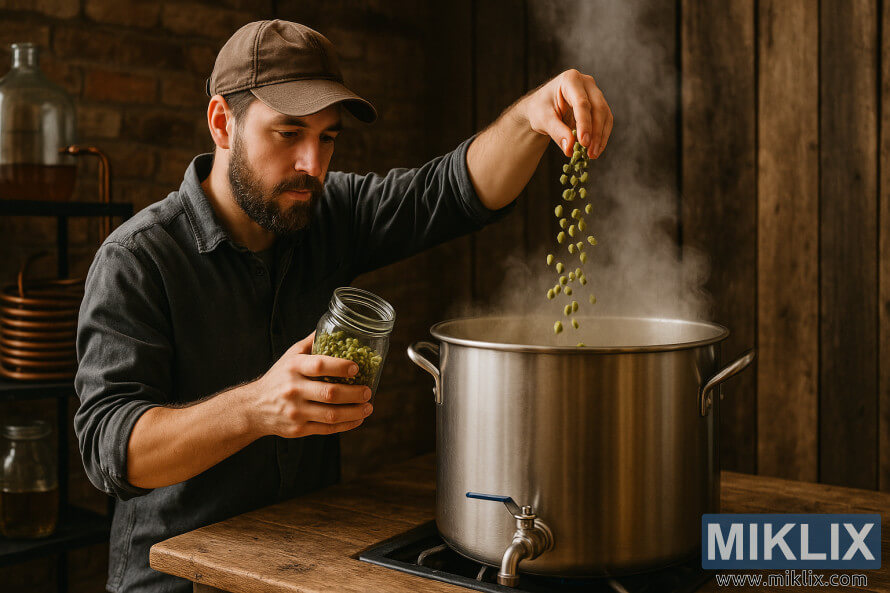
Click or tap the image for more information and higher resolutions.
Technical Data and Quality Metrics to Check
Before purchasing, always request a current Ahil COA. This certificate should detail the hop's origin, type, and chemical composition. Key metrics include alpha acids, beta acids, co-humulone, and total oil. These elements are critical in determining the hop's performance in brewing.
Ensure the Ahil alpha acid test result is provided as a percentage. A commonly reported alpha acid percentage is around 11.0%. This figure is essential for calculating bittering levels. It's also important to confirm the crop year and whether the sample is cones or pellets.
- Alpha acid percentage (current)
- Beta acid percentage
- Co-humulone percent
- Total oil (mL/100g)
- Individual oil breakdown: myrcene, humulene, caryophyllene, farnesene
- Moisture content and form (cone or pellet)
- Crop year, storage, and packaging details
Understanding Ahil quality metrics is vital for setting dosing and predicting aroma. The total oil and individual oil profile indicate the hop's aromatic capabilities. Co-humulone and alpha acid values also impact perceived bitterness and stability.
Confirm the moisture and packaging to prevent degradation. Optimal storage conditions include vacuum-sealed nitrogen-flushed packaging and cold storage. This helps extend shelf life. It's also important to verify if the supplier provides a full Ahil COA for traceability.
When crafting recipes, incorporate the Ahil alpha acid test into your calculations. This allows brewers to compare hop batches and adjust additions for consistency across seasons and suppliers.
Commercial Availability and Sourcing Ahil
Ahil is listed on various hop databases and recipe platforms. This makes it easier for brewers to find information on its aroma, alpha range, and example beers. These online resources often provide supplier availability data and links to marketplaces that sell Slovenian varieties.
To determine Ahil availability, contact well-established U.S. distributors like Yakima Chief Hops, HopsDirect, and Great Western Malting. They import European hops regularly. They can confirm whether Ahil is available in pellet or whole-cone form, provide lot COA, and specify minimum order quantities.
For direct sourcing from Slovenia, reach out to Slovenian co-ops and specialized importers. They list crop-year supply. Smaller craft importers in the U.S. may offer seasonal lots. It's important to ask about storage and shipping conditions to protect the volatile oils during transit.
- Verify form: pellet versus whole cone before you buy Ahil hops.
- Request COA and harvest year to confirm alpha acids and purity from Ahil suppliers.
- Confirm minimum order quantities and lead times for planned batches.
Marketplaces and Beer-Analytics-type platforms list recipes and stock notes. These can alert you when Ahil availability is low. When supply is tight, consider advance ordering or splitting lots with local brew clubs to secure the amount needed.
Importers can offer guidance on customs, phytosanitary rules, and recommended cold-chain options. Clear communication with Ahil suppliers reduces risk. It helps you plan for consistent hops in your brewing schedule.
Popularity, Trends, and Community Perception
Data sources show "Popularity Over Time" and "Popularity within Beer Styles" fields that are currently loading. This indicates that platforms monitor Ahil trends, even when specific numbers are absent.
Public recipe databases list Ahil in a limited number of recipes. With only four documented recipes on one platform, it's clear that Ahil is used in niche but significant ways. This scarcity helps explain its measured popularity among homebrewers and craft brewers.
Classifications identify Ahil as an aroma hop. This categorization influences brewers' expectations and shapes the community's perception of Ahil in tasting notes and online forums. Brewers often choose it for its floral and regional characteristics, using it in late additions or dry hopping.
Ahil breweries are typically regional craft operations and specialty microbreweries that experiment with Slovenian varieties. These brewers are at the forefront of Ahil trends, sharing recipes, tasting sheets, and batch notes.
To gauge sentiment, consult supplier tasting sheets, brewery notes, and forum threads on sites like Brew Your Own and BeerAdvocate. Reports vary, with Ahil used in pilsners, pale ales, and experimental saisons. This gives context to the community's perception of Ahil.
- Track Ahil trends by following platform charts where available.
- Review the few public recipes for practical examples.
- Read brewery tasting notes from Ahil breweries for sensory benchmarks.
By following these steps, brewers can form an informed view of Ahil's popularity. They can then decide if it fits their specific recipe or lineup.
Conclusion
Ahil is a standout Slovenian hop, excelling in both aroma and bittering roles. Its botanical and chemical profiles reveal an alpha-acid content of around 11%. This is accompanied by a floral, spicy oil composition. Brewers must consider all profile categories—alpha, beta, and oils—before adding it to their recipes.
When experimenting with Ahil, it's wise to start small. Use it in late additions and dry hopping to enhance aroma without overwhelming bitterness. Recipes that feature Ahil as the sole hop show its versatility. It shines in European-style lagers, pilsners, and aroma-forward ales, provided timing and dosage are carefully managed.
For those looking to brew with Ahil, here's a practical guide: obtain a supplier's Certificate of Analysis (COA) and assess alpha and oil metrics. Source Ahil from specialty distributors that import Slovenian varieties. When combined with clean lager yeasts or neutral malt bills, Ahil adds a crisp, distinctive character to balanced beers.
Further Reading
If you enjoyed this post, you may also like these suggestions: