
Hops in Beer Brewing: Azacca
Published: May 13, 2026 at 4:25:05 PM UTC
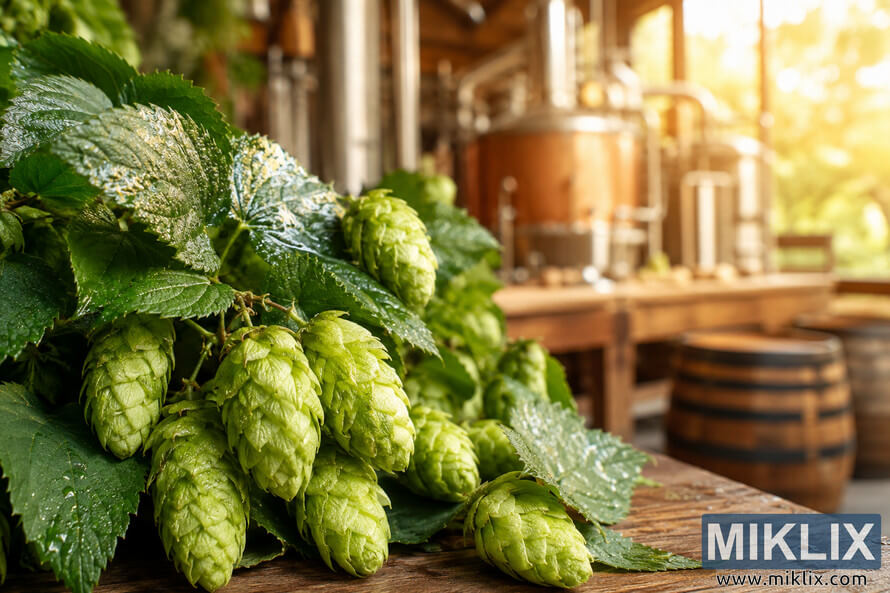
Azacca hops, developed by the American Dwarf Hop Association, are identified as ADHA-483 and AZA internationally. They are celebrated for their vibrant, tropical aroma, reminiscent of mango, papaya, and citrus. This dual-purpose hop excels in both bittering and late additions, enhancing the flavor of IPAs and pale ales.
Click or tap the image for more information and higher resolutions.
Homebrewers frequently use Azacca in SMASH experiments, pairing it with Vienna, Munich, or Maris Otter malts. This allows them to focus on the hop's unique characteristics. Online forums and recipe databases highlight its success in American Pale Ales and IPAs, where it adds depth with stone-fruit and resinous notes. Availability and pricing of Azacca hops vary by harvest year and lot, accessible through various online retailers, including Amazon.
Key Takeaways
- Azacca is a U.S. dual-purpose hop (ADHA-483, code AZA) known for tropical hops aromas.
- It performs well across the brewing process: bittering, whirlpool, and dry hop.
- SMASH tests with Vienna, Munich, or Maris Otter help reveal the Azacca hop profile.
- Homebrew communities cite stone-fruit and resinous notes alongside citrus.
- Azacca brewing materials are sold by multiple suppliers; check harvest year and format.
Introduction to Azacca and its place in modern brewing
Azacca emerged as a top choice for brewers aiming for bold tropical and citrus flavors. It maintains versatility, making it a staple in modern U.S. breweries. This introduction highlights Azacca's significance and its role in contemporary brewing.
Overview of Azacca as a dual-purpose hop
Azacca is classified as a dual-purpose hop, suitable for both early bittering and late additions. It can be added during the boil, whirlpool, or dry hop to reveal various flavors. The hop imparts vibrant mango, papaya, and pineapple notes, along with resinous pine and subtle spice.
Why craft brewers in the United States are using Azacca
Azacca's popularity in craft brewing stems from its ability to deliver tropical-fruit aromas. It's ideal for IPAs, pale ales, sours, and fruit beers. Brewers often conduct single-hop trials to showcase Azacca's delicate aroma. It complements Citra, Mosaic, and El Dorado, enhancing complex citrus and tropical profiles.
Release history and breeder: American Dwarf Hop Association
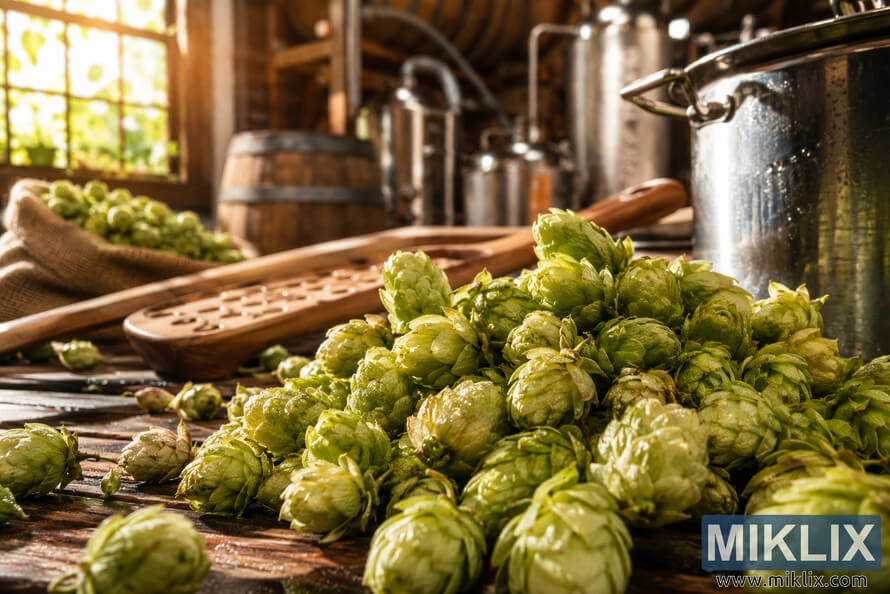
Azacca was developed and released by the American Dwarf Hop Association in 2013. It carries the identifier ADHA-483 and the international code AZA. The ADHA owns the rights and manages its propagation for commercial growers and craft breweries.
Click or tap the image for more information and higher resolutions.
Origin, genealogy, and cultivation of Azacca
Azacca's story begins with the American Dwarf Hop Association's breeding program. They aimed to create a hop with high aroma and disease resistance for U.S. farmers. This variety combines traditional and innovative hop breeding methods. It focuses on yield and aroma for craft beer.
Parentage and breeding background
- Azacca's heritage includes Toyomidori, crossed with an unknown partner. This combination aimed to capture bright fruity aromas while maintaining strong agronomic traits.
- Its family tree also includes Northern Brewer and Summit. This explains Azacca's resinous nature and reliable bittering.
Release year and cultivar identifiers
- Azacca was introduced in 2013 after extensive trials under the American Dwarf Hop Association program.
- It is known as ADHA-483 and registered internationally as AZA. This helps growers and buyers identify it accurately.
Typical harvest window and U.S. production trends
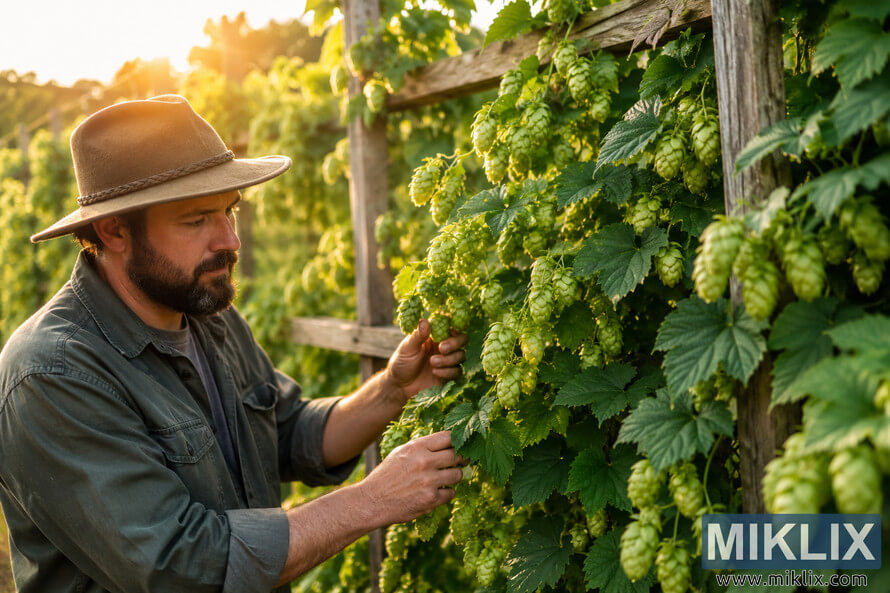
- In the U.S., aroma hop harvests start mid-to-late August. Azacca typically falls within this timeframe, influenced by latitude and weather.
- Year-to-year, the crop's aroma intensity and oil composition can vary. Brewers often track the lot and vintage to meet their recipe needs.
- After its release, production of Azacca skyrocketed. By 2019, it became one of the top twenty U.S. hops, showing strong market demand for its unique flavor.
Click or tap the image for more information and higher resolutions.
Flavor and aroma profile of Azacca hops
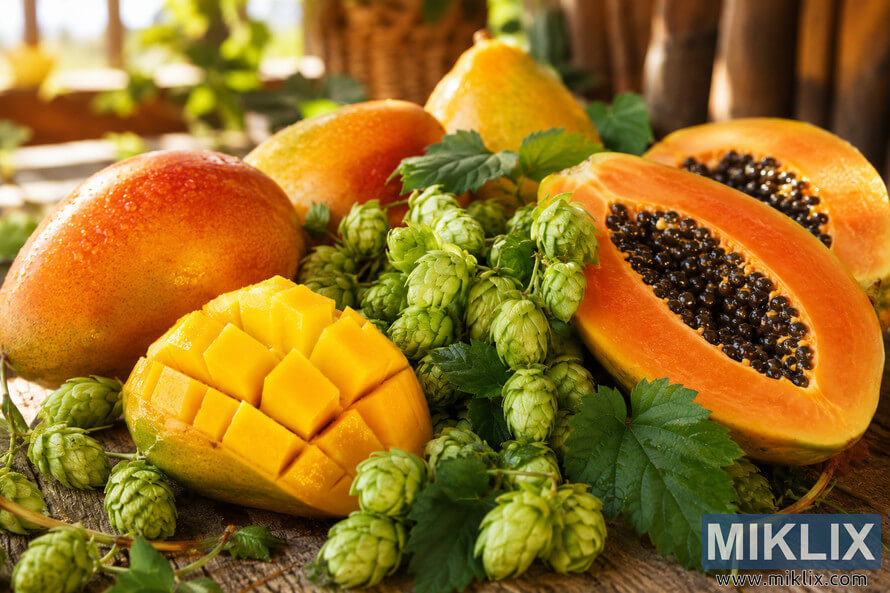
Azacca hops introduce a vibrant, fruit-forward essence that captivates brewers. The flavor profile is dominated by mango and papaya, complemented by pineapple, orange, grapefruit, and lemon. These elements create a juicy citrus experience, making Azacca a perfect match for pale malts and modern IPA recipes.
However, Azacca's profile is not just about fruit. A resinous backbone emerges, adding depth with pine and light spice. Grass and floral notes provide a fresh, green contrast, balancing the sweeter mango and papaya flavors. This balance rounds out the overall aroma of Azacca.
The aroma of Azacca can be delicate and ephemeral. To preserve its volatile oils, handle late additions with care. Employ short whirlpool rests, hop stands at lower temperatures, and ample dry-hop contact. These methods help maintain the tender tropical and citrus notes.
- Late-boil and whirlpool: protect volatile oils for max Azacca flavor.
- Dry hopping: emphasize aromatic top notes without adding harshness.
- Avoid aggressive high-temp exposure when aiming to showcase the tropical hops profile.
Click or tap the image for more information and higher resolutions.
Brewing values and chemical composition of Azacca
The chemical makeup of Azacca influences brewing decisions. Brewers rely on specific numbers for bittering, flavor, and aroma. Knowing the alpha and beta acid profiles and oil content is crucial for achieving recipe goals.
Alpha and beta acids
Azacca alpha acid typically ranges from 14–16%, averaging about 15%. This versatility allows for both early bittering and later flavor additions. Beta acid content ranges from 4.0–5.5%, averaging roughly 4.8%.
Alpha-beta ratio and co-humulone
The alpha-to-beta ratio is usually 3:1 to 4:1, averaging about 3:1. Co-humulone Azacca values are between 38% and 45% of total alpha acids, averaging 41.5%. Higher co-humulone percentages can enhance bitterness sharpness in beer.
Total oils and oil breakdown
Azacca's total oil content is 1.6–2.5 mL per 100 g, averaging 2.1 mL/100 g. This oil profile contributes to the hop's tropical, citrus-forward character.
- Myrcene: dominant at about 46–55% (avg ~50.5%)
- Humulene: roughly 14–18% (avg ~16%)
- Caryophyllene: near 8–12% (avg ~10%)
- Farnesene: low, around 0–1% (avg ~0.5%)
- Other constituents (β-pinene, linalool, geraniol, selinene): about 14–32%
These oil proportions explain the hop's bright tropical notes and resinous, floral layers. Understanding these metrics aids brewers in timing and formulating hops for the desired balance between bitterness and aroma.
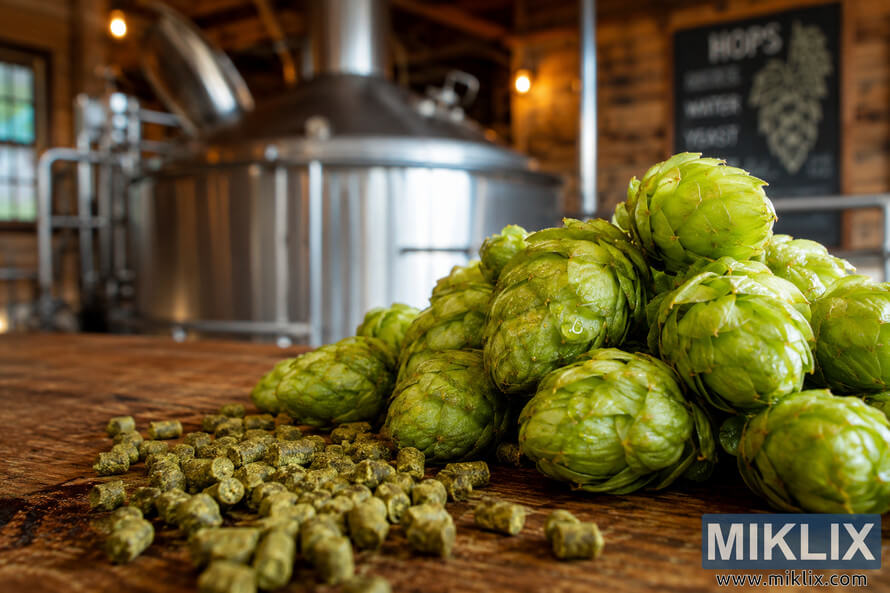
Click or tap the image for more information and higher resolutions.
How to use Azacca hops across the brewing process
Azacca hops are versatile, fitting into various stages of brewing. With an average alpha acid content of 15%, they can handle bittering tasks effectively. However, their true strength lies in their volatile oils, which provide tropical and citrus aromas. Therefore, timing and technique are crucial for achieving the desired aroma and flavor.
Boil additions for bittering versus late additions for flavor
- For bittering, add Azacca at the start of a 60-minute boil. This approach ensures a predictable IBU contribution.
- For preserving fruit and citrus notes, add most of the Azacca in the late boil, between 10–5 minutes or at flameout. This method enhances mango, pineapple, and orange flavors without introducing vegetal notes.
- To balance bitterness and aroma, consider a split charge. Use a small amount early for bitterness and a larger amount late for flavor.
Whirlpool and hop-stand techniques to highlight volatile oils
- Lower the wort temperature to preserve volatile oils. Many brewers whirlpool at 170–180°F, then cool down to 140–150°F for a hop-stand.
- Gentle agitation ensures good contact between wort and hops without excessive oxygen. A 15–30 minute whirlpool stand enhances tropical and citrus aromas.
- When using cryo or lupulin, reduce the amount to about half of pellet rates. These concentrates release oils quickly, enhancing aroma without adding astringency.
Dry hopping strategies and dosages for aroma-forward beers
- Dry hopping is ideal for fresh aroma. For Azacca dry hop, use moderate to heavy rates in IPA and pale ales to showcase stone-fruit and resin notes.
- Homebrewers often use 1–3 oz of hops per 5 gallons. Commercial brewers adjust quantities for intensity and dwell time. Cryo or lupulin requires about half the pellet dosage for similar impact.
- Extended cold dry-hop rests of 3–7 days maximize oil uptake. For very bright hop aroma, consider a short warm rest at 60–68°F before cold conditioning.
By combining these methods, you can tailor your recipe to achieve the desired balance. Using Azacca for bittering and reserving most additions for whirlpool and dry hop results in clean bitterness with vibrant tropical aroma. Adjust dosages when switching formats and handle the hops gently to preserve Azacca's unique character.
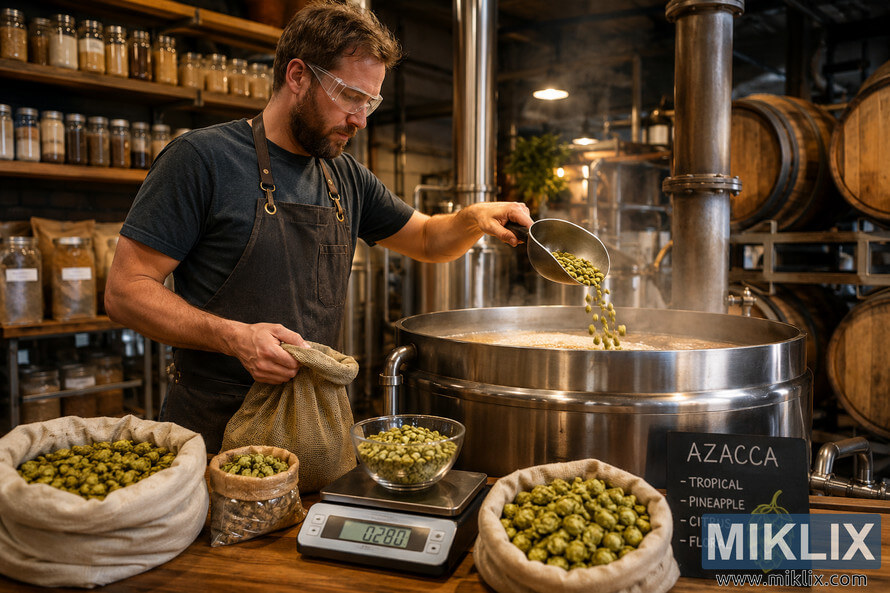
Click or tap the image for more information and higher resolutions.
Azacca hops in popular beer styles
Azacca hops introduce bold tropical and citrus flavors, enhancing a variety of modern beer styles. They bring out the bright mango, pineapple, and orange notes, elevating both aroma and flavor. This is achieved without the need for heavy malt or adjuncts.
IPA and pale ale enthusiasts prefer Azacca for its late additions and dry hops. In American IPAs, it balances intense fruit esters with a resinous backbone. This makes it ideal for creating an Azacca IPA with a hop-forward clarity or a sessionable pale ale with crisp bitterness and a vivid aroma.
Fruit beers and sours benefit from Azacca's tropical profile, adding depth. It's best added late in the whirlpool or during dry hop to preserve volatile esters. In saisons, a small amount of Azacca introduces a fresh tropical note that complements spicy yeast esters and light funk.
Some brewers choose to showcase Azacca as a single-hop variety. This allows drinkers to fully appreciate the hop's range without other varieties influencing it. Commercial examples, such as Founders Azacca IPA, serve as references for homebrewers fine-tuning their recipes.
- IPA/Pale Ale: late additions and dry hop for tropical top notes.
- Fruit beers/Sours: layer with fruit purée or lactobacillus-fermented bases.
- Saisons: small doses to complement peppery yeast esters.
- Single-hop: use fresh hop schedules to reveal pure Azacca aroma.
Homebrewers often note stone-fruit and resin impressions in their beers using Azacca. Experimenting with small changes in timing and dose can help achieve the desired balance. Whether aiming for an aromatic Azacca IPA, a bright pale ale, or a clean single-hop pour, the goal is to find that perfect balance.
Pairing Azacca with other hops and flavor-building strategies
Azacca often leads a hop bill with bright tropical and citrus notes. Its mango and pineapple character serves as a top layer. Then, partners are added to enhance depth, resin, or citrus lift. This approach preserves Azacca’s delicate aroma while adding complexity to aroma-forward beers.
Common hop partners include Mosaic, Citra, Ekuanot, Cascade, El Dorado, and Idaho 7. These hops mix fruit-forward facets with resinous or piney bases. They are used to craft complementary contrasts, rather than competing for the same notes.
- Mosaic and Azacca create layered tropical and berry tones that feel jammy without masking mango top notes.
- Citra and Azacca bring forward citrus sharpness and bright orange or grapefruit edges suitable for pale ales and IPAs.
- Ekuanot or Idaho 7 add green, resinous, and herbal depth for balance in hoppy lagers or hazy IPAs.
- Cascade or El Dorado provide citrus-rind or stone-fruit lift that supports the tropical core.
Layering aroma complexity works best when each hop has a defined role. Use Azacca in late-boil or whirlpool for primary tropical and citrus top notes. Add Mosaic or Citra to emphasize fruit complexity. Use Ekuanot or Idaho 7 for backbone and resin. Finish with Cascade or El Dorado for bright, clean lift.
Suggested hop schedules favor split late additions and staggered dry hops. Late-boil and whirlpool doses of Azacca help capture volatile oils. Split dry-hop additions preserve delicate aroma by avoiding a single large infusion that can overwhelm the beer.
- Late-boil (5–10 min): small bittering dose of a supporting hop, such as Cascade or Idaho 7.
- Whirlpool (180–90°F, 15–30 min): Azacca plus Mosaic or Citra to extract aromatic oils without harshness.
- First dry-hop (day 3–4): light dose of Ekuanot or Idaho 7 for green resin and structure.
- Second dry-hop (near packaging): Azacca and a touch of Citra for fresh top notes and finishing lift.
For homebrewers, start with modest ratios: 40–60% Azacca, 20–30% Mosaic or Citra, and 10–20% resinous hop like Ekuanot. This balance highlights Azacca pairings while keeping each hop's character clear. Adjust doses based on beer style and intended aroma intensity.
Experimentation helps identify the best hops that go with Azacca for your recipe. Track outcomes for each crop year, since variability affects aroma. Small batch trials of Mosaic and Azacca or Citra and Azacca blends reveal the most pleasing balance for your palate.
Substitutes for Azacca and when to use them
Azacca adds a vibrant tropical fruit and citrus flavor to beer. If Azacca is not available or you seek a unique twist, several hops can serve as good substitutes. The choice depends on whether you need similar alpha acids, comparable aroma intensity, or matching tropical-citrus character.
Close single-hop alternatives include Amarillo, Citra, Delta, and Pekko. Each offers fruit-forward notes, but they vary in bitterness and oil profile. Brewers often consider aroma match against alpha-acid differences when deciding to swap.
- Amarillo vs Azacca: Amarillo has a stronger orange and floral citrus presence. It's ideal when you desire clearer orange peel and a softer tropical note. Adjust the bittering if replacing Azacca at kettle addition to hit target IBUs.
- Citra substitute: Citra is known for intense mango, lime, and grapefruit facets. It's a good choice for aroma-heavy late additions, though you might reduce dry-hop weight due to its strong aroma.
- Pekko substitute: Pekko offers bright citrus with a resinous backbone. It's a solid swap for both late additions and dry hopping, providing punchy orange and stone fruit tones.
- Delta is a budget-friendly option that covers citrus and tropical notes without matching Azacca's exact perfume. Combine it with another fruity hop for more depth.
Recipe adjustments to account for alpha acids and aroma:
- First, match IBUs. Azacca averages about 15% AA. If your substitute has lower AA, increase kettle grams or ounces to reach target bitterness.
- For late additions, boost or cut gram amounts to balance aroma. Stronger aroma hops need less weight in whirlpool or dry-hop than weaker ones.
- Monitor co-humulone and perceived harshness. Some substitutes change bite; lower kettle additions or add smoother malts to compensate.
Using blends to mimic Azacca's tropical-citrus balance often yields the best results. Pairing Citra with Amarillo blends intense tropical fruit with rounded orange notes. Combining El Dorado or Mosaic with Cascade or Centennial can recreate Azacca's mix of pineapple, mango, and citrus peel.
When swapping, test small batches and scale successful ratios. Blends let you fine-tune aroma and bitterness while preserving the beer's intended character. Practical trials reduce risk and help pinpoint the right combination for your recipe.
Azacca hop formats: pellets, cryo/lupulin powder, and fresh hops
Azacca is available in various formats, each impacting how brewers manage aroma, storage, and dosing. Select the format that aligns with your brewing process and schedule. This ensures the best tropical-citrus impact in your whirlpool, dry-hop, or fresh-hop beers.
Pelletized hops are the staple for many brewers. They offer compact storage and consistent dosing, appealing to both homebrewers and commercial breweries.
- Pellets simplify inventory control and provide predictable utilization in the kettle and whirlpool.
- Utilize Azacca pellets for late additions to achieve bright fruit and citrus notes without excess vegetal character.
Lupulin and cryogenic concentrates are rich in essential oils with minimal vegetal matter. Products like Cryo by Yakima Chief and Lupomax by BarthHaas concentrate hop oils, enhancing aroma per gram.
- Azacca cryo and Azacca lupulin are dense, oil-rich powders ideal for whirlpool and dry-hop steps.
- For similar aromatic effects, use roughly half the mass of pellets, reducing vegetative contributions and trub load.
Fresh-harvest use demands speed and planning. Fresh Azacca hops exhibit greener, juicier aromas than dried varieties but must be used within days of harvesting.
- Fresh Azacca hops excel in wet-hop ales and harvest-season IPAs, particularly when picked in mid-to-late August in many U.S. growing regions.
- They offer a shift in profile, with more green, resinous notes alongside mango and citrus. Manage additions and cold-side handling to preserve this fleeting character.
Choose based on convenience, aroma intensity, and brewery logistics. Opt for Azacca pellets for a steady supply, Azacca cryo or Azacca lupulin for maximum oil-driven aroma. Select fresh Azacca hops when you can brew immediately after harvest.
Storage, freshness, and hop stability for Azacca
Proper storage of Azacca hops ensures the preservation of its vibrant tropical aroma and bitterness. Brewers aiming for consistent results must focus on hop freshness and simple handling practices. These steps protect the volatile oils and alpha acids crucial for flavor.
Azacca HSI values provide a quick gauge of hop stability. Historical data indicates an Azacca HSI around 24%, suggesting moderate degradation when stored at room temperature for months. For those emphasizing aroma, using fresher hops results in clearer mango, pineapple, and citrus notes.
To minimize loss, adhere to basic storage best practices for Azacca hops. Use vacuum sealing or oxygen-barrier bags to exclude oxygen. Store hops in a refrigerator for short-term use. For longer storage, freezing slows down oil and alpha-acid degradation.
- Vacuum seal or use nitrogen-flushed packaging to reduce oxygen contact.
- Store in cold conditions: refrigeration or freezer depending on how soon you will use them.
- Handle minimally and keep pellets in opaque containers to limit light and heat exposure.
When storing Azacca hops, verify the harvest year and lot information before purchase. Crop-year variations can significantly alter alpha-acid levels and oil profiles. Newer harvests offer fresher hop freshness, ideal for whirlpool and dry-hop applications.
Plan your recipes around the availability of Azacca hops. Use older lots for bittering additions, where aroma loss is less critical. Reserve recent harvests for late additions and dry hopping to showcase Azacca’s tropical essence.
Recipe ideas and single-malt experiments showcasing Azacca
Azacca shines in focused recipe tests, highlighting its tropical and citrus notes. Begin with a simple malt base and aim for moderate bitterness. Late hop additions and dry hopping are key to bringing out mango, papaya, and bright orange flavors.
For a straightforward Azacca SMASH, select one malt like Maris Otter, Vienna, or Munich. Mash at a balanced temperature to achieve a moderate body. Use a single-hop schedule emphasizing late additions and dry hopping to enhance aroma without overpowering delicate esters.
- Typical grain bill: 10–12 lb Maris Otter or Vienna for a 5-gallon batch with 5–8% specialty malt like carahell or light crystal.
- Bittering: calculate IBUs based on Azacca’s AA (~15%) and target 25–35 IBUs for a pale balance.
- Late additions: 40–20 minutes for flavor, whirlpool at 160–170°F for 15–30 minutes, then dry-hop 3–5 g/L for 48–72 hours.
Homebrewers often share single-hop Azacca recipe variants using a pale ale base. These recipes aim for stone-fruit and resinous notes by keeping bitterness moderate and amplifying late hop contact. A focused single-hop trial helps evaluate Azacca’s nuance against a neutral malt profile.
To rework an existing IPA around Azacca, swap primary late and dry-hop additions for Azacca while holding original bittering hops to preserve balance. Reduce any competing citrus-heavy hops like Citra if you want Azacca’s mango and tropical profile to lead.
- Keep the base malt the same: maintain original mash schedule to keep body consistent.
- Adjust late additions: replace 60–100% of late and whirlpool hops with Azacca for aroma focus.
- Dry-hop plan: split charges—half on day two of fermentation, half at high krausen or post-fermentation for layered aroma.
Example Azacca pale ale recipe for 5 gallons: 10 lb Maris Otter, 1 lb light crystal 10L, 0.5 lb Munich; target OG 1.050, FG 1.010. Bitterness 30–35 IBU, driven by a small early addition and larger whirlpool and dry-hop Azacca doses. Use a clean American ale yeast to let hop flavors shine.
When testing a single-hop Azacca recipe, keep records of hop weights, timing, and temperatures. Small tweaks to whirlpool time or dry-hop dose reveal how sensitive Azacca is to handling. These experiments inform how to scale Azacca into larger IPAs or specialty pale ales.
Commercial availability and purchasing tips for Azacca
Azacca hops are widely available in the U.S. through hop merchants and specialty retailers. You can find them at suppliers like Yakima Chief, BarthHaas, and Hopsteiner. Additionally, smaller craft distributors and some Amazon listings also offer Azacca hops. Availability can change due to demand and crop yields, so it's crucial to check stock and labeling before making a purchase.
When evaluating options, focus on the Azacca harvest year and lot notes. The intensity of tropical and citrus aromas can vary by crop year. Lot variability impacts alpha acids and oil character, which are important for recipe consistency.
- Compare Azacca pricing across different formats like pellets, whole-cone, and lupulin. Lupulin or cryogenic concentrates are more expensive per gram but require less by weight.
- Be aware of unit sizing on listings. Some distributors sell by ounce, pound, or kilogram. Pricing can vary based on format and volume.
- Read supplier descriptions for processing dates and recommended storage. This information helps judge freshness for aroma-forward beers.
Scale your purchases to match your brewing needs. Homebrewers usually buy ounces to a few pounds, focusing on smaller, fresher lots. Commercial brewers should secure contracts or bulk lots from reliable suppliers to ensure supply and better pricing.
- Begin with a small order if testing a new lot. This allows you to confirm aroma and alpha values against the label.
- If planning seasonal releases, work with suppliers early to reserve specific harvest-year lots that align with your production schedule.
- Consider storage capacity and hop stability. Vacuum-sealed, cold storage preserves freshness and protects the unique character tied to a specific Azacca harvest year.
Production statistics and market growth of Azacca
Azacca production skyrocketed after its release, captivating the attention of both craft brewers and commercial producers. Between 2014 and 2019, the planted acreage and harvested totals saw a significant increase. This rise mirrors the growing demand for Azacca's unique tropical flavor.
Industry reports highlight a 339% increase in Azacca production from 2014 to 2019. This rapid growth underscores the variety's swift adoption in U.S. hop yards.
Hops production statistics reveal Azacca's emergence as a key player. By 2019, it ranked as the 18th most grown hop in the United States. This transition from a niche to a staple for brewers is noteworthy.
The implications for supply and price dynamics are influenced by seasonal factors. Increased acreage generally helps stabilize shortages and price volatility. However, crop quality, lot-to-lot variation, and strong demand can still cause price fluctuations.
- 2014–2019 growth illustrates strong Azacca market growth driven by craft and larger breweries.
- Ranking 18th in 2019 signals mainstreaming but not oversupply.
- Year-to-year hops production statistics remain important for budgeting and contract planning.
Brewers should monitor harvest reports and supplier inventories closely. Grasping these production trends aids in forecasting availability and setting price expectations. It also informs decisions on when to secure contracts or purchase spot lots.
Common brewing challenges and troubleshooting with Azacca
Azacca's bright tropical and citrus notes can disappear if the brewing process is too harsh. To avoid this, it's crucial to make thoughtful decisions about hopping, malt, and fermentation. This ensures Azacca's flavors shine without becoming harsh or muddled.
To maintain the aroma, focus on late additions and gentle handling. Incorporate whirlpool or hop-stand additions and a detailed dry-hop program. Avoid early kettle additions that can lose volatile oils. Also, keep malt and adjunct flavors minimal to highlight Azacca's mango and citrus notes.
- Late additions: whirlpool at 170–180°F for 15–30 minutes.
- Dry-hop: split additions, one during active fermentation and one post-ferment for balance.
- Malt choices: pale base malts and light crystal to avoid masking fruit esters.
Managing bitterness is a common challenge with Azacca. Its co-humulone content is higher than some modern hops, leading to a sharper bitterness. To balance this, use smoother bittering hops like East Kent Goldings or Bramling Cross when necessary.
- Keep kettle IBUs moderate when aiming for aroma-forward beers.
- Use a lower alpha bittering hop early, then boost late additions for flavor.
- Consider hop utilization changes with boil time to fine-tune perceived Azacca bitterness.
Fermentation management is key to preserving hop character. Choose clean, neutral yeast strains like SafAle US-05 or Wyeast 1056. Control fermentation temperature to prevent fusel or phenolic byproducts that can mask hop nuances.
Be cautious with adjuncts and fruit additions, as they can overpower Azacca. In sours or fruit beers, add fruit in stages and reduce heavy adjuncts. For kettle-soured beers, add hops after souring to preserve volatile oils.
When troubleshooting, document each variable: hop timing, lot year, pellet versus cryo, yeast strain, and fermentation profile. Small, systematic adjustments will help determine if character loss is due to recipe balance, process, or raw material. This methodical approach ensures Azacca's aroma and bitterness are preserved.
Conclusion
Azacca (ADHA-483, code AZA) has solidified its position in modern brewing. It is a U.S.-bred, dual-purpose hop known for its bright tropical and citrus flavors. These include mango, papaya, pineapple, orange, grapefruit, and lemon, complemented by pine and spice. This summary outlines its typical chemical profile and oil-rich character, making it valuable for late additions and aromatic treatments.
For brewers using Azacca hops, technique is key. Favor late-boil and hop-stand additions, or use cryo/lupulin at roughly half pellet dosing to capture volatile oils. Azacca excels in IPAs, pale ales, and single-hop experiments. SMASH builds with Vienna or Maris Otter, and adjusted IPA grain bills highlight its stone-fruit and resinous traits while managing bitterness.
This brewing guide also addresses market realities. Strong production growth has improved availability, but crop-year variation and storage (HSI near 24%) still impact aroma. Buy with attention to harvest year and format, store cold and oxygen-free, and adjust hop schedules to protect its delicate tropical-citrus layers. With proper care, Azacca can be a reliable tool for flavorful, aroma-forward beers.
FAQ
What is Azacca and who bred it?
Azacca, with the cultivar code ADHA-483 and international code AZA, is a U.S.-bred dual-purpose hop. It was released in 2013 by the American Dwarf Hop Association. Developed from Toyomidori, it has lineage ties to Northern Brewer and Summit.
What aroma and flavor characteristics does Azacca provide?
Azacca offers pronounced tropical and citrus notes, including mango, papaya, pineapple, orange, grapefruit, and lemon. It also has secondary pine, spice, grassy, and floral components. The overall character is a blend of juicy fruit and resinous, lightly spicy accents.
Is Azacca better for bittering or aroma additions?
Azacca, with about 14–16% alpha acids (≈15%), can be used for bittering. Its aromatic strengths are best realized with late-boil, whirlpool/hop-stand, and dry-hop additions. This preserves volatile oils like myrcene and linalool.
How should I schedule Azacca additions in a recipe?
For aroma-focus, schedule late boil additions and use whirlpool or hop-stand at cooler wort temperatures. Many brewers rest between roughly 170–180°F down toward 140–150°F. Heavy or split dry-hop additions further highlight Azacca’s tropical-citrus notes. Use kettle additions for base IBUs if needed.
What dry-hop dosing and formats work best for Azacca?
Pellets are common; cryo/lupulin concentrates (Yakima Chief Cryo, BarthHaas Lupomax styles) are effective at roughly half the pellet weight. Typical homebrew dosages vary with desired intensity—moderate to heavy dry-hop schedules are common for single-hop showcases.
Which beer styles suit Azacca?
Azacca is popular in Pale Ales and IPAs and also works well in fruit beers, sours, and saisons. Its tropical-citrus profile makes it a strong choice for hoppy, aromatic styles and single-hop experiments.
Can Azacca be used as a single-hop or in SMASH experiments?
Yes. Homebrewers often run SMASH batches using Maris Otter, Vienna, or Munich malts to evaluate Azacca’s contribution. Single-hop pale ales and APAs let brewers hear the hop’s stone-fruit and resinous voice more clearly.
What hops pair well with Azacca?
Common partners include Mosaic and Citra for extra fruit complexity, Ekuanot or Idaho 7 for resinous/green lift, and Cascade or El Dorado for citrus or stone-fruit balance. Layering these hops builds breadth without masking Azacca’s top notes.
Which hops make good substitutes for Azacca?
Amarillo, Citra, Delta, and Pekko are often recommended as substitutes. Because alpha-acid and oil profiles differ, adjust bittering additions to hit target IBUs and tweak late/whirlpool/dry-hop amounts to match aroma intensity. Blends (e.g., Citra + Amarillo) can better mimic Azacca’s tropical-citrus-resin balance.
How does crop year and storage affect Azacca?
Crop-year variation changes alpha acids, oil composition, and aroma intensity. Azacca’s historical HSI is about 24% (0.241), so freshness matters. Vacuum-seal or use oxygen-barrier packaging and cold storage (refrigeration or freezing). Prefer recent harvests for aroma-forward uses.
Where can I buy Azacca and what should I check when purchasing?
Azacca is sold by hop suppliers and distributors and appears on marketplaces like Amazon. Check harvest year, lot information, and format (pellet vs. cryo/lupulin). Lupulin/cryogenic concentrates cost more per gram but are used at roughly half pellet weight.
How much Azacca should I use for bittering if average AA is ~15%?
Use standard IBU calculations based on the target bitterness. Because Azacca averages ~15% AA, reduce or increase pellet mass relative to your bittering hop plan to reach desired IBUs. Many brewers use other smoother bittering hops and save Azacca for late additions to avoid perceived harshness from its co-humulone share (~38–45%).
What are practical brewing tips to preserve Azacca’s delicate aroma?
Avoid long, high-temperature exposure for aroma additions. Favor late-boil, whirlpool/hop-stand at cooler temperatures, and staged dry-hop additions. Use cleaner yeast strains and moderate specialty malts or adjuncts so hop aromatics aren’t overwhelmed.
How does Azacca’s oil composition influence its aroma?
Total oils average about 1.6–2.5 mL/100g (≈2.1 mL). Myrcene dominates (≈46–55%), giving fruity and resinous character; humulene (≈14–18%) and caryophyllene (≈8–12%) add spice and backbone. Smaller components like linalool and geraniol contribute floral and citrus nuances.
Are there commercial beers that feature Azacca?
Yes. Founders’ Azacca IPA is a known commercial example that showcases Azacca. Many craft breweries in the U.S. use Azacca in single-hop releases and blended hop recipes for tropical-citrus-forward beers.
How has production of Azacca changed over recent years?
Azacca production grew rapidly—about 339% between 2014 and 2019—and by 2019 it ranked roughly 18th in U.S. hop acreage. Growth improved availability but crop-year variability and market demand still affect supply and price.
Should I consider fresh (wet) Azacca hops?
Fresh-harvest Azacca can offer greener, different aromatics but must be used quickly after harvest, typically around the mid-to-late August U.S. harvest window. Fresh hops are great for wet-hop beers but require logistics for timing and use.
How do cryo or lupulin products change dosing and results?
Cryo/lupulin concentrates concentrate oils and lupulin matter, so brewers generally use about half the pellet weight to achieve similar aromatic impact. They reduce vegetal matter in dry hops and can intensify tropical and resinous notes at lower mass.
What grain bills and bitterness targets work well when showcasing Azacca?
For single-hop or SMASH tests, use a neutral pale malt base such as Maris Otter or a pale ale malt with small specialty additions. Target IBUs in the 25–45 range for Pale Ale/APA balance, and emphasize late additions and dry-hop to spotlight Azacca’s tropical-citrus profile.
Further Reading
If you enjoyed this post, you may also like these suggestions: