
Hops in Beer Brewing: Bianca
Published: December 20, 2025 at 11:13:49 PM UTC
Bianca hops, a notable variety, have caught the eye of craft brewers and homebrewers. They are known for their bright, aromatic profile. Cataloged among aroma hops, Bianca brings a mix of floral and fruity notes. These enhance pale ales, lagers, and IPAs.
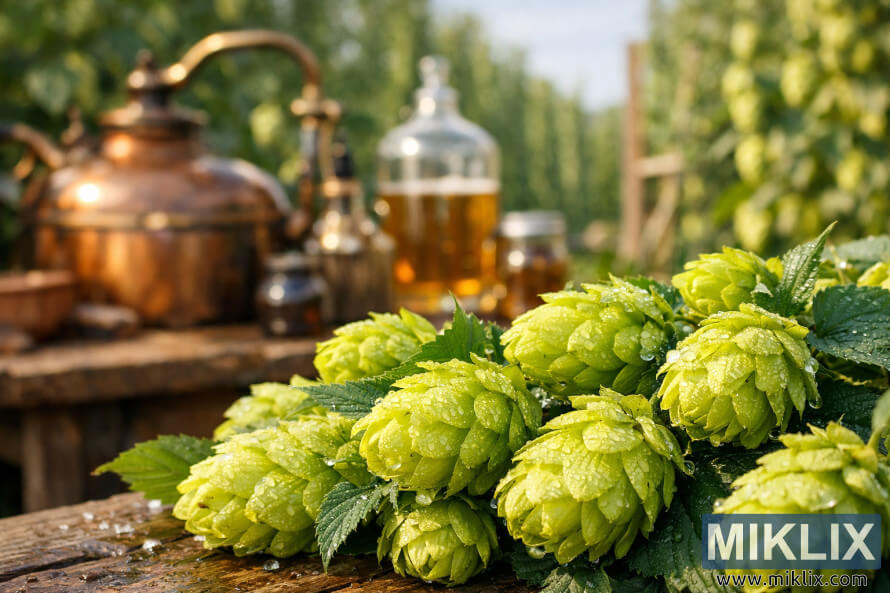
Click or tap the image for more information and higher resolutions.
Discover the unique role of Bianca hops in beer brewing. They are your gateway to sensational flavors and aromatic bliss in craft beers.
This article, matching the Bianca meta title, will cover the essentials U.S. brewers need. We'll explore origin and chemistry, practical brewing techniques, and ideal beer styles. We'll also discuss substitutions, availability, storage, calculations, recipes, and troubleshooting. It will show how hops in beer brewing act as both flavor drivers and aromatic agents. Craft brewing Bianca can shape the final beer character.
Key Takeaways
- Bianca hops are primarily used as an aroma hop with floral and fruity character.
- The Bianca hop variety is listed in U.S. hop databases and comparison tools.
- Craft brewing Bianca works well in pale ales, lagers, and modern hop-forward beers.
- Practical coverage will include chemistry, kettle use, whirlpool, and dry hopping.
- Future sections explain availability, storage, calculations, recipes, and troubleshooting.
What Are Bianca Hops and Their Origin
Bianca hops started as an ornamental vine in the United States. Their origin is rooted in breeding for garden appeal, not brewing. Breeders focused on appearance, vigor, and cluster form, highlighting the ornamental hop history.
The Bianca hop genealogy connects it to other decorative varieties. Catalogs and databases reveal relatives like Sunbeam, sharing similar visual characteristics. This places Bianca among hops classified by purpose, acknowledging its aroma potential despite its decorative origins.
Bianca is listed in hop catalogs and databases for various reasons. Growers categorize it as an aroma and dual-purpose hop. Breeders often mention its harvest timing. Commercially grown Bianca is typically harvested in mid-to-late August.
Brewers and growers have explored Bianca's brewing potential, noting Saaz-like aromas in some lots. Despite its ornamental origins, practical trials have shown it can add delicate, noble-style aromas. This transition from garden to kettle explains Bianca's presence in both nursery catalogs and brewing databases.
Bianca hops Flavor and Aroma Profile
Bianca is primarily an aroma hop. Brewers use it in late boil additions and for dry hopping to capture delicate oils. The Bianca flavor profile leans toward a Saaz-like noble character that shows best when cones are handled gently.
Hop descriptors Bianca commonly include floral notes, a soft spiciness, and green or fresh herbal tones. These traits match many descriptions found in hop databases and tasting notes. When used properly, the Bianca aroma can bring a subtle, classic noble lift to lagers and lighter ales.
Bianca gives a Saazer-style hops impression without being an exact match. Brewers who want the Saaz family feel often reach for Bianca as a local or modern alternative. The hop’s total oil content supports aromatic use, even when exact oil breakdowns such as myrcene or humulene are not available.
For best results, focus on late additions and dry hopping. Volatile oils drive the Bianca aroma, so early boil additions will lose much of the delicate character. Paired with restrained malt and clean yeast strains, the Bianca flavor profile comes through with clarity and balance.
Simple pairings highlight Bianca’s strengths. Use it in pilsners, Vienna lagers, and traditional ales where floral and noble spiciness are wanted. Careful dosing preserves the hop descriptors Bianca is known for and keeps the aroma crisp rather than overwhelming.
Bianca hops Brewing Values and Chemical Composition
Bianca alpha acids range from 7–8%, averaging 7.5%. This range offers brewers a balanced bitterness option. Increasing the boil time enhances the isomerization of these acids, leading to a more pronounced bitterness.
Beta acids in Bianca average about 3.4%. Unlike alpha acids, beta acids do not contribute significantly to bitterness. Instead, they are responsible for volatile aroma compounds. These aromas become apparent when hops are added late in the boil or during fermentation.
The cohumulone in Bianca is between 20–28% of the alpha fraction, averaging 24%. This moderate cohumulone percentage results in a smoother, less harsh bitterness. It contrasts with hops having higher cohumulone levels.
Bianca total oils range from 0.6–1.0 mL/100g, averaging 0.8 mL. These oils are highly volatile. They are best showcased through late kettle additions, whirlpool hops, or dry hopping, where aroma retention is crucial.
- Alpha acids: 7–8% (average 7.5%) — primary source of bitterness.
- Beta acids: ~3.4% (average 3.4%) — aroma precursors, not main bittering agents.
- Cohumulone Bianca: 20–28% of alpha (average 24%) — moderate contribution to smooth bitterness.
- Bianca total oils: 0.6–1.0 mL/100g (average 0.8 mL) — volatile aroma carriers.
Oil breakdown in available datasets is incomplete. When specific percentages for myrcene, humulene, caryophyllene, and farnesene are missing, those entries list "All Others" as 100%. This gap means the hop chemical composition is partly unknown. Rely on sensory trials and late additions to judge aroma potential.
For brewing practice, the moderate Bianca alpha acids allow dual use. Early additions provide measurable bitterness when desired. Late and whirlpool additions showcase Bianca total oils and the aroma compounds tied to Bianca beta acids. Brewers seeking a smoother boil bitterness will appreciate the moderate cohumulone Bianca level.
When planning recipes, treat Bianca as primarily an aroma-forward variety with enough bittering power for balance. Use calculated alpha acid contributions for IBUs if boiling early. Reserve significant hop mass for late additions to capture the volatile hop chemical composition that gives Bianca its floral and herbal lift.
How to Use Bianca Hops in the Brew Kettle
Bianca is most effective as a finishing hop. For its aromatic and delicate Saaz-like notes, add Bianca in the last 15–5 minutes of the boil. This method preserves volatile oils, enhancing the bright, noble character of lagers and ales.
However, avoid long, vigorous boils to preserve aroma. Prolonged heat can drive off oils, reducing the impact of late additions. If you must boil longer, increase the weight of late additions to compensate for oil loss.
If you aim for bitterness, consider Bianca's alpha acid range of 7–8%. Early additions will isomerize these acids, increasing IBUs. The co-humulone content of 20–28% ensures a smoother bitterness compared to high cohumulone varieties.
- Typical timings: 15 min for aromatic flavor, 5 min for peak aroma, and a hopstand/whirlpool for gentle extraction.
- Use late boil Bianca for subtle noble character in Pilsners and Belgian styles.
- When replacing Saaz, match late addition timing rather than large early bittering additions.
For Belgian/Pilsner kettle hops, treat Bianca as a finishing and flavor partner. Early additions will shift its role from aroma hop to bittering hop. Small adjustments in Bianca hop timing can transform its profile from faint herbal to pronounced floral.
When using whole cones, pinch and drop them near the end of the boil to release oils without excessive volatilization. With pellets, expect slightly faster extraction; reduce contact time for the lightest noble impression.
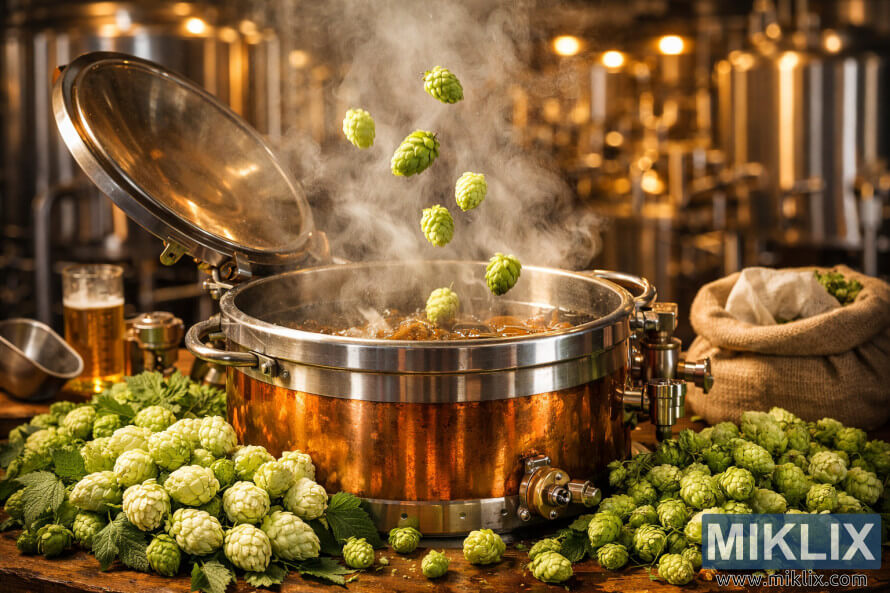
Click or tap the image for more information and higher resolutions.
Bianca hops for Dry Hopping and Whirlpool Additions
Bianca shines as a late hop addition, preserving its vibrant, green-fruit essence. Brewers prefer dry hopping with Bianca to capture volatile oils lost in boiling. This method ensures the aroma remains bold and fresh post-fermentation.
For whirlpool work, aim for a short rest at 160–180°F. A 15–30 minute whirlpool at these temperatures extracts aroma effectively. This approach avoids losing delicate esters, resulting in a cleaner, more consistent fruit note.
Timing is crucial for late hop additions. Employ small, frequent additions to layer citrus, pear, and herbal tones. A combination of whirlpool and dry hop often achieves the best flavor and aroma balance.
Bianca dry hopping can last from two to five days post-fermentation. Cold dry hopping at refrigerator temperatures slows biotransformation, preserving the hop's true profile. Warm dry hopping, however, speeds extraction but may alter the flavor towards vegetal or dank notes.
- Pellet or whole-cone forms work well; adjust rates for form and batch size.
- Use 0.5–2 oz per gallon for assertive aroma, lower for subtle lift.
- Combine with neutral yeast strains to showcase Bianca’s top notes.
One limitation is the absence of cryo Bianca from major lupulin product lines. Suppliers like Yakima Chief Hops Cryo, Barth-Haas Lupomax, or Hopsteiner do not offer Cryo or lupulin-only Bianca. Brewers must use conventional pellets or cones, which may have higher vegetal matter and less concentrated lupulin.
Workflows combining whirlpool and dry hop reduce the need for concentrated products. A modest Bianca whirlpool followed by a light dry hopping offers layered aroma without relying on cryo extracts. This method preserves nuance and maximizes the hop's natural oil content.
Beer Styles That Work Well with Bianca Hops
Bianca hops are perfect for beers needing a subtle, noble touch. They're ideal for lagers and Pilsners, adding a light floral spice without harsh bitterness.
In Pilsner, Bianca brings a Saaz-like aroma with late-kettle or whirlpool additions. Brewers aiming for a delicate finish often choose minimal contact time to maintain a clean palate.
Lager Bianca excels with cool fermentation and careful hopping. Late additions or a brief dry-hop enhance aroma while preserving the malt's crisp clarity.
Belgian ale Bianca complements estery yeast strains, creating a complex, layered taste. Its noble character supports fruity esters and Belgian phenolics, enhancing the beer's depth without dominating it.
- Use late-kettle or whirlpool hops for restrained aroma in Pilsner Bianca recipes.
- In lager Bianca programs, prioritize time and temperature control over heavy hopping.
- For Belgian ale Bianca, match hop additions to yeast-driven complexity.
Bianca beer styles often eschew the boldness of IPAs. Instead, use Bianca as a finishing hop to showcase finesse, not brute force.
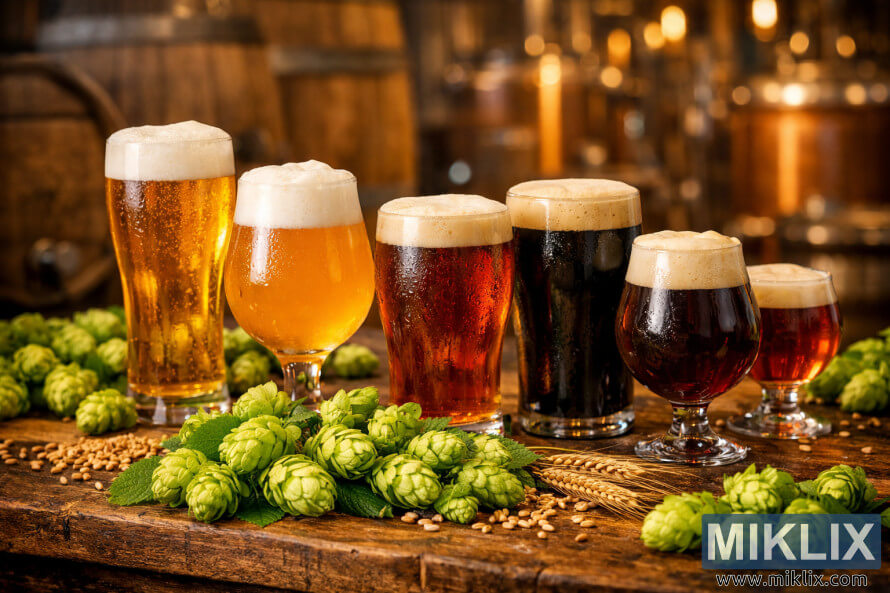
Click or tap the image for more information and higher resolutions.
Bianca hops Substitutes and Comparisons with Other Hops
Experienced brewers often seek Bianca substitutes when a crop is scarce or a recipe needs tweaking. Sunbeam substitute is a common choice because Sunbeam is a half-sister with similar herbal, spicy, and floral notes. Tasting side-by-side reveals close aromatic traits for lager and pilsner styles.
When you need a Saaz alternative, pick hops that share low-to-moderate alpha acids and noble-like earthiness. Look for soft spice, mild floral top notes, and balanced bitterness. Use small test batches to confirm the outcome before scaling up.
Databases show alpha acid ranges and oil totals, but those figures do not tell the full story. Oil composition can shift how a hop behaves in the kettle and during dry hopping. A hop comparison Bianca tool helps compare up to three varieties for aroma and brewing values before substitution.
- Start with aroma-focused varieties that match Bianca’s profile.
- Match alpha acids roughly when substituting in the boil for bitterness control.
- Plan small-scale trials for dry hopping to detect subtle oil differences.
Practical substitution relies on empirical tasting and brief pilot batches. Public datasets leave some Bianca oil details incomplete, so firsthand sampling reduces risk. Skilled brewers document their sensory notes for future hop substitutions.
Availability and Purchasing Bianca Hops
Finding Bianca hops can be challenging compared to common aroma varieties. Small-batch growers, specialty hop retailers, and ornamental hop nurseries may carry them. It's wise to compare offerings from various Bianca suppliers, focusing on harvest year, lot size, and price.
Amazon.com sometimes lists packets or small volumes of Bianca hops. For larger quantities needed for commercial brewing, reach out to regional distributors and hop merchants. When searching to buy Bianca hops, pay attention to lot details and dry-hop suitability.
The timing of the harvest impacts the aroma and alpha profile of Bianca hops. In the U.S., aroma hop harvests typically occur in mid-to-late August. This timing is crucial when comparing fresh resins or pellets from different suppliers.
Practical buying steps:
- Confirm harvest year and lot number with the supplier.
- Ask for COAs or lab reports when available.
- Compare shipping methods to protect freshness.
- Consider seed and ornamental hop growers for plant material if commercial stock is limited.
When using general marketplaces, it's important to check seller feedback and return policies. Searching for Bianca Amazon listings can reveal small retail options, but availability can vary. For a steady supply, establish relationships with trusted Bianca suppliers. This way, you can monitor hop availability Bianca and reserve future crops.
Click or tap the image for more information and higher resolutions.
Is There a Lupulin or Cryo Version of Bianca Hops?
Major hop processors have not released a lupulin Bianca product. Yakima Chief Hops, Barth‑Haas, and Hopsteiner do not list a Bianca lupulin powder or a Lupomax variant in their catalogs. Brewers seeking concentrated lupulin Bianca must still buy whole cone, leaf, or pellet forms from hop suppliers.
The absence of a Cryo Bianca or Bianca lupulin powder means brewers cannot use a ready‑made concentrated product to boost whirlpool or dry‑hop intensity for Bianca-forward beers. This limits options when aiming for amplified aroma with less vegetal matter in the fermenter.
Some brewers express disappointment that Cryo hops Bianca have not appeared. They believe lupulin concentrates could offer cleaner aroma extraction and reduced trub. For now, users adapt by using higher pellet additions, split whirlpool/dry‑hop schedules, or cold soak techniques to lift Bianca’s character.
When suppliers do expand their Cryo or lupulin lines, check processing notes and alpha profiles carefully. Until then, plan recipes around available pellet and whole‑cone Bianca, and adjust hop timing to get the most from the variety.
Bianca hops and Brewing Calculations
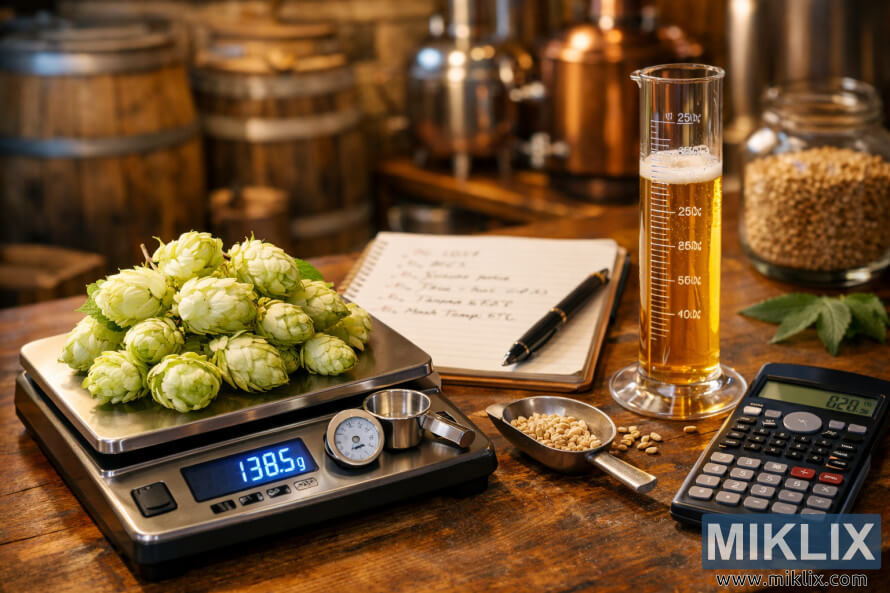
Begin with the average alpha acid range for Bianca, which is 7–8%. Use 7.5% as a midpoint for calculations. For bittering, apply a standard utilization formula. This ensures Bianca IBUs accurately reflect early boil additions.
Early boil hops convert alpha acids into measurable bitterness. Adjust hop weights accordingly to achieve the desired IBU levels.
When calculating Bianca alpha acids, consider batch size, boil time, and wort gravity. Incorporate co-humulone values, around 20–28%, to estimate bitterness feel. A moderate co-humulone suggests a smoother bitterness compared to hops with high co-humulone.
Late-hop and whirlpool additions differ significantly. For aroma-focused additions, prioritize weight over strict IBU targets. Volatile oils are more crucial for sensory impact than bitterness. With total oils near 0.8 mL per 100 g, increase late additions for stronger scent and flavor.
Follow a simple checklist for hop calculations:
- Decide on desired IBUs and use 7.5% alpha for initial math.
- Choose utilization based on boil minutes and gravity.
- For late additions, convert aroma goals into grams per liter instead of IBU.
- Keep notes on harvest-year variability for future adjustments.
Practical rules of thumb aid on brew day. For delicate lagers and pilsners, start with conservative hop amounts and gradually increase. For Belgian ales and bold styles, scale up late and dry-hop weights to enhance floral and herbal notes.
Record each brew’s Bianca IBUs and aroma weights. Use these records to refine calculations for future batches. This trial-and-adjust approach ensures consistent recipes while accommodating natural variations in alpha acids and oil content.
Click or tap the image for more information and higher resolutions.
Storage, Handling, and Quality Considerations for Bianca Hops
Proper Bianca hop storage starts with packaging that blocks oxygen and light. Use vacuum-sealed, oxygen-barrier bags or cans to slow oxidation. This helps preserve volatile oils, which are key to Bianca's unique character.
For optimal results, keep hops cold. Refrigeration is best for short-term storage, while freezing is ideal for longer periods. It's important to note whether you have pellets or cones, as each form ages differently.
Always check lab reports and the harvest year before making a purchase. Crop-to-crop variability can affect alpha acids and aroma oils. Confirming the analysis ensures the hop quality Bianca meets your recipe's needs.
Follow practices that minimize oxygen pickup. Only open packages when you're ready to use them. Avoid excessive agitation during transfer to reduce aroma loss during dry hopping or whirlpool additions.
- Store pellets and cones sealed and frozen for long-term use.
- Use refrigerated storage for short-term sessions of a few weeks.
- Label packages with harvest year and lot number to track freshness.
- For dry hop additions, add hops gently to limit splashing and oxygen exposure.
Respect the recommended windows for use. Pellet and cone formats have different shelf lives. Using hops within those windows preserves the 0.6–1.0 mL/100g total oils that contribute to hop quality Bianca.
When measuring doses, work quickly and with clean tools. Good practices for storing Bianca hops and careful hop handling Bianca will protect flavor and aroma through to packaging.
Recipes and Practical Brew Day Examples Using Bianca Hops
Below are compact, field-tested recipes and timing notes to help you plan a Bianca brew day. Adjust hop weights for alpha acid (7–8%) and batch volume. Run small trial batches to fine-tune aroma intensity across harvest years.
- Pilsner Bianca recipe:
- Use Bianca as 100% of finishing hops to achieve a Saaz-like noble character without masking the malt. Add 10–20 g/gal at 10–0 minutes, split across late additions if preferred. Dry hop 2–4 g/gal for 3–5 days post-fermentation for lift and softness.
- Lager with Bianca:
- For lagers, favor a late-kettle whirlpool at 160–180°F. Add 5–10 g/lb of total hops for 20–30 minutes to capture gentle floral spice. Optionally dry hop 1–2 g/lb after fermentation for subtle aromatic rounding.
- Belgian Bianca recipe:
- Pair Bianca with an estery Belgian yeast strain. Add 5–10 g/gal at flameout or whirlpool to support yeast-driven fruitiness. Finish with a 2–3 g/gal dry hop for 2–4 days to complement clove and pepper notes without overpowering banana-esters.
When converting these guidelines to your system, factor in total oil variability. If alpha acids trend toward 8%, reduce late additions slightly. If oils are low, increase dry hop time rather than weight to preserve balance.
Measure and log each trial. Keep records of hop lot and harvest year. Over several batches you will find the sweet spot for Bianca recipes that matches your malt bill and yeast choice.
Common Mistakes and Troubleshooting with Bianca Hops
Boiling Bianca for too long can strip away its volatile oils, which are key to its Saaz-like aroma. A common mistake is adding hops too early in the boil, which can flatten the floral notes. To preserve these delicate top notes, add aroma hops late in the boil, during flameout, in the whirlpool, or as a dry hop.
Expecting the same impact from standard pellets as from lupulin is a recipe for disappointment. Since there is no Cryo or lupulin version of Bianca, adjust your hop weights and increase contact time in the whirlpool or dry hopping. This approach helps when the aroma seems weak.
Swapping Bianca for other hops without proper testing can alter the beer's bitterness and aroma balance. Use recommended substitutes like Sunbeam and conduct small-scale trials or use a hop comparison tool before scaling up. These steps help avoid common Bianca hop issues caused by poor swaps.
Using oxidized or stale Bianca can result in a loss of its noble character. Always check the supplier's harvest year and storage practices when troubleshooting flavor loss. Store hops in vacuum-sealed containers, refrigerate, or freeze them to prevent degradation and enhance results when fixing Bianca hop problems.
- Late additions: move aroma hops to flameout, whirlpool, or dry hop to keep oils.
- Boost weight: add more pellets or lengthen contact time if aroma is weak.
- Test substitutions: try Sunbeam or small batches before full swaps.
- Storage check: confirm harvest year and use vacuum-sealed, cold-stored hops.
If a batch lacks aroma, first check the time, form, and storage conditions. Follow these troubleshooting steps to address common Bianca brewing mistakes and minimize recurring hop problems.
Conclusion
Bianca summary: This American aroma hop, bred for ornamentation, offers a Saaz-like, noble character. It excels when added late in the boil, in the whirlpool, or as a dry-hop. With alpha acids around 7–8%, beta acids near 3.4%, and co-humulone between 20–28%, it brings subtle spice, floral notes, and delicate herbal tones. These qualities make it perfect for pilsners, lagers, and Belgian ales.
When using Bianca hops, treat them primarily as finishing hops. Adjustments should match the current alpha and oil values from supplier lab sheets. Late additions are preferred to protect volatile aromas. There is no lupulin or Cryo product for Bianca, so expect whole-cone or pellet variability by harvest year. Always check crop reports before scaling a recipe.
Practical Bianca brewing tips include running small test batches with new harvests. Compare lab data from reputable suppliers and experiment with different late-addition schedules. This will help capture the hop’s noble profile. For brewers seeking a clear Bianca aroma hop conclusion: source quality lots, use it late, and tweak quantities based on analytics. This will give the best aromatic lift in delicate beer styles.
Further Reading
If you enjoyed this post, you may also like these suggestions:
- Hops in Beer Brewing: Willow Creek
- Hops in Beer Brewing: Falconer's Flight
- Hops in Beer Brewing: Strisselspalt