
Image: Vacuum-Sealed Hop Packages Stored in a Frosty Freezer
Published: September 16, 2026 at 7:07:43 PM UTC
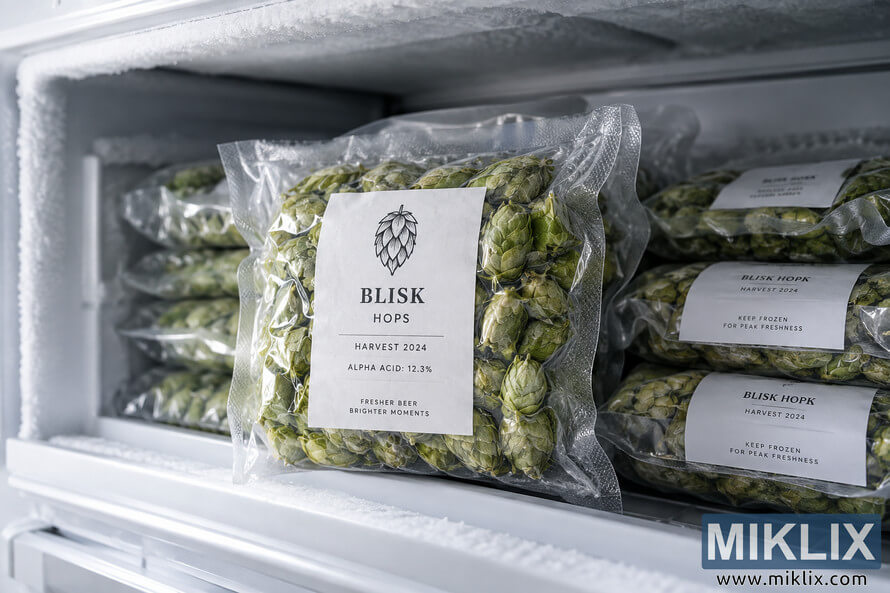
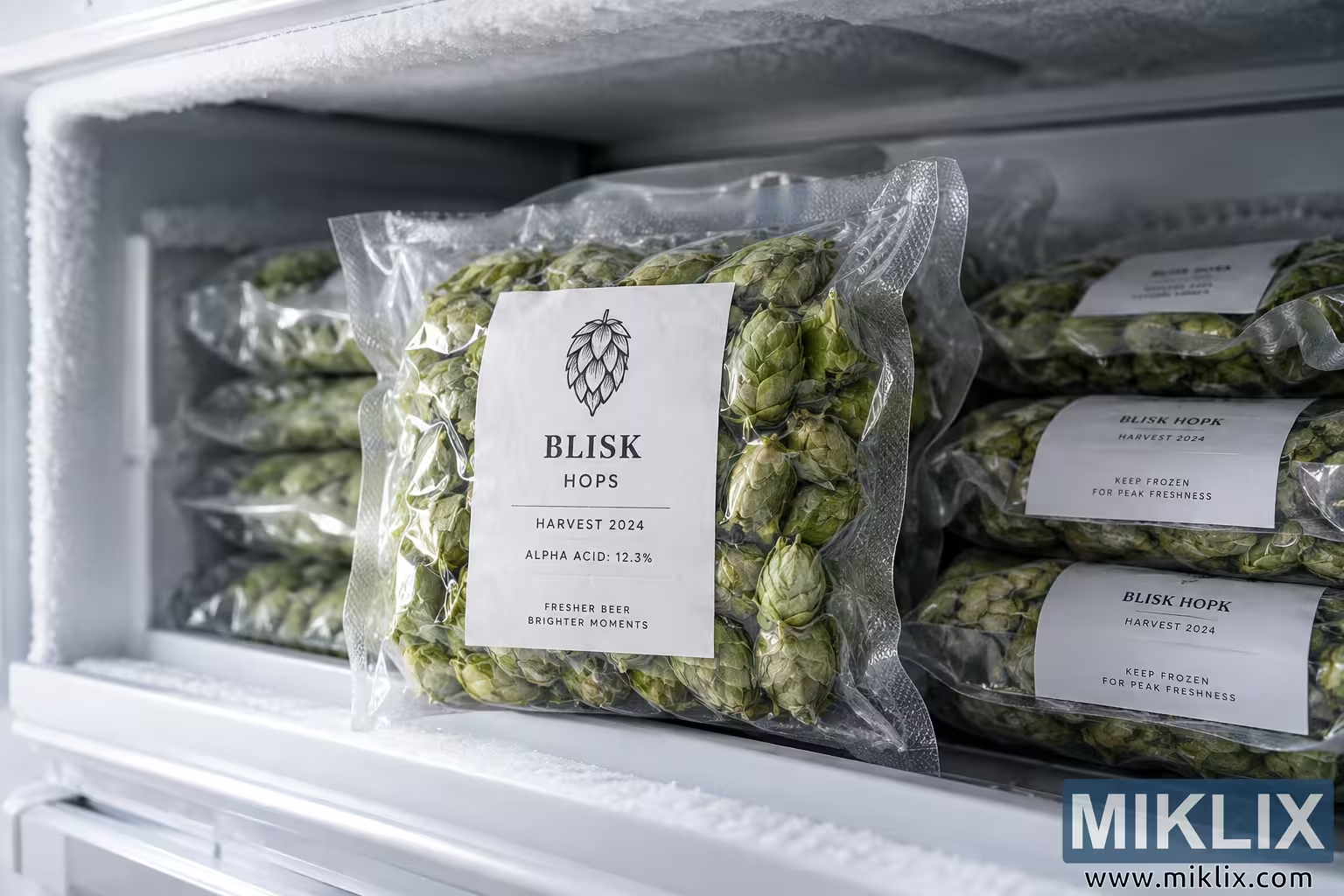
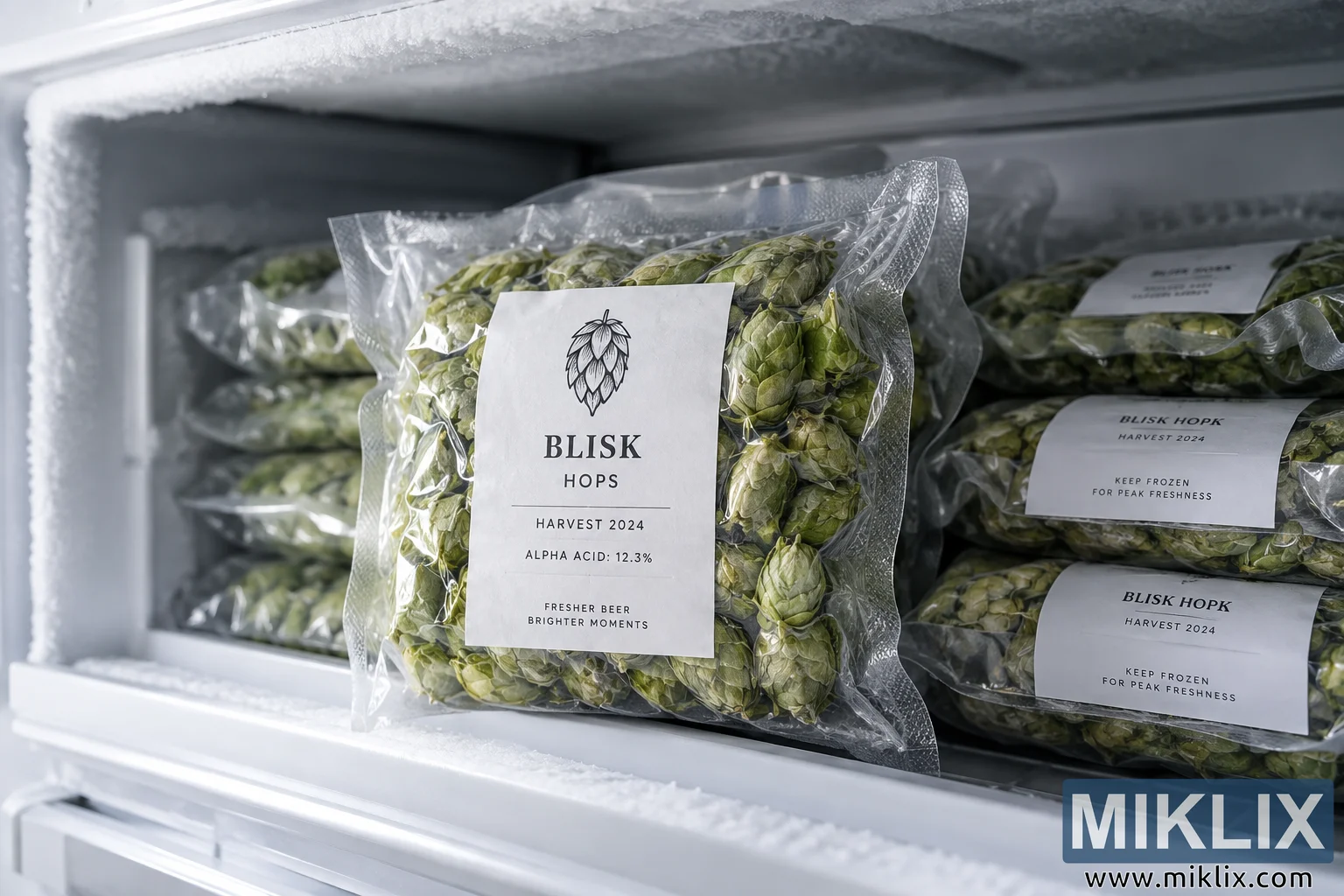
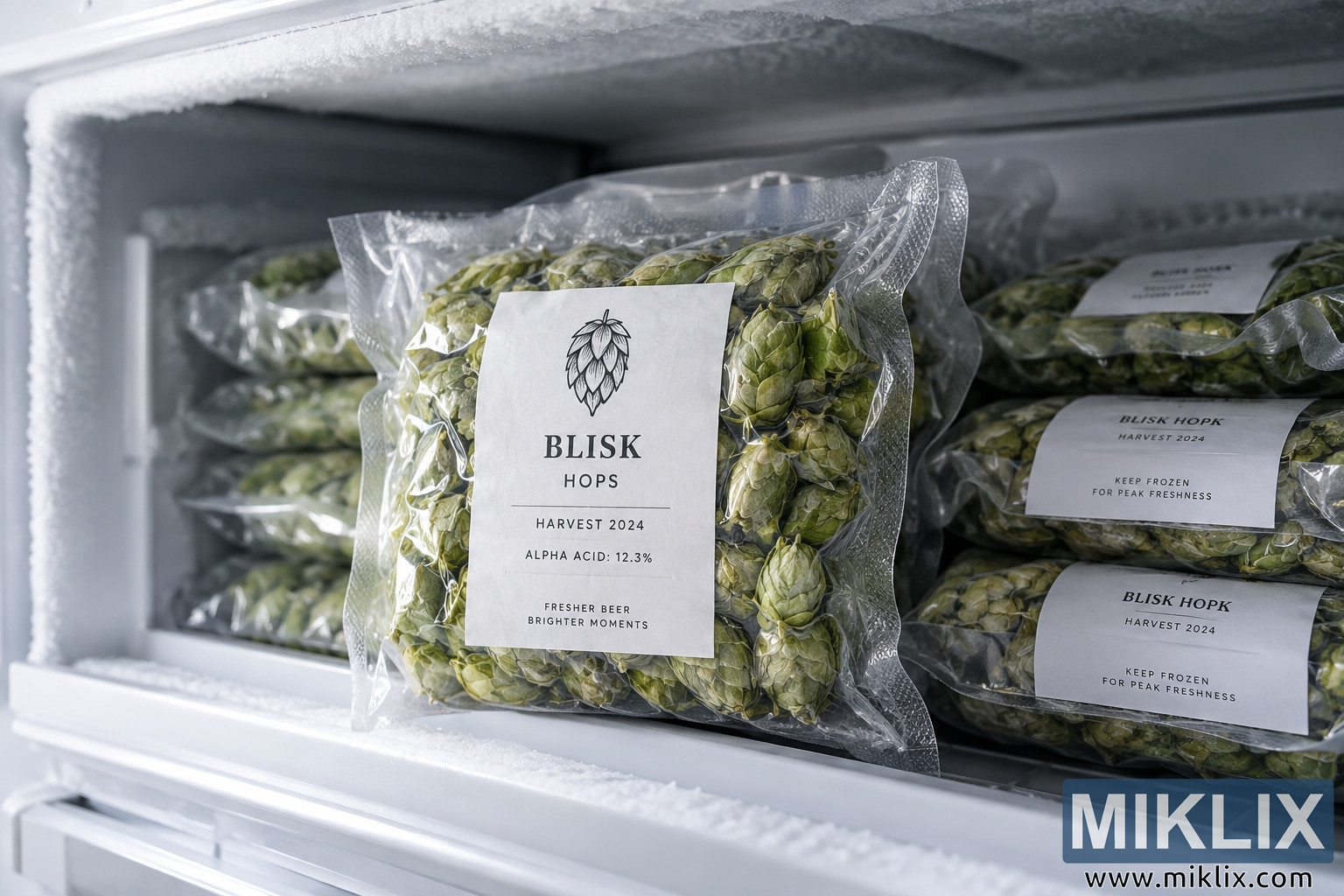
Vacuum-sealed green hop cones stored in an organized, frosty freezer environment, illustrating cold storage designed to preserve hop freshness, aroma, and quality.
Available versions of this image
The image files available for download below are less compressed and higher resolution - and as a result of that, higher quality - than the images embedded in articles and pages on this website, which are more optimized for file size in order to reduce bandwidth consumption.
Regular size (1,536 x 1,024)
Large size (3,072 x 2,048)
Very large size (4,608 x 3,072)
Extra large size (6,144 x 4,096)
Comically large size (1,048,576 x 699,051)
- Still uploading... ;-)
Image description
A wide, photorealistic landscape image shows an organized collection of vacuum-sealed hop packages stored inside a cold, heavily frosted freezer. The composition is photographed from close range at approximately shelf level, giving the viewer the impression of looking directly into the freezer after its door has been opened. The central subject is a large transparent vacuum-sealed package filled with whole green hop cones. This package occupies much of the middle and foreground of the frame and is rendered in crisp detail, while the surrounding packages gradually become softer and less prominent toward the background. The arrangement immediately communicates careful refrigerated storage and an emphasis on maintaining the freshness and quality of the hops.
The hops themselves are visible through the clear plastic packaging. Individual cones have layered, overlapping leaves with naturally irregular shapes and subtle variations in green, ranging from muted olive and sage tones to fresher yellow-green highlights. Their textured surfaces and compact forms are clearly recognizable as hop cones. Because the package has been vacuum sealed, the transparent plastic conforms closely to the hops, producing folds, creases, stretched areas, and reflective highlights across its surface. The tightly compressed appearance of the contents visually reinforces the idea that air has been removed from the package to help protect the product during storage.
A simple rectangular white label is attached to the front of the main package. The label uses a restrained, generic design with dark typography and a line illustration of a hop cone near the top. Product-style information is arranged neatly beneath the illustration, including a hop designation, harvest information, an alpha-acid percentage, and a short freshness-oriented message. The overall presentation resembles professional agricultural or brewing-ingredient packaging, but the design remains clean and understated rather than visually competing with the natural hops. Similar white labels can be seen on several packages stacked to the right, where storage-oriented wording indicates that the contents should remain frozen for peak freshness. No recognizable real-world commercial brand identity, corporate logo, or distinctive branded packaging is depicted.
The freezer interior provides a cool, controlled visual environment around the packages. Thick white frost and ice crystals have accumulated along the upper interior edge and around portions of the shelving. A particularly noticeable band of frost runs across the top of the image, emphasizing the consistently low temperature. Additional icy buildup is visible along the lower shelf edge and in the corners of the freezer. The frost has a granular, slightly uneven texture, contrasting with the smooth, glossy plastic of the vacuum-sealed bags and the organic surfaces of the hop cones.
Several additional hop packages are arranged behind and beside the main package. On the right side of the frame, multiple bags are stacked horizontally in an orderly manner, creating repeating layers of transparent plastic, green hops, and white labels. One package sits above another, while further packages extend toward the rear of the freezer. On the left side and in the deeper background, more vacuum-sealed bags are visible but increasingly out of focus. Their softer rendering creates a convincing sense of depth and makes the sharply detailed foreground package the dominant visual element. The repeated presence of similarly prepared packages suggests systematic storage of a larger hop supply rather than a single isolated bag.
The freezer shelves and structural surfaces are predominantly white and pale gray. These neutral tones make the green hops stand out strongly while supporting the clean, chilled atmosphere of the scene. Cool illumination appears to come from the freezer interior and from the open front, creating soft highlights on the plastic bags and subtle shadows underneath the stacked packages. Reflections on the vacuum-sealed material are bright but controlled, allowing the hops to remain clearly visible. The lighting also catches the frost along the top and shelf edges, making the icy texture appear crisp and cold.
The photographic perspective is slightly angled rather than perfectly straight-on. The main package is positioned near the center-left of the composition, while the stacked packages on the right lead the eye deeper into the freezer. Shelf lines and the upper interior surfaces create horizontal visual guides that reinforce the landscape orientation. The foreground is exceptionally clear, revealing small wrinkles in the packaging, individual hop bracts, label texture, and fine frost deposits. The background uses a shallow depth of field, so distant bags and freezer surfaces appear progressively softer. This combination gives the image the polished appearance of professional commercial or editorial product photography without relying on a real commercial brand.
The overall color palette is deliberately restrained. Fresh botanical greens dominate the contents of the packages, while white, silver-gray, and cool bluish-gray tones characterize the freezer, frost, labels, and reflected light. Dark lettering on the labels introduces small areas of contrast. There are no warm background colors or unrelated objects to distract from the subject. As a result, the viewer's attention remains focused on the hops, their protective packaging, and the cold-storage conditions surrounding them.
Conceptually, the image illustrates a practical method for preserving hops after harvest and before brewing or other use. The vacuum-sealed packaging visually suggests reduced exposure to air, while the obvious frozen environment communicates low-temperature storage. Together, these details evoke protection of delicate hop characteristics such as freshness, aroma, and overall ingredient quality. The neat stacking and clearly labeled packages additionally suggest inventory management, traceability, and careful handling. The scene could therefore accompany informational material about hop storage, brewing ingredients, freshness preservation, agricultural product handling, or best practices for maintaining hops over an extended period.
Despite the technical storage theme, the image remains visually appealing because of the contrast between the organic shapes of the hop cones and the clean geometry of the freezer and packaging. The hops provide rich natural texture, while the vacuum bags create glossy highlights and irregular folds. Frost contributes another distinct surface quality, appearing powdery and crystalline against the smooth shelf materials. These different textures make the scene tactile and realistic while reinforcing the environmental conditions depicted.
Overall, the photograph presents a clean, organized, and highly detailed view of vacuum-sealed hops being kept frozen for optimal freshness preservation. The prominent foreground package, rows of additional sealed bags, visible frost accumulation, cool illumination, and orderly freezer storage work together to communicate careful preservation of a sensitive botanical brewing ingredient. The landscape framing provides enough environmental context to establish the freezer setting while keeping the vacuum-sealed green hops unmistakably at the center of the composition.
The image is related to: Hops in Beer Brewing: Blisk