
Image: Homebrewer Measuring and Preparing Defender Hops
Published: September 22, 2026 at 3:49:16 PM UTC
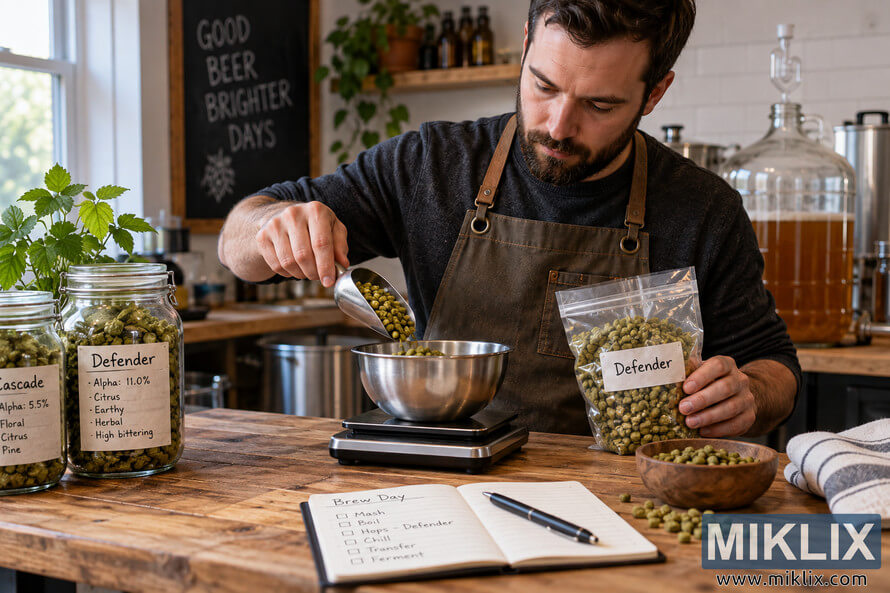
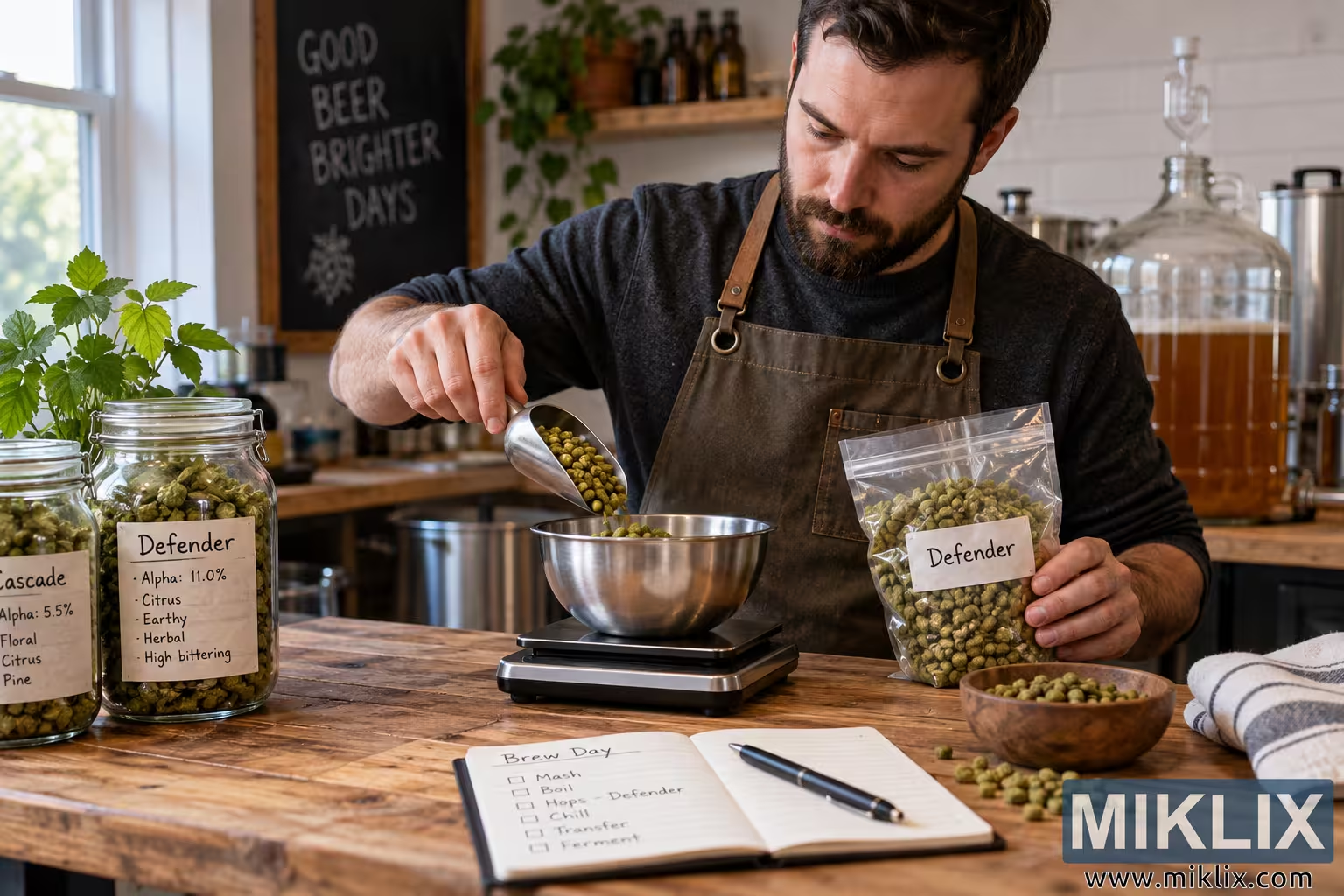
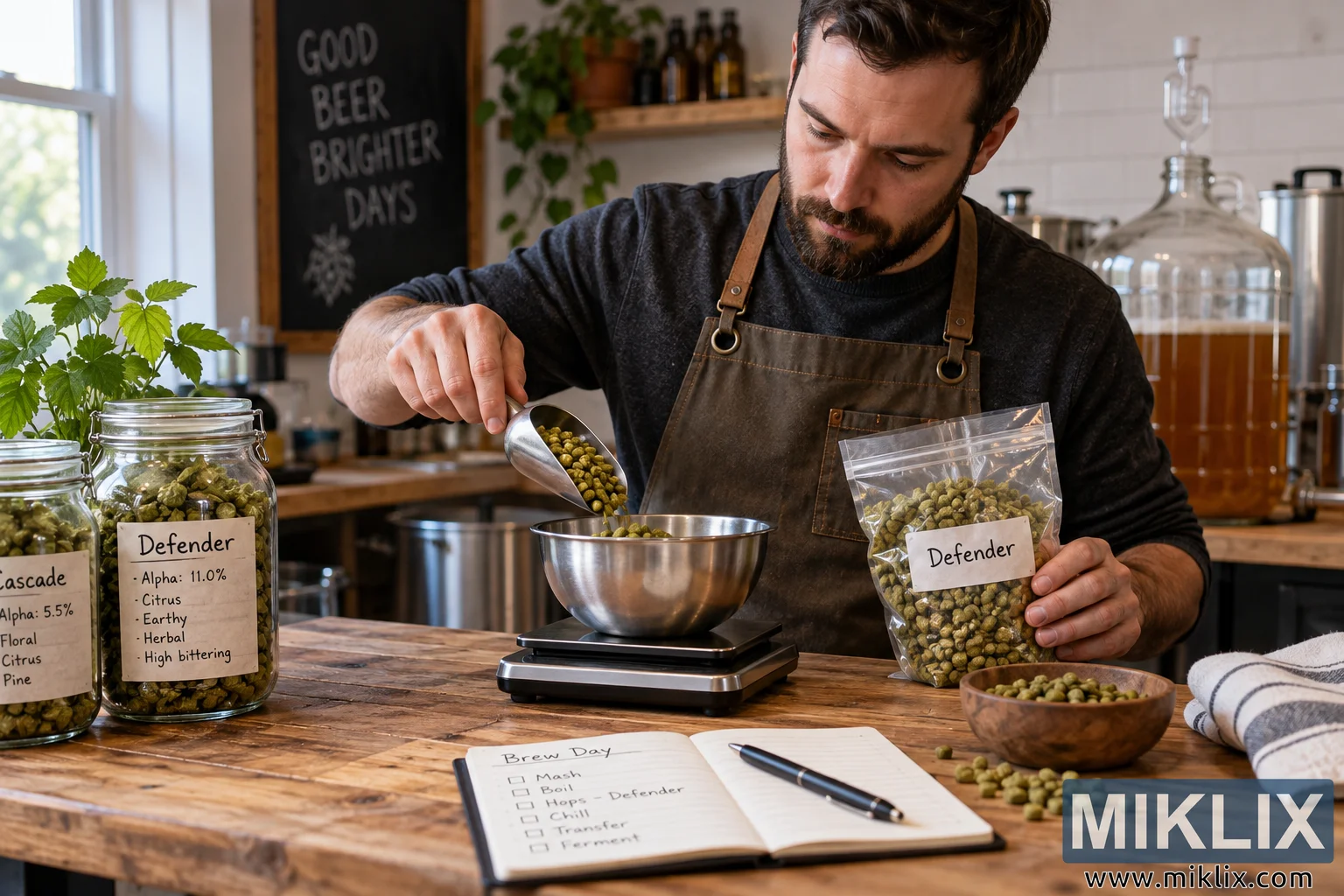
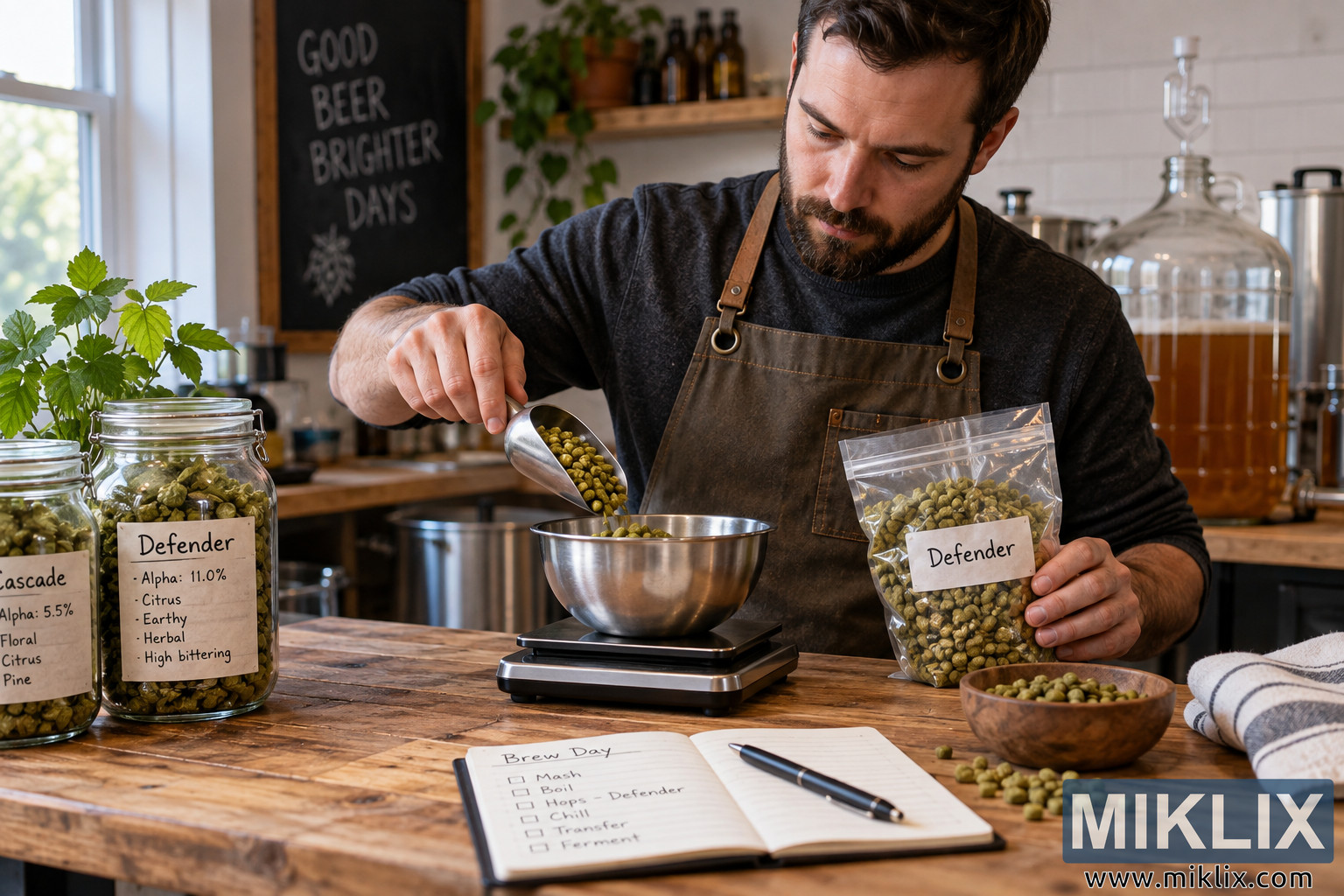
A homebrewer carefully measures and prepares Defender hop pellets on a digital scale in a warm rustic workspace surrounded by brewing ingredients and equipment.
Available versions of this image
The image files available for download below are less compressed and higher resolution - and as a result of that, higher quality - than the images embedded in articles and pages on this website, which are more optimized for file size in order to reduce bandwidth consumption.
Regular size (1,536 x 1,024)
Large size (3,072 x 2,048)
Very large size (4,608 x 3,072)
Extra large size (6,144 x 4,096)
Comically large size (1,048,576 x 699,051)
- Still uploading... ;-)
Image description
A wide, landscape-oriented photograph depicts a homebrewer carefully measuring and preparing hop pellets in a warm, rustic homebrewing workspace. The scene centers on an adult man standing behind a substantial wooden worktable. He has short, dark brown hair, a neatly trimmed full beard, and a focused expression as he looks downward at the ingredients he is weighing. He wears a dark charcoal knit sweater beneath a practical dark brown brewing apron with leather shoulder straps, metal rings, and visible stitching. His posture and concentrated gaze convey the precision involved in preparing ingredients for a batch of homemade beer.
At the center of the work surface is a compact digital kitchen scale with a stainless steel mixing bowl resting on top. The brewer holds a small metal scoop in his right hand and is tipping green hop pellets from the scoop into the bowl. Several pellets can be seen falling in midair, capturing the action of measuring the ingredient. In his left hand he holds a clear resealable plastic bag containing additional hop pellets. A simple handwritten paper label on the bag reads "Defender". The packaging is intentionally generic and does not display a commercial logo or actual brand identity.
To the left of the brewer are glass storage jars containing additional hops. One prominent jar is filled with green hop material and carries a handwritten label identifying the contents as "Defender". Beneath the name are brewing notes including an alpha-acid percentage and descriptive characteristics such as citrus, earthy, herbal, and high bittering. At the extreme left edge of the composition, another jar is partially visible and contains a different variety of hops with handwritten tasting and brewing notes. The assortment of jars, labels, and loose ingredients gives the workspace the appearance of a dedicated homebrewing station where different hop varieties are carefully organized and compared.
The foreground emphasizes the practical preparation process. An open notebook lies on the wooden table directly in front of the brewer. Its page is headed "Brew Day" and contains a handwritten checklist of brewing stages, including mash, boil, hops, chill, transfer, and ferment. A dark pen rests diagonally across the opposite page, suggesting that the brewer is recording his progress or preparing to make notes about the recipe. Near the right side of the table is a small wooden bowl filled with additional green hop pellets. A few pellets are scattered naturally across the tabletop beside it, reinforcing the hands-on character of the brewing process. A folded white kitchen towel with dark stripes rests near the far-right edge.
The background provides extensive visual context for the homebrewing environment. Behind the brewer, large glass fermentation vessels contain amber-colored liquid, visually suggesting beer or wort in an active or recent stage of fermentation. One glass vessel is fitted with an airlock at the top, a recognizable piece of homebrewing equipment that allows fermentation gases to escape while protecting the contents. Stainless steel brewing equipment is also visible farther back, including a tall metal kettle or vessel. These elements establish that the scene represents a functional brewing area rather than an ordinary kitchen where brewing ingredients have simply been placed for decoration.
The room combines industrial brewing equipment with warm domestic materials. Natural wood dominates the workbench and shelving, while stainless steel, clear glass, and ceramic surfaces add contrasting textures. On a wooden shelf behind the brewer are several dark glass bottles and a leafy green potted plant. More greenery appears beside the window on the left, softening the utilitarian character of the brewing equipment and contributing to the comfortable, handcrafted atmosphere. White wall tiles in the background reflect the daylight and help keep the scene visually bright despite the dark clothing and rich wood tones.
A large window on the left allows soft natural daylight into the room. The light falls across the brewer, the glass jars, the hops, and the wooden work surface, creating realistic highlights on the stainless steel bowl and scoop. The overall lighting is warm and inviting rather than dramatic. The shallow-to-moderate depth of field keeps the brewer, scale, hops, and nearby ingredients sharply emphasized while allowing background equipment to remain recognizable without competing with the central action.
A black chalkboard mounted behind the brewer adds another handcrafted detail. Written in large chalk-style lettering are the words "GOOD BEER BRIGHTER DAYS", accompanied by a small decorative hop-like drawing. The lettering complements the handwritten ingredient labels and brew-day notebook, creating a consistent visual theme of small-scale, personal craft brewing. There are no recognizable commercial logos, branded bottles, or other actual brand identities visible in the scene.
The color palette is dominated by warm brown wood, deep charcoal clothing, muted metallic silver, amber brewing liquid, and the distinctive olive-green color of the hop pellets. The green plants echo the hops and introduce fresh natural accents throughout the room. Reflections on the glass fermentation vessels and metal equipment contribute to the photographic realism, while small imperfections such as scattered pellets and handwritten notes prevent the setting from appearing overly staged.
Compositionally, the brewer occupies the central and upper-right portion of the frame, while the digital scale and metal bowl form the visual focal point near the middle. His arms naturally direct attention toward the falling hop pellets and the measuring bowl. The labeled hop containers on the left, the open notebook in the foreground, and the fermentation equipment in the background create layers of information that explain the brewing process without distracting from the primary action. The landscape framing provides enough width to show both the person and the surrounding workspace, giving the image an editorial, documentary-style quality suitable for illustrating an article or guide about homebrewing, hop preparation, recipe formulation, or brew-day ingredient measurement.
Overall, the photograph portrays a calm and methodical moment during a homebrew session. Rather than showing the dramatic boiling or fermentation stages, it focuses on the precise preparation of hops before they are used in the brewing process. The brewer's careful handling of the scoop, scale, bowl, and labeled hop supply communicates attention to recipe accuracy. The combination of brewing equipment, handwritten notes, natural materials, warm daylight, and organized ingredients creates an authentic craft-oriented atmosphere centered on the practical act of measuring and preparing Defender hops.
The image is related to: Hops in Beer Brewing: Defender