
Hops in Beer Brewing: Defender
Published: September 22, 2026 at 3:49:16 PM UTC
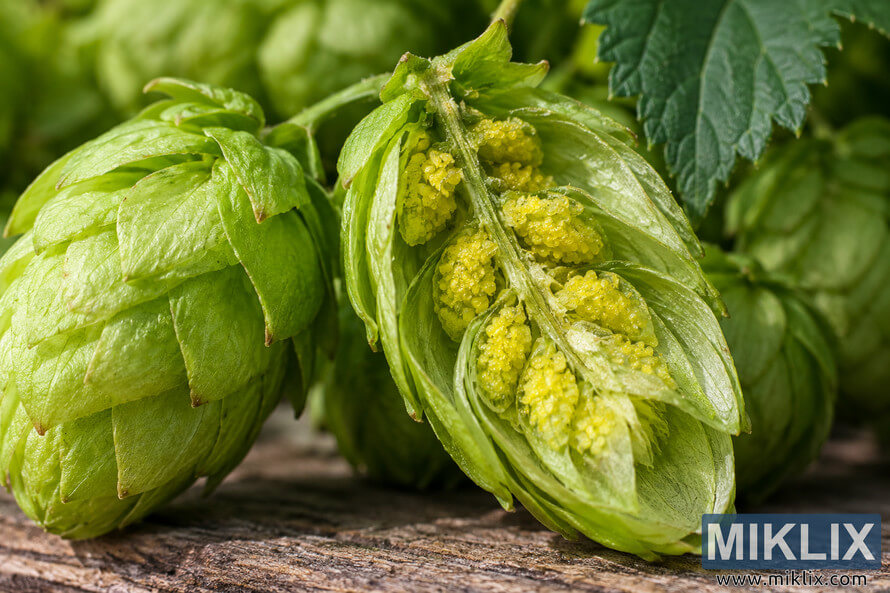
Defender hops represent an exciting variety for homebrewers seeking balanced bitterness with subtle fruity notes. This English hop brings traditional character to modern brewing projects.
Click or tap the image for more information and higher resolutions.
Whether you craft classic English ales or experiment with American IPA styles, understanding how to work with Defender hops opens new possibilities in your homebrew recipes.
Origin and Development of Defender Hops
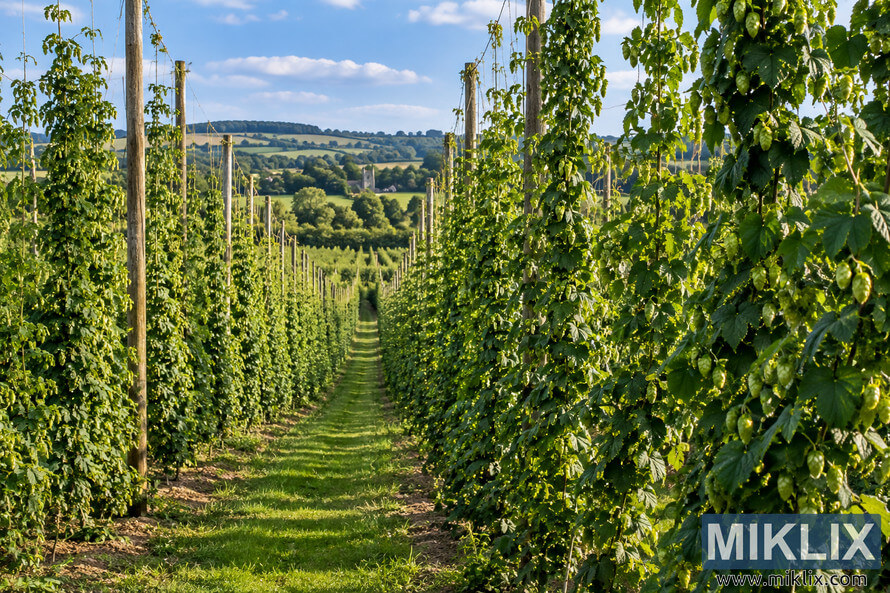
Defender hops emerged from the breeding program at Wye Hops Ltd in England. Developed as a high-alpha variety, this hop aimed to provide English brewers with stronger bittering potential while maintaining characteristic English hop qualities. The breeding work focused on disease resistance alongside brewing performance.
Released commercially in the late 1990s, Defender quickly gained recognition among craft brewers. The variety shows strong resistance to wilt diseases that plague other English hop cultivars. This resilience made Defender attractive to growers in the UK hop regions. The hop combines genetics from multiple parent varieties to achieve its balanced profile.
Today, Defender remains primarily grown in English hop regions. Limited cultivation occurs in other hop-growing areas worldwide. The variety suits brewers who appreciate English hop tradition but need higher alpha acid content. Defender bridges the gap between classic low-alpha English hops and modern high-alpha American varieties.
Click or tap the image for more information and higher resolutions.
Key Historical Points
- Developed at Wye Hops breeding facility
- Released to market in late 1990s
- Bred specifically for disease resistance
- Created for higher alpha acid content
- Maintains English hop character
Growing Characteristics
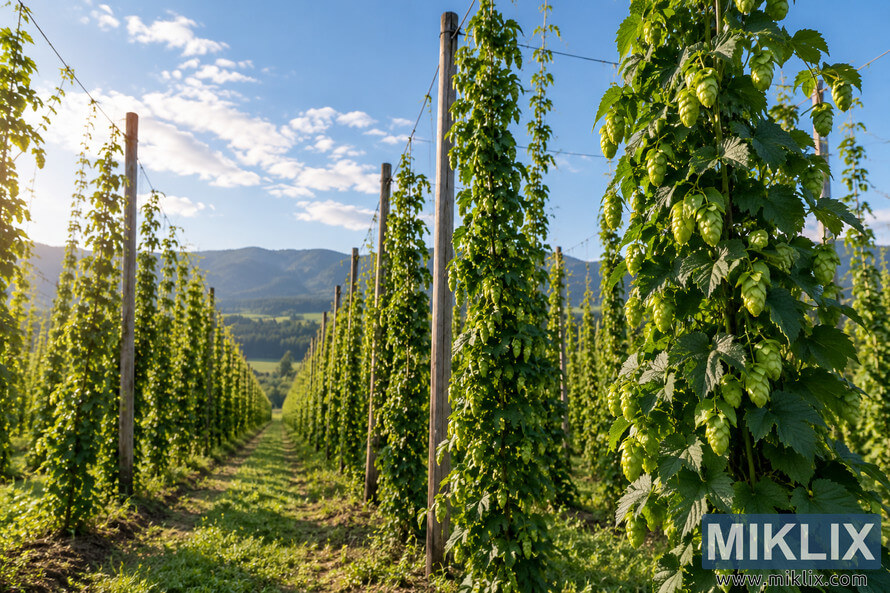
- Strong resistance to verticillium wilt
- Moderate yield potential per acre
- Primarily cultivated in Kent, England
- Adapts well to English climate conditions
- Harvest typically occurs in September
Click or tap the image for more information and higher resolutions.
Flavor Profile and Aroma Characteristics
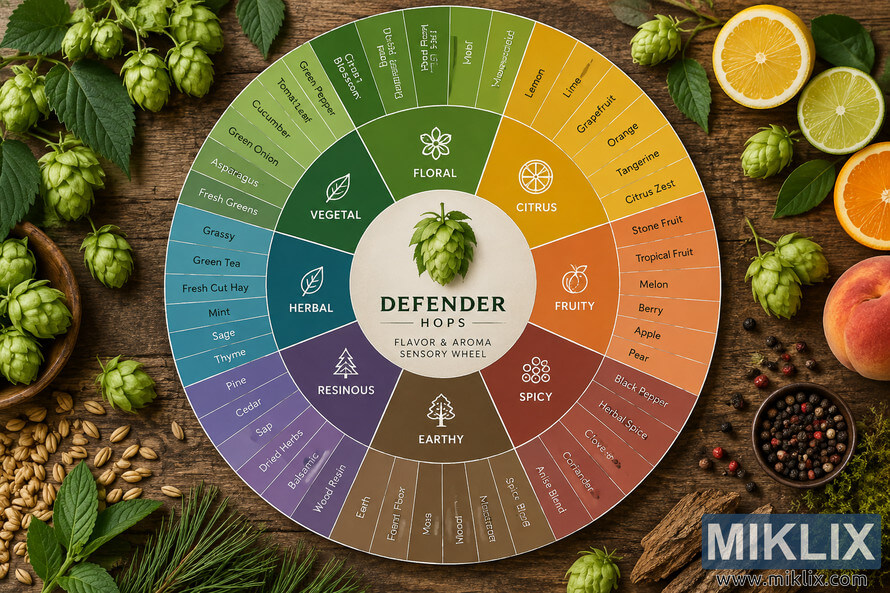
Defender hops deliver a classic English character with subtle fruity undertones. The aroma presents mild notes of stone fruit and light citrus. Brewers often detect gentle hints of apricot and orange alongside earthy, herbal qualities. This balanced profile works exceptionally well in traditional English beer styles.
The bitterness quality feels smooth and clean rather than harsh. Defender produces a rounded bitterness that supports malt character without overwhelming it. This makes the hop ideal for beers where you want noticeable hop presence without aggressive bite. The flavor remains true to English brewing traditions while offering enough complexity for modern palates.
Click or tap the image for more information and higher resolutions.
Technical Specifications
| Characteristic | Value | Brewing Impact |
| Alpha Acid Content | 5.0 - 8.0% | Moderate to high bittering potential |
| Beta Acid Content | 4.0 - 6.0% | Good stability during storage |
| Co-Humulone | 28 - 32% | Smooth, pleasant bitterness |
| Total Oil Content | 1.0 - 1.5 mL/100g | Moderate aroma contribution |
| Myrcene | 35 - 40% | Herbal, earthy notes |
| Humulene | 20 - 25% | Traditional hop spice character |
| Caryophyllene | 8 - 12% | Subtle woody, spicy notes |
Sensory Experience
When you smell fresh Defender hops, expect moderate intensity compared to aggressive American varieties. The aroma feels subtle yet distinct. Stone fruit characteristics emerge first, followed by light citrus and herbal notes. This makes Defender excellent for beers where hop aroma should complement rather than dominate.
In finished beer, Defender contributes a pleasant background bitterness. The flavor profile remains clean without grassy or vegetal off-notes. Some brewers describe a gentle orange peel character in the finish. The overall impression supports malt sweetness while adding complexity to the flavor experience.
Click or tap the image for more information and higher resolutions.
Recommended Beer Styles for Defender Hops
Defender hops excel in English and American beer styles that benefit from balanced hop character. The variety works particularly well where you want noticeable bitterness without overwhelming citrus or pine notes. Traditional English styles showcase Defender's heritage, while West Coast IPA recipes utilize its clean bittering qualities.
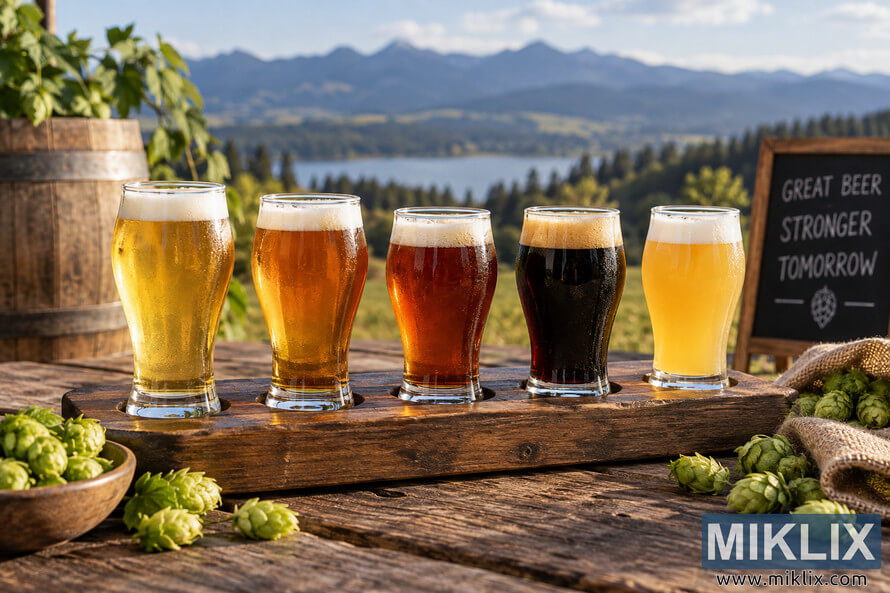
Defender creates excellent ordinary, best, and ESB variations with balanced hop-malt interplay.
Traditional English Styles
English Bitter represents an ideal application for Defender hops. The variety provides sufficient bitterness to balance malt sweetness while contributing subtle fruity notes. Use Defender as your primary bittering addition and late kettle hop in ordinary bitter, best bitter, or extra special bitter recipes. The hop supports rather than dominates the malt profile.
English Pale Ale benefits from Defender's moderate alpha content and refined character. The hop adds complexity without the aggressive citrus punch of American varieties. This maintains the authentic English pale ale profile while providing adequate hop presence. Many brewers combine Defender with classic English hops like Fuggle or East Kent Goldings for layered character.
Click or tap the image for more information and higher resolutions.
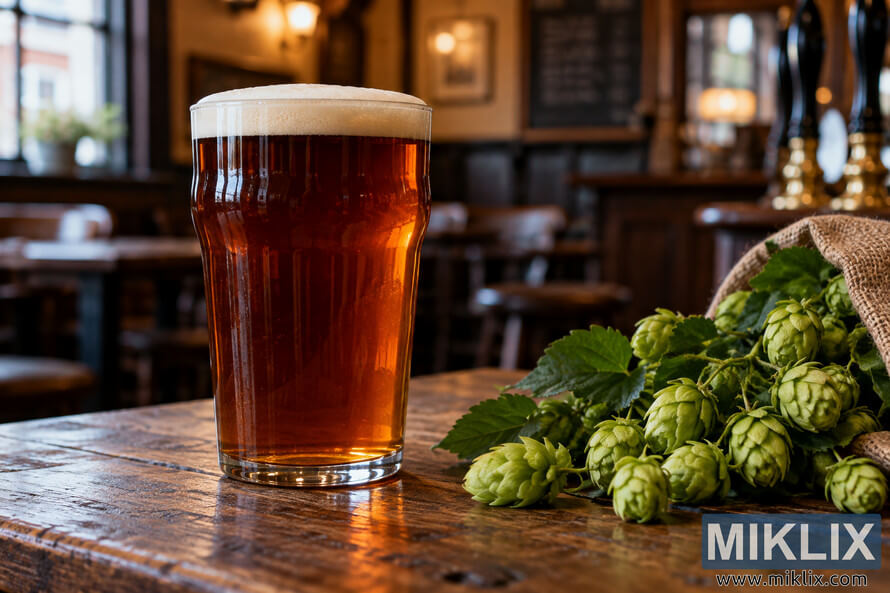
English Bitter
- ABV range: 3.2% - 5.5%
- IBU target: 25 - 45
- Color: Amber to copper
- Malt-forward with hop balance
Click or tap the image for more information and higher resolutions.
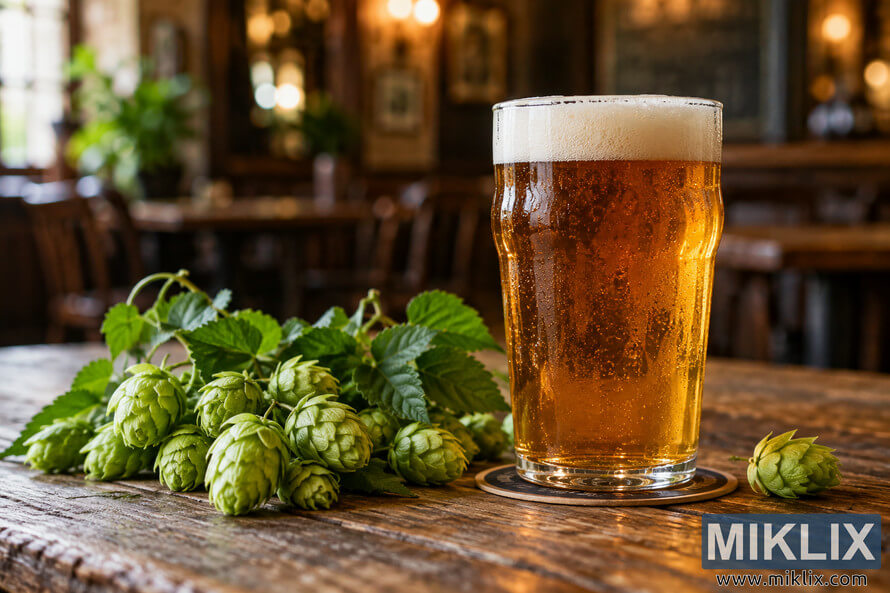
English Pale Ale
This style showcases Defender's refined character without overwhelming traditional English qualities.
- ABV range: 4.5% - 5.5%
- IBU target: 30 - 50
- Color: Golden to amber
- Clean hop finish
Click or tap the image for more information and higher resolutions.
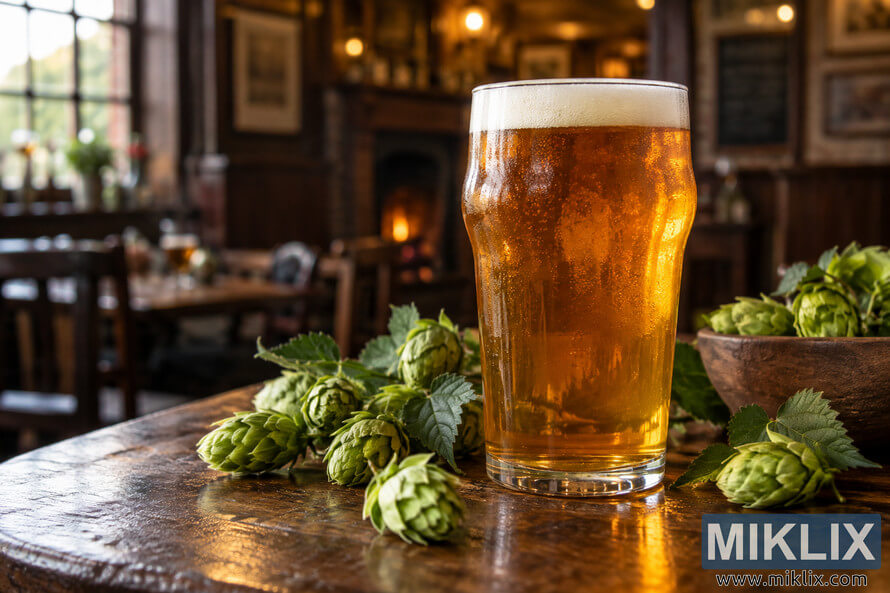
English IPA
Higher hopping rates highlight Defender's stone fruit notes in this historical strong ale style.
- ABV range: 5.0% - 7.5%
- IBU target: 40 - 70
- Color: Golden to deep amber
- Assertive but refined bitterness
Click or tap the image for more information and higher resolutions.
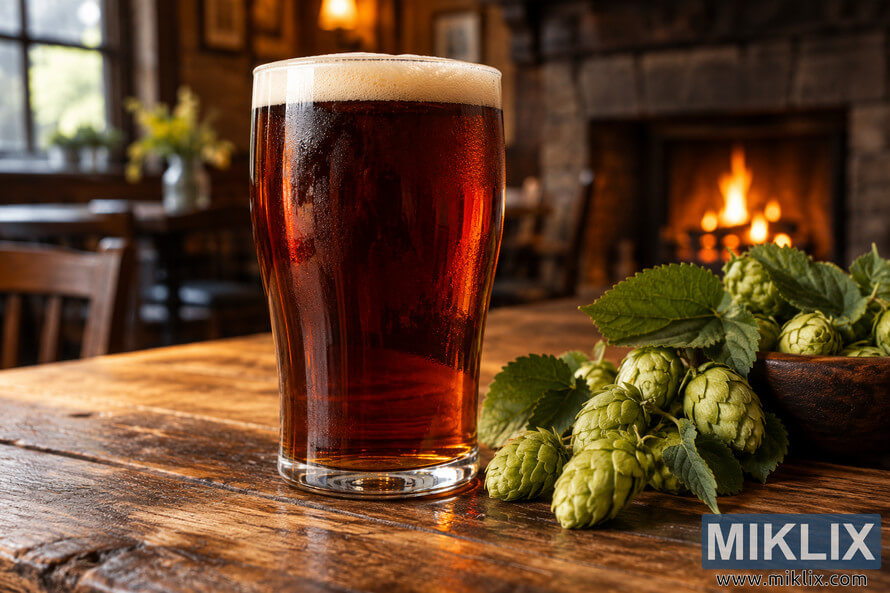
English Brown Ale
Defender provides clean bitterness that complements nutty, toasted malt character perfectly.
- ABV range: 4.0% - 5.5%
- IBU target: 20 - 35
- Color: Brown to dark brown
- Malt emphasis with hop support
Click or tap the image for more information and higher resolutions.
American Craft Beer Applications
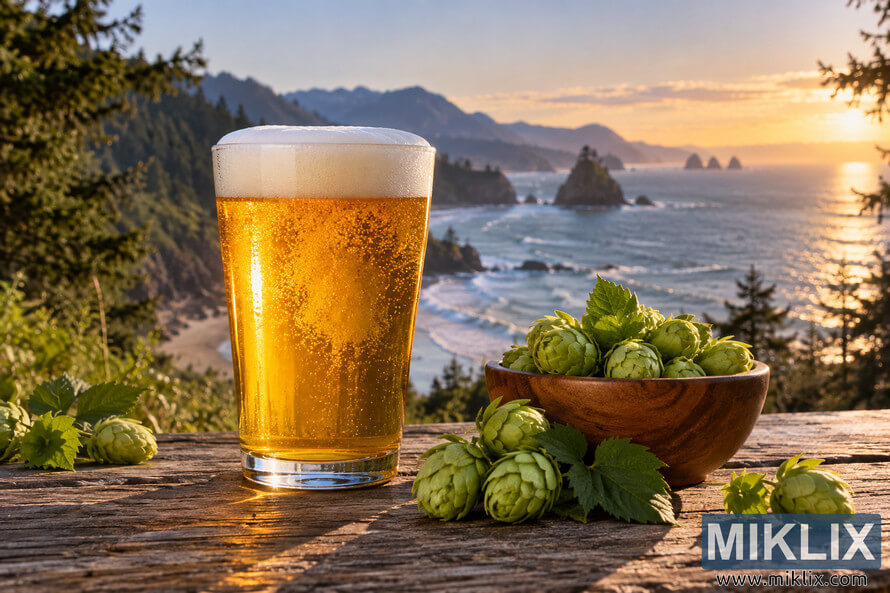
West Coast IPA recipes benefit from Defender's clean bittering potential. While not traditionally American, Defender works well in IPA formulations that prioritize bitterness clarity over intense tropical fruit aroma. Use Defender for your 60-minute bittering addition, then layer American hops in late kettle and dry hop additions for aroma.
American Pale Ale represents another suitable style for Defender. The hop contributes a solid bitter backbone that allows showcase hops to shine in aroma positions. This approach creates depth in your hop bill without excessive cost. Defender handles the functional bittering role while premium hops provide the aromatic signature.
Click or tap the image for more information and higher resolutions.
Blending Defender with Other Hops
Combine Defender with complementary hop varieties to create unique flavor profiles. Pair with Cascade for citrus enhancement, blend with Fuggle for traditional English depth, or mix with Centennial for West Coast IPA character. The neutral profile of Defender makes it an excellent base hop in complex hop bills.
Versatility Beyond Core Styles
Porter and Stout recipes can benefit from Defender in supporting roles. The hop provides clean bitterness without adding inappropriate flavor notes to dark beers. Use restrained amounts to balance roasted malt without introducing hop flavor that conflicts with chocolate or coffee character.
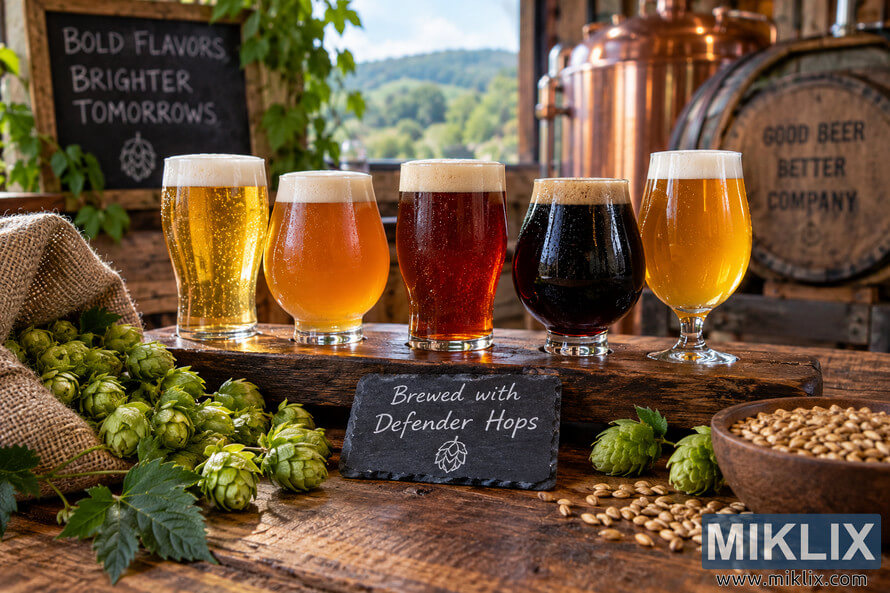
Best Style Matches
- English Bitter (all subcategories)
- English Pale Ale
- English IPA
- American Pale Ale (bittering)
- West Coast IPA (bittering)
- English Brown Ale
Workable But Not Ideal
- Porter (use sparingly)
- Stout (bittering only)
- Belgian Ale styles
- American Wheat Beer
- Cream Ale
- California Common
Avoid These Styles
- Hazy/New England IPA
- Tropical fruit-forward IPAs
- Saison and farmhouse ales
- German lager styles
- Czech pilsner
- Hefeweizen
Click or tap the image for more information and higher resolutions.
Practical Brewing Guidance with Defender Hops
Understanding when and how to add Defender hops maximizes their contribution to your beer. The timing of hop additions dramatically affects the final flavor profile. Defender's moderate alpha acid content and balanced character offer flexibility across different addition points in your brew day.
Bittering Additions
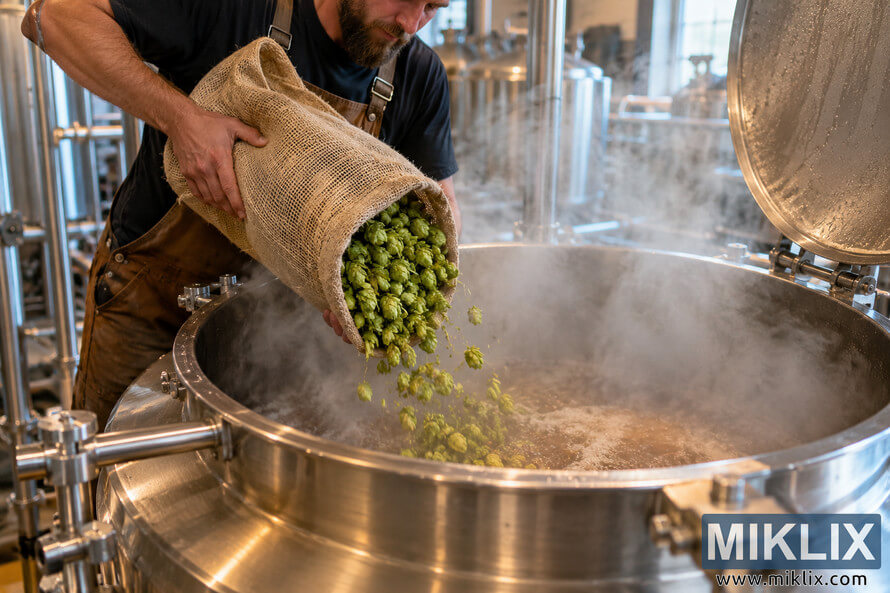
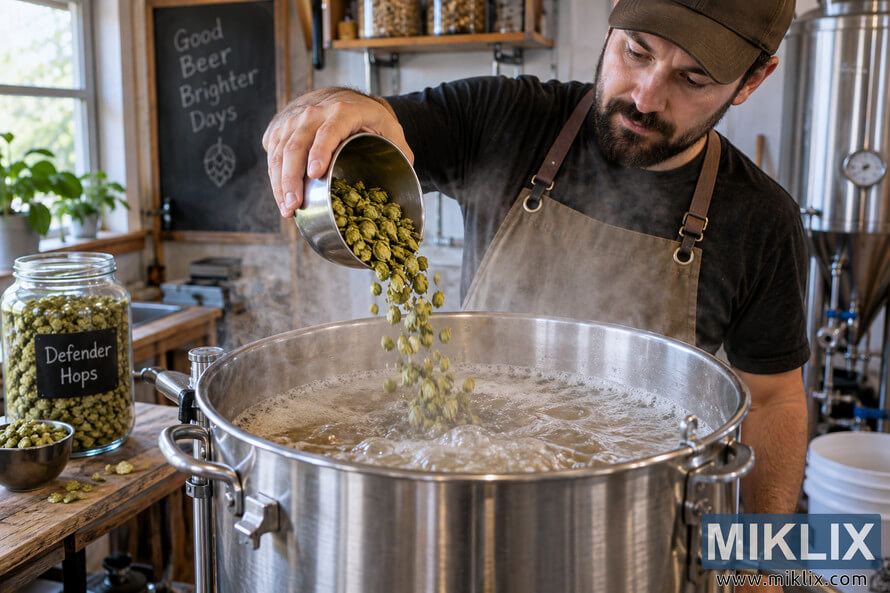
Add Defender hops at the start of your boil for primary bittering. A 60-minute boil extracts maximum alpha acids while minimizing aroma contribution. This approach works perfectly when you want clean bitterness without significant Defender flavor character in the finished beer.
Calculate your bittering addition using standard IBU formulas or brewing software. For a 5-gallon batch targeting 40 IBUs with 6.5% alpha acid Defender hops, you'll need approximately 1.2 to 1.5 ounces at 60 minutes. Adjust based on your actual alpha acid percentage and desired bitterness level.
Quick IBU Reference for Defender Hops
For a 5-gallon batch with 6% AA Defender hops at 60 minutes:
- 0.5 oz = approximately 15 IBUs (Session strength)
- 1.0 oz = approximately 30 IBUs (Standard bitter)
- 1.5 oz = approximately 45 IBUs (ESB or pale ale)
- 2.0 oz = approximately 60 IBUs (IPA territory)
These calculations assume 5.0 gallons into fermenter with average hop utilization. Always verify with brewing software for your specific setup.
Click or tap the image for more information and higher resolutions.
Flavor and Aroma Additions
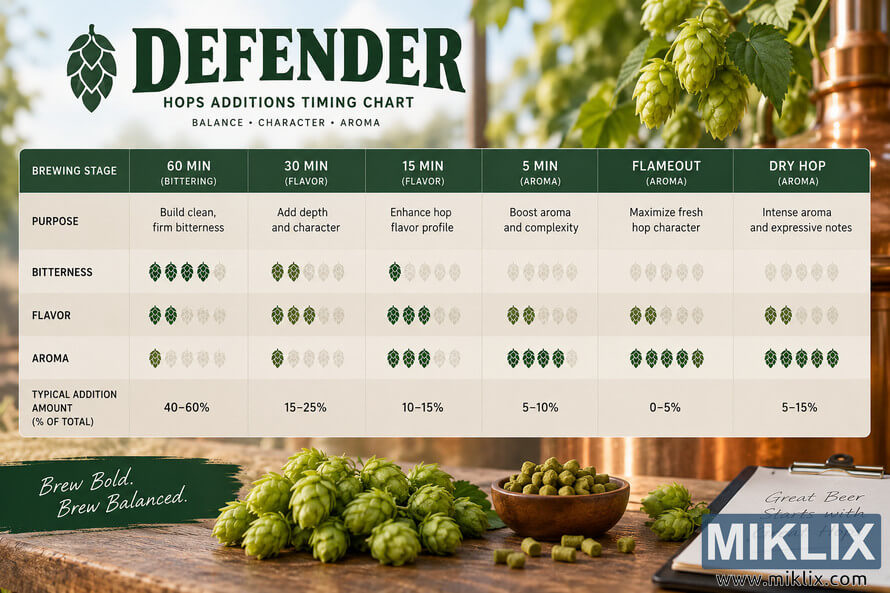
Late kettle additions at 15 minutes or less preserve more of Defender's subtle flavor characteristics. Add 0.5 to 1.0 ounce at 15 minutes remaining to introduce gentle stone fruit and light citrus notes. This placement works well in English pale ales where you want restrained hop flavor.
Flameout or whirlpool additions maximize aroma contribution. Add 1.0 to 2.0 ounces when you turn off heat, then let steep for 10-20 minutes before cooling. This method preserves volatile aroma compounds while adding moderate flavor. The longer steep time at elevated temperature extracts more character than traditional late additions.
Click or tap the image for more information and higher resolutions.
Dry Hopping with Defender
Dry hopping with Defender adds subtle aroma enhancement. While not as aromatic as modern American varieties, Defender contributes pleasant stone fruit and light citrus notes without grassiness. Add 1.0 to 2.0 ounces per 5 gallons during active fermentation or after primary fermentation completes.
Consider dry hopping temperature and duration carefully. Room temperature dry hops for 3-5 days extract maximum aroma. Cold-side dry hopping in a keg produces more subtle results. Defender rarely contributes harsh vegetal character even with extended contact time, making it forgiving for homebrewers.
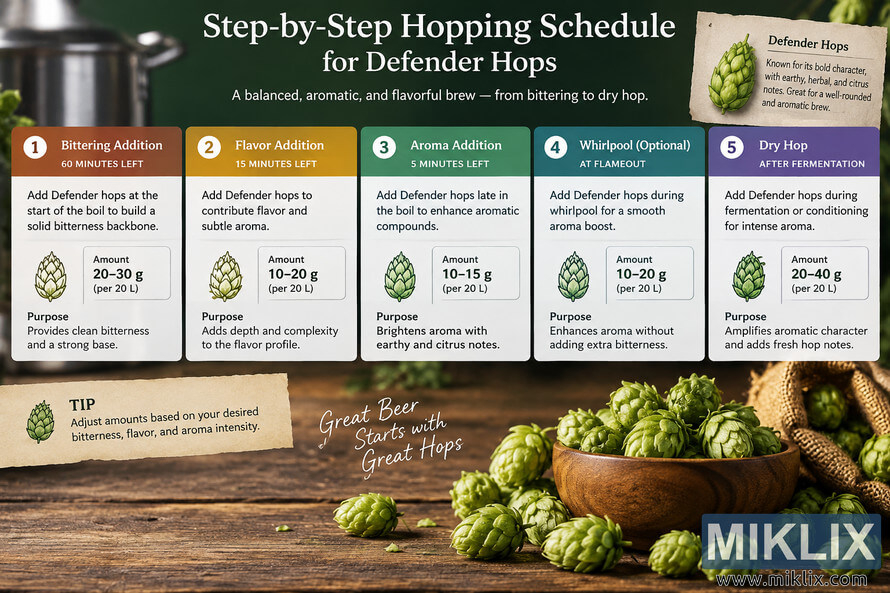
Recommended Hopping Schedule
English Bitter Recipe (5 gallons)
- Bittering (60 min): 1.0 oz Defender (6% AA) for approximately 30 IBUs
- Flavor (15 min): 0.5 oz Defender for light hop flavor
- Aroma (5 min): 0.5 oz Defender for subtle aroma
- Optional dry hop: 1.0 oz Defender for 3 days in fermenter
This schedule creates a balanced bitter with moderate hop presence. Adjust quantities based on your preference and specific beer style requirements.
Click or tap the image for more information and higher resolutions.
Hop Utilization Factors
Several factors affect how efficiently you extract bitterness from Defender hops. Wort gravity influences utilization rates—higher gravity worts extract less bitterness per ounce of hops. A high-gravity IPA requires more hops than a session bitter to achieve the same IBU level.
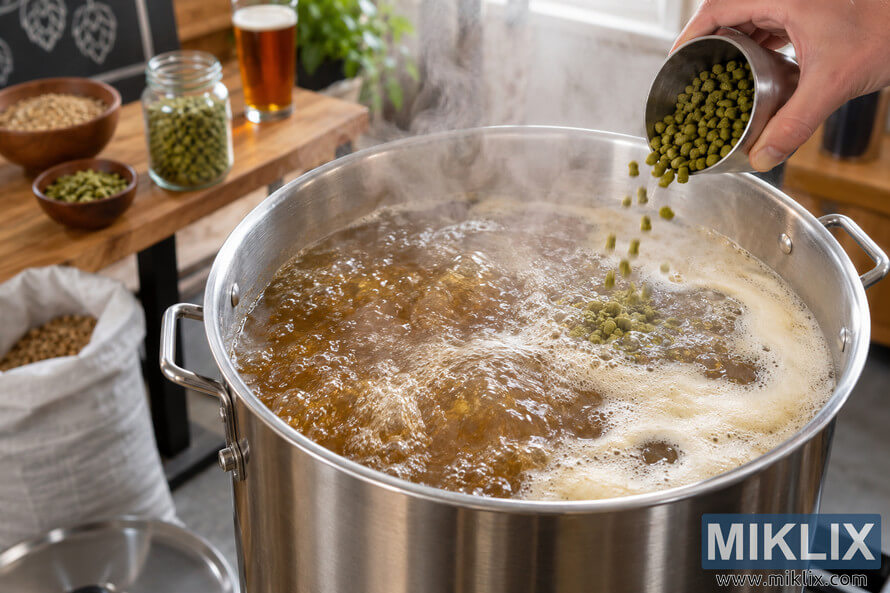
Boil vigor also impacts extraction. A rolling boil provides better utilization than a gentle simmer. Ensure your kettle maintains a strong boil throughout the 60-minute addition period. Weak boils result in lower IBU extraction and potential off-flavors from incomplete hop matter conversion.
Click or tap the image for more information and higher resolutions.
Combining Defender with Other Hops
Defender works excellently in multi-hop bills. Use Defender for your 60-minute bittering charge, then add more aromatic varieties later in the boil. This strategy provides cost-effective bittering while reserving expensive aroma hops for flavor positions.
With English Hops
Pair Defender with Fuggle, East Kent Goldings, or Target for authentic English character. This combination creates depth and complexity in traditional British ales.
- Defender: 60-minute bittering
- Fuggle: 15-minute flavor
- EKG: Flameout aroma
With American Hops
Combine Defender with Cascade, Centennial, or Chinook for American pale ales and IPAs. Defender handles bittering while American hops provide signature aroma.
- Defender: 60-minute bittering
- Cascade: Late kettle additions
- Centennial: Dry hop
With New World Hops
Use Defender as a neutral bittering base for New Zealand or Australian hops. This approach highlights exotic hop character without flavor competition.
- Defender: 60-minute bittering
- Nelson Sauvin: Whirlpool
- Galaxy: Dry hop
Specific Tips for Homebrewers
Homebrewing with Defender hops requires attention to several practical considerations. Small-batch brewing presents unique challenges and opportunities compared to commercial operations. These tips help you achieve consistent results with Defender at the five or ten-gallon scale.
Accurate Hop Measurement
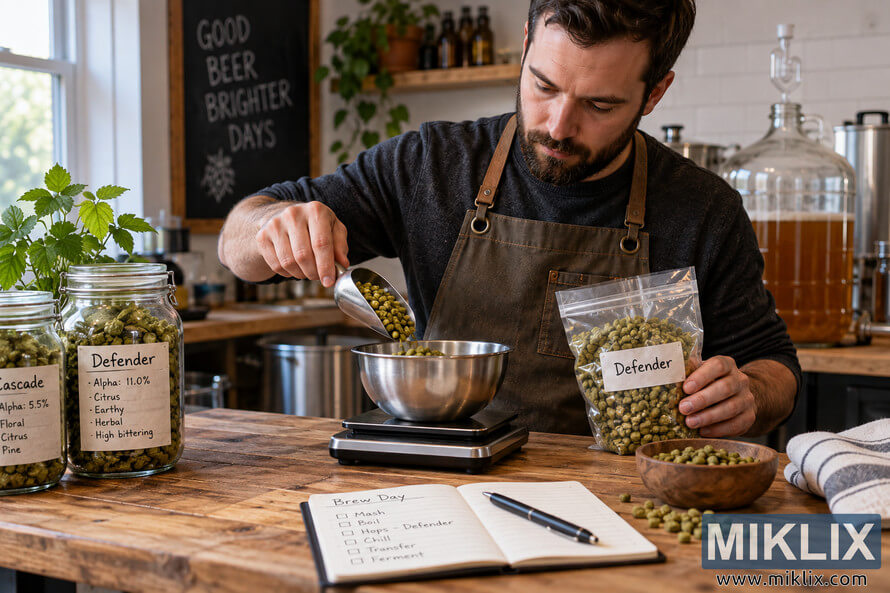
Invest in a quality digital scale that measures to 0.1-ounce precision. Accurate hop measurement ensures recipe reproducibility and proper bitterness levels. Defender's moderate alpha acid content means small measurement errors significantly impact your IBU calculations. Weigh hops immediately before use rather than pre-measuring days in advance.
When working with hop pellets, break apart compressed pellets before weighing. Compressed pellets can lead to inaccurate measurements if you simply scoop them. Gently separate pellets and fluff them slightly before weighing for better accuracy. This small step improves measurement consistency across brew sessions.
Click or tap the image for more information and higher resolutions.
Adjusting for Alpha Acid Variation
Alpha acid content varies between crop years and suppliers. Your Defender hops might measure 5.5% AA one year and 7.5% the next. Always check the alpha acid percentage on your hop package and adjust recipe quantities accordingly. Most brewing software automatically recalculates IBUs when you update the AA percentage.
Create a simple reference chart for your common recipes at different alpha acid levels. This allows quick adjustments on brew day without extensive calculations. For example, if your recipe calls for 1.0 oz at 6% AA but your hops measure 7%, you need only 0.86 oz for equivalent bitterness.
Managing Hop Freshness
Purchase Defender hops in quantities you'll use within six months. While properly stored hops remain usable longer, fresher hops provide better results. Small homebrewers benefit from buying 4-ounce or 8-ounce packages rather than pound bags unless brewing frequently.
Consider splitting large hop purchases with other homebrewers. This approach provides access to bulk pricing while ensuring each brewer receives fresh hops. Vacuum seal individual portions immediately after splitting to maintain quality. Label each package with variety, alpha acid percentage, and purchase date.
Advantages for Homebrewers
- Moderate alpha acid content suits diverse recipes
- Forgiving character reduces risk of harsh bitterness
- Works well in single-hop or multi-hop bills
- Less expensive than premium aroma varieties
- Suitable for both extract and all-grain brewing
- Produces consistent results across batches
- Complements wide range of malt profiles
Considerations and Limitations
- Limited availability compared to popular American hops
- Subtle aroma requires generous dry hop amounts
- Not ideal for tropical fruit-forward IPAs
- May require blending for complex aroma profiles
- Alpha acid variation between crop years
- Less familiar to new brewers
Pellets versus Whole Cone Hops
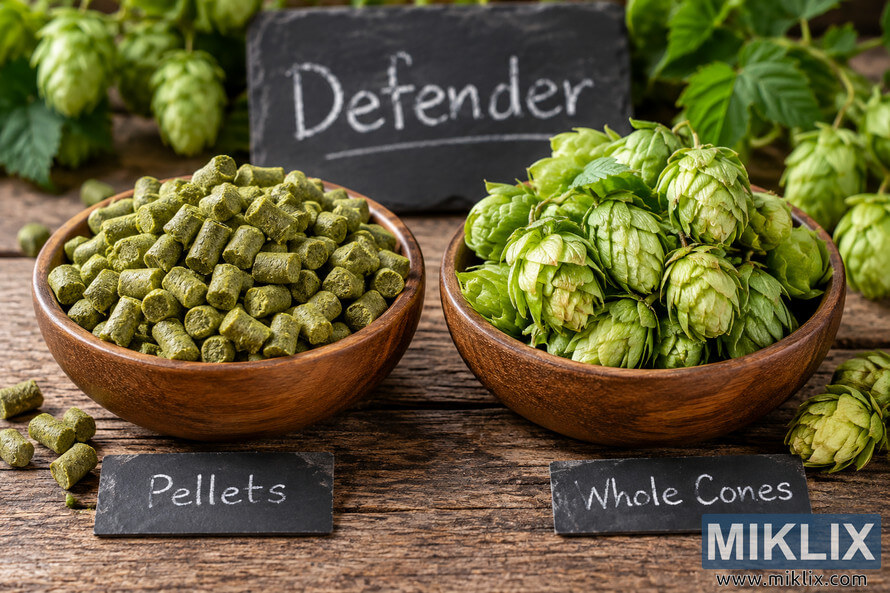
Most homebrewers find pelletized Defender hops more practical than whole cones. Pellets offer better storage stability, easier measurement, and improved utilization rates. The pelletizing process breaks down lupulin glands, making alpha acids more accessible during the boil. This typically yields 10-15% better utilization than whole cones.
Whole cone Defender hops provide a more traditional brewing experience. Some brewers prefer whole cones for dry hopping, citing improved aroma quality and easier separation from finished beer. If using whole cones, increase your hop quantities by approximately 15% to account for lower utilization. Use a hop bag or spider to simplify removal after dry hopping.
Click or tap the image for more information and higher resolutions.
Water Chemistry Considerations
Water chemistry influences how Defender hops express themselves in finished beer. Higher sulfate levels accentuate hop bitterness and create a drier finish. Aim for a sulfate-to-chloride ratio around 2:1 for English styles using Defender. This enhances hop character while maintaining appropriate malt presence.
For West Coast IPA applications with Defender bittering, consider pushing sulfate levels higher. A 3:1 sulfate-to-chloride ratio creates assertive bitterness and crisp hop finish. Start conservative and adjust in subsequent batches based on your taste preferences and water source characteristics.
Fermentation Temperature and Hop Character
Fermentation temperature affects how hop character presents in finished beer. Warmer fermentation temperatures can emphasize fruity esters that complement or compete with Defender's subtle stone fruit notes. For clean hop expression, ferment English ales at the lower end of yeast temperature ranges (62-65°F for most English ale strains).
American ale styles benefit from slightly warmer fermentation (66-68°F) when using Defender. This temperature range allows yeast to produce light fruity esters that enhance the hop's citrus characteristics. Avoid fermenting too warm (above 72°F) as excessive esters can muddle Defender's refined profile.
Recipe Formulation Strategy
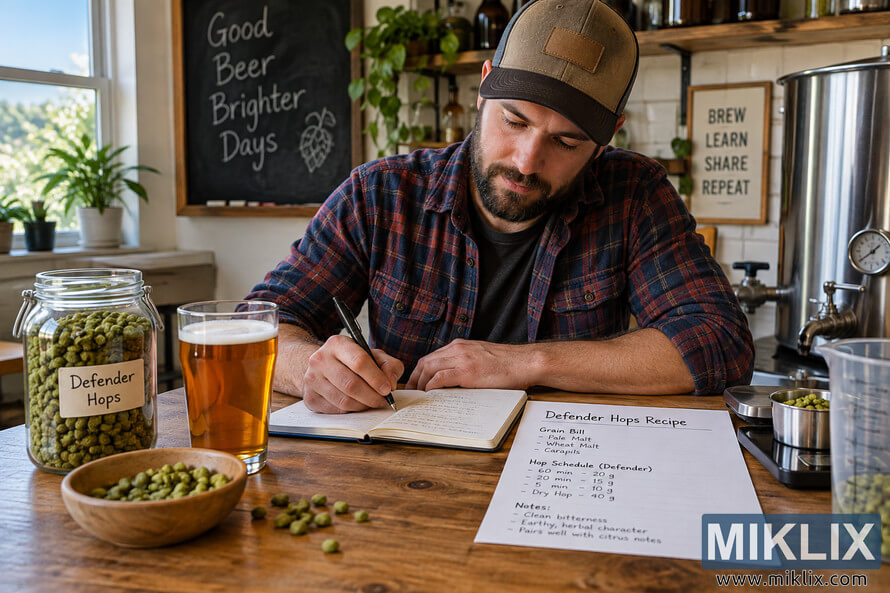
Start simple when first using Defender hops. Brew a straightforward English bitter with Defender as the sole hop variety. This allows you to understand the hop's character without interference from other ingredients. Use a neutral malt bill (90% pale malt, 10% crystal) and clean English ale yeast.
Once familiar with Defender's profile, experiment with hop combinations. Try replacing half your standard bittering hop with Defender in existing recipes. This gradual approach helps you understand how Defender interacts with your brewing system and preferred beer styles. Take detailed notes for future reference.
Click or tap the image for more information and higher resolutions.
Common Mistakes to Avoid
Don't expect Defender to provide intense tropical fruit aroma. Brewers familiar with Citra or Mosaic may find Defender underwhelming if used in similar quantities for aroma. Defender excels in supporting roles, providing structure rather than spotlight flavor. Use Defender for what it does well—clean, pleasant bittering with subtle complexity.
Avoid over-hopping with Defender in pursuit of aroma. The variety's moderate oil content means excessive dry hopping rarely yields proportional aroma increases. Instead, you may extract unwanted grassy or vegetal notes. Keep dry hop additions between 1-2 ounces per five gallons for best results with this variety.
Storage and Handling Recommendations
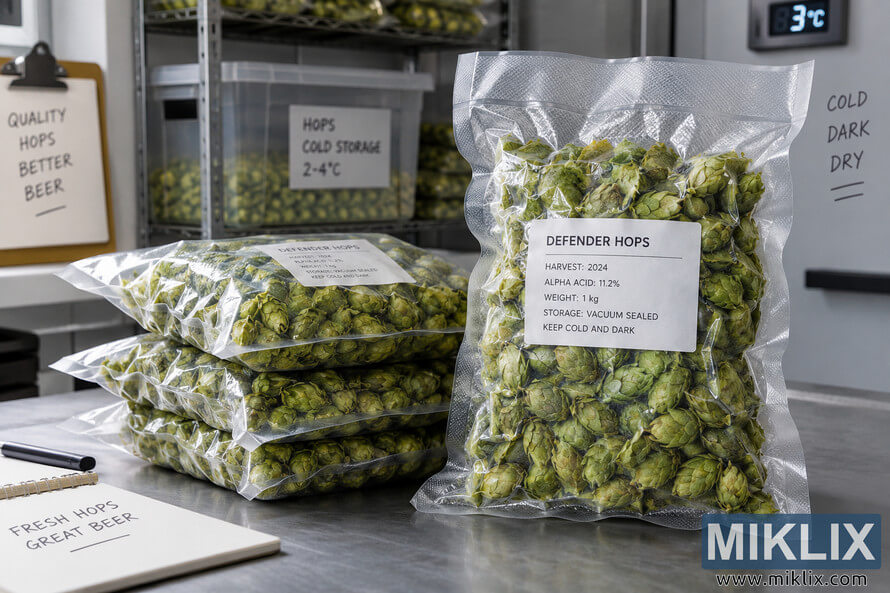
Proper hop storage preserves alpha acids and aromatic compounds that make Defender valuable in your recipes. Hops degrade quickly when exposed to oxygen, light, and heat. Implementing correct storage practices ensures your Defender hops remain fresh and potent from purchase through brew day.
Click or tap the image for more information and higher resolutions.
Optimal Storage Conditions
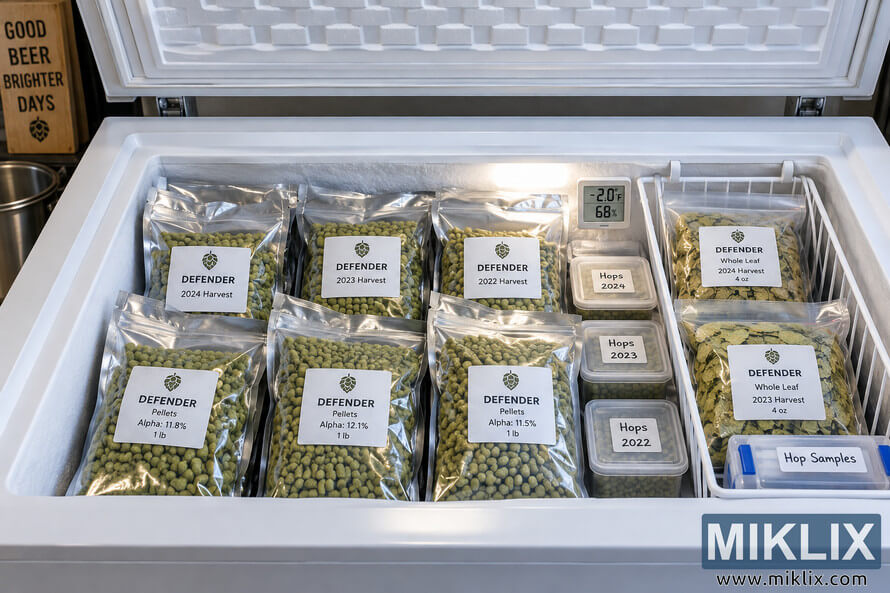
Store Defender hops in your freezer at 0°F or below. Freezer storage dramatically slows oxidation and alpha acid degradation. Keep hops in their original vacuum-sealed packaging until ready to use. Once opened, transfer unused portions to vacuum-sealed bags or jars with oxygen absorbers.
Organize your hop inventory by variety and purchase date. Label each package clearly with the hop variety, alpha acid percentage, and date received. This system prevents confusion and helps you use older hops before fresher ones. Create a simple spreadsheet or use brewing software to track your hop inventory.
| Storage Method | Expected Shelf Life | Alpha Acid Retention | Aroma Quality |
| Freezer (vacuum sealed) | 2-3 years | 90-95% after 1 year | Excellent |
| Refrigerator (vacuum sealed) | 6-12 months | 80-85% after 1 year | Good |
| Room temperature (sealed) | 2-4 months | 60-70% after 1 year | Fair to poor |
| Room temperature (opened) | 1-2 weeks | 40-50% after 1 year | Poor |
Recognizing Hop Degradation
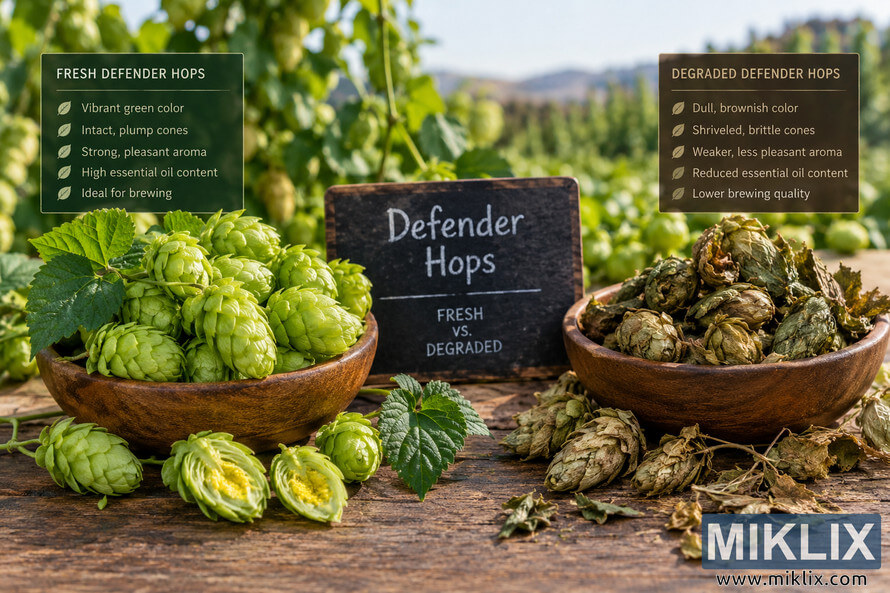
Fresh Defender hops display vibrant green color and strong aromatic presence. As hops age, they turn brown and develop cheesy or stale aromas. Check your hops before brewing by rubbing a small amount between your palms. Fresh hops release pleasant aromatic oils. Degraded hops smell musty, cheesy, or simply lack aroma.
Alpha acid degradation affects bitterness more than aroma. Hops stored improperly lose bittering power over time. If using older Defender hops, increase your additions by 10-20% to compensate for alpha acid loss. Better yet, purchase fresh hops and store them properly from the start.
Click or tap the image for more information and higher resolutions.
Handling Hops on Brew Day
Remove hops from the freezer just before weighing and adding to your kettle. Minimize time at room temperature to prevent condensation and temperature fluctuation. Weigh your hop additions in advance and return unused portions to the freezer immediately. Never leave hop packages sitting out during your entire brew session.
Avoid repeatedly opening and closing hop packages. Constant exposure to air accelerates degradation. If you frequently brew with Defender, consider dividing a large package into smaller portions upon purchase. Vacuum seal individual brew-day amounts to minimize air exposure during storage.
Long-Term Hop Planning
Purchase Defender hops in late summer or early fall when fresh crop arrives. Hop suppliers typically receive new crop in September and October. Buying fresh crop ensures maximum alpha acid content and aromatic quality. Stock up during this period to cover your brewing needs for the coming year.
Join a hop buying group or co-op to access fresher hops at better prices. Many homebrew clubs organize group buys directly from hop suppliers. This approach provides pound-quantity pricing while splitting large bags among multiple brewers. You receive fresher hops and save money compared to retail packages.
Warning: Avoid These Storage Mistakes
- Never store hops in standard refrigerator crisper drawers—moisture causes mold
- Don't use sandwich bags for long-term storage—they're not airtight
- Avoid storing hops near foods with strong odors—hops absorb flavors
- Never refreeze hops that have completely thawed—this damages lupulin glands
- Don't assume old hops are worthless—test them before discarding
Click or tap the image for more information and higher resolutions.
Emergency Hop Storage Solutions
If you lack freezer space, vacuum-sealed hops stored in the refrigerator remain viable for 6-12 months. This represents acceptable short-term storage for homebrewers who purchase hops quarterly. Monitor hop condition more closely with refrigerator storage compared to freezer storage.
For very short-term storage (1-2 weeks), unopened hop packages keep adequately at room temperature in a dark location. This works when you've ordered hops for an upcoming brew session but haven't yet started. Never rely on room temperature storage for more than a few weeks, even in original packaging.
Brewing Calculations and Measurements
Accurate calculations ensure consistent results when brewing with Defender hops. Understanding the mathematics behind hop utilization helps you formulate recipes and make on-the-fly adjustments during brew day. These calculations apply specifically to homebrewing scale operations.
Click or tap the image for more information and higher resolutions.
Basic IBU Calculation Formula
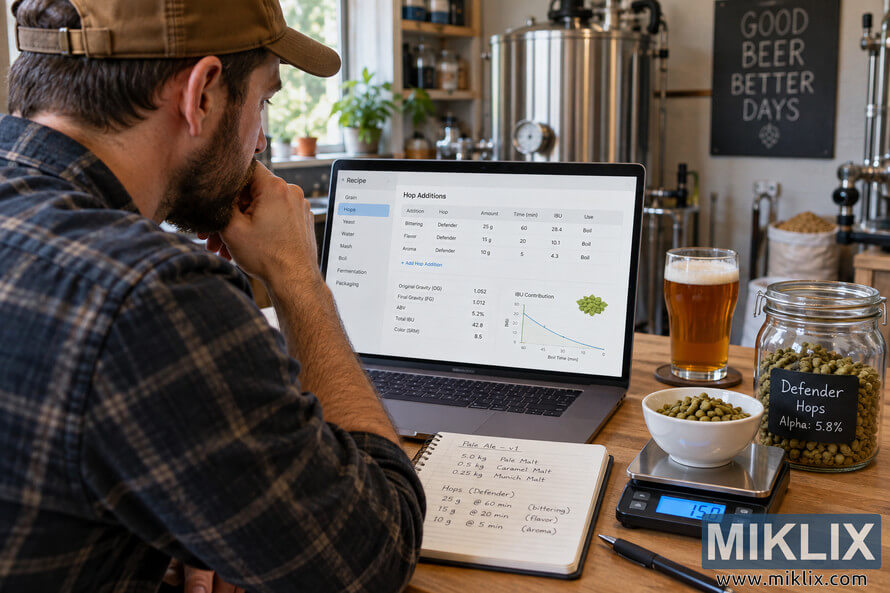
The Tinseth formula provides reasonable IBU estimates for homebrewing. While not perfectly accurate, it offers consistency across batches. The formula considers hop weight, alpha acid percentage, boil time, and wort gravity. Most brewing software uses Tinseth or similar formulas automatically.
For manual calculation, use this simplified approach: IBUs = (Ounces × AA% × Utilization% × 7490) / (Gallons × Gravity Correction). Utilization percentage varies by boil time—60 minutes yields approximately 30% utilization at average gravity. Gravity correction accounts for reduced extraction in high-gravity worts.
| Boil Time | Utilization % | Best Application | Flavor Contribution |
| 60 minutes | 30% | Primary bittering | Minimal flavor or aroma |
| 30 minutes | 19% | Secondary bittering | Slight flavor notes |
| 15 minutes | 13% | Flavor addition | Moderate flavor contribution |
| 5 minutes | 8% | Late flavor/aroma | Strong flavor, light aroma |
| Flameout | 4-5% | Aroma addition | Minimal flavor, strong aroma |
| Dry hop | 0% | Pure aroma | No bitterness, maximum aroma |
Adjusting for Alpha Acid Variations
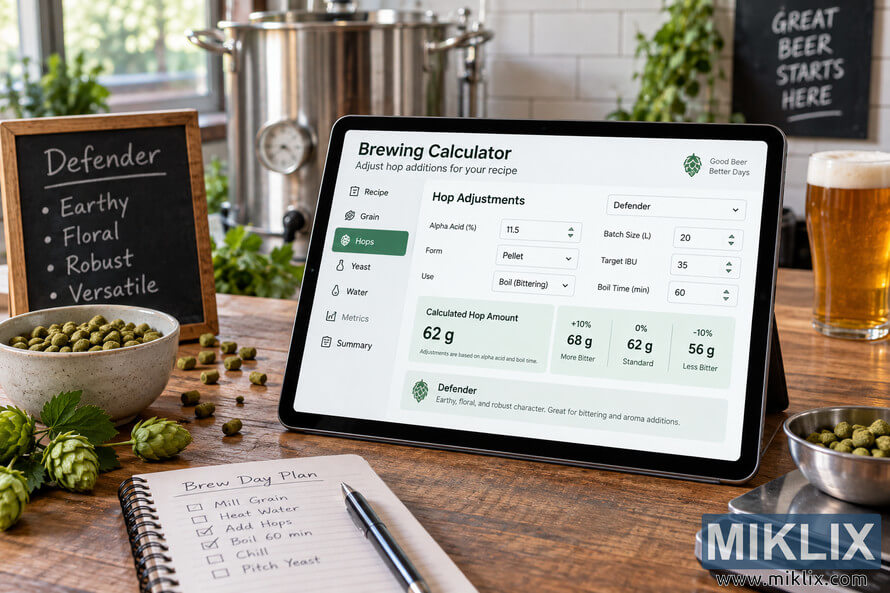
When your Defender hops differ from recipe specifications, adjust quantities proportionally. If a recipe calls for 1.0 oz at 6% AA but your hops measure 7% AA, calculate: (6 ÷ 7) × 1.0 = 0.86 oz. This maintains equivalent IBU contribution despite alpha acid differences.
Create a quick reference chart for your most-brewed recipes at various alpha acid percentages. List common AA ranges (5%, 6%, 7%, 8%) with corresponding hop weights. This eliminates calculation time on brew day when you discover alpha acid variations in your hop package.
Scaling Recipes Up or Down
Scale hop additions linearly with batch size for bittering hops. If a 5-gallon recipe uses 1.0 oz Defender at 60 minutes, a 10-gallon batch requires 2.0 oz for equivalent IBUs. This straightforward scaling works well for bittering additions where utilization remains constant.
Late hop additions don't scale perfectly linearly. Aroma and flavor hops provide diminishing returns in larger batches due to increased wort volume. When doubling batch size, multiply late hop additions by 1.7-1.8 rather than 2.0. This prevents over-hopping while maintaining appropriate hop presence.
Click or tap the image for more information and higher resolutions.
Hop-to-Malt Ratios
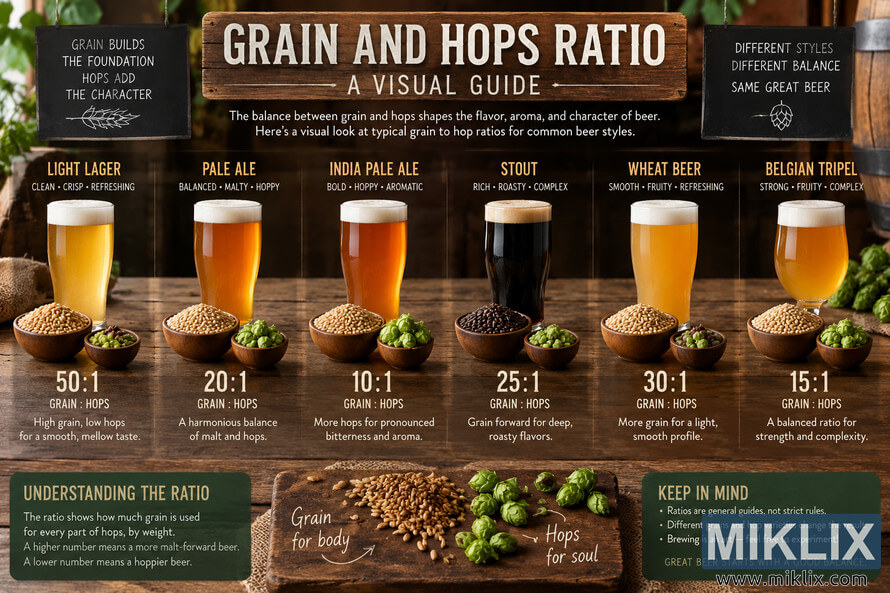
Traditional English ales use approximately 0.5 to 0.75 ounces of hops per pound of grain. This ratio creates balanced beers where neither malt nor hops dominate. An English bitter with 9 pounds of grain might use 6 ounces total Defender across all additions (0.67 oz per pound ratio).
American pale ales and IPAs employ higher hop-to-grain ratios, typically 1.0 to 1.5 ounces per pound. These styles emphasize hop character more aggressively. When using Defender primarily for bittering in American styles, concentrate your hop weight in late additions and dry hopping rather than early boil additions.
Example: 5-Gallon English Bitter
Grain Bill: 9 pounds total (8 lbs pale, 1 lb crystal)
Target: 35 IBUs, moderate hop flavor
Hop Schedule with Defender (6.5% AA):
- 1.25 oz at 60 min (bittering) = 30 IBUs
- 0.5 oz at 15 min (flavor) = 4 IBUs
- 0.5 oz at 5 min (aroma) = 1 IBU
- Total hops: 2.25 oz = 0.25 oz per pound grain
This ratio produces appropriate balance for the style while showcasing Defender's character across multiple addition points.
First Wort Hopping Calculations
First wort hopping involves adding hops to the kettle as you run off wort from the mash tun. This technique produces smoother bitterness than standard 60-minute additions. Calculate first wort hops at approximately 10% higher utilization than 60-minute additions for IBU purposes.
Try replacing your 60-minute Defender addition with first wort hopping in English styles. Add the same quantity as you would at 60 minutes, but place hops in the kettle before collecting wort. This small change improves bitterness quality and blends hop character more seamlessly with malt.
Click or tap the image for more information and higher resolutions.
Hop Standing and Whirlpool Calculations
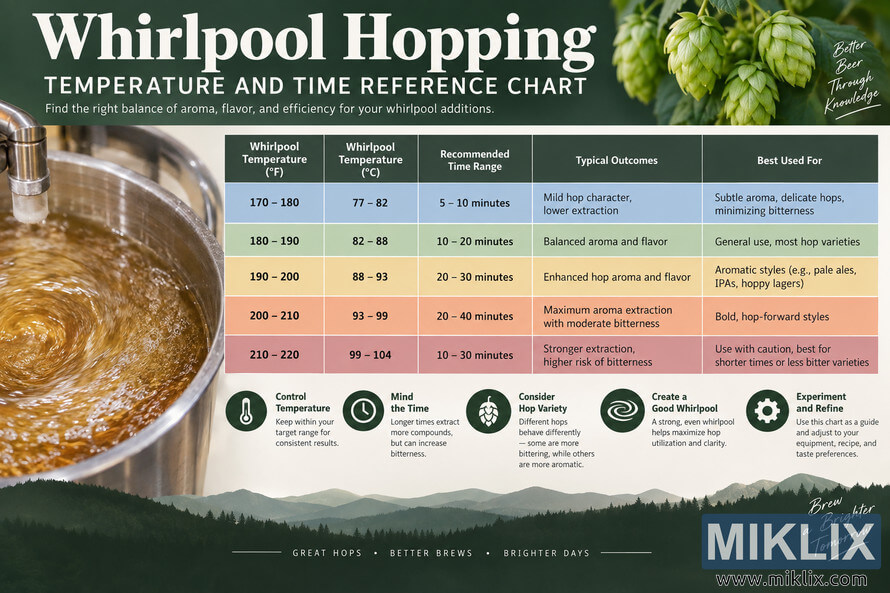
Whirlpool and hop stand additions at temperatures between 160-185°F extract both flavor and some bitterness. Estimate approximately 10-15% of the IBU contribution you'd get from a 15-minute boil addition. A 2-ounce whirlpool addition at 170°F for 20 minutes contributes roughly 8-10 IBUs.
Temperature significantly affects extraction during hop stands. Higher temperatures (180-185°F) extract more bitterness. Lower temperatures (160-170°F) emphasize aroma while minimizing additional IBUs. Adjust your whirlpool temperature based on whether you want flavor or pure aroma from your Defender additions.
Click or tap the image for more information and higher resolutions.
Dry Hop Rate Calculations
Dry hopping rates typically range from 0.2 to 0.8 ounces per gallon for maximum effect. For 5 gallons, this translates to 1-4 ounces. Defender's moderate oil content works well at 0.2-0.4 oz per gallon (1-2 oz per 5 gallons) for subtle aroma enhancement.
Going beyond 2 ounces per 5 gallons with Defender rarely improves aroma proportionally. The variety's chemistry limits aroma contribution compared to high-oil modern hops. Focus Defender dry hopping in the 1-2 ounce range and add more aromatic varieties if additional aroma intensity is desired.
Should I adjust hop quantities if my boil-off rate differs from the recipe?
Yes, adjust based on final volume into the fermenter rather than kettle volume during boil. If a recipe targets 5.5 gallons into fermenter but you only get 5.0 gallons due to higher boil-off, increase hop additions by 10% to maintain the same IBU level. The IBU calculation uses post-boil volume, so differences in boil-off rate require adjustment.
How much does water chemistry affect calculated IBUs?
Water chemistry doesn't change calculated IBUs significantly, but it affects perceived bitterness. Higher sulfate levels make bitterness feel sharper and more pronounced. Higher chloride softens bitterness perception. Your calculations remain valid regardless of water chemistry, but taste experience varies. Adjust sulfate-to-chloride ratio to fine-tune how hop bitterness presents in finished beer.
Mastering Defender Hops in Your Homebrewing
Defender hops offer homebrewers a versatile, reliable ingredient for creating balanced, flavorful beers. This English variety bridges traditional hop character with modern brewing needs. From classic bitter to American pale ale, Defender contributes clean bitterness and subtle complexity that enhances your recipes without overwhelming them.
Success with Defender comes from understanding the hop's strengths and limitations. Use it where clean bittering matters most. Combine it with aromatic varieties when intense hop aroma is your goal. Store it properly to maintain quality between brew sessions. Calculate additions accurately to achieve your target bitterness levels.
Start experimenting with Defender in your next batch. Brew a straightforward English bitter to experience the hop's character in a simple context. Then explore more complex applications as you become familiar with how Defender behaves in your system. Your brewing journey with this variety will reward careful attention to technique and recipe formulation.
The craft of homebrewing thrives on exploration and experimentation. Defender hops provide an excellent tool for brewers seeking refined hop character without extreme intensity. Whether you're crafting traditional English ales or modern American styles, this variety deserves a place in your hop rotation. Embrace the learning process, take detailed notes, and enjoy the journey of mastering Defender hops in your homebrewing practice.
Click or tap the image for more information and higher resolutions.
Further Reading
If you enjoyed this post, you may also like these suggestions: