
Image: Defender Hops: Pellets and Whole Cones Comparison
Published: September 22, 2026 at 3:49:16 PM UTC
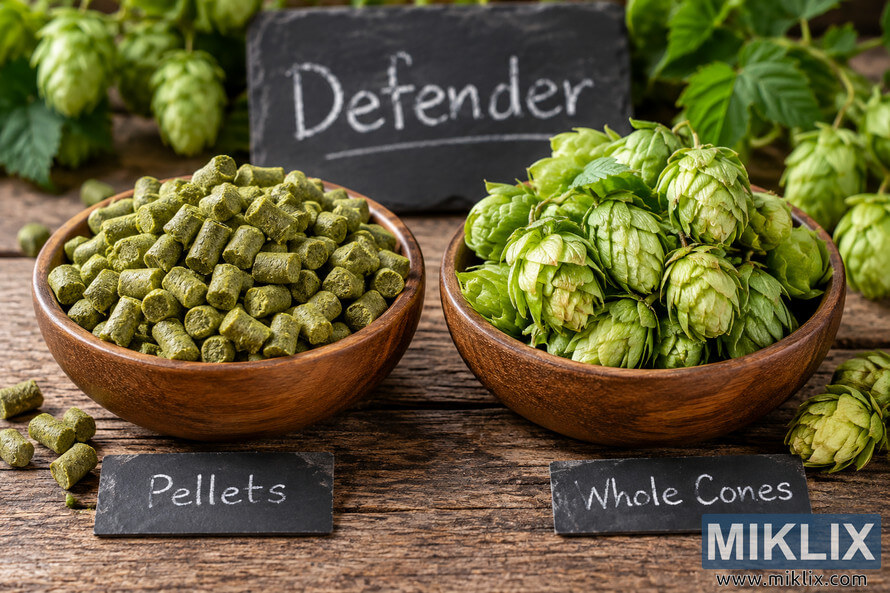
Detailed visual comparison of hop pellets and whole hop cones, showing their differences in shape, texture, density, and appearance in a rustic botanical setting.
Available versions of this image
The image files available for download below are less compressed and higher resolution - and as a result of that, higher quality - than the images embedded in articles and pages on this website, which are more optimized for file size in order to reduce bandwidth consumption.
Regular size (1,536 x 1,024)
Large size (3,072 x 2,048)
Very large size (4,608 x 3,072)
Extra large size (6,144 x 4,096)
Comically large size (1,048,576 x 699,051)
- Still uploading... ;-)
Image description
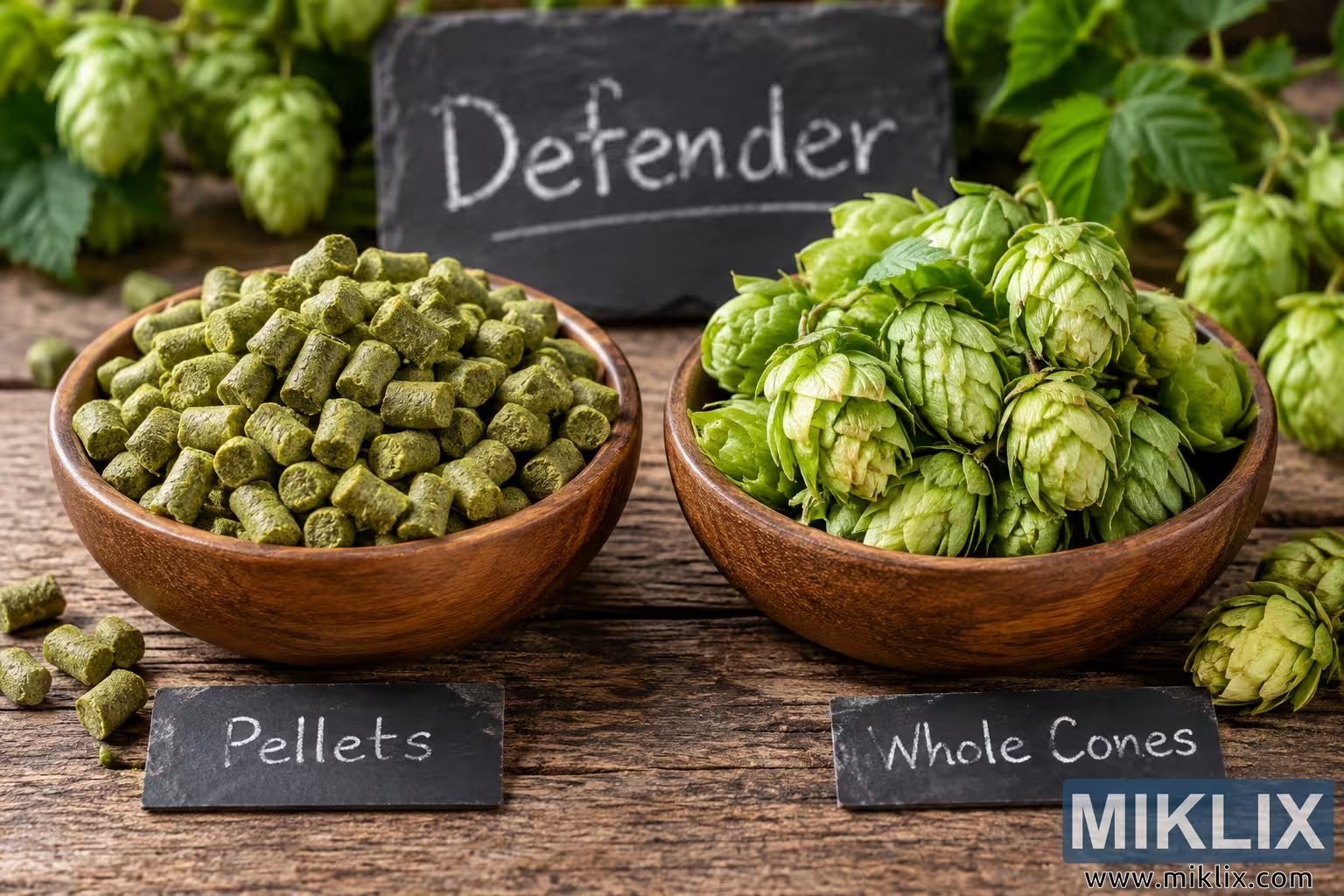
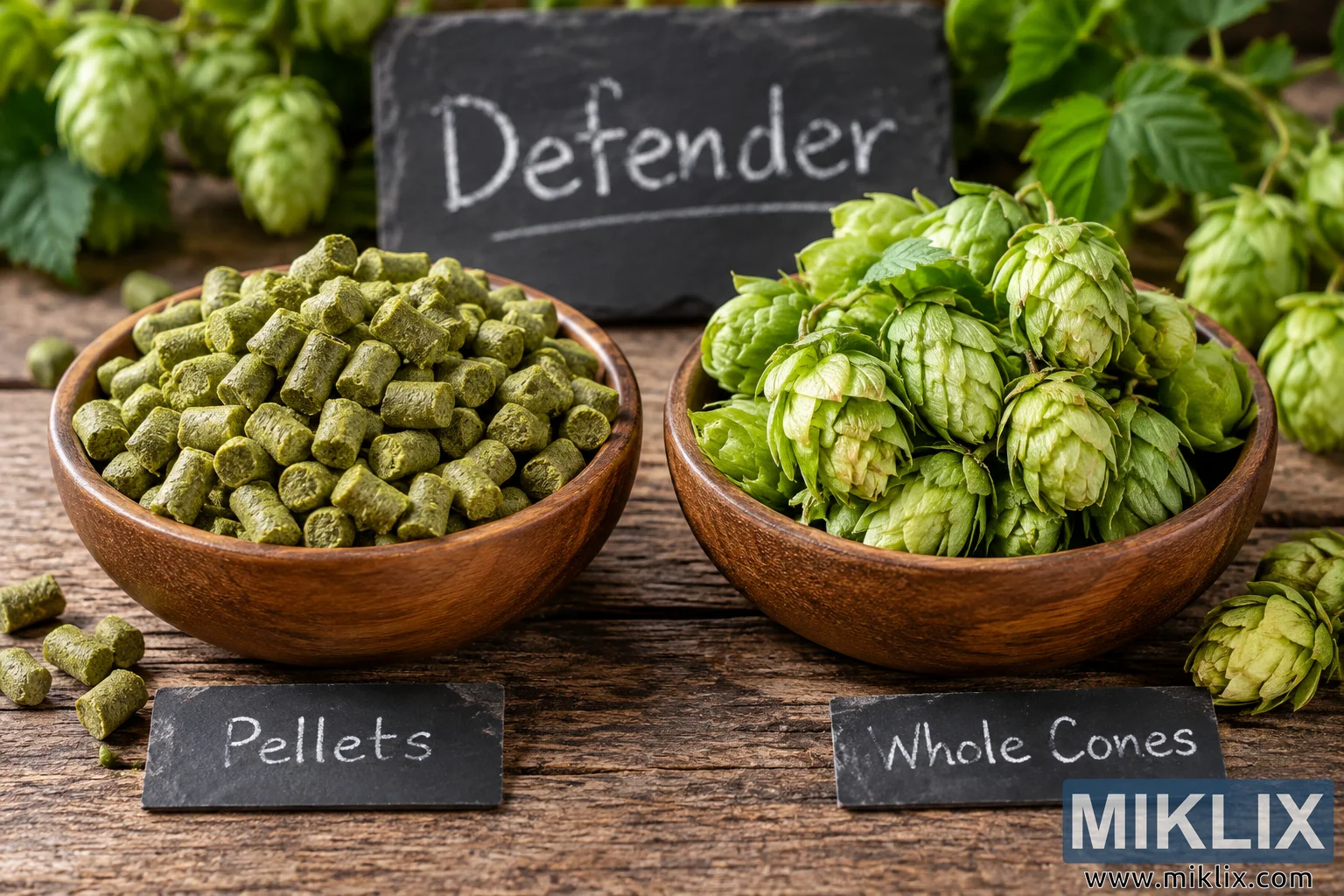
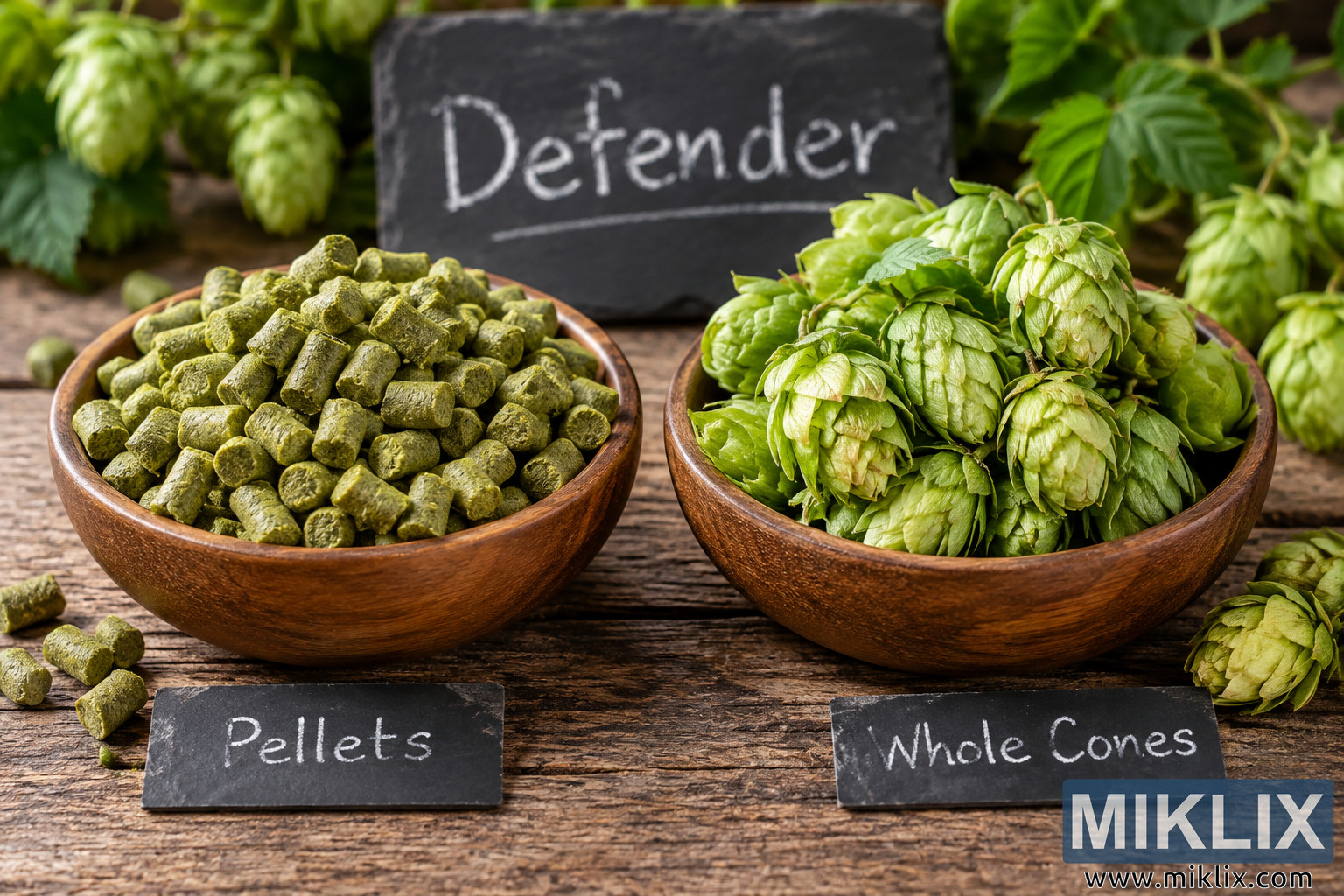
A high-resolution, landscape-oriented still-life photograph presents a clear side-by-side comparison between hop pellets and whole hop cones on a rustic wooden tabletop. The composition is centered around two round wooden bowls placed next to each other in the foreground and middle of the frame. The bowl on the left is filled generously with compressed green hop pellets, while the bowl on the right contains a mound of fresh-looking whole hop cones. The arrangement makes the physical differences between the two forms of hops immediately visible, emphasizing their contrasting shapes, textures, density, and appearance.
The hop pellets in the left-hand bowl are small, compact cylinders in muted olive-green and yellow-green tones. They have slightly irregular surfaces and edges, giving them the natural, compressed appearance associated with processed plant material rather than perfectly manufactured shapes. Some pellets are darker than others, creating subtle variation throughout the bowl. Several loose pellets have been scattered naturally across the wooden surface around the bowl, particularly toward the lower-left portion of the image. These scattered pieces reinforce the scale and compact dimensions of the pellets while making the scene feel less staged and more tactile. The wooden bowl has a smooth, rounded rim and a warm brown finish with visible grain, providing a strong visual contrast with the cooler green color of the hops.
On the right, a matching wooden bowl is overflowing with whole hop cones. These cones are considerably larger than the pellets and display the characteristic layered, overlapping bracts of hops. Their colors range from bright yellow-green to deeper natural green, with small variations in tone across individual leaves and cones. Several of the cones face toward the camera, allowing their intricate overlapping structures to be seen clearly. Others sit at different angles, creating a dense, organic pile with considerable visual depth. A few loose whole cones also appear around the scene, including one prominently positioned near the lower-right edge of the tabletop. Additional cones and green hop foliage are visible in the background, visually connecting the whole cones with the living plant from which hops are harvested.
The two bowls are approximately equal in size and positioned at a similar distance from the camera, which strengthens the image's function as a visual comparison. The left bowl demonstrates how hops appear after being processed and compressed into pellets, while the right bowl illustrates their recognizable whole-cone form. The difference in volume and structure is especially noticeable: the pellets form a dense collection of small cylindrical pieces, whereas the whole cones create a lighter-looking, irregular mass of leafy botanical forms. Despite these differences, their related green coloration visually communicates that both materials originate from the same type of plant ingredient.
In front of each bowl is a small rectangular black slate label with informal white chalk lettering. The label beneath the left bowl reads "Pellets," while the label beneath the right bowl reads "Whole Cones." These labels make the comparison explicit and allow the viewer to identify the two forms instantly. Behind the bowls, a larger dark chalkboard-style sign is positioned among the hop foliage. It displays the word "Defender" in large handwritten white lettering with a simple chalk underline. The word functions as descriptive text within the scene rather than as a visible commercial logo, packaging design, or branded product mark. No recognizable corporate branding, trademarked packaging, or manufacturer identity is shown anywhere in the image.
The background contains numerous hop cones and broad green leaves arranged loosely around and behind the central sign. These botanical elements are softly out of focus because of the shallow depth of field, ensuring that attention remains concentrated on the two bowls in the foreground. Large hop cones can be seen hanging toward the upper-left and upper-right portions of the frame, while rich green foliage fills much of the remaining background. The soft focus creates a natural garden or hop-growing atmosphere without distracting from the comparison itself.
The photograph uses warm, natural-looking illumination that brings out the texture of every major material. Highlights along the wooden rims reveal the bowls' polished surfaces, while directional light emphasizes the rough, granular texture of the compressed pellets and the thin, layered bracts of the whole hop cones. Shadows are present beneath and inside the bowls but remain soft enough to preserve detail. The green hops stand out strongly against the warm brown tabletop and bowls, while the dark slate labels and central chalkboard provide neutral visual anchors.
The tabletop itself consists of weathered wooden planks with pronounced grain, scratches, seams, and variations in brown tone. Its rustic appearance complements the agricultural subject matter and gives the photograph an artisanal, natural character. The horizontal lines of the planks also reinforce the landscape composition and guide the viewer's eye from the pellet bowl on the left to the whole-cone bowl on the right. The low viewing angle places the camera close to tabletop level, making the bowls and their contents appear substantial and detailed.
Overall, the image has the polished appearance of an educational or editorial food-and-beverage ingredient photograph. It communicates a straightforward comparison between two presentations of hops while maintaining an inviting agricultural aesthetic. The most important visual message is the contrast between compact, processed hop pellets and larger, leafy whole hop cones. The balanced arrangement, readable labels, rustic wooden setting, botanical background, shallow depth of field, and detailed natural textures make the subject understandable at a glance while also providing enough visual richness for use as a wide-format illustrative image.
The image is related to: Hops in Beer Brewing: Defender