
Image: Proper Storage of Defender Hops in Vacuum-Sealed Packages
Published: September 22, 2026 at 3:49:16 PM UTC
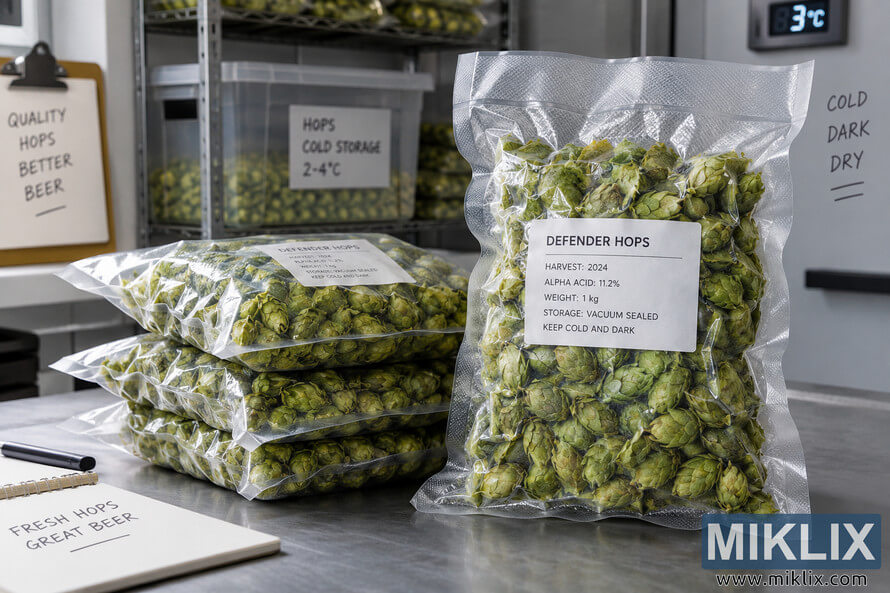
Realistic image of Defender hops stored in vacuum-sealed packages in a clean cold-storage environment, illustrating organized, cool, dark, and dry hop preservation.
Available versions of this image
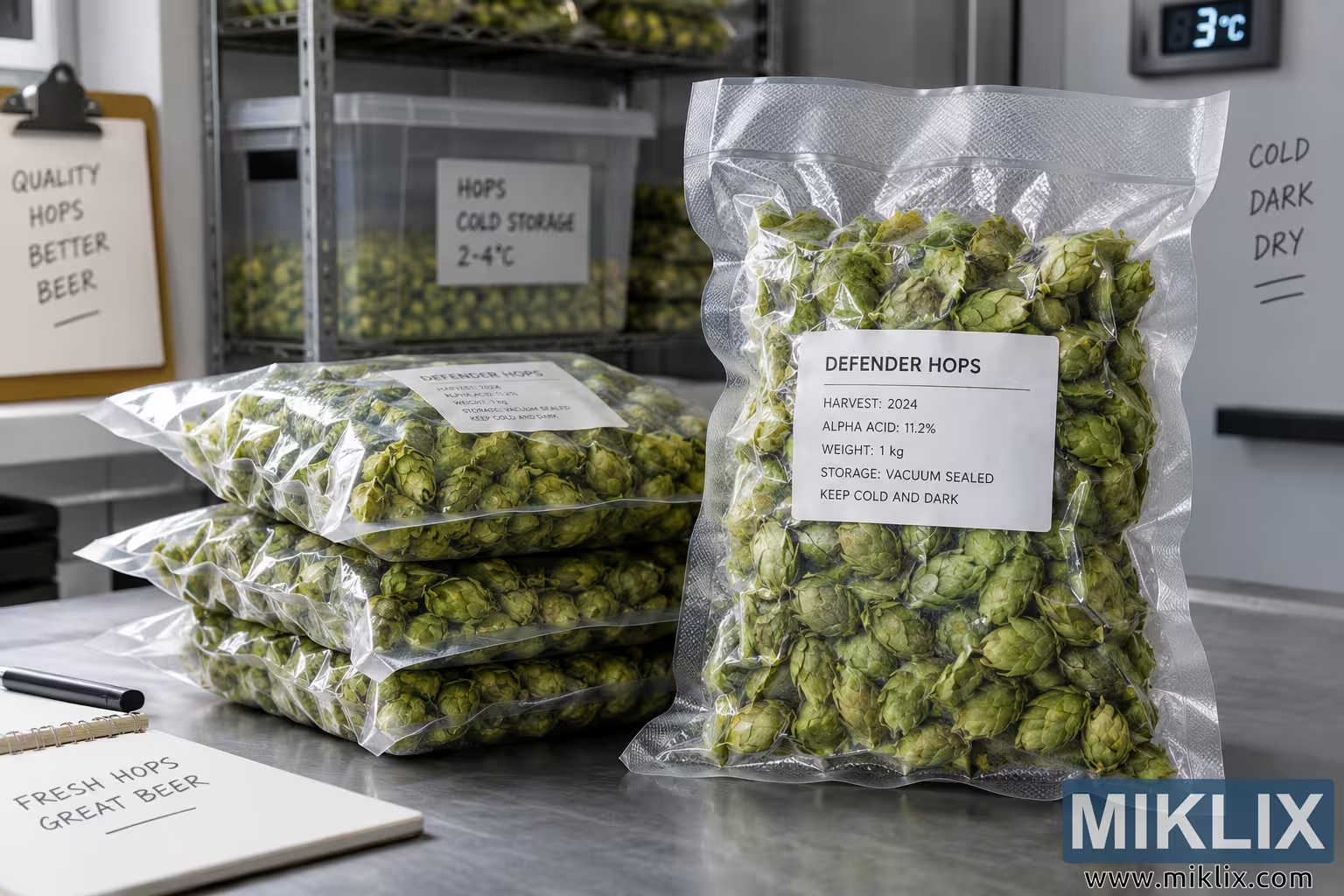
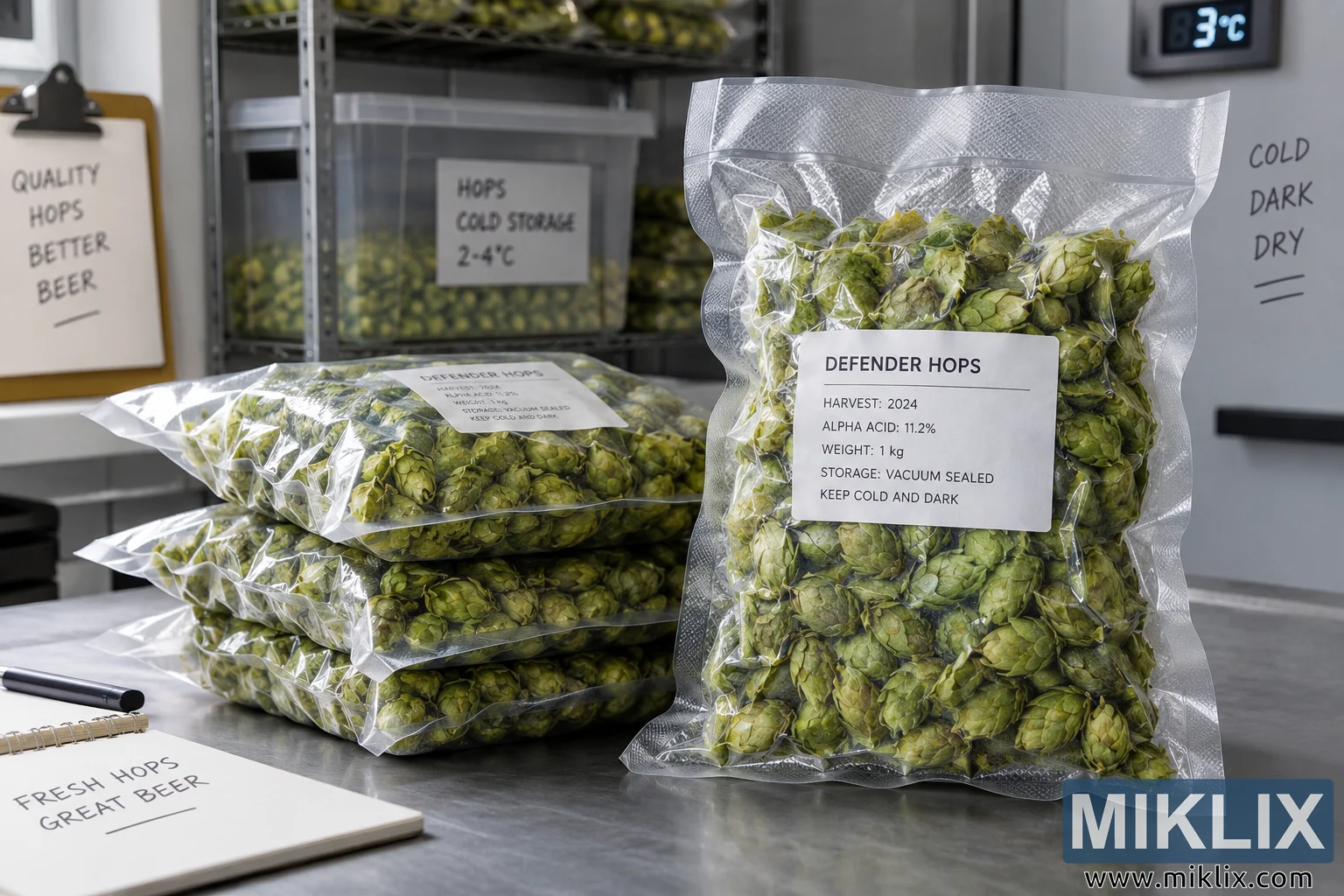
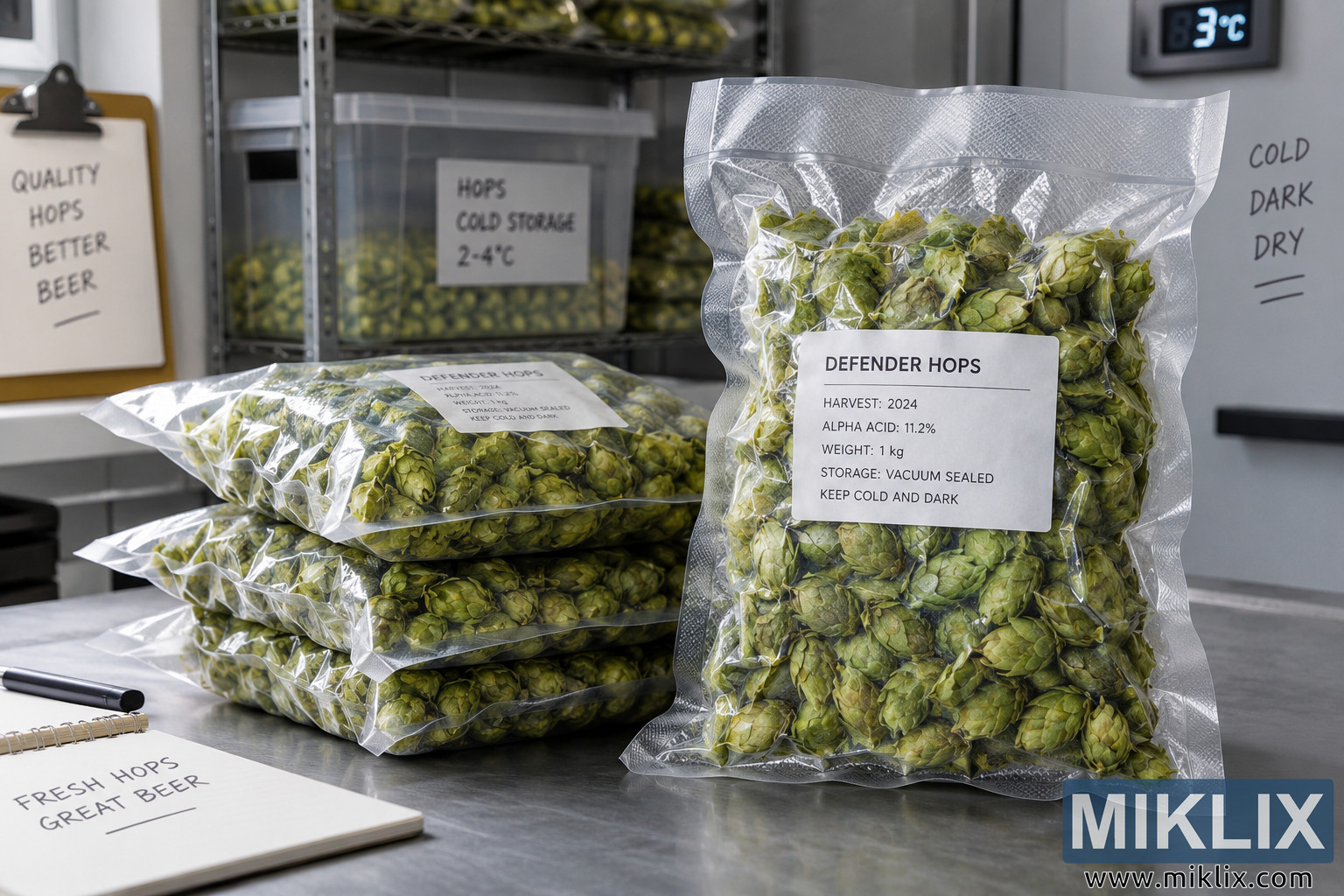
The image files available for download below are less compressed and higher resolution - and as a result of that, higher quality - than the images embedded in articles and pages on this website, which are more optimized for file size in order to reduce bandwidth consumption.
Regular size (1,536 x 1,024)
Large size (3,072 x 2,048)
Very large size (4,608 x 3,072)
Extra large size (6,144 x 4,096)
Comically large size (1,048,576 x 699,051)
- Still uploading... ;-)
Image description
The image presents a realistic, carefully organized cold-storage and packaging environment dedicated to preserving hops in vacuum-sealed packages. The scene is photographed in a wide landscape composition, with the main focus placed on several transparent vacuum-sealed bags filled with whole green hop cones. The setting resembles a professional brewery ingredient room, hop-processing workspace, or temperature-controlled storage facility. Stainless-steel surfaces, industrial shelving, translucent storage containers, and a visible digital temperature display give the room a clean, functional, food-production character.
In the foreground and slightly to the right of center, a large upright vacuum-sealed package dominates the composition. The clear plastic packaging is tightly formed around a substantial quantity of whole hop cones, visibly reducing the amount of air surrounding the plant material. The bag has broad textured sealing areas along its perimeter, particularly across the top, reinforcing the impression that it has been securely vacuum sealed for storage. The hops inside vary naturally in tone from yellow-green to deeper olive green, with overlapping petals and compact cone shapes providing substantial texture and visual detail. Reflections and highlights across the plastic emphasize the smooth, airtight packaging and contrast with the organic texture of the hops.
A simple white identification label is attached to the front of the prominent package. It identifies the contents as Defender hops and presents harvest and storage information in a straightforward, utilitarian format. The label includes a 2024 harvest designation, an alpha-acid value of 11.2 percent, a package weight of one kilogram, and storage information indicating that the hops are vacuum sealed and should be kept cold and dark. The label has no commercial logo, trademark styling, or recognizable brand identity; instead, it resembles an internal inventory or ingredient-management label used to organize agricultural materials in a professional storage environment.
To the left of the upright package is a stack of three additional vacuum-sealed bags resting horizontally on the stainless-steel worktable. These bags are also filled with green hop cones and have been compressed into relatively flat, rectangular packages. Their clear plastic surfaces contain numerous folds, highlights, and reflections created by the vacuum sealing. A white identification label can be seen on the uppermost package, visually connecting it with the larger upright package. Together, the four visible packages communicate a systematic approach to portioning, sealing, identifying, and storing hops rather than leaving the ingredient exposed to the surrounding air.
The stainless-steel table extends across the lower portion of the scene. Its clean, slightly reflective surface contributes to the impression of a hygienic processing or storage area. At the lower left edge of the image, a spiral-bound notebook lies partly within the frame. Handwritten text on the visible page refers to fresh hops and great beer, suggesting that the workspace belongs to someone concerned with ingredient freshness and brewing quality. A black pen rests nearby on the table, adding a practical detail that makes the environment feel actively used for record keeping, inventory management, or quality-control work.
Behind the packaged hops, industrial metal shelving occupies much of the background. Several translucent plastic storage bins sit on the shelves, while additional hop material or packaged hops can be seen farther back. One container carries a simple paper sign identifying it as cold storage for hops and specifying a temperature range of approximately two to four degrees Celsius. The shelving and containers are deliberately plain and functional, supporting the overall visual message of controlled storage rather than retail presentation. The background is somewhat softer than the main foreground package, creating depth while keeping the vacuum-sealed hops as the primary subject.
In the upper-right portion of the scene, a digital temperature display reads 3°C. This detail immediately communicates that the storage environment is being maintained at a low temperature. Its placement near the packaged hops reinforces the importance of refrigeration or cold storage as part of proper hop preservation. On the wall beneath the temperature display, handwritten words emphasize three storage conditions: cold, dark, and dry. These short instructions visually summarize the environmental principles represented by the rest of the scene. Although the room is illuminated sufficiently for the photograph, the storage guidance itself indicates that prolonged exposure to light should be avoided during normal storage.
On the far left side of the background, a clipboard or mounted sheet contains another handwritten quality-oriented note referring to hops and better beer. This small detail complements the notebook in the foreground and makes the room feel like a working brewery or ingredient-handling facility where staff document and reinforce best practices. The handwritten notes contrast with the more formal printed labels on the vacuum-sealed packages, balancing a professional industrial environment with the practical character of a hands-on brewing workspace.
The lighting is bright, neutral, and realistic, with soft reflections appearing on the stainless-steel table, clear plastic bags, shelving, and storage containers. The overall color palette is restrained: green and olive tones from the hop cones are surrounded by silver-gray stainless steel, neutral gray walls, clear plastic, and white labels. This limited palette helps the natural green hops remain visually prominent. The photograph uses moderate depth of field, keeping the primary package and nearby stacked bags highly detailed while allowing background elements to become slightly less prominent without losing their informational value.
The composition communicates proper hop storage through several complementary visual cues. Vacuum-sealed packaging demonstrates the reduction of air exposure; the 3°C display and cold-storage container indicate refrigeration; the written instructions emphasize cold, dark, and dry conditions; and the organized labels demonstrate attention to harvest information, ingredient characteristics, package weight, and storage procedure. The sealed bags also isolate the hops from the surrounding workspace, visually suggesting protection from environmental exposure and contamination. Rather than depicting loose hops in an open container, the image consistently emphasizes secure packaging and controlled conditions.
No people are visible in the scene, allowing the viewer's attention to remain entirely on the stored ingredient, packaging method, and storage environment. There are also no recognizable commercial brands, logos, branded products, or trademarked packaging designs. The wording on the packages functions as generic ingredient identification rather than commercial branding. Overall, the image is a detailed, realistic representation of Defender hops being preserved in transparent vacuum-sealed packages within an orderly, cool, dry, and controlled storage environment. It visually communicates careful ingredient handling, organized inventory practices, temperature control, protection from air exposure, and an emphasis on maintaining hop freshness and quality for subsequent brewing use.
The image is related to: Hops in Beer Brewing: Defender