
Image: Fresh vs. Degraded Defender Hops: Visual Quality Comparison
Published: September 22, 2026 at 3:49:16 PM UTC
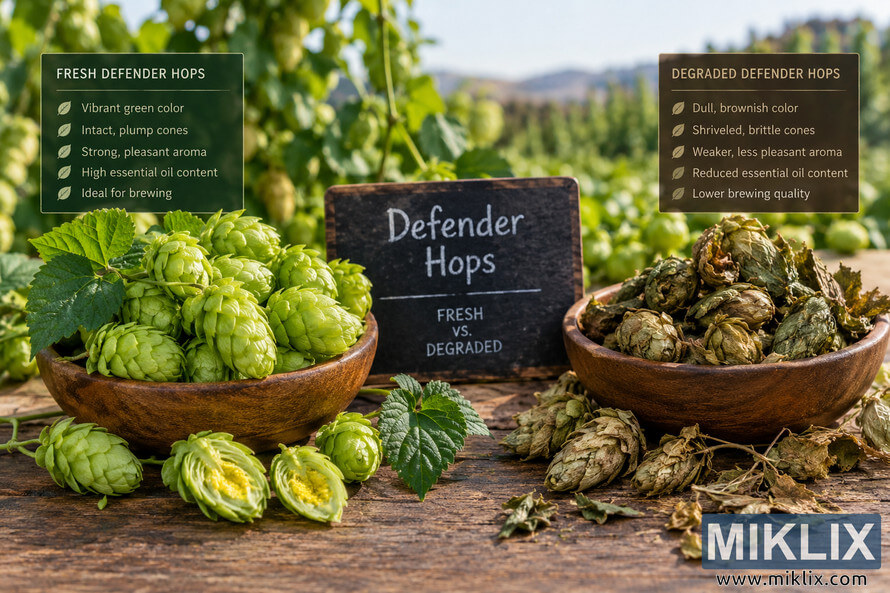
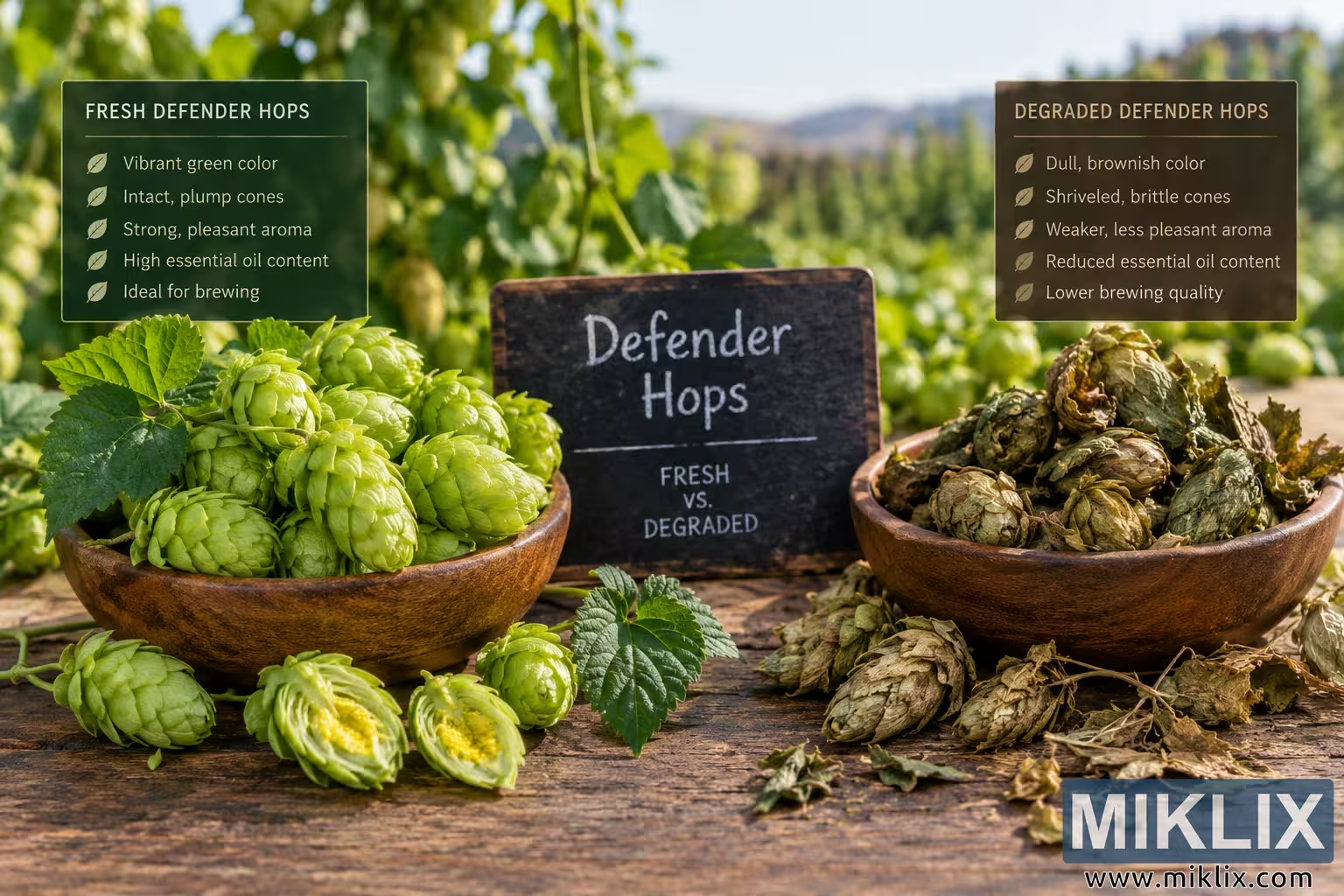
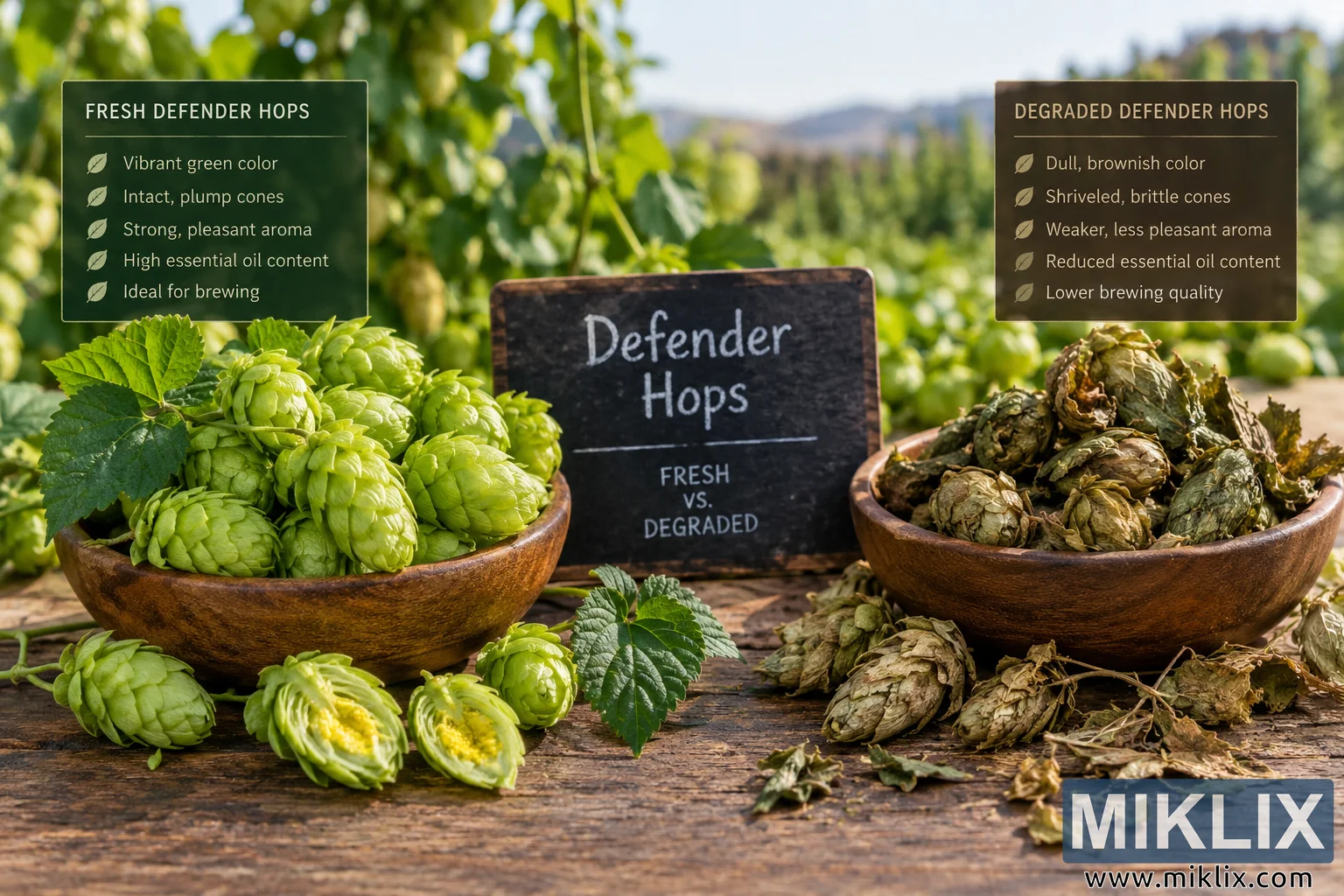
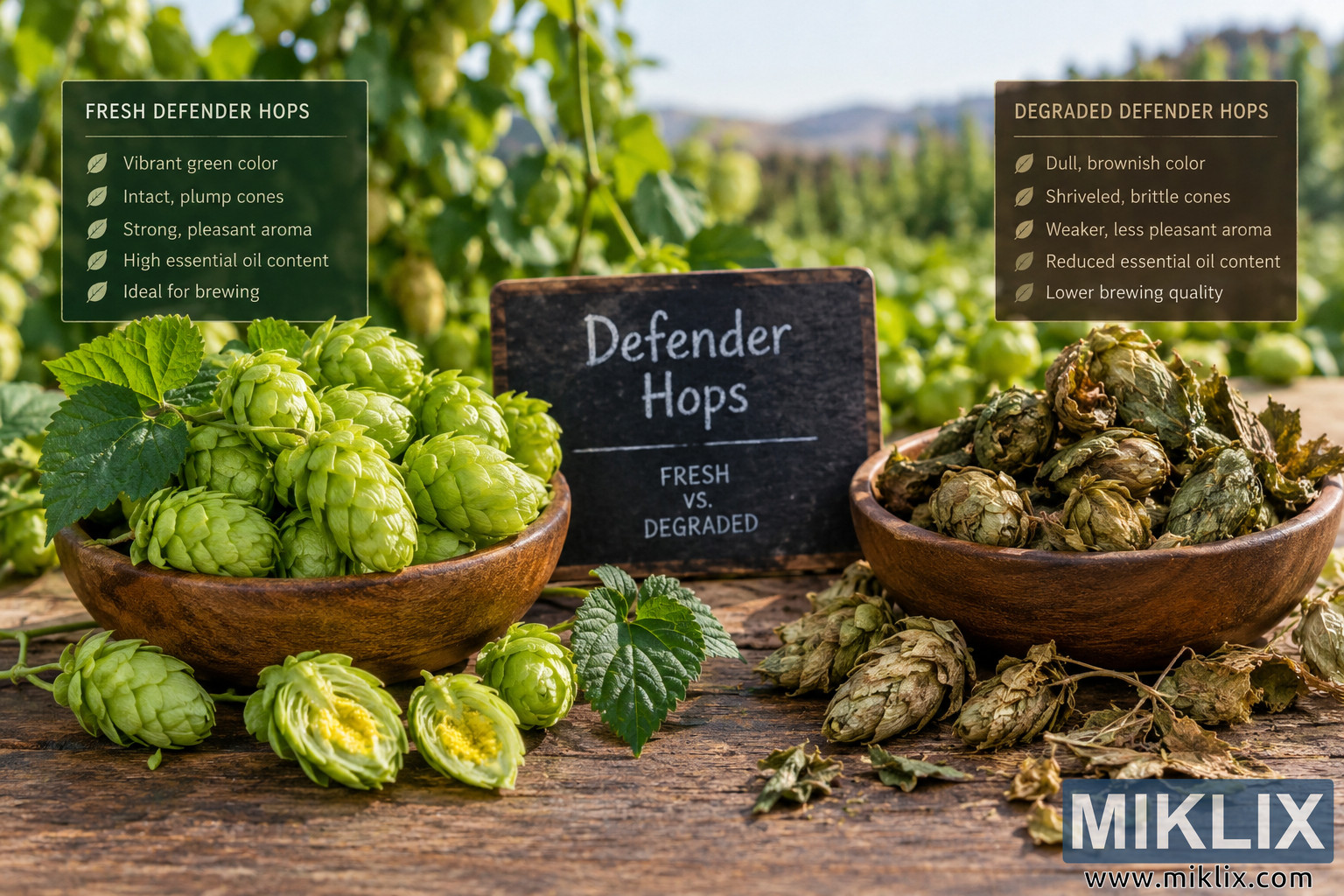
Visual comparison of fresh versus degraded Defender hops, showing differences in color, cone integrity, aroma, essential oil content, dryness, and brewing quality.
Available versions of this image
The image files available for download below are less compressed and higher resolution - and as a result of that, higher quality - than the images embedded in articles and pages on this website, which are more optimized for file size in order to reduce bandwidth consumption.
Regular size (1,536 x 1,024)
Large size (3,072 x 2,048)
Very large size (4,608 x 3,072)
Extra large size (6,144 x 4,096)
Comically large size (1,048,576 x 699,051)
- Still uploading... ;-)
Image description
A wide, landscape-oriented photographic comparison presents fresh and degraded Defender hops side by side in an outdoor hop-growing setting. The composition is arranged symmetrically around a small, dark chalkboard positioned near the center of the image. The chalkboard carries handwritten-style white lettering reading “Defender Hops,” followed by a horizontal divider and the words “FRESH VS. DEGRADED.” The scene is illuminated by warm, natural daylight, creating a bright agricultural atmosphere and emphasizing the substantial visual differences between the two groups of hop cones.
On the left side of the photograph, a large wooden bowl is filled generously with fresh hop cones. These hops have a vivid, lively green to yellow-green color and appear full, plump, firm, and structurally intact. Their overlapping bracts have a crisp appearance, and the cones retain the characteristic compact shape associated with freshly harvested hops. Several healthy green hop leaves surround the bowl and extend into the foreground. Loose fresh cones are arranged naturally on the rustic wooden tabletop, including a few cut or opened cones that reveal a bright yellow interior. The yellow material visible inside these opened cones provides an additional visual indication of freshness and highlights the internal lupulin-rich portion of the hops. A prominent dark green leaf lies near the center foreground, reinforcing the fresh, recently harvested character of the left-hand side.
Above the fresh hops is a translucent dark green information panel. Its heading reads “FRESH DEFENDER HOPS.” Beneath the heading, a series of leaf-shaped icons introduces five short characteristics: “Vibrant green color,” “Intact, plump cones,” “Strong, pleasant aroma,” “High essential oil content,” and “Ideal for brewing.” The green coloration of this panel visually coordinates with the healthy hops below it. The fresh cones are brightly illuminated by sunlight, which produces detailed highlights along their bracts and makes their saturated green coloration especially noticeable.
The right side provides a strong visual contrast. A second wooden bowl contains degraded hop cones that are noticeably darker, duller, and more irregular than the fresh examples. Their colors range from faded olive green and gray-green to tan and brown. Many cones look compressed, shriveled, brittle, or partially broken. Some have curled, dry-looking bracts, while others appear to be losing their original compact cone structure. Around the bowl, additional degraded hops, fragments, dried leaves, stems, and loose plant material are scattered across the wooden surface. This scattered debris contributes to the impression of dryness and deterioration. The degraded material in the foreground has muted earthy tones and lacks the vivid green coloration visible on the fresh side.
Above the degraded hops is a translucent dark brown information panel headed “DEGRADED DEFENDER HOPS.” Five leaf icons accompany the listed characteristics: “Dull, brownish color,” “Shriveled, brittle cones,” “Weaker, less pleasant aroma,” “Reduced essential oil content,” and “Lower brewing quality.” The brown color scheme of the panel corresponds visually with the aged and degraded appearance of the hops beneath it, making the right side immediately distinguishable from the green-themed fresh side.
The central chalkboard acts as a visual divider while keeping both samples within the same photographic environment. Its rough wooden frame and chalk lettering complement the rustic tabletop and agricultural setting. Fresh green foliage partially overlaps the lower edge of the board, while dried plant material from the degraded sample extends toward it from the opposite direction. This creates a gradual visual transition from vibrant living green material on the left to faded, dry material on the right.
In the background, rows of hop plants extend into a softly blurred agricultural landscape. Tall green vines and foliage are visible behind both samples, with distant hills or elevated terrain appearing near the horizon. The shallow depth of field keeps the foreground hop cones, bowls, chalkboard, and comparison panels visually dominant while allowing the hop field to provide environmental context without becoming distracting. Bright sky and soft atmospheric haze occupy the upper background, contributing to the sunny outdoor appearance.
The most important visual distinction is the contrast in color, texture, integrity, and apparent moisture between the two hop samples. The fresh Defender hops are represented as bright green, compact, healthy, and aromatic-looking cones with intact plant foliage, whereas the degraded Defender hops are represented as faded, brownish, brittle, dry, and structurally damaged cones surrounded by fragmented material. The comparison is designed to communicate deterioration at a glance, while the accompanying text panels explicitly describe the associated changes in aroma, essential oil content, and brewing quality. The image uses realistic photographic textures, natural lighting, rustic wooden containers, and an agricultural background to present the comparison in an accessible educational format. No commercial logos, packaging, trademarks, or identifiable brand marks are visible in the scene; “Defender” is presented only as the name of the hop variety being compared.
The image is related to: Hops in Beer Brewing: Defender