
Image: Homebrewer Calculating Defender Hop Additions with Brewing Software
Published: September 22, 2026 at 3:49:16 PM UTC
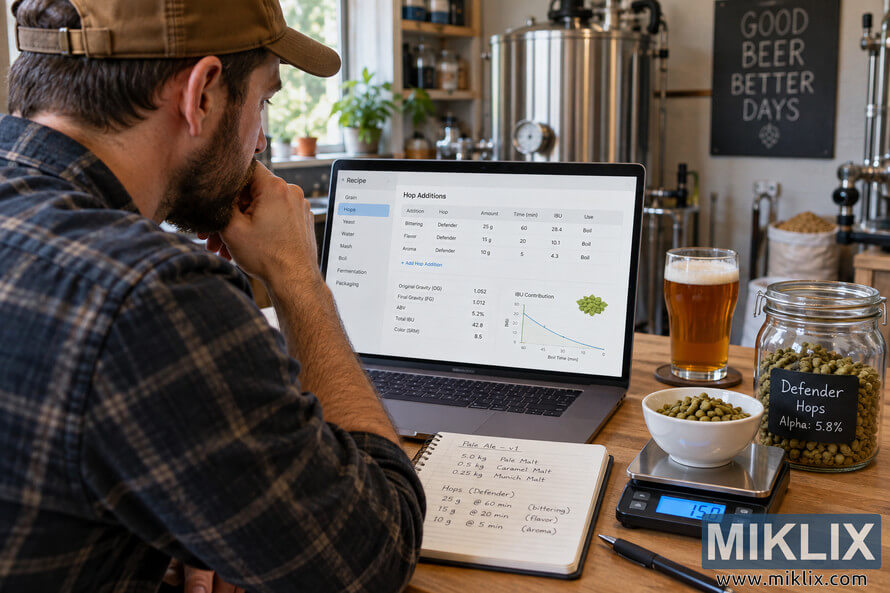
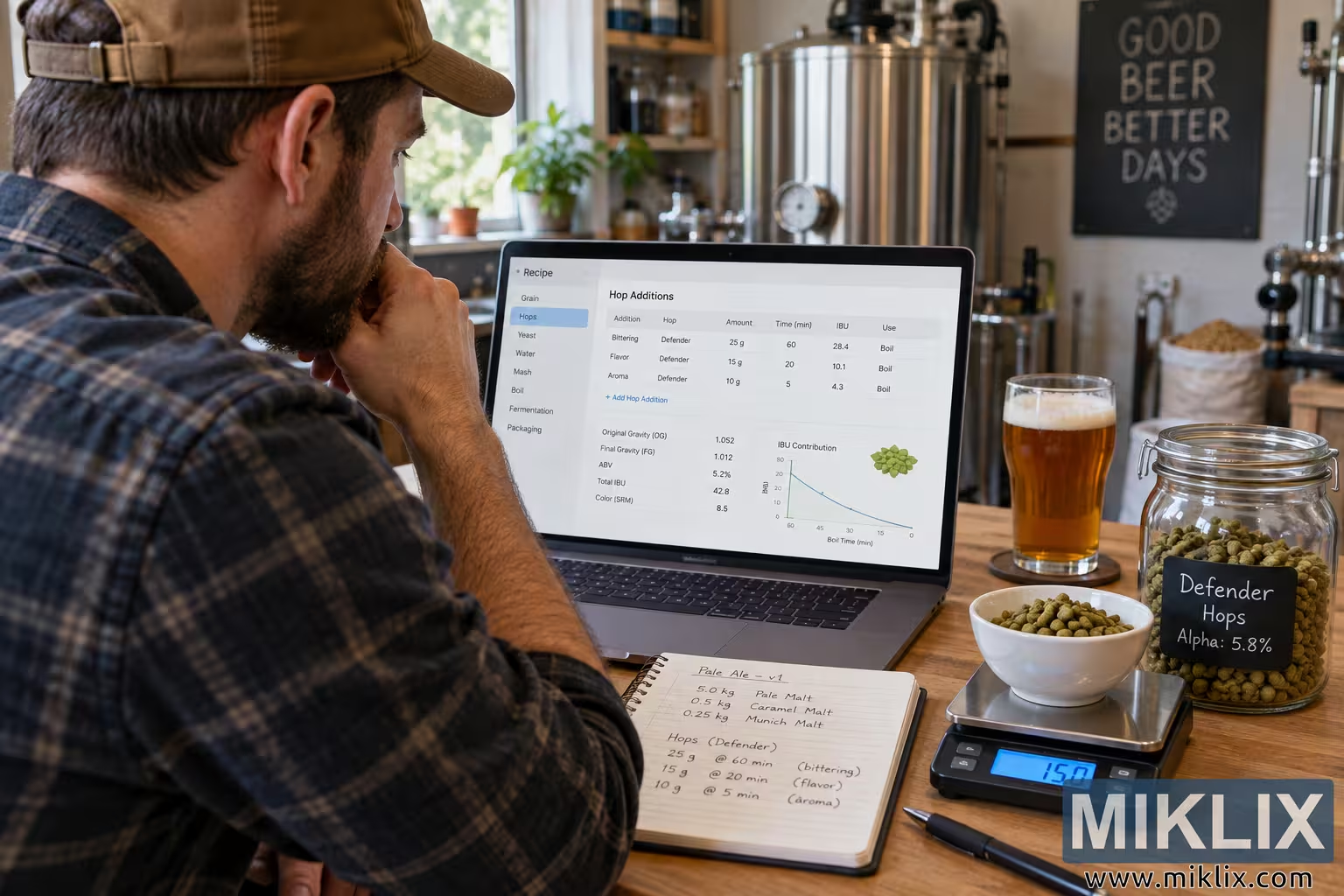
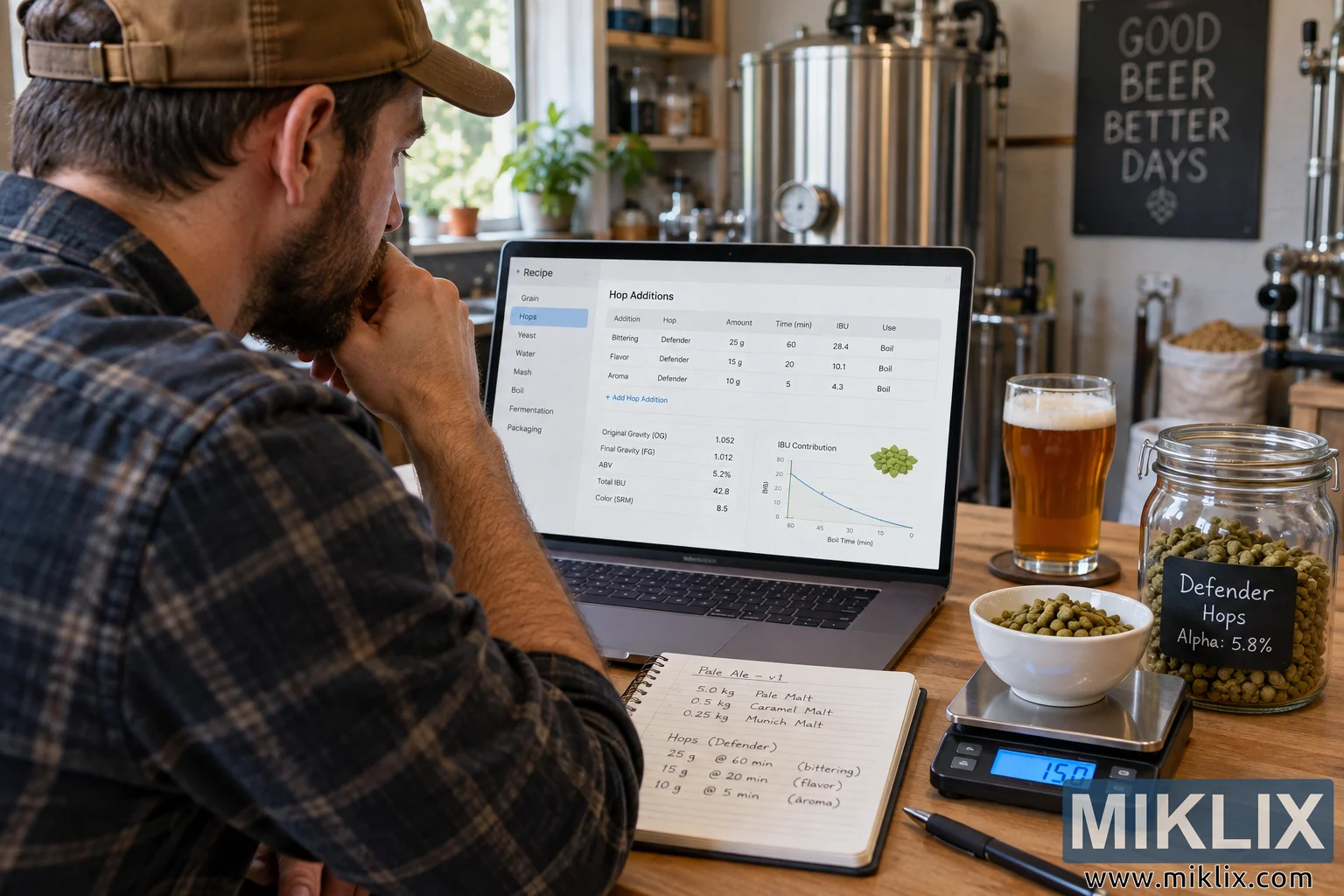
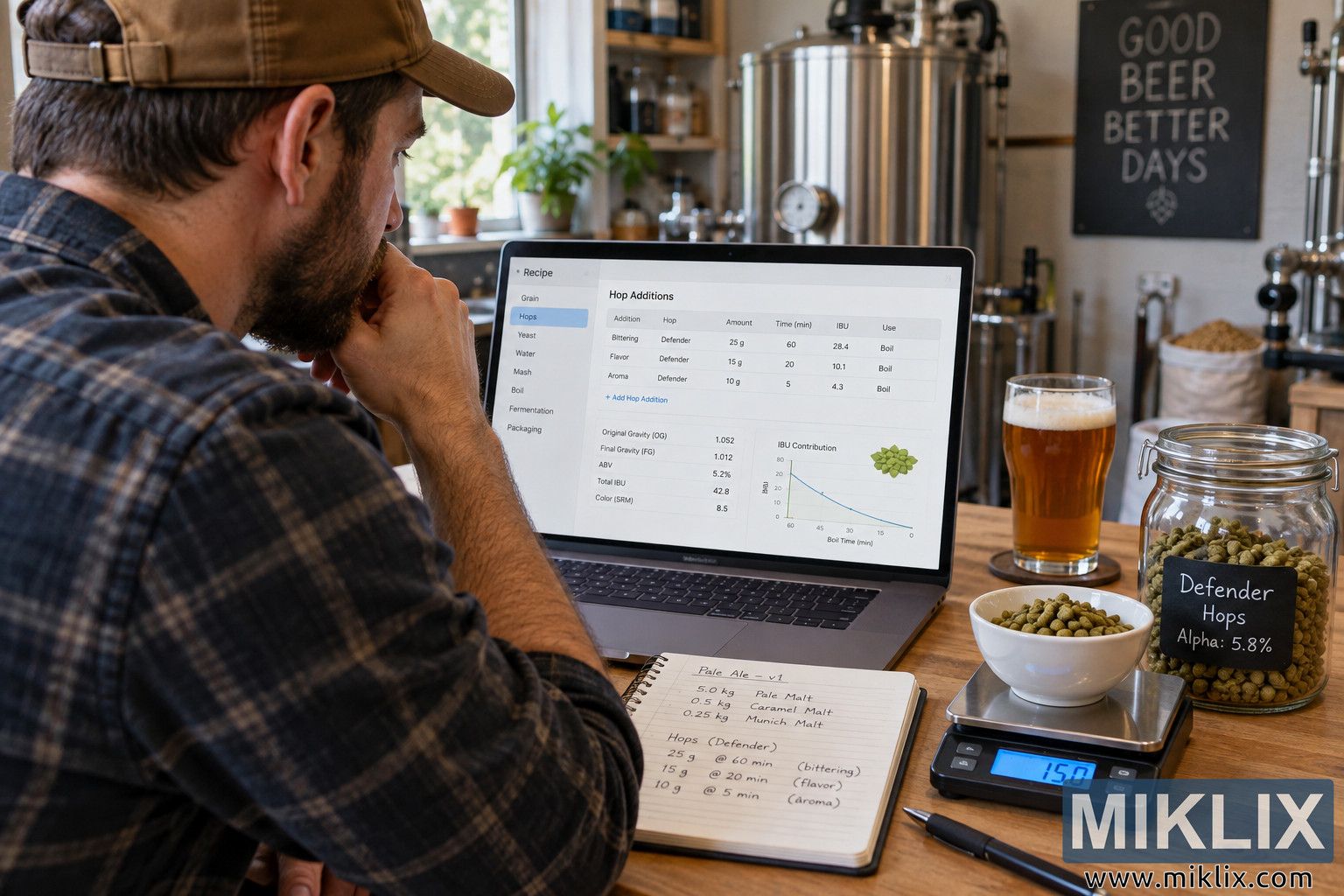
A homebrewer uses brewing software to calculate Defender hop additions, weighing hop pellets beside recipe notes, brewing equipment, and a glass of amber beer.
Available versions of this image
The image files available for download below are less compressed and higher resolution - and as a result of that, higher quality - than the images embedded in articles and pages on this website, which are more optimized for file size in order to reduce bandwidth consumption.
Regular size (1,536 x 1,024)
Large size (3,072 x 2,048)
Very large size (4,608 x 3,072)
Extra large size (6,144 x 4,096)
Comically large size (1,048,576 x 699,051)
- Still uploading... ;-)
Image description
A high-resolution landscape photograph depicts a homebrewer working at a well-organized brewing station in a warm, inviting indoor home brewery. The scene is viewed from slightly behind and to the left of the brewer, creating an over-the-shoulder perspective that emphasizes both the person and the brewing calculations displayed on a laptop. The homebrewer is an adult man with short brown hair and a beard. He wears a neutral brown baseball cap and a dark plaid shirt. Seated or leaning forward at a wooden work surface, he rests one hand near his chin while concentrating on the laptop screen, giving the impression that he is carefully reviewing and adjusting a beer recipe before proceeding with the next stage of brewing.
The laptop is positioned prominently near the center of the composition. Its screen displays generic brewing software with a clean, neutral interface and no visible commercial branding. A recipe section is open to a page titled "Hop Additions." The software presents a structured table of hop additions with columns for information such as the addition, hop variety, amount, time, bitterness contribution, and use. The hop variety shown in the recipe is Defender. Several additions are scheduled at different stages of the boil, illustrating how the brewer is using software to calculate the effect of hop quantity and timing on the finished beer. Additional recipe statistics appear beneath the table, including original gravity, final gravity, alcohol by volume, total bitterness, and beer color. A small graph visualizes the relationship between boil time and bitterness contribution, reinforcing the analytical and technical aspect of modern homebrewing.
On the wooden table in front of the laptop is an open spiral-bound brewing notebook containing handwritten recipe notes. The notes describe a pale ale recipe, including several malt quantities and a section devoted to Defender hops. Three hop additions are recorded at different boil times, corresponding visually with the calculations displayed on the laptop. A dark pen lies diagonally on the table near the notebook, suggesting that the brewer is actively transferring information between the brewing software and his handwritten records.
To the right of the notebook is a compact digital kitchen scale. A small white bowl filled with green hop pellets rests on its metal weighing platform, and the illuminated display indicates a measured quantity. Immediately behind the scale is a larger clear glass jar containing additional green hop pellets. A simple dark handwritten-style label identifies the contents as Defender hops and includes an alpha-acid percentage. The jar, bowl, and scale make the hop-measuring process tangible and connect the software calculations on the computer with the physical ingredients used during brewing. The hop pellets have a natural olive-green appearance and slightly rough texture, contrasting with the smooth glass jar, white ceramic bowl, metal scale, and polished wooden worktop.
A clear pint glass of amber-colored beer stands behind the scale and next to the laptop. The beer has a pale foamy head and catches the warm ambient light, producing rich golden and copper tones. It provides a visual reminder of the finished product the homebrewer is working toward without displaying any brewery logo or commercial branding. The glass rests on a simple dark coaster.
The background establishes the room as a dedicated homebrewing space. A large stainless-steel brewing vessel occupies the central background, with polished metal walls, fittings, tubing, and a round analog gauge. Additional stainless brewing hardware and pipes are visible toward the right side of the image. Shelving in the rear contains jars and brewing supplies, while a sack or container of grain is visible farther to the right. A window on the left allows soft daylight into the room, and a small green plant near the window adds a natural accent to the otherwise equipment-focused environment. The combination of daylight and warm interior illumination creates a comfortable workshop atmosphere while retaining the practical appearance of a functioning brewing area.
On the wall in the upper-right background is a simple dark decorative board with light-colored lettering reading "GOOD BEER BETTER DAYS" and a small hop-inspired graphic underneath. The sign contributes to the enthusiastic homebrewing atmosphere while remaining generic and free of real-world brand identities. No recognizable commercial logos or actual product brands are intentionally featured anywhere in the scene.
The overall composition balances traditional hands-on brewing with contemporary recipe calculation. The homebrewer, laptop, handwritten notebook, measured hops, brewing equipment, and finished glass of beer form a visual sequence from planning and calculation through ingredient preparation to the eventual beverage. The brewer's focused posture makes the software the intellectual center of the scene, while the hop pellets on the scale provide a clear physical representation of the values being calculated. Stainless steel brewing equipment in the background gives the photograph authenticity and depth without distracting from the foreground activity.
The photograph uses a naturalistic, documentary-style aesthetic with realistic textures, moderate depth of field, and warm color temperature. The foreground is sharply detailed, particularly the laptop, notebook, scale, hop pellets, and brewer, while the background equipment remains sufficiently clear to establish context. The landscape framing provides room for the brewer on the left, the brewing software in the center, and the physical hop ingredients on the right. Altogether, the image communicates a knowledgeable homebrewer using digital brewing software to calculate and plan Defender hop additions, then accurately weighing those hops as part of a carefully documented home beer recipe.
The image is related to: Hops in Beer Brewing: Defender