
Image: Brewing Calculator for Defender Hop Adjustments
Published: September 22, 2026 at 3:49:16 PM UTC
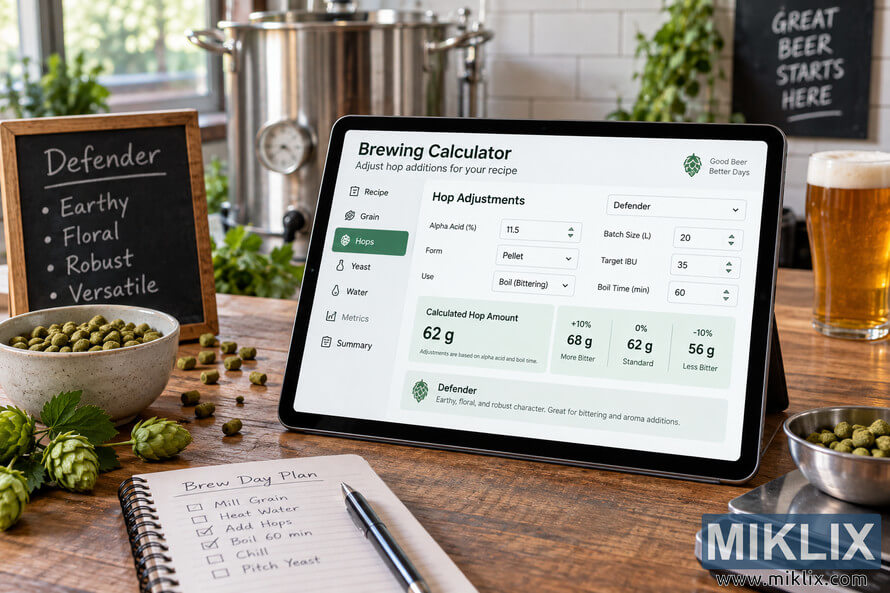
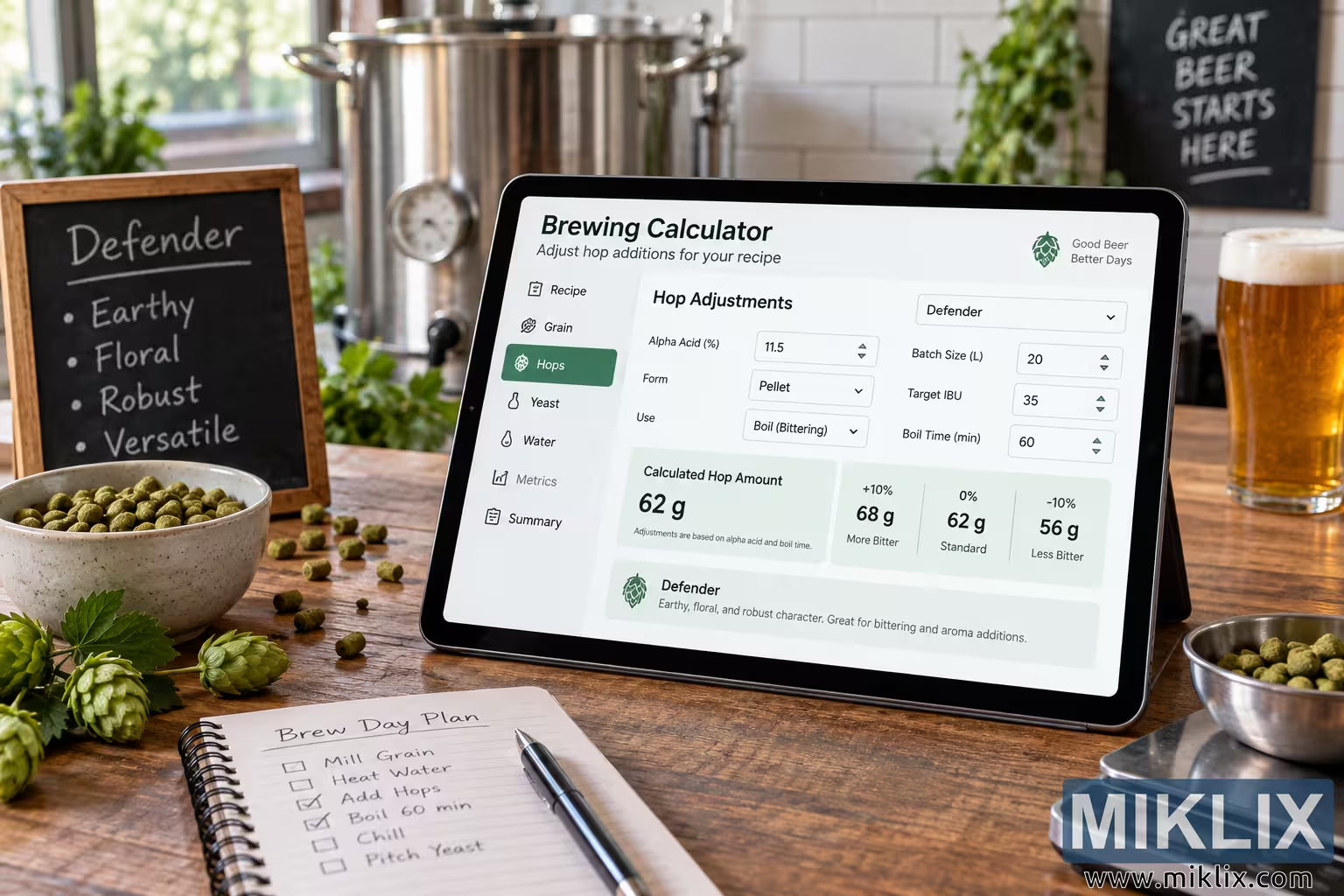
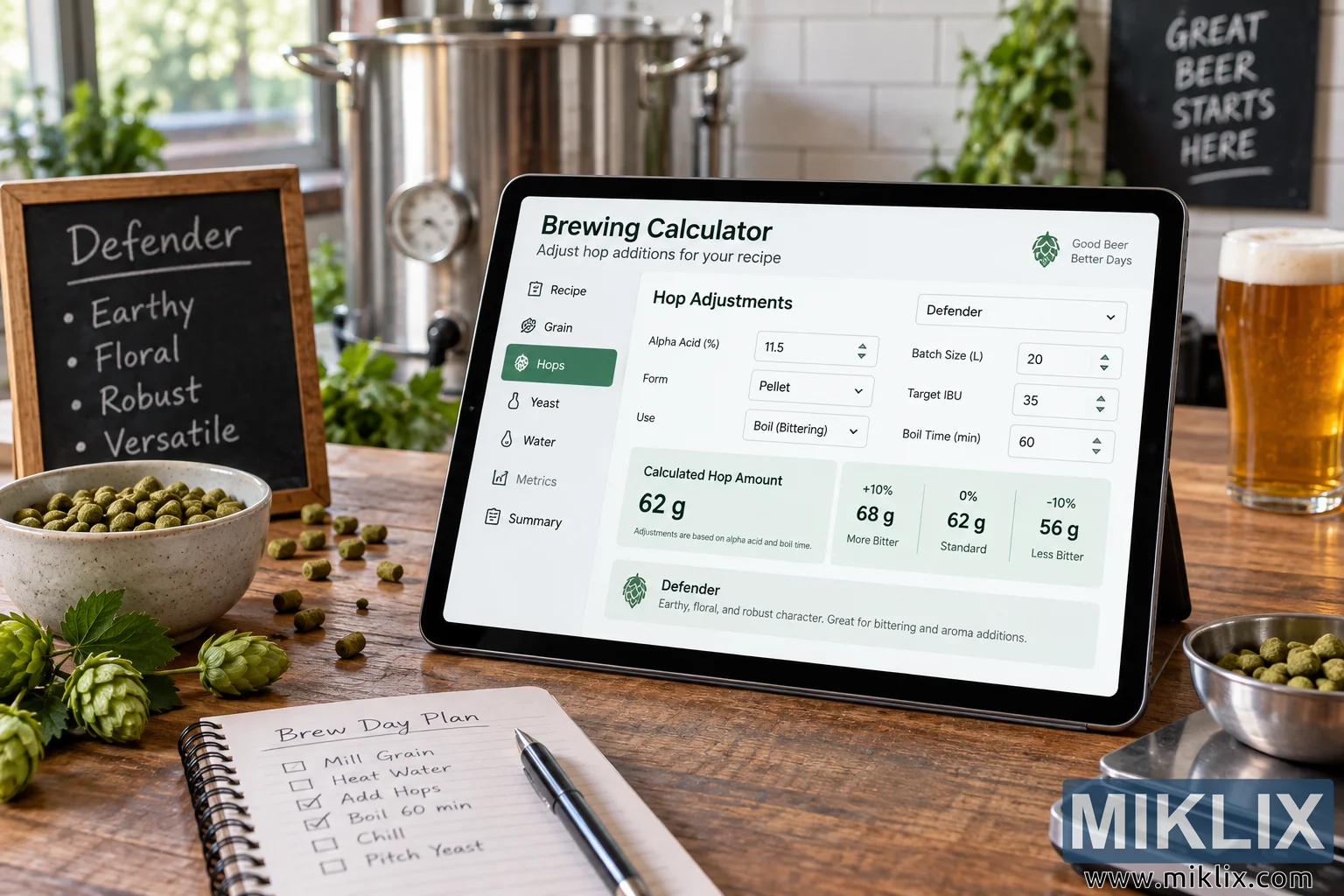
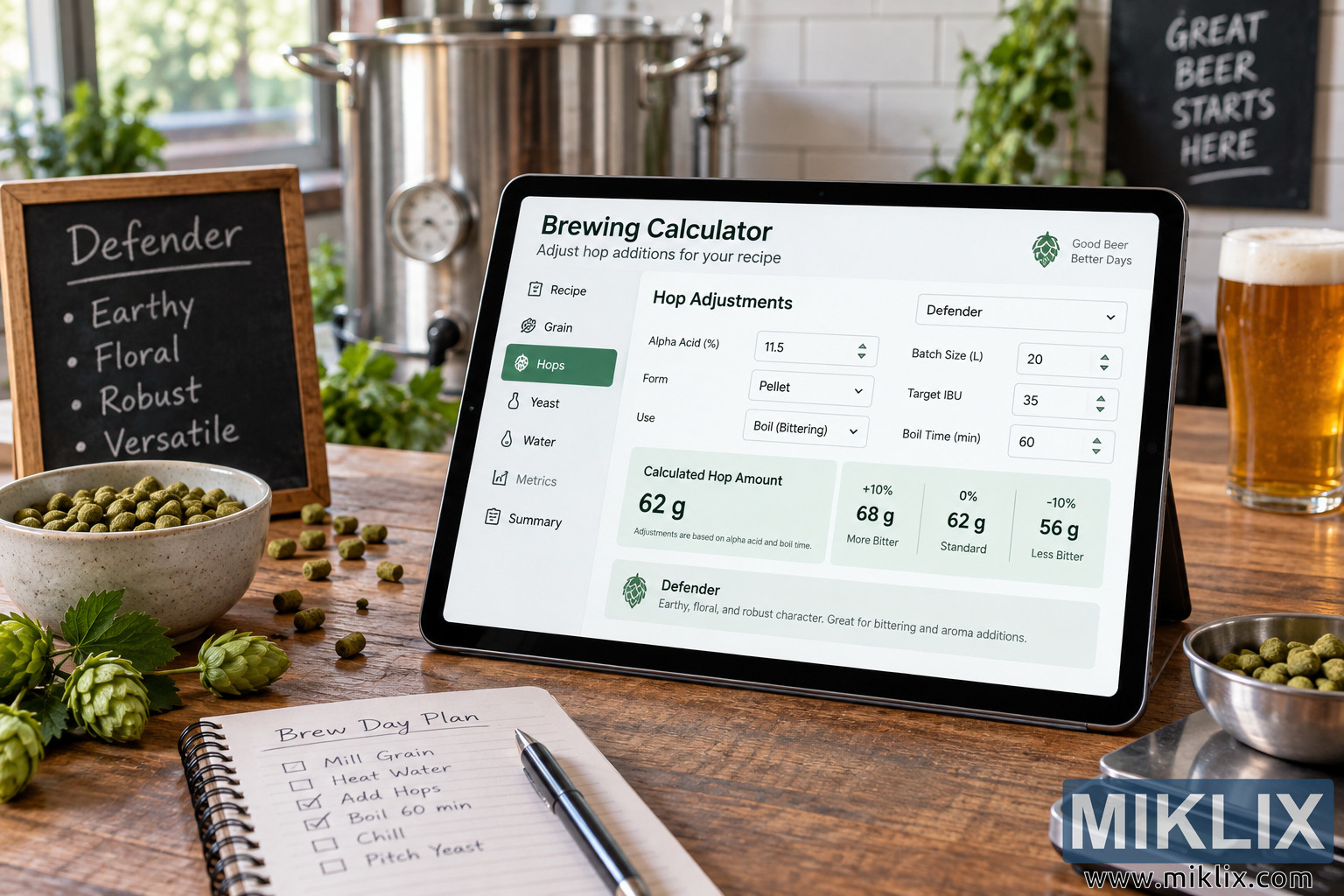
A realistic craft-brewing workspace featuring a digital calculator for Defender hop adjustments, with hops, brewing equipment, recipe notes, a scale, and amber beer.
Available versions of this image
The image files available for download below are less compressed and higher resolution - and as a result of that, higher quality - than the images embedded in articles and pages on this website, which are more optimized for file size in order to reduce bandwidth consumption.
Regular size (1,536 x 1,024)
Large size (3,072 x 2,048)
Very large size (4,608 x 3,072)
Extra large size (6,144 x 4,096)
Comically large size (1,048,576 x 699,051)
- Still uploading... ;-)
Image description
A crisp, photorealistic landscape image depicts a welcoming craft-brewing workspace arranged around a digital brewing calculator. The scene is set on a broad, rustic wooden worktable with warm natural grain and subtle signs of use, creating the atmosphere of a small home brewery or thoughtfully equipped brewing studio. The central focal point is a large black tablet propped upright at a slight angle. Its bright screen displays a clean, modern brewing calculator interface dedicated to hop adjustments. The interface uses a restrained white and pale green palette with dark green accents, visually connecting the software to the fresh hops and brewing ingredients surrounding the device.
At the top of the tablet screen, a prominent heading reads “Brewing Calculator,” accompanied by the subtitle “Adjust hop additions for your recipe.” A vertical navigation menu runs down the left side of the interface and includes sections for Recipe, Grain, Hops, Yeast, Water, Metrics, and Summary. The Hops section is highlighted in green, making it immediately apparent that hop calculations are currently being edited. The main panel is headed “Hop Adjustments” and shows Defender as the selected hop variety. The calculator contains clearly organized fields for brewing parameters, including an alpha acid value of 11.5 percent, a batch size of 20 liters, pellet form, a target bitterness of 35 IBU, a boil or bittering use, and a boil time of 60 minutes.
A large calculation panel in the lower portion of the interface presents the resulting hop quantity. The standard calculated hop amount is shown as 62 g. Alongside this result are adjustment choices that illustrate how the hop quantity could be modified to alter bitterness: a plus 10 percent option displays 68 g and is labeled as more bitter, the standard setting remains at 62 g, and a minus 10 percent option displays 56 g and is labeled as less bitter. Beneath the calculation is a short Defender hop information area describing an earthy, floral, and robust character and indicating suitability for bittering and aroma additions. The interface therefore communicates both the numerical calculation and the practical brewing purpose of the selected ingredient without displaying any recognizable commercial brand identity.
The physical workspace surrounding the tablet reinforces the brewing theme. To the left, a small wood-framed chalkboard stands vertically on the table. “Defender” is handwritten across its upper section, followed by a bulleted list of sensory characteristics: earthy, floral, robust, and versatile. In front of the chalkboard sits a light-colored ceramic bowl filled with compact green hop pellets. Several additional pellets are scattered casually across the wooden surface, making the scene feel active and authentic rather than staged. Fresh green hop cones and leafy stems occupy the lower-left foreground. Their layered, papery cones and vivid leaves provide an organic contrast to the precise digital calculator at the center of the composition.
In the lower foreground, a spiral-bound notebook lies open on the table. The page is headed “Brew Day Plan” in handwritten lettering and contains a practical brewing checklist. Visible tasks include milling grain, heating water, adding hops, boiling for 60 minutes, chilling, and pitching yeast. Several middle tasks have been checked off while others remain incomplete, suggesting that the photograph captures a brew day already in progress. A dark pen rests diagonally across the notebook, adding another natural working detail and directing the viewer’s eye toward the tablet.
On the right side of the table is a compact digital scale. A stainless-steel bowl positioned on or near the scale contains another portion of green hop pellets, visually connecting the calculator’s gram measurements with the real-world process of weighing ingredients. Farther back on the right is a clear pint glass filled with bright amber beer. A substantial creamy white foam head sits at the top of the glass, while warm light passes through the golden liquid and gives it an inviting glow. The beer is presented as part of the brewing environment rather than as a branded product; there are no logos, labels, or identifiable commercial markings on the glass.
The background is softly out of focus, creating realistic depth of field while preserving enough detail to establish the setting. A large polished stainless-steel brewing kettle rises behind the tablet. Its reflective cylindrical body, sturdy handles, and brewing hardware suggest a functional small-batch brewing setup. A round dial instrument is visible near the kettle, further emphasizing process control and measurement. Behind the equipment is a clean white tiled wall. Green plants and hop-like foliage appear around the edges of the background, softening the industrial metal surfaces and extending the natural green visual theme established by the hops.
Natural daylight enters from a window on the left side of the background, producing a bright, warm atmosphere. The illumination creates gentle highlights on the stainless-steel kettle, tablet frame, glassware, scale, and wooden table while maintaining soft shadows. In the upper-right background, a black wall-mounted chalkboard carries the handwritten phrase “GREAT BEER STARTS HERE” in large white lettering with an underline. The phrase contributes to the enthusiastic craft-brewing atmosphere while remaining generic and free of actual branding.
The overall composition balances traditional hands-on brewing with modern digital recipe management. The tablet and its hop-adjustment calculator dominate the center, while physical hops, pellets, a scale, brewing notes, stainless equipment, and a finished amber beer provide immediate context for how the calculation would be used. Green, amber, silver, black, white, and warm wood tones form the primary visual palette. The shallow depth of field, natural illumination, realistic materials, and carefully arranged brewing tools give the image the appearance of a professional lifestyle photograph. The central concept is immediately readable: a brewer is using a digital brewing calculator to determine and adjust the quantity of Defender hops for a recipe, translating parameters such as alpha acid percentage, batch size, target IBU, and boil time into a practical weight of hops to measure and add during brewing.
The image is related to: Hops in Beer Brewing: Defender