
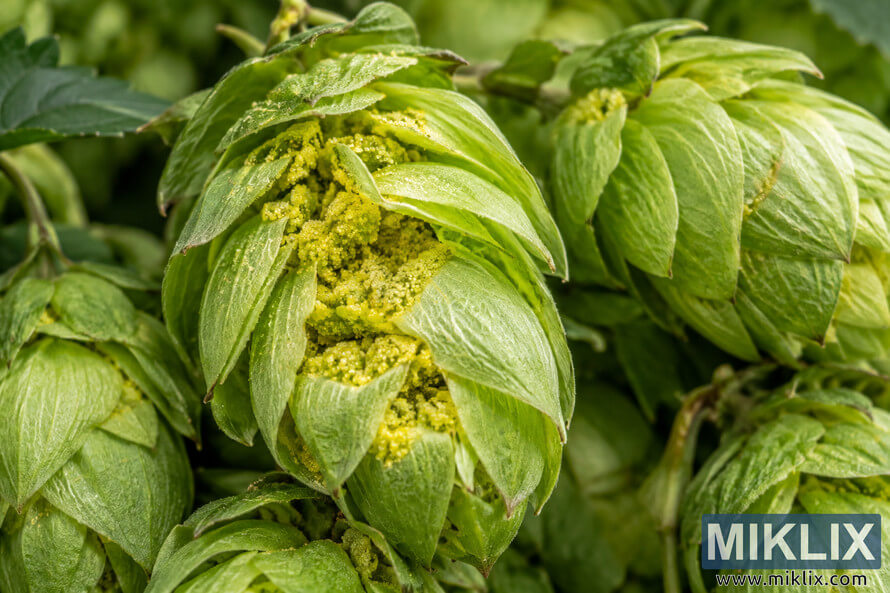
Image: Fresh Green Hop Cones with Visible Lupulin Glands
Published: September 23, 2026 at 5:05:13 PM UTC
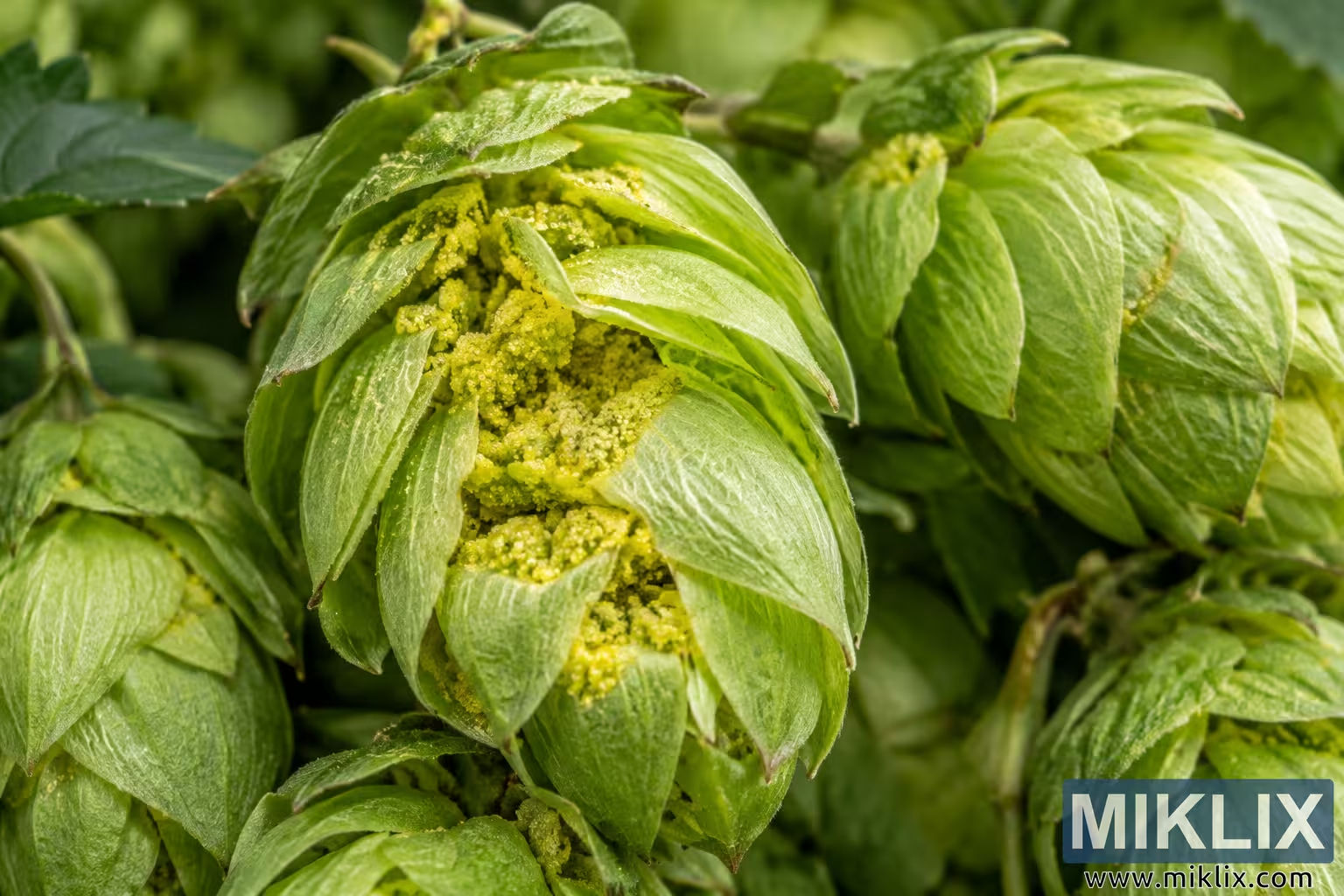
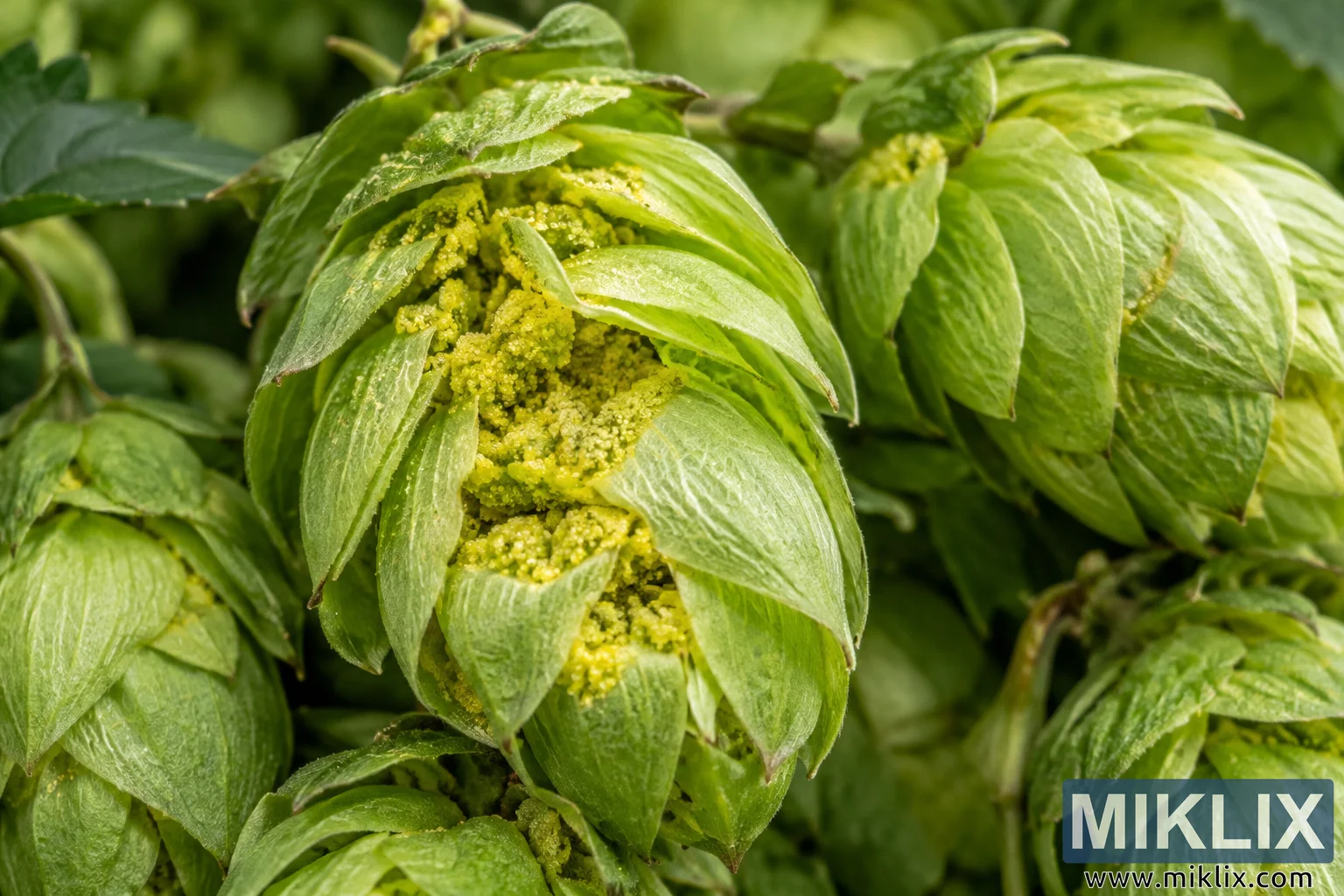
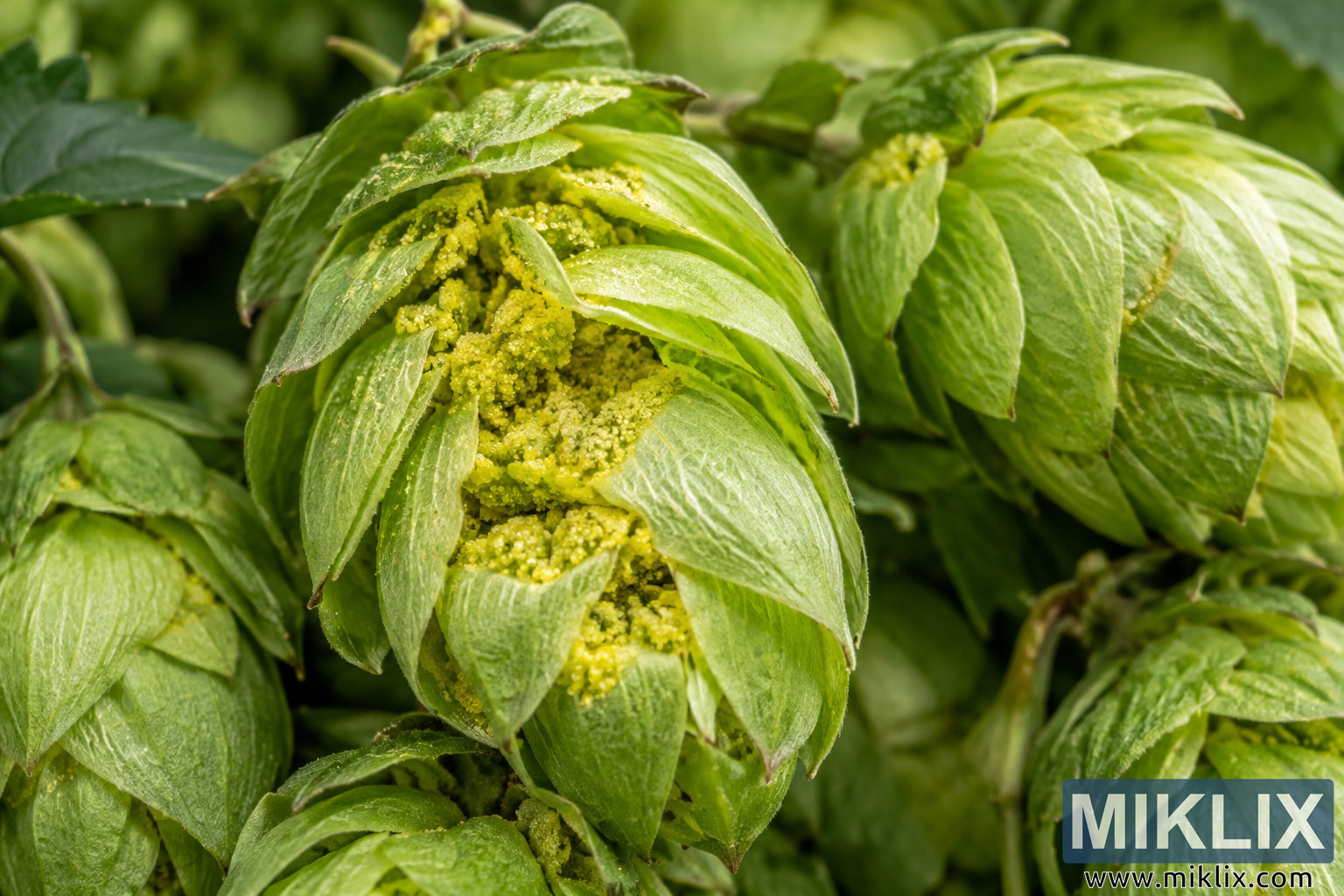
Photorealistic macro close-up of fresh green hop cones revealing yellow-green lupulin glands, detailed bracts, natural textures, and vibrant botanical color.
Available versions of this image
The image files available for download below are less compressed and higher resolution - and as a result of that, higher quality - than the images embedded in articles and pages on this website, which are more optimized for file size in order to reduce bandwidth consumption.
Regular size (1,536 x 1,024)
Large size (3,072 x 2,048)
Very large size (4,608 x 3,072)
Extra large size (6,144 x 4,096)
Comically large size (1,048,576 x 699,051)
- Still uploading... ;-)
Image description
A highly detailed, photorealistic macro photograph presents a cluster of fresh green hop cones at extremely close range, emphasizing the botanical structure, texture, and lupulin glands found within the flowers. The composition is dominated by one large hop cone positioned slightly left of center. Its overlapping green bracts have naturally separated in several places, revealing abundant yellow-green lupulin glands packed between the delicate layers. These resinous glands appear as countless tiny granular particles and rounded droplets, creating a striking contrast with the smoother, leaf-like surfaces surrounding them. Their warm yellow-green coloration immediately draws attention and communicates the freshness, aromatic character, and resin-rich interior associated with newly harvested hops.
The central hop cone displays an intricate arrangement of overlapping bracts that curve outward from the core. Each bract is thin and gently tapered, with visible veins, subtle wrinkles, fine surface texture, and slightly darker tips. Variations in green range from bright lime and yellow-green areas illuminated by the light to deeper natural greens in the shaded folds. The edges of several bracts curl outward enough to expose the interior of the cone, where dense concentrations of lupulin are clearly visible. The glands have a granular, almost crystalline appearance at this magnification, and small highlights across their surfaces give them a moist, resinous quality. This combination of crisp botanical detail and shallow depth of field makes the central cone feel tactile and three-dimensional.
Several additional hop cones surround the main subject and create a dense, natural composition. A large cone occupies the upper-right portion of the image. It remains more tightly closed than the central specimen, allowing its overlapping bracts to form a recognizable layered cone shape. Its surface is illuminated by soft natural-looking light, which reveals fine veins and gentle folds while leaving deeper spaces between the bracts in shadow. Another hop cone appears along the lower-right edge, partially cropped by the frame, while a further cone fills much of the lower-left corner. These secondary cones help establish the scene as a fresh cluster rather than an isolated botanical specimen. They also provide visual repetition without distracting from the exposed lupulin at the center.
The background consists of additional green plant material, including softly rendered leaves, stems, and out-of-focus hop structures. Because of the very shallow depth of field, these background elements dissolve into smooth green shapes and darker shadowed areas. This selective focus strongly separates the primary cone from its surroundings and reinforces the macro-photography aesthetic. The darkest background regions appear behind and around the central subject, increasing local contrast and making the illuminated bracts and yellow lupulin glands stand out more clearly. There is no visible text, packaging, branding, logo, human presence, machinery, or artificial product styling anywhere in the scene.
Lighting is bright yet naturalistic, resembling diffused daylight falling across freshly harvested plant material. Highlights are strongest on the upper and outward-facing surfaces of the hop bracts, while the folds and interior spaces transition into softer shadows. The lighting reveals minute surface details without making the plants appear artificial or excessively polished. A faint impression of moisture and freshness is visible across some of the green surfaces, enhancing the sense that the cones have recently been picked. The color palette remains almost entirely botanical, combining vibrant leaf greens, lime tones, subdued olive shadows, and the distinctive golden yellow-green of the lupulin glands.
From a visual storytelling perspective, the image focuses on the internal anatomy and resin content of fresh hops rather than presenting the cones merely as decorative greenery. The opened central cone acts almost like a botanical cross-section, providing a clear view of the lupulin-rich material hidden beneath the overlapping bracts. The extreme close-up perspective makes the glands a major visual feature, highlighting their density and granular texture. This gives the photograph relevance to subjects such as hop cultivation, harvesting, brewing ingredients, botanical identification, agricultural quality, aroma compounds, and the examination of fresh hop flowers.
The landscape-oriented framing creates room for multiple cones while maintaining a strong central focal point. Cropped cones around the edges make the cluster feel abundant and extend the scene beyond the boundaries of the photograph. The main cone is sharply focused across much of its exposed face, especially around the open bracts and lupulin deposits, whereas foreground and background elements gradually become softer. This controlled depth of field directs attention naturally toward the resinous interior. Overall, the photograph conveys freshness, abundance, natural texture, and botanical complexity through an intimate macro view of green hop cones, with the exposed yellow-green lupulin glands serving as the defining visual detail.
The image is related to: Hops in Beer Brewing: Density