
Hops in Beer Brewing: Density
Published: September 23, 2026 at 5:05:13 PM UTC
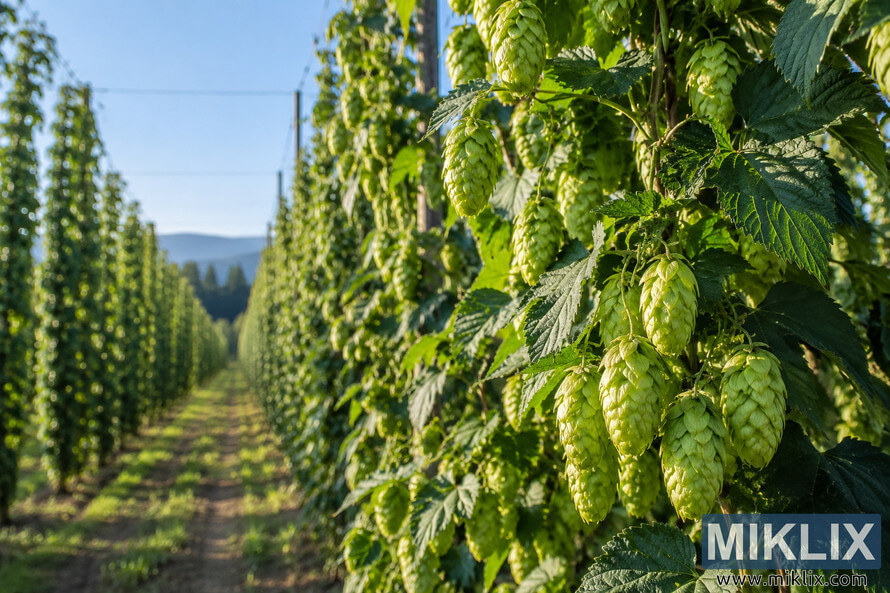
Density hops bring a unique character to craft beer that homebrewers consistently seek. This variety offers a distinctive blend of citrus and floral notes that can transform your brewing projects.
Click or tap the image for more information and higher resolutions.
Developed at Wye College in England, Density hops have earned their place in modern brewing. The variety delivers consistent performance across multiple beer styles. Homebrewers appreciate the reliable oil content and predictable alpha acid levels that make recipe formulation straightforward.
Whether you're crafting your first batch or refining an established recipe, understanding this hop variety opens new possibilities for flavor development.
Origin and Key Characteristics of Density Hops
The Density hops variety emerged from the renowned breeding program at Wye College. This British institution has produced numerous hop varieties that shaped modern brewing. The plant material from Wye College consistently yields quality hops with stable genetic characteristics.
Density hops grow on vigorous plants that produce substantial yields. The hop cones develop a compact structure with rich lupulin content. Commercial growers and home gardeners both report reliable harvests from this variety.
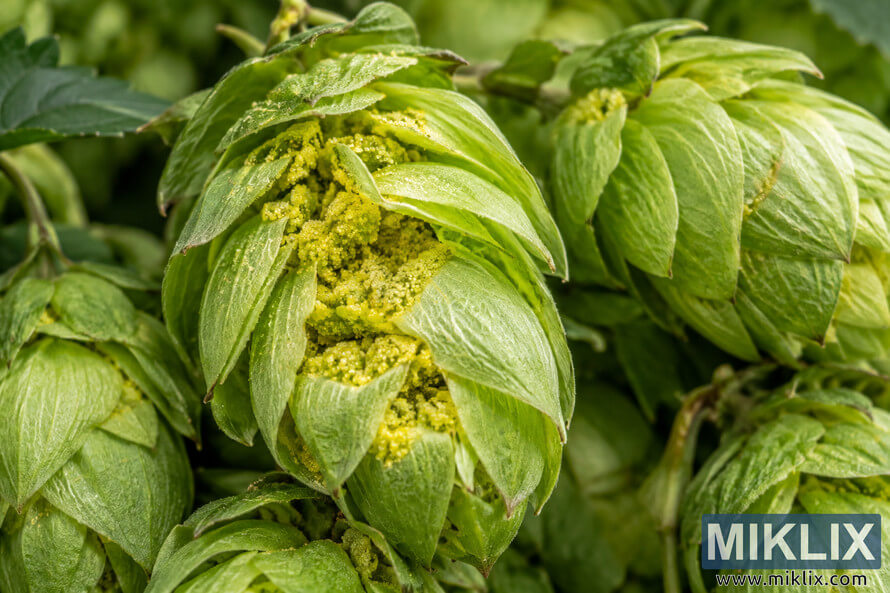
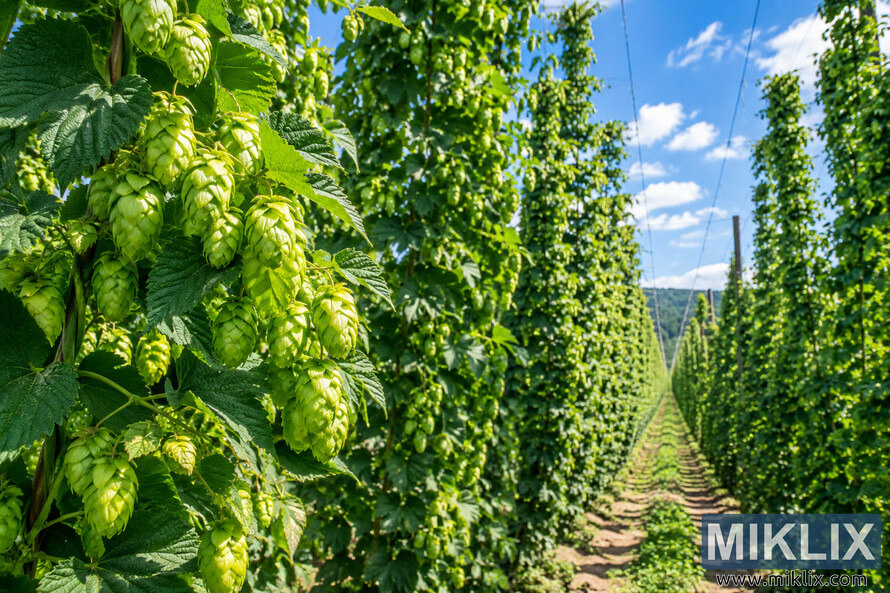
The physical characteristics of Density hops make identification easy. Cones display a medium to large size with a distinctive green color. The aroma profile emerges immediately when you rub fresh cones between your fingers.
Breeding Heritage: Wye College developed this variety through careful selection and crossbreeding. The breeding program focused on creating hops with balanced characteristics suitable for diverse beer styles.
Click or tap the image for more information and higher resolutions.
Alpha Acid Content and Bittering Properties
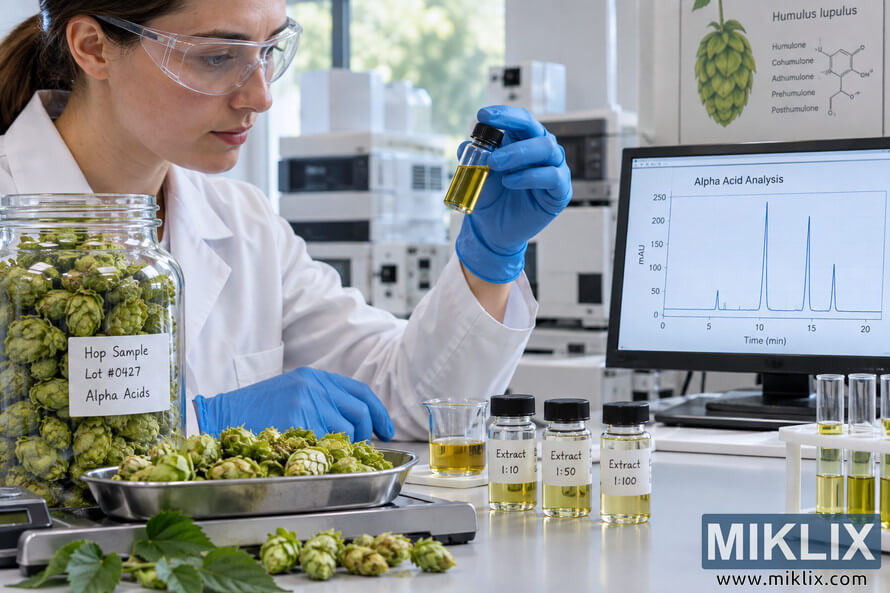
Alpha acid levels in Density hops typically range between eight and ten percent. This moderate alpha content provides brewers with flexibility in recipe design. The bittering potential suits both assertive IPAs and balanced pale ales.
The bittering quality from Density hops remains smooth and clean. Harsh or astringent notes rarely develop even with generous additions. This characteristic makes the variety forgiving for beginning brewers who might miscalculate hop quantities.
When used as a bittering hop, add Density early in the boil. A sixty-minute addition extracts maximum alpha acid content while minimizing aroma contribution. Calculate International Bitterness Units based on the specific alpha percentage of your hop batch.
| Addition Timing | Alpha Utilization | Bitterness Level | Recommended Amount |
| 60 minutes | 30% | High | 1-2 oz per 5 gallons |
| 30 minutes | 15% | Medium | 0.5-1 oz per 5 gallons |
| 15 minutes | 8% | Low | 0.5 oz per 5 gallons |
| Whirlpool | 3-5% | Very Low | 1-3 oz per 5 gallons |
Click or tap the image for more information and higher resolutions.
Aroma and Flavor Contributions
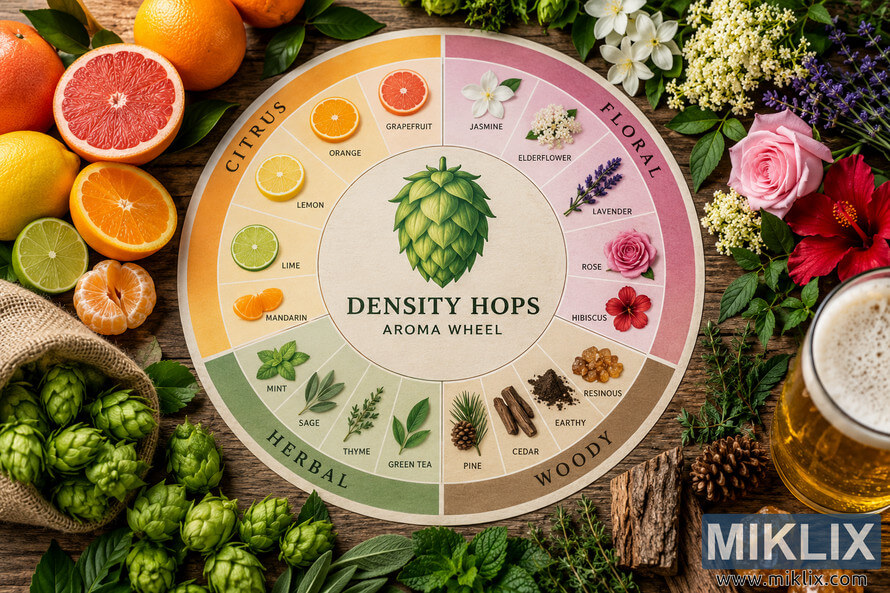
The aroma profile of Density hops showcases bright citrus notes at the forefront. Grapefruit and lemon characteristics dominate the sensory experience. These citrus elements blend seamlessly with subtle floral undertones that add complexity.
Oil content in Density hops contributes significantly to the aromatic impact. The essential oil composition includes myrcene, humulene, and caryophyllene in balanced proportions. This oil profile creates a multi-dimensional aroma that evolves throughout the brewing process.
Primary Aroma Notes
- Bright grapefruit zest
- Fresh lemon peel
- Light orange blossom
- Subtle lime character
Secondary Characteristics
- Delicate floral notes
- Mild herbal undertones
- Clean pine hints
- Gentle spice background
Late hop additions maximize aroma contribution from Density hops. Add hops during the final fifteen minutes of boiling to preserve volatile oil compounds. Whirlpool additions at lower temperatures extract maximum aroma while minimizing bitterness.
Dry hopping with Density creates an intense aromatic experience in finished beer. The citrus character intensifies during dry hopping while floral notes become more pronounced. Add one to two ounces per five gallons for noticeable aroma impact.
Pro Tip: Combine Density hops with complementary varieties like Cascade or Centennial for layered citrus complexity. The interaction between different hop oils creates unique flavor profiles impossible to achieve with single varieties.
Click or tap the image for more information and higher resolutions.
Best Beer Styles for Density Hops
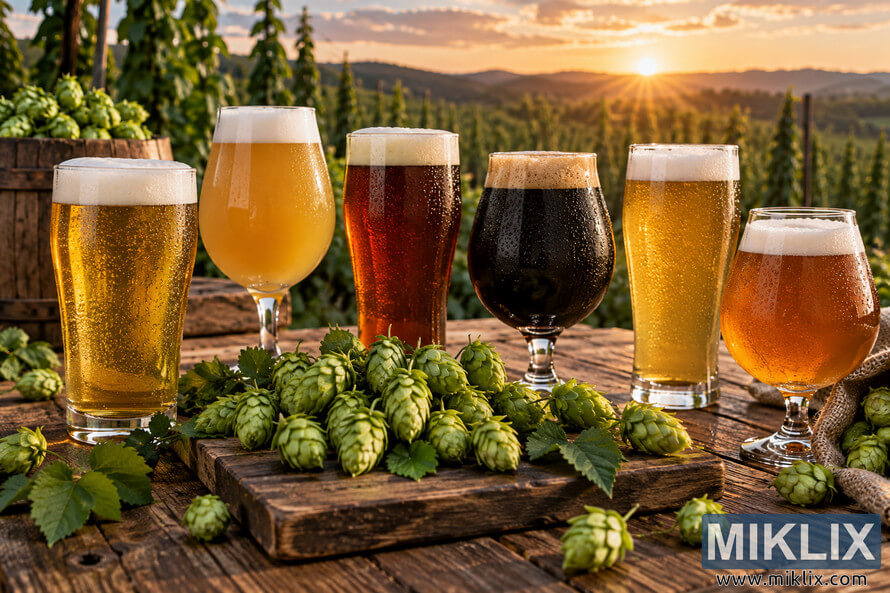
Density hops excel in American-style pale ales where citrus character shines. The moderate alpha content provides adequate bitterness without overwhelming malt sweetness. These beers showcase the variety's best attributes while maintaining balance.
India Pale Ales benefit tremendously from Density hop additions. Both West Coast and New England IPA styles accommodate this variety well. The citrus notes complement tropical fruit characteristics from other modern hop varieties.
Click or tap the image for more information and higher resolutions.
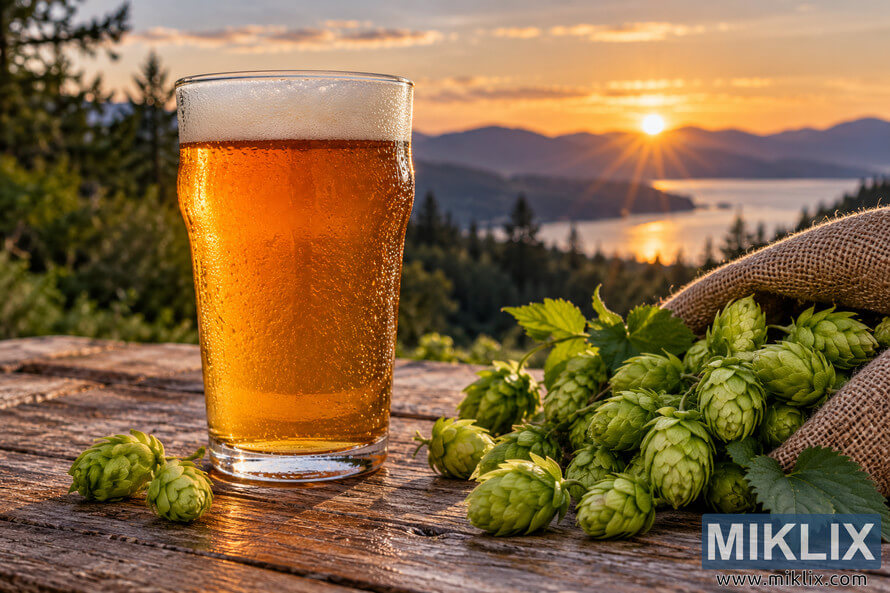
American Pale Ale
The citrus and floral character of Density hops pairs perfectly with crystal malt sweetness. Use as both bittering and aroma hop for cohesive flavor.
- Target IBU: 30-45
- Hop schedule: 60 min, 15 min, dry hop
- Total addition: 3-4 oz per 5 gallons
Click or tap the image for more information and higher resolutions.
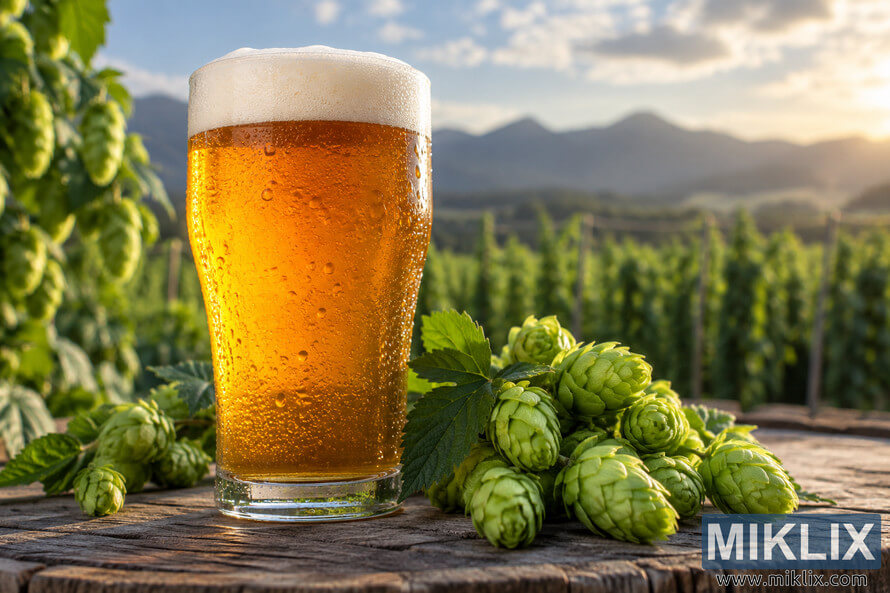
India Pale Ale
Density hops contribute assertive citrus notes that define modern IPA character. Generous dry hopping amplifies aromatic intensity.
- Target IBU: 50-70
- Hop schedule: 60 min, whirlpool, dry hop
- Total addition: 5-8 oz per 5 gallons
Click or tap the image for more information and higher resolutions.
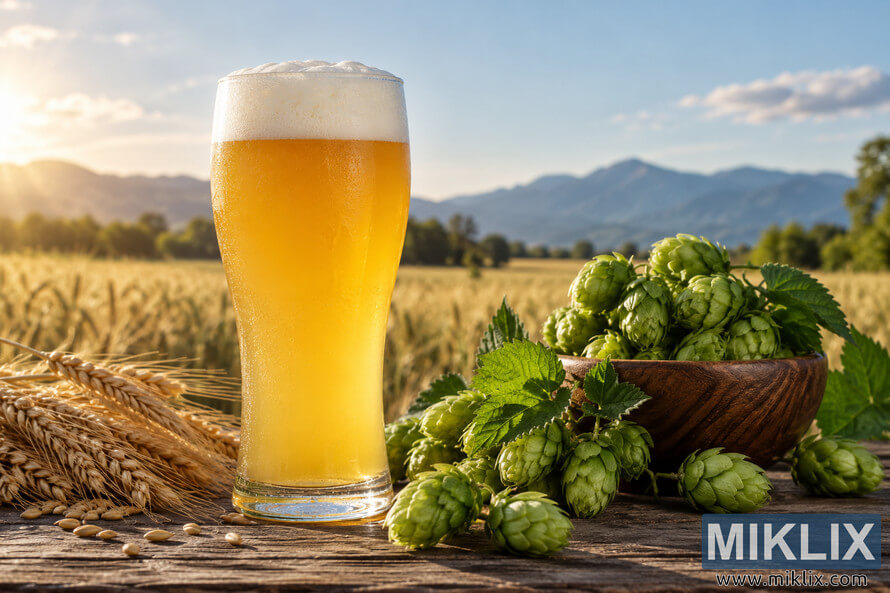
American Wheat Beer
Light citrus notes from Density complement wheat malt without overpowering delicate grain character. Perfect for refreshing summer beers.
- Target IBU: 15-30
- Hop schedule: 60 min, 5 min
- Total addition: 1.5-2.5 oz per 5 gallons
Click or tap the image for more information and higher resolutions.
Session IPAs and Blonde Ales
Session IPAs and blonde ales also showcase Density hops effectively. Lower alcohol content in these styles allows hop character to dominate the flavor profile. The variety's clean bitterness supports sessionability without palate fatigue.
Wheat beers gain refreshing citrus notes from light Density additions. The floral elements complement traditional wheat beer yeast character. Keep hop rates moderate to maintain the style's signature grain-forward profile.
Usage Rates and Timing for Homebrewing
Proper hop scheduling maximizes the potential of Density hops in your recipes. Early additions extract bitterness while late additions preserve aroma compounds. Understanding timing principles helps you achieve your desired beer character.
Bittering additions work best at the sixty-minute mark. This extended boil time isomerizes alpha acids efficiently while volatilizing aromatic compounds. Calculate your addition based on actual alpha percentage and desired IBU level.
Bittering Additions
- Add at 60 minutes remaining
- Use 1-2 oz per 5 gallons
- Focus on alpha acid extraction
- Minimal aroma contribution
- Provides base bitterness
Flavor Additions
- Add at 15-30 minutes remaining
- Use 0.5-1 oz per 5 gallons
- Balance bitterness and aroma
- Moderate flavor contribution
- Bridges bittering and aroma
Aroma Additions
- Add at 5 minutes or whirlpool
- Use 1-3 oz per 5 gallons
- Maximum aroma preservation
- Minimal bitterness addition
- Showcases citrus character
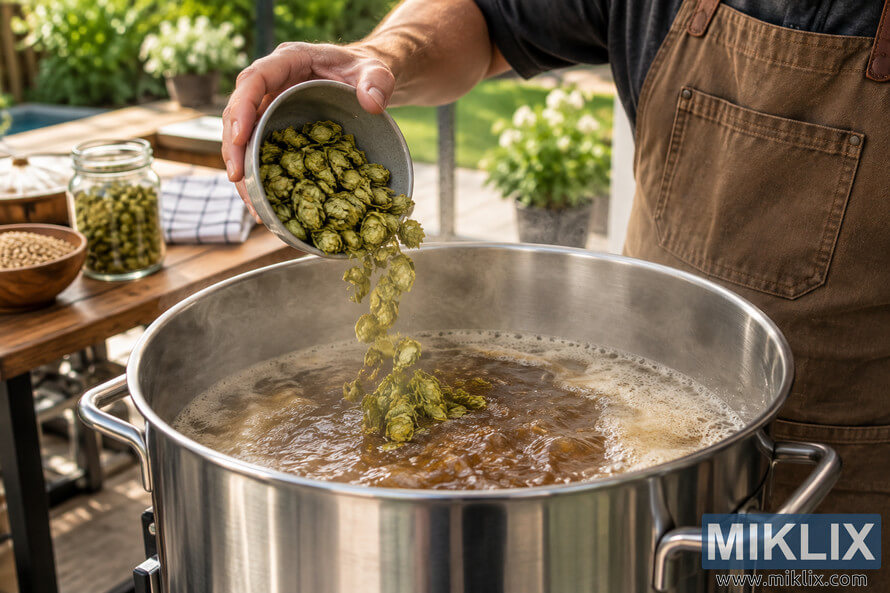
Whirlpool additions capture intense aroma while adding subtle bitterness. Allow your wort to cool to 170-180 degrees Fahrenheit before adding hops. Steep for twenty to thirty minutes with gentle stirring.
Dry hopping extracts the fullest aroma potential from Density hops. Add hops after primary fermentation completes but before cold conditioning. Contact time of three to five days produces optimal results without extracting harsh vegetal character.
Important: Avoid over-dry hopping with Density hops. Excessive rates above three ounces per five gallons can introduce grassy or vegetal notes that detract from citrus character. Start conservative and increase gradually based on experience.
For single-hop beers featuring Density, distribute additions across multiple timing points. Use a small sixty-minute charge for base bitterness. Add larger quantities at whirlpool and during dry hopping to emphasize aroma.
Click or tap the image for more information and higher resolutions.
Brewing Tips and Best Practices
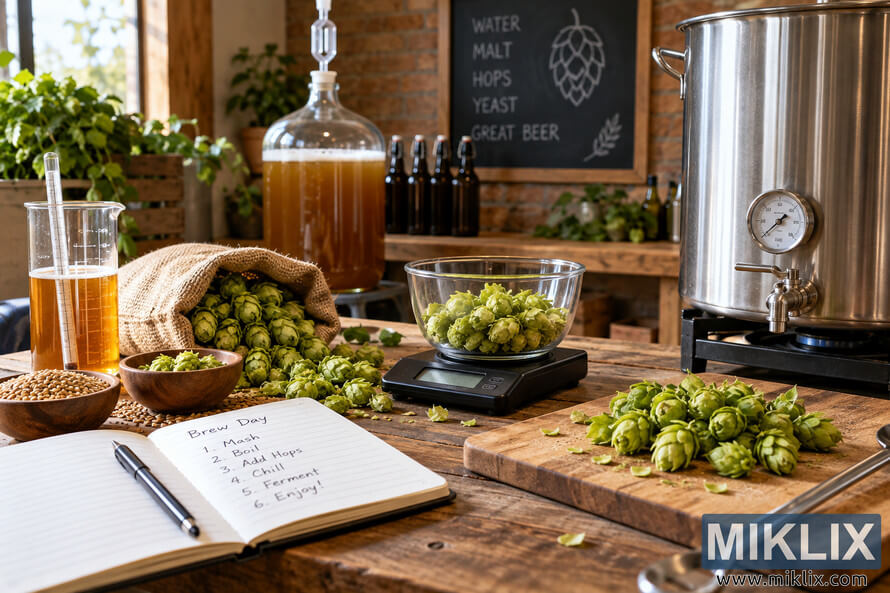
Water chemistry impacts how Density hops express their character in finished beer. Moderate sulfate levels accentuate citrus notes and enhance perceived bitterness. Aim for sulfate concentrations between 150-250 ppm for hop-forward styles.
Mash pH affects hop utilization throughout the brewing process. Target a mash pH of 5.2-5.4 for optimal enzyme activity and flavor development. Proper pH sets the foundation for clean hop expression in your final beer.
- Measure Alpha Acids: Always check the alpha acid percentage printed on your hop package. Density hops vary between batches. Adjust your recipe calculations accordingly for consistent results.
- Control Fermentation Temperature: Clean fermentation preserves hop character. Keep ale fermentations between 65-68 degrees Fahrenheit. Higher temperatures produce fruity esters that compete with hop aroma.
- Time Your Dry Hop Addition: Add Density hops after primary fermentation reaches seventy-five percent completion. This timing maximizes aroma extraction while minimizing hop material absorption by yeast.
- Consider Hop Creep: Dry hopping can restart fermentation due to enzymes in hop material. Monitor gravity after dry hopping. Allow beer to fully attenuate before packaging.
- Minimize Oxygen Exposure: Oxygen degrades hop aroma compounds rapidly. Purge vessels with CO2 before dry hopping. Package beer with minimal oxygen pickup for lasting freshness.
- Balance Your Recipe: Let Density hops shine by avoiding excessive malt sweetness. Use a clean base malt like American two-row. Limit crystal malts to maintain hop prominence.
- Boil vigor affects hop utilization and final beer character. Maintain a rolling boil without excessive evaporation. Vigorous boiling drives off desirable volatile compounds while concentrating harsh bitterness.
Advantages
- Consistent alpha acid content across harvests
- Clean citrus character without harsh edges
- Versatile across multiple beer styles
- Good storage stability when properly packaged
- Readily available from hop suppliers
- Beginner-friendly with forgiving performance
Considerations
- Less distinctive than ultra-modern hop varieties
- May lack tropical fruit notes some brewers prefer
- Requires fresh product for optimal aroma
- Can turn grassy if over-used in dry hopping
- Not ideal as a single variety in subtle beer styles
Click or tap the image for more information and higher resolutions.
Storage and Shelf Life for Homebrewers
Proper storage preserves the quality of Density hops between brew days. Hops degrade quickly when exposed to oxygen, light, and heat. Understanding storage principles protects your investment and maintains hop character.
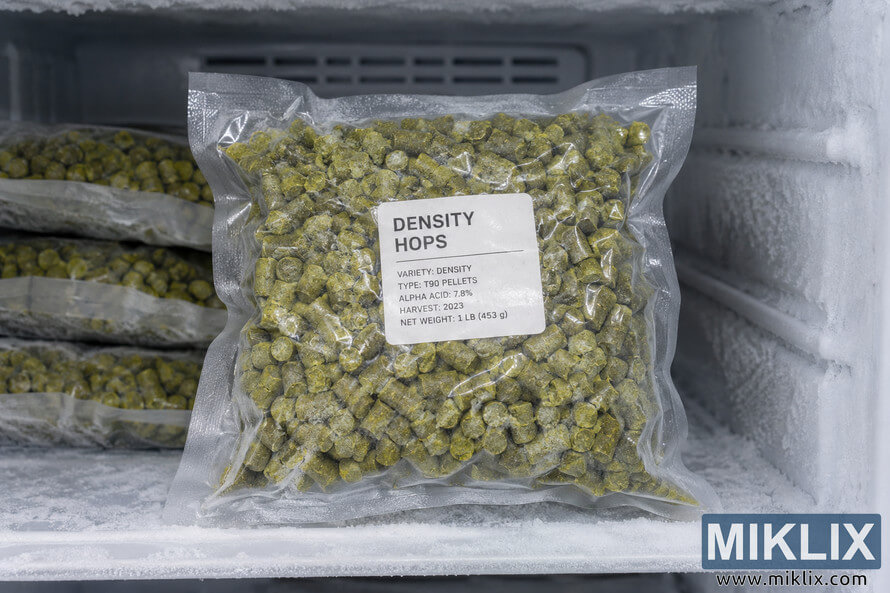
Vacuum-sealed packaging offers the best protection for hop storage. Remove as much air as possible before sealing bags. Oxygen-barrier bags prevent oxidation that destroys aromatic compounds.
Temperature control significantly impacts hop shelf life. Store Density hops in your freezer at zero degrees Fahrenheit or below. Frozen storage maintains hop quality for twelve months or longer.
Minimize freeze-thaw cycles that degrade hop quality. Portion hops into smaller bags before freezing. Remove only what you need for each brew session.
Click or tap the image for more information and higher resolutions.
How long do Density hops stay fresh in the freezer?
Properly vacuum-sealed Density hops maintain peak freshness for twelve to eighteen months when stored at zero degrees Fahrenheit. Alpha acids remain stable while aromatic oils preserve their character. After eighteen months, you may notice diminished aroma intensity, though the hops remain usable for bittering purposes.
Can I store opened packages of Density hops?
Yes, but take precautions to minimize air exposure. Squeeze excess air from the package before resealing. Use a vacuum sealer if available or wrap tightly in plastic wrap before returning to the freezer. Use opened packages within three to six months for best aroma retention.
What signs indicate Density hops have gone bad?
Degraded Density hops develop a cheesy or sweaty aroma instead of bright citrus notes. The cones may appear brown or oxidized rather than green. Lupulin glands lose their vibrant yellow color. If your hops smell unpleasant or lack characteristic aroma, replace them with fresh material.
Label your hop packages with purchase date and alpha acid percentage. This information helps track freshness and adjust recipes over time. Include variety name and crop year for complete records.
Consider buying Density hops in larger quantities when freshly harvested. Autumn hop harvests offer peak freshness and often better pricing. Proper storage allows you to use harvest-fresh hops throughout the year.
Hop Substitutions and Complementary Pairings
When Density hops aren't available, several varieties offer similar character profiles. Cascade hops provide comparable citrus notes with slightly more grapefruit emphasis. The alpha acid content of Cascade closely matches Density for straightforward substitution.
Centennial hops serve as another effective substitute with stronger citrus punch. Expect more pronounced floral character compared to Density. Adjust quantities slightly downward due to Centennial's higher alpha acid range.
Cascade
American classic with bright citrus and floral notes. Slightly more grapefruit character than Density. Use in equal amounts for direct substitution. Alpha: 4.5-7%
Centennial
Super Cascade with intensified citrus and pine. Higher alpha acids require quantity adjustment. Excellent dual-purpose hop. Alpha: 9.5-11.5%
Amarillo
Orange and grapefruit dominant with floral backing. Slightly different profile but works in similar applications as Density. Alpha: 8-11%
Click or tap the image for more information and higher resolutions.
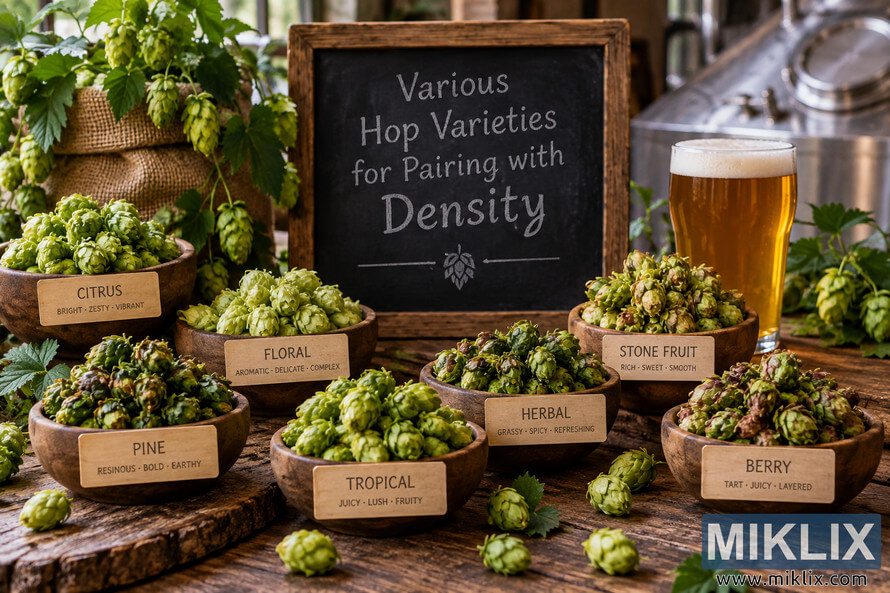
Combining Density hops with complementary varieties creates complex flavor layers. Pairing with Citra adds tropical fruit dimensions while maintaining citrus base notes. The combination works exceptionally well in modern IPA recipes.
Mosaic hops blend beautifully with Density for berry and citrus complexity. Use Density as the base hop and add Mosaic in smaller proportions during late additions. This combination produces beers with remarkable depth.
Classic Pairings
Traditional hop combinations that enhance Density character through proven synergies.
- Density + Cascade = Enhanced grapefruit citrus
- Density + Centennial = Bold citrus punch
- Density + Chinook = Citrus with pine backbone
- Density + Willamette = Balanced floral-citrus blend
Modern Combinations
Contemporary pairings with newer varieties that expand flavor possibilities.
- Density + Citra = Citrus with tropical fruit layers
- Density + Mosaic = Complex berry-citrus fusion
- Density + Simcoe = Citrus-pine with passion fruit hints
- Density + Amarillo = Amplified orange character
Experimental Blends
Adventurous combinations for brewers seeking unique flavor profiles.
- Density + Galaxy = Citrus meets stone fruit
- Density + Nelson Sauvin = White wine-citrus character
- Density + Azacca = Mango-citrus tropical blend
- Density + Ekuanot = Citrus with melon undertones
British Influences
Pairings with English varieties honoring Density's Wye College heritage.
- Density + East Kent Goldings = Citrus-earthy balance
- Density + Fuggle = Floral-citrus traditional blend
- Density + Target = Clean bittering with citrus finish
- Density + Progress = Mild citrus-spice combination
When blending hops, maintain Density as the primary variety for consistent character. Use secondary hops at twenty-five to forty percent of total hop weight. This ratio allows accent hops to complement without overwhelming base citrus notes.
Brewing Success with Density Hops
Density hops offer homebrewers reliable performance across diverse brewing applications. The citrus and floral character fits naturally into American pale ales, IPAs, and wheat beers. Moderate alpha acid content provides formulation flexibility while clean bitterness maintains drinkability.
Success with this variety starts with quality hop selection and proper storage. Purchase from reputable suppliers who maintain cold chain integrity. Store hops frozen in oxygen-barrier packaging to preserve aromatic compounds.
Understanding timing and usage rates helps you extract maximum character from Density hops. Early additions provide clean bitterness foundation. Late additions and dry hopping showcase the variety's signature citrus aroma. Experiment with different schedules to discover your preferred balance.
The brewing community continues to explore new applications for this versatile hop. Share your Density hop recipes and experiences with fellow brewers. Each batch teaches valuable lessons about hop character and beer formulation.
Your journey with Density hops begins with a single brew day. Apply these guidelines to your next recipe. Taste critically and adjust subsequent batches based on your preferences. Consistent practice develops the skills to master hop-forward brewing.
Click or tap the image for more information and higher resolutions.
Further Reading
If you enjoyed this post, you may also like these suggestions: