
Image: Laboratory Testing of Hop Alpha Acid Content
Published: September 23, 2026 at 5:05:13 PM UTC
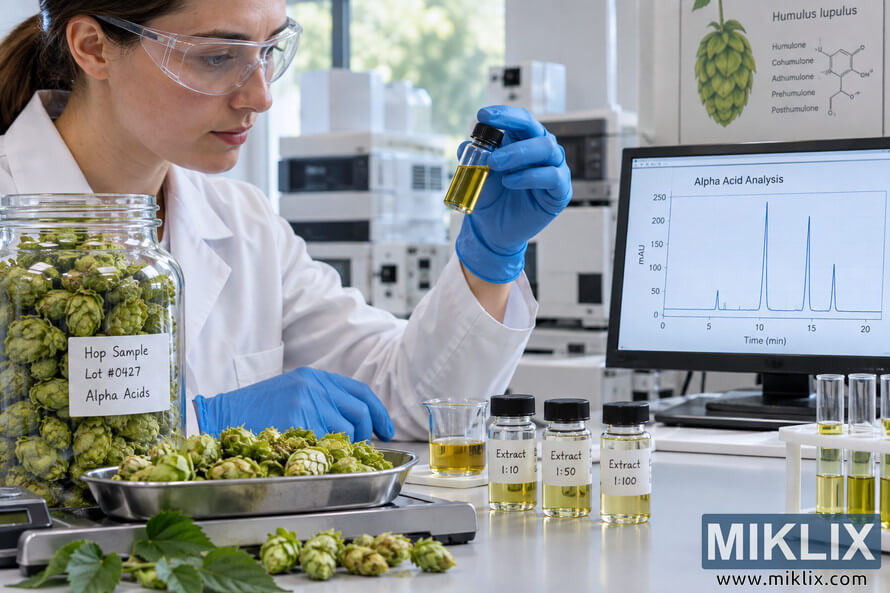
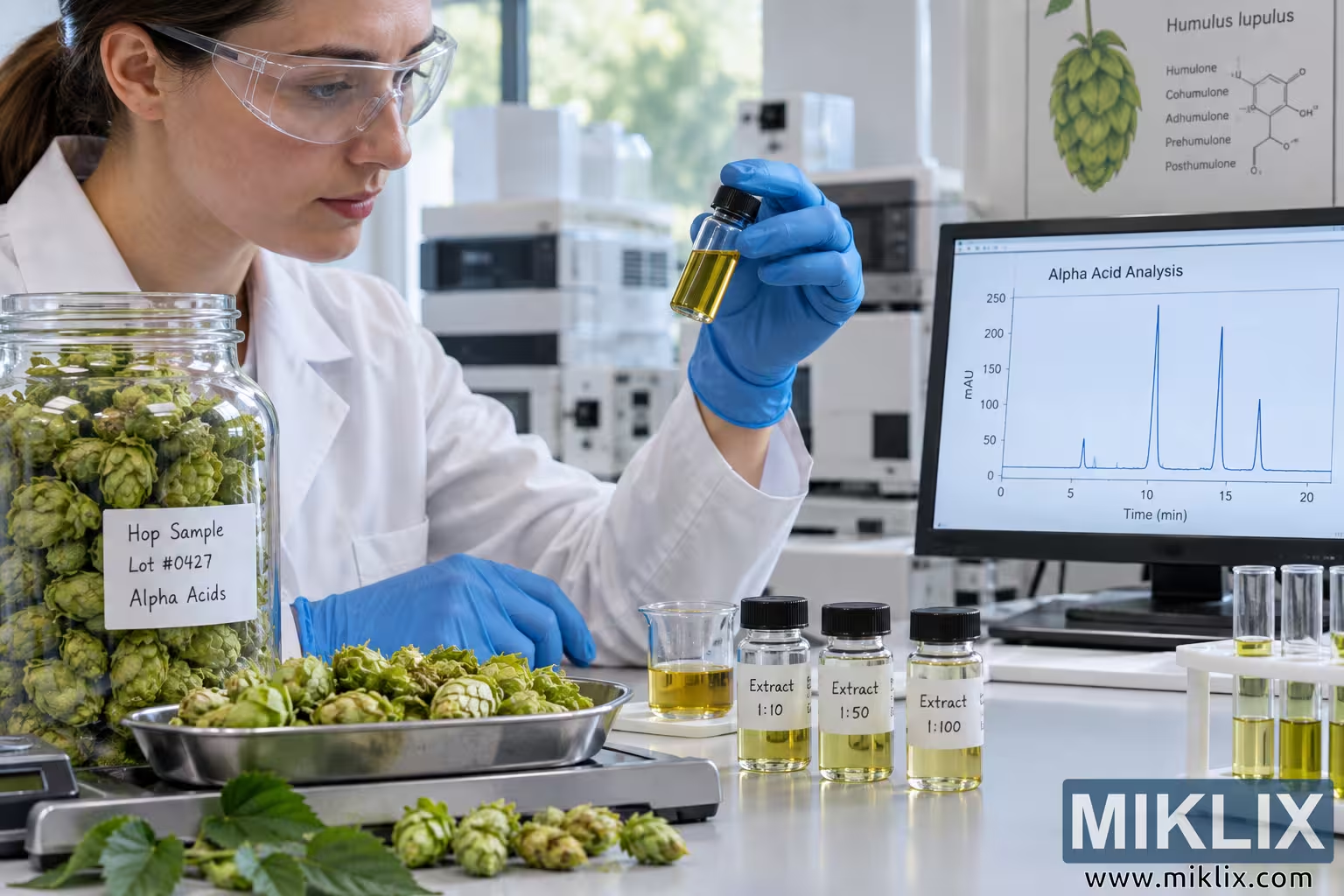
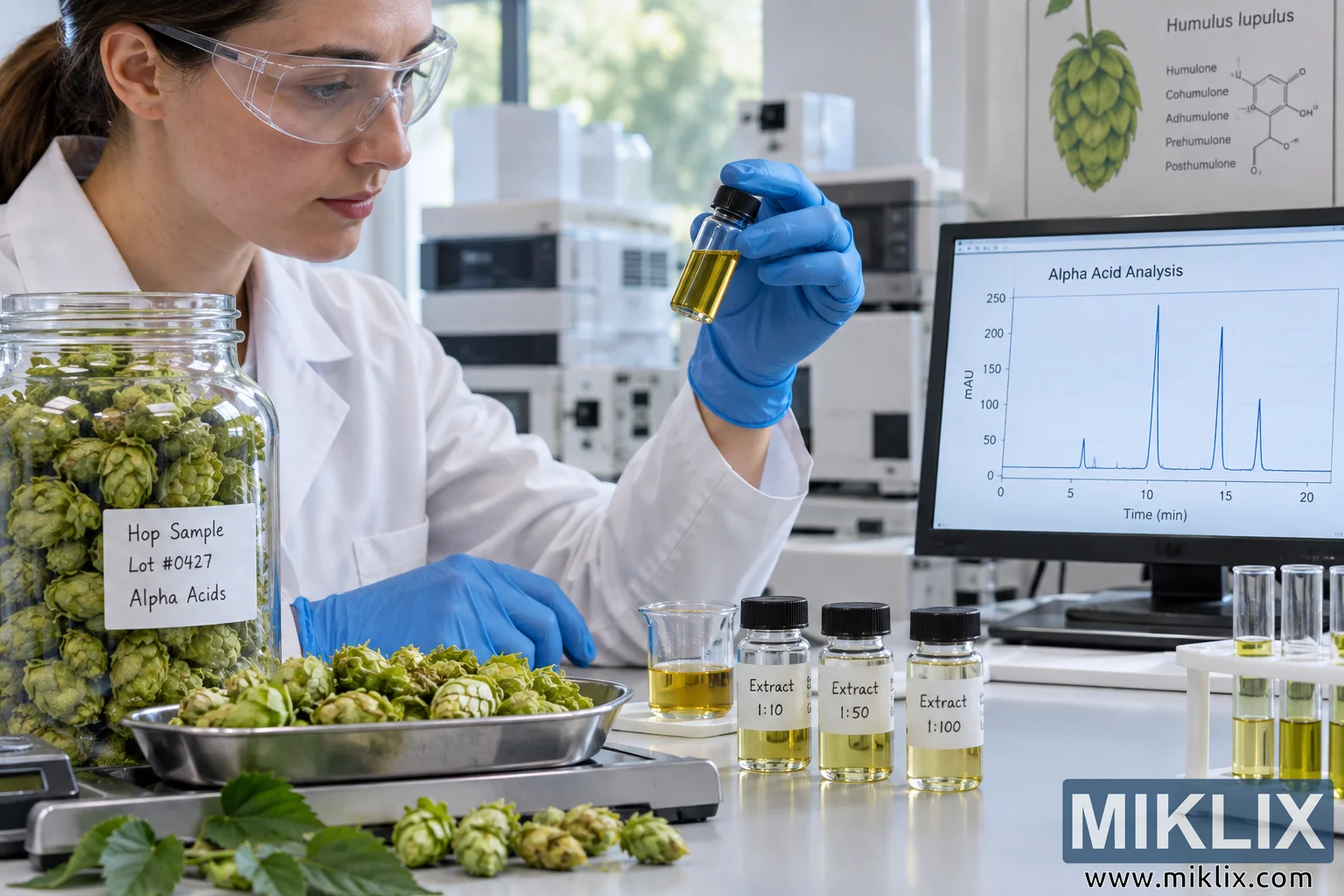
Laboratory analysis of hop alpha acid content showing a scientist examining hop extract samples, hop cones, analytical equipment, and chromatographic test results.
Available versions of this image
The image files available for download below are less compressed and higher resolution - and as a result of that, higher quality - than the images embedded in articles and pages on this website, which are more optimized for file size in order to reduce bandwidth consumption.
Regular size (1,536 x 1,024)

Large size (3,072 x 2,048)
Very large size (4,608 x 3,072)
Extra large size (6,144 x 4,096)
Comically large size (1,048,576 x 699,051)
- Still uploading... ;-)
Image description
The image presents a bright, modern laboratory scene centered on the scientific analysis of alpha acid content in hops. The composition is photographed in a wide landscape orientation and combines recognizable hop plant material, prepared liquid extracts, laboratory glassware, analytical instrumentation, and a scientist actively examining a sample. The overall setting communicates a controlled quality-testing or research environment associated with hop chemistry, brewing science, agricultural analysis, or food and beverage laboratories.
On the left side of the image, a female laboratory scientist occupies much of the foreground and middle ground. She is wearing a clean white laboratory coat, transparent protective safety glasses, and vivid blue disposable gloves. Her dark brown hair is pulled back, keeping it away from her face and the laboratory samples. Her expression is concentrated and serious as she looks closely at a small transparent vial held at approximately eye level in her raised gloved hand. The vial has a dark screw cap and contains a clear golden-yellow liquid, suggesting a prepared hop extract or analytical sample. The scientist's posture and gaze emphasize careful visual inspection and reinforce the sense that a precise laboratory procedure is underway.
In the foreground at the left is a large clear glass container filled with dried green hop cones. A plain handwritten laboratory label on the container identifies the material as a hop sample and refers to alpha acids and a sample lot number. Beside and in front of the container is a shallow stainless-steel tray containing additional hop cones. Several loose hop cones and green hop leaves extend across the lower edge of the work surface, providing a direct visual connection between the botanical raw material and the chemical analysis being performed. The hops display natural variations in green, pale yellow-green, and muted brown tones, with the characteristic layered structure of mature hop cones clearly visible.
The central laboratory bench contains several stages or concentrations of liquid sample preparation. A small glass beaker holds a translucent yellow solution. Nearby, multiple clear sample bottles with black caps contain similar pale yellow or golden liquids. Simple white labels identify them as extracts at different dilution ratios, visually suggesting that a series of prepared samples is being used for quantitative analysis. The repeated containers and varying concentrations help convey the systematic nature of laboratory testing. At the far right, a white test-tube rack holds several narrow glass tubes containing small amounts of yellow-green liquid. These elements create the impression of an organized analytical workflow progressing from raw hop material through extraction, dilution, and instrumental measurement.
A large computer monitor dominates the right-center portion of the image. Its screen displays an analytical graph titled 'Alpha Acid Analysis.' The chart resembles a chromatographic output, with time in minutes along the horizontal axis and detector response on the vertical axis. A mostly low baseline is interrupted by several narrow peaks of different heights, including prominent peaks in the middle of the graph. This visual representation suggests separation and measurement of chemical compounds in the hop extract, consistent with an instrumental method such as high-performance liquid chromatography. The graph makes the purpose of the laboratory work immediately understandable: the scientist is evaluating chemical constituents associated with hop alpha acids rather than merely inspecting the hops visually.
Behind the scientist and computer are several pieces of neutral-colored analytical laboratory equipment. Their white, gray, and black housings, stacked modules, control areas, and instrument-like forms suggest sophisticated chemical analysis equipment without displaying recognizable commercial branding. The instruments are slightly less visually prominent than the foreground subjects, allowing the scientist, hops, samples, and analytical graph to remain the main focus. The absence of visible commercial logos gives the laboratory a generic professional appearance rather than associating the scene with a particular manufacturer or brand.
In the upper-right background, a scientific reference poster provides additional botanical and chemical context. It includes an illustration of a green hop cone, the botanical name 'Humulus lupulus,' and references to several alpha-acid-related compounds alongside a simplified chemical structure. This educational element strengthens the connection between the physical hop cones on the bench and the molecular compounds being measured. It also makes the scene suitable for illustrating topics such as hop quality control, brewing laboratory procedures, alpha acid determination, hop chemistry, crop analysis, bitterness potential, and scientific research into brewing ingredients.
Natural daylight enters through large windows behind the laboratory setup. Outside the windows, softly blurred green vegetation is visible, creating a pleasant contrast between the controlled indoor laboratory and the agricultural origin of the plant material being tested. The background is intentionally soft and bright, while the foreground is crisp and detailed. The lighting is clean and neutral, with gentle reflections on the glass containers, metal tray, work surface, safety glasses, and sample liquids. The golden tones of the extracts stand out against the white laboratory surfaces and blue gloves, while the green hops add an organic visual element to an otherwise technical environment.
The image uses a balanced visual narrative from left to right. Raw hop cones appear prominently on the left and lower foreground, the scientist and prepared sample occupy the center, and the analytical result appears on the monitor to the right. This arrangement effectively illustrates a conceptual sequence from agricultural ingredient to laboratory preparation to quantitative chemical measurement. The scientist's raised vial forms a visual bridge between the physical hop samples and the chromatographic data displayed on the screen. The result is a realistic, professional laboratory photograph that clearly communicates laboratory testing of hop alpha acid content, with an emphasis on analytical chemistry, sample preparation, scientific precision, and quality assessment.
The image is related to: Hops in Beer Brewing: Density