
Image: Homebrewing Equipment and Fresh Hops Preparation
Published: September 23, 2026 at 5:05:13 PM UTC
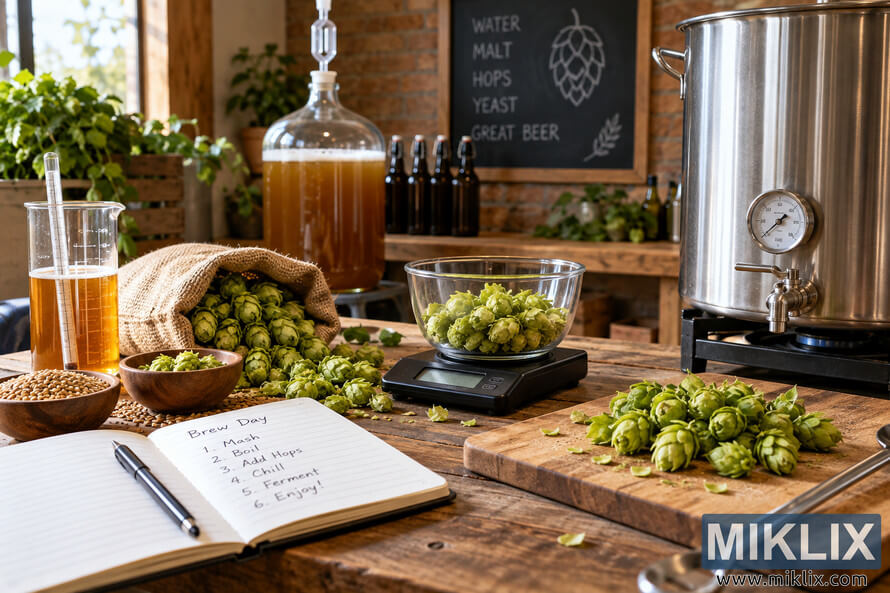
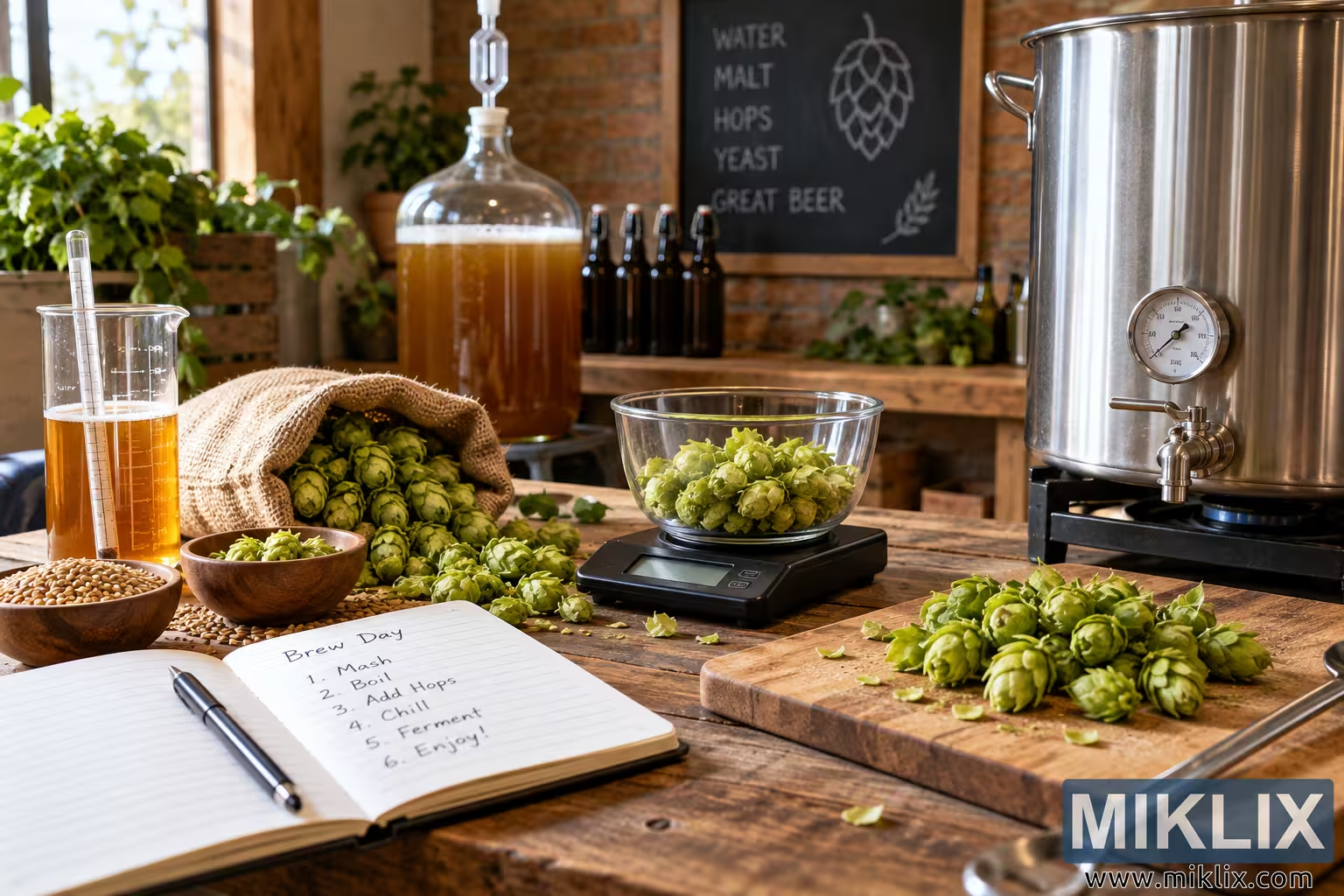
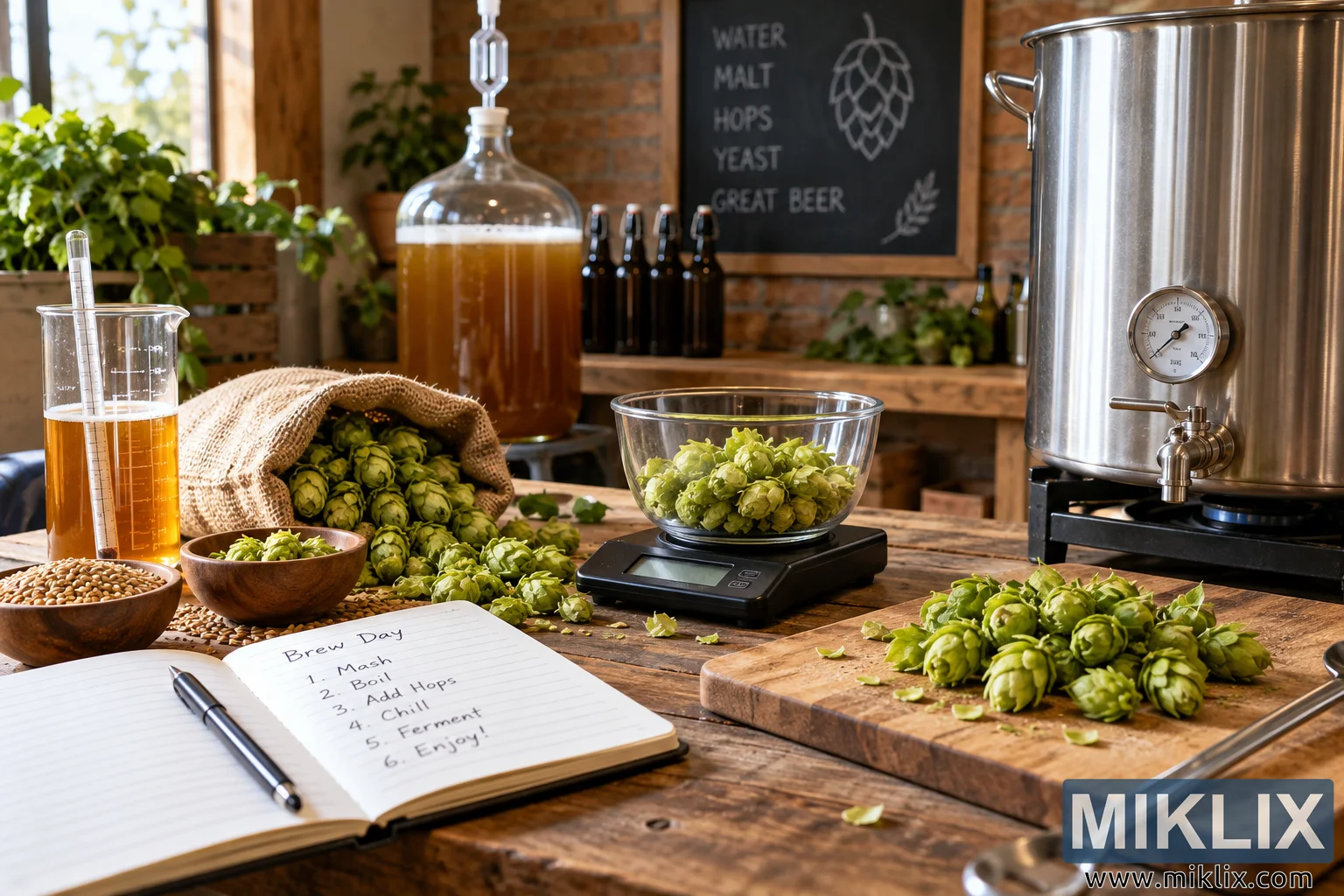
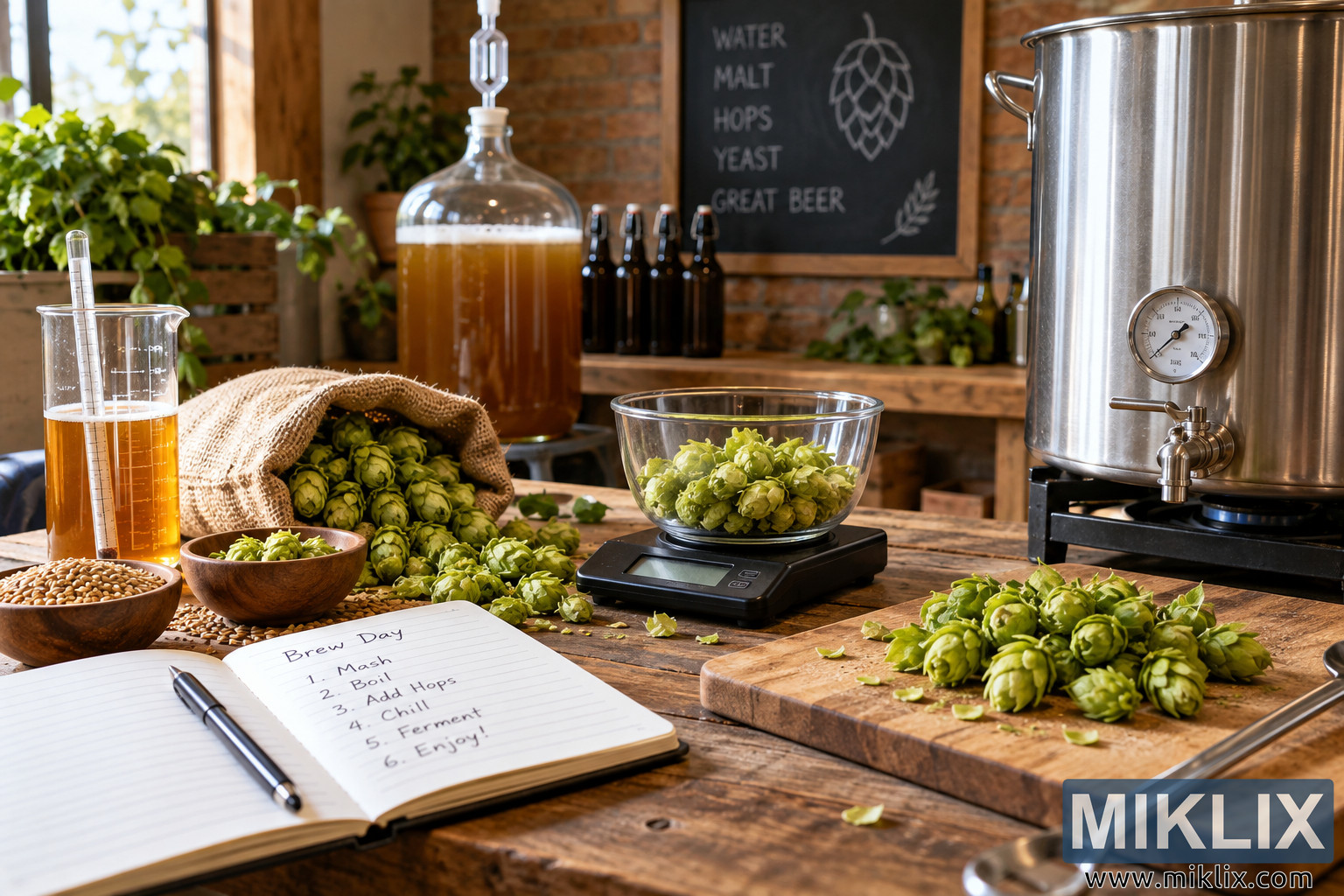
A warm rustic homebrewing scene featuring brewing equipment, a stainless-steel kettle, fresh hops preparation, measured ingredients, grains, fermentation equipment, and bottles.
Available versions of this image
The image files available for download below are less compressed and higher resolution - and as a result of that, higher quality - than the images embedded in articles and pages on this website, which are more optimized for file size in order to reduce bandwidth consumption.
Regular size (1,536 x 1,024)
Large size (3,072 x 2,048)
Very large size (4,608 x 3,072)
Extra large size (6,144 x 4,096)
Comically large size (1,048,576 x 699,051)
- Still uploading... ;-)
Image description
A wide, landscape-oriented photograph presents a warm and inviting homebrewing workspace centered on beer-making equipment and the preparation of fresh green hops. The scene is arranged on a large, rustic wooden worktable whose heavily textured boards, visible grain, knots, scratches, and warm brown tones give the setting the character of a practical craft workshop. Natural daylight enters from a window on the left side of the image and combines with warm interior illumination, producing a bright yet cozy atmosphere. The lighting emphasizes the metallic reflections of the brewing equipment, the transparency of the glass vessels, the golden amber color of the liquid, and especially the vivid green tones and layered textures of the hop cones.
On the right side of the composition stands a large cylindrical stainless-steel brewing kettle. Its polished surface reflects the surrounding warm light and nearby objects without displaying any visible commercial branding. A round analog temperature gauge is mounted on the lower front portion of the kettle, and beneath it is a metal valve and tap assembly that suggests the vessel is designed for controlled transfer of brewing liquid. The kettle rests on a sturdy dark metal burner or support frame. Its substantial size makes it one of the dominant pieces of equipment in the image and immediately establishes the setting as a serious homebrewing environment rather than an ordinary kitchen scene.
Fresh hops form the other major visual theme. In the center foreground, a clear glass bowl filled with whole green hop cones sits on top of a compact digital kitchen scale. The scale has a dark rectangular body, a small digital display, and simple control buttons, indicating that the hops are being carefully measured before being added to the brew. Individual hop cones show overlapping pale and medium-green bracts, giving them a distinctive layered, almost flower-like appearance. Additional hops are scattered loosely around the work surface, reinforcing the sense that preparation is actively underway. To the right, a generous pile of fresh hop cones rests on a thick wooden cutting board. A few detached green fragments are scattered nearby, adding natural imperfection and realism to the working environment.
Toward the left-center of the table, a coarse burlap sack lies partially open with numerous fresh hop cones spilling from it. The rough tan fibers of the sack contrast strongly with the smooth stainless steel, transparent glass, and delicate green hops. In front of the sack is a small wooden bowl containing another portion of hops. Nearby, a larger wooden bowl holds pale golden brewing grains, while additional grains have spilled naturally across the tabletop. Together, the hops and grain visually represent two of the principal agricultural ingredients associated with brewing beer.
At the far left foreground stands a tall transparent laboratory-style beaker containing clear amber-golden liquid. Measurement markings are visible on the glass, and a long narrow measuring instrument is positioned vertically inside the vessel. The warm color of the liquid echoes the appearance of beer or wort and complements the earthy wood tones throughout the image. The scientific appearance of the glassware also reinforces the precise, measured side of homebrewing, balancing the rustic and handcrafted character of the ingredients and surroundings.
An open notebook occupies much of the lower-left foreground. A dark pen rests diagonally across the blank left-hand page, while the right-hand page contains a handwritten brewing checklist headed 'Brew Day.' Beneath the heading is a numbered sequence referring to major brewing stages, including mash, boil, adding hops, chilling, fermentation, and enjoyment. The notebook introduces a planning and documentation element to the scene, suggesting that the brewer is following or recording a process. Its white pages create a bright visual counterpoint to the dark wood underneath and help guide the viewer's eye from the foreground toward the brewing ingredients in the center.
In the middle background is a large transparent glass fermentation vessel or carboy containing cloudy amber-brown liquid. A fermentation airlock is fitted into the top of the vessel, clearly indicating an active or prepared fermentation setup. Behind and beside the carboy is a row of dark amber swing-top bottles. The bottles are unbranded and arranged neatly on a wooden shelf, suggesting finished beer storage or bottles awaiting filling. More bottles appear farther to the right, partially obscured by the brewing kettle and background objects.
The room itself has a handcrafted, rustic aesthetic. An exposed reddish-brown brick wall forms much of the background, complemented by wooden structural elements, shelves, crates, and work surfaces. Green leafy plants appear near the bright window on the left and in several background locations, introducing additional organic color and helping connect the brewing setup with the natural origin of the ingredients. The window is softly overexposed by daylight, creating a pleasant luminous area that gives the scene depth and makes the foreground ingredients appear particularly crisp and tactile.
Mounted against the brick wall in the upper middle background is a dark chalkboard framed in wood. Written in light chalk are the words 'WATER,' 'MALT,' 'HOPS,' 'YEAST,' and 'GREAT BEER.' A simple chalk drawing of a hop cone appears beside the text, along with a small botanical flourish. The board functions as decorative brewing-themed signage rather than commercial advertising, and no actual brand names or logos are visible anywhere in the scene.
The photographic composition uses a moderately shallow depth of field. Foreground elements such as the hops, scale, notebook, grain, glassware, cutting board, and brewing kettle appear crisp and richly detailed, while some objects farther into the room become progressively softer. The perspective is close enough to reveal small details such as individual hop leaves, scattered grains, reflections in the stainless steel, bubbles and cloudiness in the fermentation vessel, and the fibers of the burlap sack. At the same time, the wide landscape framing provides enough environmental context to establish the entire space as a dedicated homebrewing area.
Overall, the image communicates the combination of craft, agriculture, precision, and experimentation involved in homebrewing. The stainless-steel kettle and measuring equipment represent controlled brewing technique, while the abundant fresh hops, grain, wooden bowls, burlap, and rustic surroundings emphasize natural ingredients and hands-on preparation. The fermenter and bottles in the background suggest later stages of the brewing process, allowing the photograph to visually connect ingredient preparation, brewing, fermentation, and eventual bottling within a single coherent scene. The absence of people gives the equipment and ingredients complete visual prominence, making the photograph especially suitable as an illustrative image for content about homebrewing equipment, hop preparation, hop measurement, brewing ingredients, small-batch beer production, or educational explanations of the brewing process.
The image is related to: Hops in Beer Brewing: Density