
Image: Fresh Green Hop Cones in Sunlight
Published: September 24, 2026 at 2:44:22 PM UTC
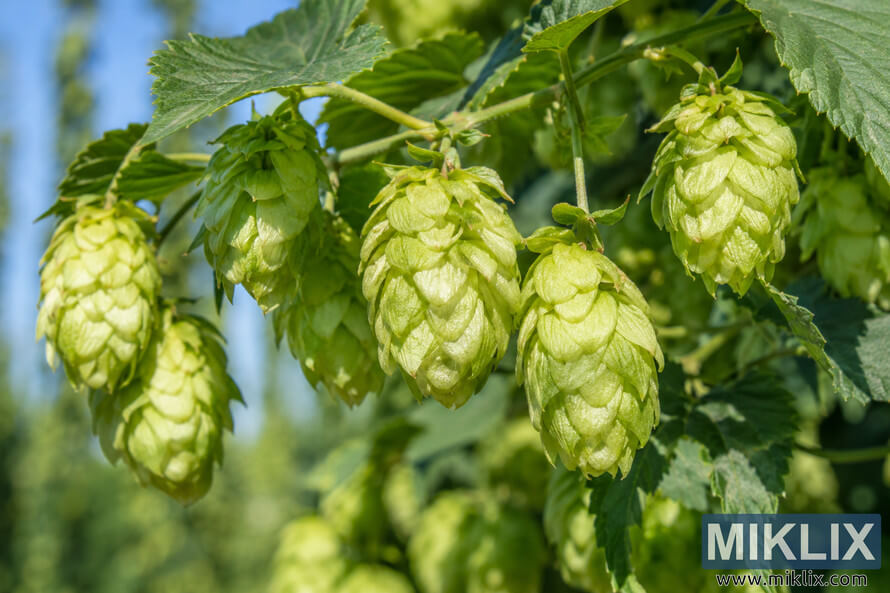
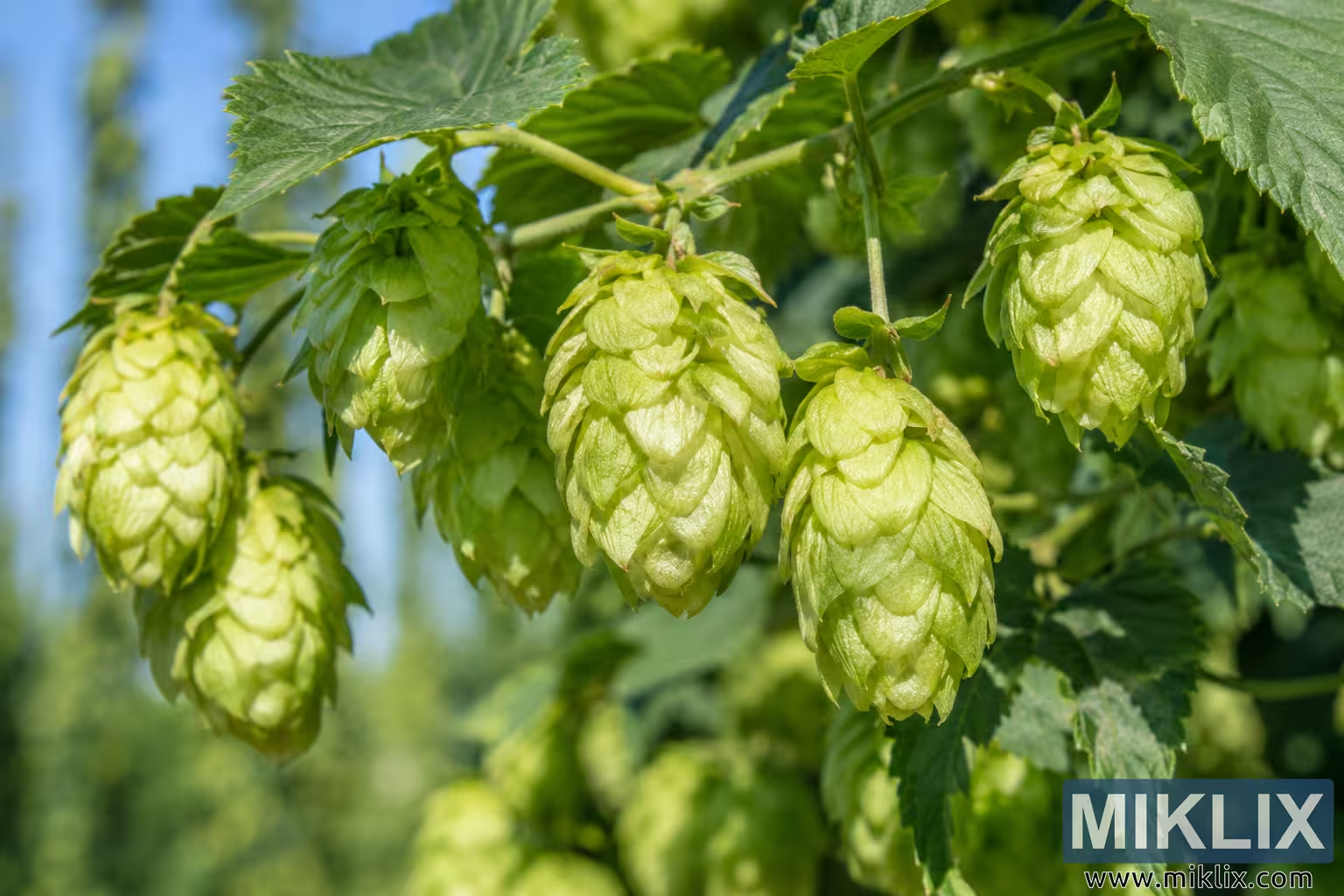
Detailed close-up of fresh green hop cones growing on the vine, displaying vivid green color, compact layered bracts, healthy leaves, and natural sunlight.
Available versions of this image
The image files available for download below are less compressed and higher resolution - and as a result of that, higher quality - than the images embedded in articles and pages on this website, which are more optimized for file size in order to reduce bandwidth consumption.
Regular size (1,536 x 1,024)
Large size (3,072 x 2,048)
Very large size (4,608 x 3,072)
Extra large size (6,144 x 4,096)
Comically large size (1,048,576 x 699,051)
- Still uploading... ;-)
Image description
A high-resolution landscape photograph presents a close-up view of fresh hop cones growing naturally on a vigorous hop vine. The composition is dominated by a group of mature, healthy-looking cones suspended from slender green stems beneath a canopy of broad hop leaves. Their fresh green coloration immediately stands out, ranging from pale yellow-green where direct sunlight strikes the surface to deeper, richer shades of green in the areas protected by leaves and neighboring cones. The photograph emphasizes the characteristic compact structure of the hops, with each cone formed from numerous overlapping, scale-like bracts arranged in dense layers around a central axis. These individual bracts create an intricate pattern of rounded points, delicate folds, and subtle ridges that gives every cone a distinctly textured appearance.
Several prominent hop cones occupy the central and foreground portions of the image. The largest examples are sharply defined, allowing the layered construction of the cones to be examined in considerable detail. The bracts overlap one another in an orderly natural sequence, producing the familiar elongated, slightly tapered form associated with mature hop flowers. Some cones appear particularly compact and tightly closed, while others show small variations in the spacing and orientation of their outer bracts. These subtle differences prevent the plants from appearing uniform and reinforce the natural character of the scene. Fine surface details are visible on the illuminated bracts, including faint veins, gentle creases, and variations in translucency caused by the strong daylight.
Bright natural sunlight enters the scene from above and slightly from the front, creating a lively contrast between illuminated and shaded areas. On the most exposed cones, the thin green bracts catch the light and appear almost luminous, revealing their delicate plant tissue and giving them a fresh, crisp quality. The shadows between the overlapping layers are darker and more saturated, which enhances the sense of depth and makes the compact construction of each cone especially clear. This combination of highlights and shadows creates a three-dimensional appearance, allowing the individual cones to stand out distinctly from the surrounding foliage.
The hop cones are attached to a network of green stems that extend horizontally and diagonally across the upper portion of the frame. Some stems are fully visible, while others disappear behind leaves or clusters of cones. Their curved and branching forms give the composition an organic sense of movement. Large hop leaves surround the flowers, many displaying the plant's recognizable serrated edges and pronounced vein patterns. The leaves vary considerably in their orientation toward the light. Those receiving direct sunlight display brighter green surfaces and clearly defined veins, while leaves turned away from the sun become deeper green and contribute areas of natural shade. A few leaves partially overlap the cones, visually connecting the flowers with the rest of the living plant.
The arrangement of the cones leads the eye naturally across the wide frame. A cluster on the left introduces the subject, followed by several substantial cones across the middle and a prominent illuminated cone toward the upper-right portion of the photograph. The central cones form the primary visual focus because of their size, sharpness, and strong exposure to the sunlight. Smaller or partially obscured hop cones can also be seen farther into the foliage, adding depth and suggesting that the photographed vine carries a plentiful crop beyond the immediate foreground.
The background is rendered with a noticeably softer focus than the principal subjects. Green vegetation blends into smooth areas of color, while patches of clear blue sky are visible through openings in the foliage, particularly toward the upper-left and left portions of the frame. This shallow depth of field isolates the foreground cones without removing the environmental context. The viewer can clearly recognize that the hops are growing outdoors on a living vine rather than being arranged in a studio or photographed after harvest. The softly blurred background also prevents distant details from competing with the intricate texture of the cones.
Color is an important element throughout the photograph. Fresh greens dominate almost the entire frame, but they range from bright lime and yellow-green highlights to medium leaf green and dark forest-green shadows. These variations convey the effects of sunlight, depth, and differing plant surfaces while maintaining a cohesive botanical palette. Small areas of blue sky provide a cool visual contrast to the extensive green foliage. There are no artificial colors, labels, packaging elements, logos, text, or recognizable commercial branding anywhere in the scene. The presentation is entirely botanical and focuses exclusively on the natural appearance of the hop plant.
The overall mood is fresh, bright, agricultural, and summery. The strong daylight and healthy foliage suggest an outdoor growing environment during the active season, when hop cones have developed their recognizable shape and are approaching or have reached a mature stage. The cones look firm and substantial rather than dry or processed, emphasizing their freshly grown state. Their dense construction is particularly evident in the foreground, where the closely overlapping bracts produce compact forms with well-defined contours.
From a visual and botanical perspective, the photograph works as a detailed representation of fresh hop cones because it combines a broad environmental view with close-up structural information. The wide landscape orientation accommodates multiple cones at different positions and depths while retaining enough surrounding leaves and stems to establish their growth habit. At the same time, the sharp foreground focus provides a clear view of the characteristic overlapping bracts, green coloration, tapered forms, and compact structure of the cones. Natural variations in size, shape, light exposure, and orientation make the cluster appear realistic and abundant. The result is a clean, vivid nature photograph centered on fresh green hops growing directly on the vine, with detailed plant textures, strong natural illumination, and a softly blurred outdoor background.
The image is related to: Hops in Beer Brewing: Dr Rudi