
Image: Laboratory Analysis of Hop Alpha Acids
Published: September 24, 2026 at 2:44:22 PM UTC
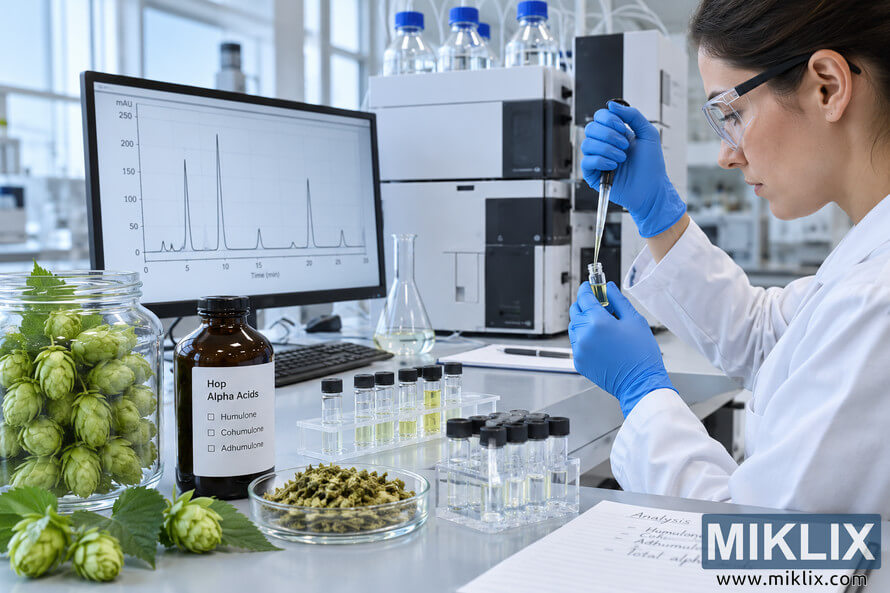
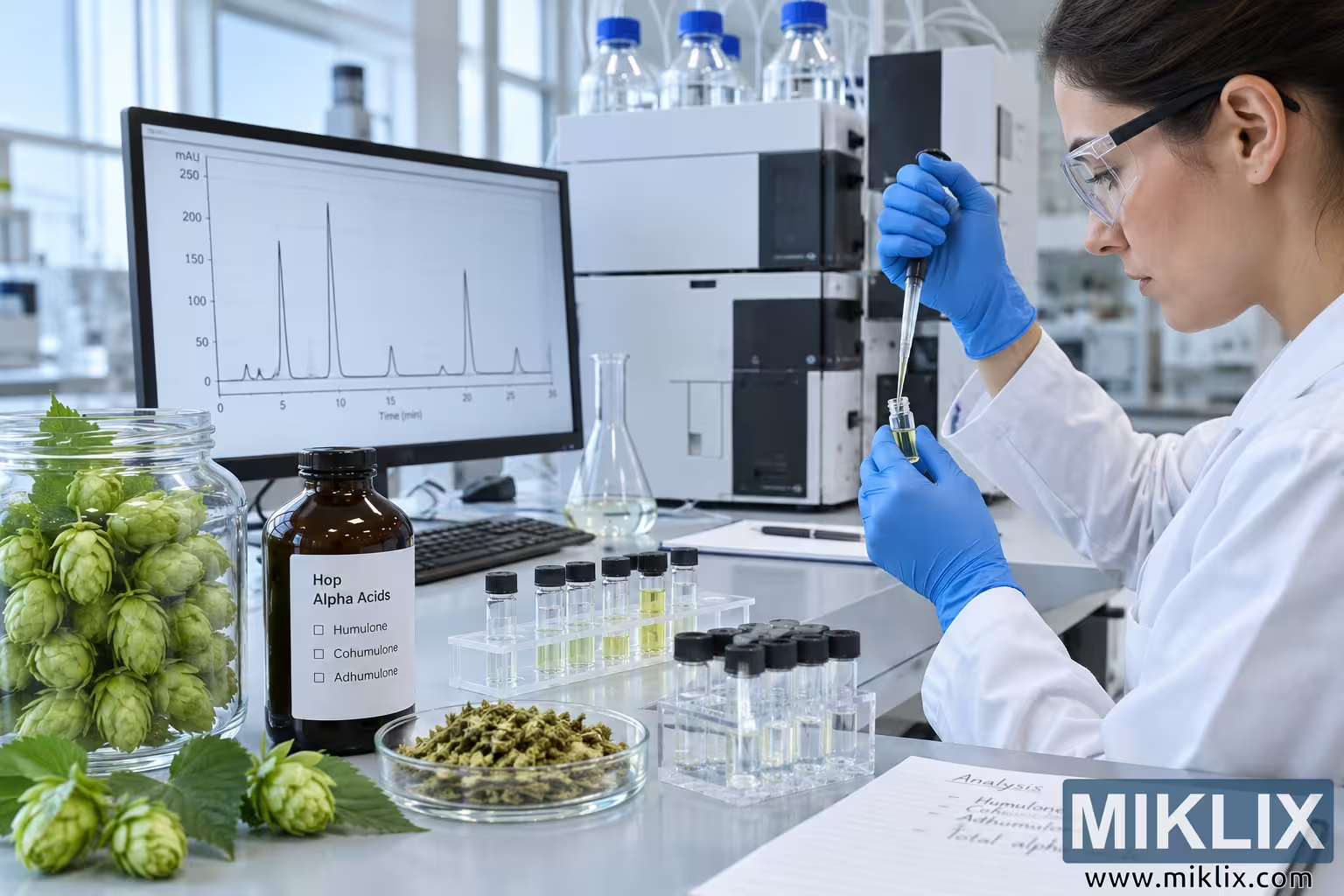
Laboratory analysis of hop alpha acids with fresh hop cones, prepared samples, a scientist using a micropipette, chromatography equipment, and analytical data.
Available versions of this image
The image files available for download below are less compressed and higher resolution - and as a result of that, higher quality - than the images embedded in articles and pages on this website, which are more optimized for file size in order to reduce bandwidth consumption.
Regular size (1,536 x 1,024)
Large size (3,072 x 2,048)
Very large size (4,608 x 3,072)
Extra large size (6,144 x 4,096)
Comically large size (1,048,576 x 699,051)
- Still uploading... ;-)
Image description
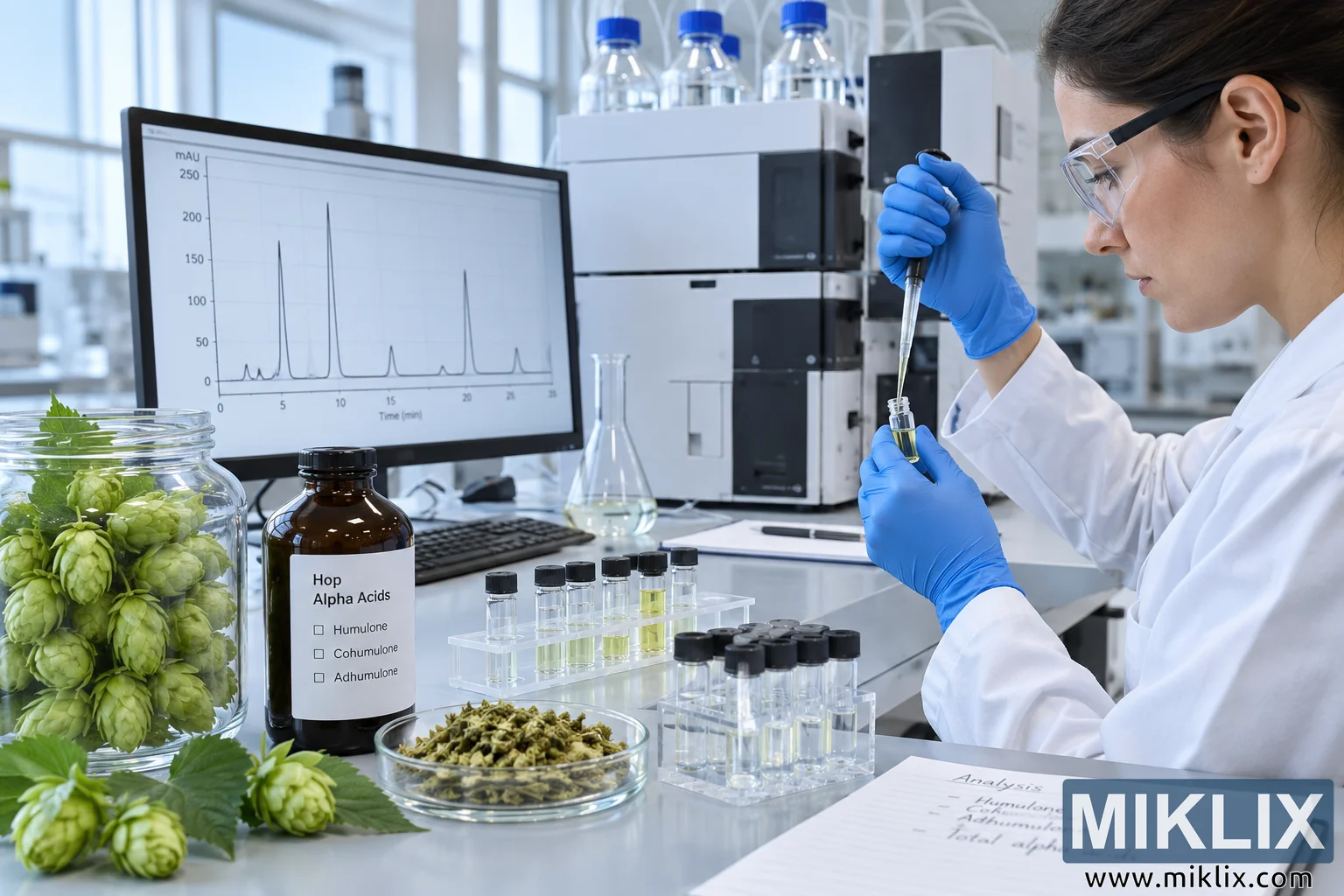
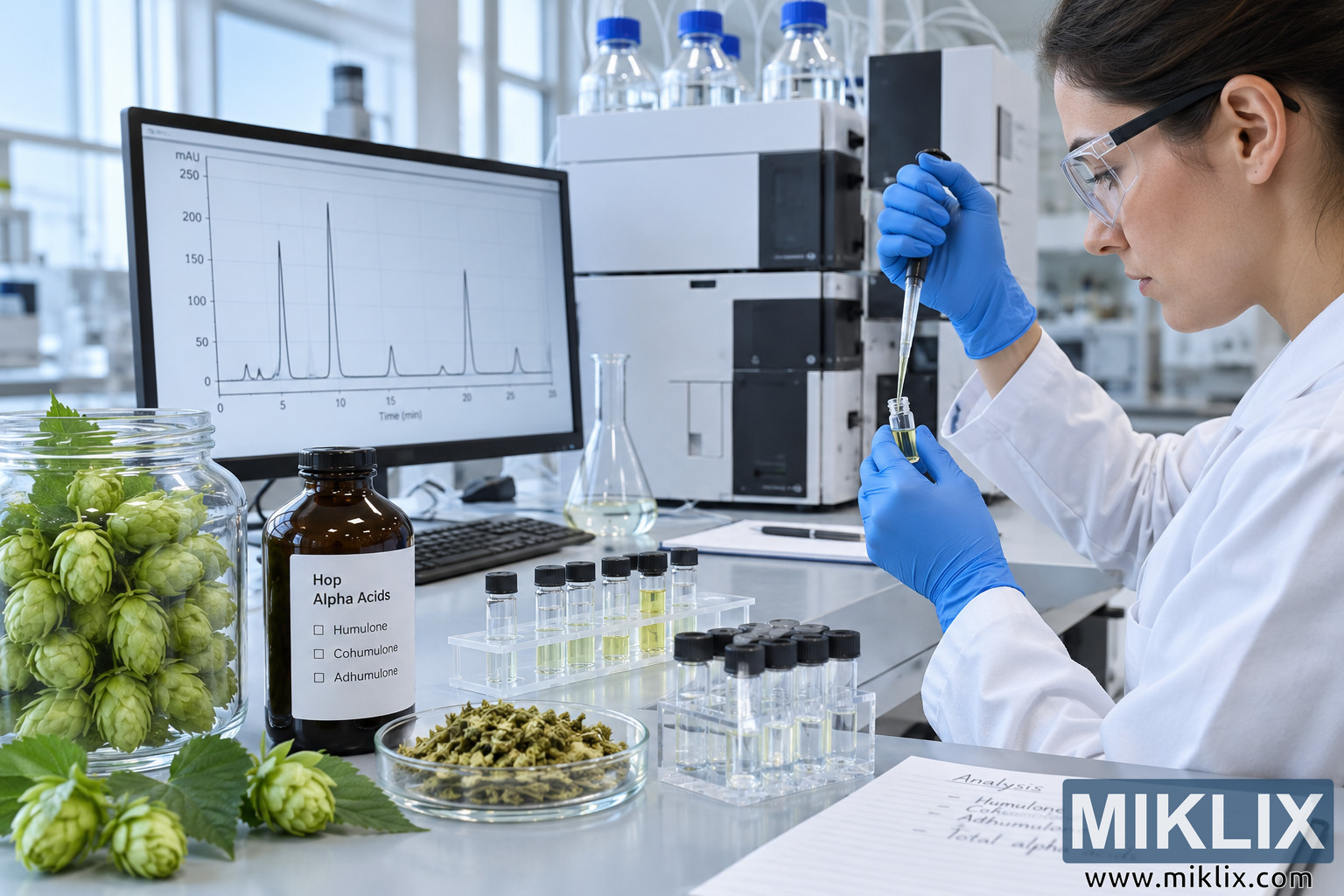
A high-resolution, landscape-oriented photograph depicts the laboratory analysis of alpha acids found in hops. The scene takes place in a bright, modern analytical laboratory with large windows, clean white surfaces, stainless-steel work areas, and professional scientific instrumentation. Natural-looking daylight fills the room and gives the image a crisp, clinical appearance while retaining the recognizable green tones of the hop material. The composition combines the raw botanical ingredient, prepared laboratory samples, analytical equipment, and a scientist performing a precise procedure, visually connecting hops with the scientific measurement of their chemical constituents.
On the right side of the image, a laboratory scientist wearing a clean white lab coat, transparent protective safety glasses, and blue disposable gloves is carefully handling a small liquid sample. She holds a narrow sample vial in one gloved hand while operating an adjustable laboratory micropipette with the other. The pipette tip extends into the open vial, which contains a small quantity of transparent, pale yellow-green liquid. Her posture and focused expression suggest a controlled sample-preparation or transfer step carried out before or during instrumental analysis. The protective clothing, careful handling technique, and organized laboratory surroundings reinforce the impression of a professional analytical workflow.
Behind the scientist is a large modular chromatography-style analytical instrument consisting of several white and dark rectangular components. Transparent laboratory bottles containing clear liquid are positioned on top of the equipment and connected to thin tubing, suggesting a liquid chromatography system used for separating and quantifying compounds in prepared samples. The equipment has a clean, generic appearance without visible commercial branding. Its placement directly behind the sample preparation area creates a clear visual connection between the scientist's manual pipetting procedure and the subsequent instrumental measurement.
A large computer monitor dominates the left-center portion of the scene. The screen displays a chromatogram-like analytical graph with several distinct narrow peaks of different heights distributed across a horizontal time axis. The vertical axis is marked in milli-absorbance units, while the horizontal axis represents time in minutes. The pattern resembles data generated during chromatographic separation, where individual chemical components produce separate detector responses as they pass through the analytical system. Several prominent peaks are visible, along with smaller signals, giving the display the appearance of a realistic laboratory measurement rather than a decorative graph. A keyboard and computer accessories are arranged on the bench beneath the monitor.
The foreground prominently features fresh green hop cones and leaves. On the far left, numerous pale green hop cones are stored in a large transparent glass container. Additional loose hop cones and leafy stems are arranged naturally across the laboratory bench in front of the container. Their layered, overlapping bracts and characteristic conical shapes make the botanical material immediately recognizable as hops. The vivid green plant material provides a strong visual contrast with the white, gray, transparent, and metallic surfaces of the laboratory and establishes the biological source of the compounds being analyzed.
Near the center foreground stands a generic amber laboratory reagent bottle with a plain white label identifying its contents in relation to hop alpha acids. The label references major alpha-acid constituents including humulone, cohumulone, and adhumulone. The dark amber glass resembles laboratory containers commonly used to protect light-sensitive chemical substances and standards. No commercial logo, manufacturer name, or recognizable brand identity is visible. Beside the bottle is a shallow glass dish containing chopped or dried hop material. This processed plant sample appears less vivid than the fresh cones, suggesting an intermediate stage between raw botanical material and the liquid extracts prepared for instrumental analysis.
Several transparent sample vials and test tubes are organized in clear laboratory racks across the center of the workbench. Some contain small quantities of pale yellow or yellow-green liquid, while others appear nearly colorless or empty. Their orderly arrangement implies multiple samples, calibration standards, extraction fractions, or replicate preparations. A glass Erlenmeyer flask positioned farther back contains a small volume of similarly pale liquid. Together with the pipette, vial racks, chromatography equipment, and computer data, these objects communicate a sequence of laboratory activities including sample preparation, extraction, dilution, separation, detection, and quantitative evaluation.
In the lower-right foreground, an open laboratory notebook or analysis sheet rests on the bench. Handwritten-style notes refer to the analysis and alpha-acid components, visually reinforcing the scientific subject of the image. The notebook is partly cropped by the edge of the frame, which gives the scene the candid quality of an active laboratory workspace rather than a rigidly staged equipment display. Despite the number of scientific objects, the workbench remains orderly and clean, emphasizing precision and controlled laboratory practice.
The overall composition is designed to communicate the scientific determination of hop alpha acids, compounds of particular relevance to hop chemistry and brewing research. Fresh hops establish the source material, dried and processed hops suggest sample preparation, the pale extracts represent prepared analytical samples, and the chromatography-style instrument and chromatogram indicate instrumental chemical analysis. The scientist serves as the human connection between these stages, shown performing a careful liquid-handling operation at the moment of analysis. The shallow background depth keeps attention on the scientist, samples, hops, and analytical display while still revealing enough laboratory equipment to establish a sophisticated research environment.
Visually, the photograph balances scientific precision with natural botanical detail. Cool whites, grays, glass surfaces, and metallic laboratory elements dominate the environment, while the green hop cones, yellow-green extracts, amber bottle, and blue gloves provide distinct points of color. Bright, even illumination minimizes harsh shadows and makes small details in the samples and equipment clearly visible. The wide landscape framing accommodates the complete analytical story within a single scene: raw hops on the left and foreground, measurement data on the monitor, laboratory instrumentation in the background, and the scientist actively preparing a sample on the right. The resulting image presents hop alpha-acid analysis as a precise, modern laboratory process using professional scientific equipment, careful sample handling, chromatography-style measurement, and documented analytical results, without displaying any actual commercial brands.
The image is related to: Hops in Beer Brewing: Dr Rudi