
Image: Hop Pellets Being Measured on a Digital Scale
Published: September 24, 2026 at 2:44:22 PM UTC
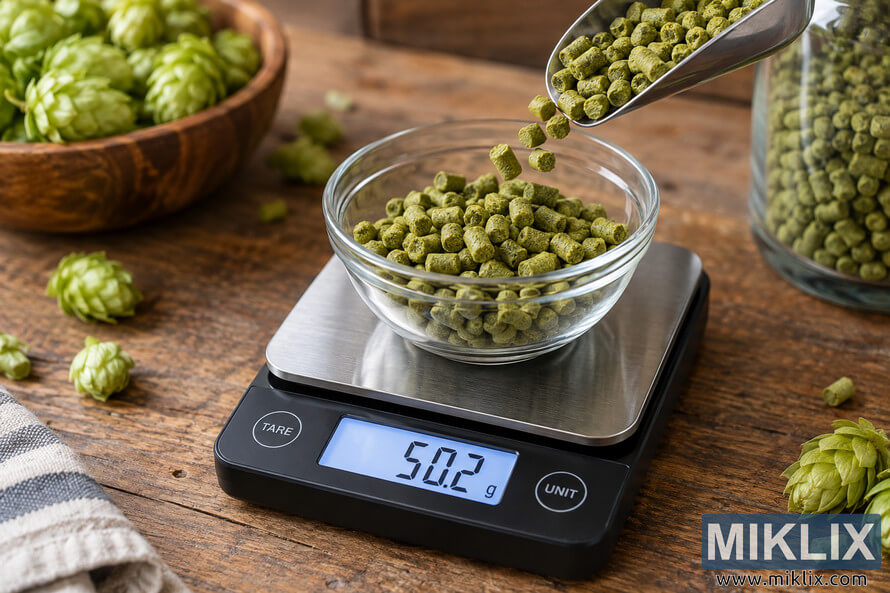
Close-up image of green hop pellets being precisely measured on a digital scale, with whole hop cones and brewing ingredients arranged on a rustic wooden work surface.
Available versions of this image
The image files available for download below are less compressed and higher resolution - and as a result of that, higher quality - than the images embedded in articles and pages on this website, which are more optimized for file size in order to reduce bandwidth consumption.
Regular size (1,536 x 1,024)
Large size (3,072 x 2,048)
Very large size (4,608 x 3,072)
Extra large size (6,144 x 4,096)
Comically large size (1,048,576 x 699,051)
- Still uploading... ;-)
Image description
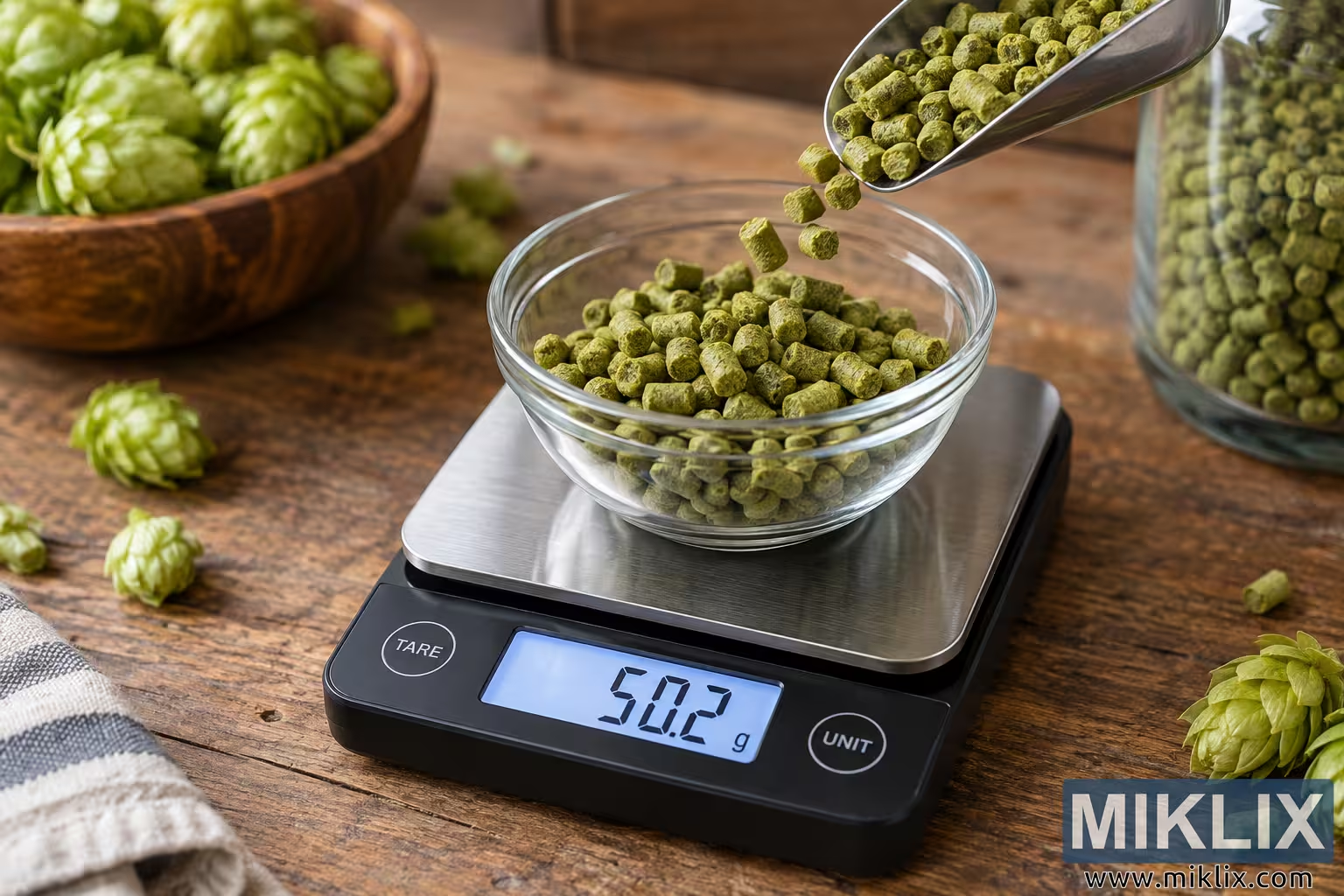
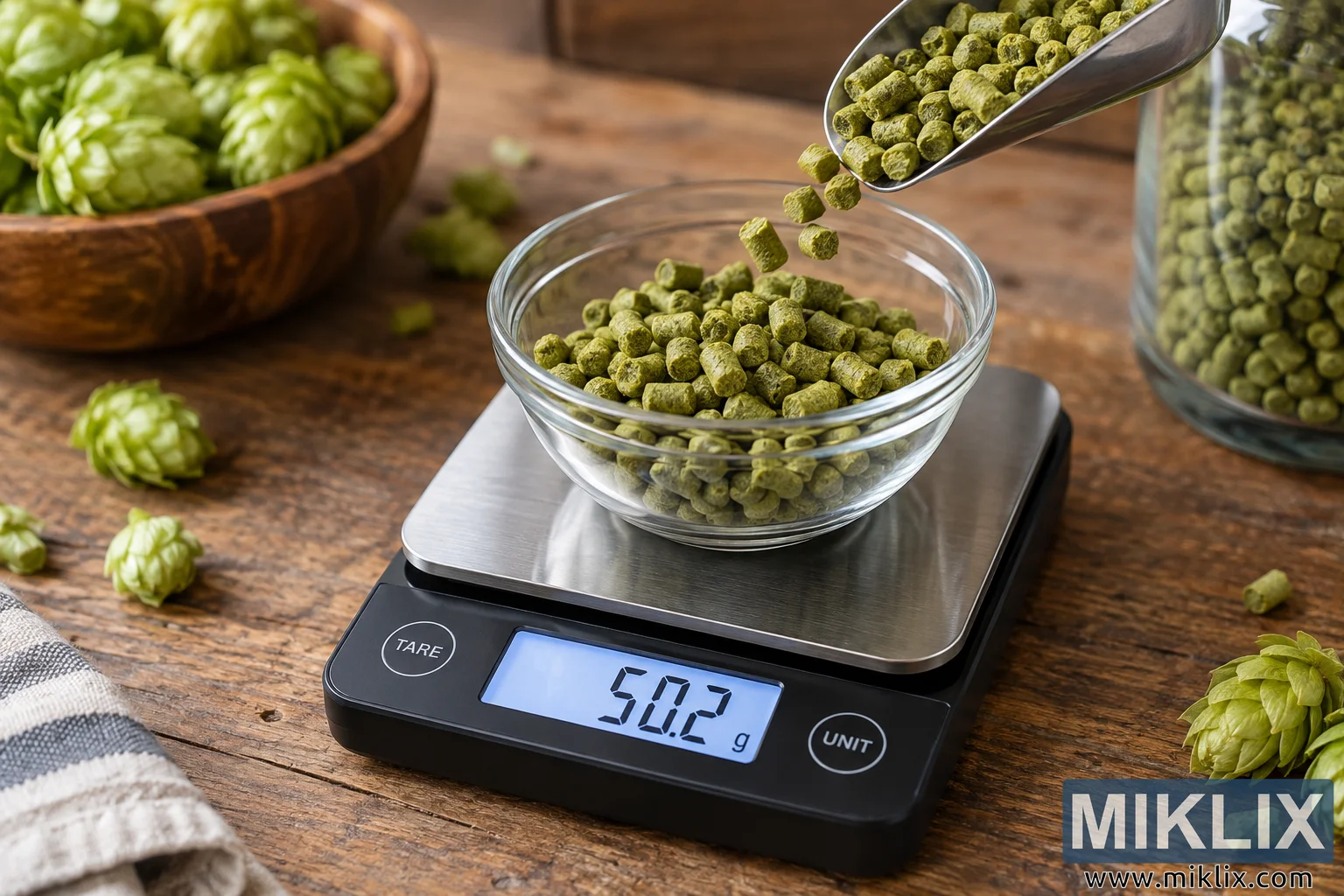
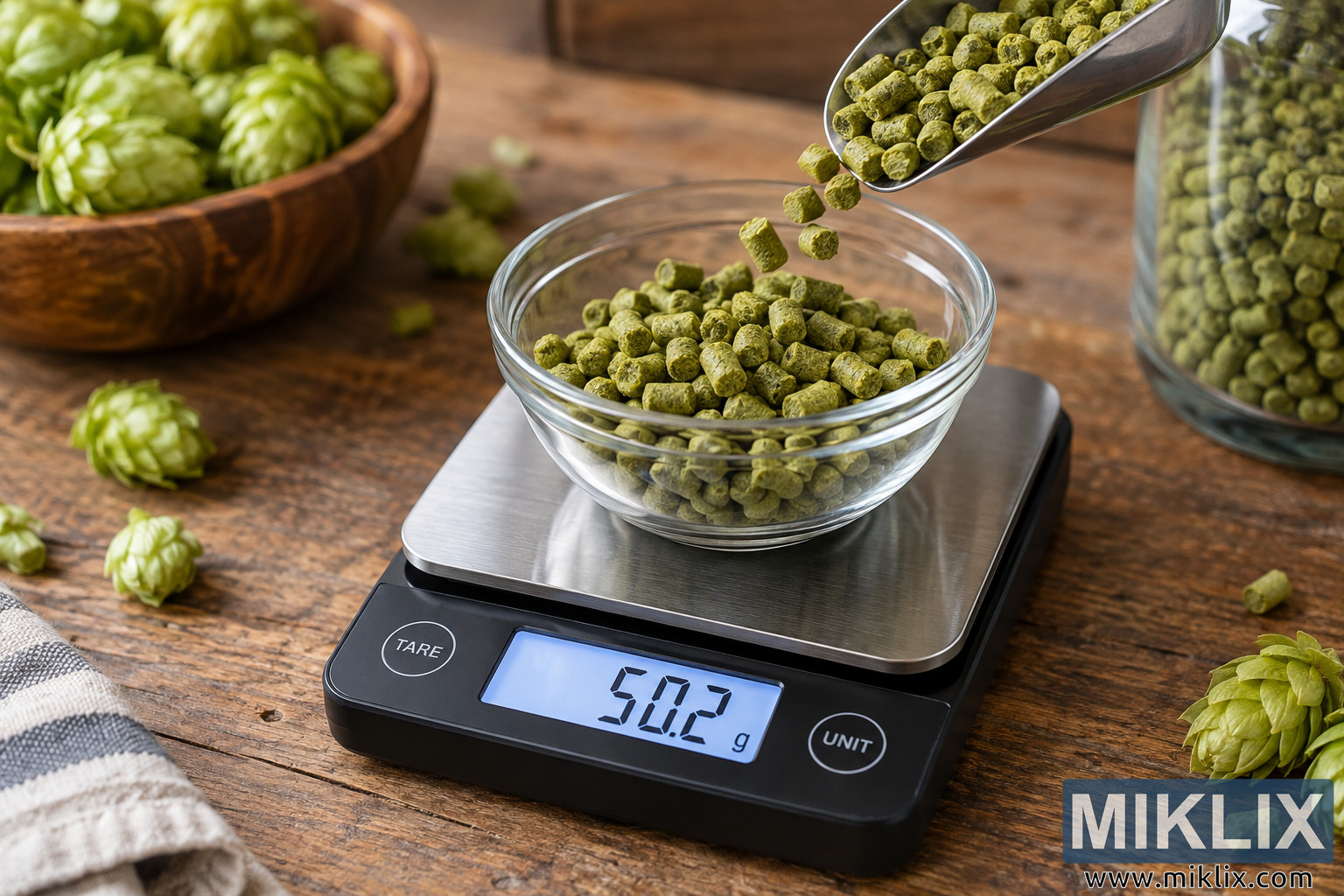
A high-resolution landscape-oriented photograph presents a carefully staged close-up scene of hop pellets being measured on a digital kitchen scale, evoking the practical preparation stage of home brewing or small-batch craft beer production. The composition centers on a transparent glass bowl filled with numerous compact green hop pellets. The pellets have the characteristic short cylindrical shape of processed hops and display a naturally varied olive-green to yellow-green coloration. Their surfaces appear slightly rough and compressed, with subtle irregularities that communicate the dried, plant-based nature of the material. The glass bowl sits directly on the brushed stainless-steel weighing platform of a modern digital scale. Because the bowl is transparent, additional hop pellets can be seen through its curved sides, giving the central subject a sense of depth and emphasizing the quantity being measured.
The digital scale occupies much of the lower central portion of the frame. It has a rectangular form with softly rounded corners, a dark housing, and a metallic weighing platform. At the front is a large illuminated digital display showing a measurement of 50.2 grams. The bright display contrasts strongly with the dark body of the scale and makes the act of precise measurement immediately understandable. Circular controls are positioned on either side of the display, contributing to the practical kitchen or brewing-equipment appearance without displaying any recognizable commercial branding. The clean, contemporary construction of the scale contrasts with the rustic wooden tabletop underneath it.
Above the bowl, entering the composition from the upper-right area, is a shiny metal scoop containing additional hop pellets. Several pellets are captured in midair as they fall from the scoop toward the bowl. This detail introduces movement into an otherwise still composition and visually explains that the amount of hops is actively being adjusted to reach a desired weight. The suspended pellets form a loose diagonal line between the scoop and the bowl, naturally directing the viewer's attention toward the measured ingredients. The reflective metal surface of the scoop catches the warm ambient light and provides another material contrast against the matte, textured appearance of the hops.
The entire arrangement is positioned on a richly textured wooden work surface composed of warm brown boards. Visible grain patterns, small imperfections, scratches, and tonal variations give the tabletop a rustic and well-used appearance. This background helps establish an artisanal atmosphere that feels appropriate for craft brewing, ingredient preparation, or a home brewery workspace. The warm brown wood also complements the natural green tones of the hops while allowing the cooler metallic surfaces of the scale and scoop to stand out clearly.
Several whole hop cones are arranged around the main subject as visual context. On the left side of the frame, a wooden bowl holds a collection of fresh-looking green hop cones. Their overlapping, layered bracts create a distinctive botanical texture that contrasts with the compressed cylindrical form of the processed hop pellets. Individual hop cones are also scattered across the tabletop, including examples near the lower-left and lower-right edges of the composition. These intact cones make the relationship between the original hop flowers and the processed pellets visually apparent. Their pale green coloration and detailed leafy structure reinforce the natural origin of the ingredient.
On the right side of the image, behind the central weighing setup, a large transparent glass container is partially visible. It is filled with more green hop pellets, suggesting that the small portion on the scale has been taken from a larger supply. The container extends beyond the right edge of the frame, which makes the scene feel like a cropped view of a larger working environment rather than an isolated product display. The glass catches soft reflections while still allowing the densely packed pellets inside to remain visible.
A folded or loosely placed striped textile enters the lower-left corner of the image. The fabric has alternating light and dark neutral stripes and a visibly woven texture. Its presence softens the scene by adding a familiar kitchen or workshop element alongside the harder surfaces of glass, steel, and wood. The textile is slightly out of the primary focal plane, ensuring that it supports the composition without competing with the scale and bowl.
The lighting is warm, soft, and directional, resembling natural daylight entering a rustic kitchen, brewing room, or workshop. Highlights appear on the curved glass bowl, stainless-steel scale platform, and polished metal scoop, while gentle shadows beneath the objects create convincing depth. The hop pellets and whole hop cones retain substantial surface detail, with small variations in texture and color clearly visible. The background and peripheral objects become progressively softer due to a relatively shallow depth of field, while the bowl, falling pellets, weighing platform, and digital measurement remain especially sharp. This selective focus guides attention toward the central action of weighing the hops.
The photograph uses a close, slightly elevated viewing angle, allowing the viewer to see both inside the glass bowl and across the control panel of the scale. The primary visual hierarchy begins with the bowl of hop pellets, continues to the illuminated weight reading, and then follows the falling pellets upward toward the scoop. Secondary elements such as the whole hop cones, wooden bowl, storage container, and striped cloth provide context and visual balance around the main subject. The overall palette is dominated by natural greens, warm wood browns, neutral metallic silver, transparent glass, and subdued black and gray tones.
The scene communicates precision, ingredient preparation, and hands-on brewing without showing a person. It suggests that a brewer is carefully portioning hops before adding them to a recipe, highlighting the importance of accurate measurements in the brewing process. The combination of raw hop cones, processed pellets, weighing equipment, and bulk ingredient storage provides a clear visual narrative from agricultural ingredient to measured brewing component. No recognizable brand names, logos, packaging designs, or other commercial identifiers are present. The resulting image has a polished editorial and instructional quality suitable for content about brewing ingredients, home brewing techniques, hop additions, beer recipes, craft brewing processes, or educational explanations of how hop pellets are measured before use.
The image is related to: Hops in Beer Brewing: Dr Rudi