
Image: Proper Hop Storage in Vacuum-Sealed Bags in a Freezer
Published: September 24, 2026 at 2:44:22 PM UTC
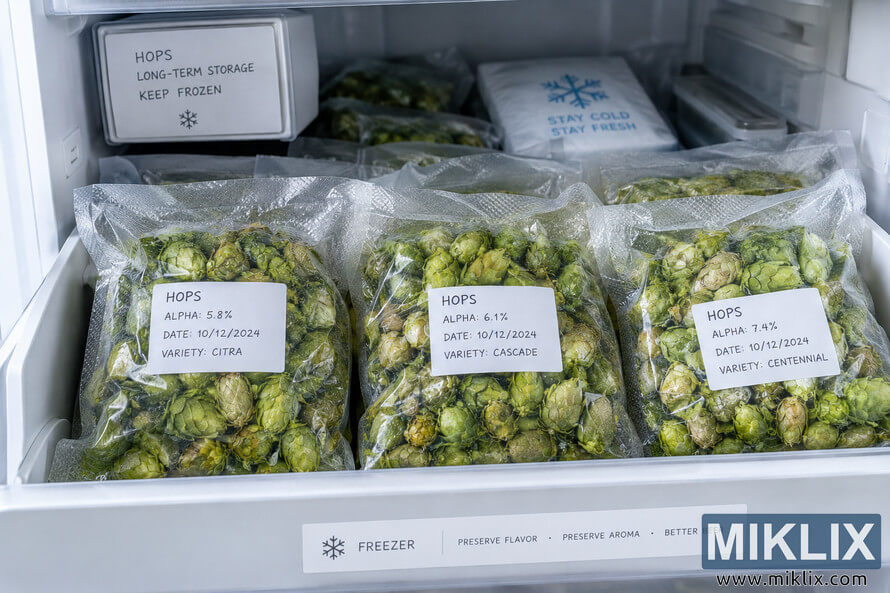
Proper hop storage illustrated with labeled, vacuum-sealed bags of green hop cones kept in a freezer to help preserve freshness, aroma, and flavor.
Available versions of this image
The image files available for download below are less compressed and higher resolution - and as a result of that, higher quality - than the images embedded in articles and pages on this website, which are more optimized for file size in order to reduce bandwidth consumption.
Regular size (1,536 x 1,024)
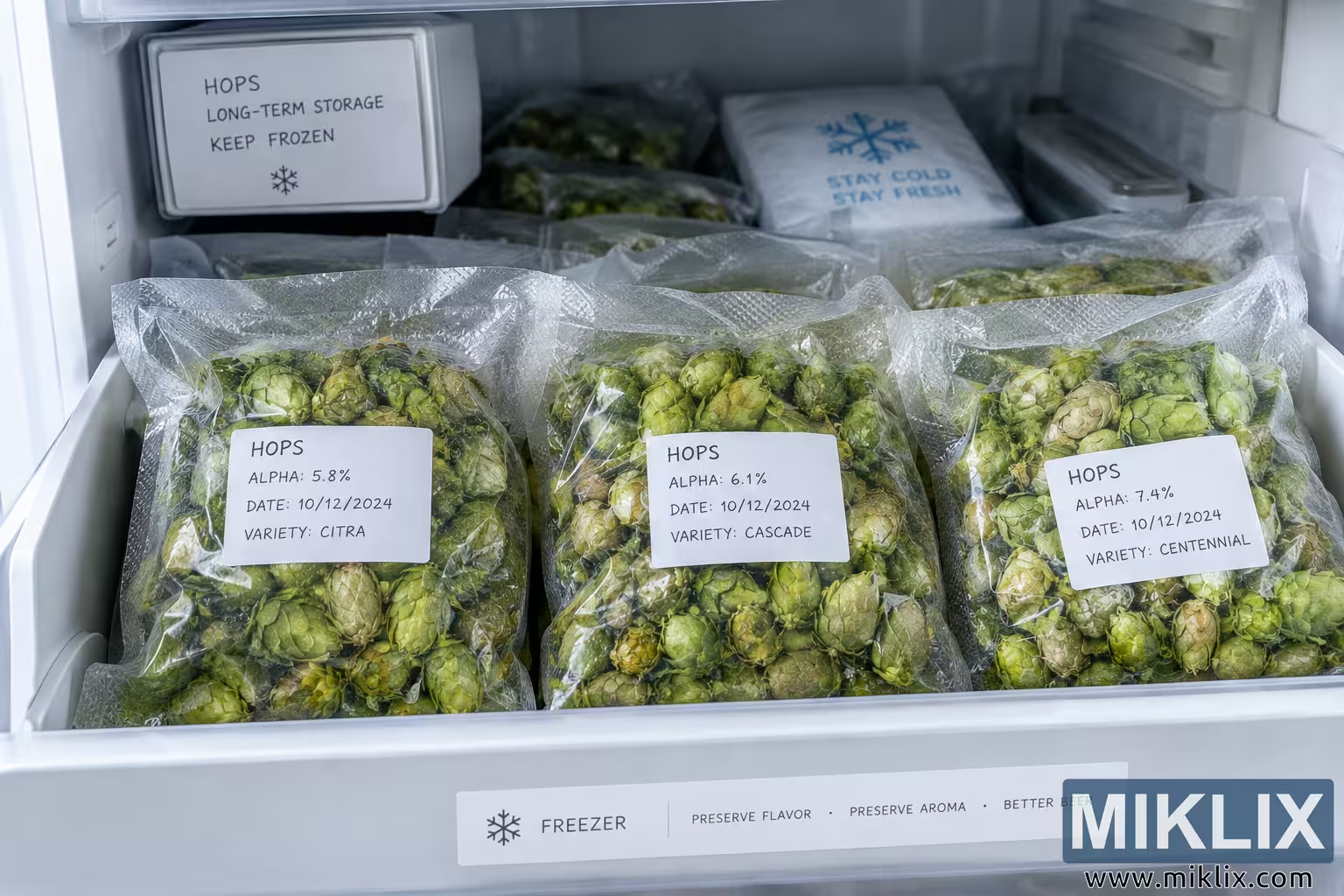
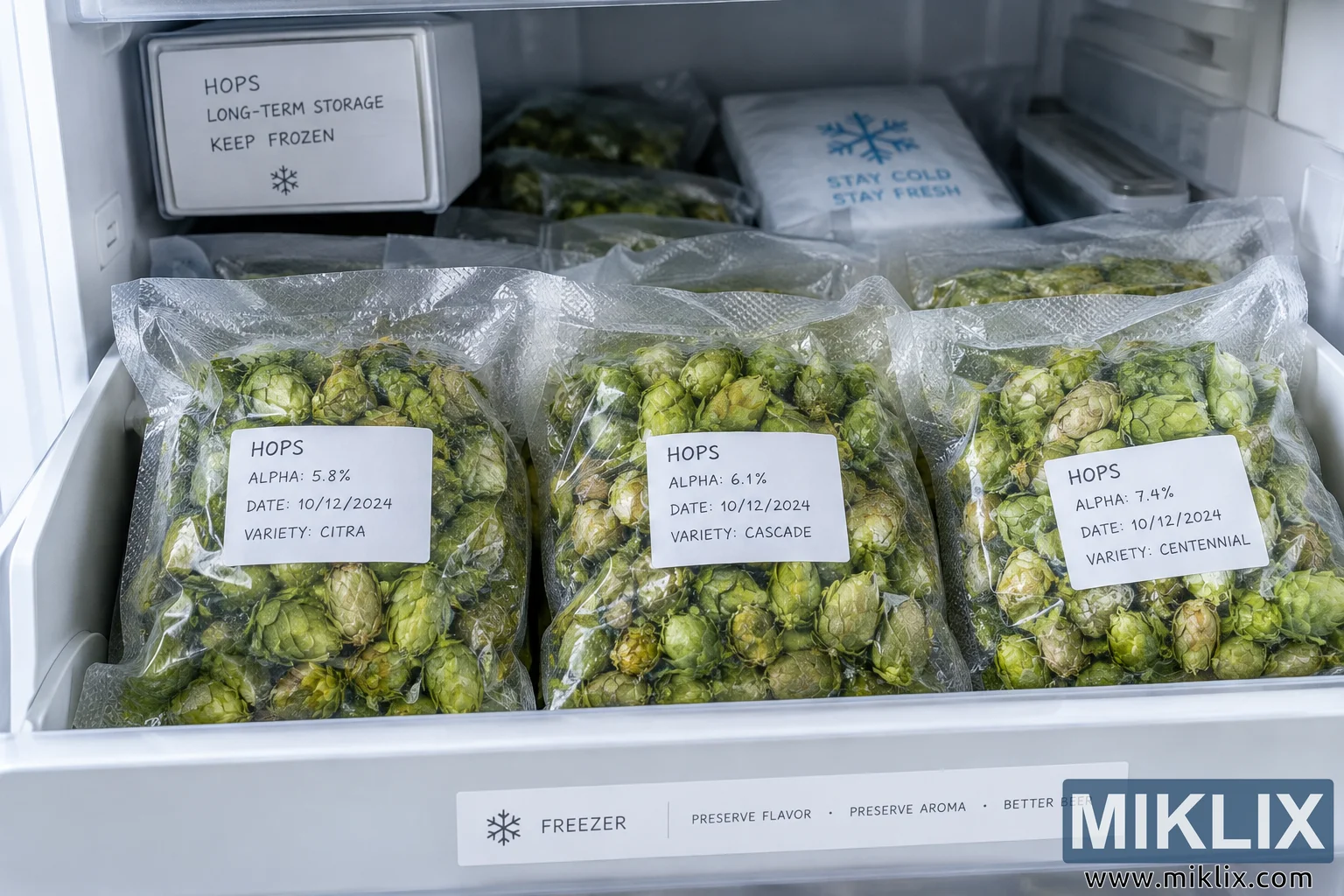
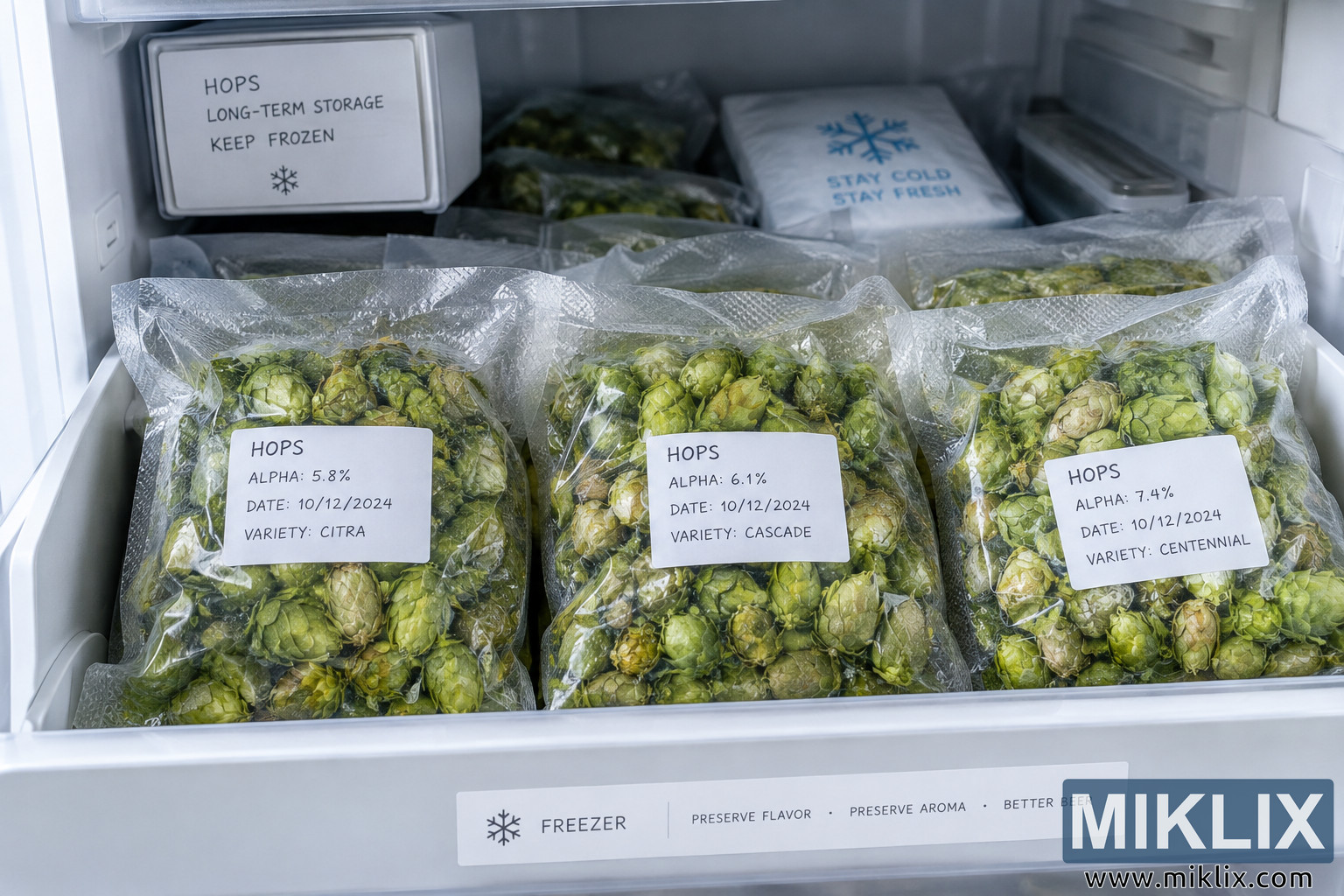
Large size (3,072 x 2,048)
Very large size (4,608 x 3,072)
Extra large size (6,144 x 4,096)
Comically large size (1,048,576 x 699,051)
- Still uploading... ;-)
Image description
A crisp, realistic landscape photograph shows the interior of a clean, modern household freezer being used for proper long-term hop storage. The composition is viewed straight into an open freezer drawer, with the foreground dominated by three large, transparent vacuum-sealed bags filled with whole green hop cones. The bags have been tightly evacuated so that the clear textured plastic conforms closely around the individual hops, visually communicating that excess air has been removed before freezing. The vacuum packaging appears sturdy and professionally sealed, with broad sealed edges and a slightly embossed surface that catches the cool freezer light. Small traces of condensation and frost on portions of the plastic reinforce the impression that the hops are being kept at a consistently low temperature.
The hop cones themselves are highly detailed and natural in appearance. Their overlapping leafy bracts range from fresh yellow-green to deeper olive and forest-green tones, with occasional pale or slightly brownish areas that add realistic organic variation. The cones are packed densely inside each bag while remaining individually recognizable. Because the bags are transparent, the viewer can immediately identify the stored ingredient and inspect its condition without opening the packaging. The three primary bags are arranged side by side across the front of the freezer drawer, creating an orderly, symmetrical presentation and making the storage method the unmistakable subject of the image.
Each foreground bag carries a simple rectangular white identification label with dark handwritten-style lettering. The left label identifies the contents generically as hops and records an alpha-acid value of 5.8 percent, a date of 10/12/2024, and the variety as Citra. The center bag similarly displays an alpha value of 6.1 percent, the same date, and the variety Cascade. The right-hand bag is marked with an alpha value of 7.4 percent, the same storage date, and the variety Centennial. These names appear only as descriptive hop-variety information rather than commercial branding; there are no company logos, manufacturer marks, product packages, or other recognizable commercial identities anywhere in the scene. The labels demonstrate a useful organizational practice by recording information that can help a brewer distinguish different stored hop varieties and relevant brewing characteristics after the bags have been frozen.
Behind the three main packages are several additional vacuum-sealed bags of hops lying horizontally and partially overlapping one another. They recede into the darker rear portion of the freezer and provide visual depth while suggesting that the storage technique can be used for a larger hop inventory. The rear bags remain recognizable through their clear packaging, although their contents and labels are less prominent than those in the foreground. This arrangement gives the freezer a practical, actively used appearance without making it look cluttered or disorganized.
At the upper left is a pale rectangular freezer container or storage box. Its front carries a straightforward informational label reading 'HOPS', 'LONG-TERM STORAGE', and 'KEEP FROZEN', accompanied by a small snowflake symbol. This reinforces the educational message of the photograph: hops intended for extended storage should remain cold and protected from environmental exposure. In the upper central-right portion of the freezer is a soft rectangular cold pack or insulated package decorated with a blue snowflake graphic and the words 'STAY COLD' and 'STAY FRESH'. Its cool blue typography complements the icy white and gray freezer interior and strengthens the overall visual association with refrigeration and freshness.
The freezer itself has a contemporary, minimal appearance. White and pale gray plastic surfaces surround the stored hops, while translucent drawer edges and molded storage structures frame the composition. The lighting is bright and cool, resembling the clean illumination of an appliance interior. Subtle shadows deepen toward the back of the compartment, allowing the brightly illuminated foreground bags to stand out. Frosty reflections on the plastic packaging, the slight sheen of the freezer surfaces, and the visible texture of the vacuum bags contribute to the photographic realism. The overall color palette is dominated by cool whites, silvery grays, icy blue accents, and the contrasting natural greens of the hops.
Across the front face of the freezer drawer is another clean informational strip featuring a snowflake icon followed by the word 'FREEZER'. Additional text emphasizes the intended benefits with the phrases 'PRESERVE FLAVOR', 'PRESERVE AROMA', and 'BETTER BEER'. This lower label works almost like an educational caption embedded naturally into the scene. Together with the sealed packaging, organized labeling, and visibly frozen environment, it communicates the central concept that limiting oxygen exposure and maintaining low temperatures are important practices for preserving hop quality during storage.
The photograph has a polished instructional quality while still resembling a believable homebrewing storage setup. Nothing in the frame distracts from the central subject. There are no people, brewing vessels, bottles, logos, or unrelated food products. Instead, the visual hierarchy moves from the three prominent hop bags in the foreground to the additional stored hops and cold-storage indicators in the background. The shallow-to-moderate depth of field keeps the principal bags and their labels sharp while allowing the deepest parts of the freezer to become slightly softer. This directs attention toward the physical characteristics of the vacuum-sealed packaging and the green hop cones inside it.
Overall, the image presents a clear visual example of hops prepared for freezer storage: portions are separated into individual transparent bags, air has been removed through vacuum sealing, the packages are labeled with useful identifying information, and the bags are kept together in a dedicated frozen environment. The tidy arrangement suggests good inventory management, while the visible snowflake graphics and cold-storage messaging immediately communicate the importance of temperature control. The resulting scene is informative, practical, and visually appealing, making it suitable for illustrating an article, guide, tutorial, or educational resource about preserving hops, organizing brewing ingredients, vacuum sealing, freezer storage, or maintaining hop aroma and flavor over an extended period.
The image is related to: Hops in Beer Brewing: Dr Rudi