
Image: Vacuum Sealing Fresh Green Hops for Storage
Published: September 24, 2026 at 2:44:22 PM UTC
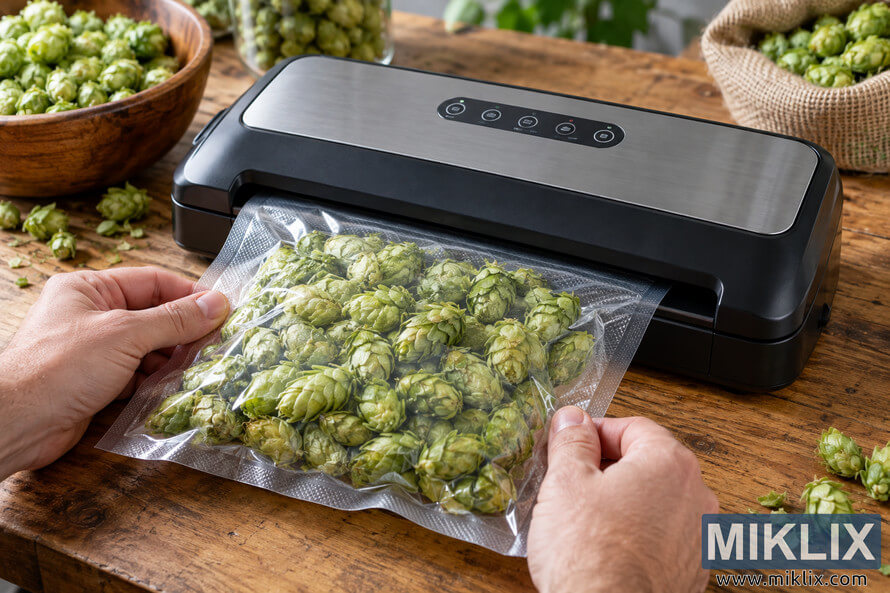
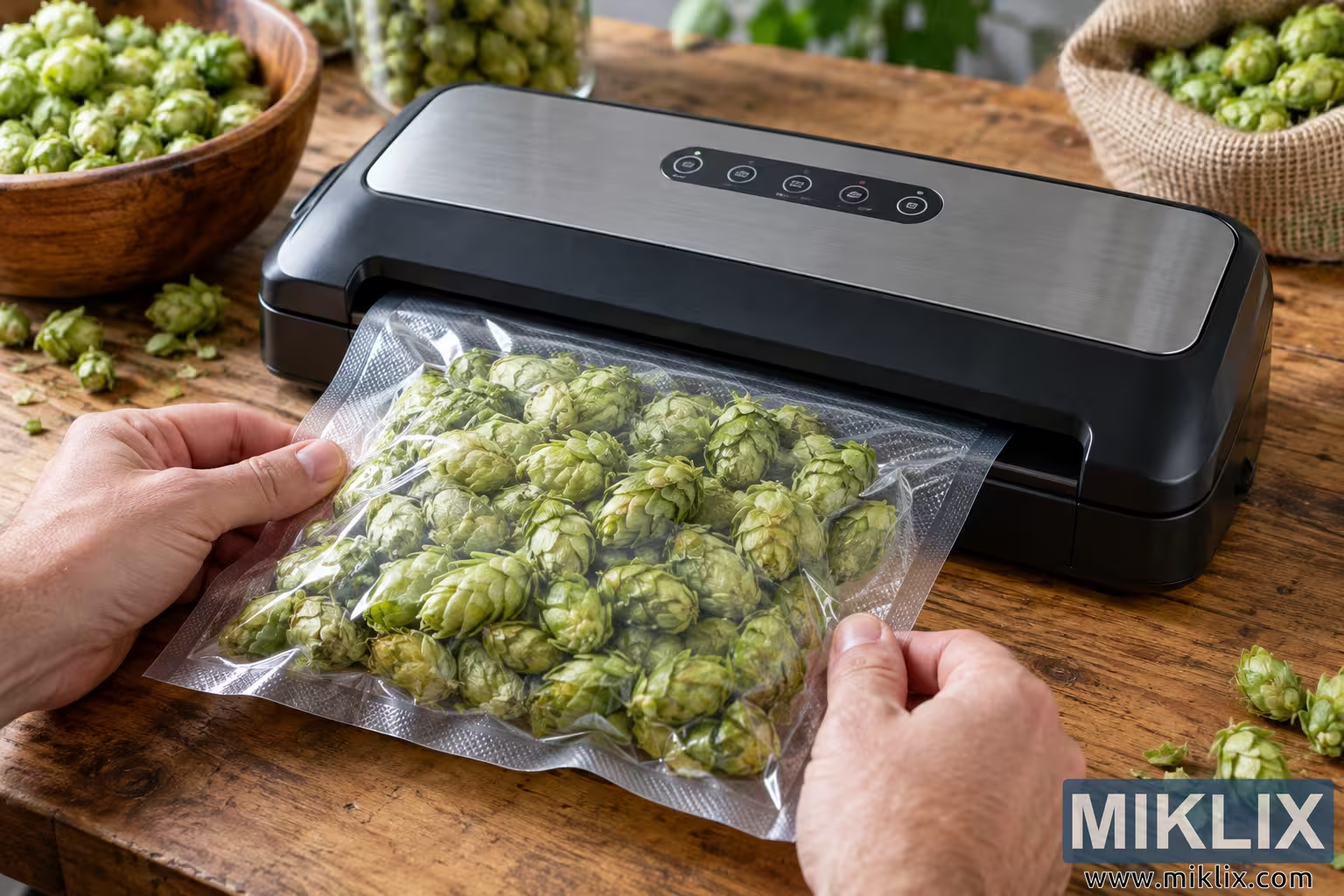
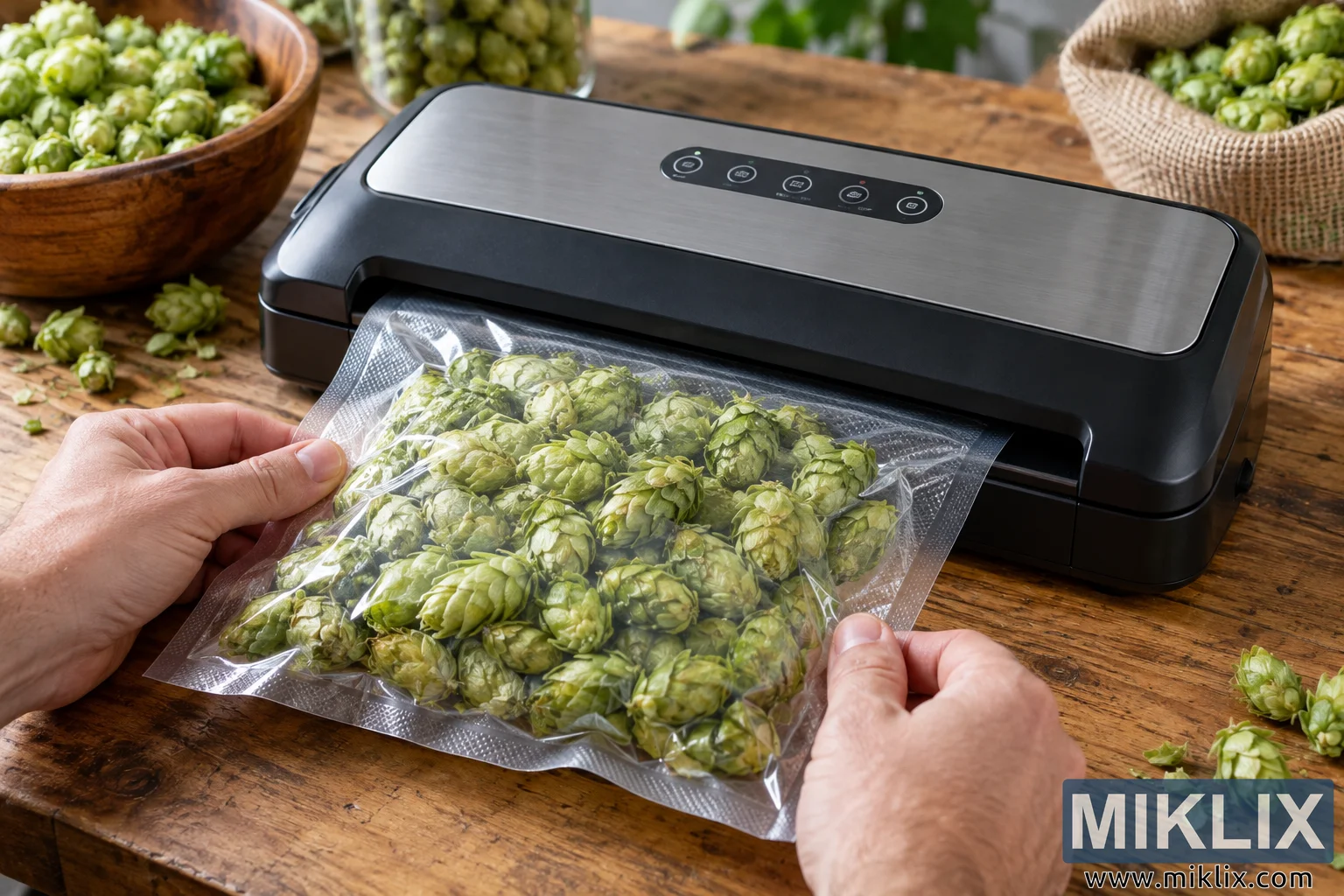
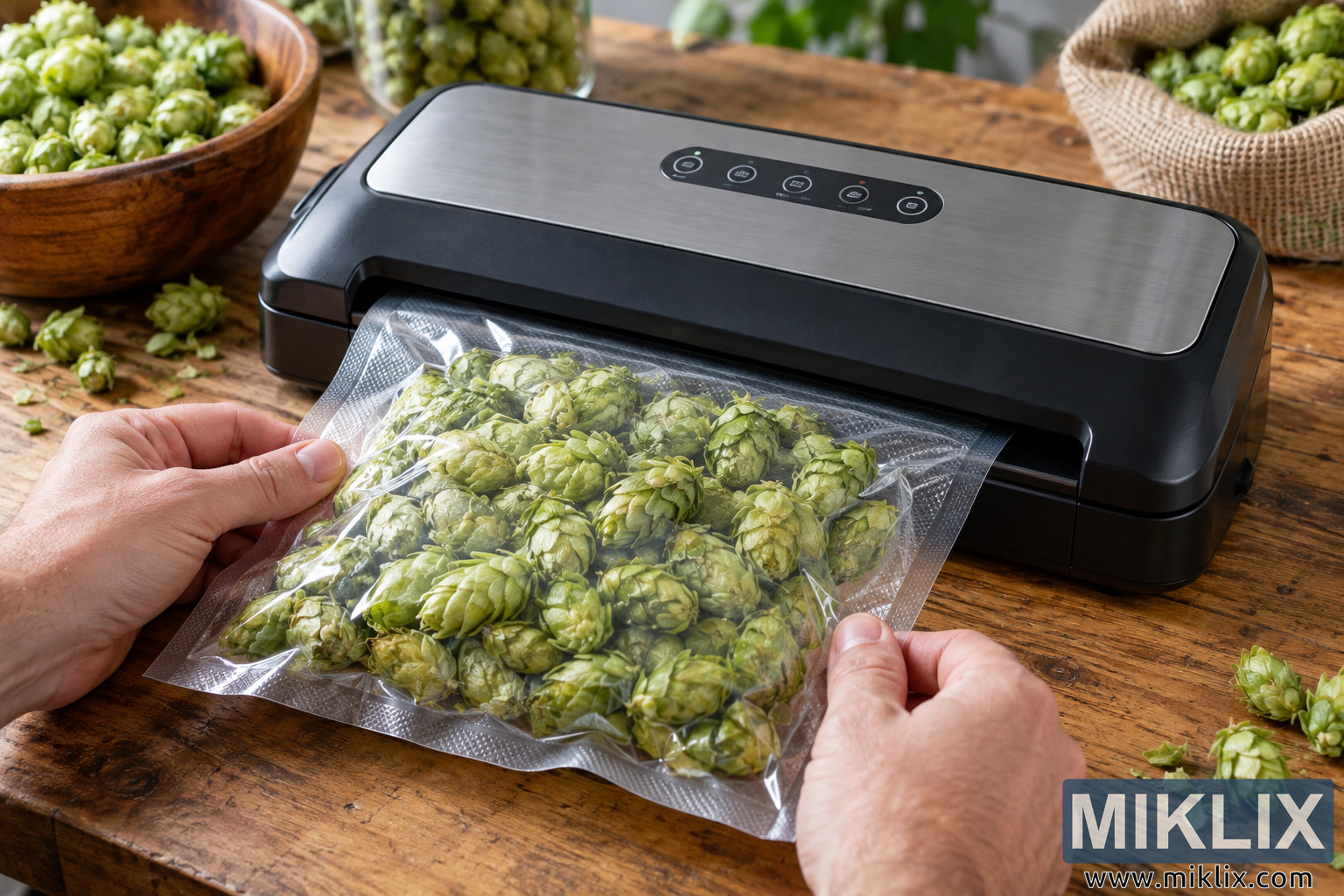
Fresh green hop cones are packaged in a clear vacuum-seal bag using an unbranded vacuum sealer on a rustic wooden work surface.
Available versions of this image
The image files available for download below are less compressed and higher resolution - and as a result of that, higher quality - than the images embedded in articles and pages on this website, which are more optimized for file size in order to reduce bandwidth consumption.
Regular size (1,536 x 1,024)
Large size (3,072 x 2,048)
Very large size (4,608 x 3,072)
Extra large size (6,144 x 4,096)
Comically large size (1,048,576 x 699,051)
- Still uploading... ;-)
Image description
A detailed, high-resolution landscape photograph shows fresh green hop cones being packaged with a vacuum sealer on a rustic wooden work surface. The composition centers on a modern, unbranded countertop vacuum sealing machine positioned toward the upper-right and middle portion of the frame. The appliance has a substantial rectangular body with softly rounded corners, a matte black lower housing, and a broad brushed-metal panel across the top. A dark control strip is integrated into the metallic surface and contains several small circular buttons and subtle indicator lights. There are no visible company names, logos, trademarks, or other recognizable branding elements on the appliance, giving it a clean and generic appearance.
In the foreground, a large transparent vacuum-sealing bag is filled generously with whole green hop cones. The hops display a range of natural green tones, from pale yellow-green highlights to deeper olive and leafy greens. Individual cones are clearly distinguishable through the glossy plastic. Their overlapping, scale-like bracts create a dense and highly textured appearance, with some cones appearing tightly compact while others have slightly more open leaves. The transparent bag extends from the lower center of the photograph toward the opening of the vacuum sealer, visually connecting the foreground ingredients with the packaging equipment. The plastic has realistic folds, wrinkles, reflections, and small textured sections around its perimeter, emphasizing the flexible material used for vacuum packaging.
Two human hands are actively handling the bag. One hand enters from the lower-left side of the frame and grips the left edge of the clear packaging, while the other enters from the lower-right and supports the opposite side. The hands gently guide and steady the filled bag as its open end is positioned inside the front slot of the vacuum sealing machine. This interaction makes the scene feel practical and instructional rather than staged as a simple product display. The image captures a recognizable moment in the food-preservation process: the hops have been placed into suitable packaging and are being prepared for the removal of excess air and the creation of a sealed closure.
The vacuum sealer itself occupies a prominent position in the image. Its dark body contrasts strongly with both the vivid green hops and the warm brown tones of the wooden table. The brushed-metal upper surface reflects the surrounding light softly without becoming excessively shiny. The front of the machine contains a wide horizontal opening where the clear bag has been inserted. The overall design appears sturdy and contemporary, but deliberately neutral and free of branding. Small control icons and indicator lights suggest that the appliance is powered and ready for operation, adding to the impression that the photograph documents an active packaging process.
The setting reinforces the agricultural and craft-oriented character of the subject. The vacuum sealer and bag rest on a heavily grained wooden table with a warm, medium-brown finish. Natural variations in the wood, including darker lines, knots, scratches, and irregular grain patterns, give the surface a well-used, authentic appearance. Several loose hop cones and fragments of hop leaves are scattered around the work area. These small details prevent the scene from looking overly polished and suggest that the hops have recently been sorted, handled, or prepared for storage.
Additional hops appear throughout the background and along the edges of the composition. On the upper-left side, a large wooden bowl is filled with fresh hop cones. The rounded bowl has a rich brown tone that complements the workbench while providing another concentrated area of green. Behind the vacuum sealer, a transparent glass container holds more hops, though it is slightly softer in focus because of the shallow depth of field. In the upper-right corner, an open coarse-textured burlap or jute sack contains another supply of green hop cones. The natural woven fibers of the sack add a contrasting texture and strengthen the visual association with harvesting, agriculture, brewing ingredients, and small-batch processing.
Loose hop cones are also visible near the lower-right edge and along the left side of the work surface. Some are intact, while small green pieces and leaf fragments are scattered nearby. These elements frame the central vacuum-sealing action and make the abundance of hops immediately apparent. Softly blurred green foliage is visible farther in the background, contributing additional natural color without distracting from the main subject. The background is intentionally subdued so that attention remains on the hands, the transparent bag of hops, and the sealing machine.
Lighting throughout the photograph is bright, soft, and natural in appearance. Highlights on the transparent plastic emphasize its glossy surface, while gentle shadows between the hop cones reveal their layered structure. The metallic panel on the vacuum sealer catches broad, diffused reflections, and the wooden table retains visible detail in both its brighter and darker areas. The lighting avoids harsh contrast, allowing the green hops to appear fresh and vibrant while preserving realistic skin tones in the hands and warm tones in the wood.
The camera angle is slightly elevated and directed toward the front of the vacuum sealer, providing a clear view of both the appliance and the contents of the bag. The filled package dominates the lower half of the image, while the machine anchors the upper half. This arrangement creates an immediate visual explanation of what is happening without requiring labels or text. The landscape orientation provides enough surrounding context to show the bowls, sack, loose hops, and workbench while still keeping the central packaging process large and detailed.
Overall, the image depicts the practical preservation and storage of hops using vacuum-sealing equipment. The fresh hop cones, clear packaging material, visible hands, rustic wooden workbench, and additional harvested hops combine to create an authentic workshop or small-scale processing atmosphere. The photograph would be suitable for illustrating subjects such as hop storage, home brewing preparation, ingredient preservation, vacuum packaging, post-harvest handling, brewing supplies, or methods for protecting hops from prolonged exposure to air. Its realistic photographic style, detailed textures, natural agricultural elements, and absence of recognizable commercial branding keep the emphasis firmly on the process of vacuum sealing fresh hops.
The image is related to: Hops in Beer Brewing: Dr Rudi