
Image: Various Hop Packaging Options for Homebrewers
Published: September 24, 2026 at 2:44:22 PM UTC
Explore common hop formats for homebrewing, including whole hops, pellets, dried hops, hop flakes, and mesh hop bags in a rustic, brand-free brewing display.
Available versions of this image
The image files available for download below are less compressed and higher resolution - and as a result of that, higher quality - than the images embedded in articles and pages on this website, which are more optimized for file size in order to reduce bandwidth consumption.
Regular size (1,536 x 1,024)
Large size (3,072 x 2,048)
Very large size (4,608 x 3,072)
Extra large size (6,144 x 4,096)
Comically large size (1,048,576 x 699,051)
- Still uploading... ;-)
Image description
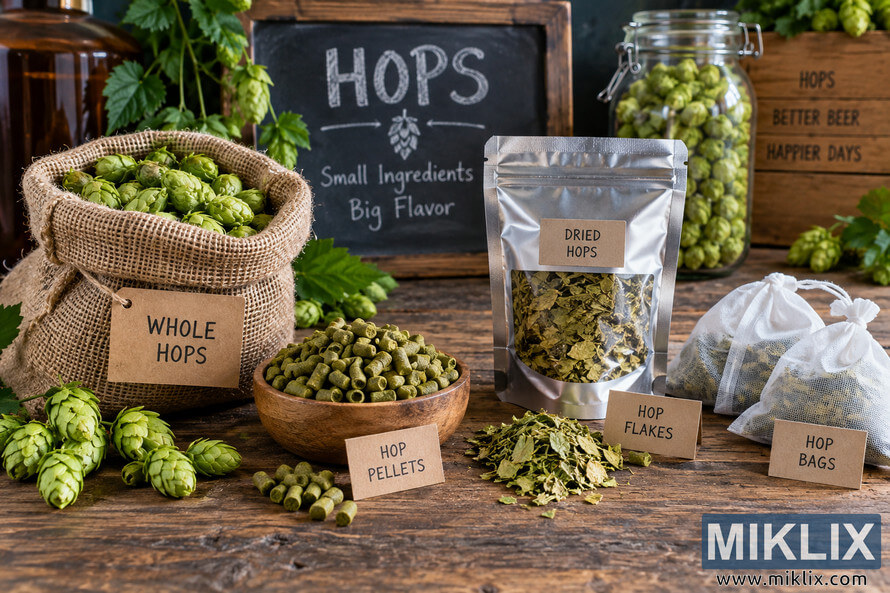
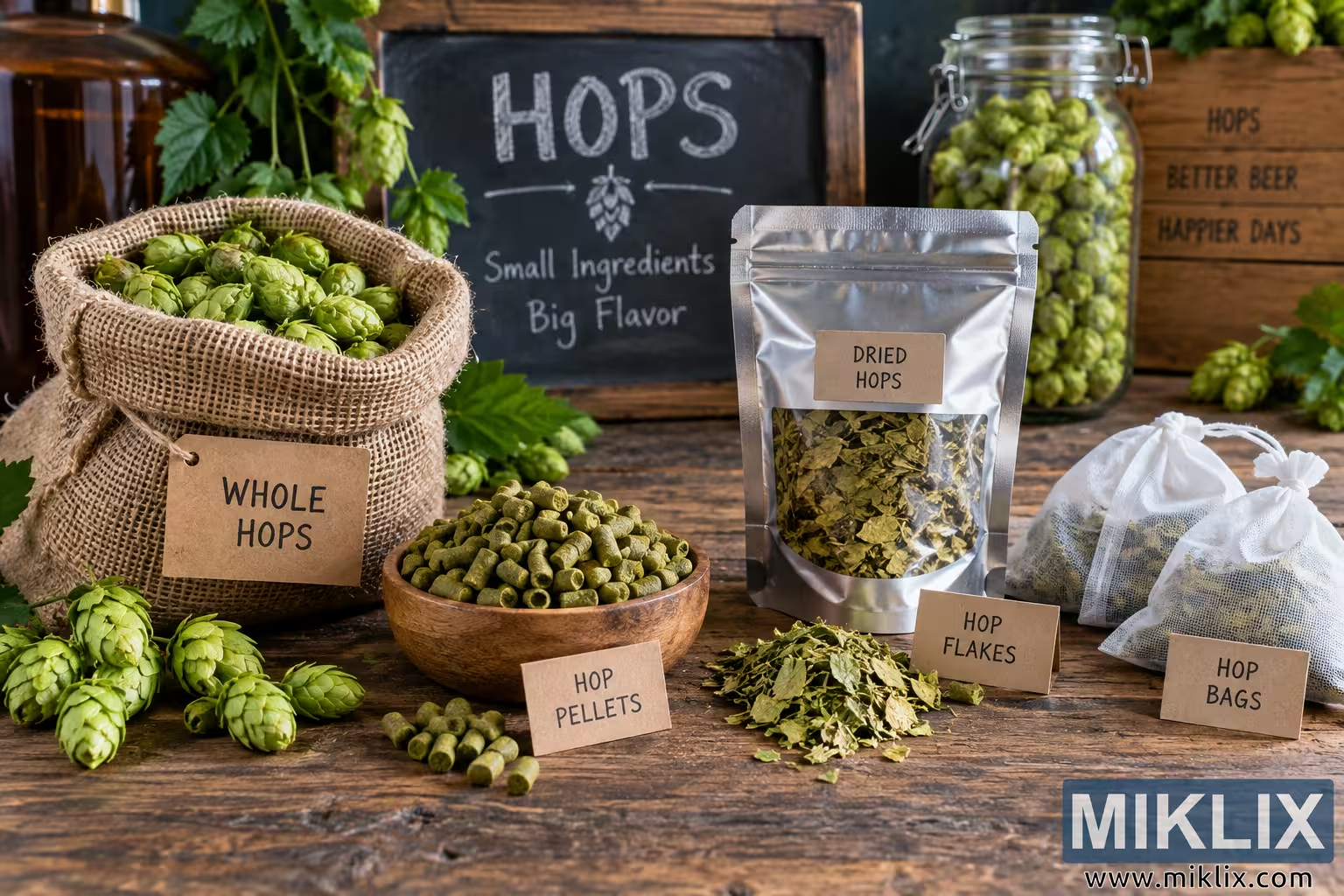
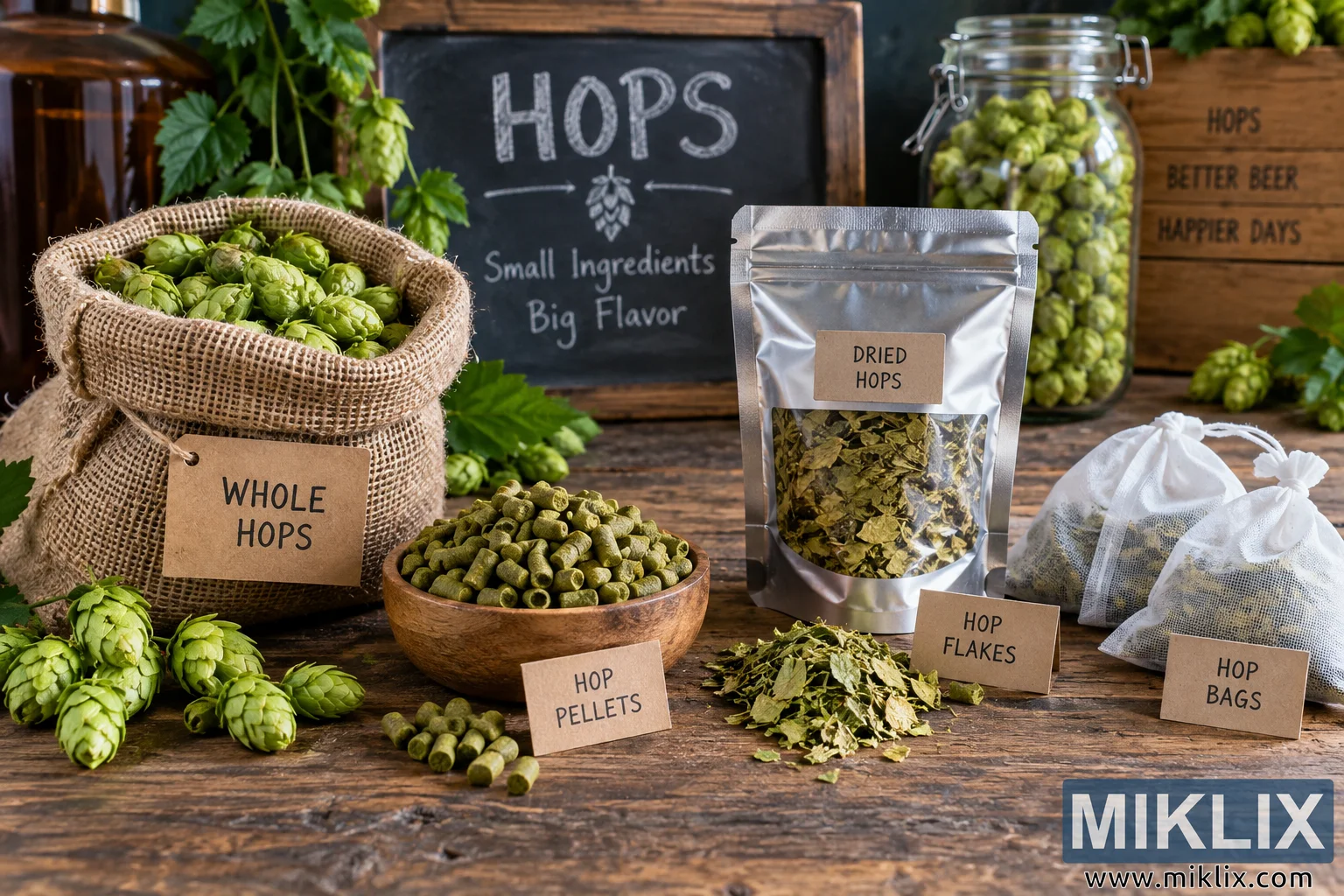
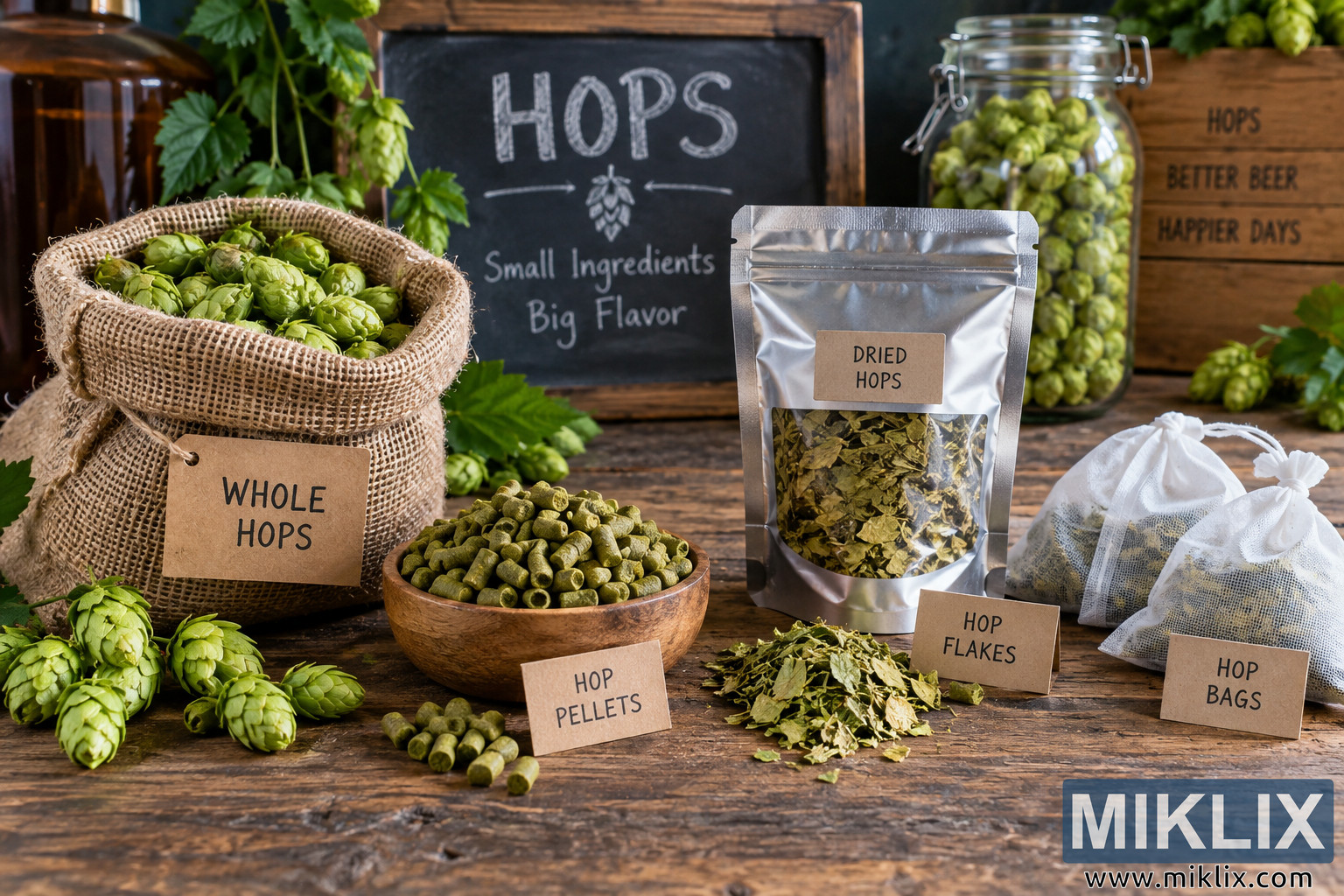
A high-resolution landscape-oriented photograph presents a carefully arranged assortment of hop products and packaging formats intended to illustrate the different ways homebrewers may encounter, store, and use hops. The scene is styled as a rustic brewing still life, with the ingredients displayed across a broad, weathered wooden tabletop. Warm natural-looking light enters from the side and creates a welcoming, handcrafted atmosphere, emphasizing the greens of the hops, the brown tones of the wood and burlap, and the metallic surface of the resealable pouch. No commercial branding or recognizable brand logos appear anywhere in the image.
On the left side of the composition, a large loosely woven burlap sack is filled generously with fresh-looking whole hop cones. The hops are vivid green and have the characteristic layered, leafy shape associated with mature hop flowers. The mouth of the sack is folded outward, revealing a dense pile of cones inside. A simple rectangular kraft-paper tag hangs from the front of the sack by a piece of twine and is marked "WHOLE HOPS" in dark lettering. Several additional whole hop cones are scattered on the tabletop immediately in front of the sack. Their overlapping scales and variations in green give them a natural, freshly harvested appearance. Behind the sack, leafy hop vines rise into the background, adding further botanical texture to the scene.
Near the center foreground is a shallow wooden bowl filled with compact green hop pellets. The pellets are short cylindrical pieces with a slightly rough, compressed texture and muted olive-green color. A few pellets have spilled out of the bowl onto the table, reinforcing the informal homebrewing workspace aesthetic. In front of the bowl is another small kraft-paper label reading "HOP PELLETS." This part of the arrangement visually contrasts the processed pellet format with the intact whole cones displayed to the left.
Slightly right of center stands a silver-colored, resealable flexible pouch. Its reflective metallic material catches the warm light and forms soft highlights and folds across the packaging. The pouch has a clear window in its lower section through which dried, broken pieces of green plant material can be seen. A plain brown label attached to the upper front of the pouch reads "DRIED HOPS." The package is intentionally generic, with no manufacturer name, logo, product trademark, barcode, or other brand-specific design. In front and slightly to the right of this pouch is a loose mound of dried hop flakes or leafy hop material. A kraft-paper card beside the pile identifies it as "HOP FLAKES." The irregular fragments provide another visible example of how processed hop material can differ in texture and appearance from both whole cones and pellets.
On the right side of the foreground are several small white mesh drawstring bags containing dark green hop material. Their translucent woven fabric allows some of the contents to remain visible while illustrating a practical brewing format for containing hops during use. The bags are loosely grouped together, with cords gathered and tied at their tops. A simple brown card positioned in front of them reads "HOP BAGS." The white mesh creates a bright visual contrast against the darker wooden table and the predominantly green and brown palette of the other ingredients.
The background contains additional brewing-themed details while remaining softly secondary to the products in the foreground. In the center-left background is a rectangular black chalkboard surrounded by a thick rustic wooden frame. Large chalk-style lettering at the top reads "HOPS," with decorative horizontal marks and a small hop illustration beneath it. Lower on the board is the phrase "Small Ingredients Big Flavor," arranged over several lines in handwritten white lettering. The chalkboard contributes an educational, workshop-like quality to the image and reinforces the subject without introducing a commercial identity.
Behind the metallic pouch on the right is a tall clear glass storage jar with a hinged metal clasp and lid. The jar is filled almost to the top with pale green whole hop cones, making their shapes visible through the glass. Farther to the right, a wooden crate or box forms part of the background. Dark lettering on its side reads "HOPS," followed by "BETTER BEER" and "HAPPIER DAYS" on separate lines. The wording is decorative and generic rather than branded. Additional green hop cones and leaves appear around and above the crate, extending the natural brewing-ingredient theme into the background.
At the far left edge, partially cropped amber-brown glass brewing vessels or bottles provide another subtle contextual reference to beer making. Their dark glass reflects the warm illumination without displaying labels or logos. The entire composition uses shallow-to-moderate depth of field: the primary hop products and their identifying cards are crisp and detailed, while some background foliage and objects are slightly softer. Fine textures are particularly prominent, including the coarse fibers of the burlap sack, the grain and scratches of the wooden tabletop, the compressed surfaces of the pellets, the papery scales of the hop cones, the wrinkles of the metallic pouch, and the delicate weave of the mesh bags.
Overall, the image functions as an attractive visual overview of various hop presentations relevant to homebrewing. Whole hop cones, hop pellets, dried hop material, hop flakes, and filled mesh hop bags are all represented as distinct formats and arranged so that their differences in shape, texture, processing, and packaging can be understood at a glance. The rustic wood, kraft-paper labels, green foliage, glass storage jar, chalkboard, and brewing vessels create a cohesive artisanal setting reminiscent of a home brewery or ingredient-preparation area. Warm lighting and abundant natural textures make the photograph feel approachable and practical while retaining the polished appearance of professional food and product photography. The scene contains no people and no actual commercial brands, focusing entirely on generic hop ingredients, packaging options, and the visual culture of small-scale homebrewing.
The image is related to: Hops in Beer Brewing: Dr Rudi