
Image: Common Coffee Brewing Mistakes: A Visual Guide to Better Coffee
Published: September 24, 2026 at 2:44:22 PM UTC
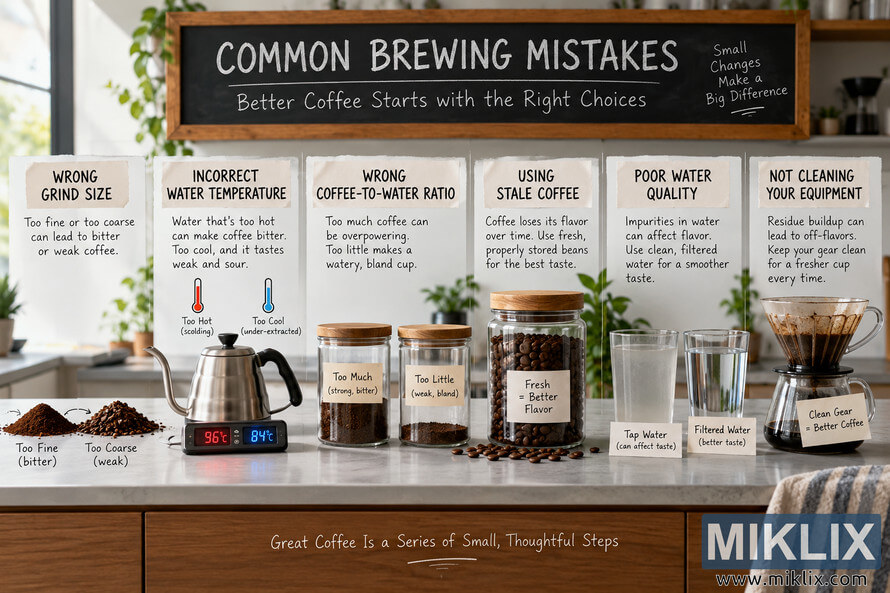
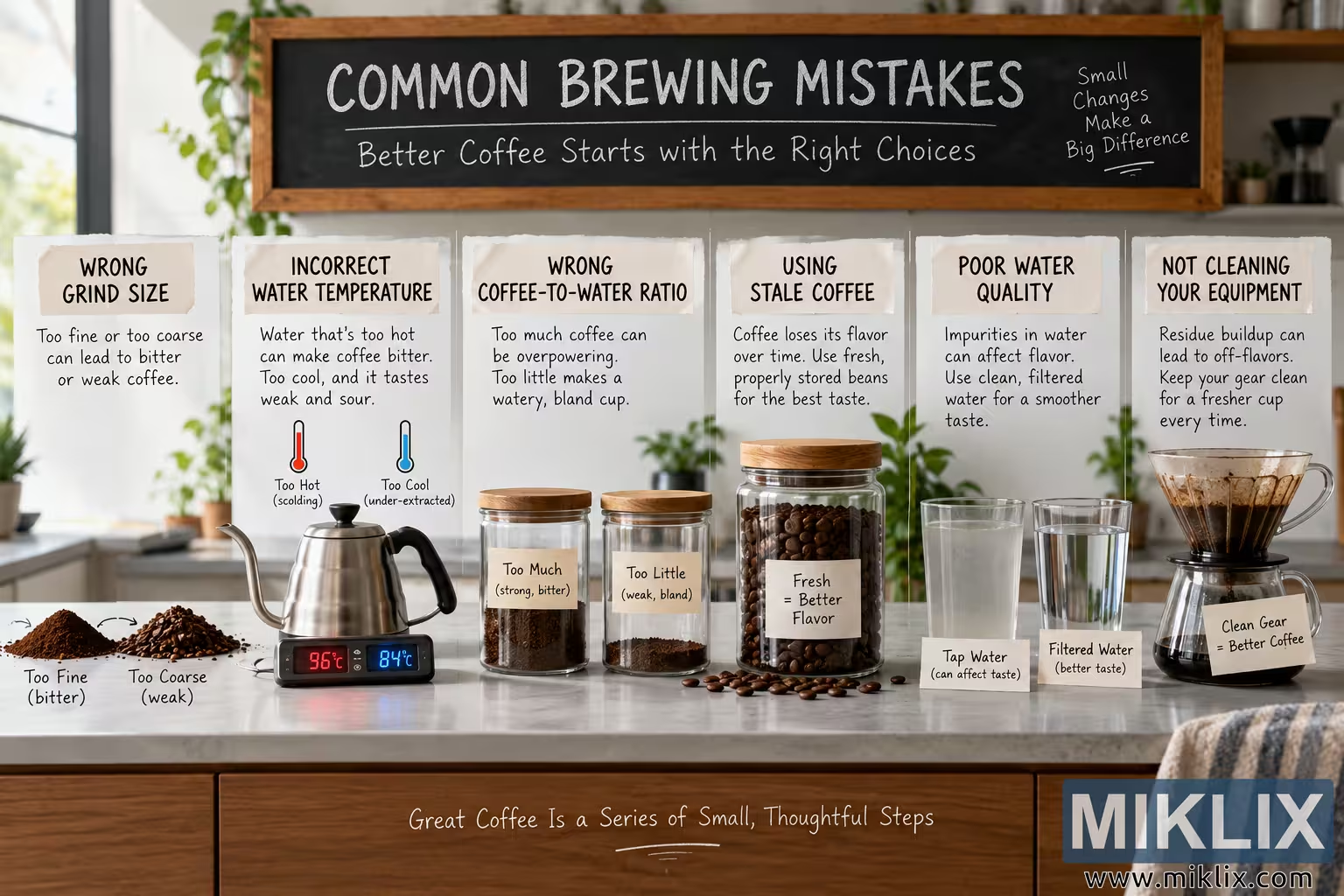
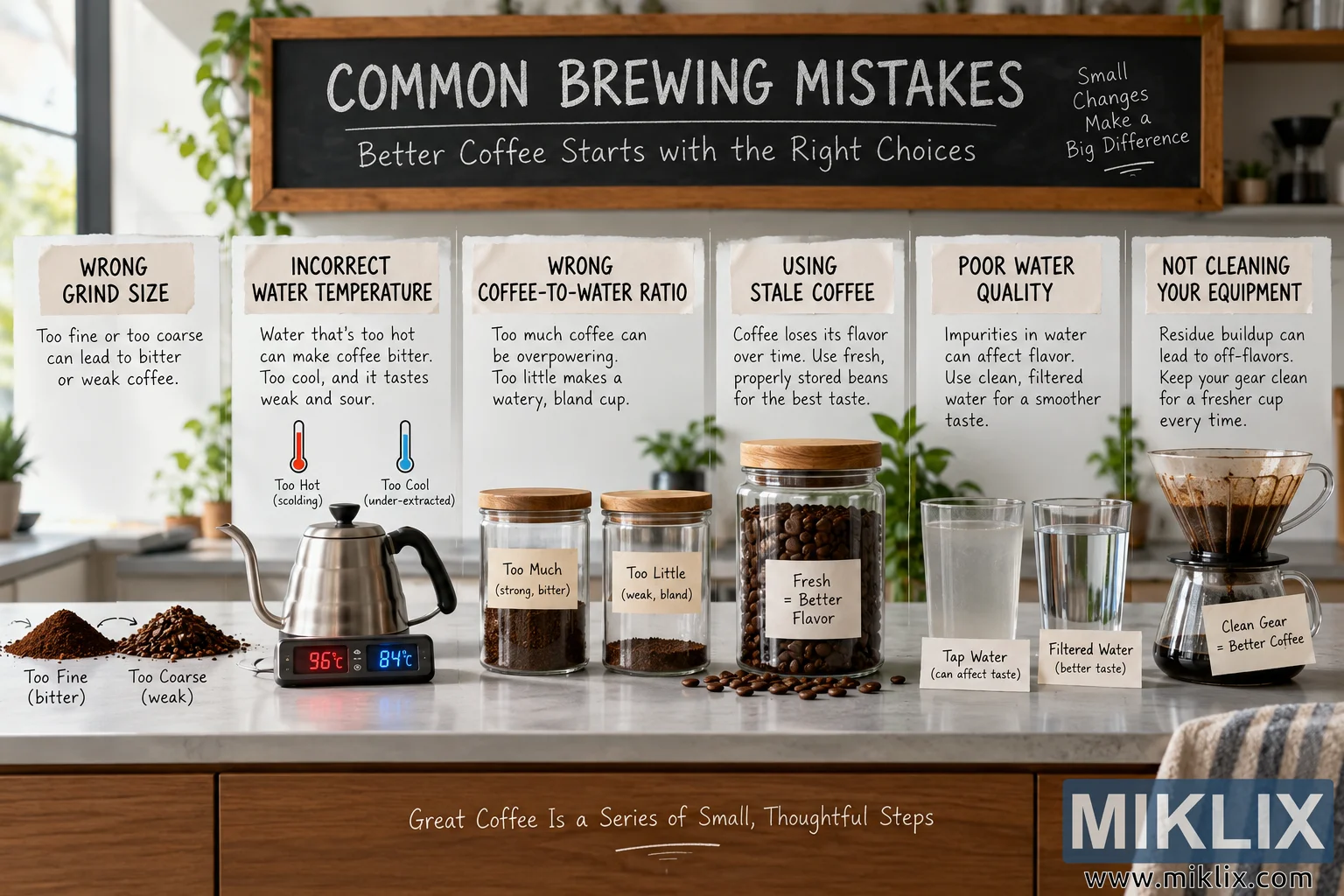
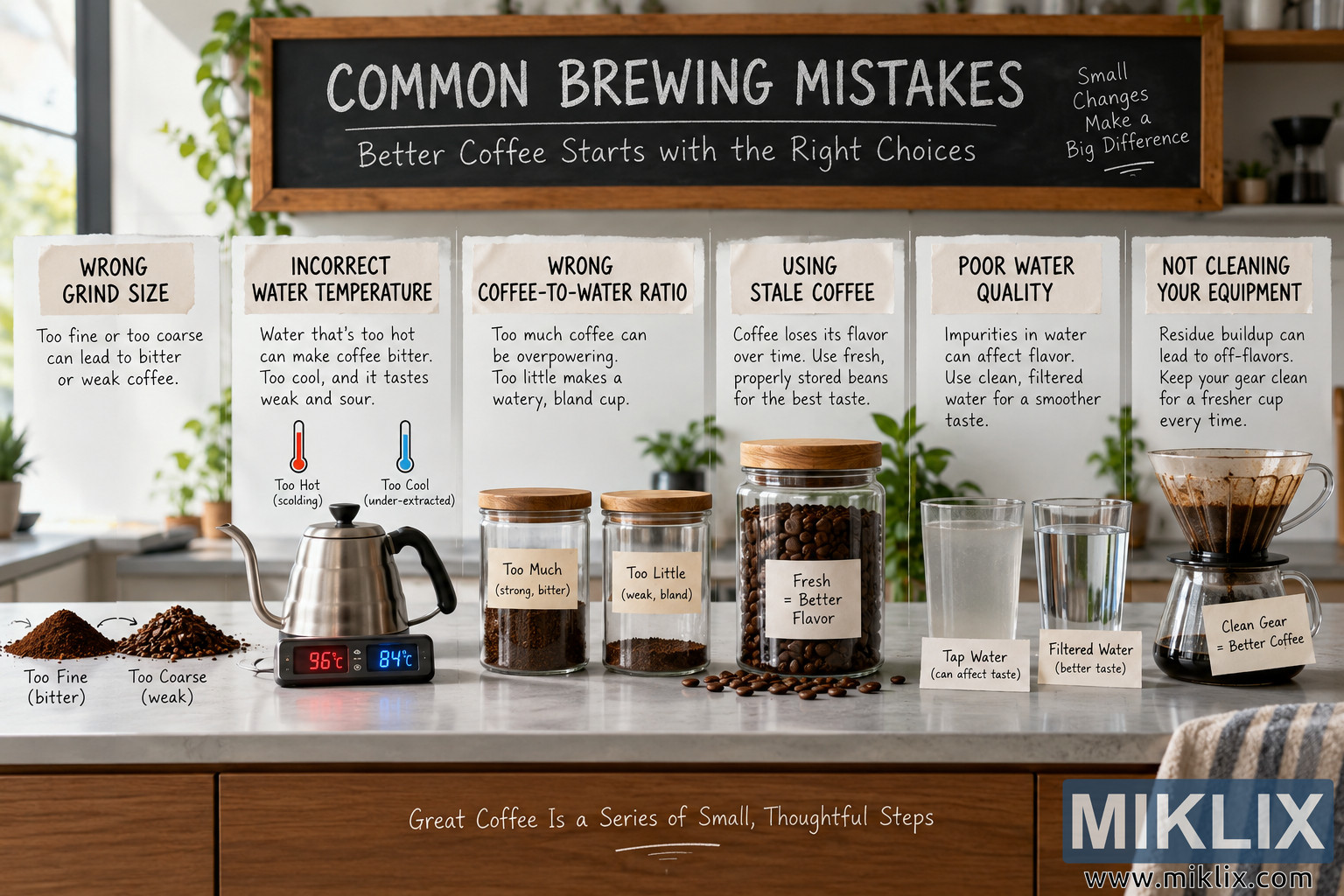
A visual guide to common coffee brewing mistakes, showing how grind size, water temperature, brewing ratio, bean freshness, water quality, and clean equipment can affect coffee flavor.
Available versions of this image
The image files available for download below are less compressed and higher resolution - and as a result of that, higher quality - than the images embedded in articles and pages on this website, which are more optimized for file size in order to reduce bandwidth consumption.
Regular size (1,536 x 1,024)
Large size (3,072 x 2,048)
Very large size (4,608 x 3,072)
Extra large size (6,144 x 4,096)
Comically large size (1,048,576 x 699,051)
- Still uploading... ;-)
Image description
A wide, landscape-format infographic-style photograph presents a bright, inviting modern kitchen arranged as an educational visualization of common coffee brewing mistakes. The scene combines realistic coffee-making equipment and ingredients with handwritten signs, labels, and explanatory panels, creating the appearance of a carefully staged instructional display. The overall palette is warm and natural, with rich wood cabinetry and framing, a pale stone countertop, transparent glass vessels, stainless-steel equipment, dark roasted coffee beans, white informational cards, and soft green plants in the background. Natural daylight enters from the left side of the kitchen, giving the image a clean, approachable atmosphere while keeping the instructional elements easy to distinguish.
Across the upper portion of the image is a large horizontal black chalkboard enclosed in a medium-toned wooden frame. Written prominently in large white chalk-style lettering is the heading “COMMON BREWING MISTAKES.” Directly underneath, a smaller handwritten line reads “Better Coffee Starts with the Right Choices.” On the right side of the chalkboard, another handwritten message says “Small Changes Make a Big Difference,” reinforcing the educational theme. Below the chalkboard, six vertical instructional sections are arranged from left to right across the countertop. Each section identifies a specific mistake that can reduce coffee quality and visually demonstrates the problem with ingredients or brewing equipment.
The first section is titled “WRONG GRIND SIZE.” Its explanatory text states that coffee ground too fine or too coarse can lead to bitter or weak coffee. On the countertop beneath the panel are two clearly separated piles of ground coffee. The pile on the left is noticeably finer and is labeled “Too Fine (bitter),” while the pile on the right is visibly coarser and is labeled “Too Coarse (weak).” Small arrows point toward the two contrasting textures, making grind size an immediately understandable visual comparison.
The second section is titled “INCORRECT WATER TEMPERATURE.” The accompanying explanation notes that excessively hot water can make coffee bitter, whereas water that is too cool can produce weak and sour results. Two small thermometer illustrations reinforce the hot-versus-cool comparison. In front of the panel sits a polished stainless-steel gooseneck kettle with a black handle and lid. Its narrow curved spout extends toward the left. The kettle rests on a compact digital base displaying two contrasting temperature readings, approximately 96°C in red and 84°C in blue. Labels beneath the thermometers identify the hotter condition as associated with scalding and the cooler condition as under-extraction.
The third section addresses “WRONG COFFEE-TO-WATER RATIO.” Its text explains that too much coffee can create an overpowering cup, while too little can make the drink watery and bland. Two transparent glass containers with wooden lids sit side by side on the counter. The left container holds a visibly larger amount of ground coffee and carries a note reading “Too Much (strong, bitter).” The right container contains much less coffee and is labeled “Too Little (weak, bland).” Their side-by-side placement makes the imbalance in quantity visually obvious and illustrates the importance of consistent measurement.
The fourth section is titled “USING STALE COFFEE.” The explanatory copy notes that coffee loses flavor over time and recommends using fresh, properly stored beans for the best taste. A large clear glass storage jar with a wooden lid dominates this portion of the display. It is filled with glossy dark-brown roasted coffee beans and has a paper label on the front reading “Fresh = Better Flavor.” Several loose beans are scattered naturally across the countertop around the base of the jar. The jar’s airtight-looking construction and prominent presentation visually suggest careful storage and freshness without displaying any commercial branding.
The fifth section covers “POOR WATER QUALITY.” Its text explains that impurities in water can affect flavor and recommends clean, filtered water for a smoother taste. Two simple transparent drinking glasses are positioned beneath the panel for comparison. The glass on the left contains slightly cloudy-looking water and is identified by a small card as “Tap Water (can affect taste).” The glass on the right contains clear water and is labeled “Filtered Water (better taste).” The comparison is intentionally straightforward, emphasizing that water is a major ingredient in brewed coffee and that its quality can influence the final cup.
The sixth and final section is titled “NOT CLEANING YOUR EQUIPMENT.” The text warns that residue buildup can lead to off-flavors and encourages keeping brewing equipment clean for a fresher cup. In front of this panel is a glass pour-over brewing setup. The upper dripper visibly contains dark coffee residue and staining along its inner surfaces, giving it a deliberately neglected appearance. Beneath it is a glass coffee server holding dark brewed coffee. A handwritten card attached to the server reads “Clean Gear = Better Coffee,” creating a direct contrast between the visibly dirty equipment and the recommended practice.
Behind the educational display, the kitchen remains softly detailed rather than completely blurred. Open wooden shelving, small potted plants, light-colored walls, and additional coffee-related objects create a believable domestic setting. Green foliage appears throughout the background and softens the otherwise structured instructional arrangement. A bright window area on the far left contributes natural illumination. The countertop stretches continuously across the image, providing a neutral stage for the coffee grounds, kettle, storage containers, beans, water glasses, and brewing equipment. No recognizable commercial logos, trademarks, branded packaging, or other actual brand identifiers are visible anywhere in the scene.
At the bottom of the composition, the warm wooden front of the kitchen cabinetry provides space for a final handwritten statement in white: “Great Coffee Is a Series of Small, Thoughtful Steps.” A small decorative underline sits beneath the sentence. This closing message summarizes the visual narrative: brewing quality is influenced not by a single dramatic intervention but by several controllable details. The six examples move logically through major variables in coffee preparation—grind size, water temperature, coffee-to-water ratio, freshness, water quality, and equipment cleanliness. The image therefore functions simultaneously as a realistic kitchen photograph, a coffee education poster, and an accessible visual checklist of mistakes to avoid. Its symmetrical landscape composition, readable headings, physical demonstrations, natural materials, and warm lighting give the subject an instructional but welcoming character.
The image is related to: Hops in Beer Brewing: Dr Rudi