
Image: Brewing Thermometer Showing an Incorrect Temperature Reading
Published: September 24, 2026 at 2:44:22 PM UTC
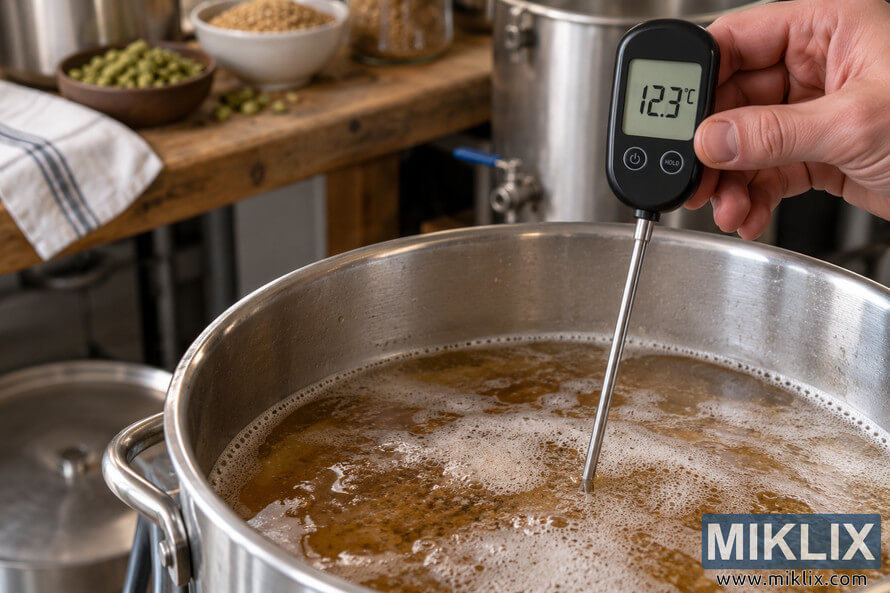
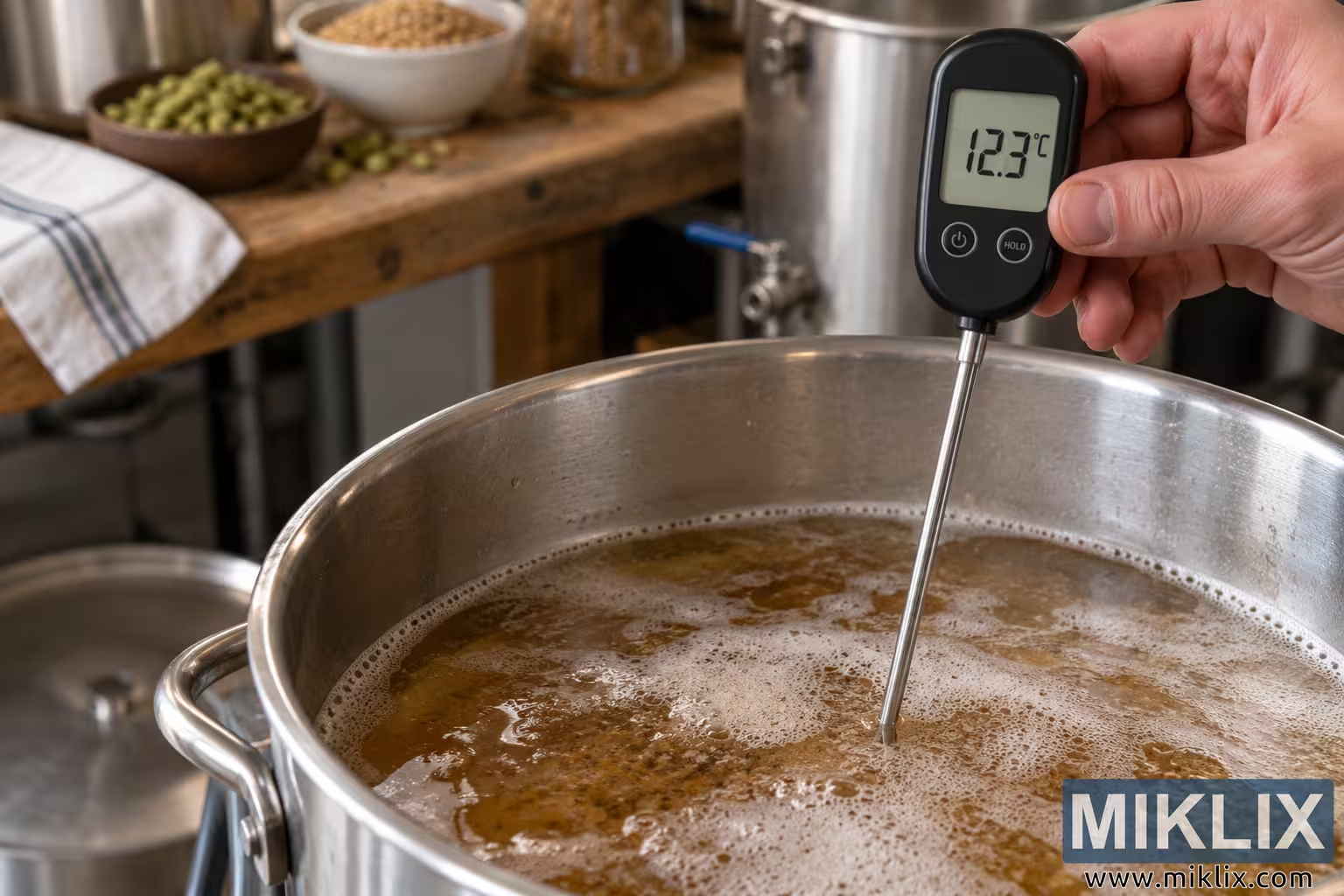
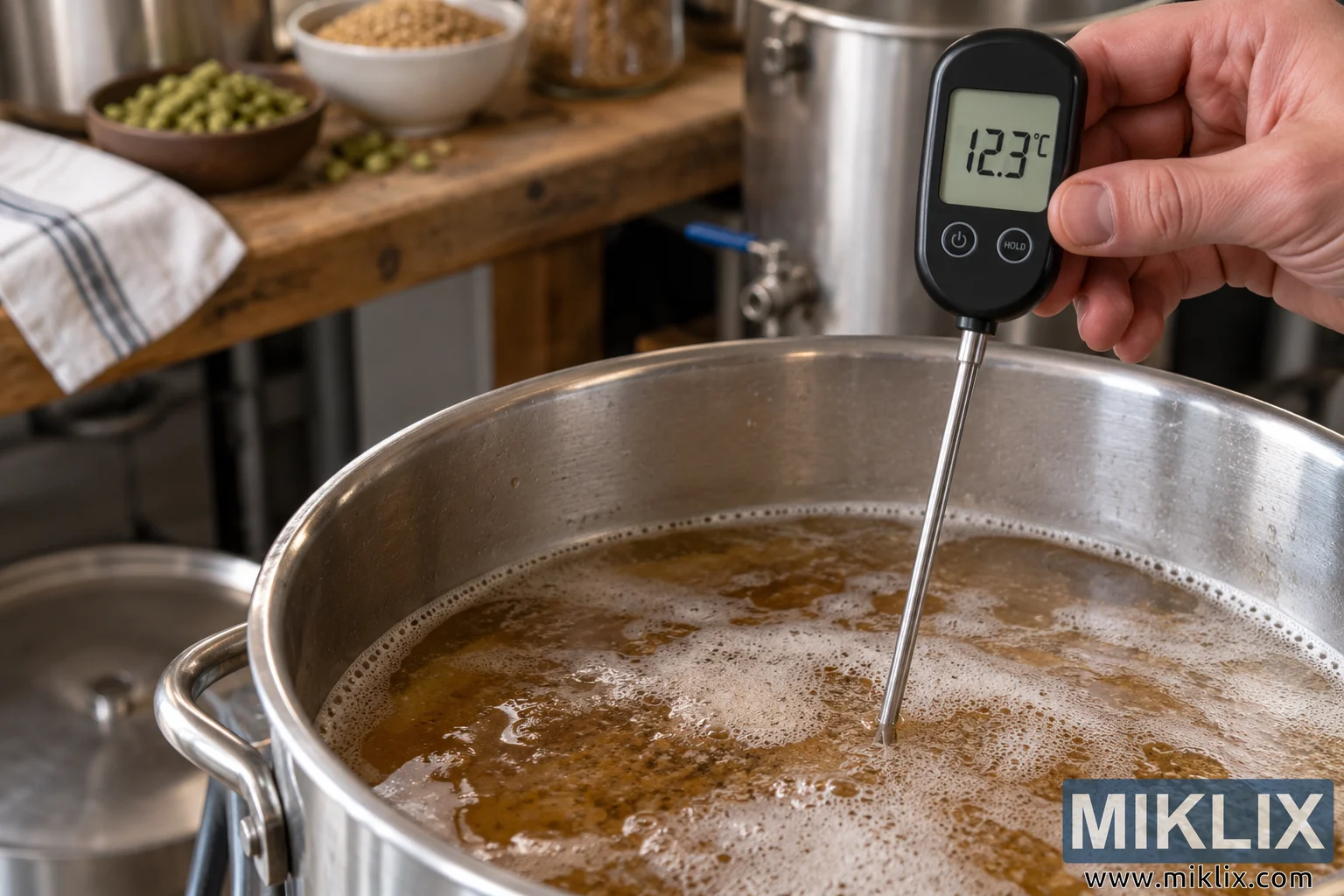
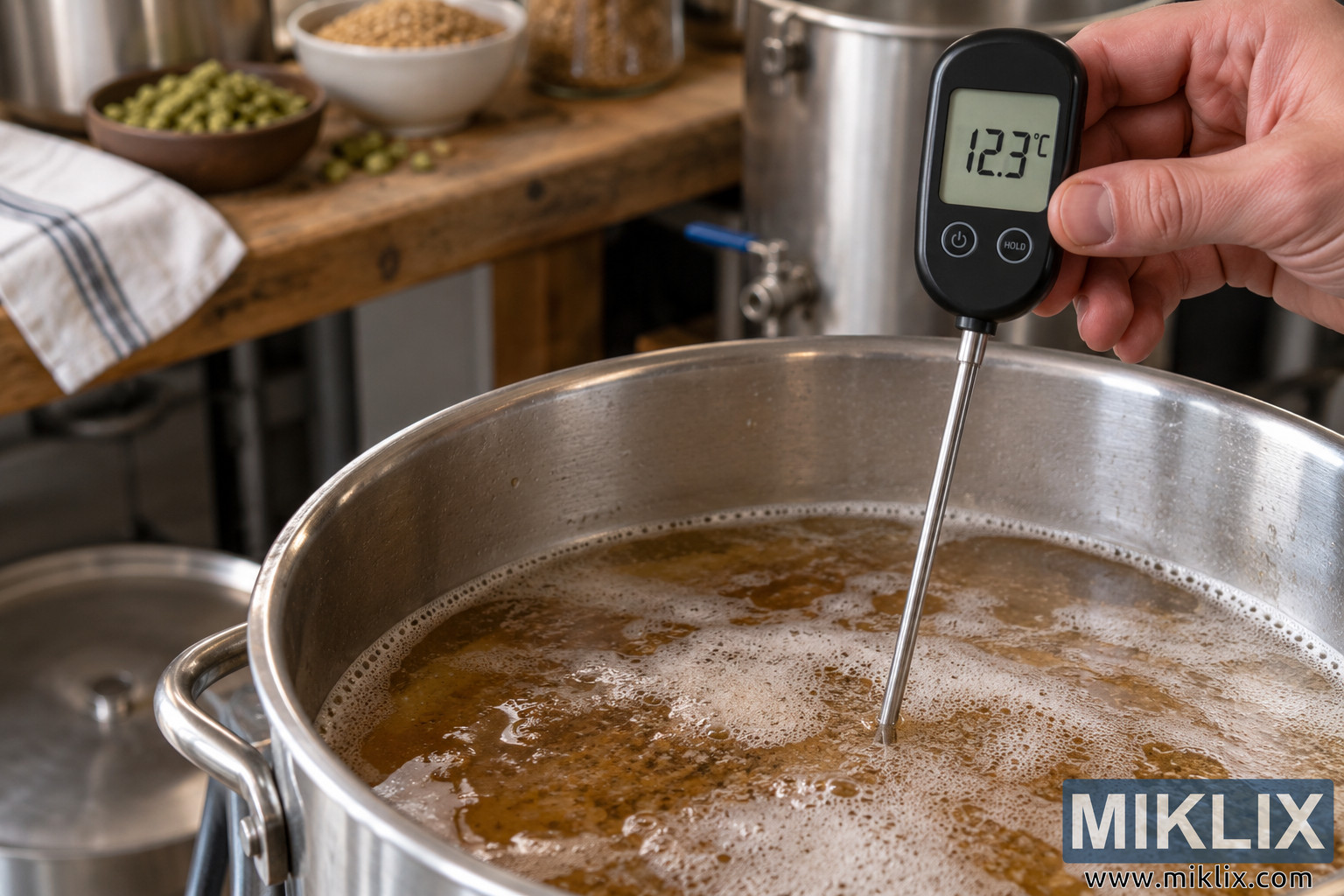
Photorealistic brewing scene showing a digital thermometer with an incorrect 12.3°C reading while measuring liquid in a stainless-steel brewing kettle.
Available versions of this image
The image files available for download below are less compressed and higher resolution - and as a result of that, higher quality - than the images embedded in articles and pages on this website, which are more optimized for file size in order to reduce bandwidth consumption.
Regular size (1,536 x 1,024)
Large size (3,072 x 2,048)
Very large size (4,608 x 3,072)
Extra large size (6,144 x 4,096)
Comically large size (1,048,576 x 699,051)
- Still uploading... ;-)
Image description
A high-resolution, photorealistic landscape image depicts a brewing environment in which a digital probe thermometer is being used to measure the temperature of liquid inside a large stainless-steel brewing kettle. The composition focuses strongly on the thermometer and the kettle, making the temperature measurement the central subject of the scene. In the upper-right portion of the image, a person's hand holds a compact black digital thermometer. The device has a rounded rectangular body, a pale LCD screen, and two circular control buttons beneath the display. There are no visible brand names, logos, manufacturer markings, or other identifying commercial elements on the thermometer. The hand grips the device naturally between the fingers and thumb, suggesting that a brewer is taking a manual temperature reading during the brewing process.
The thermometer's digital display prominently shows a reading of 12.3°C. This unusually low value contrasts with the visual appearance and context of the brewing liquid, which appears to be undergoing a warm or hot stage of production. The displayed value therefore communicates the central concept of an incorrect, implausible, or faulty brewing temperature reading. The digits are large, dark, and clearly legible against the light LCD background, ensuring that the erroneous temperature is immediately noticeable. A long, slender stainless-steel probe extends downward from the bottom of the thermometer and reaches deep into the liquid inside the kettle. Its placement makes it clear that the device is actively measuring the contents rather than simply being displayed near the brewing equipment.
The foreground is dominated by a substantial stainless-steel brewing pot with a broad circular rim. The polished metal surface reflects the warm ambient light of the room and contains subtle scratches, highlights, and realistic signs of use. A sturdy metal handle is visible on the left side of the kettle. Inside the vessel is a large quantity of amber-brown brewing liquid. The surface contains patches of pale foam, small bubbles, suspended particles, and uneven areas of grain-like material, giving the liquid a convincing appearance associated with wort or a mash during beer production. The liquid looks active and freshly processed rather than cold and still, which reinforces the impression that the thermometer's 12.3°C reading is inconsistent with the brewing conditions shown.
The thermometer probe enters the liquid at an angle from the upper right toward the center of the kettle. The point where the metal probe meets the brewing liquid is clearly visible. This visual relationship between the instrument and the liquid establishes the intended narrative without requiring additional labels or explanatory graphics: the brewing temperature is being checked, but the instrument is displaying a temperature that appears incorrect. The scene could therefore represent a faulty thermometer, a calibration problem, an inaccurate sensor, improper measurement technique, or another temperature-control issue encountered during brewing.
Behind the main kettle, the background depicts a practical brewing workspace with a rustic, workshop-like atmosphere. A thick wooden workbench runs horizontally through the scene. Its surface has a natural, worn appearance with visible grain, imperfections, and signs of regular use. Several brewing ingredients are arranged on the bench. A dark bowl contains green hop pellets, while another light-colored bowl holds pale crushed or whole grain. Additional grain is visible inside a glass container farther toward the center of the background. A few loose green hop pellets are scattered across the wooden surface, adding to the authentic working character of the environment rather than making it appear excessively staged or pristine.
On the left side of the workbench, a white cloth or kitchen towel with narrow dark stripes hangs casually over the edge. Behind it and around the work area are additional pieces of stainless-steel brewing equipment. These objects are deliberately less sharply focused than the thermometer and foreground kettle, creating a realistic shallow depth of field and directing visual attention toward the temperature measurement. A large cylindrical stainless-steel vessel stands in the background near the center-right of the image. A small metal valve and blue handle are visible near its lower section, suggesting equipment used for transferring or controlling brewing liquids. Another metal vessel is partially visible at the far left, while a blurred metal container or lid occupies part of the lower-left foreground.
The lighting is warm, naturalistic, and relatively soft. Highlights on the stainless-steel surfaces give the equipment realistic dimension without producing harsh glare. The warm tones of the wooden bench, amber brewing liquid, grains, and skin contrast with the cooler silver-gray appearance of the metal brewing equipment. This creates a visually balanced scene that feels like a small craft brewery, home-brewing room, or practical brewing workshop. The depth of field keeps the hand, thermometer, probe, kettle rim, and nearby liquid relatively crisp while allowing the ingredients and equipment in the background to soften gradually.
The landscape framing provides enough environmental context to make the brewing setting unmistakable while preserving a clear hierarchy of attention. The thermometer occupies a prominent position against the comparatively uncluttered metallic background, and its screen is oriented almost directly toward the viewer. The large kettle fills much of the lower half of the frame, emphasizing the volume of brewing liquid being measured. The hand entering from the right edge gives the photograph a sense of active human involvement without revealing the person's face or identity.
Overall, the image visually communicates an inaccurate brewing temperature measurement in a realistic brewing setting. The most important detail is the digital thermometer displaying 12.3°C while its probe is immersed in a substantial kettle of amber, foamy brewing liquid whose appearance suggests conditions inconsistent with such a low temperature. The surrounding hops, grain, stainless-steel vessels, valve, wooden workbench, and brewing accessories provide contextual evidence that this is a brewing operation. The absence of visible commercial branding keeps the scene generic and suitable for illustrating topics such as brewing thermometer errors, inaccurate temperature readings, thermometer calibration, brewing equipment troubleshooting, temperature-control problems, sensor faults, and quality control during the brewing process.
The image is related to: Hops in Beer Brewing: Dr Rudi