
Image: Dunav Alpha Acids: The Chemistry of Hops in a Brewery Setting
Published: March 13, 2026 at 8:37:23 PM UTC
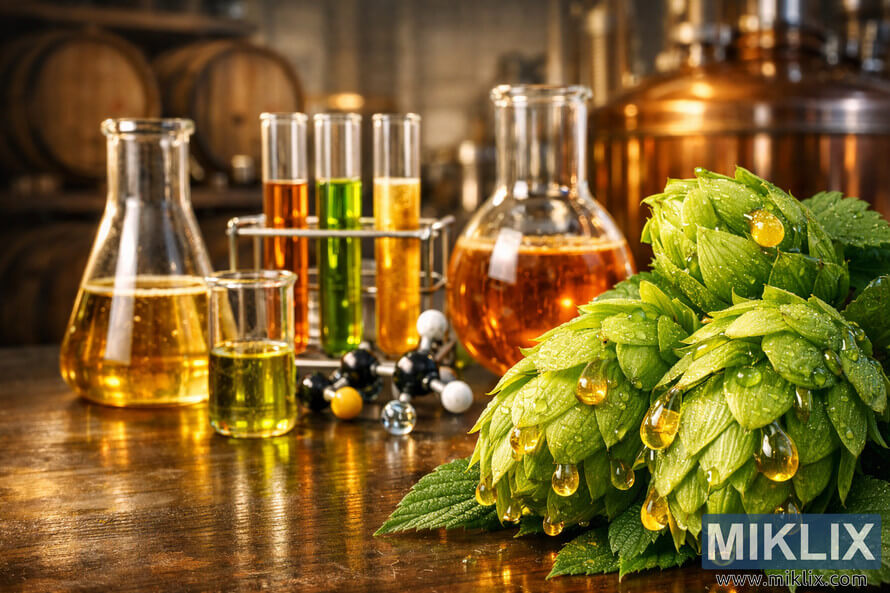
Detailed illustration of Dunav alpha acids featuring fresh hop flowers with resin droplets, laboratory glassware containing colorful extracts, and a warm brewery backdrop that highlights the chemistry behind beer brewing.
Available versions of this image
The image files available for download below are less compressed and higher resolution - and as a result of that, higher quality - than the images embedded in articles and pages on this website, which are more optimized for file size in order to reduce bandwidth consumption.
Regular size (1,536 x 1,024)
Large size (3,072 x 2,048)
Very large size (4,608 x 3,072)
Extra large size (6,144 x 4,096)
Comically large size (1,048,576 x 699,051)
- Still uploading... ;-)
Image description
This landscape-oriented, high-resolution illustration presents a carefully composed and visually engaging exploration of Dunav alpha acids, the essential bittering compounds found in hops and central to the art and science of beer brewing. In the immediate foreground, vibrant green hop cones dominate the composition, rendered with meticulous botanical detail. Each layered bract is crisp and textured, revealing delicate veins and natural variations in tone. Glistening amber resin droplets cling to the petals and edges of the cones, catching the natural light and subtly reflecting their surroundings. These luminous droplets symbolize the alpha acids themselves, emphasizing their presence as both a natural product of the hop flower and a key chemical contributor to beer’s bitterness and aroma.
Moving into the middle ground, a collection of laboratory glassware introduces a scientific dimension to the scene. Transparent beakers, flasks, and slender test tubes are arranged in an orderly, deliberate manner, suggesting precision and analytical rigor. Inside them, colorful liquid extracts—ranging from golden yellow and deep amber to vivid green—represent purified or dissolved alpha acid compounds. The clarity of the glass and the translucence of the liquids allow light to pass through, creating subtle reflections and refractions that reinforce the theme of chemical analysis. The glass surfaces are clean and polished, conveying a professional laboratory environment dedicated to studying the composition and behavior of hop-derived compounds.
In the softly focused background, the setting transitions seamlessly into a warm, inviting brewery interior. Wooden barrels rest along the walls, their curved staves and metal hoops gently illuminated by ambient light. Nearby, copper brewing equipment and metallic vessels contribute a rich, golden glow that complements the hues of the hop resin and liquid extracts. The shallow depth of field keeps these elements slightly blurred, ensuring that the viewer’s attention remains on the alpha acids and laboratory tools while still contextualizing the scene within the broader craft of brewing.
Natural lighting plays a central role in unifying the composition. Soft, directional light highlights the texture of the hop cones and enhances the brilliance of the resin droplets, while also accentuating the transparency and color gradients within the glassware. The overall mood is educational, precise, and inspiring, merging botanical beauty with scientific inquiry. By visually connecting fresh hops, analytical chemistry, and traditional brewing equipment, the image celebrates the intricate chemistry behind beer production and presents Dunav alpha acids as both a natural marvel and a subject of careful study.
The image is related to: Hops in Beer Brewing: Dunav