
Image: Ella Hops at Every Stage: Brewing Addition Timeline Infographic
Published: September 27, 2026 at 8:50:10 AM UTC
Explore a visual Ella hop addition timeline covering bittering, flavor, late-boil, whirlpool, and dry-hopping stages, with timing guidance and brewing tips for balancing bitterness, flavor, and aroma.
Available versions of this image
The image files available for download below are less compressed and higher resolution - and as a result of that, higher quality - than the images embedded in articles and pages on this website, which are more optimized for file size in order to reduce bandwidth consumption.
Regular size (1,536 x 1,024)
Large size (3,072 x 2,048)
Very large size (4,608 x 3,072)
Extra large size (6,144 x 4,096)
Comically large size (1,048,576 x 699,051)
- Still uploading... ;-)
Image description
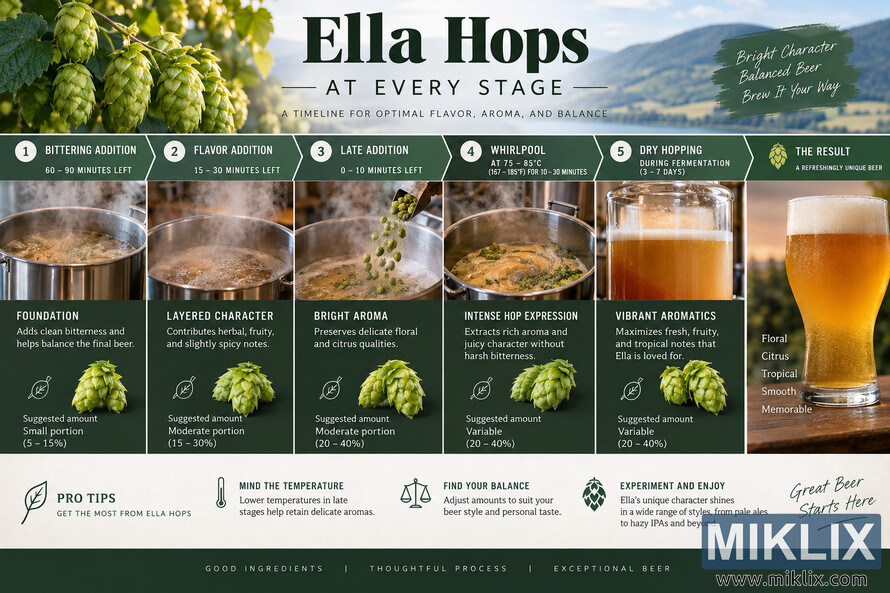
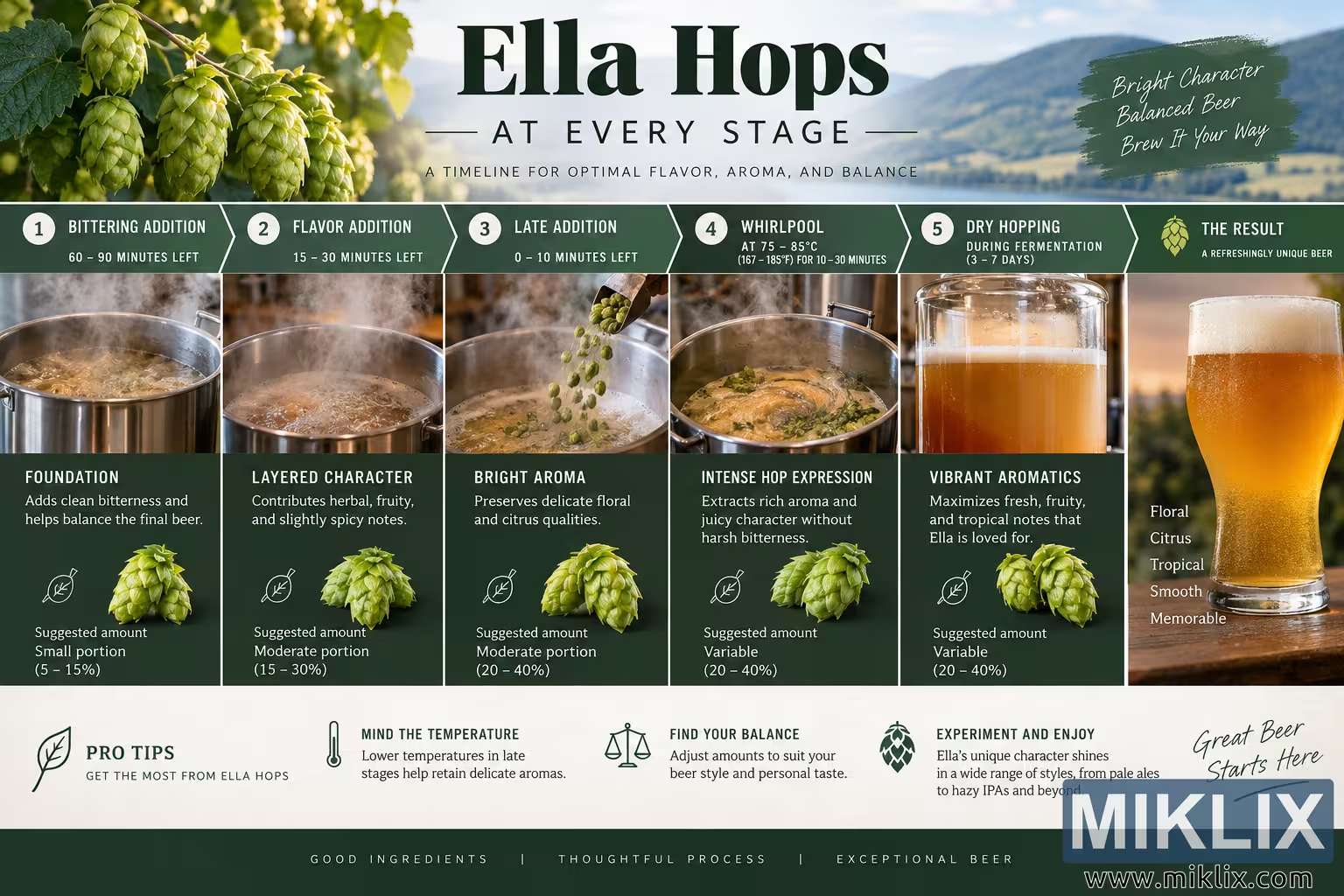
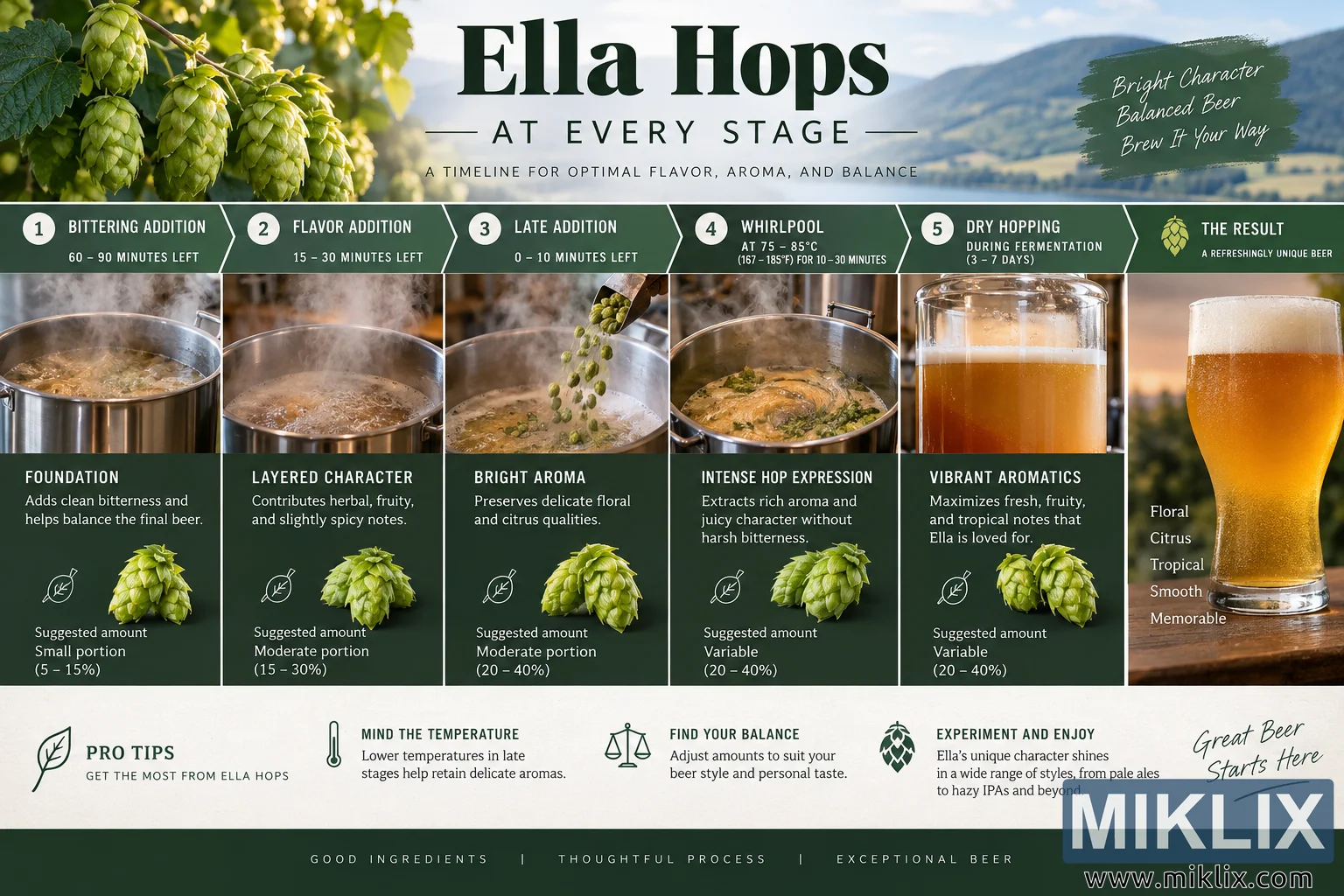
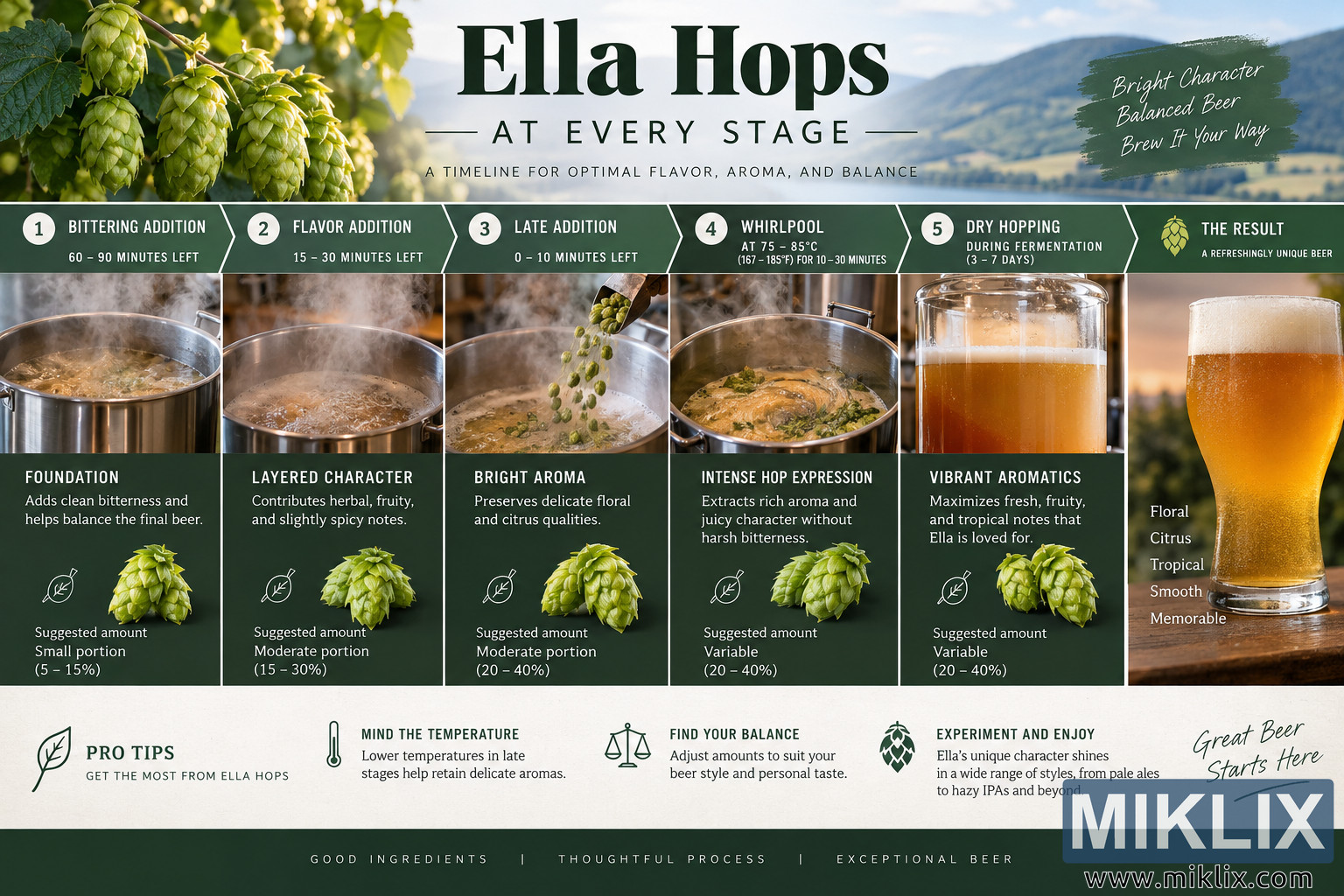
A wide, landscape-format brewing infographic titled “Ella Hops at Every Stage” presents a visual timeline for using Ella hops at different points in the beer-brewing process. The design combines realistic brewing photography, fresh green hop cones, dark forest-green information panels, cream-colored accents, and clean editorial typography. The overall visual style is polished, educational, natural, and craft-oriented, with no visible commercial branding or brand logos. At the top, a panoramic header spans the full width of the image. On the left, clusters of fresh green hop cones hang among leafy hop vines in warm sunlight. Behind the central and right portions of the header is a softly focused rural landscape with green hills, mountains, fields, and a bright sky. Large dark-green serif lettering in the center reads “Ella Hops,” followed by the spaced uppercase phrase “AT EVERY STAGE.” Beneath this is the subtitle “A TIMELINE FOR OPTIMAL FLAVOR, AROMA, AND BALANCE.” In the upper-right corner, a dark-green brushstroke-style panel contains handwritten text emphasizing bright character, balanced beer, and brewing according to personal preference.
Below the header is the main horizontal timeline, divided into five numbered brewing stages followed by a final-result section. Each stage has a dark-green heading strip, a brewing photograph, and an explanatory panel describing the purpose and approximate proportion of hops used at that stage. White borders separate the columns and create a clear left-to-right progression. The first stage is “BITTERING ADDITION,” marked with the number 1 and the timing “60–90 MINUTES LEFT.” Its photograph shows a stainless-steel brewing kettle filled with actively boiling wort, with steam rising from the surface. The text panel below labels this stage “FOUNDATION” and explains that the addition provides clean bitterness and helps balance the finished beer. A fresh hop cone illustration or photograph appears near the suggested-amount area, where a relatively small portion of the overall hop bill is recommended.
The second stage is “FLAVOR ADDITION,” numbered 2 and labeled “15–30 MINUTES LEFT.” The photograph again shows hot wort boiling in a metal brewing vessel, surrounded by visible steam. The associated heading, “LAYERED CHARACTER,” explains that this stage contributes herbal, fruity, and slightly spicy qualities. A hop cone is displayed beneath the explanatory copy alongside a suggested moderate portion of the total hop addition. This column visually communicates the transition from primarily creating bitterness toward developing recognizable hop flavor.
The third stage is “LATE ADDITION,” numbered 3 and labeled “0–10 MINUTES LEFT.” Its central photograph captures green hop material being poured into a steaming brewing kettle. The hops are visibly suspended in midair as they fall toward the hot wort, making this one of the most action-oriented images in the infographic. The panel below is headed “BRIGHT AROMA.” It explains that late additions preserve delicate floral and citrus qualities. A fresh green hop cone appears near the bottom with a suggested proportion larger than the early bittering addition, reinforcing the emphasis on aroma and fresh hop expression as the boil approaches completion.
The fourth stage is “WHIRLPOOL,” numbered 4. The heading specifies a temperature range of approximately 75–85°C, also shown as 167–185°F, for roughly 10–30 minutes. The photograph depicts a brewing kettle containing hot wort and visible green hop material, suggesting hops steeping after the primary boil. The explanatory heading reads “INTENSE HOP EXPRESSION.” Supporting text states that this technique extracts rich aroma and juicy character without creating harsh bitterness. The suggested amount is shown as variable, indicating that brewers can adjust the whirlpool addition according to recipe goals and desired intensity.
The fifth stage is “DRY HOPPING,” numbered 5 and labeled as occurring “DURING FERMENTATION,” with a duration of approximately 3–7 days. Instead of a boiling kettle, the photograph shows a transparent fermentation vessel filled with amber-colored beer, with a pale foamy layer visible near the top. The panel beneath is headed “VIBRANT AROMATICS.” It explains that dry hopping maximizes fresh, fruity, and tropical notes associated with Ella hops. A large fresh hop cone is pictured near the suggested-amount section, which again describes the quantity as variable. The progression from steaming kettles to a fermentation vessel makes the change from hot-side to cold-side hop additions visually apparent.
At the far right is a narrower section titled “THE RESULT,” accompanied by a stylized green hop icon and the phrase “A REFRESHINGLY UNIQUE BEER.” A tall, clear beer glass stands against a softly blurred outdoor landscape. The glass contains bright golden-amber beer with visible carbonation and a thick white foam head. Beside the glass is a short sensory list: “Floral,” “Citrus,” “Tropical,” “Smooth,” and “Memorable.” This final panel visually summarizes the intended outcome of combining Ella hop additions across multiple brewing stages: a balanced beer with layered bitterness, flavor, and aromatic character.
A cream-colored information band runs beneath the main timeline. On the left, a leaf icon introduces a “PRO TIPS” section with a message about getting the most from Ella hops. Three compact guidance areas follow. “MIND THE TEMPERATURE,” illustrated with a thermometer icon, notes that lower temperatures during later brewing stages help retain delicate aromas. “FIND YOUR BALANCE,” accompanied by a balance-scale icon, encourages adjusting hop quantities to suit the beer style and personal taste. “EXPERIMENT AND ENJOY,” paired with a stylized hop icon, highlights the versatility of Ella hops across different beer styles. At the far right, handwritten script reads “Great Beer Starts Here,” providing a casual craft-brewing finishing touch.
The bottom of the infographic is a narrow dark-green footer containing widely spaced uppercase words emphasizing good ingredients, a thoughtful process, and exceptional beer. Throughout the composition, the repeated dark-green and cream palette connects the infographic visually to fresh hops and brewing ingredients. Photographic textures of hop cones, boiling wort, stainless steel, fermentation, and finished beer are combined with simple line icons and structured information panels. The timeline is designed to be read from left to right, moving chronologically from early-boil bittering through flavor and late additions, then whirlpool and dry hopping, before ending with the finished beer. The image functions as an accessible visual reference for brewers who want to understand how the timing of Ella hop additions can influence bitterness, flavor, aroma, and overall sensory character.
The image is related to: Hops in Beer Brewing: Ella