
Image: Collection of Homebrewed Beers Featuring Ella Hops
Published: September 27, 2026 at 8:50:10 AM UTC
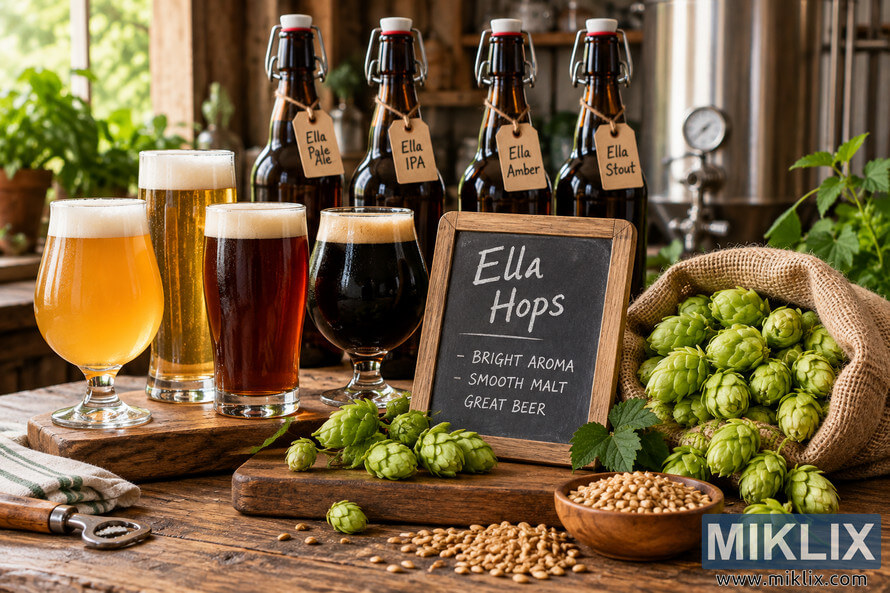
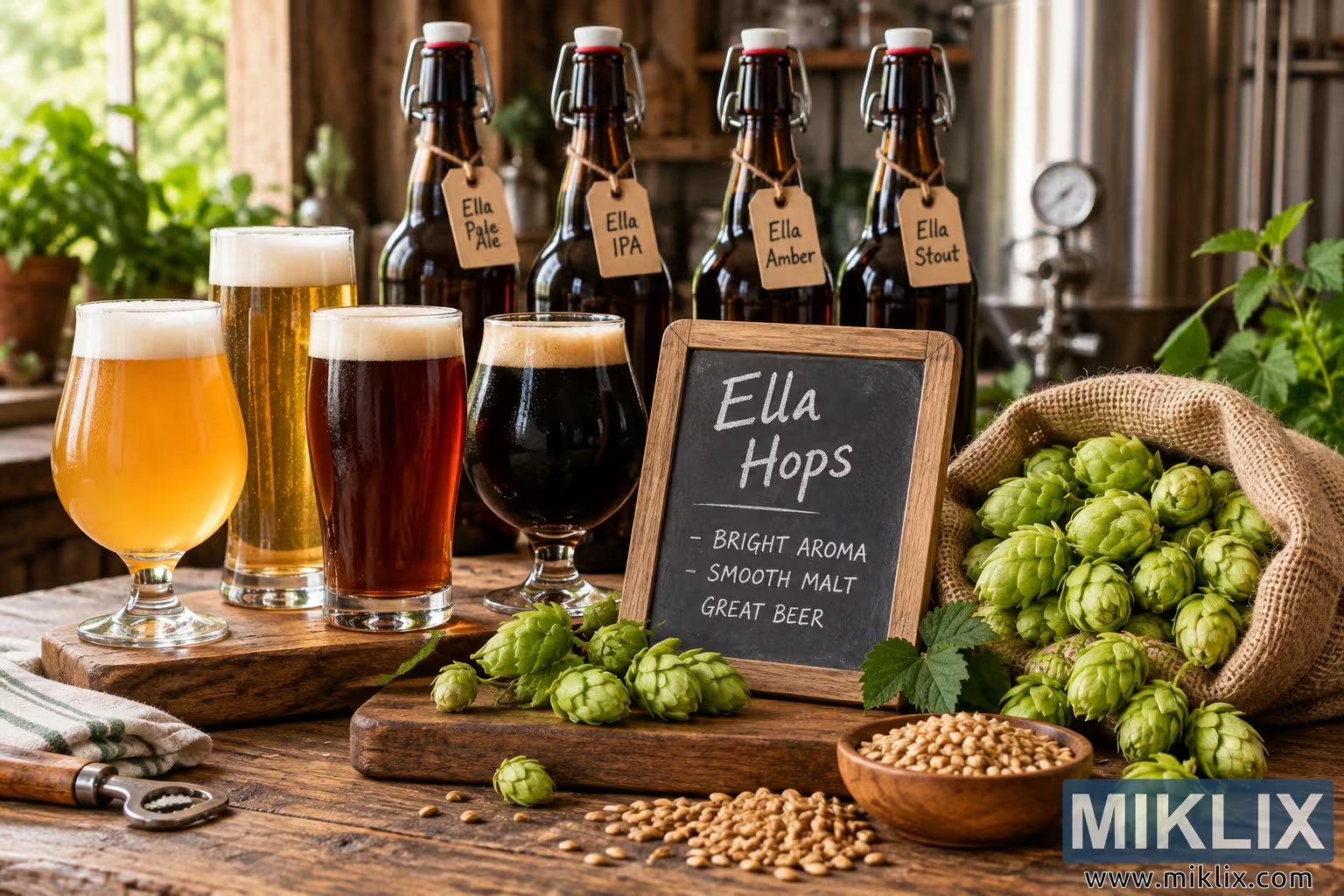
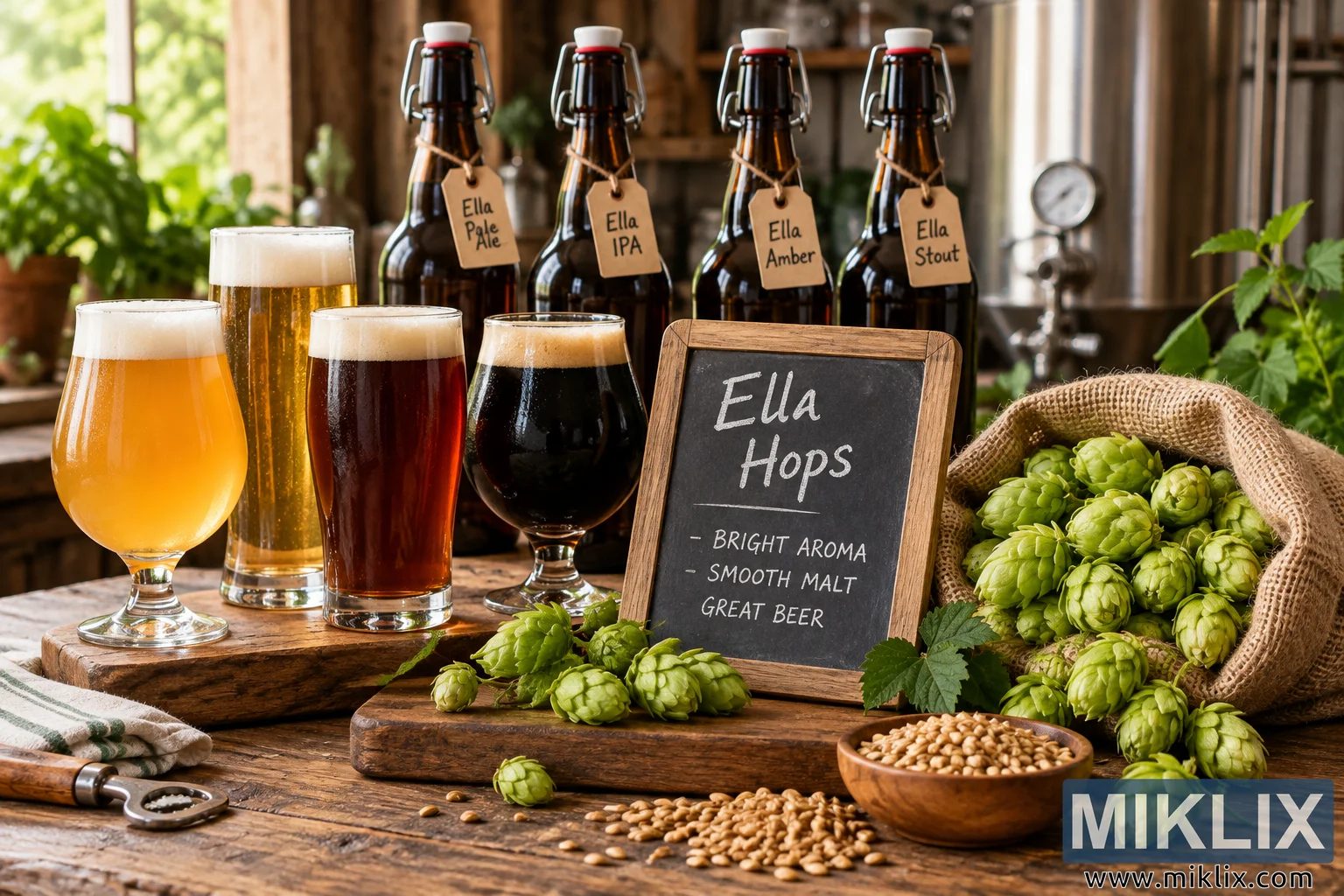
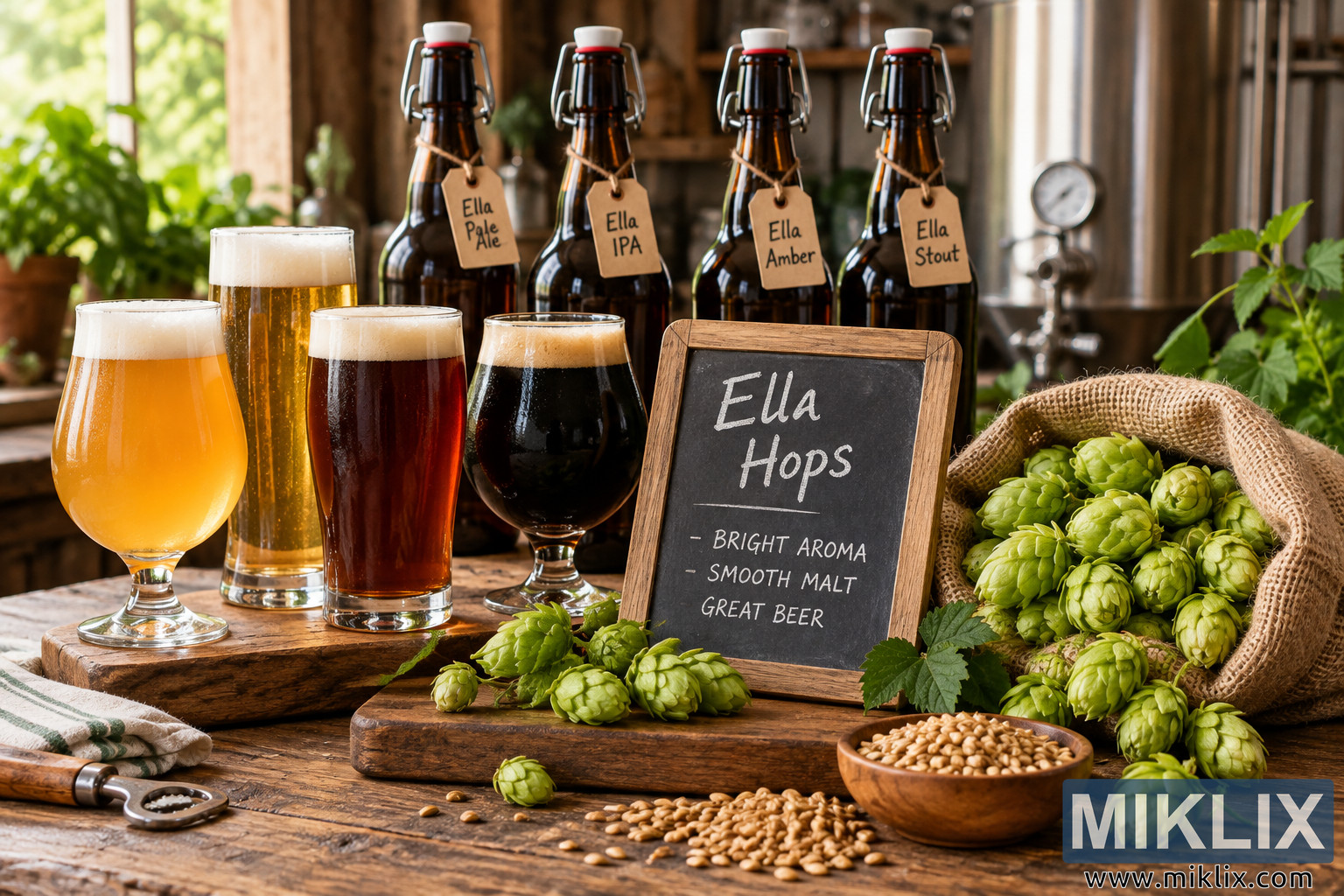
A rustic collection of homebrewed beers featuring Ella hops, with varied beer styles, fresh hop cones, malted grain, unbranded bottles and homebrewing equipment.
Available versions of this image
The image files available for download below are less compressed and higher resolution - and as a result of that, higher quality - than the images embedded in articles and pages on this website, which are more optimized for file size in order to reduce bandwidth consumption.
Regular size (1,536 x 1,024)
Large size (3,072 x 2,048)
Very large size (4,608 x 3,072)
Extra large size (6,144 x 4,096)
Comically large size (1,048,576 x 699,051)
- Still uploading... ;-)
Image description
A warmly lit, landscape-oriented still-life photograph presents a collection of homebrewed beers inspired by the Ella hop variety. The composition is arranged on a broad, rustic wooden worktable in what appears to be a small home brewery or traditional brewing workspace. Natural golden light enters from the left side of the scene, illuminating the glasses, bottles, hops, grain, and timber surfaces while leaving parts of the background softly out of focus. The overall atmosphere is welcoming, handcrafted, and slightly nostalgic, combining the visual language of artisanal beer making with the informal character of a working home brewery.
Four glasses of beer occupy the left and central foreground. Each glass contains a noticeably different style or color of beer, suggesting the versatility of a single hop variety across several homebrew recipes. At the far left is a rounded, stemmed tasting glass filled with a hazy golden-orange beer. It has a generous layer of pale, creamy foam and catches the warm light particularly strongly, making the liquid appear luminous. Behind it stands a tall, narrow glass containing a much clearer and lighter golden beer with visible carbonation and a white foamy head. To the right is a straight-sided pint glass filled with a rich amber or reddish-brown beer. Its dense cream-colored head contrasts with the deeper malt tones of the liquid. Beside it is a smaller stemmed glass containing an almost black beer, possibly representing a stout or another dark homebrew. A tan foam cap sits above the opaque dark body. Together, the four glasses form a gradual progression from pale and bright beer through amber tones to a nearly black brew.
Behind the glasses is a row of four unbranded brown glass swing-top bottles. Their dark glass and reusable ceramic-style closures reinforce the homemade, small-batch character of the scene. Each bottle has a simple kraft-paper tag tied around its neck with rustic string rather than a commercial printed label. The handwritten tags identify different Ella-based beer interpretations, including pale ale, IPA, amber beer, and stout. No commercial brewery logos or recognizable product branding are visible. The bottles are arranged in a loose line across the middle background, creating a visual connection between the finished beers in the foreground and the brewing environment behind them.
Near the center-right foreground, a small framed chalkboard leans slightly backward on the wooden surface. Written prominently in white chalk is the heading “Ella Hops.” Beneath the heading are short descriptive phrases referring to bright aroma, smooth malt, and great beer. The handwritten chalk lettering contributes to the informal homebrew aesthetic and serves as the central textual element of the composition. Its dark surface also provides a strong visual contrast with the vivid green hops immediately surrounding it.
Fresh green hop cones are abundant throughout the right half of the image. A coarse burlap sack lies open on the tabletop and is overflowing with large, tightly layered hop cones. More hops spill naturally from the sack onto the table and wooden boards in front of the chalkboard. Several cones are scattered individually across the foreground, allowing their overlapping green bracts and distinctive shape to be seen clearly. Green hop leaves and stems are mixed among the cones, adding a freshly harvested appearance. Additional leafy plants frame the scene at both the left and right edges, helping connect the brewing ingredients with their botanical origin.
Malted grain provides another prominent brewing reference. In the lower-right foreground, a small round wooden bowl is filled with pale tan kernels. More grain has been scattered loosely across the tabletop in front of and beside the bowl, creating an intentionally casual, workshop-like arrangement. The warm beige and golden colors of the grain complement the amber beer and brown wood while contrasting with the saturated greens of the hops.
The tabletop itself is heavily textured, with visible grain patterns, seams, scratches, and variations in tone that suggest a well-used wooden work surface. Thick wooden serving or cutting boards beneath the beer glasses and chalkboard add additional layers of rustic texture. At the lower-left edge, a folded striped cloth rests partly on the table. Nearby is a metal bottle opener with a wooden handle, a practical detail that reinforces the sense that the beers are ready to be opened, poured, and sampled rather than merely displayed as decorative objects.
The background establishes the homebrewing context without competing with the foreground arrangement. On the right stands a large cylindrical stainless-steel brewing vessel or fermenting tank. A round dial gauge and metal fittings are visible on its front, suggesting functional brewing equipment. Other metallic vessels and workshop details appear farther back but are softened by shallow depth of field. Wooden walls, shelves, and structural elements give the room a warm, traditional character. On the left, a bright window or opening reveals softly blurred greenery outside, introducing natural daylight and reinforcing the connection between fresh ingredients and the finished beer.
The lighting is warm and directional, with highlights reflecting from the beer glasses, brown bottles, metal brewing equipment, and polished portions of the wooden table. Shadows remain soft enough to preserve detail throughout the scene. The image uses a moderately shallow depth of field: the beers, chalkboard, hops, and grain in the foreground are crisp and richly detailed, while the brewing equipment and room behind them become progressively softer. This creates a professional food-and-beverage photography aesthetic while retaining the relaxed feeling of a genuine homebrewing environment.
Overall, the image communicates experimentation, variety, craftsmanship, and an appreciation of brewing ingredients. The different beer colors suggest that Ella hops can be explored through multiple styles rather than being associated with only one type of brew. Fresh hops, malted grain, reusable bottles, simple handwritten tags, brewing hardware, and natural wooden materials collectively emphasize small-batch production and hands-on brewing. There are no people in the photograph, allowing the collection of beers and ingredients to remain the sole focus. There are also no actual commercial brands, logos, or branded packaging. The resulting scene is a richly detailed celebration of homebrewed beer centered on Ella hops, presented with warm natural light, rustic textures, fresh botanical ingredients, and the inviting visual character of an artisanal brewing workspace.
The image is related to: Hops in Beer Brewing: Ella