
Image: Removing Dry Hops from a Brewery Fermenter
Published: September 28, 2026 at 3:40:29 PM UTC
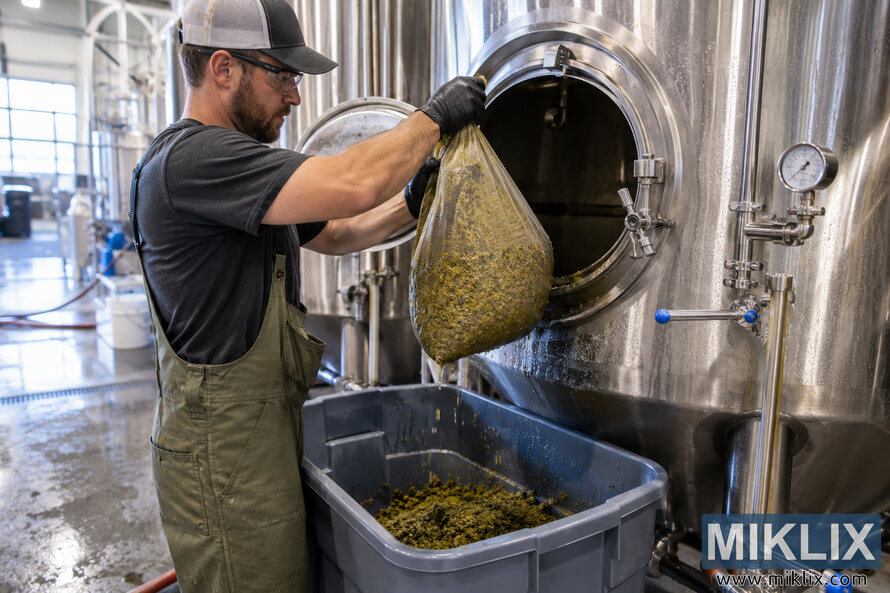
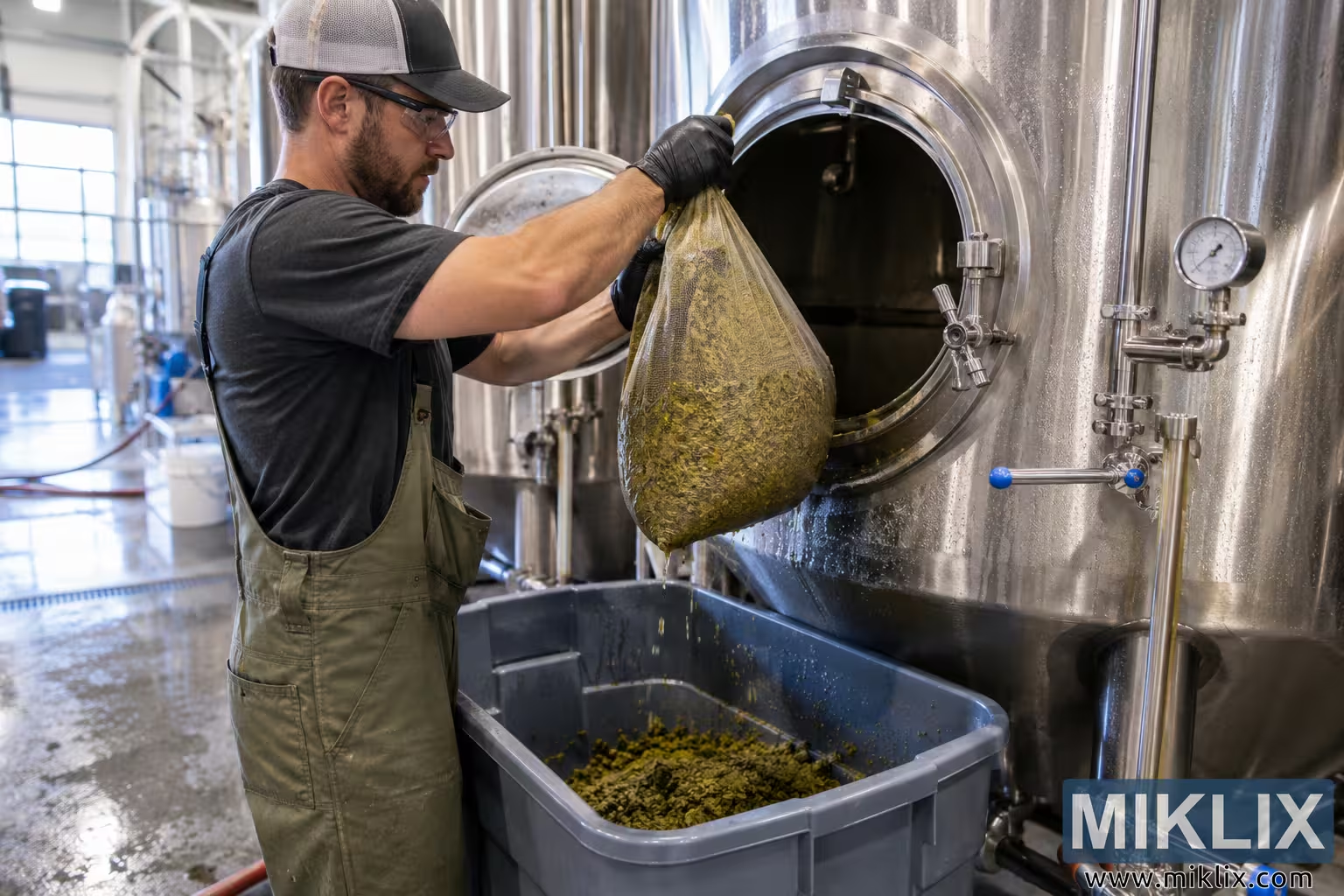
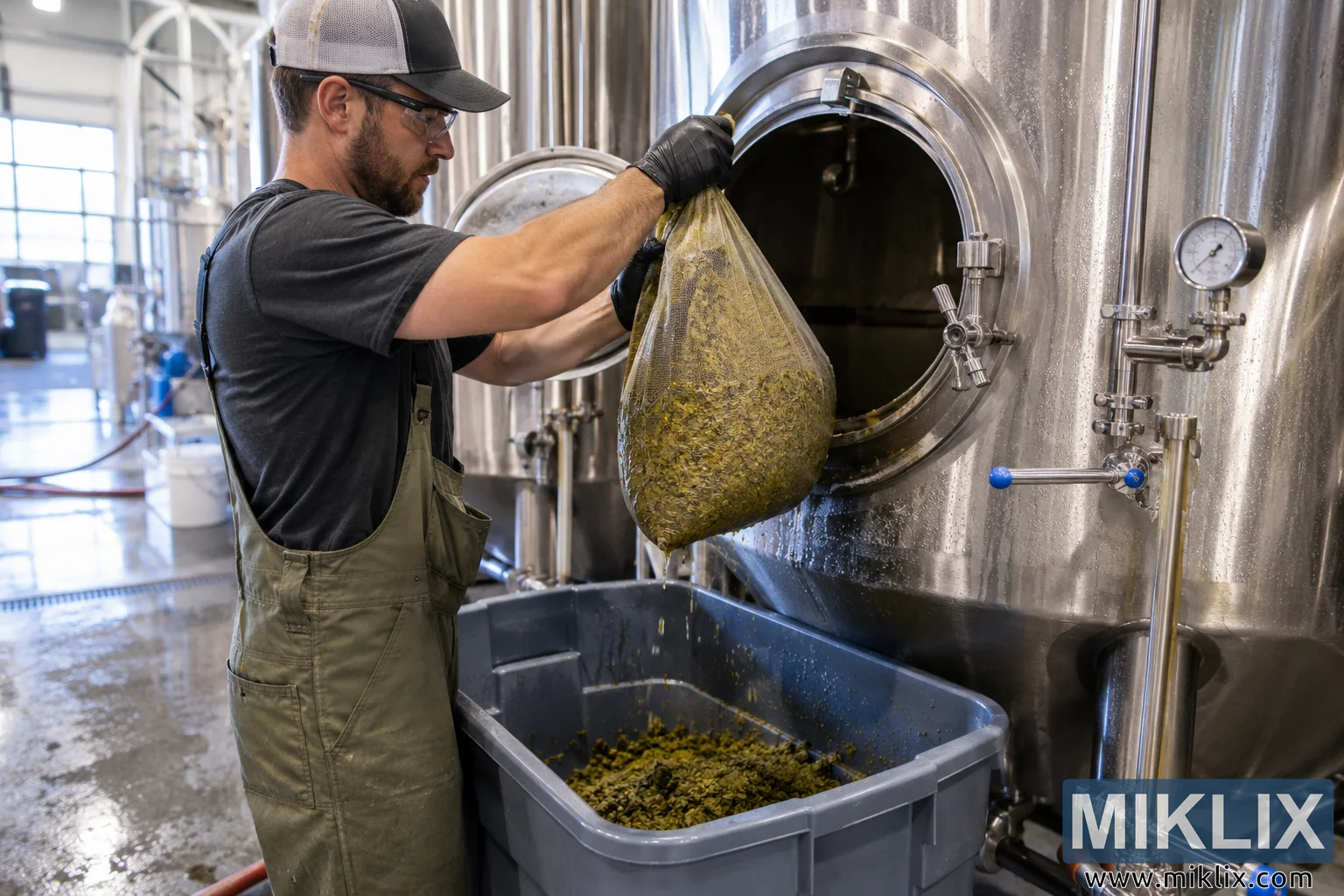
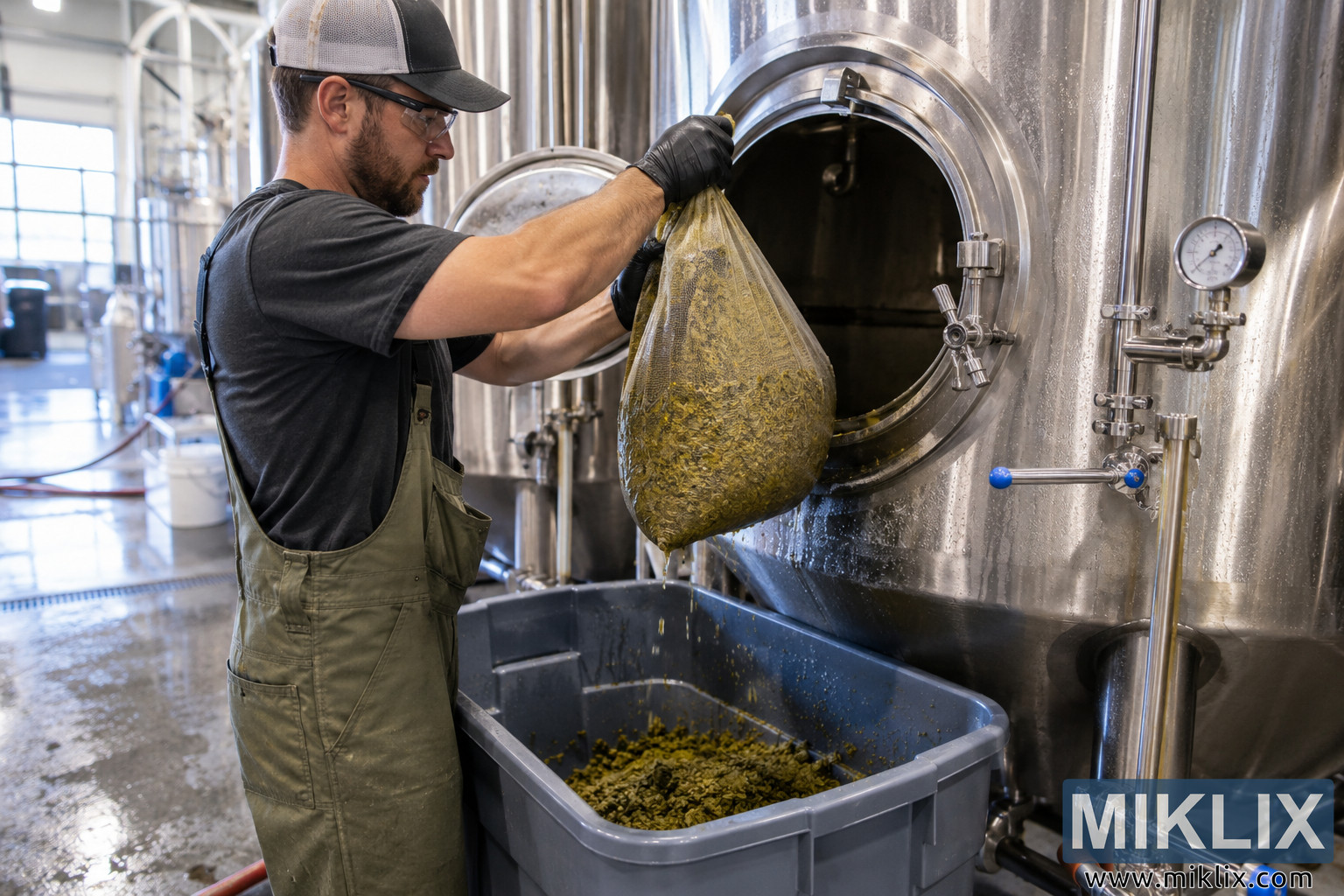
A brewery worker removes a saturated mesh bag of dry hops from an open stainless-steel fermenter, draining the spent hops into a collection bin.
Available versions of this image
The image files available for download below are less compressed and higher resolution - and as a result of that, higher quality - than the images embedded in articles and pages on this website, which are more optimized for file size in order to reduce bandwidth consumption.
Regular size (1,536 x 1,024)
Large size (3,072 x 2,048)
Very large size (4,608 x 3,072)
Extra large size (6,144 x 4,096)
Comically large size (1,048,576 x 699,051)
- Still uploading... ;-)
Image description
A high-resolution, landscape-oriented photograph depicts a worker removing a large bag of saturated dry hops from a stainless-steel fermenter inside a modern brewery. The scene is presented in a realistic documentary and industrial photography style, with the brewing process itself clearly serving as the main subject. The worker stands on the left side of the frame beside a large cylindrical stainless-steel fermentation vessel. He is shown in profile, facing toward the right and concentrating on the task in front of him. He wears practical brewery work clothing consisting of a dark short-sleeved shirt beneath olive-green bib overalls. His protective equipment includes clear safety glasses and black gloves, while a neutral-colored mesh-back cap covers his hair. He has a short brown beard and maintains a focused, controlled posture as he handles the heavy, wet material.
The fermenter occupies much of the right half of the composition. Its polished stainless-steel surface reflects the bright ambient light of the brewery and is covered in scattered droplets and streaks of moisture, reinforcing the impression that active cleaning, draining, or production work is taking place. A large circular access hatch on the side of the vessel has been opened. The round stainless-steel door is visible behind the worker, while the dark interior of the tank can be seen through the opening. Around the hatch are robust hinges, clamps, valves, and other sanitary fittings typical of professional brewing equipment. Additional stainless-steel pipes and fittings run vertically and horizontally across the right side of the fermenter. A round pressure gauge is mounted near the upper-right portion of the image, and several valve handles with small blue grips provide additional visual detail. A transparent vertical sight tube or level indicator is also attached to the vessel near the right edge of the frame.
The central action is the removal of the dry hops. Using both hands, the worker grips the top of a large porous mesh bag and lifts it away from the open fermenter. The bag hangs heavily between him and the vessel, bulging with a substantial quantity of soaked hop material. Through the translucent mesh, the contents appear greenish-yellow to olive in color, with the coarse texture of saturated plant matter clearly visible. The bottom of the bag narrows under the weight of the wet hops, and liquid visibly drips from it. This dripping moisture emphasizes that the hops have just been removed after contact with the liquid inside the fermenter. The worker's raised arms and firm grip communicate the physical weight of the bag and the care required to extract it cleanly from the vessel.
Directly below the hop bag is a large gray industrial collection bin. Its open top is positioned to catch liquid and spent hop material as the bag is removed. The bottom of the bin already contains a noticeable pile of damp green hop matter, and small fragments are visible against its inner surfaces. Drops and small particles appear in the space between the suspended bag and the container, giving the image a convincing sense of an ongoing process rather than a staged pose. The bin's heavy molded plastic construction and reinforced rim fit naturally with the utilitarian brewery environment.
The surrounding brewery extends into the background on the left side of the photograph. Multiple tall stainless-steel tanks stand in rows, creating repeating vertical forms and giving the facility a sense of scale. Pipes, hoses, fittings, containers, and other pieces of production equipment can be seen farther into the room. Large windows or bright openings allow abundant light into the space, producing soft highlights across the metallic surfaces. The background becomes progressively less visually dominant with distance, helping keep attention on the worker, hop bag, and open fermenter in the foreground.
The concrete brewery floor is visibly wet and reflective. Water or cleaning solution forms irregular glossy patches across the surface, while a long floor drain runs through part of the production area. Several hoses lie across the floor in the background, consistent with the washing and sanitation procedures common in beverage-production facilities. The combination of wet flooring, stainless-steel machinery, sanitary pipework, and drainage infrastructure creates a convincing professional production environment.
Compositionally, the image balances the worker on the left with the imposing fermenter on the right. The suspended hop bag occupies the visual center and immediately communicates the specific activity taking place. The circular fermenter hatch frames the area behind the bag and provides a strong geometric counterpoint to the vertical lines of the tanks and pipework. The large collection bin anchors the lower center of the frame and visually connects the worker's action with the spent hop material being removed. The perspective places the viewer close enough to observe practical details such as the wet mesh, individual pieces of hop matter, droplets on the fermenter, protective gloves, valves, clamps, and the texture of the worker's clothing.
Lighting is bright, clean, and predominantly naturalistic, with highlights reflecting from the stainless-steel tanks without obscuring their shapes. The metallic surfaces range from bright silver highlights to darker gray reflections, while the worker's black shirt and olive workwear provide a subdued contrast. The green and yellow tones of the wet hops stand out against the otherwise neutral palette of steel, gray plastic, concrete, and dark clothing. The overall atmosphere is practical, hygienic, and work-focused rather than decorative.
The photograph captures a recognizable stage of brewery production in which dry-hop material is physically removed from a fermentation vessel after use. It emphasizes the hands-on character of brewing at production scale, showing both the industrial equipment and the manual labor involved in handling ingredients. There are no visible brand names, company logos, product labels, advertising elements, or other identifiable commercial branding in the scene. The result is a detailed, brand-neutral representation of a brewery worker removing saturated dry hops from a fermenter and allowing the wet material to drain into a collection container.
The image is related to: Hops in Beer Brewing: Falconer's Flight