
Image: Multiple Hop Varieties Arranged for Craft Blending
Published: September 28, 2026 at 3:40:29 PM UTC
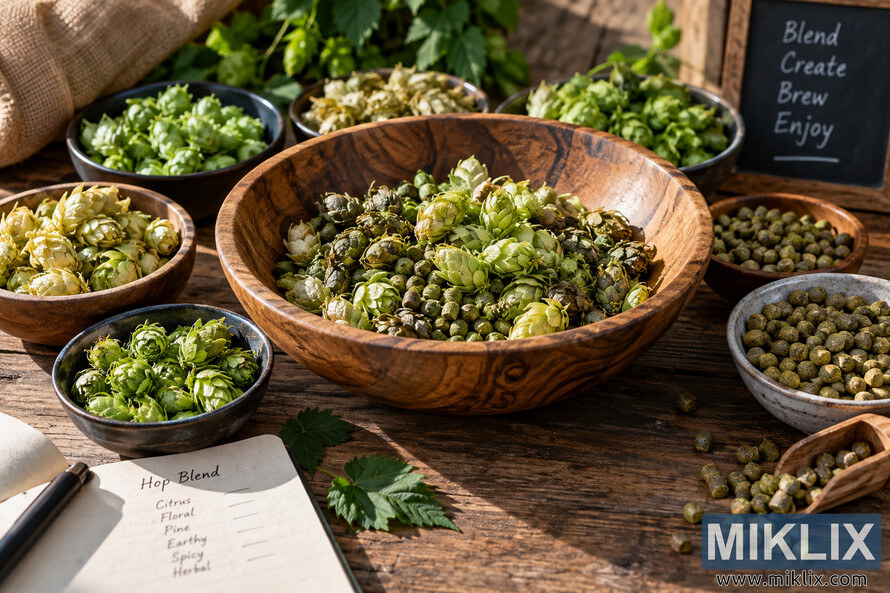
Multiple hop varieties arranged for blending in a rustic brewing scene, featuring hop cones, pellets, tasting notes, wooden bowls, fresh leaves, and brewing tools.
Available versions of this image
The image files available for download below are less compressed and higher resolution - and as a result of that, higher quality - than the images embedded in articles and pages on this website, which are more optimized for file size in order to reduce bandwidth consumption.
Regular size (1,536 x 1,024)
Large size (3,072 x 2,048)
Very large size (4,608 x 3,072)
Extra large size (6,144 x 4,096)
Comically large size (1,048,576 x 699,051)
- Still uploading... ;-)
Image description
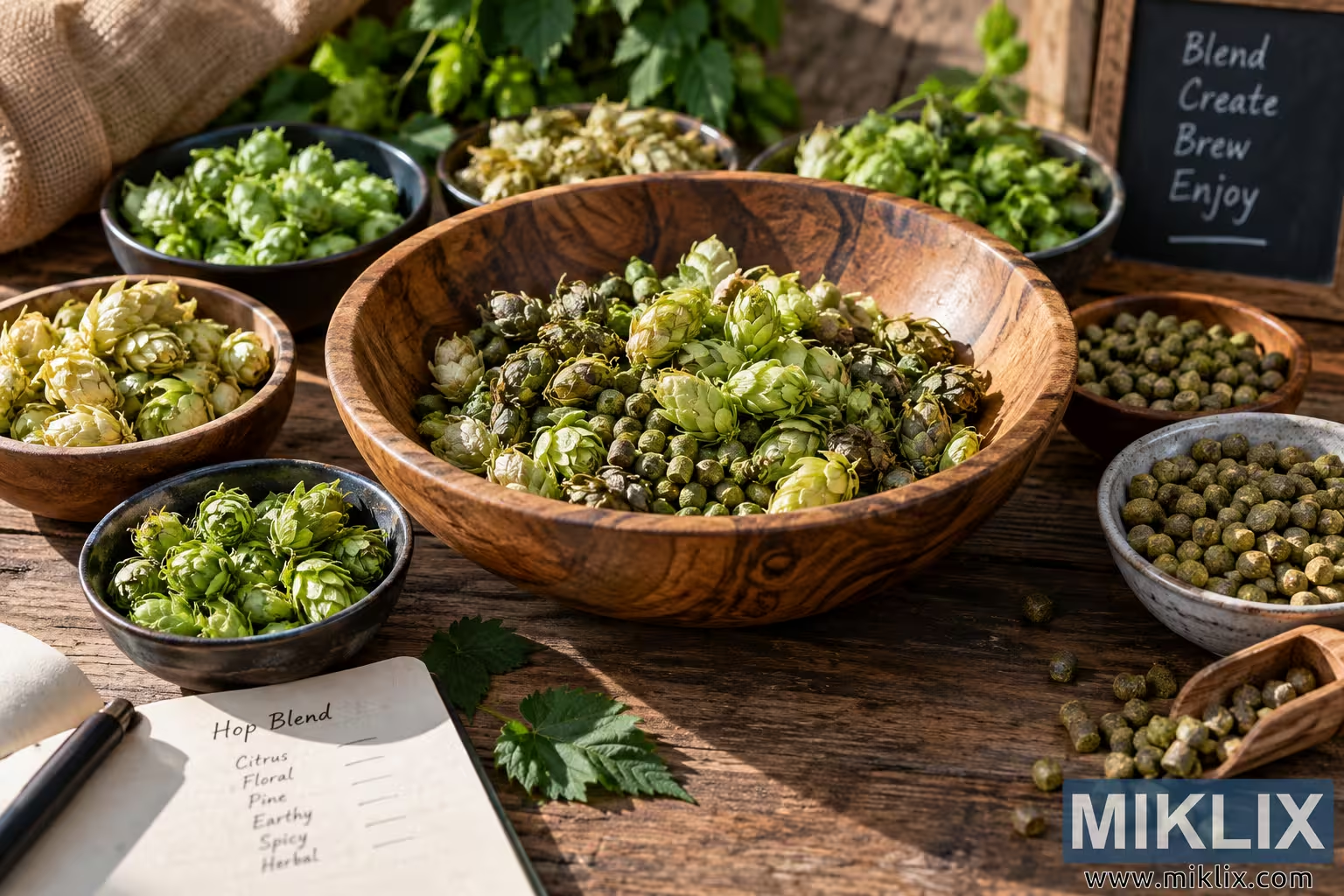
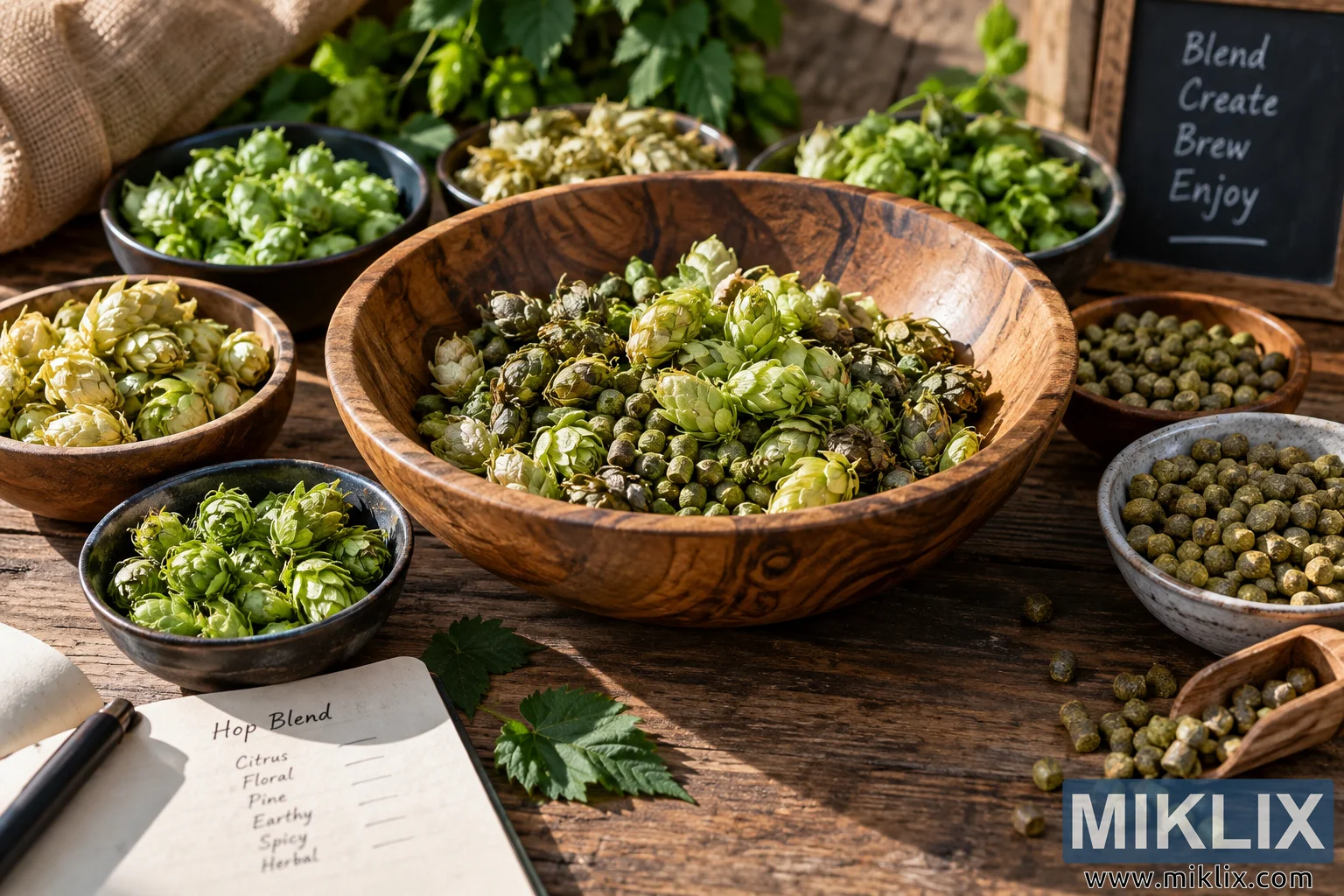
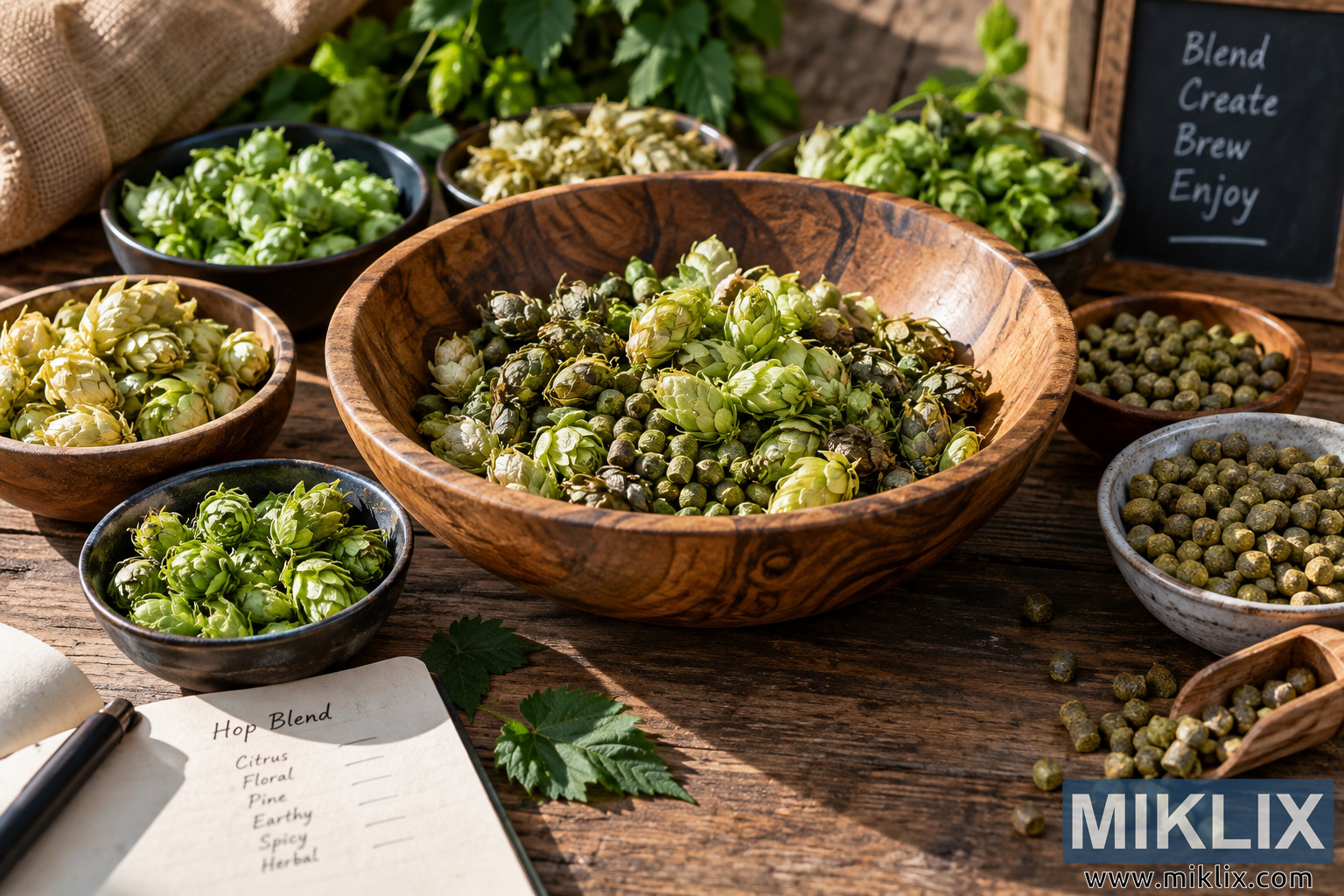
A wide, landscape-oriented still-life photograph presents an abundant assortment of hop varieties arranged for blending on a rustic wooden worktable. The composition has the warm, tactile atmosphere of a small craft brewery, hop farm, or experimental brewing workspace, with natural materials and carefully arranged ingredients emphasizing the sensory and hands-on character of creating a hop blend. At the center of the image is a large, deep wooden mixing bowl with a richly figured grain and a warm brown finish. The bowl contains a mixed collection of hops in several forms and shades. Fresh-looking hop cones in pale yellow-green, vivid green, and deeper olive tones are interspersed with compact green hop pellets. The differences in color, shape, texture, and condition suggest that several distinct hop varieties have been brought together for evaluation and blending. Some cones appear soft and leafy with clearly defined overlapping bracts, while others are darker and more compact, adding visual variety to the central mixture.
Surrounding the main bowl is a collection of smaller bowls and dishes, each holding an individual hop selection. On the left side of the table, a medium wooden bowl is filled with pale green and yellow-green hop cones. Behind it, a dark ceramic bowl contains brighter green cones. A smaller dark bowl in the foreground holds another group of fresh, vibrant green hops, allowing their layered leaves and rounded cone shapes to stand out clearly in the warm sunlight. Across the back of the composition are additional containers with hops of different appearances, including a small dish of lighter, somewhat dried-looking plant material and a larger dark bowl containing loose green hop cones. Together, these separate vessels communicate the idea that individual hop varieties are being kept apart before selected quantities are combined into a final blend.
The right side of the scene introduces hop pellets as another important visual element. A shallow wooden dish near the upper right contains numerous small cylindrical green pellets, while a larger light-colored ceramic bowl below it is also filled with pellets in subtly varying olive and green shades. At the lower right corner, a small wooden scoop lies on the tabletop with hop pellets spilling from it and scattering naturally across the rough wooden surface. Several individual pellets extend toward the center of the image, visually connecting the separate ingredients with the central blending bowl. The contrast between the compact, manufactured form of the pellets and the delicate, leafy structure of the whole hop cones gives the image a strong sense of texture and illustrates different forms in which hops can be handled during brewing.
The tabletop itself is made from dark, weathered wooden boards with visible grain, scratches, seams, knots, and irregularities. Its aged appearance reinforces the artisanal character of the scene and provides an earthy backdrop for the greens of the hops. Warm directional sunlight enters from the left and creates strong but natural highlights across the bowls and ingredients. The light catches the edges of individual hop cones, revealing their layered structure, while deeper shadows beneath the containers create depth and dimensionality. The wooden mixing bowl is particularly prominent because the sunlight emphasizes its curved rim, polished interior, and expressive grain pattern.
Fresh hop leaves and sections of hop vine are incorporated into the arrangement as botanical accents. Several broad, serrated green leaves rest directly on the table in front of the central bowl, while more hop foliage rises in the background. These leaves help establish the agricultural origin of the ingredients and add an organic connection between the harvested hop cones and the living plant. In the upper left corner, loosely folded burlap fabric enters the frame, contributing another rough natural texture and suggesting sacks traditionally associated with harvested agricultural ingredients. The combination of burlap, raw wood, ceramic vessels, leafy hops, and wooden utensils creates a cohesive rustic visual language without relying on branded packaging or commercial identifiers.
In the lower left foreground, an open cream-colored notebook rests partly within the frame. A dark pen lies across one of its pages. The visible page is headed "Hop Blend" and includes handwritten sensory descriptors such as "Citrus," "Floral," "Pine," "Earthy," "Spicy," and "Herbal," with blank lines beside the terms. This detail suggests that the person preparing the blend is comparing aroma and flavor characteristics, recording impressions, or planning how different hop profiles might complement one another. The notebook adds a thoughtful, experimental dimension to the image: the scene is not simply a display of hops, but a working arrangement for evaluating and combining them according to desired sensory qualities.
At the back right of the scene, a small black chalkboard in a simple wooden frame provides a vertical visual counterpoint to the horizontal tabletop. Written on the board in light-colored chalk are the words "Blend," "Create," "Brew," and "Enjoy," arranged one beneath another, followed by a short horizontal underline. The understated message reinforces the brewing theme and the progression from ingredient selection to creative blending and eventual enjoyment of the finished product. The chalkboard contains no company name, logo, trademark, product packaging, or other recognizable branding.
The photograph uses a relatively close viewpoint while maintaining enough width to show the full assortment of ingredients. The large central bowl functions as the primary focal point, with the surrounding dishes creating a loose semicircle that leads the eye around the scene. Foreground elements such as the notebook, leaves, scattered pellets, and wooden scoop add depth, while the softly receding foliage and rustic background prevent the arrangement from feeling flat. The image is detailed and photorealistic, with crisp textures in the hops, wood, ceramic, paper, burlap, and leaves. Its warm natural illumination and earthy palette of greens, browns, creams, and muted charcoal tones convey craftsmanship, freshness, experimentation, and an appreciation for brewing ingredients. Overall, the image visually communicates the concept of multiple hop varieties being examined, compared, and arranged for blending, presenting the process as both a technical brewing exercise and a creative sensory craft.
The image is related to: Hops in Beer Brewing: Falconer's Flight