
Image: Fresh and Degraded Hops Compared Side by Side
Published: September 28, 2026 at 3:40:29 PM UTC
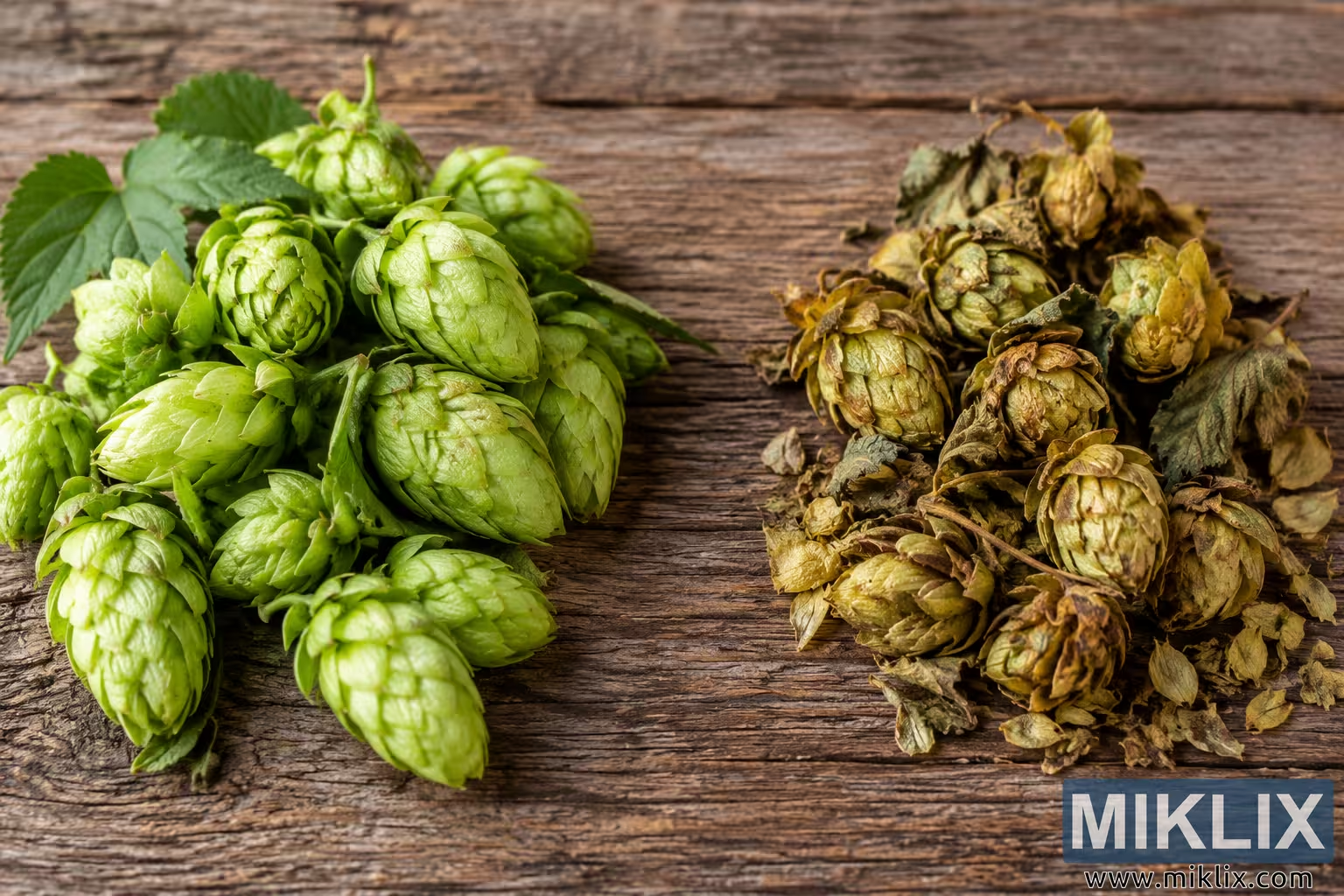
High-resolution comparison of fresh green hops and degraded, dried hops arranged side by side on rustic wood, highlighting differences in color, texture, freshness, and condition.
Available versions of this image
The image files available for download below are less compressed and higher resolution - and as a result of that, higher quality - than the images embedded in articles and pages on this website, which are more optimized for file size in order to reduce bandwidth consumption.
Regular size (1,536 x 1,024)
Large size (3,072 x 2,048)
Very large size (4,608 x 3,072)
Extra large size (6,144 x 4,096)
Comically large size (1,048,576 x 699,051)
- Still uploading... ;-)
Image description
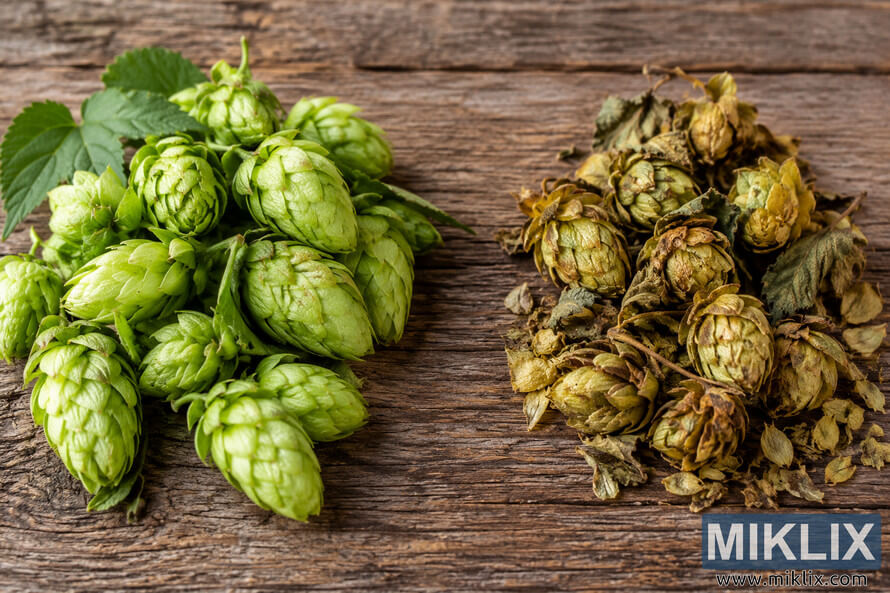
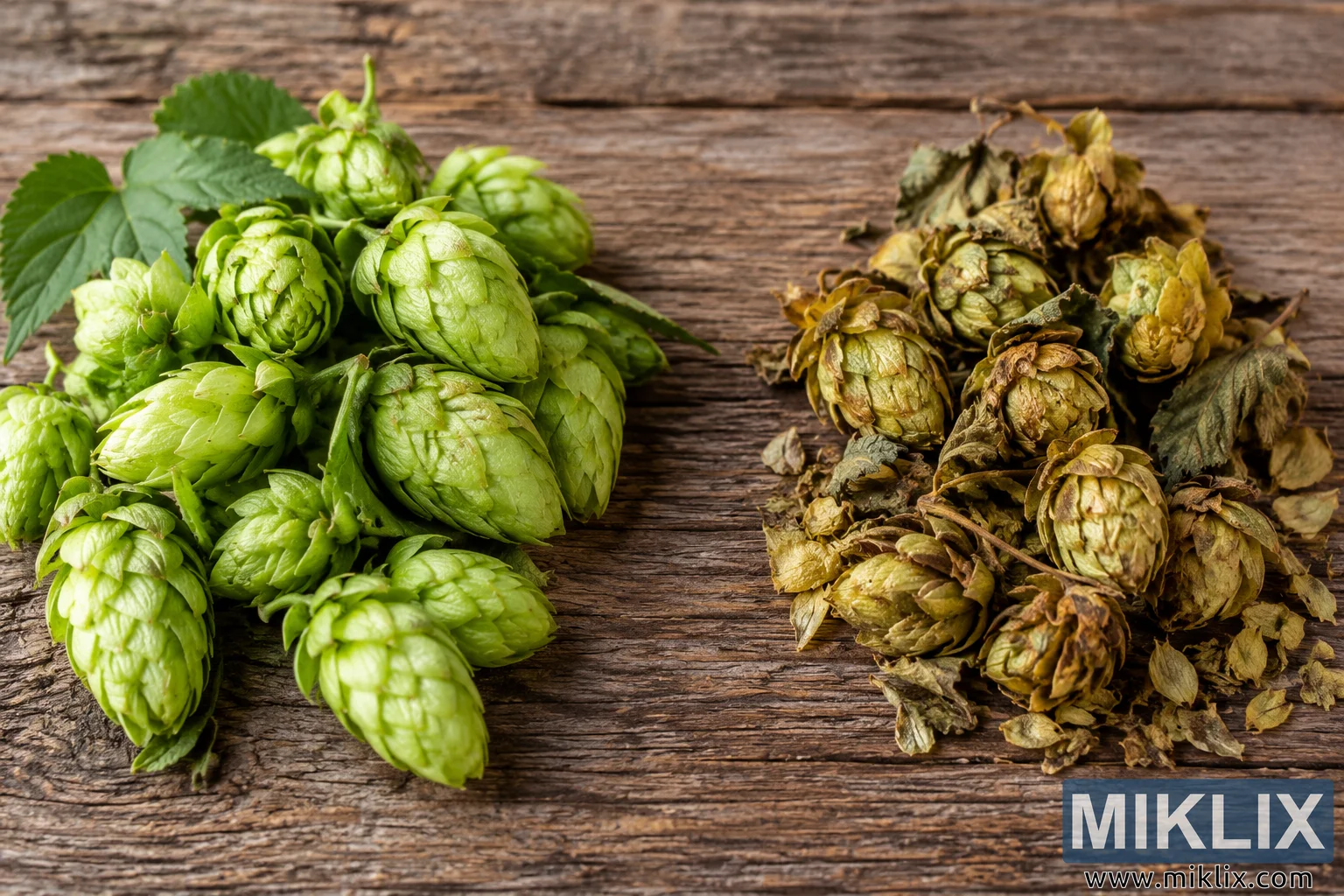
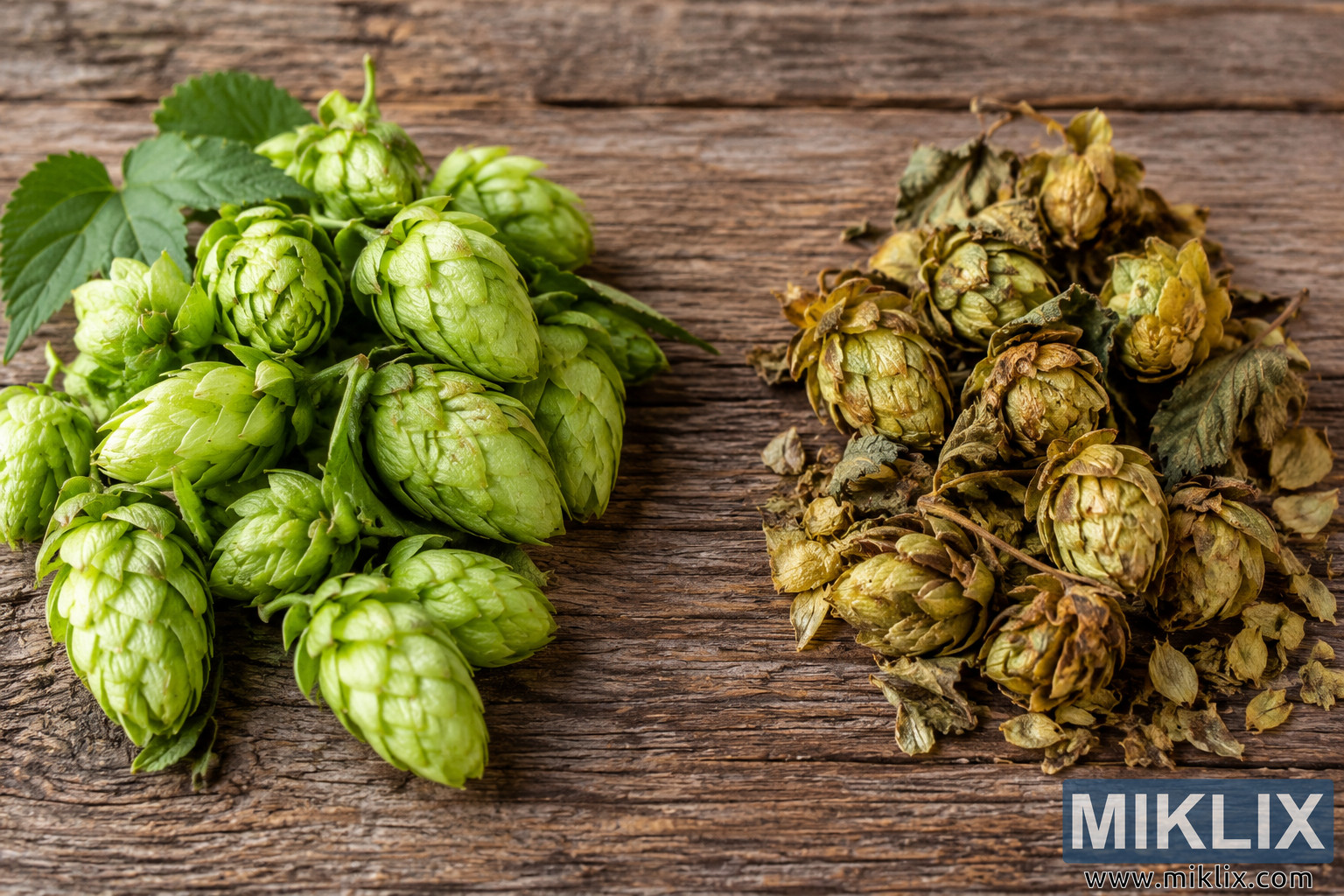
A high-resolution landscape photograph presents a clear visual comparison between fresh hops and degraded, aged hops arranged side by side on a rustic wooden surface. The composition is viewed from a slightly elevated, near top-down perspective, allowing the individual hop cones, leaves, stems, textures, and differences in condition to be examined in detail. The image is divided naturally into two contrasting groups without the use of labels, text, borders, or graphic elements. Fresh hops occupy the left side of the frame, while visibly degraded hops occupy the right side. An open area of weathered wood between the two groups reinforces the separation and makes the comparison immediately understandable.
On the left, the fresh hops appear vibrant, healthy, and recently harvested. Their cones are predominantly bright green to yellow-green, with subtle variations in tone created by the overlapping layers of their delicate bracts. The cones look full and well formed, with compact structures and smooth, slightly glossy surfaces that suggest freshness and retained moisture. Several cones are positioned at different angles, revealing their characteristic elongated, somewhat oval shapes and the intricate pattern formed by the overlapping leafy scales. Fine veins and gentle wrinkles can be seen across the surfaces, giving the hops a realistic botanical texture. Highlights from the soft directional lighting emphasize the raised edges of the bracts and create a sense of depth between the individual layers.
Fresh green leaves and stems are mixed among the hop cones on the left. The leaves are broad and richly colored, with clearly visible serrated edges, veins, folds, and natural variations in green. Some leaves extend outward from the main cluster, creating an organic, recently gathered appearance rather than a highly formal arrangement. The combination of vivid green cones and healthy foliage communicates vitality and good condition. The fresh group is relatively dense, with numerous cones overlapping one another while remaining individually distinguishable because of the sharp focus and detailed lighting.
The right side provides a strong contrast. Here, the hops show clear signs of degradation, drying, aging, and loss of quality. Instead of the vivid green seen on the left, these cones display muted yellow, olive, tan, brown, and dark green tones. Some areas have developed deeper brown discoloration, particularly along the edges and tips of the bracts. The cones appear drier, more brittle, and less uniformly shaped. Their surfaces look rougher and more papery, with curled, compressed, or irregular scales that suggest moisture loss and deterioration. Several cones have partially collapsed or become distorted, while others retain their general shape but show obvious discoloration and dryness.
The degraded group also contains numerous loose fragments of dried plant material. Small brown and yellow hop scales, curled leaves, brittle stems, and irregular pieces are scattered around the main cluster. These fragments reinforce the impression that the older hops have become fragile and are beginning to break apart. The associated leaves are wilted, darkened, curled, and dry compared with the broad, supple green foliage visible among the fresh hops. Their uneven coloring ranges from faded green and olive to ochre and dark brown. Some leaf surfaces appear wrinkled and leathery, while their edges look brittle and damaged.
The rustic wooden background extends across the entire landscape frame. It consists of horizontal weathered planks in warm brown and gray-brown tones, with prominent grain, cracks, grooves, knots, scratches, and other signs of age. The wood provides a neutral, natural setting that complements the agricultural subject without distracting from it. Its rough texture also creates a useful visual reference: the smooth, hydrated appearance of the fresh hops stands out strongly against the wood, while the dry degraded hops share some of the background's earthy brown tones and coarse textures.
Lighting is soft but sufficiently directional to reveal fine surface detail. Gentle shadows beneath the cones and leaves establish depth without obscuring important features. The fresh hops catch brighter highlights, making their green coloration appear especially lively, while the aged hops have warmer, darker highlights that emphasize their dryness and discoloration. The image remains sharply detailed across both groups, making it suitable for educational, agricultural, brewing, quality-control, storage, or ingredient-comparison contexts.
The overall composition communicates the concept of fresh versus degraded hops entirely through visual characteristics rather than written explanation. Color is the most immediate distinction: vivid green on the left contrasts with faded yellow-green, olive, and brown on the right. Texture provides a second distinction, with the fresh hops appearing plump, intact, layered, and hydrated, while the degraded material appears brittle, curled, fragmented, and dry. Structural integrity provides another contrast, as the fresh cones maintain consistent, compact forms whereas the degraded cones and foliage show deformation, breakage, and deterioration. The generous landscape format gives both conditions approximately equal visual importance and allows viewers to compare them directly. There are no people, packages, commercial products, logos, trademarks, labels, captions, or recognizable brands anywhere in the scene. The result is a clean, realistic photographic comparison focused exclusively on the physical appearance and condition of the hops.
The image is related to: Hops in Beer Brewing: Falconer's Flight