
Image: Close-Up of Green Hop Cones with Yellow Lupulin Glands
Published: September 29, 2026 at 3:34:08 PM UTC
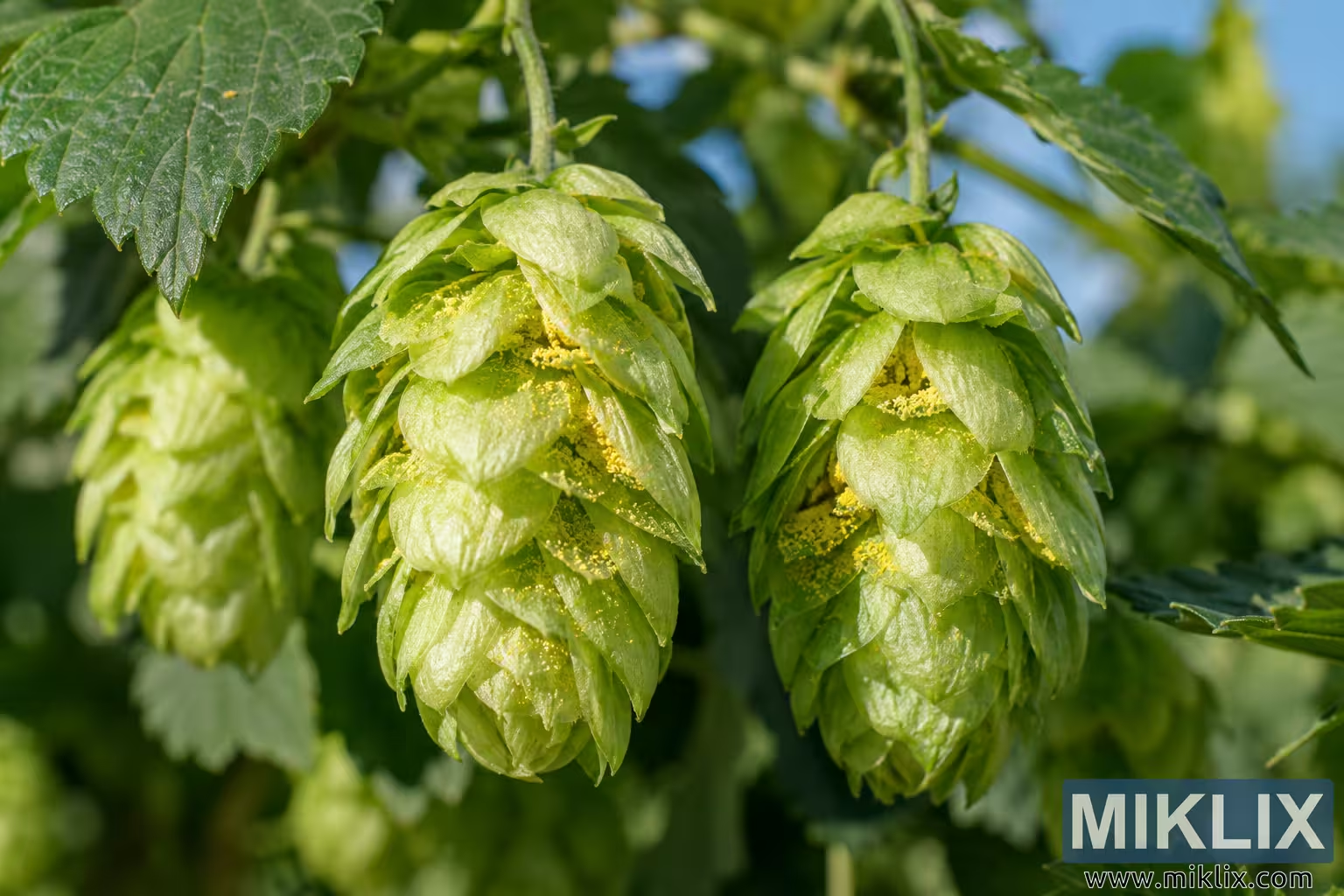
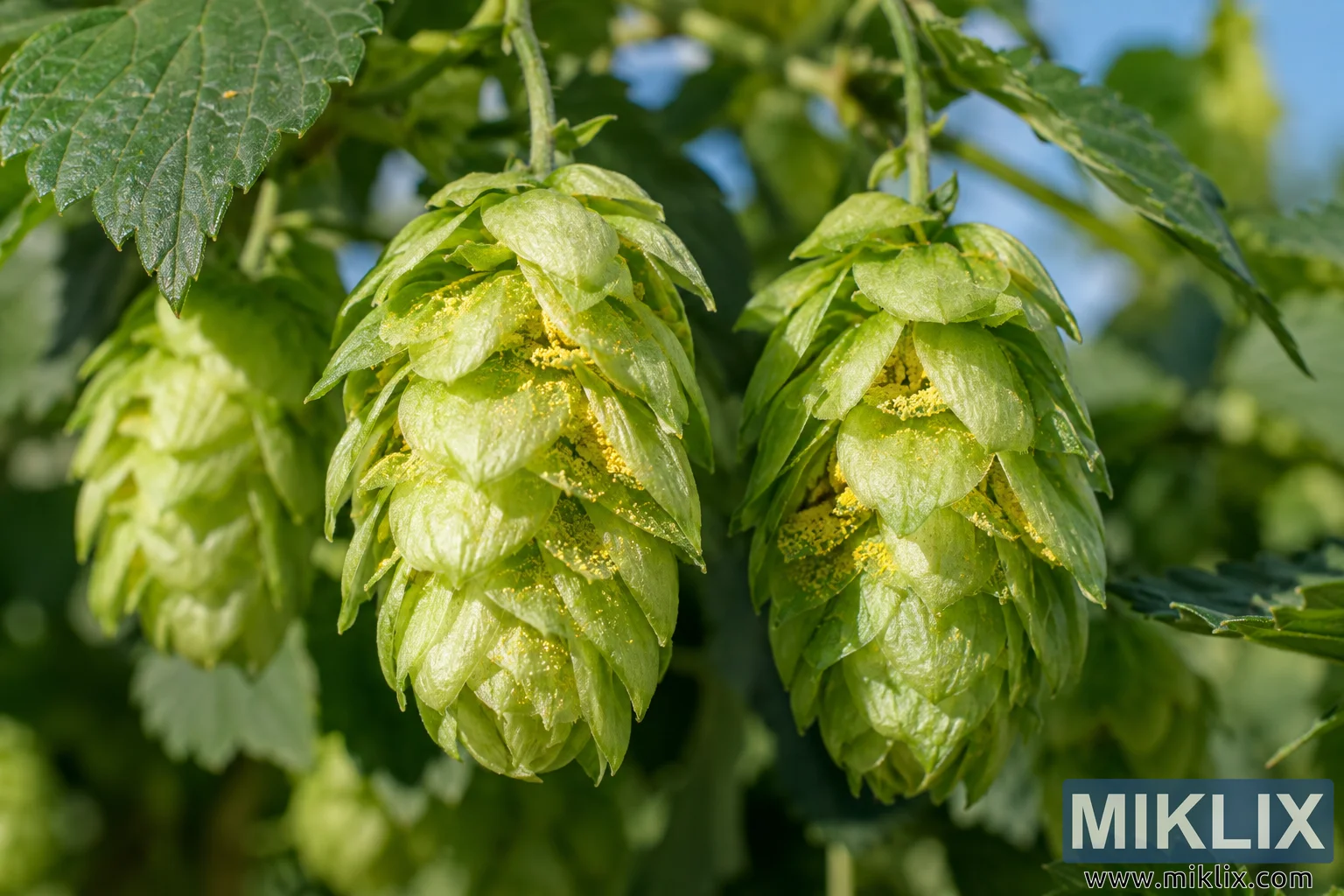
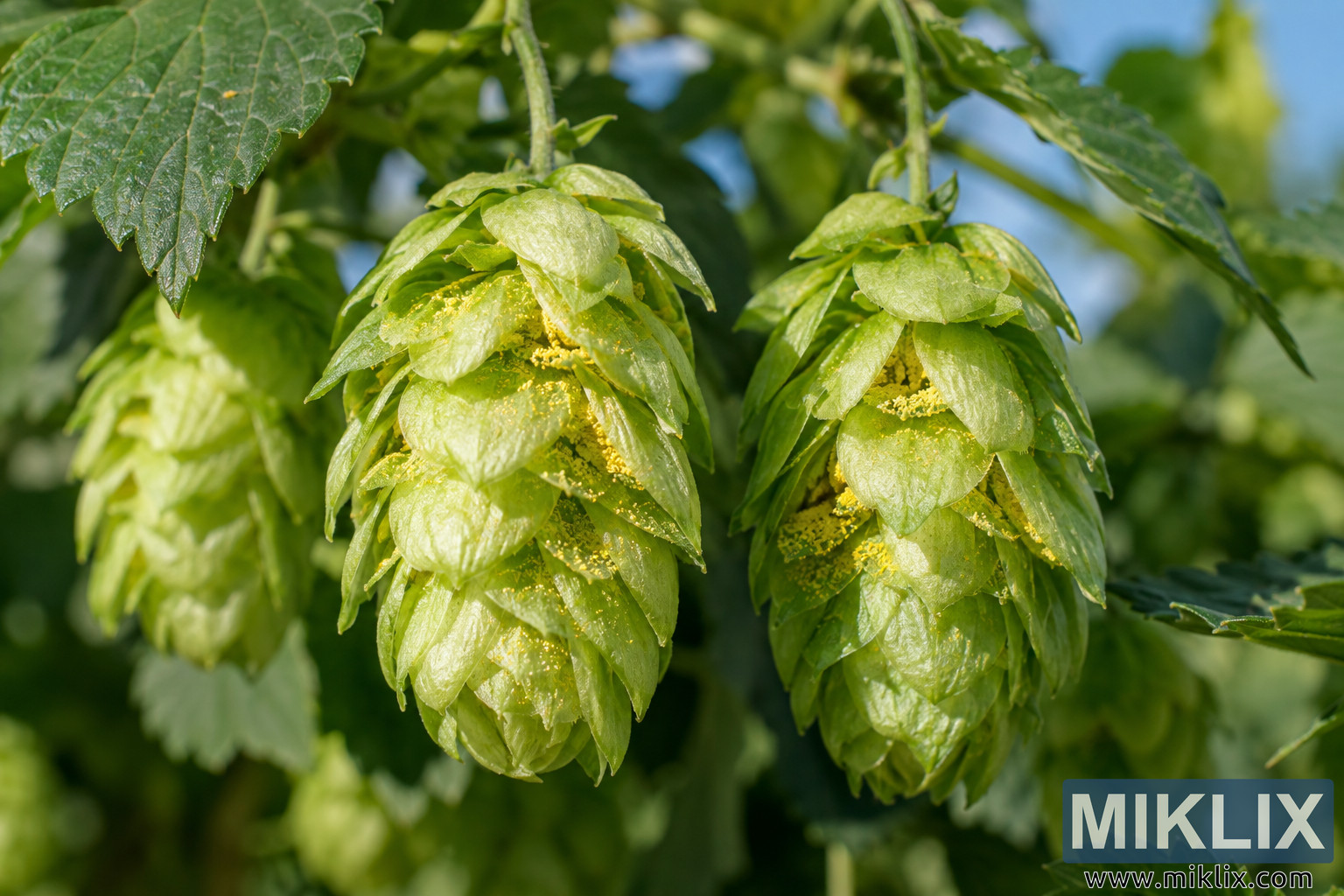
Detailed close-up photograph of fresh green hop cones with visible golden-yellow lupulin glands, surrounded by sunlit hop leaves and softly blurred foliage.
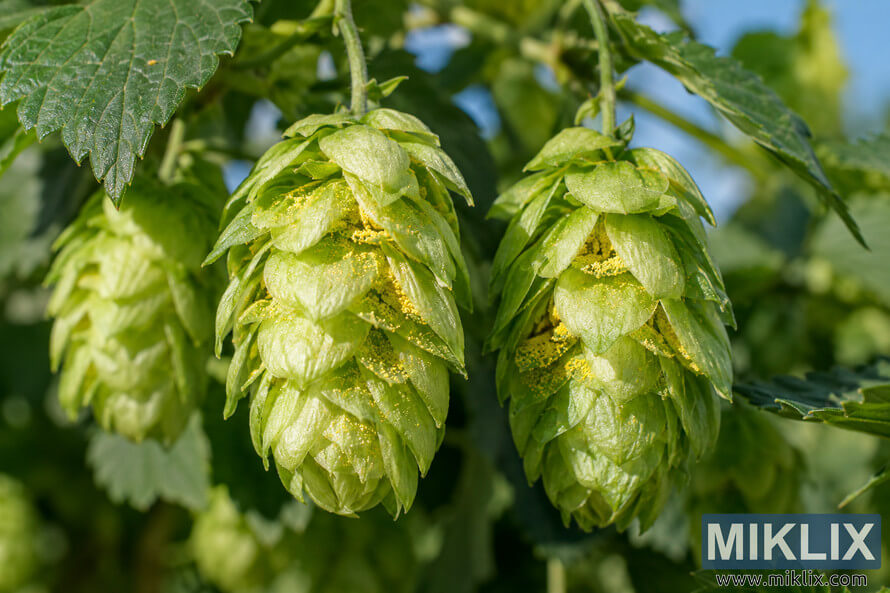
Available versions of this image
The image files available for download below are less compressed and higher resolution - and as a result of that, higher quality - than the images embedded in articles and pages on this website, which are more optimized for file size in order to reduce bandwidth consumption.
Regular size (1,536 x 1,024)
Large size (3,072 x 2,048)
Very large size (4,608 x 3,072)
Extra large size (6,144 x 4,096)
Comically large size (1,048,576 x 699,051)
- Still uploading... ;-)
Image description
A detailed close-up nature photograph shows several mature green hop cones growing on a hop plant in bright natural daylight. The composition is dominated by two large hop cones hanging vertically near the center of the frame. These cones are sharply focused and positioned side by side, allowing their layered structure and botanical details to be examined clearly. Each cone consists of numerous overlapping, pale to medium green bracts arranged in a compact, elongated form. The bracts have thin, slightly translucent surfaces with gently curved and pointed edges, creating the characteristic scale-like appearance of a mature hop cone. Between many of these green bracts are conspicuous deposits of vivid yellow lupulin. The lupulin appears as clusters and scattered grains of fine golden-yellow material concentrated primarily around the inner surfaces and bases of the bracts. Its warm yellow color contrasts strongly with the surrounding fresh green plant tissue and immediately draws attention to the resinous glands that are an important feature of hop flowers. On the central cone, the yellow lupulin is particularly visible across several opened layers, forming small granular patches, lines, and speckles. Similar golden material can be seen inside the cone on the right, where it collects in sheltered spaces beneath the overlapping bracts. The close perspective and strong illumination make these yellow glands appear textured and almost powder-like while preserving the natural botanical character of the plant. Sunlight falls across the two primary cones from the front and side, producing bright highlights on their papery surfaces and subtle shadows underneath the overlapping layers. These alternating areas of light and shade emphasize the three-dimensional construction of each cone and reveal delicate wrinkles, veins, folds, and variations in the green coloration. The cone on the left is slightly broader and occupies a prominent position just left of center. Its upper bracts spread outward around the stem before the structure narrows gradually toward the lower tip. The cone on the right is similarly mature and elongated, with a dense sequence of overlapping bracts and visible yellow lupulin tucked among its middle layers. Both cones hang naturally from slender green stems extending downward from the leafy hop bine above. A third hop cone is visible farther toward the left side of the photograph. This cone is noticeably softer and less detailed because it lies outside the main plane of focus. Its pale green silhouette nevertheless remains recognizable and provides additional botanical context, indicating that the photograph depicts cones growing naturally on a living hop plant rather than an isolated specimen. Other indistinct hop cones and foliage appear deeper in the background. Large green leaves surround the cones throughout the scene. In the upper left corner, a dark green leaf extends prominently into the frame and displays a sharply defined serrated edge and a network of branching veins. Additional leaves and stems occupy the upper and right portions of the image, framing the central cones without obscuring them. The foliage varies from bright yellow-green where direct sunlight reaches the surfaces to deep forest green in shaded areas. These tonal differences create a rich, natural background and reinforce the impression of a healthy, vigorously growing hop plant. The background is rendered with a shallow depth of field, so leaves, stems, and distant cones gradually dissolve into soft green shapes and circular areas of blur. Small openings in the foliage reveal patches of clear blue sky, particularly near the upper right and upper central areas. The cool blue tones provide a subtle contrast to the dominant greens and yellows of the vegetation. The photographic perspective is intimate and observational, as though the camera has been positioned very close to the hop plant specifically to document the cones and their lupulin glands. Fine surface details remain visible on the principal cones, including tiny creases in the bracts, delicate edges catching the sunlight, slight variations in translucency, and individual yellow granules distributed across the inner floral structures. The image has a horizontal landscape orientation, with the two sharply focused cones forming the main visual anchor across the middle of the composition. The surrounding leaves and blurred cones create depth on both sides and behind the principal subjects. There are no people, buildings, tools, packaging, labels, logos, typography, or recognizable commercial brands anywhere in the scene. The photograph is entirely botanical in character and concentrates on the natural appearance of hop cones on the plant. Overall, the image presents a crisp macro-style view of green hop cones with highly visible golden-yellow lupulin glands, combining botanical detail with the fresh atmosphere of an outdoor hop garden. The strong natural light, shallow depth of field, richly textured bracts, granular yellow lupulin, serrated leaves, and softly blurred green background make the photograph suitable for illustrating hop cultivation, hop anatomy, brewing ingredients, horticulture, agriculture, botanical identification, or educational material about the resinous glands found inside mature hop cones.
The image is related to: Hops in Beer Brewing: Goldings (NZ)