
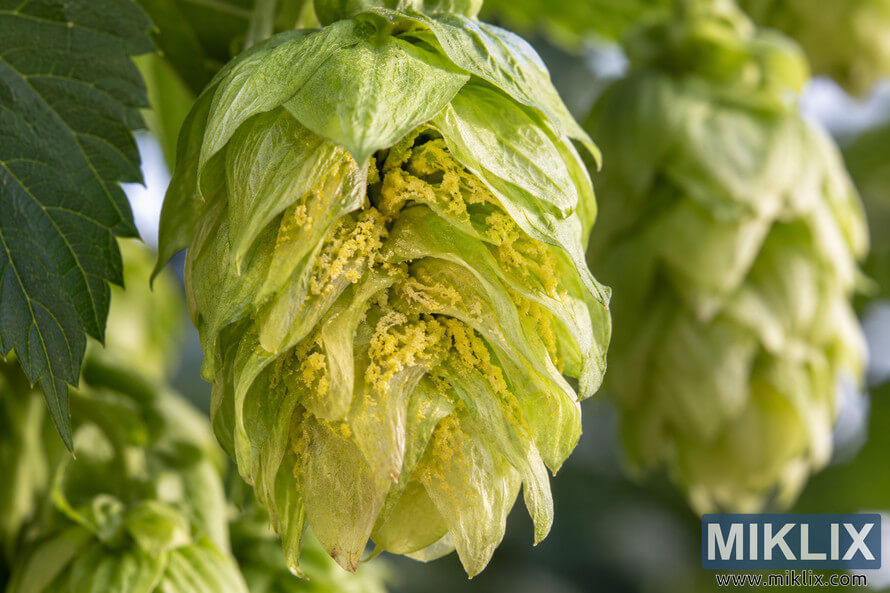
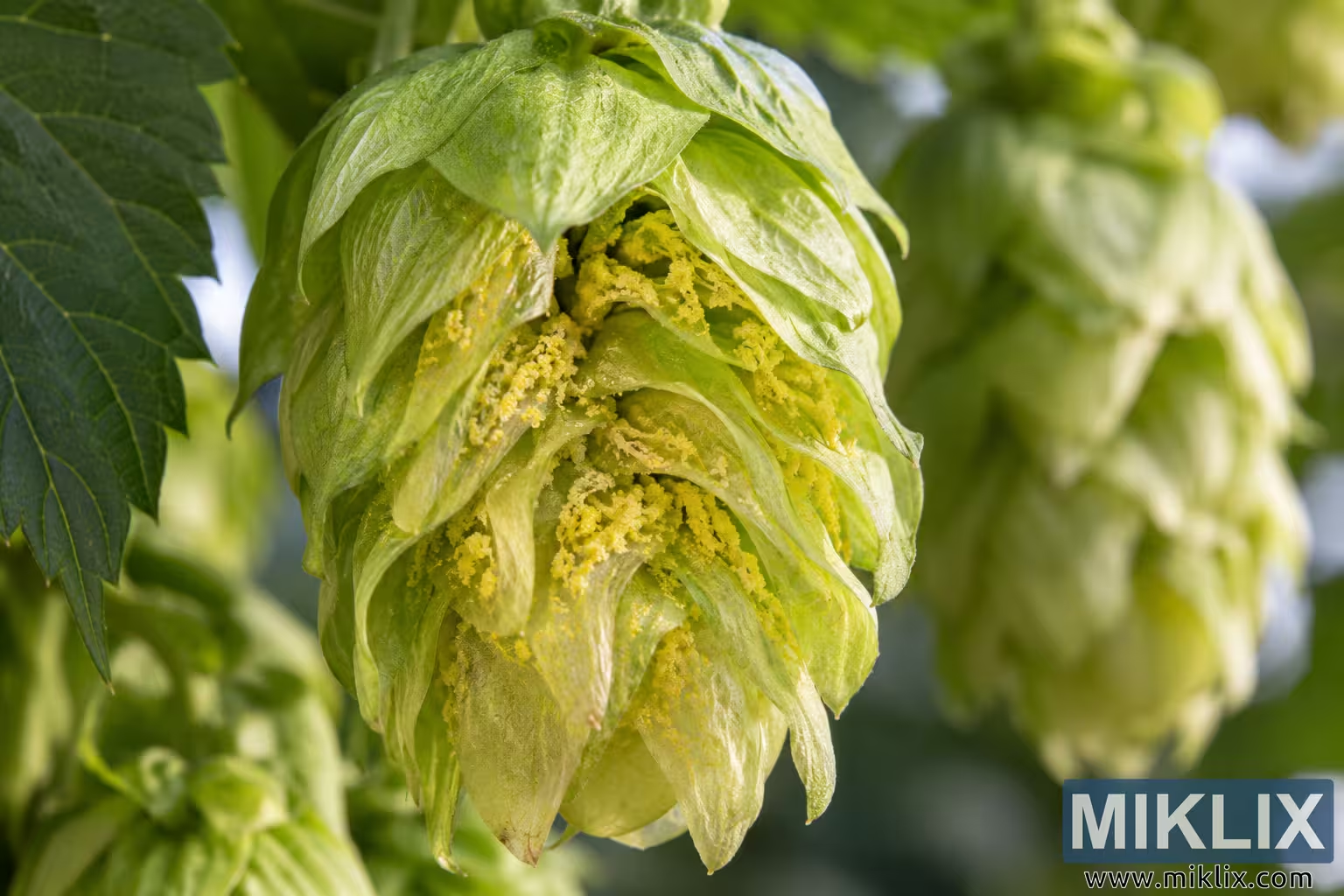
Image: Macro Close-Up of Green Hop Cone with Visible Lupulin Glands
Published: October 1, 2026 at 4:38:59 PM UTC
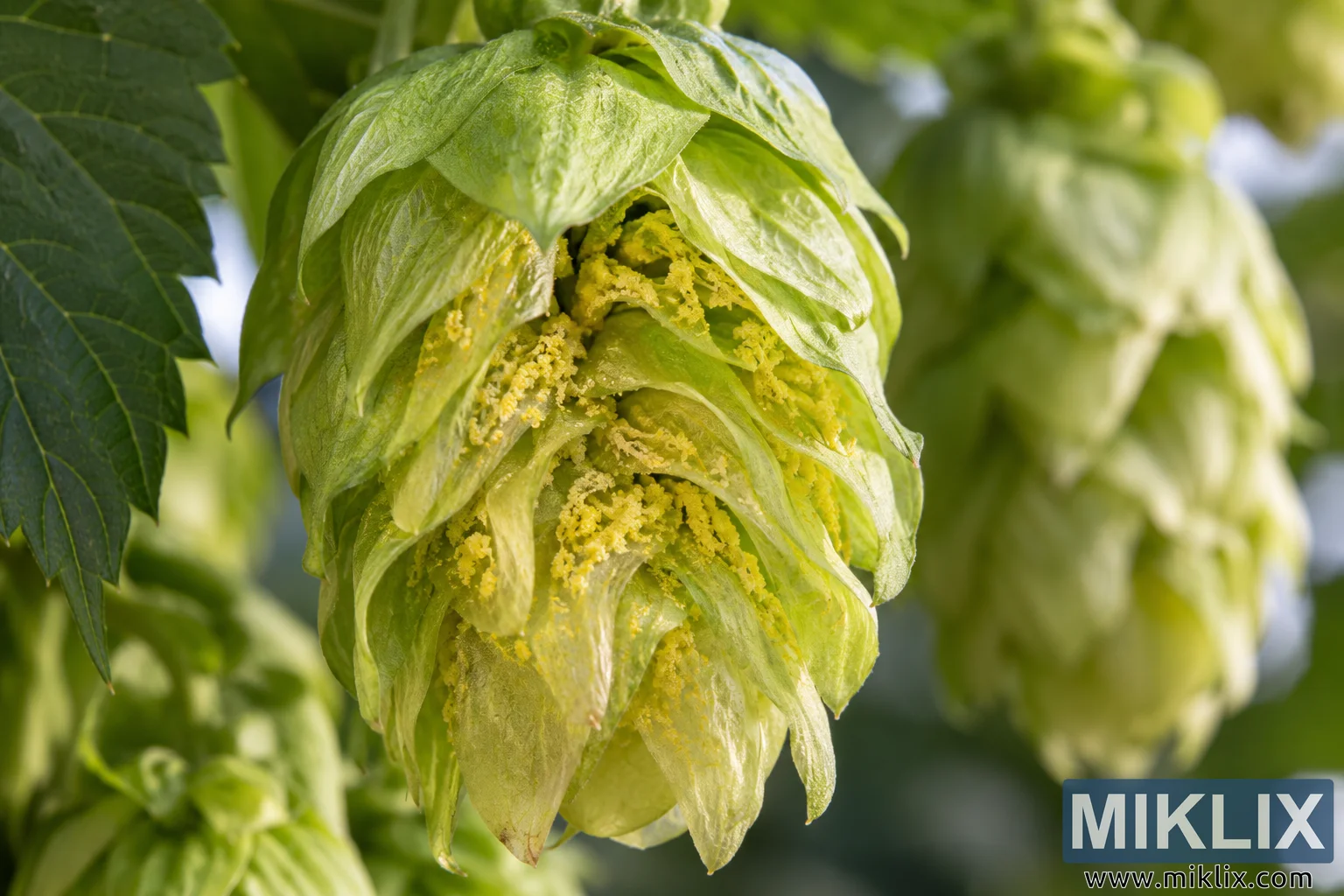
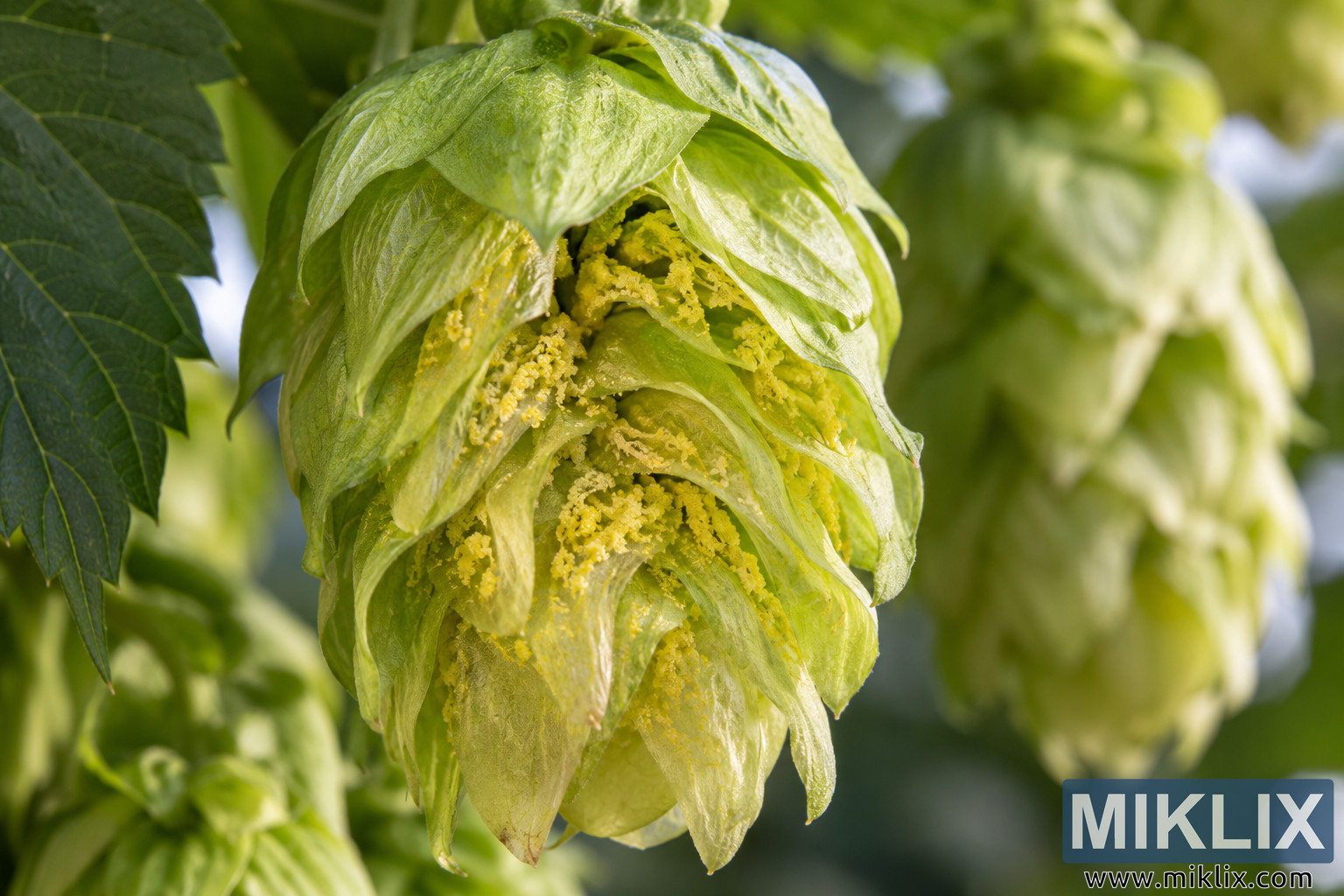
Detailed macro photograph of a green hop cone showing its layered bracts, fine botanical structure, and golden-yellow lupulin glands in natural sunlight.
Available versions of this image
The image files available for download below are less compressed and higher resolution - and as a result of that, higher quality - than the images embedded in articles and pages on this website, which are more optimized for file size in order to reduce bandwidth consumption.
Regular size (1,536 x 1,024)
Large size (3,072 x 2,048)
Very large size (4,608 x 3,072)
Extra large size (6,144 x 4,096)
Comically large size (1,048,576 x 699,051)
- Still uploading... ;-)
Image description
A high-resolution landscape-oriented macro photograph presents an exceptionally close view of a fresh green hop cone growing naturally on the plant. The composition is dominated by a single large hop cone positioned slightly left of center, allowing its layered botanical structure to fill much of the frame while still leaving enough surrounding foliage and softly blurred background detail to establish a natural outdoor setting. The cone hangs downward from the hop plant and is shown at a scale that reveals the individual overlapping bracts in considerable detail. These bracts form the characteristic compact, tapered structure of the hop cone, overlapping one another in successive layers from the broad upper portion toward the narrower lower end. Their surfaces range from fresh yellow-green to deeper leafy green, with subtle variations in translucency caused by the strong natural illumination. Fine veins, wrinkles, folds, slightly curled edges, and delicate surface textures are clearly visible across many of the bracts, emphasizing the thin, papery nature of the plant material.
The most prominent feature of the photograph is the exposed yellow lupulin material visible between and across the inner bracts of the hop cone. Numerous tiny golden-yellow granules and gland-like deposits cluster around the folds and bases of the scales, particularly through the open central portion of the cone. The lupulin contrasts strongly with the surrounding green plant tissue and appears as a fine, powdery to granular coating. Some deposits form dense patches, while others appear as scattered individual specks along the surfaces and edges of the bracts. This close perspective makes the relationship between the lupulin glands and the internal structure of the hop cone especially apparent. The central region has opened enough for several layers of the cone to be visible simultaneously, providing a detailed view into the spaces where the yellow resinous material naturally accumulates. The resulting appearance is both botanical and textural, with the soft green scales framing areas of vivid yellow-green and golden material.
Natural sunlight enters strongly from the upper right and front of the scene, illuminating the main cone and creating a bright, warm appearance. The light passes through some of the thinner bracts, giving them a slightly translucent quality and revealing delicate internal veins. Small highlights follow the ridges, folds, and curved edges of the plant tissue, while deeper recesses between the scales remain in gentle shadow. This interplay of illumination and shadow gives the hop cone a pronounced three-dimensional form and makes the overlapping structure easy to distinguish. The upper section of the cone is particularly bright, with pale lime-green highlights, whereas shaded portions transition toward richer olive and medium green tones. The yellow lupulin catches the light especially well, making its granular texture stand out against both illuminated and shadowed plant surfaces.
Along the left side of the frame, a large dark green hop leaf provides a contrasting element. Its broad surface is partially visible and displays pronounced branching veins, serrated edges, and a deeper green coloration than the central cone. Additional leaves and stems occupy the upper and lower portions of the background, but they gradually fall outside the narrow plane of focus. A smaller hop cone appears toward the lower left corner, where its layered scales remain recognizable despite being substantially softer than those of the main subject. On the right side of the image, another large hop cone hangs in the background. It is heavily blurred by the shallow depth of field, appearing as a soft pale-green form that echoes the shape of the sharply focused foreground cone without competing for attention. More indistinct foliage extends behind it, producing a continuous natural green environment.
The background consists primarily of soft green, yellow-green, and dark muted areas created by out-of-focus leaves, stems, additional hop cones, and distant vegetation. Small patches of pale sky or bright ambient light appear as smooth highlights between the foliage. Because of the macro-style focus, these background elements dissolve into creamy shapes and gentle bokeh rather than displaying distinct botanical details. This separation directs attention immediately toward the foreground cone and, in particular, toward its exposed lupulin glands. The shallow depth of field also enhances the sense of scale, making the viewer feel physically close to the plant and allowing the minute surface characteristics of the hop to become the central visual subject.
The photograph has a realistic botanical and agricultural character rather than a staged commercial appearance. There are no containers, labels, logos, packaging, text, people, tools, or identifiable brands anywhere in the scene. The hop is depicted directly on the living plant in an outdoor environment. The image emphasizes the natural anatomy of the cone: overlapping protective bracts, fine veins, irregular edges, interior folds, and the distinctive yellow lupulin glands associated with mature hops. Although the cone is broadly green, the combination of pale translucent scales, deeper shaded foliage, and concentrated yellow lupulin creates considerable tonal variation within the subject. The macro perspective and sharp foreground detail make the photograph particularly suitable as a visual illustration of hop cone morphology and lupulin distribution. Overall, the image conveys freshness, botanical complexity, and tactile detail, with the prominent golden lupulin material providing the principal point of interest inside the layered green structure of the hop cone.
The image is related to: Hops in Beer Brewing: Green Bullet