
Image: Laboratory Analysis of Hop Essential Oils
Published: October 1, 2026 at 4:38:59 PM UTC
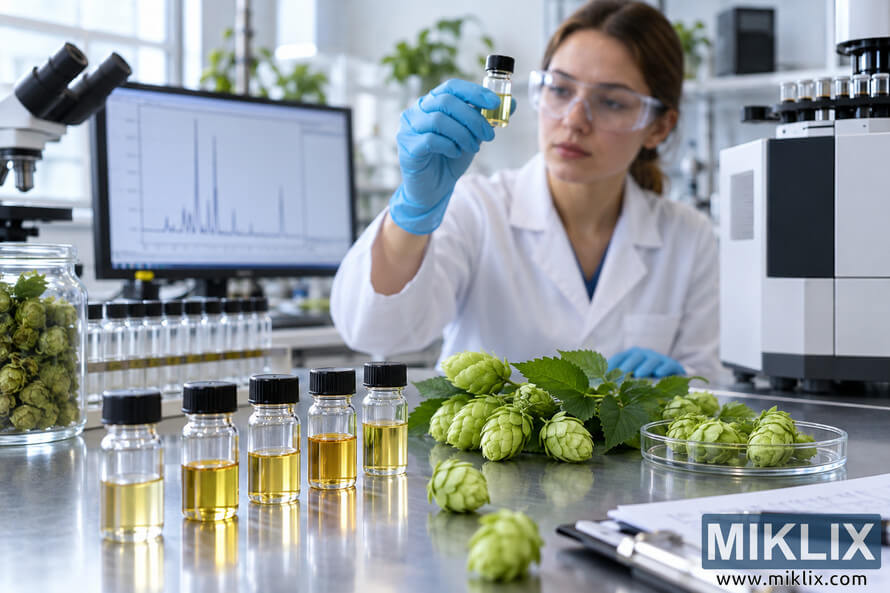
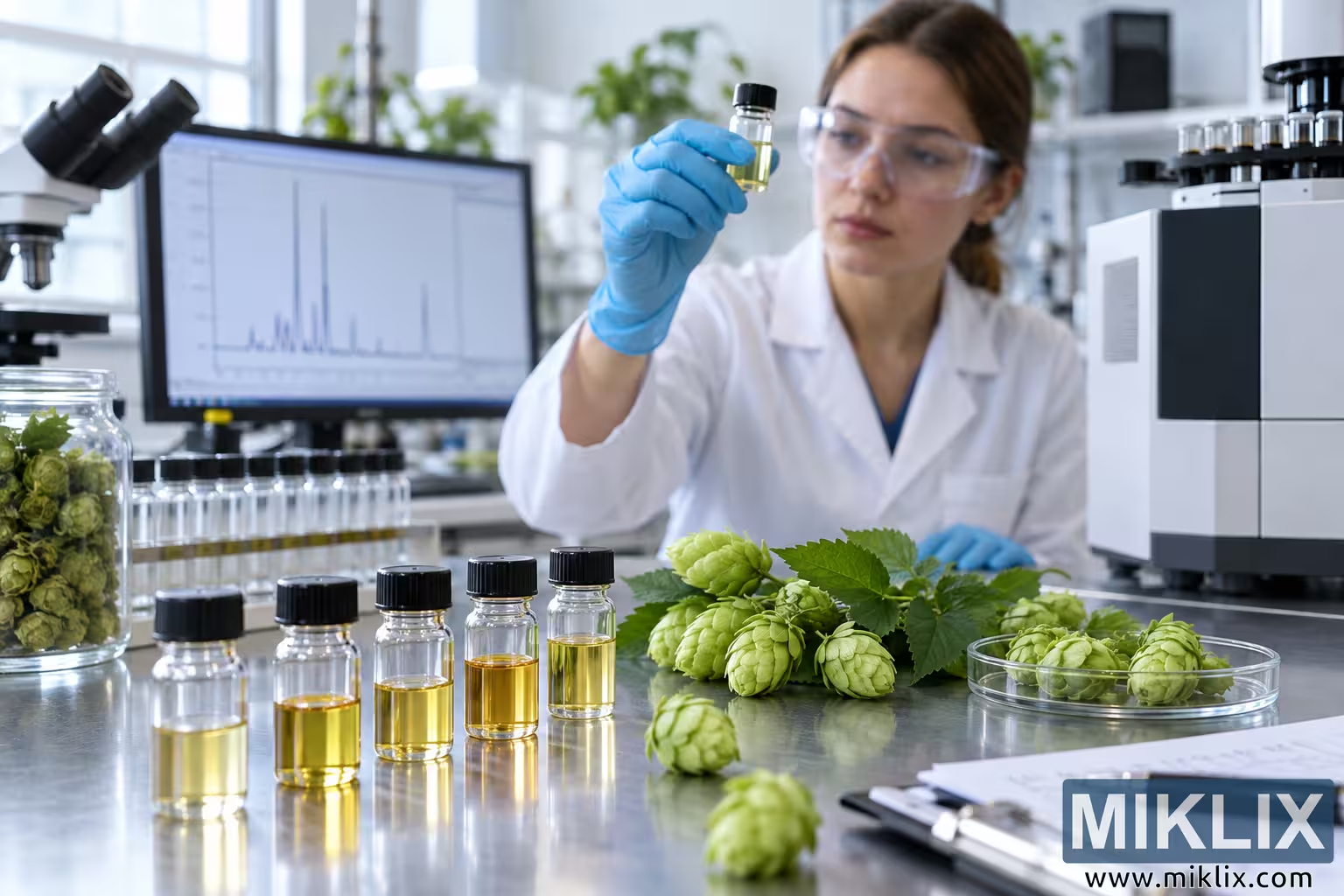
Scientific laboratory analysis of hop essential oils, showing a researcher examining golden oil samples alongside fresh hops, glass vials, chromatography data, and modern analytical equipment.
Available versions of this image
The image files available for download below are less compressed and higher resolution - and as a result of that, higher quality - than the images embedded in articles and pages on this website, which are more optimized for file size in order to reduce bandwidth consumption.
Regular size (1,536 x 1,024)
Large size (3,072 x 2,048)
Very large size (4,608 x 3,072)
Extra large size (6,144 x 4,096)
Comically large size (1,048,576 x 699,051)
- Still uploading... ;-)
Image description
A wide, landscape-oriented photograph depicts a bright, modern scientific laboratory where hop essential oils are being examined and analyzed. The scene combines recognizable botanical material with laboratory glassware and analytical equipment, immediately communicating the connection between fresh hops and the chemical study of their aromatic compounds. In the center-right portion of the image, a laboratory researcher wearing a clean white lab coat, transparent protective safety glasses, and bright blue disposable gloves carefully holds a small clear glass vial at approximately eye level. The vial contains a small quantity of pale yellow liquid, representing an extracted hop essential oil sample. The researcher studies the sample closely, with her attention directed toward the vial and its contents. Her posture and concentrated expression suggest careful visual inspection as part of a controlled analytical procedure.
The foreground is dominated by a reflective stainless-steel laboratory work surface. Several small transparent glass sample vials are arranged across the bench, each sealed with a plain black screw cap. The vials contain liquids in subtly different shades ranging from very pale straw yellow to richer golden amber. These variations create the impression of multiple hop oil extracts, fractions, or samples being compared during laboratory analysis. Reflections of the glass containers and their golden contents are visible on the polished metal surface, adding depth and a clean, technical appearance to the composition. None of the containers or pieces of equipment display visible commercial branding, logos, or product labels.
Fresh green hop cones occupy a prominent position beside the sample vials. A generous cluster of hops with attached green leaves lies across the central area of the laboratory bench. Individual hop cones display their characteristic layered, overlapping bracts, with colors ranging from light yellow-green to deeper natural green. Additional hop cones have been placed in a shallow transparent glass dish on the right side of the bench, while more dried or fresh botanical material is visible inside a clear glass container toward the left edge of the scene. A few loose hop cones in the foreground reinforce the visual relationship between the original plant material and the extracted oils contained in the vials.
Behind the researcher, the laboratory contains several pieces of analytical and scientific equipment. On the left is a laboratory microscope with dark eyepieces and a white body. Next to it, a large computer monitor displays an analytical graph resembling a chromatogram, with a horizontal baseline and numerous narrow peaks of different heights. The graph visually suggests instrumental analysis used to separate, detect, or characterize volatile compounds within hop essential oils. The monitor is intentionally generic and does not show identifiable software branding. On the right side of the researcher stands a substantial white and dark-gray analytical instrument with a row of small sample positions or vials along its upper section. Its design evokes equipment used for chromatography, spectroscopy, automated sampling, or related laboratory techniques without representing a specific branded model.
Additional laboratory sample tubes are arranged in a rack behind the foreground vials. These transparent tubes contain small quantities of similarly colored liquids, suggesting that several samples are being processed or compared simultaneously. The repetition of glass containers throughout the scene reinforces the controlled, systematic nature of the laboratory workflow. Papers, a clipboard, and writing instruments appear near the lower-right edge of the frame, suggesting that experimental observations, sample identifiers, or analytical results may be recorded during the procedure. The paperwork remains out of focus and contains no legible identifying information.
The laboratory itself is spacious, clean, and brightly illuminated. Large windows on the left allow abundant natural daylight to enter, producing soft highlights across the glassware, stainless-steel bench, and protective equipment. White cabinetry, laboratory fixtures, and indistinct green plants appear in the background, contributing to an orderly contemporary research environment. The background has a moderate depth-of-field blur, keeping visual attention on the researcher, the vial she is examining, the hop cones, and the essential oil samples while still preserving enough contextual detail to establish the scientific setting.
The overall composition tells a clear visual story of botanical chemistry and quality analysis. Raw hops are presented alongside extracted golden liquids, laboratory glassware, a chromatographic-style data display, and sophisticated analytical instrumentation. The researcher acts as the focal human element connecting these stages, carefully examining one sample while surrounded by the materials and equipment used for scientific investigation. The photograph could represent research into hop aroma compounds, essential oil composition, volatile organic compounds, botanical extraction, brewing science, agricultural quality control, flavor chemistry, or the characterization of different hop varieties. The clean laboratory environment and deliberate arrangement of samples convey precision, professionalism, traceability, and scientific rigor. At the same time, the vivid natural greens of the hops and warm golden tones of the oils provide an organic contrast to the cool white, glass, and metallic surfaces of the laboratory. The image contains no visible actual brands, commercial logos, branded packaging, or identifiable trademarks, allowing the scene to function as a generic representation of laboratory analysis of hop essential oils.
The image is related to: Hops in Beer Brewing: Green Bullet