
Image: Assorted Beer Styles Brewed with Green Bullet Hops
Published: October 1, 2026 at 4:38:59 PM UTC
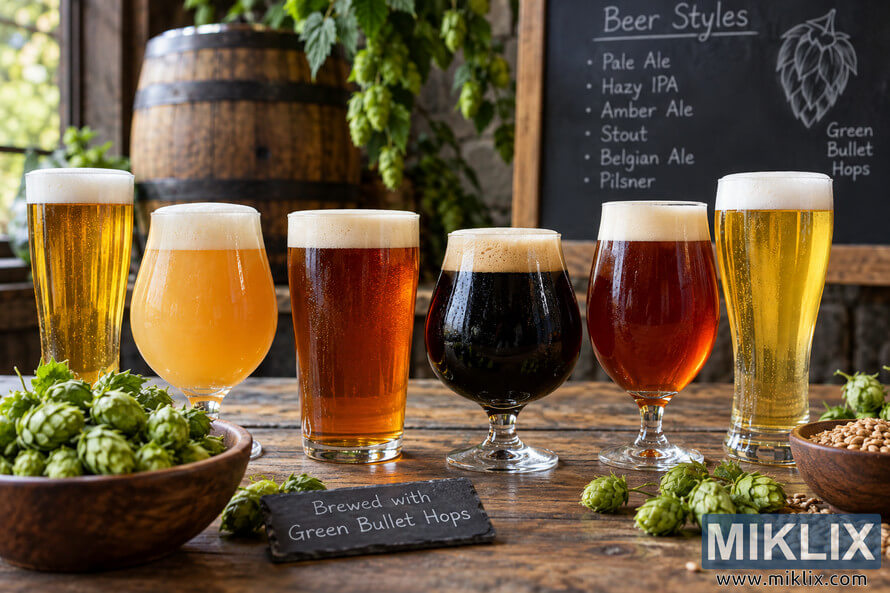
Rustic brewery tasting scene featuring six different beer styles brewed with Green Bullet hops, displayed with fresh hop cones, grains, glassware, a wooden barrel and brewery-style chalkboard.
Available versions of this image
The image files available for download below are less compressed and higher resolution - and as a result of that, higher quality - than the images embedded in articles and pages on this website, which are more optimized for file size in order to reduce bandwidth consumption.
Regular size (1,536 x 1,024)
Large size (3,072 x 2,048)
Very large size (4,608 x 3,072)
Extra large size (6,144 x 4,096)
Comically large size (1,048,576 x 699,051)
- Still uploading... ;-)
Image description
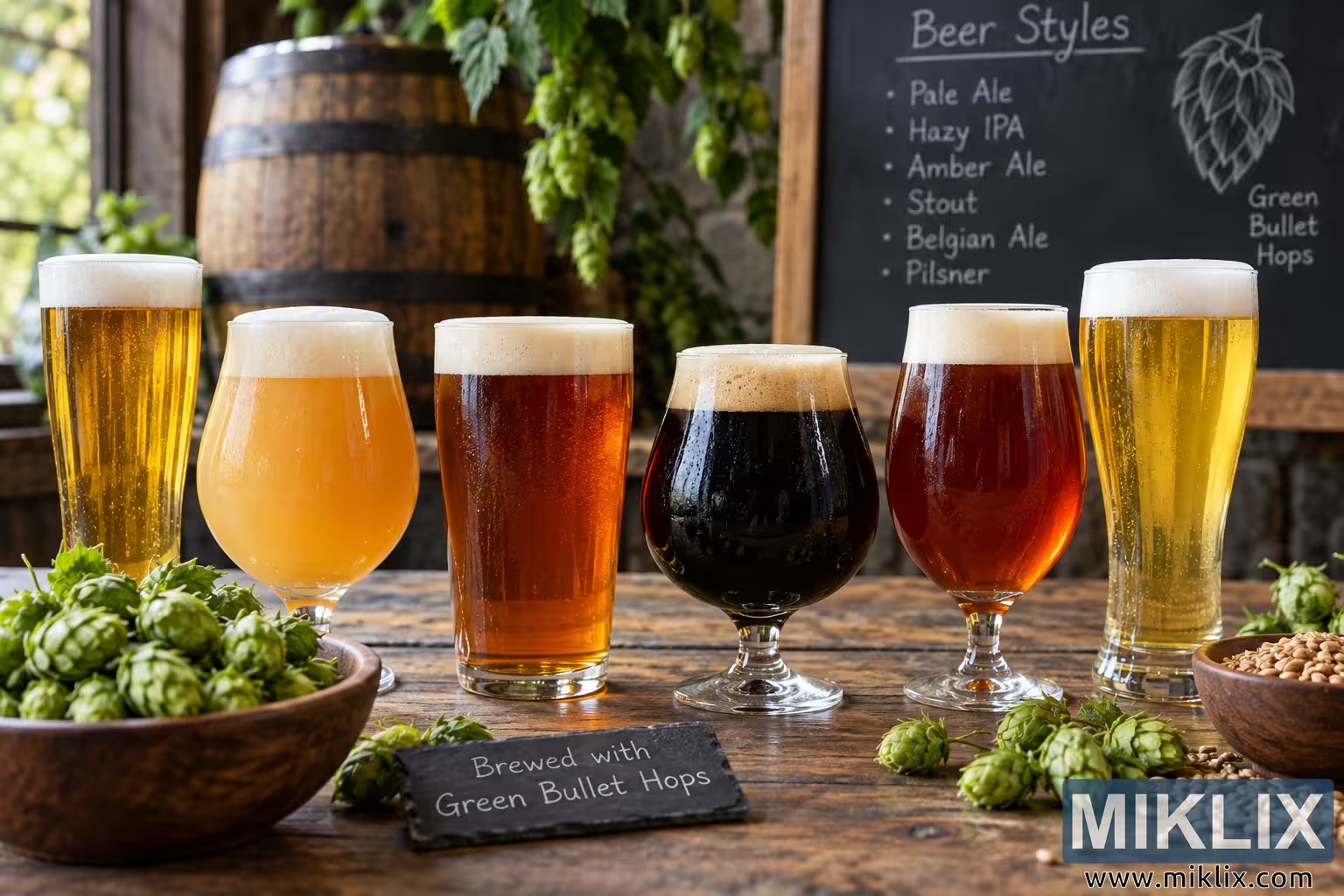
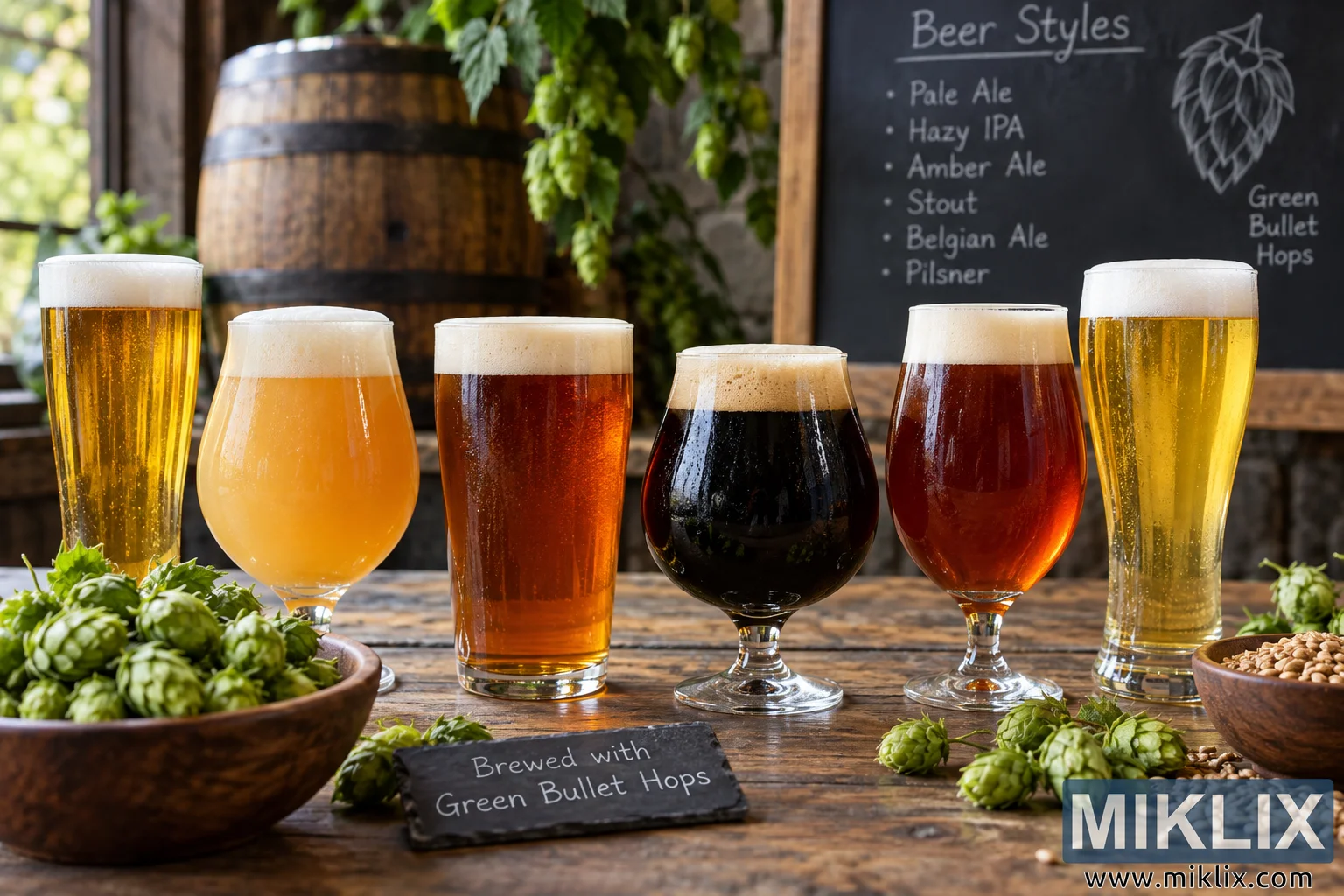
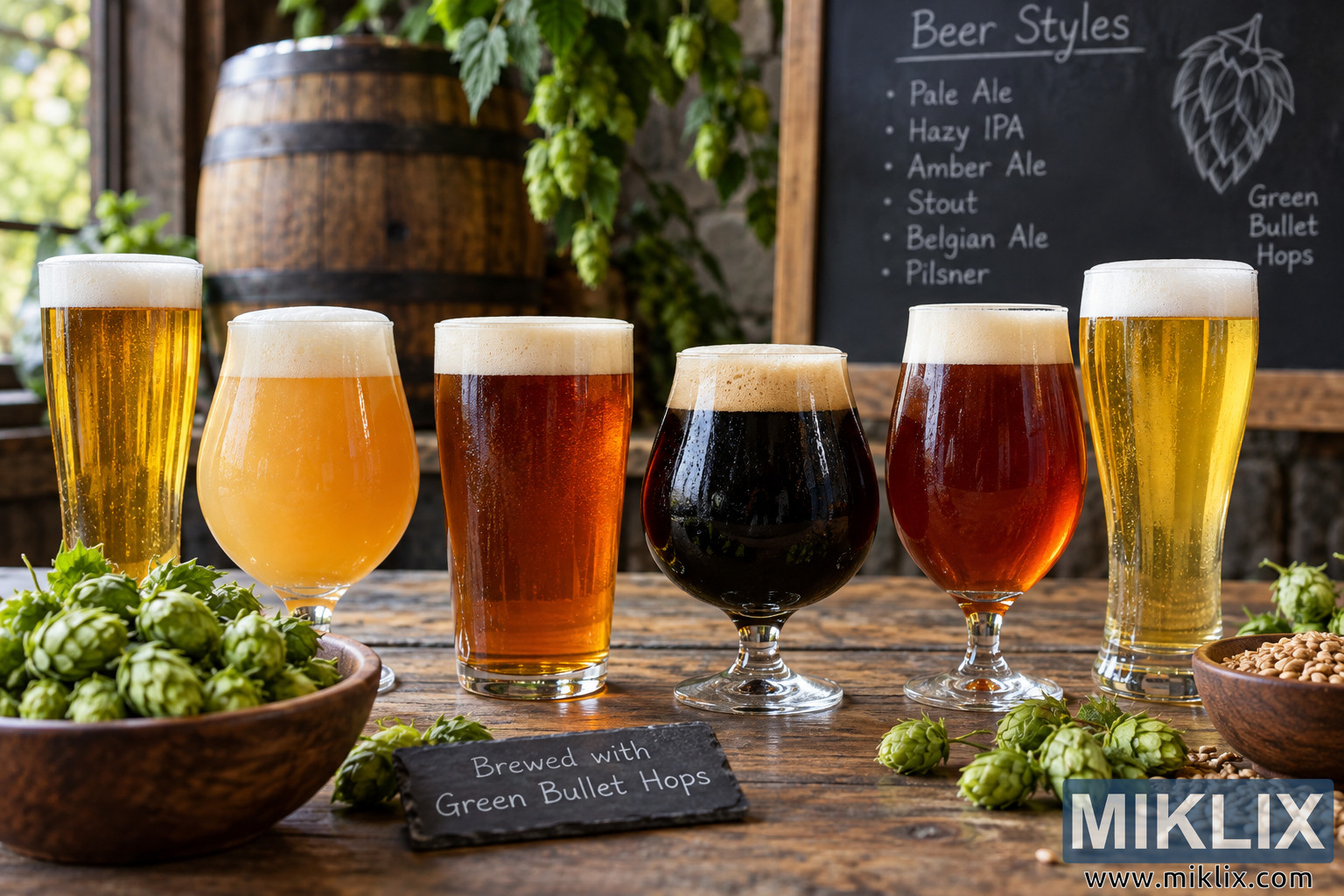
A wide, landscape-oriented photograph presents a carefully arranged tasting selection of six different beer styles on a rustic wooden table in a warm, traditional brewery-inspired setting. The composition is viewed straight on at approximately table height, allowing the individual colors, levels of clarity, glass shapes, and foam characteristics of the beers to stand out clearly. Across the center of the image, six glasses form a horizontal row. Each contains a visually distinctive beer, creating a progression from brilliant golden tones through hazy yellow and rich amber to nearly opaque black before returning to reddish brown and clear gold. The differences between the beers suggest a varied tasting flight made to demonstrate how a single hop variety can be incorporated into multiple brewing styles.
On the far left stands a tall, slender glass filled with a bright, transparent golden beer. Numerous tiny bubbles are visible through the liquid, rising toward a dense white head of foam that sits neatly above the beer. Its crisp clarity and pale gold color give it a light and refreshing visual character. Immediately to its right is a rounded, stemmed glass containing a cloudy, pale orange-yellow beer. This beer is noticeably hazier than the first, with an opaque, juice-like appearance and a generous creamy white head. The curved glass and soft color emphasize the contrast between this hazy beer and the highly transparent golden beer beside it.
The third glass is a tall, straight-sided pint glass holding a clear amber-colored beer. Its liquid ranges from warm copper to reddish orange depending on the way the light passes through it. A substantial off-white foam cap rests on top. In the center of the lineup is a dark beer served in a rounded, short-stemmed tasting glass. The beer is almost black, although subtle deep brown and reddish highlights can be seen near the edges where light penetrates the liquid. A tan, creamy head crowns the dark beer, providing a strong tonal contrast with its nearly opaque body. This central glass acts as a visual anchor for the arrangement because it is both the darkest element among the beverages and positioned near the middle of the composition.
To the right of the dark beer is another stemmed glass containing a clear reddish-brown to deep amber beer. Its warm mahogany and copper tones glow in the ambient light, while a pale creamy head covers the surface. The final glass on the far right is tall and gently tapered, containing another bright golden beer with excellent clarity. Fine carbonation is visible in the liquid, and a thick white head sits at the top. Together, the six glasses create a balanced spectrum of beer appearances, illustrating differences in color, opacity, carbonation, and foam while maintaining a cohesive tasting presentation.
Fresh green hop cones are prominently incorporated into the foreground and background. In the lower left corner, a wooden bowl is filled with numerous green hop cones and leafy material. Their layered, overlapping bracts give them a distinctive textured appearance. Additional loose hop cones are scattered across the table in front of and between the beer glasses, especially toward the lower center and right side. These hops visually connect the beers with their brewing ingredient and add fresh green accents to the otherwise warm palette of gold, amber, brown, and natural wood. On the lower right, a small wooden bowl contains pale grains, while more grains are scattered loosely across the tabletop nearby. These elements reinforce the brewing theme by presenting both hops and grain alongside the finished beers.
Near the front center of the table lies a small dark slate-style sign with handwritten white lettering reading “Brewed with Green Bullet Hops.” The sign is angled slightly rather than being perfectly parallel with the edge of the frame, which gives the arrangement a casual, handcrafted tasting-room quality. The reference to Green Bullet identifies the hop variety associated with the beers without displaying a commercial brewery logo or consumer brand. The surrounding loose hop cones further emphasize this ingredient-focused concept.
The background resembles the interior of a rustic brewery, taproom, or traditional brewing space. On the left side, behind the beers, stands a large wooden barrel with dark metal hoops. Its warm brown staves echo the color and texture of the wooden table. Behind and above the barrel, green hop vines hang down naturally, with leaves and hop cones visible among the foliage. More greenery extends across the upper portion of the scene, helping frame the tasting arrangement and strengthening the impression that hops are central to the image.
On the right side of the background is a large black chalkboard framed in wood. Written across its upper portion in chalk-like lettering is the heading “Beer Styles.” Beneath it is a list naming Pale Ale, Hazy IPA, Amber Ale, Stout, Belgian Ale, and Pilsner. A simple hand-drawn hop cone illustration appears toward the upper-right area of the chalkboard, accompanied by the words “Green Bullet Hops.” The chalkboard functions as an explanatory visual element, associating the six glasses in the foreground with a range of recognizable brewing styles. Its informal handwritten appearance fits naturally with the rustic craft-brewery atmosphere.
Soft natural-looking illumination enters primarily from the left, where part of a window or bright opening is visible. This directional light produces attractive highlights on the glassware and makes the golden and amber beers appear luminous. Reflections on the glass surfaces, visible carbonation, translucent beer colors, and detailed foam textures contribute to a realistic photographic appearance. The darker background remains sufficiently subdued to keep attention focused on the beers while still revealing the barrel, hanging hops, wooden architecture, and chalkboard. A relatively shallow depth of field gives the foreground beers and ingredients strong visual presence while allowing some background elements to appear gently softened.
The overall palette combines natural greens, honey gold, pale yellow, copper, amber, mahogany, near-black brown, cream, and weathered wood tones. The atmosphere is warm, artisanal, and inviting, evoking a small brewery tasting room or educational beer sampling session. No people are present, allowing the focus to remain entirely on the range of beer styles, the fresh hops, the brewing grains, and the rustic environment. No actual commercial beer brands or brewery logos are visible. Instead, the scene communicates the concept of beers brewed with Green Bullet hops through generic glassware, ingredient displays, handwritten signage, and a broad visual assortment of beer styles.
The image is related to: Hops in Beer Brewing: Green Bullet