
Image: Vacuum Sealing Green Bullet Hops for Fresh Storage
Published: October 1, 2026 at 4:38:59 PM UTC
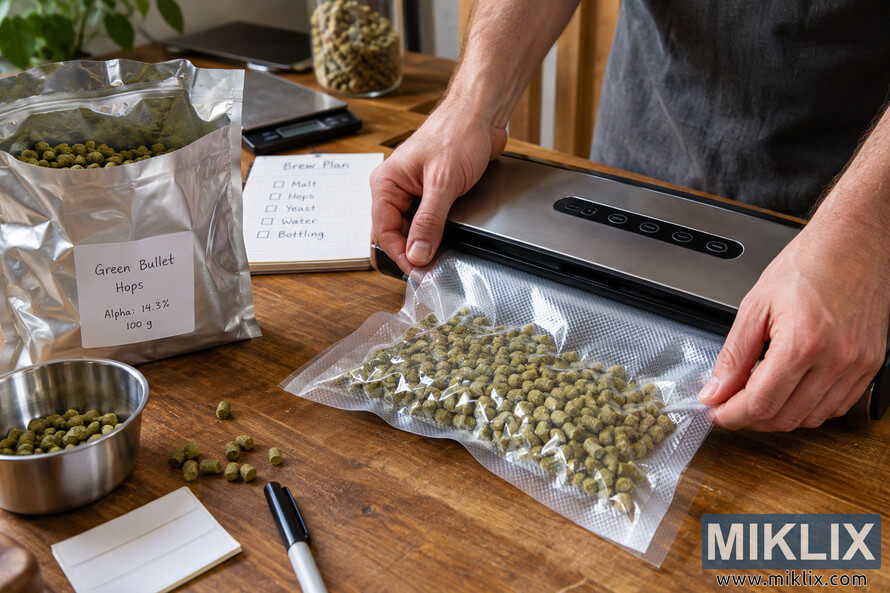
A home brewer uses a vacuum sealer to repackage opened Green Bullet hop pellets for storage, surrounded by brewing supplies on a wooden workbench.
Available versions of this image
The image files available for download below are less compressed and higher resolution - and as a result of that, higher quality - than the images embedded in articles and pages on this website, which are more optimized for file size in order to reduce bandwidth consumption.
Regular size (1,536 x 1,024)
Large size (3,072 x 2,048)
Very large size (4,608 x 3,072)
Extra large size (6,144 x 4,096)
Comically large size (1,048,576 x 699,051)
- Still uploading... ;-)
Image description
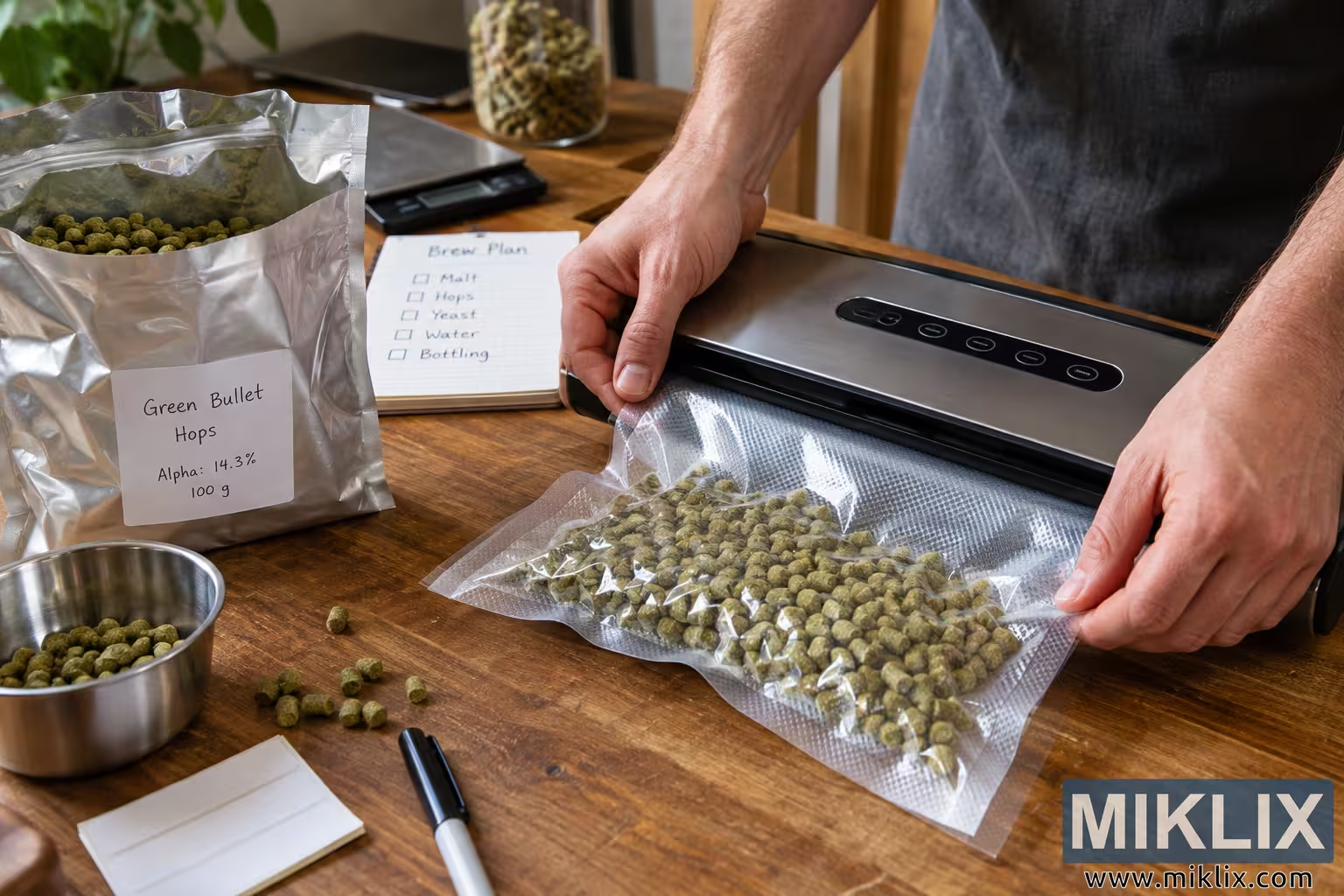
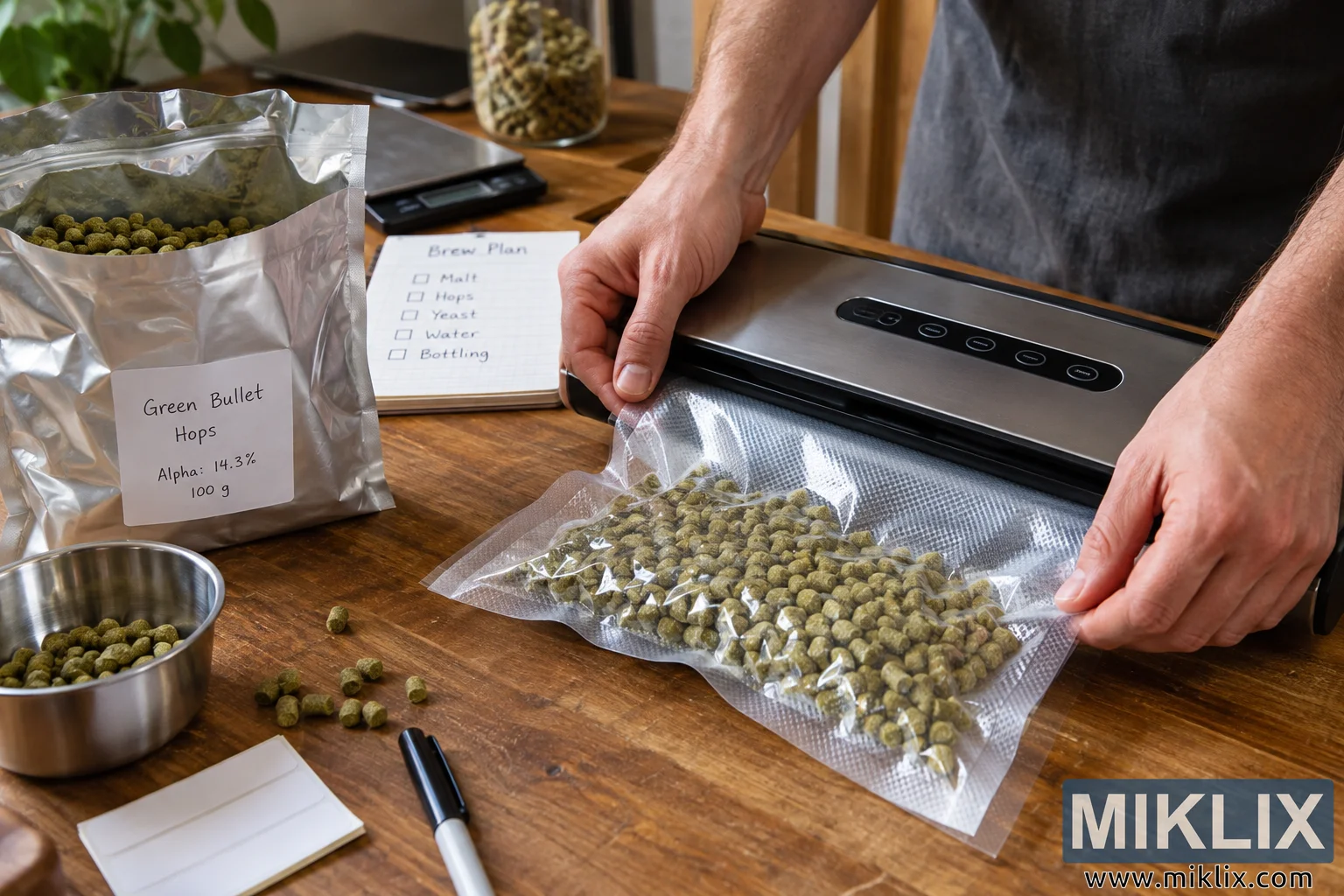
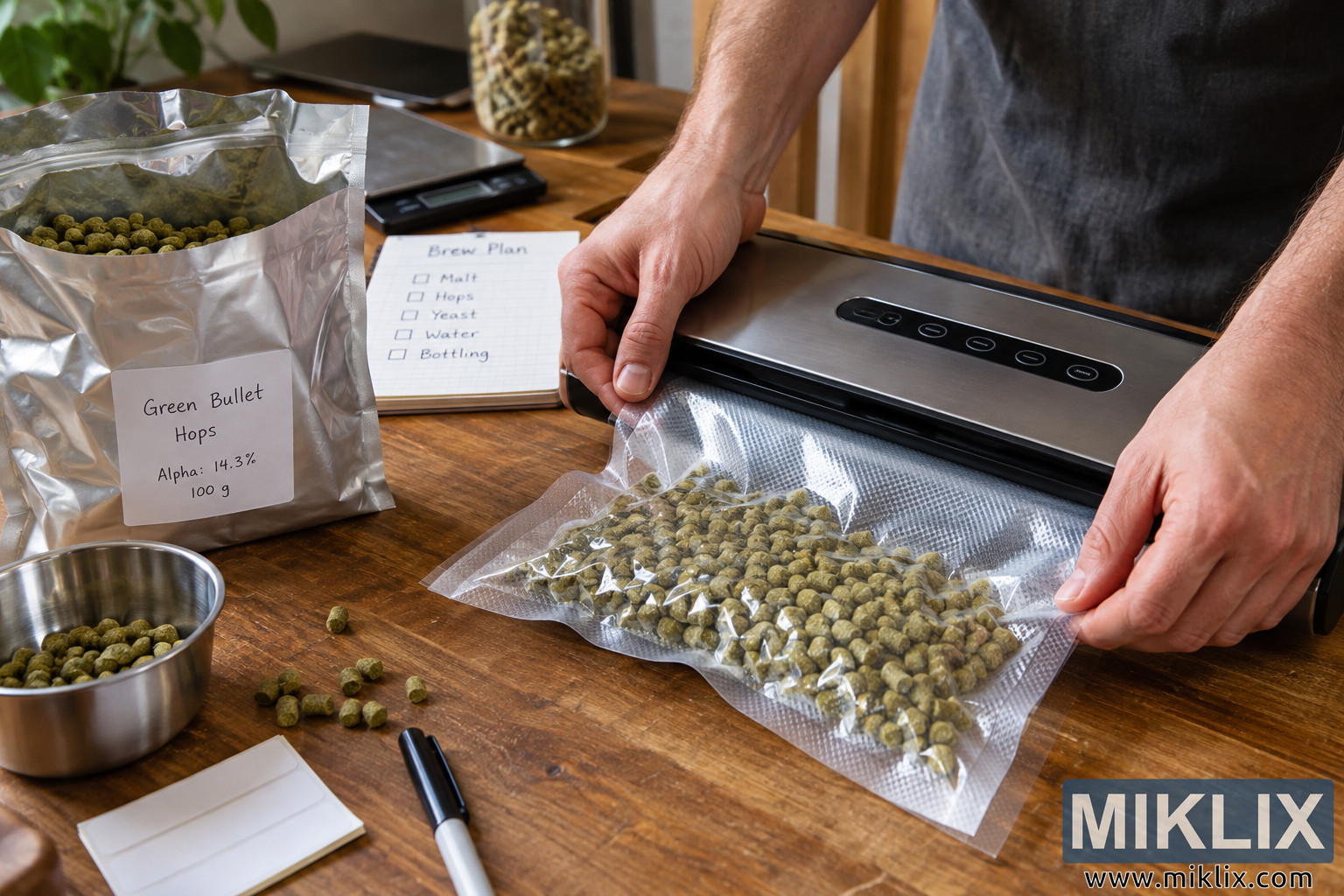
A detailed, warmly lit landscape photograph shows a home-brewing workspace where a person is in the process of vacuum sealing a portion of Green Bullet hop pellets for storage. The scene is photographed from a slightly elevated, close perspective, placing the viewer directly at the wooden workbench and emphasizing the practical process of repackaging an opened supply of hops. Only the person's torso, forearms, and hands are visible, keeping the attention on the ingredients and equipment rather than on an individual identity. The person wears a simple dark gray shirt and stands behind a large, sleek vacuum sealing machine positioned toward the right and center of the image. The appliance has a brushed stainless steel upper surface, dark trim, and a row of understated black control buttons. There are no visible manufacturer logos or recognizable commercial brand markings on the machine.
The central action involves a transparent, textured vacuum-sealer bag filled with numerous small green hop pellets. The bag extends from the foreground toward the vacuum sealer, with its open end positioned at the mouth of the machine. The person's left hand carefully holds and aligns the upper edge of the plastic bag near the sealing mechanism, while the right hand steadies the opposite side. The positioning of the hands makes it clear that the hops are being prepared for vacuum sealing rather than simply being poured or handled. The transparent material of the bag allows the individual hop pellets to remain clearly visible. They have the characteristic compact, cylindrical appearance of pelletized brewing hops and range from muted olive green to yellow-green tones. The textured plastic catches highlights from the room, producing small reflections and emphasizing the heavy-duty material commonly used for vacuum storage.
To the left of the vacuum sealer is the opened original supply pouch. It is a large, reflective silver foil bag standing upright on the workbench with its resealable opening spread apart. More green hop pellets are clearly visible inside the pouch, reinforcing the idea that only part of an opened package is being transferred into a smaller vacuum-sealed portion. A plain white handwritten label on the front identifies the contents as Green Bullet hops and includes information about the alpha-acid percentage and package quantity. The packaging is intentionally generic and contains no commercial logo, manufacturer name, trademark, or other brand identity. Its simple metallic construction and handwritten-style labeling give the scene the appearance of a practical home-brewing setup rather than a commercial product advertisement.
A small stainless steel bowl sits in the lower-left portion of the image and contains another quantity of green hop pellets. Several loose pellets have spilled or been deliberately placed on the wooden surface beside the bowl, adding natural detail and making the workspace feel actively used. Their rough, compressed texture contrasts with the smooth reflective metal of the bowl and the glossy plastic vacuum bag. In the foreground is a black-and-white marker lying diagonally across the table near a small stack of blank adhesive labels. These objects suggest that the newly sealed portions can be labeled after packaging, an important step when storing different hop varieties or dividing ingredients into measured quantities.
Behind the opened hop pouch, a compact digital kitchen scale rests on the rear section of the workbench. Its dark platform and small display are visible but not emphasized. The scale contributes to the brewing context by suggesting that the hops may have been weighed before being placed into the vacuum bag. Farther back, near the center of the image, a transparent glass jar filled with additional hop pellets stands against the softly blurred background. The jar provides another visual indication of ingredient storage while also adding depth to the composition.
A small notebook or brewing checklist lies between the opened hop package and the vacuum sealing machine. The page is headed with a simple reference to a brewing plan and contains a vertical series of checkboxes associated with typical brewing ingredients or stages, including items such as malt, hops, yeast, water, and bottling. This subtle prop establishes the setting as a home-brewing or small-scale craft-brewing workspace rather than an ordinary food-storage scene. It also complements the organized nature of the repackaging process: ingredients are being measured, portioned, sealed, labeled, and stored as part of a broader brewing workflow.
The work surface itself is made from richly grained, medium-toned wood with visible natural variations, scratches, and marks that give it a well-used workshop character. Warm ambient light falls across the table from the left and front, producing gentle highlights on the foil pouch, stainless steel bowl, vacuum sealer, and transparent plastic bag. The person's forearms are also softly illuminated, while the darker shirt and shadowed background create contrast that draws the eye toward the hands and the hops. The lighting is realistic and inviting rather than dramatic, resembling daylight entering a kitchen or hobby room.
In the upper-left background, green leaves from a houseplant introduce a small natural element that visually echoes the green color of the hop pellets. The remainder of the background is softly out of focus, ensuring that the foreground activity remains the dominant subject. The shallow depth of field gives the photograph a polished but believable documentary quality. Objects closest to the sealing process are rendered with crisp detail, including the texture of the pellets, wrinkles in the foil pouch, fine patterning in the vacuum bag, wood grain, and contours of the person's hands.
Overall, the image communicates a clear sequence and purpose: an opened supply of Green Bullet hops is being divided and repackaged with a vacuum sealer so that the remaining hops can be stored in a compact, airtight package. The combination of the opened foil pouch, loose pellets, measuring equipment, blank labels, marker, brewing notes, and actively positioned vacuum bag makes the process immediately understandable. The scene feels tidy enough to be instructional while retaining realistic signs of active work, such as scattered pellets and equipment spread across the table. Its landscape composition provides generous horizontal space for the workbench and surrounding brewing accessories while keeping the vacuum sealing action at the visual center. The result is a realistic, high-detail representation of a home brewer preserving opened Green Bullet hop pellets, with generic, non-branded equipment and packaging throughout.
The image is related to: Hops in Beer Brewing: Green Bullet