
Image: Different Yeast Strains for Advanced Brewing Applications
Published: October 1, 2026 at 4:38:59 PM UTC
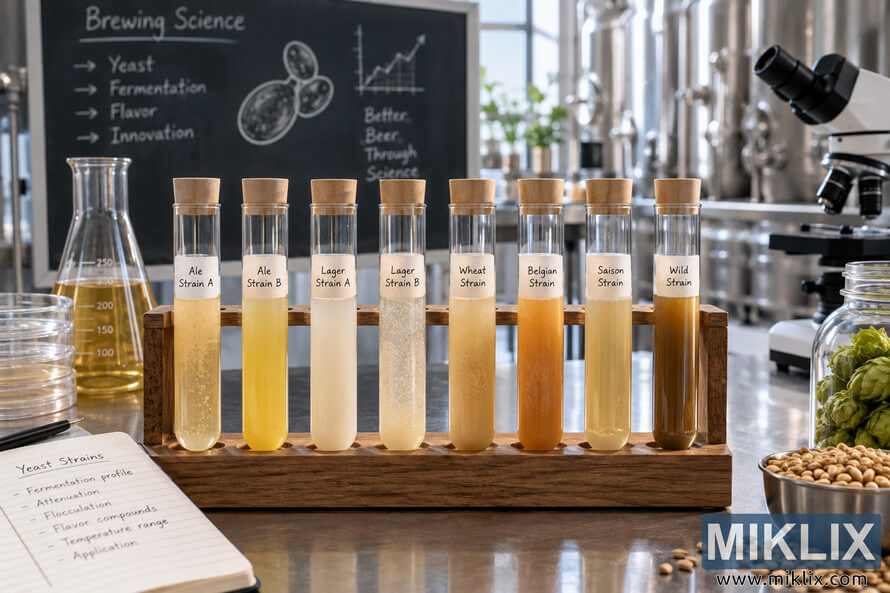
Different brewing yeast strains displayed in laboratory test tubes alongside brewing science equipment, hops, malt, and fermentation tanks for advanced brewing research.
Available versions of this image
The image files available for download below are less compressed and higher resolution - and as a result of that, higher quality - than the images embedded in articles and pages on this website, which are more optimized for file size in order to reduce bandwidth consumption.
Regular size (1,536 x 1,024)
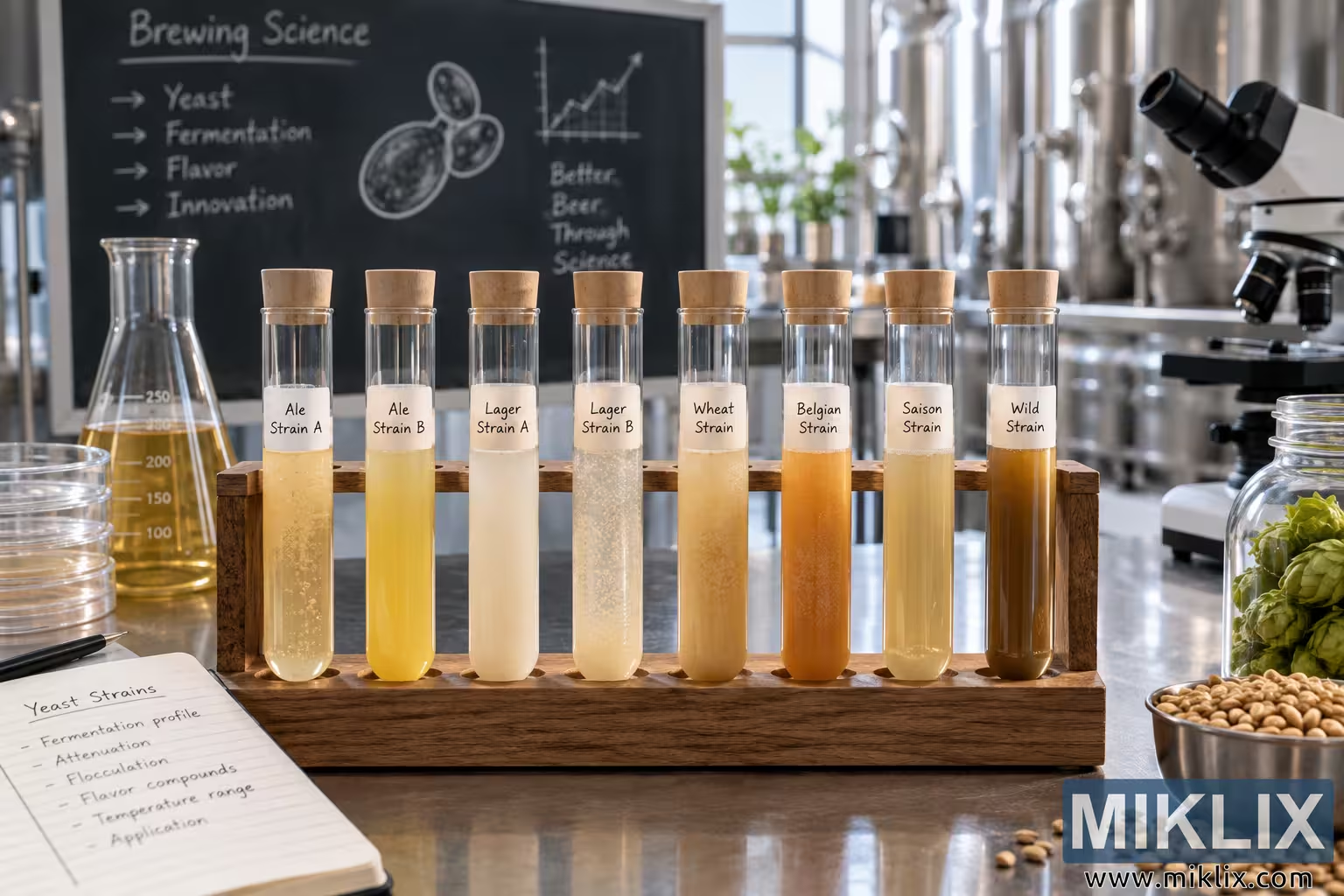
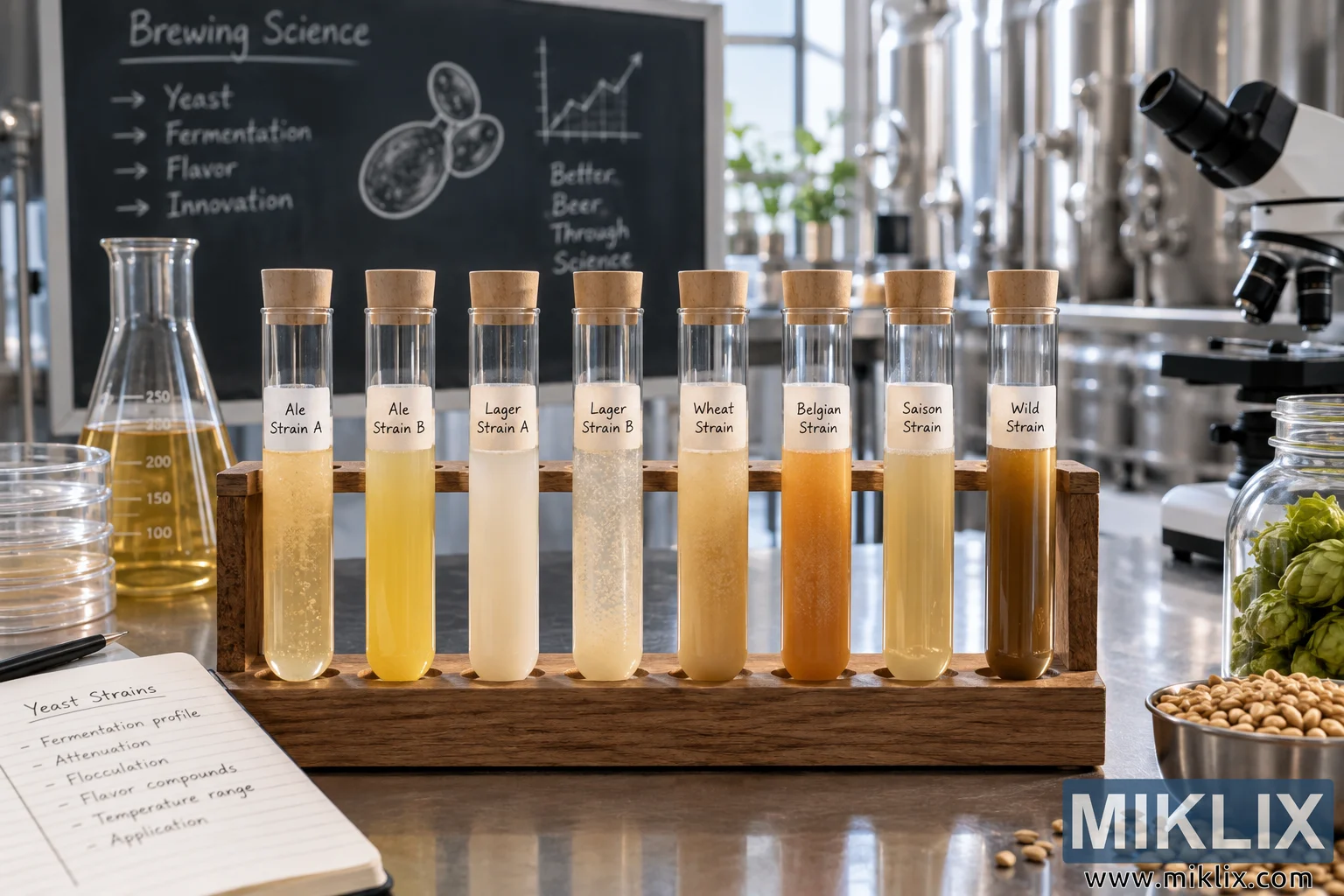
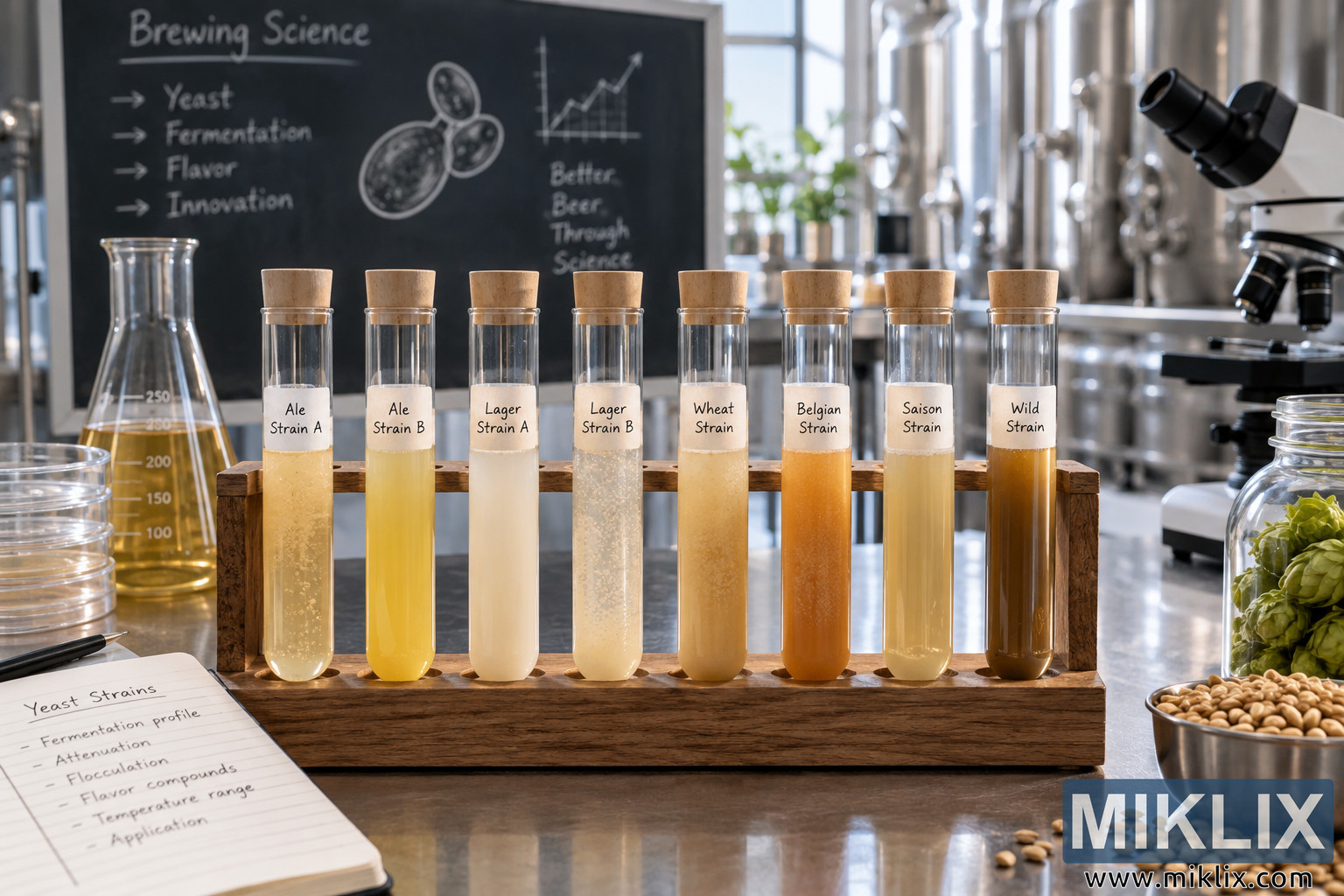
Large size (3,072 x 2,048)
Very large size (4,608 x 3,072)
Extra large size (6,144 x 4,096)
Comically large size (1,048,576 x 699,051)
- Still uploading... ;-)
Image description
A high-resolution, landscape-oriented photograph depicts a sophisticated brewing science laboratory focused on the study and comparison of different yeast strains for advanced brewing applications. The central subject is a sturdy wooden laboratory rack positioned prominently on a reflective stainless-steel work surface. Eight transparent glass test tubes are arranged neatly in a single row inside the rack, creating a clear visual progression of brewing cultures. Each tube is sealed with a natural-looking cork stopper and carries a simple white handwritten label identifying a different brewing yeast category or strain. From left to right, the labels include Ale Strain A, Ale Strain B, Lager Strain A, Lager Strain B, Wheat Strain, Belgian Strain, Saison Strain, and Wild Strain. The generic terminology communicates the diversity of microorganisms used in brewing without displaying commercial brands or proprietary product identities.
The contents of the test tubes vary noticeably in color, clarity, opacity, and texture, visually suggesting the biological diversity of the cultures. Some samples are pale yellow and relatively translucent, while others appear cloudy, creamy, golden, amber, or deep brown. Fine bubbles and suspended particles can be seen in several tubes, suggesting active fermentation, yeast growth, sediment, or differences in culture behavior. The variations give the impression that each strain possesses its own fermentation characteristics and could contribute different attenuation levels, aromas, flavors, textures, or other properties to a finished beer. The repeated cylindrical forms of the test tubes and the consistent wooden stoppers establish an orderly scientific composition, while the differences among the liquids immediately communicate experimentation and comparative analysis.
Behind the test-tube rack is a large dark chalkboard that reinforces the scientific brewing context. Written across the top is the heading 'Brewing Science.' Additional handwritten notes reference yeast, fermentation, flavor, innovation, and the idea of improving beer through scientific investigation. A simplified drawing resembling budding yeast cells appears near the center of the board, accompanied by a small upward-trending graph. These elements suggest laboratory research, strain evaluation, fermentation optimization, and the systematic study of brewing microorganisms. The chalkboard is slightly softened by the photographic depth of field, keeping the test tubes as the dominant focal point while allowing the scientific information in the background to remain recognizable.
The laboratory environment combines microbiology equipment with unmistakable brewing-related objects. On the right side of the image, a professional microscope occupies part of the workbench, its eyepieces angled toward the center of the scene. Behind it stand large stainless-steel fermentation or brewing vessels with polished metallic surfaces, valves, fittings, and industrial details. Their presence connects the small-scale laboratory cultures in the foreground with larger brewing and fermentation processes. Bright windows and clean architectural elements contribute natural illumination and make the space feel modern, controlled, professional, and hygienic.
Additional laboratory and brewing materials are distributed around the central rack to provide context without overwhelming the primary subject. To the left is a clear laboratory flask containing a golden-yellow liquid and marked with measurement graduations. Nearby are stacked transparent petri dishes, suggesting microbiological culturing and quality-control procedures. In the lower-left foreground, an open laboratory notebook contains handwritten notes under a heading about yeast strains. The visible entries reference concepts such as fermentation profile, attenuation, flocculation, flavor compounds, temperature range, and application, emphasizing the analytical criteria that brewers and fermentation scientists might consider when selecting microorganisms for a particular brewing objective. A dark pen rests near the notebook, giving the impression that observations and experimental results are actively being documented.
On the right side, a clear glass container holds green hop cones, while a metal bowl contains pale malted grain. Several individual grains are scattered naturally across the reflective work surface. These ingredients provide an immediate visual link between the microbiological research and practical beer production. The hops introduce organic green forms that contrast with the glass, wood, and stainless steel, while the malt contributes warm beige and golden tones. Together with the cultured yeast samples, these ingredients represent several of the fundamental biological and agricultural components involved in brewing.
The photograph uses a balanced, symmetrical composition centered on the eight test tubes. The warm brown wooden rack contrasts with the cool metallic laboratory surfaces and industrial fermentation tanks. Golden, cream, amber, and brown culture samples provide subtle color variation across the center of the frame. Reflections on the stainless-steel bench add depth and realism, while the glass surfaces capture highlights from the surrounding windows and laboratory lighting. The background is moderately blurred, producing a professional photographic depth of field that separates the yeast cultures from the larger laboratory environment without removing contextual details.
Overall, the image communicates precision, experimentation, microbiology, fermentation research, and advanced brewing development. It presents yeast not merely as a generic brewing ingredient but as a diverse collection of specialized strains that can be studied, compared, selected, and applied according to specific fermentation goals. The combination of test tubes, microscope, petri dishes, scientific notes, hops, malt, laboratory glassware, and stainless-steel brewing vessels creates a convincing visual bridge between laboratory-scale microbial research and professional brewing practice. The scene contains no visible commercial branding, logos, branded packaging, or identifiable proprietary products, giving it a neutral scientific and educational character suitable for illustrating topics such as yeast strain selection, brewing microbiology, fermentation science, brewery research and development, quality control, experimental beer production, and advanced brewing applications.
The image is related to: Hops in Beer Brewing: Green Bullet