
Image: Proper vs. Over-Extracted Dry Hopped Beer Samples
Published: October 1, 2026 at 4:38:59 PM UTC
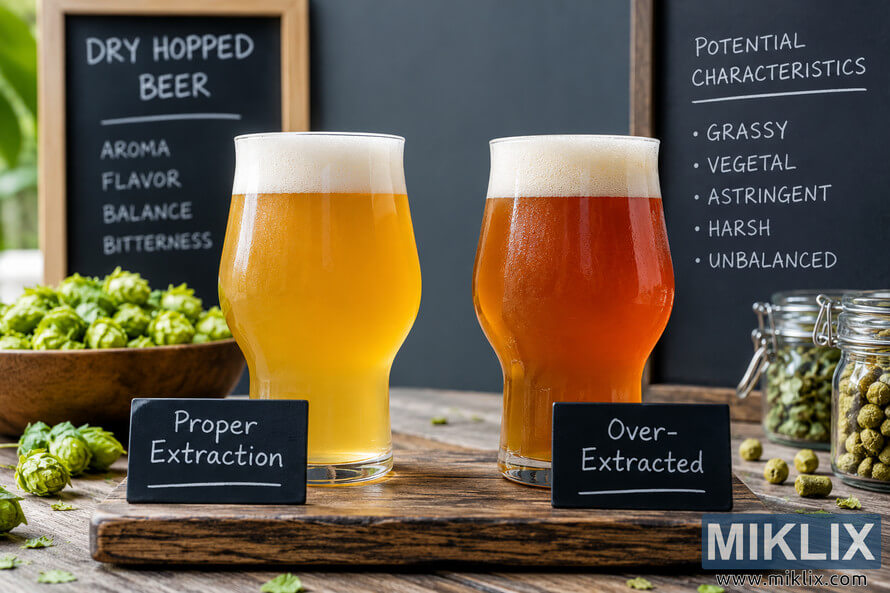
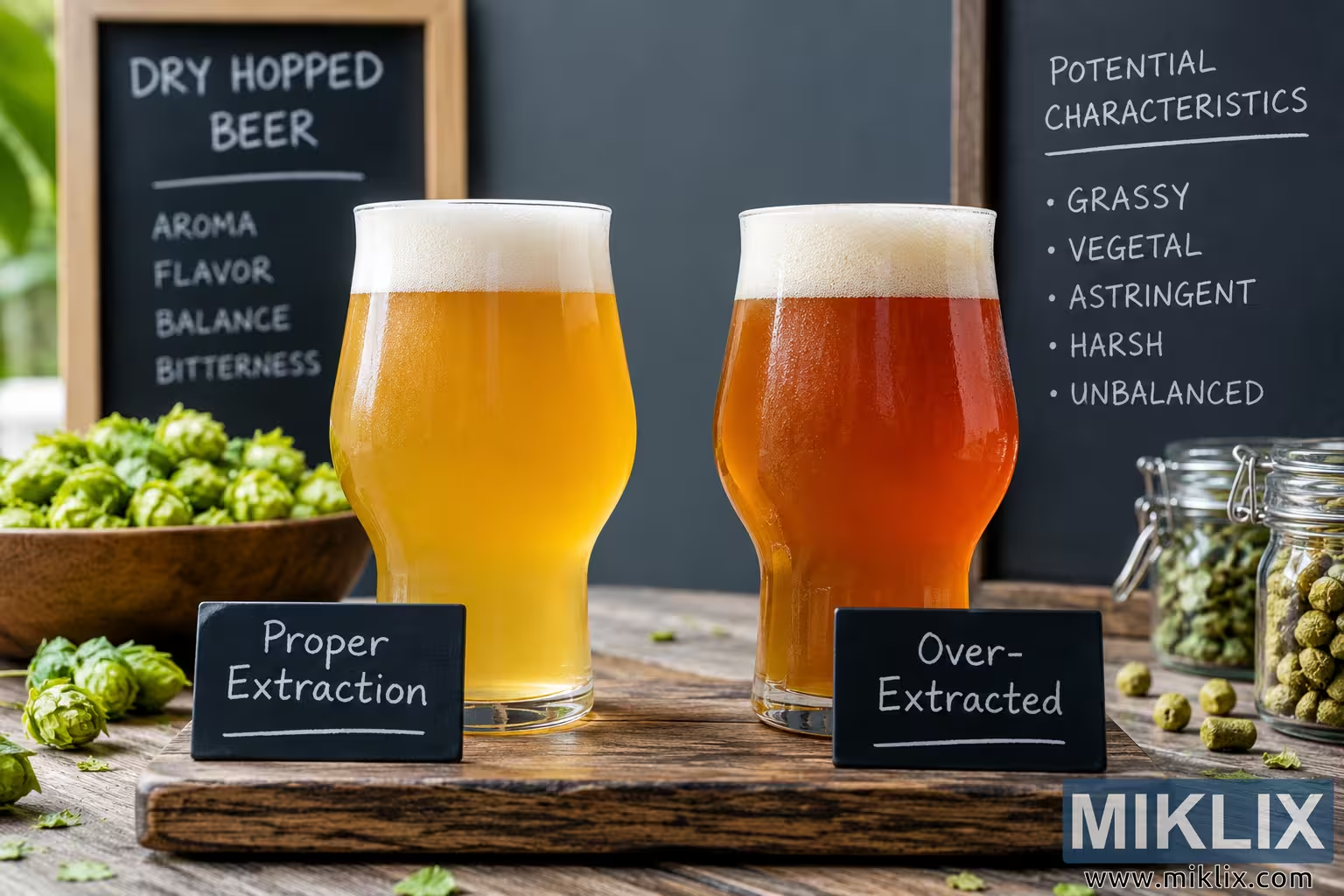
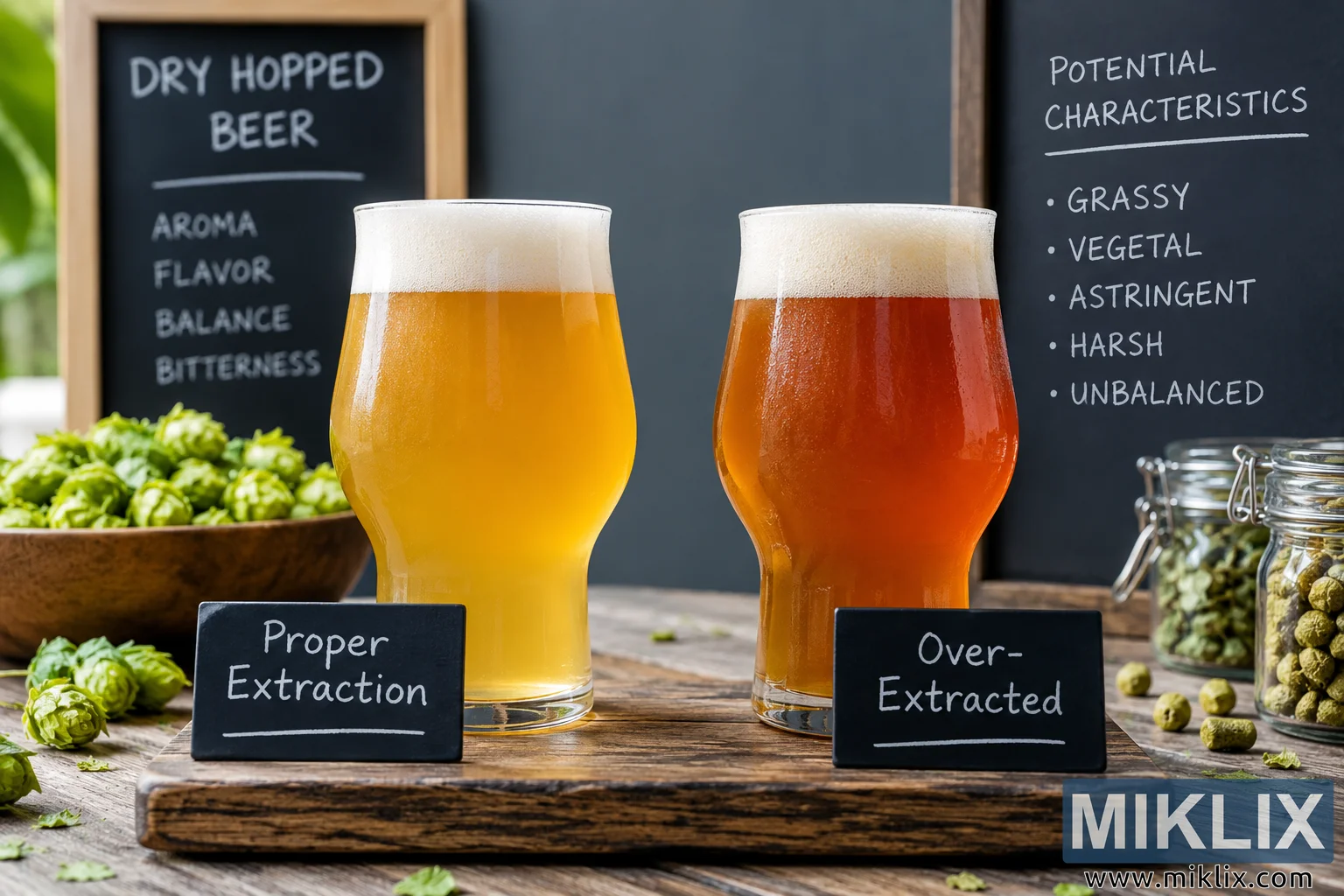
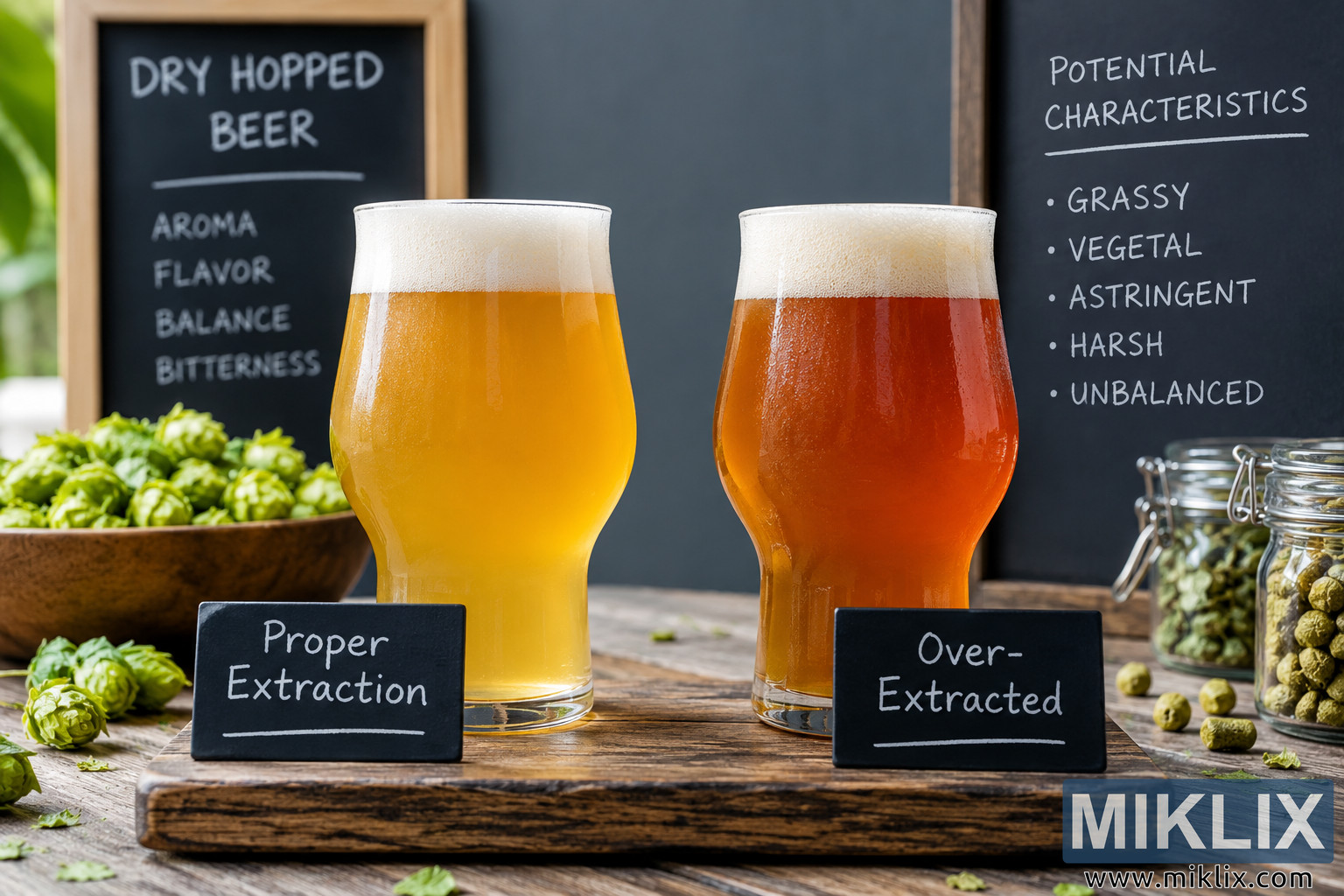
Educational comparison of properly extracted and over-extracted dry hopped beer, showing two beer samples with hops and sensory notes such as grassy, vegetal, harsh, and unbalanced.
Available versions of this image
The image files available for download below are less compressed and higher resolution - and as a result of that, higher quality - than the images embedded in articles and pages on this website, which are more optimized for file size in order to reduce bandwidth consumption.
Regular size (1,536 x 1,024)
Large size (3,072 x 2,048)
Very large size (4,608 x 3,072)
Extra large size (6,144 x 4,096)
Comically large size (1,048,576 x 699,051)
- Still uploading... ;-)
Image description
A landscape-oriented, photorealistic educational still-life image presents a side-by-side comparison of two dry hopped beer samples, illustrating the visual and conceptual difference between proper extraction and over-extraction. The composition is arranged on a rustic wooden tabletop with a thick, dark-edged wooden serving board occupying the lower center of the frame. Two tall, modern beer glasses stand prominently on this board and form the central focus of the image. Both glasses contain beer and have generous, creamy white foam heads, but the color and appearance of the liquid differ noticeably. The glass on the left represents a properly extracted dry hopped beer. Its beer is a bright, luminous golden-yellow to light orange color, with a slightly hazy appearance that catches the warm light passing through the glass. The liquid looks fresh, vibrant, and inviting, and the pale color contrasts strongly with the dark background. A small rectangular black chalkboard-style sign sits directly in front of this glass. Written in casual white chalk lettering are the words "Proper Extraction," with a horizontal chalk line underneath. The glass on the right represents an over-extracted dry hopped beer. It contains a noticeably darker beer with a deeper amber, burnt orange, and reddish-brown tone. The beer appears visually heavier and more intense than the sample on the left. It also has a substantial off-white foam head. In front of the right-hand glass is a matching small black chalkboard-style sign bearing the words "Over-Extracted" in white handwritten lettering, again accompanied by a simple horizontal underline. The two glasses are similar in shape and size, making their contrasting beer colors easy to compare directly. Behind the glasses, large dark chalkboards provide contextual information and reinforce the educational, sensory-analysis theme. On the left side, a framed blackboard displays the heading "DRY HOPPED BEER" in large white chalk-style letters. Beneath the heading is an underline, followed by a vertical list of sensory and quality attributes: "AROMA," "FLAVOR," "BALANCE," and "BITTERNESS." Some of this background writing is softly out of focus because the camera's depth of field emphasizes the two beer samples in the foreground. On the right side, another dark chalkboard carries the heading "POTENTIAL CHARACTERISTICS," underlined in white. Below it is a bulleted list describing undesirable qualities associated with excessive extraction: "GRASSY," "VEGETAL," "ASTRINGENT," "HARSH," and "UNBALANCED." These words are clearly visible and provide explanatory context for the darker over-extracted sample. Brewing ingredients and hop-related materials are distributed around the scene. At the lower left and along the left edge of the wooden surface are numerous fresh green hop cones. Several are clustered in a shallow wooden bowl behind the left beer glass, while others are scattered individually across the table and foreground. Their vivid green color provides a natural visual connection to dry hopping and contrasts with the warm gold and amber tones of the beer. On the right side are clear glass storage jars containing dried hop material and compact green hop pellets. One jar has a hinged metal clasp lid, while another open or prominently visible jar contains cylindrical hop pellets. Additional pellets are scattered loosely on the tabletop nearby. Small fragments of green hop leaves or plant material are also distributed across the wooden surface and around the serving board, giving the scene the appearance of an active brewing or sensory evaluation workspace. The background is dark and muted, allowing the illuminated beer glasses and green hops to stand out. Soft natural-looking light appears to enter from the left, producing highlights on the glassware, illuminating the golden beer especially strongly, and creating subtle reflections and condensation-like texture on the glass surfaces. A blurred green plant or foliage is visible at the far left edge, adding freshness and depth without distracting from the comparison. The photography uses a shallow depth of field: the two beer glasses, their labels, and much of the right-hand explanatory chalkboard are relatively sharp, while portions of the rear left chalkboard and peripheral background become progressively softer. The perspective is approximately eye-level with the beer glasses, making the viewer feel as though the samples have been placed directly in front of them for inspection. The overall color palette combines warm honey gold, amber, reddish brown, natural wood tones, vivid hop green, creamy white foam, and charcoal-black chalkboards. The atmosphere evokes a craft brewery, brewing laboratory, tasting room, or educational workshop rather than a commercial advertisement. No recognizable commercial beer brands, brewery logos, product packaging, trademarks, or branded glassware are visible. Instead, the image relies on generic brewing ingredients and handwritten educational labels. Conceptually, the left sample communicates desirable, controlled extraction and balance, while the darker right sample is paired with terminology suggesting excessive contact or extraction and resulting grassy, vegetal, astringent, harsh, or unbalanced sensory characteristics. The symmetrical placement of the two glasses makes the image function as a clear visual comparison, while the surrounding hops, pellets, jars, chalkboards, and rustic wood establish the dry hopping context. The finished scene is detailed, realistic, warmly illuminated, and designed to communicate the distinction between proper and excessive extraction in dry hopped beer at a glance while also offering additional explanatory information for viewers who examine the background text.
The image is related to: Hops in Beer Brewing: Green Bullet