
Hops in Beer Brewing: Hallertau Tradition
Published: March 14, 2026 at 10:00:03 PM UTC
Hallertau Tradition stands out among noble German hops, celebrated for its subtle, refined aromas. It's often used as an aroma hop for late kettle additions and dry hopping. This highlights its floral and herbal notes.
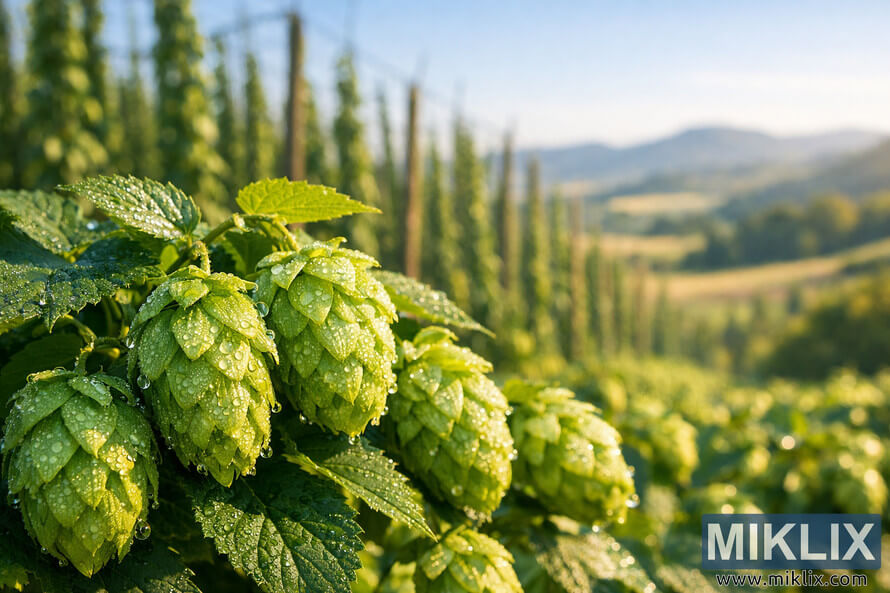
Click or tap the image for more information and higher resolutions.
Hallertauer hops, including Hallertau Tradition, are cataloged with identifying codes by breeders and suppliers. This hop is widely available from various retailers and distributors. Its reputation as a noble, refined aroma hop makes it a staple in hop catalogs and supplier pages. However, prices and availability can fluctuate based on harvest year and supplier.
Key Takeaways
- Hallertau Tradition is a classic noble German aroma hop favored for floral and herbal notes.
- Best used as a late-addition or dry-hop variety for lagers, pilsners, and wheat beers.
- Availability and price depend on harvest year and supplier; shop multiple sources.
- Hallertau Tradition hops are regularly listed in hop catalogs with clear cultivar identifiers.
Overview of Hallertau Tradition Hops
Hallertau Tradition is a classic aroma hop in German brewing. It's celebrated for its mild floral profile and balanced bitterness. This makes it perfect for lagers and pilsners.
Origin and registration history
The Hop Research Institute in Hüll bred this variety. Its formal registration in 1993 marked its commercial debut. This registration highlights the selection of noble aroma traits and improved agronomic stability.
Genetic lineage: Hallertau Gold, Mittelfrüher and Saaz
Hallertau Tradition has Hallertau Gold as one parent. It also includes Hallertau Mittelfrüher and Saaz in its lineage. This blend offers soft spice, floral lift, and noble character. It's why German malt- and hop-focused breweries widely adopt it.
Where it’s grown and harvest season in Germany
Tradition is mainly grown in Bavaria, within the Hallertau region. It follows the local cycle, defining Germany's hop harvest season. Harvests start in late August and go into September. This timing ensures the cones reflect the autumn season.
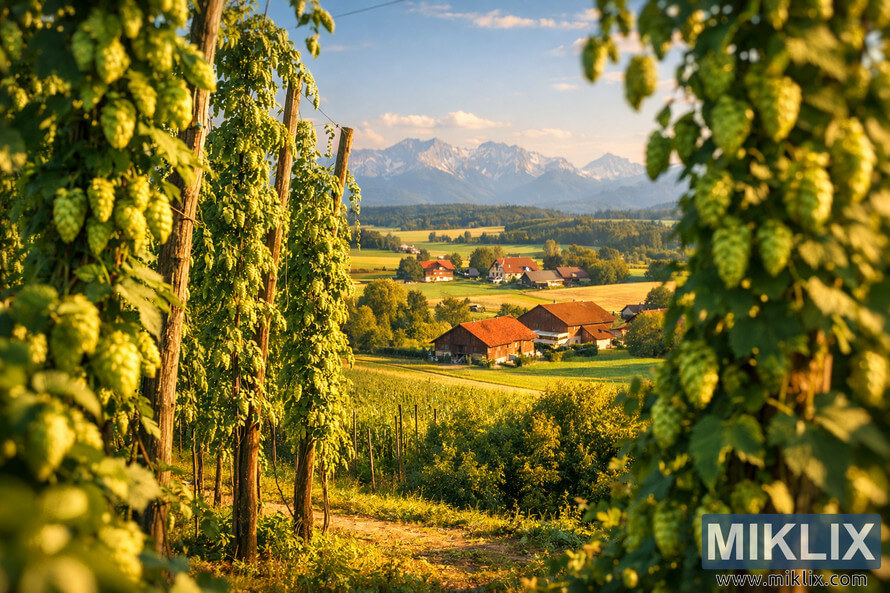
Click or tap the image for more information and higher resolutions.
Hallertau Tradition hops
The Hallertau Tradition hop is a classic among German aroma varieties. It is cherished for its soft, noble scent, reminiscent of traditional Hallertau. This heritage is reflected in its commercial name, making it easy to understand its origins in catalogs and tasting notes.
The Tradition label was given to preserve the floral and herbal notes of older Hallertau varieties. Breeders aimed to enhance these traits while improving the plant's growth characteristics. The name "Tradition" connects it to Germany's rich hop heritage and is often compared to Hallertauer Mittelfrüher by suppliers.
The hop's international identifiers underscore its lineage. You'll find the HTR hop code in trial reports and trade sheets. The cultivar is listed as 78/28/16 on technical pages. These codes facilitate matching specifications across European and American markets.
- Common trade name: Tradition or Hallertau Tradition
- International code: HTR hop code
- Cultivar ID: cultivar 78/28/16
Availability can vary by year and vendor. Large hop merchants, specialty homebrew retailers, and online marketplaces offer Tradition in pellet and whole-cone formats. Buyers should compare harvest year, alpha acid range, and package size before making a purchase.
Typically, German cooperatives and U.S. distributors stock noble aroma hops like Tradition. Inventory changes with each harvest. Therefore, professional brewers and hobbyists often order early to secure the best lots and maintain consistent aroma in their seasonal brews.
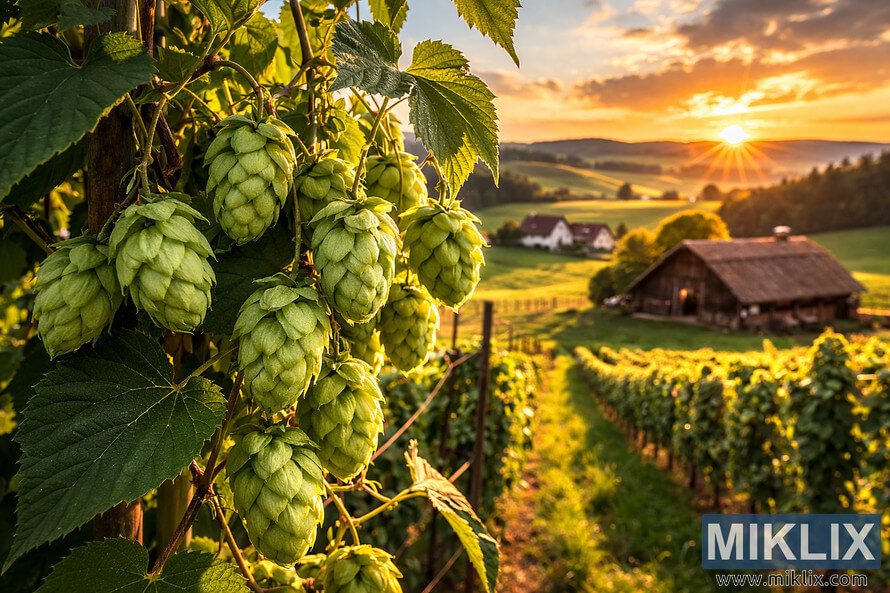
Click or tap the image for more information and higher resolutions.
Flavor and aroma profile of Hallertau Tradition
Hallertau Tradition aroma is known for its gentle, noble character. It's perfect for delicate lagers and pilsners. Brewers love its balance of fresh top notes and softer, earthy undertones. To preserve the hop's volatile oils, timing and technique are key.
The primary impressions are floral grassy herbal hops. They open on the nose without overpowering the malt. Expect soft blossoms, a light hay-like grassiness, and a pleasant herbal backbone. This lets malt and yeast remain central, while the hop adds refinement.
Secondary aromas include hints of nectar fruit hops, adding a mild stone-fruit sweetness. A subtle earthiness sits beneath, adding depth and restraint. This layered profile makes Tradition versatile for mixed hop bills.
How you add the hops shifts perception. Late additions and dry hopping preserve delicate oils. This lifts the floral grassy herbal hops to the forefront. Long boils, however, dissolve those volatiles, leaving less fruit and blossom and more muted green notes.
- Use 5–15 minute late kettle additions to keep bright top notes.
- Dry hop aroma blossoms most when hops are added post-fermentation for 3–5 days.
- Avoid extended high-temperature contact if you want nectar fruit hops to remain noticeable.
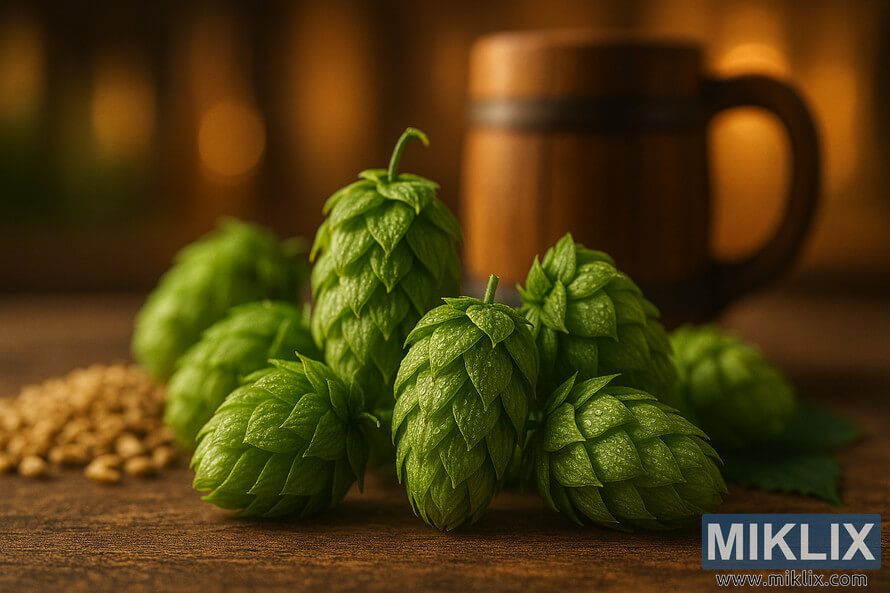
Click or tap the image for more information and higher resolutions.
Brewing values and chemical composition
The chemical makeup of Hallertau Tradition influences brewing techniques. The alpha, beta acids, and co-humulone levels predict hop bitterness and aroma retention. These values are crucial for recipe formulation.
- Alpha acids typically range from 4.6–7.0%, with an average of 5.8%.
- This range positions Tradition as a hop for moderate bitterness, ideal for late additions to enhance aroma rather than for high-IBU bittering.
- Calculating IBUs, expect a gentle, rounded bitterness rather than a sharp, aggressive bite.
Beta acids and alpha-beta ratios
- Beta acids usually fall between 3% and 6%, averaging about 4.5%.
- Beta acids do not contribute to bitterness during boiling but play a role in long-term aroma stability and oxidation.
- The alpha-to-beta ratio ranges from roughly 1:1 up to 2:1, with an average near 2:1. This balance affects hop bitterness and aroma persistence through conditioning and aging.
Co-humulone percentage and perceived bitterness smoothness
- Co-humulone makes up about 23–30% of the alpha fraction, averaging near 26.5%.
- A moderate co-humulone level suggests smoother perceived bitterness compared with varieties that contain higher co-humulone shares.
- For brewers aiming for soft, noble-style hop bitterness, Tradition’s co-humulone and overall hop chemistry support late-kettle and dry-hop use. This enhances aroma while keeping bitterness balanced.
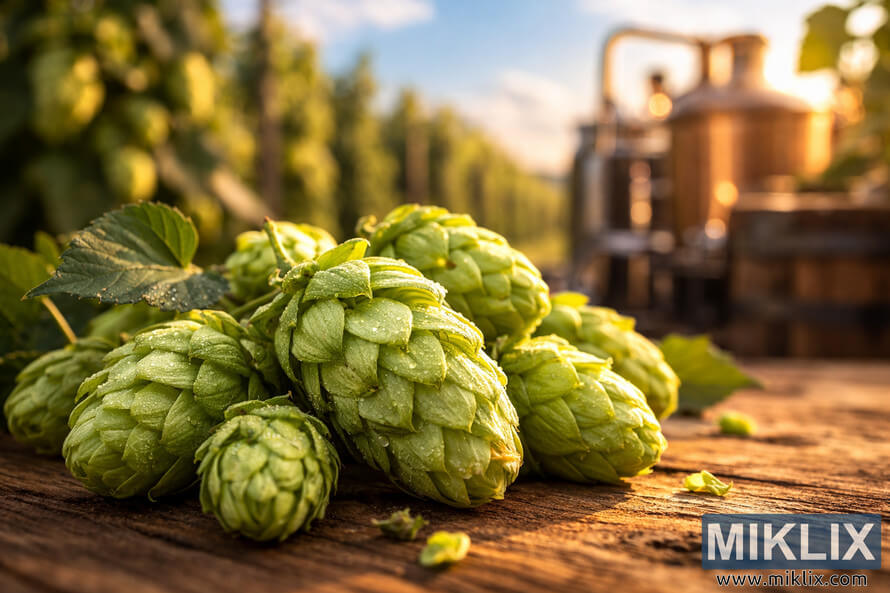
Click or tap the image for more information and higher resolutions.
Essential oil breakdown and sensory impact
The volatile profile of Hallertau Tradition is why brewers cherish its subtle, noble character. Total oils range from about 0.5 to 1.9 mL per 100 g, with an average near 1.2 mL/100 g. This relatively low hop oil composition favors finesse over explosive citrus intensity. It rewards late additions or dry hopping to preserve aroma.
Major oil groups shape the classic bouquet. Myrcene commonly makes up roughly 17–32% of the total, averaging about 24.5%. This compound brings resinous, citrus, and fruity notes when it survives processing. Humulene tends to be the dominant fraction, often 35–50% and averaging near 42.5%. That ratio gives a woody, noble, and slightly spicy backbone. Caryophyllene sits lower, around 10–15% with an average near 12.5%, adding peppery, woody, and herbal facets. Together these proportions define the myrcene humulene caryophyllene balance typical for this variety.
Minor oils modulate the main theme. Farnesene is present at trace levels, usually 0–1% and averaging about 0.5%, and when detected it adds a fresh, green, floral lift. Other components such as β-pinene, linalool, geraniol, and selinene vary more widely and can make up 2–38% of the residual oil mix. Those compounds supply floral, green, and perfumed nuances that round the hop oil composition and make small additions noticeable in delicate lagers.
Sensory implications follow from these numbers. A high humulene percentage supports the noble, slightly spicy frame many brewers seek in Pilsner and classic lager styles. Myrcene contributes fruit and resin but fades during long boils, so late kettle additions or dry hopping preserve its citrus-fruity character. Caryophyllene gives a subtle peppery edge that works well with malt restraint and light yeast profiles.
Practical choices for preserving these aromas include minimizing boil time for late additions and using cold-side techniques to retain volatile oils. Careful handling keeps the hop oil composition intact so Hallertau Tradition essential oils can express their layered, elegant profile in finished beer.
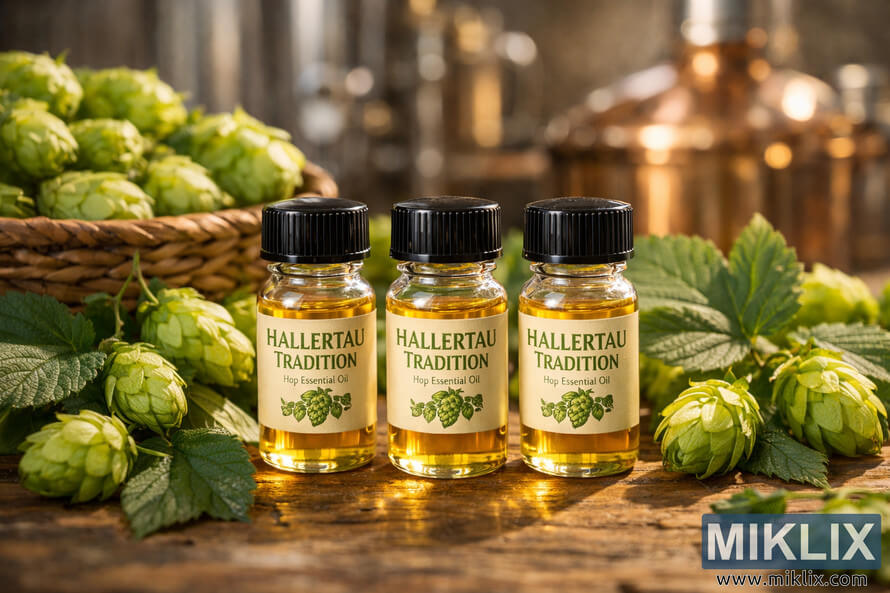
Click or tap the image for more information and higher resolutions.
Typical brewing uses and ideal beer styles
Hallertau Tradition is perfect for beers that seek a subtle, noble character. Its floral, grassy, and light fruit notes enhance where malt clarity is key. Brewers often select Tradition to add a delicate aroma without overpowering the base malts.
- Lager: Tradition pairs well with clean malt profiles, enhancing aroma while keeping bitterness in check.
- Pilsner: Tradition in pilsner highlights noble florals and soft spice, resulting in a refined finish.
- Wheat: Tradition brings gentle herbal and citrus hints, complementing yeast-driven banana and clove flavors.
In session beers, Tradition stands out as the main hop. Its mild bitterness and aromatic clarity allow brewers to showcase nuance at lower bittering levels.
Stronger lagers benefit from layered additions. Use early hops for base bitterness sparingly. Reserve late additions and whirlpool hops to build aroma and mid-palate complexity without harshness.
- Late kettle additions: add Tradition in the last 10–5 minutes to preserve volatile oils.
- Whirlpool: a short, warm rest extracts aromatic oils while limiting vegetal notes.
- Dry hopping: light dry hops reinforce floral and fruity character without boosting bitterness.
Plan late hop addition strategies that match the beer's strength and malt bill. For delicate wheat beers, rely on hop use in wheat beers primarily at whirlpool and dry hop stages. For Tradition in pilsner, emphasize short late additions and a measured whirlpool rest to keep the profile crisp.
Hop substitution and pairing options
When looking for a Hallertau Tradition substitute, focus on aroma and alpha acid levels. Brewers often swap hops to preserve floral, herbal, and noble qualities. Small changes in oil content or AA can shift bitterness and scent, so plan adjustments before the brew day.
Common choices include Hallertau Mittelfrüh, Tettnanger, and East Kent Golding. Each brings a related noble character while offering distinct nuances. Hallertau Mittelfrüher alternative hops match Tradition’s soft floral tone. Tettnanger vs Tradition favors Tettnanger for a slightly spicier, more delicate finish.
- Hallertau Mittelfrüh: gentle, floral, good for lagers and pilsners.
- Tettnanger: light spice and herbal notes, works in both traditional and modern styles.
- East Kent Golding: adds English fruity-earthy depth for ales and hybrid lagers.
- Crystal and Mount Hood: U.S. and German alternatives that approximate Tradition’s profile when needed.
When comparing Tettnanger vs Tradition, focus on oil ratios and alpha acids. Adjust additions to maintain perceived bitterness. Use alpha acid corrections or tweak late additions to keep aroma balance intact.
Blending hops can recreate complexity lost in single-hop substitutions. Blending hops with Tradition or its substitutes helps layer herbal, floral, and fruity notes without raising harshness. Pair low-AA noble varieties with a small percentage of a bolder hop to preserve smooth bitterness while adding dimension.
- Match alpha acid: recalculate bittering additions when using substitutes.
- Balance oils: pair a myrcene-rich hop with a humulene-forward noble for depth.
- Test small batches: trial blends to dial aroma before scaling up.
For practical swaps, treat Mittelfrüher alternative hops as first-choice stand-ins for Tradition in lagers. Use East Kent Golding to shift toward English profiles. Combine Crystal or Mount Hood with a noble partner when German-grown Tradition is unavailable. Careful blending hops and dose adjustments yield consistent results across beer styles.
Availability, formats, and purchasing tips
Hallertau Tradition hops are a favorite among brewers in the United States. You can opt for whole cone hops or processed formats, depending on your brewing style and storage needs. When purchasing online or from a local supplier, ensure you review packaging details, sample reviews, and payment options before finalizing your order.
Whole cone, pellet, and lupulin powder options
Hallertau Tradition is commonly sold as whole cone hops and hop pellets. Homebrewers often prefer pellets for their ease of use and consistent dosing. On the other hand, traditionalists favor whole cone hops for their dry hopping and aroma enhancement capabilities. Currently, lupulin powder for Hallertau Tradition is not widely available from major suppliers like Yakima Chief Hops, BarthHaas, or Hopsteiner.
How harvest year and supplier affect quality
The hop harvest year significantly impacts alpha acids, oil content, and aroma freshness. Hops from recent harvests tend to have brighter floral and herbal notes. Suppliers vary in their harvest years, alpha ranges, and packaging methods. It's crucial to compare these details to ensure they align with your recipe requirements.
Where to buy in the United States and comparison shopping
In the U.S., Hallertau Tradition can be purchased from national distributors, regional retailers, and online shops. Buyers can expect secure payment options such as American Express, Mastercard, Visa, PayPal, Apple Pay, Google Pay, and ACH.
- Compare prices and stated hop harvest year for freshness.
- Choose hop pellets for consistent dosing and filtration benefits.
- Select whole cone hops for traditional handling and gentle dry hops.
- Prioritize vacuum-sealed or nitrogen-flushed packaging to preserve aroma.
When purchasing Hallertau Tradition, always check the product notes for the hop harvest year and storage advice. If lupulin powder becomes available, review the supplier's tech sheets. For now, plan your recipes around whole cone hops or pellets, selecting the format that best fits your brewing process.
Practical brewing recipes and addition schedules
Below are concise, usable templates that show how to use Hallertau Tradition for aroma while keeping bitterness consistent. Use measured alpha acids from your supplier and make small adjustments to hop weights to hit target IBUs. The examples emphasize last-minute kettle additions, whirlpool timing, and dry hopping to preserve volatile oils.
Example Pilsner — late additions and dry hop timing
- Base: Pilsner malt, 90% Vienna or Pils, 10% Carapils for body.
- Bittering: Use a higher-alpha hop like Magnum or Perle at 60 minutes to reach base IBUs.
- Late kettle: Add Hallertau Tradition at 10 minutes and 5 minutes for floral lift. This follows a Tradition Pilsner schedule that focuses Tradition on aroma rather than bittering.
- Whirlpool: Add a larger dose of Tradition at whirlpool (80–90°C) for 15–20 minutes to extract oils without harshness.
- Dry hop: Add Tradition at primary fermentation day 3–5 or during conditioning to highlight nectar-fruit top notes.
Wheat beer application — balancing malt and noble aroma
- Malt bill: 60–70% wheat malt with pilsner or pale malt for balance.
- Bittering: Keep early hops minimal; target low IBUs to let wheat body shine.
- Aroma use: Add small Tradition doses at 10 minutes and a whirlpool addition to give gentle floral and herbal tones without overpowering the grain.
- Dry hop: Light dry hop with Tradition to add noble perfume while maintaining wheat character. These wheat beer hops should emphasize aroma, not bitterness.
Adjusting alpha acid contributions for bitterness control
- Check batch alpha acids: Tradition ranges roughly 4.6–7% AA. Use the supplier’s harvest-year value when you calculate.
- To adjust IBU with Tradition, either increase hop weight proportionally or use a higher-AA bittering hop early in the boil and Tradition later for aroma.
- Example math: If target IBUs require 20 IBUs from Tradition at 5% AA but your Tradition is 6.5% AA, reduce grams/ounces by the AA ratio to maintain the same bitterness.
- For consistent results, brew small test batches or use a reliable IBU calculator that inputs actual AA and boil time.
Use these templates as starting points when building Hallertau Tradition recipes. Tweak timings and grams to taste, and document each brew so you can repeat successful Tradition Pilsner schedule choices and wheat beer hops balances in future batches.
Storage, handling, and preserving aroma
Proper storage is key to keeping hops vibrant and aromatic. Cold, oxygen-free conditions slow oxidation and protect volatile oils. Refrigeration or freezing is the best approach for storing Hallertau Tradition for months.
Best practices for cold, oxygen-free storage
Store hops in a dedicated freezer or fridge at a steady temperature. Use airtight, opaque containers to block light. For long-term preservation, avoid repeated thaw cycles. Remove only the amount needed for a brew and return the rest to cold storage immediately.
- Store pellets or whole cones frozen until use.
- Use nitrogen-flushed packaging when available to reduce oxygen exposure.
- Label packages with harvest year and alpha acid to track quality.
Using vacuum-sealed packs and keeping hops fresh
Vacuum-sealed hops extend shelf life by removing air and slowing acid breakdown. Choose vacuum-sealed packs or supplier nitrogen flushing when buying hops online. Inspect seals on arrival and transfer to vacuum-sealed bags if the original pack shows any compromise.
- Purchase vacuum-sealed hops when possible for best initial storage.
- After opening, reseal with a vacuum sealer or use airtight jars with oxygen absorbers.
- Minimize the time hops sit at room temperature during handling.
How volatile oils are lost during long boils and solutions
Total oils in Hallertau Tradition are relatively low and highly volatile. Long, vigorous boils drive off delicate hop oils that provide aroma and nuance. To protect hop character, rely on late kettle additions, whirlpooling, or dry hopping rather than extended boil schedules.
Follow dry hop best practices to capture aroma effectively. Add hops during active fermentation or after primary fermentation to maximize oil retention. Reduce hop exposure to oxygen during transfer and dry hop contact time to limit loss of volatile compounds.
For hop oil preservation on brew day, cold-side additions and short contact with hot wort work best. When you store Hallertau Tradition hops correctly and use vacuum-sealed hops, you preserve the subtle floral and herbal notes that define this variety.
Comparing Hallertau Tradition to other noble hops
The following notes help brewers weigh Tradition against classic noble varieties. Read them to understand aroma overlaps, chemical contrasts, and practical choices when crafting lagers, pilsners, or wheat beers.
- Flavor similarities: Tradition shares floral, grassy, and herbal topnotes common to Hallertauer Mittelfrüher and Saaz. All three deliver a restrained, refined noble character that suits delicate malt bills.
- Noble hop comparisons: In blind tastings, brewers often note the same soft herbal backbone across these varieties, with Tradition showing a touch more fruitiness than Saaz.
- Oil and alpha contrasts: Tradition typically averages about 5.8% alpha acids with total oils near 1.2 mL/100g. Its humulene is relatively high, around 42.5%, while myrcene sits near 24.5%. Mittelfrüher and Saaz present different AA ranges and oil profiles, which affects perceived bitterness and aroma lift.
- Tradition vs Saaz: Expect a fruitier, rounder aroma from Tradition compared to Saaz’s drier, spicier notes. Alpha acid differences mean Saaz may behave slightly differently for bittering calculations.
- Practical decision factors: Choose Hallertau Tradition when you want a mild, smooth bitterness paired with a subtle fruity twist and classic noble greens. For a drier or more peppery edge, pick Saaz. For a purer old-world floral-herb tone, compare specific harvest data for Mittelfrüher.
- Tradition vs Mittelfrüher: Use Tradition to lift fruity nuance without losing the noble base found in Mittelfrüher. Check alpha acid labels and oil percentages from the supplier and year before final substitution.
When planning recipes, consult lab specs and recent harvest notes. That approach gives control over balance and ensures the chosen noble hop supports your beer’s aroma and bitterness goals.
Sensory evaluation and tasting notes for brewers
Start with a detailed plan for hop sensory work. Allocate quiet time and ensure your glassware is clean. Use identical small samples for fair comparisons. This method allows for consistent evaluation of Hallertau Tradition aroma.
How to conduct a hop aroma and flavor evaluation
- Smell dry whole cones or pellets to capture top notes like floral and grassy.
- Gently crush a small sample and smell again to reveal middle notes such as nectar and subtle fruit.
- For brewed checks, add Tradition late in the boil or perform a single-hop dry hop on a neutral pale wort to isolate hop character.
Descriptors to record: earthy, grassy, nectar, floral
Document short, specific tasting notes for Tradition as you go. Note floral lifts, grassy green tones, and any earthy or herbal roots. Also, observe nectar or light fruit when present. These notes guide recipe tweaks and pairing choices.
Interpreting oil percentages in sensory terms
Translate oil data to the nose: myrcene tends to give resinous, citrus, and fruity impressions. Humulene supports woody, noble, and spicy character. Caryophyllene adds peppery, woody accents. Lower total oils produce subtler aroma than high-oil American hops. Use these cues when you perform hop sensory evaluation to set realistic expectations for intensity and balance.
Industry context and breeding background
The Hallertau Tradition variety was developed at the Hop Research Institute Hüll and registered in 1993. It represents a culmination of Hallertau breeding efforts. These efforts aimed to merge noble aroma characteristics with contemporary brewing demands. Brewers appreciate Tradition for its clean, floral taste, complemented by a hint of fruit.
To enhance aroma and disease resistance, breeders crossed Hallertau Gold with Mittelfrüher and Saaz lines. This lineage connects Tradition to the classic German hop profile, offering growers more consistent yields. The outcome embodies the Hallertau breeding tradition's emphasis on balance and drinkability.
- Bred and registered: 1993 at Hop Research Institute Hüll.
- Lineage highlights: Hallertau Gold, Mittelfrüher, Saaz influences.
- Industry role: noble aroma with a fruitier tilt for delicate lagers and pilsners.
In German brewing traditions, Tradition holds a place among noble varieties, ideal for classic styles. Craft brewers often select Tradition for late additions and dry hopping. This preserves the floral and nectar notes. Its mild bitterness makes it perfect for pairing with delicate malt profiles.
U.S. brewers have increasingly adopted Hallertau Tradition for their lager and pilsner programs. Many American breweries source Tradition in both pellet and whole-cone formats. They prefer it for its aromatic qualities, using small amounts for a subtle lift without dominating the malt.
Adoption trends indicate widespread availability and consistent use in specialty wheat beers and refined lagers. Homebrewers and craft breweries choose Tradition to introduce subtle complexity while honoring German hop traditions. Its ability to balance tradition with modernity keeps it relevant in contemporary brewing.
Conclusion
Hallertau Tradition is a top choice for brewers aiming for a refined noble hop aroma. It offers floral, grassy, and herbal notes with a hint of nectar-fruit. Developed at the Hop Research Institute in Hüll, it was registered in 1993. This variety falls between Mittelfrüher and Saaz in character, adding a fruity twist.
Its chemical makeup supports gentle bitterness and aromatic lift. Alpha acids range from 4.6–7% (average 5.8%), beta acids are near 3–6% (average 4.5%), and total oils are about 1.2 mL/100g. These are dominated by humulene and myrcene.
For brewing, Hallertau Tradition hops are best used in late kettle additions, whirlpool, and dry hopping. This is especially true for lagers, pilsners, and wheat beers. Adjust bittering calculations for its moderate alpha acids and prefer shorter boil times for better aroma retention.
Proper storage is crucial to preserve the hop's delicate oils. Use vacuum or nitrogen packaging and keep it cold and oxygen-free. This ensures the hop's quality from harvest to mash.
Hallertau Tradition is available in whole-cone and pellet formats from various suppliers. This includes mainstream marketplaces, making it easy for U.S. brewers to source. When purchasing, verify the harvest year, packaging method, and seller reputation to ensure quality. In summary, Hallertau Tradition is a versatile hop for subtle aroma, smooth bitterness, and consistent performance in traditional European-style ales and lagers.
FAQ
What is Hallertau Tradition and why is it called "Tradition"?
Hallertau Tradition is a German aroma hop bred at the Hop Research Institute in Hüll. It was registered in 1993. This hop carries classic Hallertau noble characteristics, including floral, grassy, and herbal notes. It also has a slightly fruitier, nectar-like twist. The name "Tradition" reflects its place in the long Hallertau lineage of refined aroma hops used in traditional German lagers and Pilsners.
What is the origin and registration history of Hallertau Tradition?
Tradition was developed at the Hop Research Institute in Hüll and officially registered in 1993. Its breeding program ties it to established Hallertau cultivars and German hop-breeding traditions focused on noble aroma profiles.
What is the genetic lineage of Hallertau Tradition?
Hallertau Tradition is a daughter of Hallertau Gold. It includes genetic input from Hallertau Mittelfrüher and Saaz. This pedigree places it squarely within the Hallertau family and explains its noble, refined aroma.
Where is Hallertau Tradition grown and when is it harvested in Germany?
Hallertau Tradition is grown in Germany following the standard German hop cycle. Harvest typically begins in late August and continues into September. Harvest year and growing conditions affect alpha acids, oil content, and freshness.
What are the commercial identifiers for Hallertau Tradition?
The international code for Hallertau Tradition is HTR. The cultivar/brand ID is listed as 78/28/16. Suppliers and catalogs commonly use "Tradition" or "Hallertau Tradition" in listings.
In what formats is Tradition sold and where can I buy it?
Tradition is commonly available as whole cone and pellet hops. There is no widely produced lupulin powder (Cryo/LupuLN2/Lupomax) version from major lupulin producers. U.S. buyers can purchase Tradition from multiple suppliers and marketplaces, including hop merchants and online retailers such as Amazon. Availability, harvest year, price, and package sizes vary by seller.
What are the primary aroma and flavor descriptors for Tradition?
Expect floral, grassy, and herbal top notes with secondary nectar-fruit and subtle earthy facets. Tags often used by suppliers include #earthy, #grassy, #nectar, #fruity, and #noble.
How does Hallertau Tradition’s aroma change with late additions and dry hopping?
Tradition’s volatile oils are best preserved with late kettle additions, whirlpool rests, and dry hopping. Long boils reduce the floral and fruity top notes. Using it late in the boil or as a dry hop maximizes the delicate nectar-fruit and floral character while retaining noble, spicy undercurrents.
What are the typical alpha and beta acid ranges for Tradition?
Alpha acids typically range from 4.6–7.0% with a historical average near 5.8%, indicating low to moderate bittering potential. Beta acids range from 3–6% with an average around 4.5%.
How should I account for Tradition’s alpha acids when formulating recipes?
Because Tradition is primarily an aroma hop with modest alpha acids, use a higher-AA bittering hop early in the boil or calculate IBUs using the precise alpha value from your supplier’s harvest year. Adjust the hop weight accordingly to achieve consistent bitterness.
What is the co-humulone percentage and why does it matter?
Co-humulone in Tradition ranges roughly 23–30% of total alpha acids (average ~26.5%). That relatively low-to-moderate co-humulone fraction tends to produce a smoother perceived bitterness compared with hops that have higher co-humulone levels.
What is the essential oil breakdown for Tradition and its sensory impact?
Total oils average about 1.2 mL/100 g (range 0.5–1.9). Myrcene averages ~24.5% (resinous, citrus, fruity), humulene ~42.5% (woody, noble, spicy), caryophyllene ~12.5% (peppery, herbal), and farnesene is minor (~0.5%). Other minor oils (β-pinene, linalool, geraniol, selinene) contribute floral and green nuances. The high humulene supports a noble, spicy backbone while myrcene adds fruitiness when oils are preserved.
What beer styles suit Hallertau Tradition?
Tradition excels in Lagers, Pilsners, and Wheat beers—styles that benefit from subtle noble aroma and smooth bitterness. It’s ideal where hop aroma should complement malt rather than dominate.
How does Tradition perform in session beers versus stronger lagers?
In session beers, Tradition’s delicate aroma can act as the focal hop without overpowering the beer. In stronger lagers, use late additions and whirlpool or dry-hop techniques to add aromatic complexity while preserving refinement; also consider boosting early bitterness with a higher-alpha hop if needed.
What addition schedules work best for Tradition?
Use Tradition as late kettle additions (last 10–5 minutes), whirlpool/whirlpool rest, and for dry hopping during fermentation or conditioning. These methods preserve volatile oils and highlight floral, fruity, and herbal nuances.
Which hops make good substitutes for Tradition?
Common substitutes include Hallertau Mittelfrüher, Tettnanger, and East Kent Golding. Crystal and Mount Hood are U.S./German-style alternatives that approximate aspects of Tradition’s profile. When substituting, adjust for alpha acids and oil composition to maintain desired bitterness and aroma balance.
How should I blend Tradition with other hops?
Tradition blends well with other noble, low-alpha hops to increase aromatic complexity while keeping bitterness smooth. Pair with hops that add complementary floral, spicy, or fruity layers. Keep late additions focused on aromatic contributors and use a dedicated bittering hop early if needed.
Does harvest year affect Tradition’s quality?
Yes. Harvest year influences alpha acid levels, total oils, and aroma freshness. Compare supplier harvest years and prefer recent harvests sealed in vacuum or nitrogen-flushed packaging to maximize aroma retention.
What packaging and storage practices preserve Tradition’s aroma?
Store pellets or whole cones cold—refrigerate short-term or freeze for long-term storage—and keep them oxygen-free in vacuum-sealed or nitrogen-flushed packs. Minimize exposure to heat, light, and air to prevent oil loss and alpha/beta acid oxidation.
How should I handle Tradition before use to maximize sensory impact?
Keep hops frozen until use, open packages briefly to limit oxygen exposure, and use hops soon after opening. For evaluation, smell dry pellets or cones, then crush a small sample to assess mid-notes. Brew single-hop late-addition or dry-hop pale wort to isolate hop character.
Are there lupulin or Cryo versions of Tradition available?
Currently there is no widely produced lupulin powder (Cryo/LupuLN2/Lupomax) version of Hallertau Tradition from major producers such as Yakima Chief Hops, BarthHaas, or Hopsteiner. Tradition is usually sold as whole cone or pellet.
What buying and payment considerations should U.S. customers expect when ordering Tradition online?
U.S. retailers commonly offer secure payment options such as ACH Direct Debit, American Express, Apple Pay, Diners Club, Discover, Google Pay, Mastercard, PayPal, and Visa. Reputable hop suppliers typically state they do not store card details and process payments securely. Compare suppliers for harvest year, price, and packaging; choose pellet form for convenience or whole cone for traditional handling.
How do oil percentages translate to tasting notes for brewers?
Myrcene (~24.5%) contributes resinous, citrus, and fruity impressions. Humulene (~42.5%) provides woody, noble, and spicy character. Caryophyllene (~12.5%) adds peppery and herbal facets. Lower total oils (~1.2 mL/100 g) mean aroma is subtler than high-oil American varieties; preserve oils through late additions and dry hopping to hear these notes clearly.
How do Tradition and Hallertau Mittelfrüher compare?
Both share noble, floral, and grassy traits, but Tradition typically shows a higher humulene proportion and a slightly fruitier nectar note. Alpha acids and total oil content differ between varieties and harvests, so choose Tradition when you want a refined noble profile with a subtle fruity lift.
What practical recipe tips use Tradition effectively in a Pilsner?
Use Tradition for late-kettle additions and dry hopping to impart floral and nectar-fruit top notes. Rely on a higher-alpha bittering hop early in the boil or calculate IBUs precisely from your supplier’s alpha acids since Tradition’s average AA is ~5.8%. Keep malt clean and crisp to let the hop aroma shine.
Any special tips for using Tradition in wheat beers?
Make modest late additions or a gentle dry hop to balance wheat’s bready character and highlight floral and fruity aromas. Focus on aroma contributions rather than bittering; Tradition’s smooth bitterness complements wheat without overpowering it.
How should I evaluate Tradition in sensory testing?
Smell dry pellets or cones for top notes, then crush a small sample to reveal middle notes like nectar fruit. Brew a single-hop late-addition or dry-hopped pale wort to isolate flavor and aroma. Record descriptors such as floral, grassy, herbal, earthy, nectar, and fruity while noting intensity and persistence.
What industry role does Tradition play and how widely is it adopted?
Tradition fills a niche for brewers seeking noble aroma with a fruitier tilt. It’s used by craft and home brewers in the U.S. and Europe for refined lagers, Pilsners, and specialty wheat beers. Availability from multiple suppliers and formats supports adoption, with brewers choosing it mainly for late-hop aromatics rather than primary bittering.
Further Reading
If you enjoyed this post, you may also like these suggestions: