
Hops in Beer Brewing: Hallertauer Gold
Published: February 2, 2026 at 7:34:57 PM UTC
Hallertauer Gold is celebrated for its delicate, classic aroma in lagers and ales. It's a favorite among brewers for late addition hops. This protects the floral and spice oils from the boil's heat.
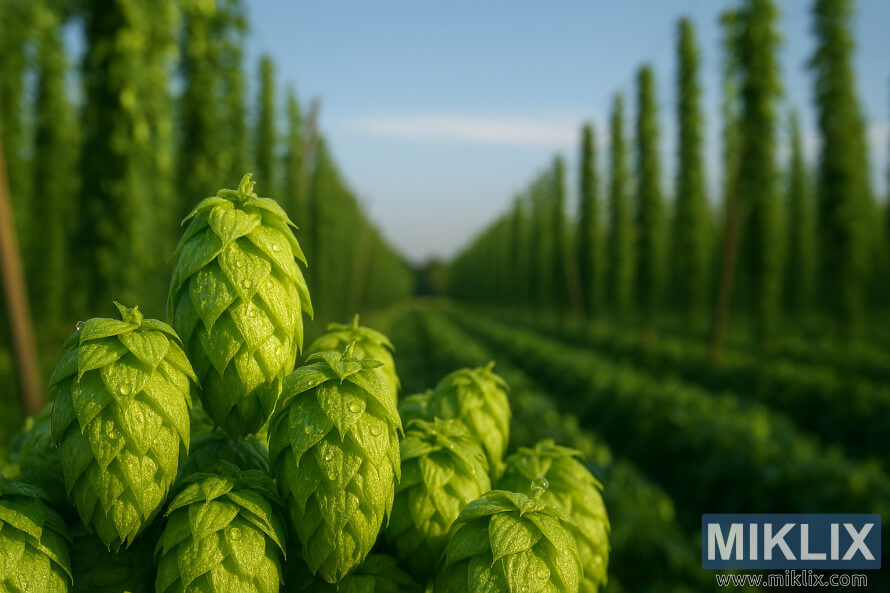
Click or tap the image for more information and higher resolutions.
Hallertauer Gold, a German aroma hop, was developed at the Hop Research Center in Hüll. It was bred from Hallertau Mittelfrüher, starting in the mid-1970s. By the late 1980s, Hallertau Gold (HGO, cultivar ID 64/14/235) was introduced. It brings a floral, spicy, and fruity character, meeting brewers' expectations.
Available from suppliers like Yakima Valley Hops and Hops Direct, Hallertauer Gold comes in various harvest years and sizes. German hop harvests happen from late August to September. Prices and availability vary with each season's yield.
After a period of less interest, Hallertauer Gold has seen a comeback. Its clean continental aroma and disease resistance have made it popular again. As part of the Hallertau family, Hallertau Gold is ideal for those seeking subtle aroma and classic German character in lagers and ales.
Key Takeaways
- Hallertauer Gold is a German aroma hop developed in Hüll from Hallertau Mittelfrüher.
- Its code is HGO and the cultivar ID is 64/14/235.
- Suppliers like Yakima Valley Hops and Hops Direct list Hallertauer Gold and related Hallertau varieties.
- Harvests occur late August to September, affecting price and availability.
- It provides classic continental aroma suitable for many lager and ale recipes.
Introduction to Hallertauer Gold and Its Role in Brewing
Hallertauer Gold is celebrated for its delicate, classic aroma in lagers and ales. It's a favorite among brewers for late addition hops. This protects the floral and spice oils from the boil's heat.
This variety offers a mild hoppiness with floral, herb, and light spice notes. Its Hallertauer aroma fits traditional German hops while being adaptable for modern brews.
Many brewers opt for Hallertauer Gold for its aromatic impact. They use it for late kettle additions and dry hopping. These methods help preserve the volatile oils, ensuring the flavor and scent remain vibrant.
Both homebrewers and commercial breweries employ Hallertauer Gold in pilsners, Helles, and saison-style ales. Paired with noble German hops like Hallertau Mittelfrüh or Tettnang, it enhances a subtle, balanced hop bouquet.
- Use: aroma hop for finishing additions.
- Technique: late addition hop or dry hopping to retain volatile oils.
- Style fit: traditional German styles and modern pale ales.
Botanical Background and Genealogy of Hallertauer Gold
Hallertauer Gold originates from the renowned Hallertau region in Bavaria. It is a descendant of the Hallertau Mittelfrüher, bred to preserve its delicate aroma. At the same time, it incorporates practical traits for growers.
The development of Hallertauer Gold was a result of German hop breeding at the Hop Research Center in Hüll. The research began in the mid-1970s, focusing on selection and disease resistance. It was released to the public in the late 1980s.
Plant breeders aimed to enhance Hallertauer Gold's resistance to wilt and other regional diseases. This variety maintains the mild spice and floral notes of the Hallertau lineage. It also boasts stronger vigor and yield stability.
The creation of Hallertauer Gold influenced subsequent breeding programs. Varieties like Hallertau Tradition and others share its ancestry. This shows how breeders combine Hallertau Mittelfrüher's aroma with disease resistance in modern cultivars.
Today, Hallertauer Gold is part of a well-defined genealogical map of German hop breeding. Growers and brewers use this knowledge when selecting Hallertauer Gold. They seek its classic Hallertau character and reliable agronomic performance in their recipes.
Chemical and Oil Composition of Hallertauer Gold
Hallertauer Gold exhibits moderate bitterness, with alpha acids ranging from 7–10%, averaging 8.5%. Homebrew data show a broader spectrum, from 9% to 9.4%, indicating variability by crop year.
Beta acids typically range from 5–7%, averaging 6%. This balance, often near 1:1 or 2:1, aids brewers in predicting hop stability and late-hop character.
Cohumulone makes up about 20% of Hallertauer Gold's alpha acids. This percentage influences the perceived bitterness, especially at high concentrations.
Total oil content averages 1.8 mL per 100 g for Hallertauer Gold. Variations among related Hallertau cultivars range from 0.9 to 1.9 mL/100 g. Therefore, crop-year analysis is crucial for aroma predictions.
Myrcene dominates the total oil, making up 62–64%, averaging 63%. It contributes fresh, green, and resinous notes, especially in early or dry hopping.
Humulene, present at 16–18%, averages 17%. It adds earthy, woody, and spicy nuances, evident in late additions and dry hops.
Caryophyllene, at 4–5%, averages 4.5%. It provides a peppery, warm backbone, enhancing floral and herbal aspects in the beer.
- Farnesene and minor sesquiterpenes total under 1%, often near 0.5%.
- Minor oils like β-pinene, linalool, geraniol, and selinene make up 12–18% of the total oil, adding to Hallertauer Gold's complexity.
Given the variability in oil proportions and alpha acids by harvest and grower, brewers must rely on current lab reports. This ensures recipes accurately reflect the expected balance of bitterness and aroma, influenced by myrcene, humulene, caryophyllene, and cohumulone levels.
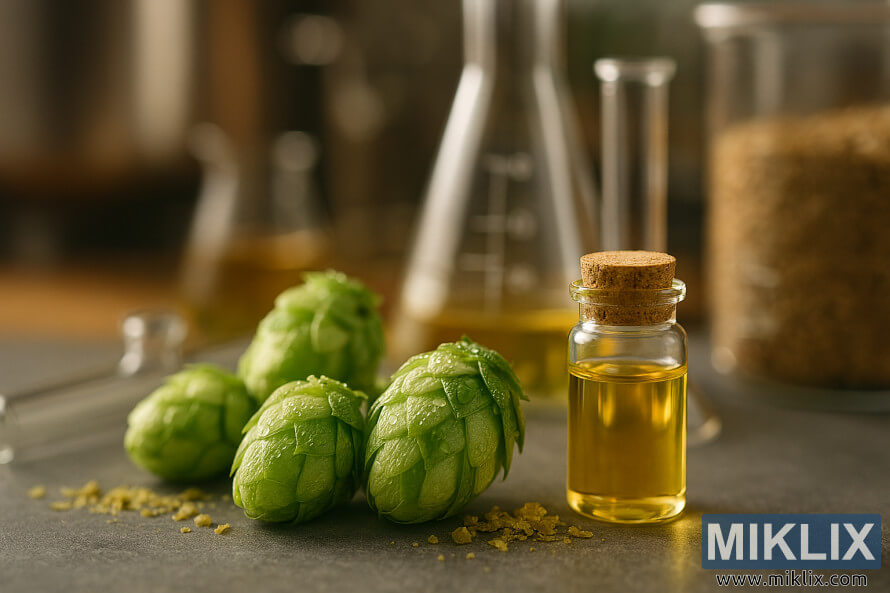
Click or tap the image for more information and higher resolutions.
Sensory Profile: Flavor and Aroma Characteristics
Hallertauer Gold offers a mild, pleasant bitterness with a distinct continental flair. Its flavor profile is marked by soft, classic floral hop aromas. There's also a subtle herbal quality that complements the floral notes.
Citrus notes add brightness to the profile, enhancing it without overpowering it. Fruity accents, such as light stone-fruit or soft tropical tones, emerge when used in late boil or dry hopping. These additions help preserve the delicate fruity and floral nuances.
The earthy and grassy traits of Hallertauer Gold give beers a grounded, agricultural feel. Some batches may also display woody or pine hints, adding depth. A spicy hop character can emerge, offering peppery or clove-like touches.
- Floral hop: gentle, traditional, ideal for subtle aromatic lifting.
- Herbal hop: supports green, tea-like complexity.
- Spicy hop: appears as a fine pepper or clove note in some uses.
Humulene-rich components can fade with prolonged heat. Therefore, many brewers prefer late kettle additions or dry hopping to preserve the floral, citrus, and fruity aspects. When combined with neutral malts and clean yeast strains, Hallertauer Gold showcases its layered aroma without background flavors.
The profile balances citrus brightness, fruity sweetness, and the earthy, grassy base typical of traditional German hops. This balance makes Hallertauer Gold ideal for lagers, pilsners, and lighter ales where nuanced aroma is crucial.
Brewing Values and How to Use Hallertauer Gold in the Wort
Hallertauer Gold is celebrated for its aromatic qualities, boasting alpha acids between 7–10%. This range allows brewers to fine-tune the bitterness level in their brews. Shorter boils are ideal for capturing floral and spicy notes. Conversely, longer boils enhance isomerization, increasing bitterness but diminishing delicate aromas.
Many brewers opt for late boil additions to preserve volatile oils. Adding hops with 10–15 minutes remaining in the boil balances flavor and aroma retention. For those prioritizing aroma, a whirlpool at 170–180°F is recommended. This method extracts aroma without excessive bitterness.
Whirlpool additions are particularly effective due to their sensitivity to heat. A 10–30 minute whirlpool rest significantly enhances aromatic lift while minimizing bitterness. This technique is particularly suited for lagers and pilsners, which benefit from subtle spice and floral notes.
Dry hopping during fermentation or in bright beer preserves the most delicate aromas. This method ensures that myrcene and humulene are preserved, offering a clearer aroma profile. Incremental additions over several days can yield a cleaner, more refined flavor than a single, large dose.
When planning bitterness, consider the cohumulone levels, which are near 20% in Hallertauer Gold. This percentage contributes to a smoother bitterness perception compared to high-cohumulone varieties. Hallertauer Gold is best used as a supporting bittering hop or for late-aroma additions, rather than as the primary bittering hop for intense bitterness.
Practical tips:
- Use late boil additions for balanced flavor with modest isomerization.
- Place hops in the whirlpool to maximize aroma and limit bitterness contribution.
- Dry hop during active fermentation to capture fresh, spicy aromatics.
- If you must bitter heavily, add a stable, high-alpha hop early and use Hallertauer Gold later.
Hallertauer Gold hops
Hallertauer Gold is identified by the international HGO hop code and cultivar ID 64/14/235. This information ensures brewers get the right cultivar for its delicate floral and spice notes.
Availability of Hallertauer Gold can vary by harvest year and supplier. It is commonly found in pellet and whole-leaf forms through distributors like Yakima Valley Hops, Hops Direct, and Northwest Hop Farms.
Over 500 homebrew recipes use Hallertauer Gold, providing a wealth of data for brewers. These recipes help gauge bitterness levels and the late-hop aroma contributions.
- HGO hop code aids traceability and catalog matching.
- Hallertauer Gold details appear on labels and technical sheets sold by reputable suppliers.
- Hop supplier listings can change season to season, so checking harvest notes is wise.
Catalogs that carry Hallertauer Tradition often stock Hallertauer Gold or close relatives. Cross-referencing cultivar info in supplier listings can reveal suitable alternatives when one harvest is scarce.
When sourcing, compare alpha acid ranges and oil compositions in the product sheets. These details guide decisions on timing, dosage, and intended aroma profile for both lagers and ales.
Click or tap the image for more information and higher resolutions.
Best Beer Styles for Hallertauer Gold
Hallertauer Gold complements clean, malt-forward beers with a gentle floral and spicy touch. It's perfect for American lagers, where a restrained bitterness and subtle aroma highlight the malt. This hop's character enhances the beer's overall profile.
Its continental ale character makes it an excellent choice for traditional German lager recipes. Brewers use it to add soft herbal notes, enhancing the smooth lager body without overpowering it.
Pilsner recipes benefit from Hallertauer Gold's refined floral top note. Adding it in late additions or as a dry hop can elevate a crisp pilsner. This approach maintains the beer's classic dryness and balance.
Kölsch gains a delicate fruitiness from Hallertauer Gold. This hop supports the yeast-driven profile, ensuring the beer remains light, bright, and perfect for sessions or cellar-age batches.
Light ales and amber ales receive a gentle aromatic boost when paired with caramel or Munich malts. Hallertauer Gold's spice and light fruit aromas complement malt sweetness, rounding out the mid-palate.
- American lager — clean bitterness, subtle aroma
- German lager — tradition-friendly, soft herbal notes
- Continental ale — versatile aromatic lift
- Pilsner — bright floral top notes
- Kölsch — supports yeast character
- Amber ale — balances malt sweetness
Recipe Guidance: Dosage and Timing Examples
Hallertauer Gold has an average alpha acid near 8.5%, crucial for calculating IBUs in boil additions. It's best to treat this hop as an aroma variety, limiting early boil use to avoid excessive bitterness. For a typical 5-gallon (19 L) batch, a small bittering charge of 0.25–0.5 oz will register modest IBUs while preserving aroma.
For late hop additions, aim to add most of the hop bill in the last 10–20 minutes of the boil or at flameout. Late hop additions at 60–80°C (140–176°F) during a whirlpool addition extract essential oils without driving up IBUs. Use a whirlpool addition of 0.5–1.5 oz per 5 gallons as a starting point and scale by batch size and target aroma strength.
Dry hop rates for related aroma hops commonly run 0.5–2.0 oz per 5 gallons (14–57 g per 20 L). Apply that same range to Hallertauer Gold, then adjust for total oil (~1.8 mL/100 g) and your desired aromatic intensity. Lower dry hop rates yield subtle floral notes. Higher dry hop rates push citrus and spice character.
- Light aroma pale ale (5 gal): 0.5 oz late hop addition + 0.75 oz dry hop for soft aroma and low IBUs.
- Balanced lager (5 gal): 0.25 oz early bitter + 1.0 oz whirlpool addition + 0.5 oz dry hop for classic spice and floral lift.
- Hoppy wheat or saison (5 gal): 0.5 oz whirlpool addition + 1.5–2.0 oz dry hop for forward aroma with controlled bitterness.
When converting recipes or blending Hallertauer Gold with Nelson Sauvin, Citra, or Saaz, recalculate IBUs using the 8.5% alpha value and the exact boil time for each addition. Record crop-specific alpha acid data when available and tweak hop dosages to match oil content. Small iterative adjustments will help dial in the desired aroma without overpowering the base beer.
Pairing Hallertauer Gold with Malts and Yeasts
Hallertauer Gold's floral, herb, and gentle spice notes pair well with a clean malt base. Opt for pilsner or pale continental malts to highlight hop aroma and delicate bitterness.
For a fuller malt profile, consider Vienna or Munich malts in moderation. These malts add bread and toasty notes that support Hallertauer Gold without overpowering it. Keep specialty malts to a minimum to preserve the hop's clarity and balance.
Yeast selection significantly impacts the final beer profile. Neutral lager yeast enhances the hop's subtle florals and herbal tones by producing minimal esters.
Ale yeast options like Kölsch or English ale strains introduce mild fruity esters. These can complement the hop's spicy-fruit character. Choose these yeast strains for a soft interplay between yeast esters and hop aroma.
- For a crisp continental lager: pilsner malt plus a neutral lager yeast creates a clean stage for Hallertauer Gold.
- For a hybrid or Kölsch-style beer: pale ale or pils base with a Kölsch yeast introduces gentle esters that meld with the hop’s fruitiness.
- For amber or Vienna-forward beers: keep specialty malts restrained and pair with a fairly neutral ale yeast to maintain flavor balance.
Pairing Hallertauer Gold with other noble or continental hops like Saaz often produces harmonious blends. These blends are suitable for both American lager and continental styles, where neutral yeast strains and straightforward malt bills are common.
When fine-tuning recipes, focus on overall flavor balance. Small adjustments in malt roast level or yeast attenuation can alter perceived hop intensity. Make gradual changes to grist and yeast strains to preserve Hallertauer Gold's signature aroma.
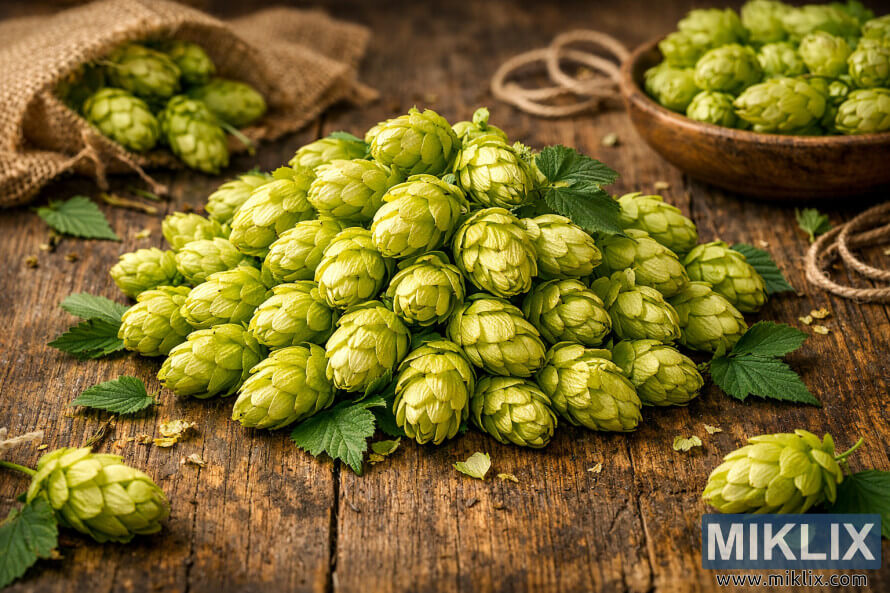
Click or tap the image for more information and higher resolutions.
Common Substitutions and Comparable Hop Varieties
When Hallertauer Gold is out of stock, brewers often turn to Hallertau Mittelfrüh. It offers soft floral and noble spice notes, keeping the recipe's original aroma intact. This substitution avoids harsh bitterness.
Tettnanger and East Kent Goldings are also good alternatives. Tettnanger brings a delicate spicy profile, while East Kent Goldings add a warm, earthy fruitiness. These hops are perfect for traditional lagers and English ales.
Crystal and Mount Hood offer unique twists for similar aromatic character. Crystal adds a mild citrus-lavender note, ideal for lighter ales. Mount Hood contributes a faint grassy-citrus blend, fitting German-style pilsners.
Other common options include Fuggle, Hersbrucker, Liberty, Perle, Saaz, and Spalter. These hops span English and continental styles, offering floral, spicy, and earthy ranges. They're great for emphasizing specific aroma facets or adapting to ingredient availability.
- Adjust for alpha acid: some substitutes have higher or lower bitterness than Hallertauer Gold.
- Match oil profile: myrcene and humulene ratios affect perceived aroma and must be considered.
- Blend hops: combining a continental and an English variety can mimic the rounded Hallertauer Gold bouquet.
Hallertau Tradition and related cultivars share aroma traits but vary in alpha acids and oil levels. When swapping hops, account for these differences to maintain aroma and bitterness goals.
Test small batches and tweak timing when substituting. A late kettle or dry-hop addition preserves delicate floral notes. This is true whether using Hallertau substitutes, Tettnanger, East Kent Goldings, Hallertau Mittelfrüh, Crystal, or Mount Hood.
Availability, Sourcing, and Where to Buy
Hallertauer Gold is frequently found among craft and homebrew sellers in the United States. Look for specialty hop merchants and large marketplaces for fresh lots. Availability and price can vary significantly between vendors.
Homebrew recipe databases list numerous recipes that include Hallertauer Gold. This consistent demand ensures that small batches remain in stock at hop shops and online retailers.
When searching for Hallertauer-type hops, consider established hop suppliers USA. Options include Yakima Valley Hops, Hops Direct, Northwest Hop Farms, and Great Fermentations. These vendors often detail the harvest year hops in their listings, aiding buyers in assessing freshness.
- Search multiple online hop retailers to compare alpha acids, aroma descriptors, and harvest year hops.
- Contact local brew shops to ask about incoming shipments and reserve specific lots.
- Watch marketplace listings if you need larger quantities for commercial brewing or seasonal batches.
Some suppliers link their inventory to larger e-commerce platforms. This makes it simpler to find Hallertauer Gold in small packages or bulk. Always confirm the harvest date and storage conditions before making a purchase, especially when freshness is crucial.
Retail availability can change with each growing season. If a seller is out of stock, ask for a notification. Alternatively, explore alternative hop suppliers USA and online hop retailers that specialize in rare or heirloom varieties.
Growing and Agricultural Notes for Hallertauer Gold
Hallertauer Gold thrives in Bavaria, Germany, where the climate is temperate. Growers carefully plan planting and pruning around frost dates. This ensures strong root growth and steady vegetative development.
The variety was bred for disease resistance, particularly against wilt. Hallertau Mittelfrüher's susceptibility to wilt led to a focus on robust resistance in Hallertauer Gold. This effort minimizes losses from common pathogens in commercial fields.
Other Hallertau cultivars also show resistance to verticillium wilt, downy mildew, and powdery mildew. These traits offer practical benefits like fewer chemical sprays and more reliable crops throughout the season.
Hallertauer types are known for their compact cone density and medium size. This makes them ideal for mechanical harvesting. The compact density also aids in handling and processing, preserving the aromatic qualities brewers value.
In Germany, the harvest season for Hallertauer Gold is from late August to September. Growers closely monitor lupulin development and moisture content. This ensures the best balance between aroma preservation and storage stability during harvest.
Yields for Hallertauer Gold and similar cultivars range from 1,560 to 1,780 kg per hectare. These figures indicate a moderate yield potential under optimal conditions. Actual yields can vary based on site, soil, and crop management.
Effective agronomic practices include balanced nitrogen feeding and maintaining trellises for vigorous bines. Timely scouting for mildew is also crucial. These steps promote consistent cone development, maximizing yield and quality.
Row spacing and irrigation choices significantly impact cone density and overall yield. Growers in cooler sites may achieve denser cones and a slightly later harvest. Warmer sites can lead to faster maturation but may compromise some of the aroma.
- Planting: choose healthy rhizomes and well-drained soil.
- Pest and disease control: prioritize monitoring to protect disease resistance traits.
- Harvest planning: aim for late August–September windows in Bavarian climates.
- Yield targets: expect moderate yields similar to other Hallertau cultivars.
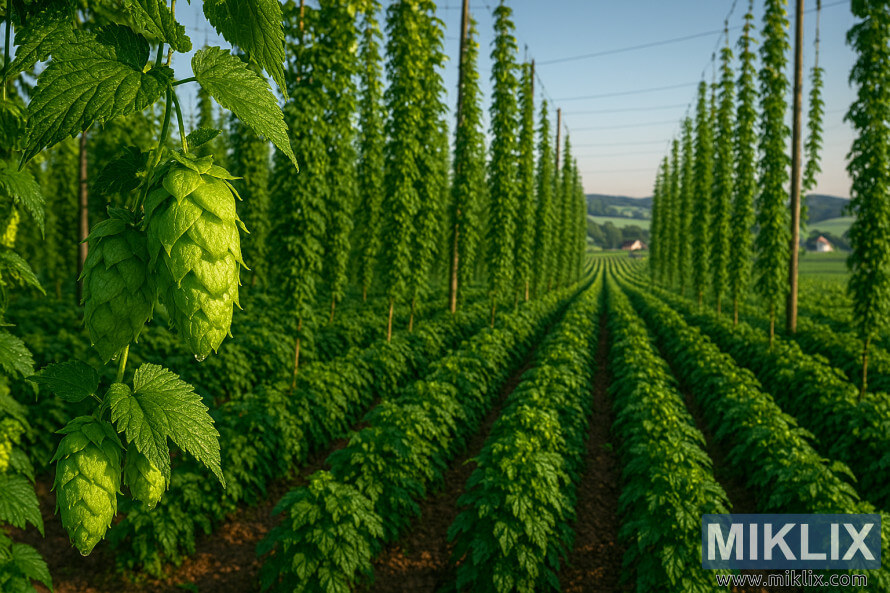
Click or tap the image for more information and higher resolutions.
Storage, Stability, and Shelf Life Considerations
Understanding hop storage begins with the harvest date and lab analysis for each lot. Hallertauer Gold's alpha acid stability and total oil content can vary significantly by crop year. This variation affects bitterness and aroma. It's crucial to review supplier lab reports before use to ensure they align with malt and yeast choices.
To maximize hop shelf life, minimize exposure to oxygen and heat. Leaving whole-cone or pellet hops at room temperature accelerates the loss of alpha acids and volatile oils. Hallertauer cultivars, including Hallertauer Gold, stored at 68°F, lose much of their alpha potency after six months. Expect similar degradation when Hallertauer Gold is stored improperly.
Vacuum-sealing hops can extend their usable life by reducing oxygen contact. When combined with cold storage—either refrigeration or freezing—degradation of aromatics is slowed, and alpha acid stability is preserved. Homebrewers should transfer opened bags to new vacuum packs or reseal with an oxygen absorber to maintain freshness.
Choose between refrigerated and frozen storage based on your storage needs. Short-term cold storage in a refrigerator keeps aroma fresher for several weeks. For the best hop shelf life, long-term frozen storage is recommended, especially when vacuum-sealed and stored at stable temperatures.
Before brewing, use a checklist to ensure proper hop storage. Confirm the harvest date, review lab numbers, inspect packaging, and prioritize recent lots for late-hop additions. Treat Hallertauer Gold like a delicate spice. Proper storage preserves its subtle floral notes and maintains alpha acid stability, ensuring reliable recipes.
Consumer and Brewer Trends: Popularity and Usage Over Time
Hallertauer Gold's popularity follows a distinct pattern. Initially, it was overlooked in commercial catalogs. However, a resurgence in interest has occurred as brewers seek classic aromas with more stable alpha acids.
Homebrew trends have significantly contributed to this comeback. Homebrewers have rediscovered Hallertauer Gold, incorporating it into hundreds of recipes. This has led to a dataset of 568 recipes, prompting small breweries to reassess their hop bills.
The evolution of craft brewing hops is moving towards disease resistance and reliability. The development of cultivars like Hallertau Tradition in 1989 exemplifies this shift. Hallertauer Gold meets these modern demands with its moderate alpha values and clean aroma profile.
Its availability from multiple suppliers ensures consistent use. Brewers frequently compare Hallertauer Gold with continental and English aroma hops when searching for substitutes. This interchangeability maintains its popularity among both professionals and hobbyists.
- Homebrew trends: recipe experimentation and shared brewing forums.
- Hallertauer resurgence: renewed interest in classic German varieties.
- Craft brewing hops: demand for stable aroma and moderate bitterness.
This dynamic environment keeps Hallertauer Gold relevant. Brewers navigate between tradition and modern brewing requirements. Consumer interest continues to influence which varieties remain in demand.
Conclusion
Hallertauer Gold summary: This German aroma hop, bred in Hüll from Hallertau Mittelfrüher, boasts alpha acids around 7–10% and total oils near 1.7–1.8 mL/100g. Its floral, herbal, and spicy notes shine when used late in the boil or as a dry hop. This method preserves volatile oils, highlighting the cultivar’s continental character in both lagers and ales.
For optimal use, treat Hallertauer Gold as a finishing and aroma contributor, not a primary bittering hop. Brewers should consider harvest-year variability and store cones or pellets cold and oxygen-free to preserve aroma. If supplies are limited, alternatives like Hallertau Mittelfrüh, Tettnanger, East Kent Golding, Crystal, or Mount Hood can be used with adjustments for alpha and oil differences.
In summary, Hallertauer Gold's versatility, disease-resistant lineage, and practical yields make it a standout. When paired with clean malt bills and yeast strains that preserve delicate aromatics, it rewards subtlety and balance. Use it late, keep it fresh, and it will add a refined floral-spice character to your beer recipes.
Further Reading
If you enjoyed this post, you may also like these suggestions: